Chinese Wild Ginger Plant Pricing
Chinese wild ginger plant pricing varies significantly based on plant size, rarity, and source. Expect to pay $15-$50 for common varieties, while rare cultivars can exceed $100. Understanding market factors helps you make smart purchasing decisions.
If you have been shopping for shade garden plants lately, you have probably noticed Chinese wild ginger showing up more often. This lovely ground cover has gained serious popularity among gardeners who want something different for their woodland gardens. But here is the thing – pricing can be all over the place. One nursery sells a small pot for fifteen bucks. Another wants eighty dollars for what looks like the same plant. What gives?
I have spent quite a bit of time researching Chinese wild ginger plant pricing across different sources. The variation is real, and it is not random. Several concrete factors determine what you will pay. Understanding these factors saves you money and helps you get healthy plants that actually thrive. Let me walk you through everything I have learned about the current market, what drives costs up or down, and how to spot a good deal versus an overpriced offering.
Key Takeaways
- Price range varies widely: Common varieties cost $15-$50, while rare cultivars can exceed $100 per plant
- Plant maturity affects cost: Larger, established specimens command premium prices over small divisions
- Source matters significantly: Specialty nurseries charge more than big-box stores but offer better quality
- Seasonal timing impacts pricing: Spring and fall typically offer better selection and prices
- Shipping adds substantial cost: Online purchases often include $15-$30 in shipping fees
- Rarity drives premium pricing: Variegated and unusual cultivars cost 3-5x standard varieties
- Local nurseries offer value: In-person purchases eliminate shipping and let you inspect plant health
Quick Answers to Common Questions
What is the average price for a Chinese wild ginger plant?
A standard one-gallon Chinese wild ginger (Asarum splendens) typically costs $25-$45 at specialty nurseries, while big-box stores may offer them for $18-$28. Rare cultivars range from $50-$100+.
Why do prices vary so much between nurseries?
Price differences reflect propagation method (division vs. tissue culture), plant maturity, nursery overhead, accurate labeling, and quality control. Specialty nurseries invest more in growing and verifying plants.
When is the best time to buy Chinese wild ginger for the lowest price?
Fall (September-October) often offers 20-40% discounts on spring leftovers. Spring has the best selection but full retail prices. Avoid winter when only mail-order is available with added shipping costs.
Is it worth paying more for a larger plant?
Yes, for immediate impact or difficult sites. A two-gallon plant ($45-$75) establishes faster and looks mature immediately. For large ground cover areas, smaller pots are more cost-effective if you can wait 2-3 years.
How can I tell if a Chinese wild ginger is fairly priced?
Check for healthy white roots, multiple growth points, accurate botanical labeling, and appropriate size for the container. Compare delivered cost (including shipping) across sources. Division-grown plants justify higher prices than tissue-cultured ones.
📑 Table of Contents
- Understanding the Chinese Wild Ginger Market
- Key Factors That Drive Price Differences
- Regional Price Variations Across the US
- How to Evaluate Plant Quality for the Price
- Smart Buying Strategies for Different Budgets
- Hidden Costs and Long-Term Value
- Where to Find Current Pricing and Availability
- Common Pricing Traps to Avoid
- Making Your Purchase Decision: A Framework
- Conclusion
Understanding the Chinese Wild Ginger Market
The market for this plant has shifted notably over the past five years. What was once a specialty item found only in collector nurseries has moved toward mainstream availability. Big-box garden centers now carry it seasonally. Online retailers stock multiple varieties. This increased availability has generally lowered prices for common forms, but it has also created a split market.
Common Varieties vs. Collector Cultivars
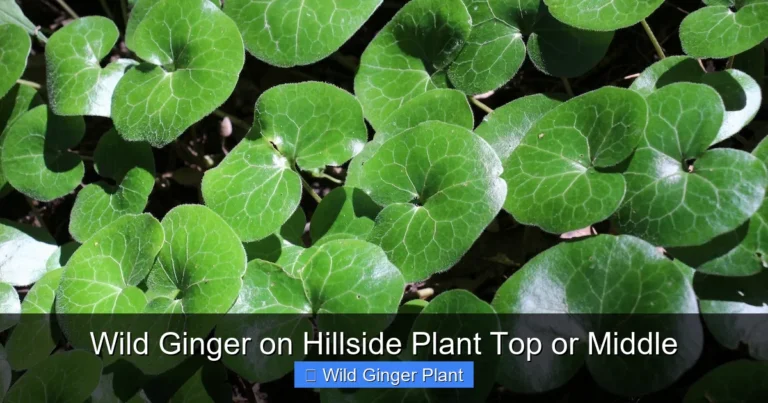
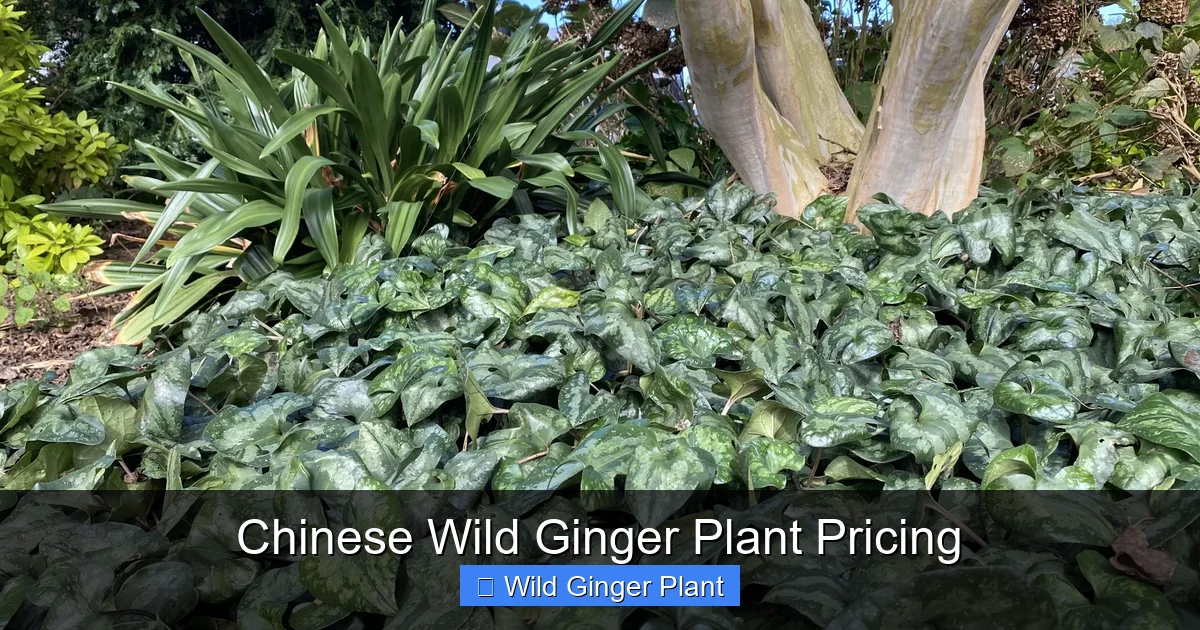
The species Asarum splendens represents the standard form most people encounter. It features the classic heart-shaped leaves with silver mottling. This is the workhorse variety. You will find it at most nurseries that carry shade perennials. Pricing for this standard form typically falls between fifteen and thirty-five dollars for a one-gallon pot.
Then you have the collector cultivars. Asarum splendens ‘Quick Silver’ shows more intense silver patterning. ‘Panda Face’ has distinctive markings that resemble – you guessed it – a panda face. These named cultivars command higher prices. Expect forty to eighty dollars for a one-gallon size. Some rare selections push past one hundred dollars. The price jump reflects propagation difficulty and limited supply.
Species Confusion in the Marketplace
Here is something that complicates Chinese wild ginger plant pricing significantly. Several Asarum species get sold under the “Chinese wild ginger” label. Asarum maximum (panda face ginger) is a different species entirely but often gets mixed in. Asarum sieboldii sometimes carries the same common name. Each species has different growth habits, hardiness, and market value.
When comparing prices, always check the botanical name. A twenty-dollar Asarum maximum might be a steal, while a twenty-dollar Asarum splendens could be overpriced if it is a tiny division. The species matters as much as the cultivar name for determining fair value.
Key Factors That Drive Price Differences
Once you understand the market segments, the pricing variation makes more sense. Let me break down the specific factors that cause one plant to cost twice as much as another that looks similar.
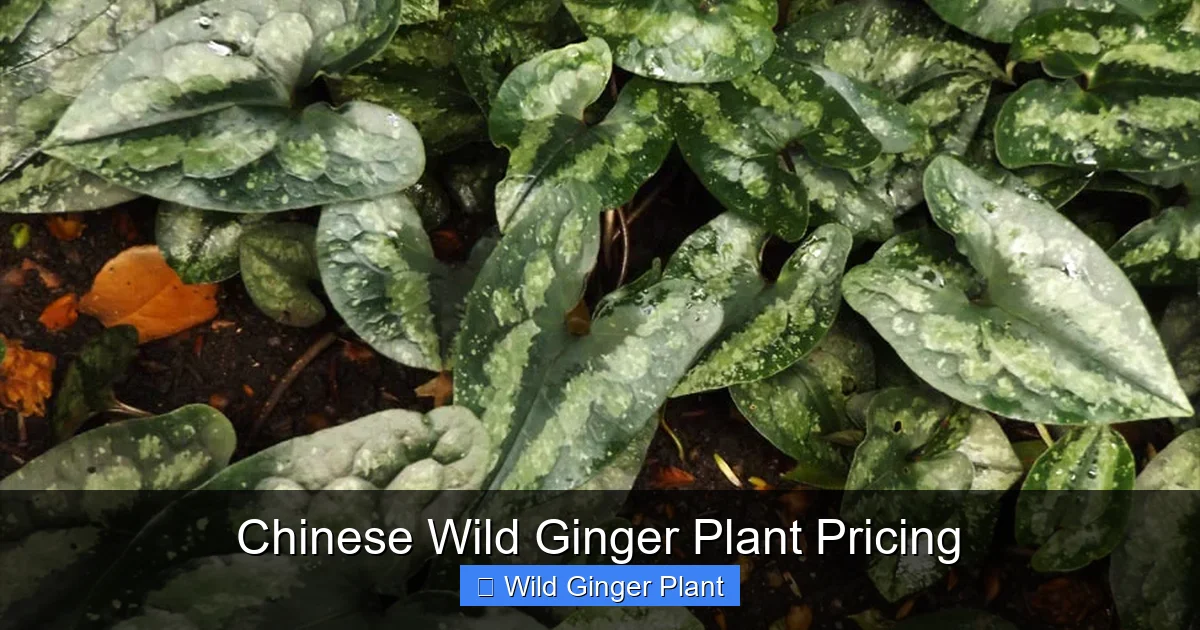
Visual guide about Chinese Wild Ginger Plant Pricing
Image source: toptropicals.com
Plant Size and Maturity
This is the single biggest factor. A three-year-old clump in a two-gallon pot has vastly more root mass and stored energy than a first-year division in a four-inch pot. The larger plant establishes faster, flowers sooner, and tolerates transplant stress better. Nurseries invest more time, space, and resources into larger specimens.
Typical pricing by container size:
- Four-inch pot (first-year division): $12-$25
- One-gallon pot (two-year plant): $25-$45
- Two-gallon pot (three-year specimen): $45-$75
- Three-gallon or larger (mature clump): $75-$150+
For Chinese wild ginger plant pricing, the jump from four-inch to one-gallon often represents the best value. You get a substantial plant without paying for the extra year of nursery care that two-gallon sizes require.
Propagation Method Matters
Chinese wild ginger propagates two ways – division and tissue culture. Division means physically separating a mature clump. This produces genetically identical plants but takes time. Each mother plant yields only so many divisions per year. Tissue culture (micropropagation) produces hundreds of plantlets in sterile lab conditions much faster.
Division-grown plants typically cost more. They are larger, tougher, and represent the “true” form without any risk of tissue culture variation. Tissue-cultured plants cost less to produce wholesale, so retail prices can be lower. However, they sometimes show minor variations in leaf patterning or vigor. Neither method is inherently bad, but division-grown plants justify higher prices.
Nursery Type and Overhead
Where you buy dramatically affects price. Let me compare the main source types:
Specialty Shade Nurseries
These nurseries focus on woodland plants. They know their Asarum species cold. Plants are typically division-propagated, well-grown, and correctly labeled. Prices run higher – expect thirty to sixty dollars for a one-gallon standard variety. You pay for expertise, quality control, and accurate identification. Staff can answer specific questions about your growing conditions.
General Independent Garden Centers
Good local nurseries that carry a bit of everything. They source from regional wholesalers. Quality varies. Some have excellent shade sections with knowledgeable buyers. Others treat woodland plants as an afterthought. Prices typically range twenty to forty-five dollars for one-gallon plants. You can inspect before buying, which is valuable.
Big-Box Retailers
Home Depot, Lowe’s, and similar chains now carry Chinese wild ginger seasonally. Prices look attractive – often eighteen to twenty-eight dollars for a one-gallon pot. But plants are usually tissue-cultured, pushed with fertilizer for quick sale, and may be mislabeled. Staff rarely know the difference between species. Return policies are good, but plant longevity can be disappointing.
Online Specialty Retailers
Websites like Plant Delights, Far Reaches Farm, and similar mail-order nurseries offer the widest selection. They ship bare-root or in pots. Plant quality is generally excellent. Prices run thirty to seventy dollars plus shipping (fifteen to thirty dollars). You cannot inspect before purchase, but reputable sellers guarantee live arrival.
Online Marketplaces (Etsy, eBay, Amazon)
Individual sellers and small nurseries list here. Prices vary wildly – ten dollars to over one hundred. Quality is unpredictable. Some sellers are hobbyists dividing their own plants. Others are dropshippers. Photos may not represent what ships. I generally avoid these for anything but the rarest cultivars unavailable elsewhere.
Seasonal Timing
When you buy affects price as much as where. Chinese wild ginger follows a clear seasonal pricing pattern:
Spring (March-May)
Peak availability. Nurseries have fresh stock. Selection is best. Prices are at standard retail. This is when you find the most cultivars available. If you want a specific named variety, spring is your window.
Early Summer (June)
Remaining spring stock may be discounted ten to twenty percent as nurseries clear space. Plants are actively growing. Good time to buy if you missed spring, but selection narrows.
Fall (September-October)
Second planting window. Some nurseries bring in fresh fall stock. Others discount spring leftovers heavily – twenty to forty percent off. Fall-planted ginger establishes roots before winter. Excellent value if you find healthy plants.
Winter (November-February)
Limited availability. Only mail-order nurseries shipping bare-root or evergreen potted plants. Prices are full retail plus shipping. Not ideal for most buyers unless you need a specific rare cultivar.
Regional Price Variations Across the US
Where you live influences what you pay. Chinese wild ginger plant pricing shows noticeable regional patterns based on climate suitability and local nursery competition.
Pacific Northwest and Coastal California
Ideal climate for this plant. Many specialty nurseries. High competition keeps prices reasonable. One-gallon standard varieties: twenty-two to thirty-eight dollars. Best selection of cultivars. Fall planting works exceptionally well here.
Northeast and Mid-Atlantic
Good climate, solid nursery network. Prices slightly higher than PNW – twenty-five to forty-two dollars for one-gallon. Spring planting preferred. Good cultivar selection at specialty nurseries.
Southeast
Hot summers stress this plant. Fewer specialty nurseries carry it. Prices run higher – thirty to fifty dollars for one-gallon. Limited cultivar selection. Mail-order often makes more sense here.
Midwest and Mountain West
Climate is marginal (winter cold, summer heat). Few local sources. Most buyers use mail-order. Prices reflect shipping costs – effectively forty to sixty-five dollars delivered for a one-gallon equivalent. Spring planting essential for establishment before winter.
Southwest and Deep South
Generally unsuitable climate. Very limited local availability. Mail-order only. High prices plus shipping. Not recommended for most gardeners in these regions unless you have a very specific microclimate.
How to Evaluate Plant Quality for the Price
Price alone tells you little. A forty-dollar plant can be a bargain or a rip-off depending on quality. Here is how to assess what you are actually getting.
Root System Inspection
This is the most important factor. Gently slide the plant from its pot (ask first at retail nurseries). Healthy Chinese wild ginger roots are white to cream-colored, firm, and fill the container without being severely root-bound. You should see active white root tips.
Red flags:
- Brown, mushy roots (rot)
- Very few roots in a large pot (recently up-potted)
- Roots circling tightly at pot bottom (long-term container bound)
- Weed roots mixed in (poor nursery hygiene)
A smaller plant with perfect roots beats a larger plant with root problems every time. For mail-order, you cannot inspect roots before purchase. This is why seller reputation matters so much.
Foliage Quality Indicators
Leaves should be firm, fully expanded for the plant’s age, and show characteristic silver mottling (for A. splendens). Some leaf damage on older outer leaves is normal. New growth should be clean.
Watch for:
- Yellowing leaves (nutrient issues or root problems)
- Crispy leaf edges (underwatering or low humidity)
- Distorted new growth (pests or virus)
- All-green leaves on a silver-mottled cultivar (reversion)
Crown and Growth Points
The crown (where leaves emerge) should be firm, not mushy. Multiple growth points indicate a well-established plant that will increase faster. A single growth point on a one-gallon plant suggests a recent division that has not yet bulked up.
Count the “eyes” or dormant buds visible at soil level. More eyes mean faster clump formation. This is especially important for Chinese wild ginger plant pricing evaluation – a plant with five eyes at thirty dollars is better value than a plant with two eyes at twenty-five dollars.
Label Accuracy
Check that the label matches what you see. The botanical name should be present. “Chinese wild ginger” alone is insufficient. If a plant is labeled Asarum splendens ‘Quick Silver’ but shows minimal silver patterning, it may be mislabeled or a seedling (not true to cultivar).
At big-box stores, labels are frequently generic or wrong. At specialty nurseries, labels are typically accurate. This is part of what you pay for at higher-end sources.
Smart Buying Strategies for Different Budgets
Everyone has a different budget and different goals. Here are practical approaches based on what you are trying to achieve.
Budget-Conscious: Maximum Coverage for Minimum Cost
If you need to cover ground and have patience, buy small. Four-inch pots at twelve to eighteen dollars each. Space them twelve inches apart. They will knit together in two to three years. Buy in fall for discounts. Look for nursery clearance sections. Avoid named cultivars – the species Asarum splendens covers ground just as well.
Another strategy: buy one two-gallon specimen (sixty to eighty dollars) and divide it yourself after a year. You essentially get multiple plants for the price of one large one. This requires confidence in your division skills and a healthy mother plant.
Collector Approach: Building a Cultivar Collection
If you want named varieties, accept higher per-plant costs. Focus spring orders with one mail-order nursery to consolidate shipping. Join plant societies – members often trade divisions. Attend specialty plant sales (Hardy Plant Society, local arboretum sales). These events offer division-grown plants from collectors at reasonable prices.
For rare cultivars over one hundred dollars, consider splitting an order with a gardening friend. You each get a division, halve the cost, and halve the shipping.
Instant Impact: Mature Specimens for Design Projects
Landscape designers and homeowners wanting immediate presence should buy two-gallon or larger. The higher upfront cost saves years of waiting. For a shaded entry garden or visible woodland path, three-gallon specimens at one hundred to one hundred fifty dollars create instant maturity. Factor this into project budgets rather than plant budgets.
Risk-Averse: Guaranteed Success
If plant loss would be devastating (memorial planting, difficult site), pay the premium for a specialty nursery one-gallon plant in spring. The combination of division propagation, expert growing, correct identification, and local adaptation provides the highest success probability. Consider it insurance.
Hidden Costs and Long-Term Value
The sticker price is not the total cost. Smart buyers factor in the hidden expenses that change the real value equation.
Shipping: The Silent Budget Killer
Mail-order shipping for live plants runs fifteen to thirty-five dollars per order. Some nurseries offer free shipping over a threshold (often two hundred to three hundred dollars). If you buy three fifty-dollar plants, shipping might add twenty-five dollars – that is eight dollars per plant extra. Always calculate delivered cost per plant before comparing to local prices.
Bare-root shipping costs less but requires immediate planting and more aftercare. Potted shipping costs more but gives you planting flexibility. For Chinese wild ginger plant pricing comparisons, always use delivered cost.
Soil Amendment and Site Preparation
This plant demands rich, moisture-retentive, well-drained soil. If your site needs compost, leaf mold, or drainage improvement, factor those costs. A fifty-dollar plant in twenty dollars of amendments is a seventy-dollar investment. Skipping preparation risks losing the plant – a total loss.
Mulch and Establishment Watering
Two to three inches of shredded leaf mulch or pine fines per plant. First-season watering during dry spells. These are small costs but real. Budget five to ten dollars per plant for establishment care.
Time to Maturity
A four-inch pot takes three years to become a showy clump. A two-gallon pot looks mature immediately. If you value your time and garden appearance, the larger plant’s higher price includes “pre-paid” growing time. This is not trivial – three years of garden real estate occupied by a small plant has opportunity cost.
Longevity and Division Potential
Healthy Chinese wild ginger lives for decades. A thirty-dollar plant that thrives for twenty years costs one dollar fifty per year. A fifteen-dollar plant that dies in year two costs seven fifty per year. Long-term value favors quality over initial savings. This plant also divides readily. A mature clump yields multiple divisions every few years – effectively free plants for expansion or sharing.
Where to Find Current Pricing and Availability
Markets change. Here is how to stay current on Chinese wild ginger plant pricing without wasting time.
Nursery Websites and Email Lists
Bookmark three to four specialty nurseries in your region or that ship to you. Sign up for their email lists. They announce availability, sales, and new cultivars first. Check websites in January for spring pre-orders – many nurseries offer early-bird pricing.
Plant Finder Tools
The Royal Horticultural Society Plant Finder (UK but useful for cultivar info), Missouri Botanical Garden Plant Finder, and Dave’s Garden PlantFiles list nurseries carrying specific plants. Cross-reference with nursery websites for current pricing.
Local Garden Center Relationships
Visit your best local independent nursery in early spring. Talk to the buyer or perennial manager. Ask when they expect Chinese wild ginger. Ask if they can notify you when it arrives. Ask about fall clearance timing. Building this relationship gets you first pick and sometimes advance notice of sales.
Plant Society Sales and Swaps
Hardy Plant Society chapters, native plant societies, and master gardener groups hold annual sales. These are gold mines for division-grown plants at twenty to forty dollars for nice one-gallon equivalents. Arrive early. Bring cash. Talk to sellers – they often have more at home.
Online Forums and Groups
GardenWeb/Houzz forums, Reddit’s r/plants and r/gardening, Facebook groups for shade gardening or specific plant genera. Members post nursery finds, mail-order experiences, and sometimes offer divisions. Real-time pricing intelligence from actual buyers.
Common Pricing Traps to Avoid
After years of watching this market, I see the same traps catch buyers repeatedly. Learn these once and save yourself frustration.
The “Rare” Label Trap
Sellers love labeling common varieties as “rare,” “hard to find,” or “collector’s item.” True rarity means limited propagation, not limited marketing. Asarum splendens species is not rare. ‘Quick Silver’ is uncommon but regularly available. If a seller calls the straight species “rare” and prices it at sixty dollars, walk away.
The Misidentified Species Trap
Asarum maximum (panda face ginger) sometimes sells as “Chinese wild ginger” at A. splendens prices. They are different plants with different needs. A. maximum is less cold-hardy, goes dormant earlier, and has different foliage. Know which species you want and verify the label.
The Seedling Trap
Named cultivars do not come true from seed. Seedlings of ‘Quick Silver’ show variable silver patterning. Some sellers grow seedlings and sell them as the cultivar. Only division or tissue culture preserves the cultivar. If a price seems too good for a named variety, ask about propagation method.
The Bare-Root Bait-and-Switch
Some mail-order sellers advertise “large flowering-size plants” but ship small bare-root divisions with two leaves. Read reviews specifically about plant size received versus description. Photos on the website should show the actual shipping size, not a mature garden specimen.
The Big-Box Impulse Buy
Seeing a healthy-looking plant at Home Depot for twenty-two dollars feels like a win. But if it is root-bound, mislabeled, or forced with fertilizer, it may decline after planting. If you buy big-box, inspect roots thoroughly, quarantine for two weeks, and expect to baby it through the first season.
Making Your Purchase Decision: A Framework
Let me give you a decision framework you can use next time you are looking at Chinese wild ginger options.
Step 1: Define Your Need
- Ground cover for large area? → Species, small pots, fall purchase
- Specimen for visible spot? → Named cultivar, one-gallon+, spring purchase
- Collection building? → Rare cultivars, mail-order, spring pre-order
- Gift or memorial? → Best quality, specialty nursery, local if possible
Step 2: Set Your Budget Per Plant
- Under $20: Four-inch pots, big-box, fall clearance only
- $20-$40: One-gallon standard variety, local nursery or mail-order
- $40-$75: One-gallon named cultivar or two-gallon species
- $75+: Two-gallon+ named cultivars, three-gallon specimens
Step 3: Choose Your Source Tier
- Tier 1 (highest confidence): Specialty shade nursery, local or mail-order
- Tier 2: Quality independent garden center
- Tier 3: Reputable mail-order generalist (Plant Delights, etc.)
- Tier 4: Big-box seasonal
- Tier 5 (highest risk): Online marketplaces, unknown sellers
Step 4: Verify Before Buying
- Botanical name matches your target
- Propagation method disclosed (division preferred)
- Current photos of actual plants for sale (not stock photos)
- Return/guarantee policy understood
- Total delivered cost calculated
Step 5: Time Your Purchase
- Best selection: March-April
- Best value: September-October
- Avoid: November-February (limited), July-August (heat stress)
Conclusion
Chinese wild ginger plant pricing reflects a genuine range of value propositions. A fifteen-dollar four-inch pot and a one-hundred-dollar three-gallon specimen can both be fair prices – they serve different needs. The key is matching your purchase to your actual situation rather than chasing the lowest sticker price or assuming higher price means better plant.
For most gardeners, the sweet spot sits at a one-gallon division-grown plant from a specialty or quality independent nursery in the twenty-five to forty-five dollar range. This size establishes reliably, shows mature foliage characteristics quickly, and reaches clump-forming stage within a year. Spring purchase gives the longest establishment window. Fall purchase saves ten to twenty percent if you find healthy stock.
If you are covering ground, buy small and be patient. If you are creating a focal point, buy large and enjoy immediate impact. If you are collecting, budget for the real cost of rarity including shipping. And always, always check the roots before you commit – they tell the true story of what you are buying.
The market will keep evolving. More tissue-cultured plants will lower entry-level prices. Climate shifts will change regional suitability. New cultivars will appear. But the fundamentals – root health, accurate identification, appropriate size for your goal, and fair pricing for the propagation method – will remain your best guides. Happy planting.
Frequently Asked Questions
What is the difference between Asarum splendens and Asarum maximum?
Asarum splendens (Chinese wild ginger) has silver-mottled evergreen leaves and is hardy to zone 5. Asarum maximum (panda face ginger) has larger leaves with dramatic silver patterning, is less cold-hardy (zone 6-7), and goes dormant earlier. They are distinct species often confused in the trade.
Can I grow Chinese wild ginger from seed to save money?
Species Asarum splendens can be grown from seed, but germination is slow and requires cold stratification. Named cultivars will not come true from seed – seedlings show variable leaf patterning. For cultivars, division or tissue culture is the only way to preserve the selected traits.
How many Chinese wild ginger plants do I need for ground cover?
Space plants 12-18 inches apart for ground cover. A 100 square foot area needs 50-100 plants depending on spacing. Buying 4-inch pots at $12-18 each makes large plantings affordable, but expect 2-3 years for full coverage.
Does Chinese wild ginger spread aggressively?
No. It spreads slowly by rhizomes, forming a polite clump that expands 2-4 inches per year. It is not invasive and will not overtake neighboring plants. Division every 3-4 years maintains vigor and provides free plants for expansion.
What soil conditions justify paying more for a larger plant?
If your soil is heavy clay, very sandy, or competitively root-bound from mature trees, larger plants (2-gallon+) with established root systems survive transplant shock better. The extra $20-30 acts as insurance against establishment failure in difficult conditions.
Are online mail-order plants worth the shipping cost?
Yes, for cultivars unavailable locally. Reputable mail-order nurseries (Plant Delights, Far Reaches Farm, etc.) ship healthy, correctly identified plants. Calculate total delivered cost per plant. Consolidate orders to minimize per-plant shipping. Bare-root shipping costs less but requires immediate planting.