Catmint Plant Walker’s Low
The catmint plant Walker’s Low is an award-winning perennial that delivers months of lavender-blue blooms with minimal care. This drought-tolerant beauty attracts pollinators while resisting deer and rabbits, making it a perfect choice for both novice and experienced gardeners.
If you have ever walked through a garden in early summer and noticed a cloud of soft lavender-blue flowers buzzing with bees, chances are you were looking at a catmint plant Walker’s Low. This perennial has earned its reputation as a garden workhorse, and for good reason. It asks for very little but gives back months of color, fragrance, and wildlife activity.
I first discovered this plant when a neighbor shared a division from her established clump. That single piece grew into a stunning mound that became the backbone of my sunny border. Whether you are a seasoned gardener or just starting out, this plant belongs on your must-have list. Let me walk you through everything you need to know to grow it successfully.
Key Takeaways
- Award-winning performer: Walker’s Low earned the Perennial Plant of the Year award in 2007 for its exceptional garden performance and reliability.
- Long bloom season: Enjoy lavender-blue flowers from late spring through early fall with proper deadheading.
- Pollinator magnet: Bees, butterflies, and hummingbirds flock to the nectar-rich blooms all season long.
- Deer and rabbit resistant: The aromatic foliage naturally deters browsing animals without chemicals.
- Drought tolerant once established: Deep roots make this plant perfect for water-wise gardens and xeriscaping.
- Versatile landscape uses: Works beautifully in borders, rock gardens, cottage gardens, and as edging along pathways.
- Low maintenance: Requires minimal fertilizer, infrequent watering, and only annual pruning to thrive.
Quick Answers to Common Questions
How tall does Walker’s Low catmint grow?
Walker’s Low catmint grows 24 to 30 inches tall and wide, despite its name suggesting a low-growing habit.
When should I cut back catmint Walker’s Low?
Cut back in early spring before new growth emerges, and shear by half after the first bloom flush in early summer to encourage reblooming.
Is Walker’s Low catmint deer resistant?
Yes, the aromatic foliage contains essential oils that deer and rabbits find unpalatable, making it highly resistant to browsing.
Does catmint Walker’s Low spread aggressively?
No, it forms a clump that slowly expands but does not run or become invasive. It may self-seed lightly in ideal conditions.
Can Walker’s Low catmint grow in shade?
It tolerates part shade but performs best in full sun. In shade, plants become leggy, flower less, and may flop open.
📑 Table of Contents
- Getting to Know Walker’s Low Catmint
- Choosing the Perfect Planting Spot
- Planting and Establishment
- Ongoing Care and Maintenance
- Design Ideas and Companion Plants
- Common Problems and Solutions
- Propagation Methods
- Seasonal Interest Throughout the Year
- Buying Tips and What to Look For
- Frequently Asked Questions About Growing Success
- Conclusion
Getting to Know Walker’s Low Catmint
What Makes This Variety Special
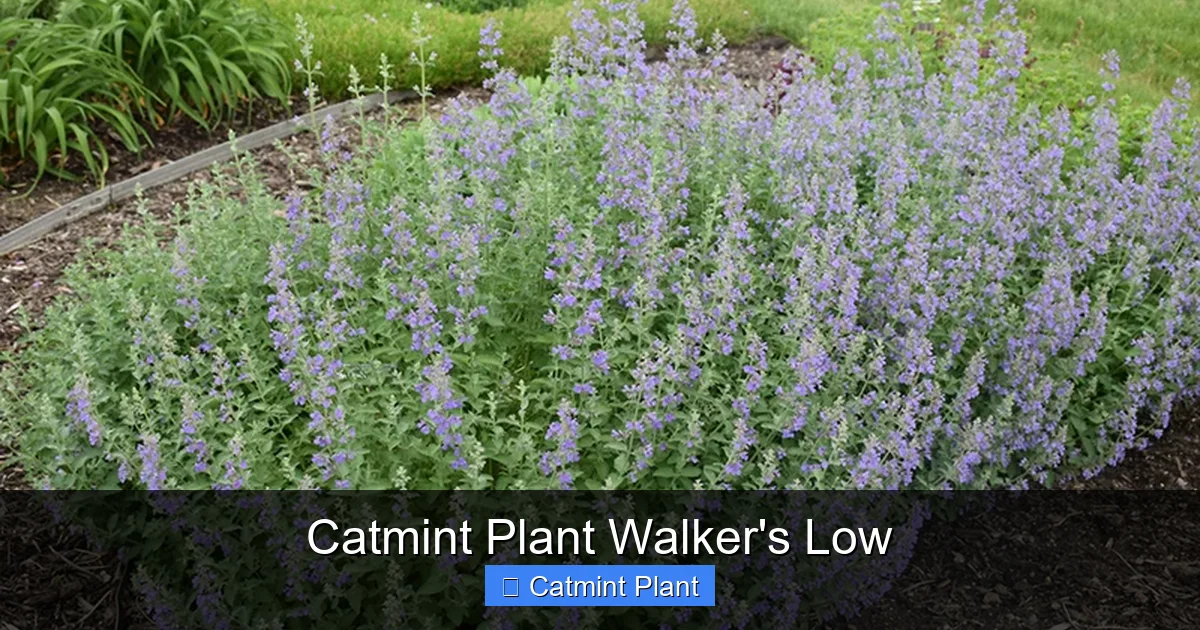
The catmint plant Walker’s Low is a cultivar of Nepeta x faassenii, a hybrid between Nepeta racemosa and Nepeta nepetella. Despite its name, this plant does not stay low. It forms a graceful mound reaching twenty-four to thirty inches tall and wide. The name actually comes from the garden in Ireland where it was discovered, not its growth habit.
This variety was named Perennial Plant of the Year in 2007 by the Perennial Plant Association. That award goes to plants that are low maintenance, pest resistant, multi-season interest, and suitable for a wide range of climates. Walker’s Low checks every box.
Foliage and Flower Details
The aromatic gray-green leaves release a pleasant minty fragrance when brushed or crushed. This scent comes from essential oils that also make the plant unappealing to deer and rabbits. The foliage forms a neat mound that looks attractive even when the plant is not in bloom.
Flowers appear in late spring, typically May or June depending on your zone. They bloom in dense whorls along tall spikes that rise above the foliage. The color is a soft lavender-blue that pairs beautifully with almost anything. If you shear the plant after the first flush, you will get a second and sometimes third wave of flowers lasting into early fall.
Hardiness and Growing Zones
This tough perennial thrives in USDA zones three through eight. It handles cold winters with ease and tolerates summer heat and humidity better than many other catmint varieties. In the warmest parts of its range, some afternoon shade helps prevent stress.
Choosing the Perfect Planting Spot
Sun Requirements
Full sun gives you the strongest stems, the most flowers, and the best fragrance. Aim for at least six hours of direct sunlight daily. In zones seven and eight, a bit of afternoon shade prevents the foliage from looking tired during the hottest weeks.
I have grown this plant in both full sun and part shade. The full sun plants were more compact and flowered more heavily. The part shade plants got a bit leggy and leaned toward the light. If you only have part shade, it will still grow, but you may need to stake it or accept a looser form.
Soil Preferences
Good drainage is non-negotiable. The catmint plant Walker’s Low will rot in wet, heavy clay, especially over winter. Sandy or gritty soil is ideal. If you have clay, amend it generously with compost, coarse sand, or fine gravel before planting.
Soil fertility should be lean to moderate. Rich soil produces lush foliage at the expense of flowers and can cause floppy stems. This plant actually prefers poor soil. I learned this the hard way when I planted one in a heavily composted bed. It grew huge but flopped open in the center and bloomed less.
Spacing Considerations
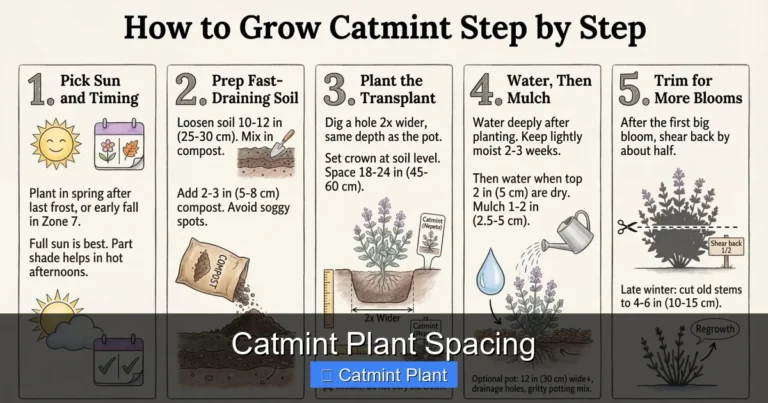
Space plants eighteen to twenty-four inches apart. They fill in quickly. A mature clump reaches about thirty inches wide, so give it room to spread without crowding neighbors. If you are planting a drift or mass, space them on the closer end for faster coverage.
Planting and Establishment
When to Plant
Spring and early fall are the best planting times. Spring planting gives the roots all season to establish before winter. Fall planting works well in zones five and warmer, provided you plant at least six weeks before the ground freezes.
Avoid planting during the heat of summer unless you can water consistently. The stress of transplanting plus heat can set the plant back significantly.
Step-by-Step Planting Guide
Start by digging a hole twice as wide as the root ball and just as deep. Loosen the soil at the bottom and sides. If your soil is heavy, mix in some coarse sand or fine gravel at the bottom for extra drainage.
Remove the plant from its pot and gently tease out any circling roots. Place it in the hole so the crown sits at soil level. Backfill with native soil, firming gently to eliminate air pockets. Water thoroughly to settle the soil.
Apply a thin layer of mulch around the base, keeping it away from the crown. Gravel mulch works beautifully and matches the plant’s preference for sharp drainage. Bark mulch is fine too, just do not pile it against the stems.
First Season Care
Water regularly during the first growing season to establish a deep root system. Once established, the catmint plant Walker’s Low is remarkably drought tolerant. I water new plants weekly unless we get a good soaking rain. By year two, they are on their own except during extreme drought.
Do not fertilize at planting time. The plant does not need it and too much nitrogen causes weak growth. If your soil is very poor, a light application of compost in early spring is plenty.
Ongoing Care and Maintenance
Watering Established Plants
After the first year, water only during prolonged dry spells. The deep taproot accesses moisture far below the surface. Overwatering is far more dangerous than underwatering. Soggy soil leads to root rot and fungal issues.
In my zone six garden, established plants go weeks without water in summer. They may look a bit wilted in late afternoon but perk up by morning. That is normal and not a sign they need water.
Deadheading for Repeat Blooms
This is the single most important maintenance task. After the first heavy bloom finishes in early summer, shear the entire plant back by about half. Use hedge shears or sharp pruners. This removes spent flowers and stimulates fresh growth and a second flush of blooms.
I set a calendar reminder for late June. The plant looks a bit bare for a week, then pushes out new stems and flower buds. You will get a second show in late July through August. In long-season areas, you can shear again after the second flush for a third round.
Spring Cleanup
In early spring, cut back all the old stems to a few inches above the ground. New growth emerges from the base. Do this before the new shoots get tall to avoid damaging them. The old foliage provides some winter protection, so leave it in place until spring.
Dividing Every Few Years
After three to four years, the center of the clump may die out, leaving a ring of growth. This is your cue to divide. Early spring is the best time. Dig up the entire clump and use a sharp spade or knife to cut it into sections, each with roots and shoots.
Replant the divisions at the same depth, water well, and treat them like new plants. You will get several vigorous new plants from one tired clump. Share the extras with friends or fill in gaps in your garden.
Design Ideas and Companion Plants
Color Combinations That Work
The soft lavender-blue flowers of the catmint plant Walker’s Low are incredibly versatile. They bridge warm and cool colors effortlessly. Pair them with yellow flowers like coreopsis, black-eyed Susan, or daylilies for a classic complementary scheme.
For a cool-toned garden, combine with white coneflowers, blue salvias, and silver foliage plants like artemisia or lamb’s ear. The result is serene and sophisticated.
In a cottage garden, let it mingle with roses. The catmint hides the bare canes of rose bushes and its fragrance masks the scent that attracts Japanese beetles. Pink or red roses look stunning above a sea of lavender-blue.
Structural Uses in the Garden
Use this plant as edging along a sunny path. The billowing mounds soften hard lines and release fragrance when brushed. Plant it at the front of a border where its height works perfectly behind lower creepers and in front of taller perennials.
It excels in rock gardens and on slopes where drainage is sharp. The roots help hold soil on banks. I have a planting on a dry slope that has prevented erosion for years while looking beautiful.
Container Growing
Yes, you can grow the catmint plant Walker’s Low in pots. Choose a container at least eighteen inches wide with excellent drainage. Use a gritty potting mix designed for succulents or make your own with half potting soil and half coarse sand or perlite.
Container plants need more frequent watering and a light feeding in spring. They also need winter protection in cold zones. Move pots to an unheated garage or bury them in the ground for winter.
Common Problems and Solutions
Floppy Stems
If your plant flops open in the center, the usual culprits are too much shade, too much water, too much fertilizer, or overcrowding. Fix the cultural issues and shear the plant back hard after the first bloom. It will regrow more compactly.
Staking is an option but looks unnatural. I prefer to plant supporting neighbors like ornamental grasses or sturdy coneflowers around it to hold it up naturally.
Powdery Mildew
In humid climates with poor air circulation, powdery mildew can appear as a white coating on leaves. Space plants properly, avoid overhead watering, and thin stems in spring to improve airflow. If it appears, remove affected leaves and treat with a homemade spray of one tablespoon baking soda per gallon of water with a drop of dish soap.
Root Rot
This is the number one killer. It happens in poorly drained soil or with excessive watering. Prevention is everything. Plant in well-drained soil, water deeply but infrequently, and never let mulch touch the crown. If a plant succumbs, remove it and improve drainage before replanting.
Cat Attraction
Yes, cats love this plant. They may roll on it, chew it, or nap in it. If neighborhood cats flatten your plants, place a few short stakes or a decorative wire cage over the crown until the plant is large enough to withstand the attention. The plant recovers quickly from cat damage.
Propagation Methods
Division
As mentioned, division is the easiest and most reliable method. Do it in early spring every three to four years. You get instant mature plants that bloom the same year.
Stem Cuttings
Take softwood cuttings in late spring or early summer. Cut four to six inch stems just below a node. Remove lower leaves, dip in rooting hormone, and stick in moist sand or perlite. Cover with a plastic bag and keep in bright indirect light. Roots form in three to four weeks.
Seed
Walker’s Low does not come true from seed. Seedlings will vary. If you want more of this exact cultivar, stick with division or cuttings. However, letting some flowers go to seed can produce interesting volunteers. Just know they will not be identical to the parent.
Seasonal Interest Throughout the Year
Spring
Fresh gray-green foliage emerges in early spring, forming a neat mound. By mid to late spring, the first flower spikes appear. This is the heaviest bloom period.
Summer
After the first flush, shear back for a second bloom in mid to late summer. The foliage stays clean and attractive all season. Pollinators are constant visitors.
Fall
In many areas, a third lighter bloom appears in early fall. The foliage may take on a slight purple tinge in cool weather. Stop deadheading in early fall to let the plant prepare for winter.
Winter
The dried stems and seed heads provide structure and catch frost beautifully. Birds may pick at the seeds. Leave the plant standing until spring for winter interest and crown protection.
Buying Tips and What to Look For
Selecting Healthy Plants
At the nursery, look for plants with vigorous green growth, no yellowing leaves, and no signs of pests. Check the root ball by gently sliding the plant partway out of the pot. Roots should be white and firm, not brown and mushy.
Avoid plants that are already flowering heavily in small pots. They may be root-bound or stressed. A younger plant with good foliage will establish faster and outperform a blooming but root-bound one.
Where to Buy
Local independent nurseries often carry the best selections and can give you region-specific advice. Mail-order specialists offer a wider range of sizes. The catmint plant Walker’s Low is widely available because it is so popular.
Size Options
You will find it in quart pots, gallon pots, and sometimes larger. Quart pots are economical and establish quickly. Gallon pots give instant impact. For mass plantings, quarts or plugs make the most sense financially.
Frequently Asked Questions About Growing Success
Why is my plant not flowering?
Too much shade, too much nitrogen, or lack of deadheading are the common reasons. Move it to a sunnier spot, stop fertilizing, and shear after the first bloom attempt.
Can I grow it in clay soil?
Only if you amend heavily with grit and compost, or plant in a raised bed. Pure clay holds too much water. The roots will rot.
Is it invasive?
No. It spreads by clumping, not running roots. It may self-seed lightly but seedlings are easy to remove. It stays where you put it.
Does it really repel mosquitoes?
The essential oils in the foliage have some repellent properties, but planting it will not create a mosquito-free zone. Crush leaves and rub on skin for a mild, short-term effect.
Can I use it in cooking?
Technically yes, the leaves are edible and minty. But culinary catmint is usually Nepeta cataria (catnip) or specific culinary varieties. Walker’s Low is bred for ornament, not flavor.
Conclusion
The catmint plant Walker’s Low has earned its place in countless gardens for good reason. It delivers months of beautiful blooms, feeds pollinators, resists pests, tolerates drought, and asks for very little in return. Whether you plant one as a specimen or drift twenty along a path, this perennial will reward you with reliable performance year after year.
My original plant, the one from my neighbor’s division, is still going strong after eight years. It has been divided three times, filling new beds and making new gardening friends. That is the true measure of a great garden plant. It keeps on giving.
If you have a sunny spot with decent drainage, do yourself a favor and add this workhorse to your garden this season. You will wonder how you ever gardened without it.
Frequently Asked Questions
What is the difference between catmint and catnip?
Catmint (Nepeta x faassenii) is an ornamental perennial grown for flowers and foliage. Catnip (Nepeta cataria) is a weedy herb grown for its effect on cats. Walker’s Low is a catmint variety with minimal cat attraction compared to catnip.
How often should I water established Walker’s Low plants?
Established plants only need water during extended drought periods of three weeks or more. Their deep taproots access subsoil moisture. Overwatering causes more problems than underwatering.
Will Walker’s Low catmint bloom the first year from planting?
Yes, spring-planted specimens usually bloom their first summer. Fall-planted ones will bloom the following spring. Deadheading after the first flush encourages a second bloom cycle.
What fertilizer should I use for catmint Walker’s Low?
Little to none. Rich soil causes floppy stems and fewer flowers. A light top-dressing of compost in early spring is sufficient. Avoid high-nitrogen fertilizers entirely.
How do I prevent my catmint from flopping open in the middle?
Plant in full sun with lean, well-drained soil. Avoid overwatering and fertilizing. Shear back by half after the first bloom. Divide every 3-4 years when the center becomes woody and dies out.
Can I grow Walker’s Low catmint in a container?
Yes, use a pot at least 18 inches wide with excellent drainage and a gritty potting mix. Water more frequently than in-ground plants. Provide winter protection in zones 5 and colder by moving to an unheated garage.