Catmint Plant Spacing
Catmint plant spacing decides how well your herbs breathe, bloom, and stay disease‑free. Follow the easy guidelines below to give each plant the room it needs for a lush, fragrant garden.
When you start a catmint garden the first thing you think about is catmint plant spacing. It sounds simple but it makes a huge difference. Good spacing gives each plant room to grow strong stems and bright flowers. It also helps prevent problems like powdery mildew and root competition.
I have grown catmint for years and I learned the hard way that crowding leads to weak plants. When I gave each plant enough space the garden looked fuller and the scent was stronger. This guide shares everything I know about catmint plant spacing so you can avoid the same mistakes.
We will cover why spacing matters, how far apart to plant each variety, how to measure the distance, common errors, companion planting tips, and how to keep the plants healthy after they are in the ground. By the end you will feel confident planting catmint with the perfect catmint plant spacing every time.
Key Takeaways
- Space for air flow: Proper catmint plant spacing lets air move between leaves, reducing mildew.
- Room for roots: Adequate distance gives roots room to spread and absorb nutrients.
- Variety matters: Different catmint types need slightly different spacing.
- Mark before you dig: Use a string line or garden marker to keep rows straight.
- Companion plants: Pair catmint with plants that share similar spacing needs.
- Adjust as they grow: Thin or transplant if plants become crowded later.
Quick Answers to Common Questions
What is the ideal catmint plant spacing for common catmint?
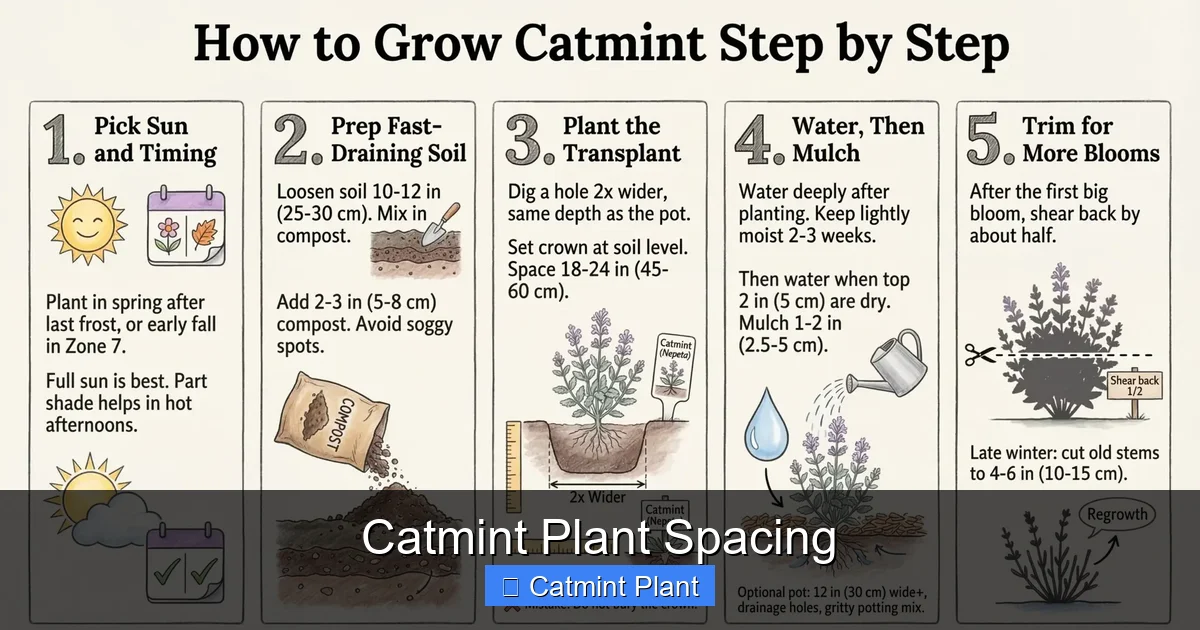
The ideal catmint plant spacing for common catmint (Nepeta × faassenii) is eighteen to twenty‑four inches on center.
Can I plant catmint closer for a quicker fill?
Yes you can plant at fifteen inches but plan to thin or transplant the extra plants later to maintain healthy catmint plant spacing.
How do I measure catmint plant spacing accurately?
Use a tape measure or a string line and mark each planting spot at the recommended distance for your chosen catmint plant spacing.
Does catmint plant spacing affect disease resistance?
Proper catmint plant spacing improves air flow which reduces humidity and helps prevent fungal diseases like powdery mildew.
When should I divide catmint clumps?
Divide catmint every two to three years in early spring and replant at the correct catmint plant spacing to rejuvenate the plants.
📑 Table of Contents
Why Catmint Plant Spacing Matters
Air Flow and Disease Prevention
Good catmint plant spacing creates air channels between the leaves. Air movement dries the foliage quickly after rain or watering. Dry leaves are less likely to develop fungal diseases like powdery mildew. When plants are too close the humidity stays high and disease spreads fast.
I once planted a row of catmint only twelve inches apart. Within a month the lower leaves turned white with mildew. After I increased the catmint plant spacing to eighteen inches the problem disappeared. The lesson is clear: give each plant breathing room.
Root Development and Nutrient Uptake
Roots need space to spread out and search for water and nutrients. When catmint plant spacing is tight the roots compete. The result is stunted growth and fewer flowers. A wider gap lets each root system explore a larger soil volume.
In my garden the plants with twenty‑four inch catmint plant spacing produced twice as many flower spikes as those spaced twelve inches apart. The extra root room made a visible difference in vigor and bloom count.
Overall Plant Shape and Aesthetics
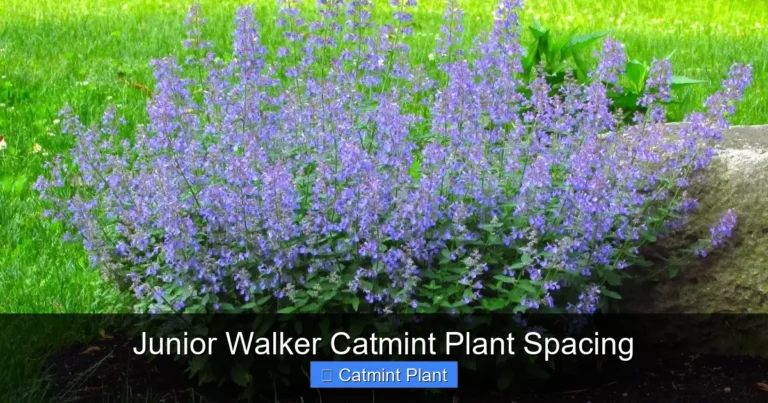
Catmint naturally forms a mounded habit. Proper catmint plant spacing allows each mound to develop its full shape without overlapping neighbors. The garden looks tidy and each plant shows off its silvery foliage and lavender flowers.
When spacing is too close the mounds merge into a messy carpet. The individual beauty of each plant is lost. Spacing them. A well‑spaced bed looks like a series of soft clouds rather than a single dense mat.
Ideal Spacing for Different Catmint Varieties
Common Catmint (Nepeta × faassenii)
The most popular garden catmint is Nepeta × faassenii. It reaches about eighteen to twenty‑four inches tall and wide. The recommended catmint plant spacing for this variety is eighteen to twenty‑four inches on center. This gives each plant enough room to reach its mature width without crowding.
If you want a quicker fill you can plant at fifteen inches but plan to thin later. Thinning is easy: simply dig up the extra plants and move them to another spot.
Giant Catmint (Nepeta ‘Six Hills Giant’)
‘Six Hills Giant’ grows larger, up to thirty inches tall and wide. For this cultivar increase the catmint plant spacing to twenty‑four to thirty inches. The extra space prevents the heavy stems from leaning on each other and reduces shading of lower leaves.
I planted a row of ‘Six Hills Giant’ at twenty‑four inches and they still touched at the tops. Moving them to thirty inches gave a cleaner look and better air flow.
Compact Catmint (Nepeta ‘Walker’s Low’)
‘Walker’s Low’ stays compact, about twelve to eighteen inches tall and wide. You can use a tighter catmint plant spacing of twelve to fifteen inches. Even at this close distance the plants stay neat because they do not spread aggressively.
This variety works well in containers or small beds where space is limited. Just remember to keep the soil well‑drained.
Catmint for Ground Cover
Some gardeners use catmint as a low ground cover. In that case you can plant at ten to twelve inches catmint plant spacing. The plants will knit together quickly forming a fragrant mat. Be prepared to trim the edges to keep the bed tidy.
Ground‑cover spacing works best with the smaller cultivars. Larger types will become leggy if forced to spread that tightly.
How to Measure and Mark Spacing in the Garden
Using a Measuring Tape
The simplest way to set catmint plant spacing is a tape measure. Stretch the tape along the planting line and mark each spot with a small stake or a dab of garden paint. This method is accurate and works for any bed shape.
I like to measure from the center of one planting hole to the center of the next. That ensures the catmint plant spacing stays consistent even if the holes vary slightly in size.
String Line Method
For long straight rows a string line is faster. Tie a string between two stakes at the ends of the row. Slide a marker along the string at the desired catmint plant spacing interval. Drop a seedling at each marker.
This technique keeps rows perfectly straight and saves time on large beds. It also makes it easy to adjust the catmint plant spacing if you change your mind mid‑project.
Grid Layout for Square Beds
In a square or rectangular bed a grid works well. Measure both directions and place a stake at each intersection using the chosen catmint plant spacing. This creates a uniform pattern that looks neat from above.
Grid planting also simplifies later maintenance because you can walk between the rows without stepping on roots.
Using a Planting Board
A planting board is a piece of wood with pre‑drilled holes spaced at the exact catmint plant spacing you need. Lay the board on the soil, press the holes, and plant directly into each hole. This is a great DIY tool for repeated plantings.
You can make one from a scrap board and a drill. It guarantees perfect spacing every time and reduces back strain.
Common Mistakes and How to Avoid Them
Planting Too Close
The most frequent error is planting catmint too close together. Gardeners often underestimate the mature width. The result is a crowded bed with poor air flow and more disease. Always check the label for the recommended catmint plant spacing and add a few inches for safety.
If you have already planted too close you can thin the bed. Remove every other plant and transplant it elsewhere. Do this early in the season before roots intertwine.
Ignoring Variety Differences
Using one spacing for all catmint types leads to problems. Giant varieties need more room than compact ones. Treat each cultivar according to its own catmint plant spacing guideline. Mixing spacings in the same bed is fine as long as each plant gets its required distance.
I once mixed ‘Six Hills Giant’ with ‘Walker’s Low’ at the same twelve‑inch spacing. The giants shaded the dwarfs and the dwarfs got leggy. Separate spacing solved the issue.
Forgetting Future Growth
Catmint spreads by underground runners. Even with correct initial catmint plant spacing the clumps can expand over years. Plan for this by leaving a little extra space or by dividing clumps every two to three years.
Division is easy: dig up the clump in early spring, cut it into sections with a sharp spade, and replant at the proper catmint plant spacing.
Neglecting Soil Preparation
Spacing alone cannot fix poor soil. Catmint prefers well‑drained, moderately fertile soil. Amend heavy clay with compost or grit before you set the catmint plant spacing. Good soil lets roots use the space you give them.
I learned this when a perfectly spaced bed in clay soil still looked weak. After adding compost the same spacing produced vigorous plants.
Companion Planting and Spacing Considerations
Herbs That Share Similar Needs
Catmint pairs well with lavender, rosemary, and thyme. These herbs like the same sun and drainage. When you plant them together keep the catmint plant spacing consistent with the companion’s spacing. This avoids one plant crowding another.
For example lavender needs about twenty‑four inches. Plant catmint at the same distance so both have equal room.
Flowers That Benefit From Catmint
Catmint attracts pollinators that help nearby flowering plants. Good companions include coneflower, salvia, and black‑eyed Susan. Space the catmint so its mounds do not shade the lower leaves of the companions. A catmint plant spacing of eighteen inches works well with most mid‑height perennials.
I plant a ring of catmint around a coneflower cluster. The catmint fills the gaps and the coneflower rises above.
Vegetables That Tolerate Catmint
Some gardeners interplant catmint with tomatoes or peppers to deter pests. Keep the catmint plant spacing wide enough that the herb does not compete for nutrients. A distance of twenty‑four inches from the vegetable stem is a safe rule.
Remember catmint can spread, so monitor the border and trim runners that invade the vegetable row.
Designing a Mixed Border
When designing a mixed border use the tallest plant as the anchor. Place catmint in front of taller perennials. The catmint plant spacing should allow a clear view of the background plants while still forming a soft edge.
Layering heights with proper spacing creates depth and continuous bloom throughout the season.
Maintaining Healthy Growth After Planting
Watering Practices
Newly planted catmint needs consistent moisture until roots establish. Water at the base, not overhead, to keep foliage dry. Once established catmint is drought tolerant. The catmint plant spacing you chose helps water penetrate evenly across the bed.
I water deeply once a week during the first month then cut back to occasional watering.
Mulching for Moisture and Weed Control
Apply a thin layer of organic mulch around each plant. Keep mulch a few inches away from the stem to prevent rot. Mulch conserves moisture and suppresses weeds that would compete for the space you allocated with your catmint plant spacing.
Straw, shredded bark, or leaf mold all work well.
Pruning and Deadheading
Trim back spent flower spikes to encourage a second bloom. Light shearing after the first flush keeps the mound compact and prevents the plant from becoming woody. The catmint plant spacing you set makes it easy to reach each plant for pruning.
I shear my catmint in midsummer and again in early fall for a tidy appearance.
Dividing Overcrowded Clumps
Every two to three years dig up the clump in early spring. Use a sharp spade to cut the root ball into sections. Replant each division at the recommended catmint plant spacing. Division rejuvenates the plant and gives you free new plants.
This routine keeps the bed looking fresh and prevents the center of the clump from dying out.
Fertilizing Lightly
Catmint does not need heavy feeding. A light application of balanced fertilizer in early spring is enough. Too much nitrogen produces lush foliage but fewer flowers. The catmint plant spacing you chose ensures each plant gets its share of nutrients without competition.
I use a slow‑release granular fertilizer at half the label rate.
Conclusion
Getting catmint plant spacing right is the foundation of a beautiful, healthy catmint garden. Proper distance gives each plant air, light, and root room. It reduces disease, improves bloom, and makes maintenance easier. Whether you grow a compact variety for a container or a giant cultivar for a border the same principles apply.
Measure carefully, respect the needs of each variety, and adjust as the plants mature. Use the tips in this guide to mark your rows, choose companions, and keep the bed thriving year after year. With the right catmint plant spacing your garden will reward you with fragrant foliage, abundant lavender flowers, and a steady stream of happy pollinators.
Happy planting and enjoy the sweet scent of success.
Frequently Asked Questions
What happens if I ignore catmint plant spacing guidelines?
Ignoring catmint plant spacing leads to crowded plants, poor air circulation, increased disease, and reduced flowering.
Can catmint be grown in containers with the same spacing rules?
In containers you can use a slightly tighter catmint plant spacing because the root volume is limited, but still allow at least twelve inches between plants.
Is catmint plant spacing different for ground cover use?
Yes for ground cover you can plant catmint at ten to twelve inches catmint plant spacing to create a quick mat.
How does catmint plant spacing affect pollinator visits?
Wider catmint plant spacing lets each plant produce more flowers, which attracts more bees and butterflies to the garden.
Should I adjust catmint plant spacing for different soil types?
Soil type does not change the recommended catmint plant spacing, but good drainage helps the plants use the space effectively.
Can I mix different catmint varieties in one bed?
You can mix varieties if you respect each one’s specific catmint plant spacing, placing larger types farther apart than compact ones.