What Is Catmint Plant
Catmint plant (Nepeta) is a hardy perennial herb that produces lavender-blue flowers and aromatic foliage cats adore. Easy to grow and drought-tolerant, it thrives in sunny gardens and attracts pollinators while repelling pests.
If you have ever watched a cat roll around in pure bliss near a certain garden plant, you have likely witnessed the magic of catmint plant in action. This remarkable perennial has earned its reputation as a feline favorite, but there is so much more to this garden workhorse than its effect on cats. From its long season of lavender-blue blooms to its incredible drought tolerance and pest-repelling properties, catmint deserves a spot in almost any sunny garden.
In this comprehensive guide, we will explore everything you need to know about catmint plant — what it is, how it differs from catnip, the best varieties to grow, planting and care instructions, design ideas, and solutions to common problems. Whether you are a cat owner looking to create a kitty paradise or a gardener seeking a reliable, low-maintenance perennial, you will find all the answers here.
Key Takeaways
- Catmint plant basics: Catmint (Nepeta) is a perennial herb in the mint family with aromatic gray-green leaves and spikes of lavender-blue flowers that bloom from late spring through fall.
- Cat attraction explained: The compound nepetalactone in catmint triggers a euphoric response in about 70-80% of cats, causing rolling, rubbing, and playful behavior that lasts 10-15 minutes.
- Easy growing conditions: Catmint thrives in full sun, well-drained soil, and tolerates drought once established, making it perfect for low-maintenance gardens and xeriscaping.
- Popular varieties exist: Top cultivars include ‘Walker’s Low’ (compact, long-blooming), ‘Six Hills Giant’ (tall, vigorous), ‘Cat’s Pajamas’ (dwarf), and ‘Blue Wonder’ (heat-tolerant).
- Multiple garden uses: Use catmint as border edging, in rock gardens, cottage gardens, pollinator gardens, or as a companion plant to repel aphids, squash bugs, and Japanese beetles.
- Simple maintenance routine: Shear plants back by half after first bloom flush to encourage reblooming, divide every 3-4 years in spring, and avoid overwatering or rich soil.
- Not the same as catnip: While related, catmint (Nepeta x faassenii) is primarily ornamental with lower nepetalactone content, while catnip (Nepeta cataria) is grown specifically for cat stimulation.
Quick Answers to Common Questions
What is catmint plant?
Catmint plant (Nepeta) is a hardy perennial herb with aromatic gray-green foliage and lavender-blue flower spikes that blooms from late spring through fall. It belongs to the mint family but is well-behaved and non-invasive.
Does catmint plant attract cats like catnip?
Yes, catmint contains nepetalactone which attracts about 70-80% of cats, but the concentration is lower than in true catnip (Nepeta cataria), so the response is usually milder.
How do you care for catmint plant?
Plant in full sun with well-drained soil. Water regularly until established, then only during drought. Shear back by half after first bloom to encourage rebloom. Divide every 3-4 years in spring. Avoid fertilizer and overwatering.
What are the best catmint plant varieties?
Top varieties include ‘Walker’s Low’ (classic, long-blooming), ‘Six Hills Giant’ (tall, vigorous), ‘Cat’s Pajamas’ (compact), ‘Blue Wonder’ (heat-tolerant), and ‘Junior Walker’ (dwarf).
Is catmint plant deer resistant?
Yes, catmint is highly deer and rabbit resistant due to its strong aromatic oils. The fragrance that attracts cats repels browsing mammals.
📑 Table of Contents
- What Exactly Is Catmint Plant
- Why Cats Love Catmint Plant
- Best Catmint Plant Varieties for Your Garden
- How to Plant Catmint Plant Successfully
- Ongoing Care for Healthy Catmint Plant
- Designing with Catmint Plant in the Garden
- Catmint Plant as a Companion Plant: Pest Control Benefits
- Common Problems and Solutions
- Propagating Catmint Plant: Make More Plants for Free
- Harvesting and Using Catmint Plant
- Catmint Plant Through the Seasons
- Frequently Asked Questions About Catmint Plant
- Conclusion: Why Every Garden Needs Catmint Plant
What Exactly Is Catmint Plant
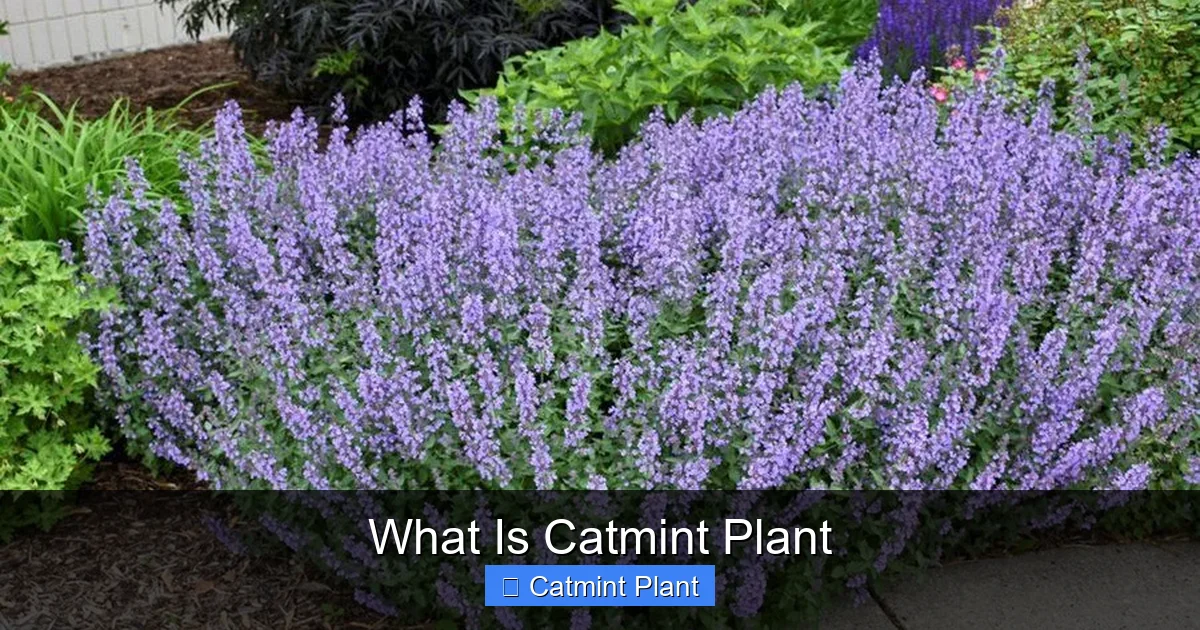
The catmint plant belongs to the genus Nepeta, a group of about 250 species in the mint family (Lamiaceae). Most garden catmints are hybrids, primarily Nepeta x faassenii, a cross between Nepeta racemosa and Nepeta nepetella. These plants form neat mounds of aromatic, gray-green foliage topped with spikes of small, tubular flowers in shades of lavender, blue, violet, and occasionally white or pink.
Unlike its aggressive cousin spearmint or peppermint, catmint plant is well-behaved in the garden. It spreads slowly by underground rhizomes but does not run rampant. The stems are square — a hallmark of the mint family — and the leaves are opposite, toothed, and covered in fine hairs that give them a soft, fuzzy texture. When crushed, the foliage releases a pleasant, minty-spicy fragrance that humans find appealing and many insects find repellent.
Botanical Classification and Origins
The genus name Nepeta is believed to derive from Nepete (modern Nepi), an ancient Etruscan city in Italy where the plant grew abundantly. Species are native to Europe, Asia, and Africa, with a concentration in the Mediterranean region and Central Asia. The most commonly cultivated catmints originate from species found in the Caucasus Mountains, Turkey, and Iran — regions with hot, dry summers and cold winters. This heritage explains the plant’s exceptional toughness and drought tolerance.
Catmint vs Catnip: Understanding the Difference
This is the most common point of confusion. Both plants belong to the genus Nepeta and both contain nepetalactone, the compound that affects cats. However, they are different species with different primary uses:
- Catnip (Nepeta cataria): Also called true catnip or catwort. This is the species grown specifically for cats. It has whiter flowers, greener (less gray) foliage, a more upright habit, and higher nepetalactone content. It can be weedy and self-seeds aggressively.
- Catmint (Nepeta x faassenii and related hybrids): These are bred primarily as ornamental perennials. They have showier, longer-blooming flowers in better colors, more attractive gray-green foliage, a tidier mounding habit, and lower nepetalactone content. They rarely self-seed problematically.
If you want a beautiful garden plant that cats enjoy moderately, choose catmint plant. If you want maximum feline excitement and do not mind a less ornamental, potentially weedy plant, choose catnip. Many gardeners grow both — catmint in the ornamental beds, catnip in a dedicated cat garden or container.
Why Cats Love Catmint Plant
The feline fascination with catmint plant is not a myth — it is biochemistry. The active compound is nepetalactone, a volatile oil found in the leaves, stems, and flowers. When cats smell nepetalactone, it binds to receptors in their nasal tissue, stimulating sensory neurons that project to the brain’s olfactory bulb, amygdala, and hypothalamus — areas involved in emotion and behavioral responses.

Visual guide about What Is Catmint Plant
Image source: southernliving.com
The Typical Cat Response
Not all cats respond to catmint. Sensitivity is hereditary, and an estimated 30-50% of cats lack the gene that makes them reactive. Kittens under 3-6 months old typically do not respond, and senior cats may show reduced interest. For responsive cats, the typical sequence includes:
- Sniffing and intense investigation
- Licking, chewing, or rubbing face and body on the plant
- Rolling, flipping, and rubbing
- Kicking with hind legs (the “bunny kick”)
- Drooling, purring, and vocalizing
- Bursts of playful energy or relaxed zonking out
The episode usually lasts 10-15 minutes, followed by a refractory period of 1-2 hours during which the cat will not respond again. The response is completely harmless and non-addictive. Think of it as a safe, natural recreational herb for cats — like a kitty happy hour.
Why Some Cats Ignore It
If your cat walks right past your catmint plant without a glance, do not take it personally. As mentioned, the response is genetic. Additionally, some cats prefer fresh catnip over catmint because of the higher nepetalactone concentration. Others may respond more to dried catnip toys than to the living plant. And some cats simply have more dignity than to be seen rolling in the garden.
Best Catmint Plant Varieties for Your Garden
Plant breeders have developed numerous catmint plant cultivars with improved habits, longer bloom times, and better colors. Here are the standout varieties that earn their keep in gardens across the country:
Walker’s Low — The Gold Standard
Named after a garden in Ireland (not for its height), ‘Walker’s Low’ is perhaps the most famous catmint cultivar. It reaches 24-30 inches tall and wide, forming a broad mound of aromatic gray-green foliage. Lavender-blue flowers appear in late spring and continue heavily through early summer, with sporadic rebloom into fall if sheared back. It won the Perennial Plant Association’s Plant of the Year award in 2007. Hardy in zones 3-8.
Six Hills Giant — For Maximum Impact
As the name suggests, this is a larger catmint, reaching 30-36 inches tall and wide. It produces abundant deep lavender-blue flowers on long spikes over a very long season. The size makes it suitable for the middle of borders or as a small flowering hedge. It can flop in rich soil or shade, so give it lean conditions and full sun. Hardy in zones 3-8.
Cat’s Pajamas — Compact and Floriferous
A newer Proven Winners introduction, ‘Cat’s Pajamas’ forms a tight, rounded mound just 12-14 inches tall and 18-20 inches wide. Despite its small stature, it is incredibly floriferous, with indigo-blue flowers covering the plant from early summer into fall. The compact habit makes it perfect for containers, rock gardens, and the front of borders. Hardy in zones 3-8.
Blue Wonder — Heat and Humidity Tolerant
Selected for better performance in hot, humid climates where other catmints may struggle with fungal issues, ‘Blue Wonder’ reaches 18-24 inches tall with a similar spread. The flowers are a clear, bright lavender-blue. It maintains a neater habit in southern gardens. Hardy in zones 4-9.
Junior Walker — A Dwarf Version
Think of this as ‘Walker’s Low’ in a smaller package — 15-18 inches tall and wide. It has the same long bloom season and lavender-blue flowers but fits into tighter spaces. Excellent for edging, containers, and small gardens. Hardy in zones 5-9.
White and Pink Varieties
While blue-lavender dominates, there are lovely alternatives. ‘Snowflake’ and ‘White Wonder’ offer pure white flowers on compact plants. ‘Pink Cat’ and ‘Pink Dreams’ provide soft pink blooms. These add variety to a catmint collection and combine beautifully with the blue forms.
Species Catmints Worth Knowing
Beyond the hybrids, a few species catmints deserve attention. Nepeta sibirica (Siberian catmint) has larger, deeper blue flowers and a more upright habit (3-4 feet). Nepeta subsessilis (Japanese catmint) tolerates more moisture and shade than most, with large, glossy leaves and vivid blue flowers. Nepeta grandiflora varieties like ‘Dawn to Dusk’ (pink) and ‘Bramdean’ (blue) offer a looser, more wildflower-like look.
How to Plant Catmint Plant Successfully
Getting your catmint plant off to a good start is straightforward, but a few key principles make the difference between a struggling plant and a thriving one.
Choosing the Right Location
Full sun is non-negotiable for best performance. Catmint plant needs at least 6 hours of direct sun daily, preferably 8+. In hot southern climates, a touch of afternoon shade is acceptable but may reduce flowering. The site must have excellent drainage. Catmint will rot in wet, heavy clay, especially over winter. If your soil is heavy, amend with coarse sand, fine gravel, or expanded shale, or plant in raised beds or berms.
Soil Preparation
Counterintuitively, catmint plant prefers lean, not-too-fertile soil. Rich, heavily amended soil encourages floppy growth and fewer flowers. If your soil is reasonably decent, just loosen it to 12 inches deep and plant. If it is very poor (pure sand or construction fill), mix in a small amount of compost — no more than 10-20% by volume. Avoid manure, heavy fertilizer, or water-retentive amendments like peat moss.
Planting Steps
- Water the plant thoroughly in its pot a few hours before planting.
- Dig a hole twice as wide as the root ball and the same depth.
- Remove the plant from its pot and gently loosen any circling roots.
- Place the plant so the crown (where stems meet roots) sits at soil level — not deeper.
- Backfill with native soil, firming gently to eliminate air pockets.
- Water deeply to settle the soil around roots.
- Apply a thin layer of gravel mulch or shredded bark, keeping it away from the crown.
Spacing Guidelines
Space plants according to their mature width: 18-24 inches for compact varieties like ‘Cat’s Pajamas’, 24-30 inches for ‘Walker’s Low’, and 30-36 inches for ‘Six Hills Giant’. Proper spacing ensures good air circulation, which prevents fungal diseases.
When to Plant
Spring planting (after the last frost) is ideal in most regions, giving roots time to establish before summer heat. Fall planting works well in zones 6 and warmer, at least 6 weeks before the ground freezes. Avoid planting in the heat of midsummer unless you can provide consistent watering during establishment.
Container Planting
Catmint plant performs beautifully in containers. Choose a pot at least 12-14 inches wide with drainage holes. Use a gritty, well-draining potting mix — a cactus/succulent mix works well, or make your own with 2 parts potting soil, 1 part coarse sand or perlite, and 1 part fine gravel. Water when the top inch of soil is dry. Container plants need more frequent watering and occasional fertilizing (half-strength balanced fertilizer once in spring).
Ongoing Care for Healthy Catmint Plant
Once established, catmint plant is one of the lowest-maintenance perennials you can grow. But a few timely interventions keep it looking its best.
Watering: Less Is More
New plants need regular water (about 1 inch per week) for the first 4-6 weeks until roots establish. After that, catmint plant is remarkably drought-tolerant. In most climates, established plants need supplemental water only during prolonged dry spells. Overwatering is the number one killer — it leads to root rot, floppy stems, and reduced flowering. Water deeply but infrequently, allowing soil to dry between waterings.
The Shearing Secret: How to Get Repeat Blooms
This is the single most important maintenance task. After the first heavy flush of flowers fades (usually early to midsummer), shear the entire plant back by one-third to one-half. Use hedge shears or large scissors. This removes spent flower spikes, tidies the foliage, and stimulates a fresh flush of growth and flowers that will carry through fall. Without shearing, the plant looks ragged and blooms sparsely for the rest of the season.
Fertilizing: Skip It
Catmint plant does not need fertilizer. In fact, fertilizer makes it worse — producing weak, floppy stems and fewer flowers. If your soil is extremely poor, a light scattering of compost around the base in early spring is plenty. Never use high-nitrogen fertilizers.
Mulching Wisely
Use inorganic mulch like pea gravel, crushed stone, or poultry grit. These reflect heat, improve drainage at the crown, and look attractive with the gray foliage. Avoid organic mulches like wood chips or shredded leaves right against the crown — they hold moisture and promote rot. If using organic mulch, keep it 2-3 inches away from the plant base.
Dividing: Every 3-4 Years
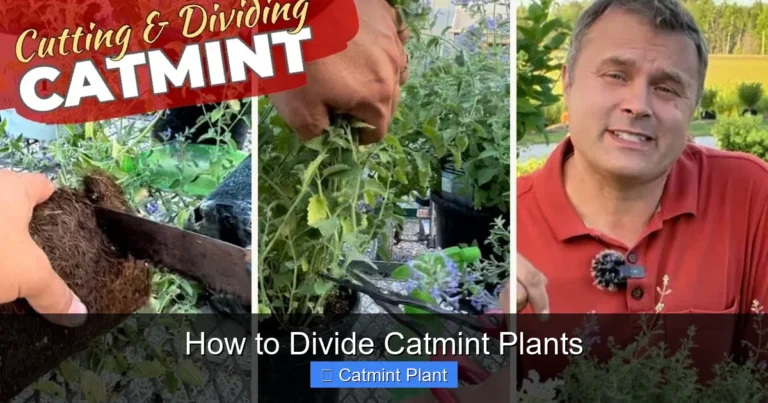
Over time, the center of a catmint plant clump can become woody and die out, forming a “donut” with growth only at the edges. Divide in early spring just as new growth emerges. Dig up the whole clump, cut it into sections with a sharp knife or spade (each section needs roots and shoots), discard the woody center, and replant the vigorous outer pieces. Water well after dividing.
Winter Care
In zones 4-8, catmint plant is fully hardy and needs no special protection. Do not cut back dead foliage in fall — it helps protect the crown over winter. Wait until early spring, then cut all dead stems to the ground before new growth appears. In zone 3, a light covering of evergreen boughs after the ground freezes can help prevent winter heaving.
Designing with Catmint Plant in the Garden
The versatility of catmint plant makes it a designer’s dream. Its soft gray foliage and cool blue flowers play well with almost any color scheme.
Classic Companion Plantings
Some pairings have become classics for good reason:
- Roses: Catmint hides bare rose canes, repels aphids, and its blue flowers complement every rose color from white to deep red.
- Salvia: Both love the same conditions. Pair blue catmint with purple salvia (like ‘May Night’) for a cool-toned drift, or with hot pink/red salvias for contrast.
- Yarrow (Achillea): Flat-topped yarrow flowers in yellow, white, or pink contrast beautifully with catmint’s spikes.
- Coneflowers (Echinacea): The daisy-form coneflowers and spiky catmint create pleasing textural contrast.
- Ornamental grasses: Fine-textured grasses like Stipa tenuissima (Mexican feather grass) or Pennisetum (fountain grass) amplify catmint’s softness.
- Lavender: A Mediterranean duo with similar needs. Catmint blooms longer; lavender provides structure.
- Coreopsis: Bright yellow coreopsis flowers pop against catmint’s blue.
Garden Style Applications
Cottage Gardens
Let catmint plant spill informally over path edges, mingle with self-seeders like foxgloves and poppies, and soften the base of shrub roses. Its long bloom season keeps the cottage garden colorful for months.
Xeric and Rock Gardens
Catmint’s drought tolerance and love of lean soil make it a natural for rock gardens, gravel gardens, and hellstrips (the strip between sidewalk and street). Pair with sedums, ice plants, penstemons, and dwarf conifers.
Pollinator Gardens
Bees, butterflies, and hummingbirds flock to catmint flowers. Plant in drifts of 3-5 or more for maximum pollinator appeal. Combine with other pollinator favorites like bee balm, butterfly weed, and asters for a season-long buffet.
Edging and Borders
Compact varieties like ‘Cat’s Pajamas’ or ‘Junior Walker’ make tidy, flowering edging along paths, driveways, or bed borders. They define edges softly without the rigidity of boxwood or the mess of annuals.
Container Combinations
In pots, catmint plant plays the “filler” role beautifully. Combine with a thriller (upright grass, salvia, or angelonia) and a spiller (trailing verbena, calibrachoa, or sweet potato vine). The gray foliage cools down hot color combos and bridges disparate hues.
Catmint Plant as a Companion Plant: Pest Control Benefits
Beyond its ornamental value, catmint plant earns its keep as a working plant in vegetable and herb gardens. The same essential oils that attract cats repel a surprising range of garden pests.
Pests Repelled by Catmint
- Aphids: The strong scent masks the smell of host plants, confusing aphids. Plant catmint near roses, peppers, eggplant, and brassicas.
- Squash bugs: Interplant with squash, pumpkins, and cucumbers to reduce squash bug populations.
- Japanese beetles: Catmint is rarely damaged by Japanese beetles and may deter them from nearby plants.
- Flea beetles: Protects eggplant, radishes, and arugula from these tiny jumpers.
- Colorado potato beetles: Some gardeners report reduced pressure on potatoes and eggplant.
- Ants: The scent disrupts ant trails; plant near problem areas.
- Mice and voles: Rodents dislike the strong aroma; plant around bulb beds or garden perimeters.
Beneficial Insects Attracted
While repelling pests, catmint plant flowers attract beneficial insects: parasitic wasps, hoverflies, lacewings, and lady beetles. These predators and parasitoids help keep pest populations in check naturally. The long bloom season provides nectar and pollen when many other plants are not flowering.
Companion Planting Strategies
Plant catmint as a border around vegetable beds, in alternating rows with susceptible crops, or in “islands” within larger plantings. For maximum pest-repelling effect, brush or shear plants occasionally to release more volatile oils. Note that catmint’s rhizomatous spread is slow but real — give it a defined bed or barrier if planting among annual vegetables that get tilled yearly.
Common Problems and Solutions
For all its toughness, catmint plant can occasionally run into issues. Here is how to diagnose and fix them.
Floppy, Sprawling Stems
Cause: Too much shade, too rich soil, too much water, too much fertilizer, or the variety is naturally lax (like ‘Six Hills Giant’).
Fix: Move to full sun. Stop fertilizing. Reduce watering. Shear back hard after first bloom. Stake or use a grow-through support ring early in the season. Choose compact varieties for tight spaces.
Yellowing Leaves
Cause: Overwatering/poor drainage (most common), nutrient deficiency in very poor soil, or natural aging of inner leaves.
Fix: Improve drainage. Water less frequently. If soil is truly depleted, apply a light top-dressing of compost. Remove yellowed inner leaves to improve air flow.
Powdery Mildew
Cause: High humidity, poor air circulation, overhead watering, crowded planting.
Fix: Space plants properly. Water at soil level, not on foliage. Thin dense growth. Choose mildew-resistant varieties like ‘Blue Wonder’. Apply horticultural oil or neem oil at first sign. Shear affected growth — new growth will be clean.
Root Rot / Crown Rot
Cause: Wet soil, especially in winter; heavy clay; mulch against crown.
Fix: Prevention is key — plant in well-drained soil, use gravel mulch, avoid winter wet. If caught early, dig plant, trim rotted roots, dust with sulfur, and replant in improved drainage. Often fatal once advanced.
Center Die-Out (The Donut Effect)
Cause: Age — the center becomes woody and unproductive after 3-4 years.
Fix: Divide in early spring. Discard woody center. Replant vigorous outer sections.
Not Blooming Well
Cause: Too much shade, too much nitrogen, plant needs dividing, or improper pruning timing.
Fix: Ensure 6+ hours sun. Stop fertilizing. Divide if old. Shear after first bloom to stimulate second flush. Do not prune in late summer/fall — you may remove flower buds.
Cat Damage
Cause: Enthusiastic cats crushing young plants.
Fix: Protect young plants with a wire cage, chicken wire cloche, or bamboo stakes until established. Mature plants tolerate moderate cat attention. Plant a dedicated catnip patch nearby to divert traffic.
Propagating Catmint Plant: Make More Plants for Free
Once you have a catmint plant you love, it is easy to multiply it. Three methods work well:
Division (Easiest, Most Reliable)
As described in the care section, divide in early spring every 3-4 years. Each division should have several shoots and a good root mass. Replant immediately at the same depth. Water well. Divisions often bloom the same year.
Softwood Cuttings (Fast, High Success)
Take cuttings in late spring to early summer from non-flowering shoots. Cut 4-6 inch tips just below a node. Strip lower leaves. Dip in rooting hormone (optional but helpful). Insert into moist perlite/vermiculite or gritty potting mix. Cover with a plastic bag or dome. Keep in bright indirect light. Roots form in 2-3 weeks. Pot up and grow on before planting out.
Seed (Variable Results)
Most named cultivars are sterile or do not come true from seed. Species catmints (N. sibirica, N. subsessilis) and catnip (N. cataria) grow readily from seed. Sow indoors 6-8 weeks before last frost or direct sow after frost. Barely cover — seeds need light to germinate. Germination in 10-20 days at 65-70°F.
Harvesting and Using Catmint Plant
While primarily ornamental, catmint plant has herbal uses too.
For Cats
Harvest stems just as flowers begin to open — this is when nepetalactone content peaks. Hang small bundles upside down in a dark, airy place to dry (1-2 weeks). Strip dried leaves and flowers, discard stems. Store in airtight containers. Use for refillable cat toys, sprinkle on scratching posts, or make “catnip tea” spray (steep dried herb in hot water, cool, spray on toys).
For Humans: Herbal Tea
Catmint makes a pleasant, mildly sedative tea. Use 1-2 teaspoons dried herb (or 2-3 teaspoons fresh) per cup of boiling water. Steep 5-10 minutes. The flavor is minty with citrus and earthy notes. Traditionally used for relaxation, digestion, and mild colds. Avoid during pregnancy (can stimulate uterine contractions). Consult a healthcare provider before medicinal use.
Culinary Uses
Young leaves can be added to salads, herb butters, or vinegar infusions. The flowers are edible garnishes. Use sparingly — the flavor is strong.
Catmint Plant Through the Seasons
Understanding the annual cycle helps you anticipate care needs:
Early Spring (March-April)
New growth emerges from the base. Cut back all dead stems to ground level. Apply light compost top-dressing if desired. Divide if needed. This is the best planting time.
Late Spring (May-June)
Rapid growth. First flower spikes appear. Enjoy the show! Watch for aphids on new growth (blast with water).
Early Summer (June-July)
Peak bloom. Deadhead spent spikes if you are meticulous, but shearing later is more important. Water during dry spells.
Midsummer (July-August)
First flush fades. Shear back by half now. This is the critical moment. Water after shearing to support regrowth.
Late Summer-Fall (August-October)
Second flush of flowers. Pollinators love it. Stop watering as weather cools. Enjoy the late-season color.
Late Fall (November)
Foliage may stay semi-evergreen in mild zones. Do not cut back. Leave foliage for winter protection.
Winter (December-February)
Dormant in cold zones. Semi-evergreen in warm zones. Plan next year’s additions. Order new varieties.
Frequently Asked Questions About Catmint Plant
Here are answers to the questions gardeners ask most often:
Is catmint plant invasive?
No. Unlike true mints (Mentha), catmint spreads slowly by short rhizomes and does not run aggressively. It may self-seed lightly, but seedlings are easy to remove or transplant. It is not listed as invasive in any U.S. state.
Will catmint plant survive winter in my zone?
Most catmint hybrids are hardy in USDA zones 3-8, some to zone 9. ‘Walker’s Low’, ‘Six Hills Giant’, and ‘Cat’s Pajamas’ are reliable to zone 3 (-40°F). Good drainage is more critical than cold for winter survival.
Can I grow catmint plant indoors?
It is challenging. Catmint needs full sun (6+ hours direct), which most windows cannot provide. It also needs a winter dormancy period. Better to grow it outdoors and bring cuttings inside for cats.
Why is my catmint plant not flowering?
Usually insufficient sun (needs 6+ hours), too much nitrogen fertilizer, the plant needs dividing (old woody center), or it was pruned at the wrong time (late summer pruning removes flower buds).
Can I walk on catmint plant?
Light foot traffic is tolerated once established, but it is not a lawn substitute. Repeated crushing damages stems and crowns. Use stepping stones through catmint plantings.
Is catmint plant deer resistant?
Yes, highly. The aromatic oils that attract cats repel deer and rabbits. In severe drought or overpopulation, desperate deer may nibble, but it is rarely a preferred browse.
How long does catmint plant live?
Individual plants live 4-6 years before the center dies out. Regular division every 3-4 years effectively makes the planting immortal — you are perpetuating the same genetic individual.
Can I grow catmint plant from a cutting my neighbor gave me?
Absolutely. Softwood cuttings in late spring root easily in water or moist perlite. It is a great way to share favorite varieties.
Does catmint plant attract bees?
Yes, enthusiastically. Honeybees, bumblebees, and native solitary bees all love catmint flowers. It is one of the best perennials for pollinator support over a long season.
What is the difference between catmint and Russian sage?
They look similar (gray foliage, blue flowers) but are different genera. Russian sage (Perovskia atriplicifolia) is a woody sub-shrub, taller (3-5 feet), later blooming, and needs even sharper drainage. Catmint is herbaceous, shorter, longer-blooming, and more adaptable.
Conclusion: Why Every Garden Needs Catmint Plant
Few perennials offer as much return for as little investment as catmint plant. It asks for so little — sun, drainage, an annual haircut — and gives so much: months of blue flowers, pollinator support, pest-repelling power, deer resistance, drought tolerance, and yes, feline entertainment. Whether you choose the classic ‘Walker’s Low’, the compact ‘Cat’s Pajamas’, or the statuesque ‘Six Hills Giant’, you are adding a plant that solves problems and creates beauty simultaneously.
If you have been hesitant because of the cat connection, remember: catmint is not catnip. Your garden will not become a neighborhood cat convention. Most cats show polite interest at most. And if you do have cats, you get the bonus of watching them enjoy a safe, natural high — right in your own backyard.
So find a sunny spot, loosen the soil, plant a catmint or three, and wait. The flowers will come. The bees will come. The cats may come. And you will wonder how you ever gardened without it ever gardened without this remarkable plant.
Frequently Asked Questions
What is the difference between catmint and catnip?
Catmint (Nepeta x faassenii) is an ornamental perennial with showy lavender-blue flowers and gray-green foliage, bred for garden performance. Catnip (Nepeta cataria) is a weedy species grown specifically for its high nepetalactone content to stimulate cats. Catmint is tidier and more attractive in gardens.
When should I cut back catmint plant?
Cut back catmint in early spring before new growth emerges, removing all dead stems to ground level. After the first heavy bloom flush in early summer, shear the plant back by one-third to one-half to stimulate a second bloom period.
Can catmint plant grow in shade?
Catmint requires full sun (at least 6 hours of direct sunlight) for best flowering and compact growth. In partial shade, plants become leggy, produce fewer flowers, and are more susceptible to powdery mildew. It is not recommended for shady sites.
How often should I water catmint plant?
Water new plants weekly for the first 4-6 weeks until established. After that, catmint is drought-tolerant and needs supplemental water only during extended dry periods. Overwatering causes root rot and floppy growth — err on the side of dry.
Will catmint plant spread aggressively?
No, catmint spreads slowly by short rhizomes and does not run rampant like true mints. It may self-seed lightly in ideal conditions, but seedlings are easy to remove. It is not considered invasive and stays in a well-behaved clump.
Can I grow catmint plant in containers?
Yes, catmint grows well in containers. Use a pot at least 12-14 inches wide with drainage holes and a gritty, well-draining potting mix. Water when the top inch of soil is dry. Container plants need more frequent watering and occasional half-strength fertilizer in spring.