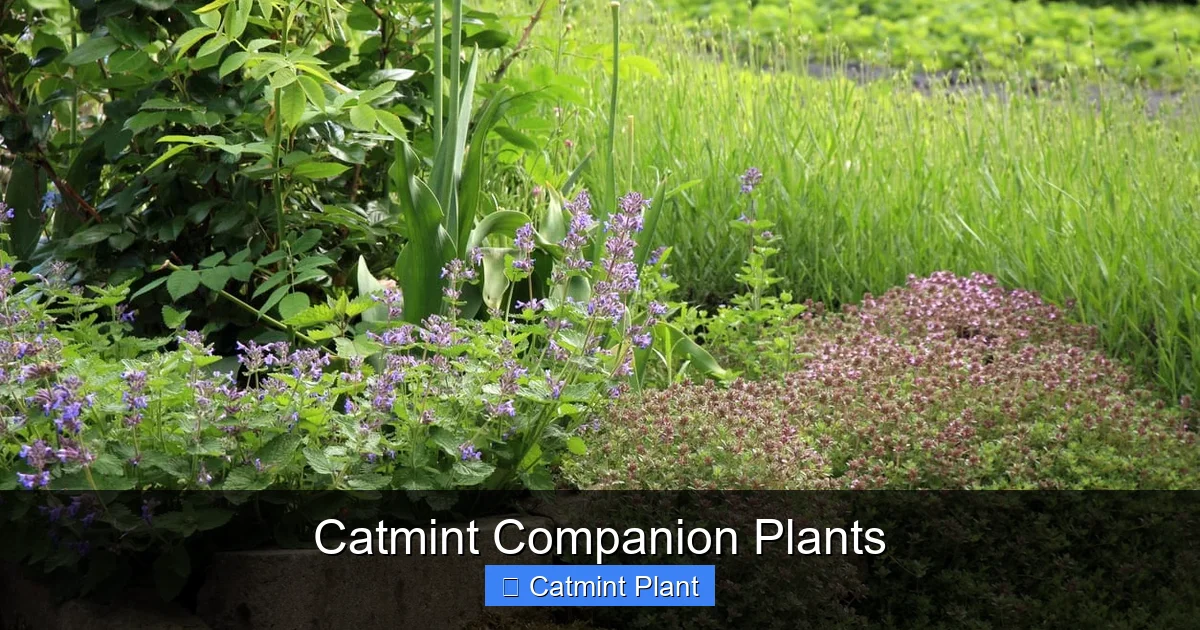
Catmint Companion Plants
Catmint companion plants create stunning garden combinations while naturally repelling pests and attracting beneficial insects. Pair catmint with roses, lavender, salvia, and vegetables like tomatoes for a thriving, low-maintenance garden ecosystem.
If you grow catmint, you already know how tough and beautiful this perennial can be. But did you know that choosing the right catmint companion plants can make your entire garden healthier and more vibrant? Catmint, also known as Nepeta, does more than just look pretty with its lavender-blue flowers and aromatic gray-green foliage. It works hard behind the scenes. This plant repels bad bugs, calls in good bugs, and plays nice with a surprising number of garden neighbors.
I have spent years testing different plant pairings in my own beds. Some combinations sing together. Others fall flat. In this guide, I will share everything I have learned about the best partners for catmint. You will discover which flowers, herbs, and vegetables make the best teammates. You will also learn a few design tricks to make your garden beds look like they were planned by a pro. Let us dig in.
Key Takeaways
- Catmint repels pests naturally: Its strong scent deters aphids, squash bugs, and Japanese beetles from nearby plants.
- Best flowering companions include roses, lavender, and salvia: These share similar growing conditions and bloom times for continuous color.
- Vegetables benefit greatly from catmint: Tomatoes, peppers, and brassicas grow healthier with catmint planted nearby.
- Catmint attracts pollinators: Bees, butterflies, and hummingbirds visit catmint flowers all season long.
- Plant catmint in full sun with well-draining soil: Most companion plants thrive in these same conditions.
- Use catmint as a border or ground cover: Its spreading habit fills gaps and suppresses weeds around companions.
- Avoid planting near delicate seedlings: Catmint’s vigorous growth can overwhelm very young or slow-growing plants.
Quick Answers to Common Questions
What are the best flowering plants to pair with catmint?
Roses, lavender, salvia, coneflower, yarrow, and Russian sage are the best flowering companions for catmint. They share similar growing needs and create beautiful color harmonies.
Can I plant catmint in my vegetable garden?
Yes, catmint is excellent in vegetable gardens. It repels pests from tomatoes, peppers, squash, brassicas, and eggplant while attracting pollinators that improve yields.
Does catmint spread aggressively?
Some varieties spread by self-seeding or layering stems. Nepeta x faassenii cultivars like ‘Walker’s Low’ are sterile and well-behaved. Deadhead spent flowers to control volunteers.
When should I cut back catmint?
Shear catmint back by half after the first flush of blooms fades in late spring. This encourages a second bloom and prevents flopping. Leave dead stems standing over winter for crown protection.
What growing conditions does catmint need?
Catmint requires full sun (6+ hours), well-draining soil, and minimal water once established. It thrives in lean, even rocky soil and does not need fertilizer.
📑 Table of Contents
- Why Catmint Makes Such a Great Garden Partner
- Best Flowering Catmint Companion Plants for Color and Texture
- Best Herb Companions for Catmint
- Best Vegetable Companions for Catmint
- Designing With Catmint Companion Plants
- Catmint Varieties and Their Best Companions
- Seasonal Care for Catmint and Companions
- Common Mistakes to Avoid
- Troubleshooting Catmint Companion Plantings
- Conclusion
Why Catmint Makes Such a Great Garden Partner
Before we look at specific plant pairings, it helps to understand why catmint is such a superstar in the companion planting world. This plant brings a lot to the table. It asks for very little in return.
Natural Pest Repellent Properties
Catmint contains a compound called nepetalactone. This is the same compound that drives cats wild. For insects, however, it acts as a powerful deterrent. Aphids hate it. Flea beetles avoid it. Squash bugs and Japanese beetles steer clear. When you plant catmint near vulnerable crops, you create a protective shield. You reduce the need for sprays. You keep your garden more natural.
Pollinator Magnet
From late spring through early fall, catmint stays in bloom. Bees love it. Butterflies flock to it. Hummingbirds dart between the flower spikes. By planting catmint, you bring these essential pollinators into your garden. They stick around to visit your tomatoes, squash, and fruit trees. Better pollination means better harvests. It is a win-win.
Low Maintenance and Drought Tolerant
Once established, catmint laughs at drought. It thrives in poor soil. It does not need fertilizer. It does not need constant watering. This makes it an ideal partner for other tough, sun-loving plants. You can plant it and mostly forget it. It will keep performing while you focus on fussier parts of the garden.
Long Bloom Season
Many perennials bloom for two or three weeks. Catmint blooms for months. The main flush comes in late spring. If you shear it back after that first bloom, you get a second show in late summer. This long season provides continuous color. It also provides continuous nectar for pollinators. Few plants offer this much bang for your buck.
Best Flowering Catmint Companion Plants for Color and Texture
Flowers are the most obvious partners for catmint. The soft blue-purple spikes of catmint complement almost any color scheme. But some flowering plants stand out as truly exceptional companions. They share the same cultural needs. They bloom at the same time. They create visual harmony.

Visual guide about Catmint Companion Plants
Image source: i0.wp.com
Roses: The Classic Combination
If you grow roses, you need catmint. This is perhaps the most famous pairing in cottage garden design. The airy, informal habit of catmint hides the bare, thorny canes of rose bushes. The blue flowers cool down hot pink or red roses. They make white roses glow. They soften the look of formal rose plantings.
But the benefits go beyond looks. Catmint repels aphids, which are the number one pest of roses. It also attracts ladybugs and lacewings, which eat aphids. Plant a ring of catmint around each rose bush. Space plants about eighteen inches from the rose base. You get beauty and biological pest control in one package.
Lavender: Mediterranean Cousins
Catmint and lavender share the same DNA, almost. Both hail from the Mediterranean region. Both demand full sun. Both need sharp drainage. Both hate wet feet in winter. Both offer aromatic foliage and purple-blue flowers. When you plant them together, you create a cohesive, silver-and-blue tapestry.
Plant lavender slightly behind catmint. Lavender grows taller and woodier. Catmint stays lower and billows forward. This layering creates depth. The combined scent on a warm afternoon is unforgettable. Both plants attract bees in droves. Both deter deer and rabbits. This is a low-water, high-impact combination.
Salvia: Spikes and Spires
Perennial salvias, especially the nemorosa and sylvestris types, are perfect catmint companion plants. They send up dense spikes of deep purple, blue, or pink flowers. Catmint sends up looser, airier spikes. The contrast in flower form is striking. The colors harmonize beautifully.
Both plants bloom heavily in late spring. Both rebloom if deadheaded or sheared. Both thrive in the same lean, sunny conditions. Plant them in drifts of three or five, alternating catmint and salvia. The effect is a river of blue-purple that moves with the breeze.
Echinacea: Coneflowers for Contrast
Purple coneflower brings a completely different flower shape to the party. Its large, daisy-like blooms with prominent cones stand tall above the catmint haze. The colors work together perfectly. Purple coneflower and catmint are a match made in prairie heaven.
Coneflowers bloom a bit later than the first catmint flush. They bridge the gap into mid-summer. Goldfinches love the seed heads in fall. Catmint fills in around the base of coneflowers, hiding their sometimes bare lower stems. This pairing supports wildlife all season long.
Yarrow: Flat-Topped Landing Pads
Yarrow offers flat-topped flower clusters in yellow, white, pink, or red. These provide perfect landing pads for butterflies and beneficial insects. The ferny foliage of yarrow contrasts nicely with the small, heart-shaped leaves of catmint. Both plants are tough as nails.
Yellow yarrow varieties like ‘Moonshine’ create a stunning complementary color scheme with blue catmint. White yarrow cools things down. Pink or red yarrow adds warmth. Yarrow spreads slowly by rhizomes. Catmint spreads by self-seeding and layering. Together, they form a dense, weed-suppressing mat.
Russian Sage: The Tall Backdrop
Russian sage (Perovskia) is essentially a giant, airy version of catmint. It grows three to four feet tall. Its silvery stems and lavender-blue flowers appear in mid to late summer. Plant catmint in front of Russian sage. The catmint hides the woody base of the Russian sage. The Russian sage provides a see-through screen behind the catmint.
This combination creates incredible movement in the wind. Both plants have aromatic foliage that deer avoid. Both thrive in heat and drought. This is a pairing for the hottest, driest spot in your yard.
Best Herb Companions for Catmint
Herbs and catmint are natural allies. Most culinary herbs come from the same Mediterranean climate. They speak the same language: sun, drainage, lean soil. Planting herbs with catmint creates a useful, beautiful, and fragrant garden zone.
Rosemary: Woody Structure
Rosemary grows into a woody shrub in warm climates. In cooler zones, it stays smaller or grows as an annual. Its stiff, upright form contrasts with the billowy softness of catmint. The needle-like foliage of rosemary adds texture. The pale blue flowers echo catmint blooms.
Both plants hate wet soil. Both repel pests with their strong oils. Plant rosemary behind or to the side of catmint. Give rosemary a bit more space. It does not like to be crowded. In zone 6 and colder, grow rosemary in a pot sunk into the ground near catmint. Lift the pot in winter.
Thyme: Living Mulch
Creeping thyme and catmint make a fantastic ground cover duo. Thyme hugs the ground. Catmint mounds above it. Thyme fills every tiny gap. Catmint covers larger areas. Together, they leave no room for weeds. Both bloom in shades of pink and purple. Both attract bees.
Plant thyme at the front of a bed. Let catmint rise behind it. Or interplant them in a rock garden. Thyme handles foot traffic. Catmint does not. Keep that in mind when placing them near paths.
Oregano and Marjoram: Spreading Carpets
Oregano and sweet marjoram spread by underground stems. They form loose mats of aromatic foliage. Their tiny pink or white flowers appear in mid-summer. Catmint fills the vertical space above. The combination smells like an Italian kitchen on a summer breeze.
These herbs can be aggressive. Catmint can be aggressive. Plant them together in a contained bed. Or let them duke it out in a wild area. They will reach a balance. You get endless herbs for cooking. You get flowers for bouquets. You get pollinator habitat.
Sage: Textural Contrast
Common garden sage has broad, pebbly, gray-green leaves. Catmint has small, smooth, gray-green leaves. The texture contrast is lovely. Sage sends up spikes of blue-purple flowers in late spring. Catmint blooms at the same time. They look like they were made for each other.
Sage is a sub-shrub. It gets woody at the base. Catmint stays herbaceous. Cut sage back hard in spring. Shear catmint after its first bloom. Both stay tidy and productive. Plant them in alternating groups for a tapestry effect.
Chives: Onion-Scented Protection
Chives bring a different scent profile. Their oniony aroma confuses pests. Their round purple pom-pom flowers bloom in late spring. They rise above catmint foliage on hollow stems. The vertical lines of chives punctuate the horizontal mounds of catmint.
Chives repel aphids and Japanese beetles. Catmint repels aphids and flea beetles. Together, they cover more pest bases. Chives self-seed modestly. Catmint self-seeds enthusiastically. Deadhead both if you want to control spread. Or let them naturalize in a cottage garden.
Best Vegetable Companions for Catmint
This is where catmint really earns its keep. Planting catmint in or near your vegetable garden can significantly reduce pest pressure. It brings in predators. It masks the scent of crops. It improves biodiversity. Here are the top vegetable pairings.
Tomatoes: The Ultimate Pairing
Tomatoes and catmint are best friends. Catmint repels aphids, whiteflies, and tomato hornworms. It attracts parasitic wasps that lay eggs in hornworms. It attracts hoverflies whose larvae eat aphids. The blue flowers look stunning against green tomato vines and red fruit.
Plant catmint at the corners of your tomato bed. Or plant it in pots placed among tomato cages. Do not plant catmint right at the base of indeterminate tomatoes. The tomato will shade it out. Give catmint its own sunny slice of real estate at the edge.
Peppers: Heat Lovers United
Peppers need the same hot, sunny conditions as catmint. They suffer from aphids, flea beetles, and spider mites. Catmint helps with all three. The pollinators catmint brings ensure good fruit set on peppers. Peppers can be slow to get going in spring. Catmint fills the visual gap while peppers size up.
Plant a catmint border along the south side of a pepper row. The catmint will not shade the peppers. It will provide a living mulch that keeps soil cooler and moister. Mulch the catmint with straw to enhance this effect.
Squash and Cucumbers: Vine Protection
Squash bugs and cucumber beetles are the bane of vine crops. Catmint repels both. Plant catmint at the corners of squash hills. Plant it along the trellis line for cucumbers. The vines will eventually ramble past the catmint. The catmint holds its ground.
One caution: squash and cucumber vines are aggressive. They can smother catmint if you are not careful. Plant catmint on the outside of the bed, not in the middle of the vine zone. Train vines away from catmint clumps.
Brassicas: Cabbage Family Defense
Broccoli, cabbage, kale, cauliflower, and Brussels sprouts all suffer from cabbage worms, flea beetles, and aphids. Catmint deters these pests. The strong scent masks the smell of brassicas, making them harder for pests to find.
Plant catmint as a border around your brassica block. Or interplant catmint every few feet within the row. Brassicas are cool-season crops. Catmint is a warm-season perennial. In spring, the catmint is just waking up as brassicas peak. In fall, catmint reblooms as brassicas mature for harvest. The timing works surprisingly well.
Eggplant: Flea Beetle Shield
Eggplant is a flea beetle magnet. Those tiny shot holes in the leaves can stunt young plants. Catmint is one of the best flea beetle repellents. Plant a dense row of catmint around your eggplant patch. The difference in flea beetle damage can be dramatic.
Eggplant also benefits from the pollinators catmint attracts. Better pollination means more and larger fruit. Eggplant and catmint both love heat. They thrive together in the dog days of summer.
Carrots and Root Vegetables: Underground Allies
Carrot flies and root maggots ruin carrot crops. Catmint helps deter carrot flies. Onions and chives also help. A trio of catmint, chives, and carrots creates a powerful protective guild. The catmint foliage shades the soil, keeping it cooler for germinating carrot seeds.
Beets, parsnips, and radishes also benefit. Catmint does not compete heavily for root space. Its roots are relatively shallow and fibrous. Root crops tap deeper. They occupy different soil zones. This is efficient use of space.
Designing With Catmint Companion Plants
Knowing which plants work together is half the battle. Arranging them artfully is the other half. Catmint has a specific growth habit. It mounds. It spreads. It billows. Understanding this habit helps you place it for maximum effect.
Using Catmint as Edging and Borders
Catmint makes one of the best edging plants available. It stays low enough not to block views. It stays dense enough to define a line. It blooms long enough to provide months of color. Plant it along the front of a sunny border. Space plants eighteen to twenty-four inches apart. They will knit together into a continuous ribbon of blue.
Edge a rose bed with catmint. Edge a vegetable bed with catmint. Edge a path with catmint. The scent releases when you brush past. The flowers spill over the edge, softening hard lines. Shear the front row after the first bloom to keep it tidy. Let the back row grow looser for a natural look.
Creating Drifts and Rivers of Color
In larger gardens, plant catmint in drifts of five, seven, or nine plants. Repeat these drifts throughout the bed. This creates rhythm. The eye moves from one drift to the next. Intersperse drifts of companion plants: a drift of salvia, a drift of coneflower, a drift of yarrow.
This technique mimics natural plant communities. It looks effortless. It requires less maintenance than fussy, alternating patterns. The plants self-sort over time. The strongest survive. The design evolves. You edit rather than control.
Layering for Height and Depth
Think in layers. Tall plants at the back (or center of island beds). Medium plants in the middle. Short plants at the front. Catmint fits in the short-to-medium layer. It grows twelve to twenty-four inches tall depending on variety.
Behind catmint, place Russian sage, tall salvias, coneflowers, or ornamental grasses. In front of catmint, place creeping thyme, sedums, or low-growing annuals. This layering creates a full, lush look. No bare soil shows. Weeds have no foothold.
Container Combinations
Catmint grows well in pots. Choose a compact variety like ‘Junior Walker’ or ‘Kit Cat’. Pair it with other sun-loving, drought-tolerant plants. A large pot with catmint, trailing rosemary, and yellow calibrachoa looks stunning. The catmint fills the center. The rosemary drapes over the sides. The calibrachoa adds bright contrast.
Use a gritty, well-draining potting mix. Add perlite or pumice. Water when the top inch is dry. Fertilize lightly once a month. Overwinter pots in an unheated garage in cold climates. Catmint in pots needs winter protection for its roots.
Rock Garden and Gravel Garden Plantings
Catmint thrives in lean, rocky soil. It is a star in gravel gardens and rock gardens. Pair it with other alpine and Mediterranean plants. Dianthus, creeping phlox, sedums, sempervivums, and small ornamental grasses all work.
The gray foliage of catmint echoes the gray of stones. The blue flowers pop against gravel mulch. Plant catmint in pockets between rocks. Let it spill over edges. It softens the hard geometry of stone. It brings life to inhospitable spots.
Catmint Varieties and Their Best Companions
Not all catmints are created equal. Different species and cultivars have different sizes, bloom times, and habits. Choosing the right variety for your companions makes a difference.
Nepeta x faassenii: The Garden Standard
This hybrid group includes the most popular cultivars. ‘Walker’s Low’ is the classic. It grows twenty-four to thirty inches tall and wide. It blooms heavily in late spring, reblooms if sheared. ‘Junior Walker’ is a dwarf version, eighteen inches tall. ‘Blue Wonder’ is compact, twelve to fifteen inches. ‘Kit Cat’ is tiny, eight to ten inches.
All faassenii types are sterile. They do not self-seed. They spread slowly by layering stems. They are well-behaved. They pair beautifully with roses, salvias, and peonies. The larger ones work in the middle of borders. The smaller ones work at the front or in pots.
Nepeta racemosa: The Early Bloomer
This species blooms earlier than faassenii types. It starts in mid-spring. It tends to be lower and more spreading. ‘Little Titch’ is a standout cultivar, only eight to ten inches tall. It forms a tight mound. It is perfect for rock gardens and troughs.
Pair racemosa types with early bulbs like alliums and late tulips. The catmint foliage hides the dying bulb foliage. The catmint flowers take over as bulbs fade. This extends the season of interest in spring beds.
Nepeta sibirica: The Tall, Late Bloomer
Siberian catmint grows thirty to forty-eight inches tall. It blooms in mid to late summer. It spreads aggressively by rhizomes. It can be a thug in rich soil. In lean, dry soil, it behaves better. ‘Souvenir d’Andr Chaudron’ is a popular cultivar with large, deep blue flowers.
Use this one in wild areas, meadow plantings, or large borders where it has room to run. Pair it with tall, tough companions: Joe Pye weed, ironweed, tall grasses, rudbeckia. Do not plant it near delicate perennials. It will eat them for lunch.
Nepeta subsessilis: The Moisture Tolerant One
This Japanese species tolerates more moisture than other catmints. It grows twenty-four to thirty-six inches tall. It has larger, glossier leaves. The flowers are a softer blue. It blooms in mid-summer.
Use this catmint in slightly damp spots where others fail. Pair it with Japanese iris, astilbe, and ligularia. It bridges the gap between dry gardens and moist gardens. It is less drought tolerant but more adaptable.
Nepeta grandiflora: The Big Flowered Beauty
‘Dawn to Dusk’ and ‘Bramdean’ are cultivars of this species. They have larger individual flowers on longer spikes. They grow twenty-four to thirty inches tall. They bloom early summer. They have a more upright habit than the billowy faassenii types.
These work well in more formal designs. Their vertical spikes add architecture. Pair them with spiky companions: liatris, veronicastrum, perovskia. The repetition of vertical forms creates a strong design statement.
Seasonal Care for Catmint and Companions
A great plant combination looks good all year. This requires a little seasonal attention. The good news: catmint and its best companions are low-maintenance. A few well-timed tasks keep the show going.
Spring: Cleanup and Division
In early spring, cut back all dead stems to the ground. Do this before new growth emerges. Remove winter mulch from crowns. Check for heaving. Press plants back down if frost pushed them up.
Spring is the time to divide overgrown clumps. Dig up the whole plant. Cut into sections with a sharp knife or spade. Each section needs roots and shoots. Replant immediately. Water well. Divide every three to four years to maintain vigor. Share divisions with friends.
Late Spring: First Bloom and Shearing
The first big bloom hits in late spring. Enjoy it. When flowers fade, shear the whole plant back by half. Use hedge shears or a string trimmer. This looks brutal. It works. The plant rebounds with fresh foliage and a second bloom in six weeks.
Shearing prevents flopping. It prevents excessive self-seeding in fertile varieties. It keeps the plant compact. Do not shear subsessilis or sibirica types as hard. They resent it. Shear faassenii and racemosa types confidently.
Summer: Water and Deadhead
Established catmint needs little water. In extreme drought, water deeply once every two weeks. New plantings need weekly water for the first season. Mulch with gravel or pine fines. Avoid heavy organic mulches that hold moisture against crowns.
Deadhead spent flowers on companions like salvia, coneflower, and yarrow. This encourages rebloom. Leave some coneflower and yarrow seed heads for birds. Remove catmint seedlings if they appear where you do not want them.
Fall: Leave It Standing
Do not cut back catmint in fall. The dead stems protect the crown over winter. They catch snow for insulation. They provide shelter for beneficial insects. They add winter structure to the garden. The frost on seed heads is beautiful.
Apply a light layer of compost around plants in late fall. Do not cover crowns. This feeds the soil for next year. Mark locations of late-emerging companions like butterfly weed so you do not disturb them in spring.
Winter: Plan and Dream
Winter is for planning. Take photos of your combinations. Note what worked. Note what failed. Order new plants for spring. Dream about next year’s garden. Catmint and its companions will be there waiting when the snow melts.
Common Mistakes to Avoid
Even experienced gardeners make mistakes with catmint. Here are the pitfalls I see most often. Avoid them and your plantings will thrive.
Planting in Shade
Catmint needs full sun. Six hours minimum. Eight hours is better. In shade, it gets leggy. It flops. It blooms poorly. It gets powdery mildew. Its companions suffer too. Most catmint companions are sun lovers. Give them the light they crave.
Overwatering and Overfertilizing
This is the number one killer of catmint. Rich soil and frequent water produce weak, floppy growth. The stems cannot support the flowers. The plant splits open in the center. It becomes a magnet for fungal diseases. Lean soil. Infrequent deep watering. No fertilizer. Tough love produces tough plants.
Crowding Plants
Catmint spreads. So do many companions. Give them room. Check mature widths on labels. Space accordingly. Crowded plants compete for light and air. Disease follows. Thin seedlings ruthlessly. Divide clumps before they smudge neighbors.
Choosing the Wrong Variety
A four-foot Siberian catmint will swallow a one-foot ‘Kit Cat’. A moisture-loving subsessilis will rot in a gravel garden. Match the variety to the site. Match the variety to the companions. Read labels. Do research. Ask nursery staff.
Ignoring Self-Seeding
Some catmints self-seed heavily. Nepeta racemosa and Nepeta cataria (true catnip) are notorious. Deadhead faithfully if you do not want volunteers. Or embrace the chaos. Volunteer seedlings are easy to pull or transplant. They make great gifts.
Troubleshooting Catmint Companion Plantings
Even with the best planning, issues arise. Here is how to diagnose and fix common problems.
Catmint Flopping Open in the Center
This is usually too much water, too much fertilizer, or not enough sun. It can also mean the plant needs division. Solution: stop fertilizing. Water less. Shear back hard after first bloom. Divide in spring if the clump is old and woody.
Powdery Mildew on Foliage
This happens in humid climates or with poor air circulation. Space plants wider. Water at the base, not overhead. Choose resistant varieties like ‘Walker’s Low’. Remove badly affected stems. Spray with neem oil or potassium bicarbonate if severe.
Companions Getting Smothered
Catmint can be a bully. It layers stems that root where they touch soil. It self-seeds. Aggressive companions like yarrow or oregano can also bully. Edit ruthlessly. Dig out encroaching roots. Install root barriers for runners. Thin seedlings weekly in spring.
Poor Bloom on Catmint or Companions
Not enough sun is the usual culprit. Too much nitrogen fertilizer is another. Overcrowding is a third. Solution: move to sunnier spot. Stop fertilizing. Divide and space properly. Some perennials take a year to establish before blooming well. Be patient.
Winter Kill
Wet winter soil kills catmint. It rots the crown. Plant in well-drained soil. Amend heavy clay with grit. Plant on a slight mound. Mulch with gravel, not leaves. Choose hardy varieties for your zone. Most faassenii types are hardy to zone 4. Sibirica to zone 3.
Conclusion
Choosing the right catmint companion plants transforms your garden from a collection of plants into a community. The partnerships you create above ground mirror the partnerships below ground. Roots mingle. Fungi connect. Insects communicate. Birds nest. The garden becomes a living system, not a static display.
Start small. Plant a catmint next to a rose. Plant a drift along your vegetable bed. Watch what happens. Notice the bees. Notice the lack of aphids. Notice how the blue flowers tie everything together. Then expand. Try new combinations. Share divisions with neighbors. The beauty of catmint is that it gives you plenty to share.
Remember the basics: full sun, sharp drainage, lean soil, annual shearing. Follow these and your catmint will thrive. Pair it with plants that want the same things. Roses. Lavender. Salvia. Tomatoes. Peppers. Thyme. The list is long and rewarding.
Your garden is yours. There are no rigid rules. Only guidelines and observations. Use this article as a starting point. Experiment. Observe. Enjoy. The best garden is the one that brings you joy. Catmint and its companions bring me joy every single season. I hope they do the same for you.
Frequently Asked Questions
Will catmint attract cats to my garden?
Yes, catmint contains nepetalactone which attracts many cats. They may roll on the plants or chew the foliage. Most established plants recover quickly from cat damage. If neighborhood cats are a problem, use wire cages or plant catnip (Nepeta cataria) in a separate area as a decoy.
Can catmint grow in partial shade?
Catmint tolerates light afternoon shade in hot climates but performs best in full sun. In too much shade, plants become leggy, flower poorly, and are more susceptible to powdery mildew. For shadier spots, consider Nepeta subsessilis which handles more shade than other species.
Is catmint the same as catnip?
No. Catnip (Nepeta cataria) is a different species with white flowers and a more upright, weedy habit. Catmint usually refers to ornamental hybrids like Nepeta x faassenii with blue-purple flowers and a mounding habit. Both contain nepetalactone but catnip is much more potent for cats.
How do I propagate catmint?
Catmint propagates easily by division in spring, by stem cuttings in early summer, or by layering. Dig and divide clumps every 3-4 years. Take 4-inch cuttings, strip lower leaves, and root in moist sand or perlite. Stems that touch soil often root naturally.
What should I not plant near catmint?
Avoid planting catmint near moisture-loving plants like hostas, ferns, or astilbes (except N. subsessilis). Do not plant it where it will shade out low, slow-growing alpines. Avoid rich, heavily fertilized beds where catmint will flop. Keep it away from delicate seedlings that vigorous catmint might smother.
Why is my catmint not blooming?
Lack of blooms usually means insufficient sun (needs 6+ hours), too much nitrogen fertilizer, overcrowding, or the plant needs division. Young plants may not bloom heavily their first year. Shearing after the first bloom encourages a second flush. Some varieties bloom later than others.


