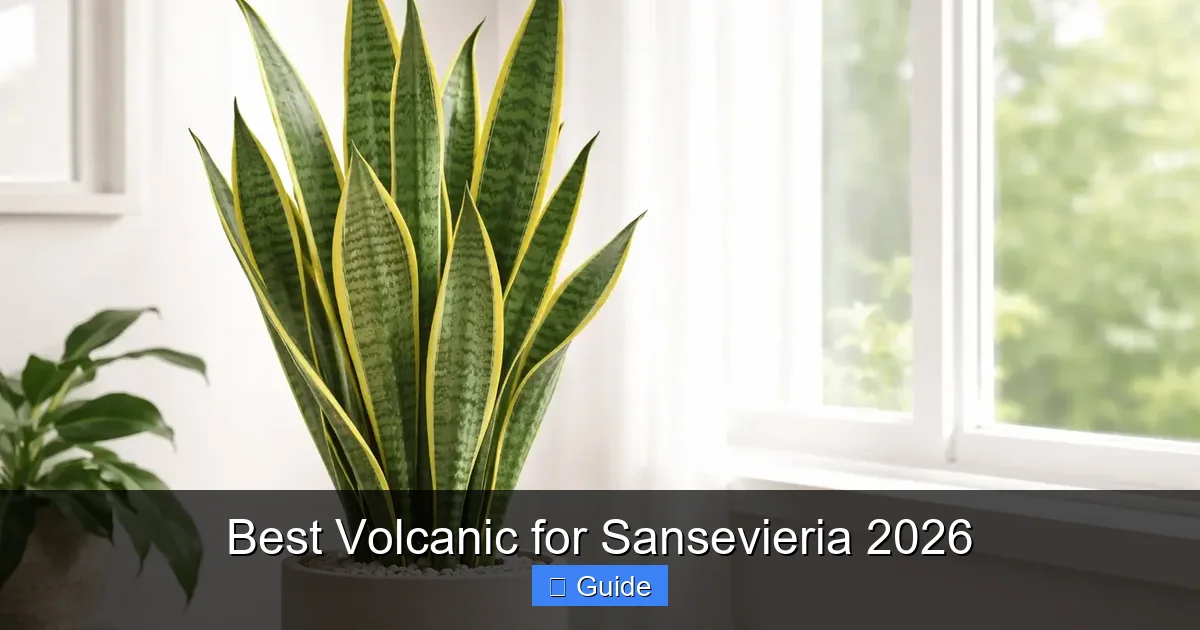
Best Volcanic for Sansevieria 2026
Choosing the best volcanic for Sansevieria 2026 means picking a porous, well-draining medium that mimics arid habitats. Volcanic materials like pumice, lava rock, and scoria prevent root rot and boost oxygen flow. This guide covers top products, DIY blends, and care tips for healthy snake plants.
Key Takeaways
- Drainage is king: Volcanic substrates excel at moving water away from roots, reducing rot risk.
- Pumice leads the pack: Lightweight, porous, and pH-neutral, it’s ideal for Sansevieria.
- Lava rock adds stability: Heavier particles anchor tall leaves and improve aeration.
- Scoria offers a budget option: Similar to lava rock but often cheaper and widely available.
- Mix ratios matter: Aim for 50-70% volcanic material blended with organic matter.
- Repot every 2-3 years: Refresh the medium to maintain structure and nutrient availability.
- Watch for salt buildup: Flush volcanic mixes occasionally to prevent mineral accumulation.
Quick Answers to Common Questions
What is the single best volcanic material for Sansevieria?
Horticultural pumice is widely considered the best all-around choice due to its ideal balance of aeration, moisture retention, and neutral pH.
Can I use straight lava rock without any organic matter?
You can, but plants will need more frequent fertilizing. Adding 20-30% coconut coir or bark improves water holding and microbial activity.
How often should I water Sansevieria in a volcanic mix?
Water when the mix is dry halfway down the pot. Typically every 7-10 days in summer, 3-4 weeks in winter. Always check with a skewer.
Is perlite a good substitute for pumice?
Perlite works short-term but crushes and floats over time. Pumice maintains structure for years and is a better long-term investment.
Do I need to sterilize volcanic rocks before use?
Commercial horticultural grades are usually clean. Landscape grades should be rinsed thoroughly. Solarizing reused mix kills pathogens.
📑 Table of Contents
- Introduction
- Why Volcanic Substrates Matter for Sansevieria
- Top Volcanic Materials for Snake Plants
- How to Choose the Right Volcanic Mix
- DIY Volcanic Soil Recipes for Sansevieria
- Caring for Sansevieria in Volcanic Media
- Common Mistakes to Avoid
- Best Volcanic Products for Sansevieria in 2026
- Sustainability and Sourcing Considerations
- Troubleshooting Common Issues
- Conclusion
Introduction
Hey there plant friend. If you are growing Sansevieria, you already know these tough plants hate wet feet. The secret to success? A gritty, fast-draining mix that lets roots breathe. That is where volcanic substrates shine. In this guide, we will walk through everything you need to know about the best volcanic for Sansevieria 2026. We will cover the top materials, how to blend them, and simple care routines to keep your snake plants thriving year after year.
Volcanic rocks are not just trendy. They are a practical choice for succulents and semi-succulents like Sansevieria. Their porous structure holds air pockets while shedding excess water. That means less root rot, stronger growth, and happier plants. Whether you are a beginner or a seasoned collector, you will find actionable advice here. Let’s dig in.
Why Volcanic Substrates Matter for Sansevieria
Natural Habitat Clues
Sansevieria species originate from arid regions of Africa and Asia. They grow in rocky, well-drained soils. Their rhizomes store water, so they are adapted to dry spells. In pots, regular potting soil stays wet too long. That leads to mushy roots and fungal issues. Volcanic materials replicate the sharp drainage of their native ground.
Porosity and Aeration
Volcanic rocks like pumice and lava rock are full of tiny vesicles. These pores trap air. Roots need oxygen for respiration. When soil is waterlogged, oxygen disappears. Volcanic substrates keep air channels open even after watering. That promotes vigorous root systems and faster growth.
pH Stability
Most volcanic rocks are pH neutral. They do not break down quickly or alter soil chemistry. That means you can fertilize without worrying about sudden pH swings. Consistent pH helps Sansevieria absorb nutrients efficiently.
Longevity and Reusability
Organic components like peat or bark decompose over time. They compact and lose drainage. Volcanic rocks stay structurally sound for years. You can rinse and reuse them when repotting. That saves money and reduces waste.
Top Volcanic Materials for Snake Plants
Pumice
Pumice is a lightweight, frothy volcanic glass. It forms when super-heated, pressurized rock erupts and cools rapidly. The result is a sponge-like stone riddled with pores. For Sansevieria, pumice is often the gold standard. It holds some moisture inside its pores but drains freely between particles. It is also sterile and weed-free.
Look for horticultural grade pumice, typically 1/4 to 3/8 inch size. Avoid construction pumice which may contain fines that clog drainage. Brands like Bonsai Jack and General Pumice Products offer reliable options. In 2026, expect more sustainably sourced pumice from domestic quarries.
Lava Rock
Lava rock, also called scoria or cinder, is denser than pumice. It has larger vesicles and a rough texture. It comes in red, black, or brown colors. The weight helps stabilize top-heavy Sansevieria varieties like ‘Laurentii’ or ‘Zeylanica’. Lava rock drains extremely fast and adds excellent aeration.
Choose washed, screened lava rock sized 3/8 to 1/2 inch. Rinse thoroughly before use to remove dust. Some gardeners prefer red lava rock for its iron content, but the effect on plants is minimal. Black lava rock is inert and widely available.
Scoria
Scoria is similar to lava rock but often more porous and lighter. It forms from basaltic lava with high gas content. It is a cost-effective alternative, often sold as “volcanic cinder” or “lava sand” in smaller grades. Scoria works well in mixes where you want a bit more water retention than pure lava rock provides.
Perlite and Vermiculite Comparison
Perlite is a heated volcanic glass that pops like popcorn. It is very light and improves aeration. However, it floats to the surface over time and can crush into powder. Vermiculite holds more water, which is not ideal for Sansevieria. For long-term mixes, pumice and lava rock outperform both.
Zeolite and Other Specialty Volcanics
Zeolite is a microporous volcanic mineral with cation exchange capacity. It can hold nutrients and release them slowly. Some premium mixes include zeolite for added fertility. It is pricier but can reduce fertilizing frequency. Consider it for show plants or low-maintenance setups.
How to Choose the Right Volcanic Mix
Assess Your Environment
Your climate and growing conditions dictate the ideal blend. In humid areas, increase volcanic content to 70-80% for maximum drainage. In dry, hot climates, a 50-60% volcanic ratio retains enough moisture for roots between waterings. Indoor growers with low light should lean toward higher drainage to prevent rot.
Particle Size Matters
Uniform particle size creates consistent pore space. Mixing fine and coarse particles leads to compaction. Aim for a narrow range: 1/4 to 1/2 inch for most Sansevieria. For small pots or offsets, use 1/8 to 1/4 inch. Avoid dust and fines; they settle at the bottom and create a perched water table.
Organic Amendment Balance
Pure volcanic media lacks nutrients and microbial life. Add 20-30% organic matter like coconut coir, composted pine bark, or worm castings. Coir holds moisture evenly and resists compaction. Bark adds structure and slow-release nutrients. Worm castings introduce beneficial microbes. Avoid peat moss; it becomes hydrophobic when dry.
Pre-Mixed vs. DIY
Pre-mixed volcanic blends save time. Look for labels like “succulent mix,” “cactus mix,” or “bonsai soil” with high volcanic content. Check ingredients: pumice, lava rock, and maybe akadama. DIY lets you customize ratios and save money on bulk ingredients. For 2026, several brands offer subscription-based custom blends tailored to your zip code.
Budget Considerations
Pumice is often the most expensive per cubic foot. Lava rock and scoria are cheaper, especially in bulk from landscape suppliers. Calculate cost per pot. A 50/50 mix of lava rock and coir is very economical. Invest in quality for prized specimens; use budget blends for propagation trays.
DIY Volcanic Soil Recipes for Sansevieria
Classic 50/50 Blend
This is a foolproof starting point. Mix equal parts horticultural pumice and coconut coir. Hydrate coir first, then combine. The coir holds just enough water for roots; pumice ensures instant drainage. Add a handful of worm castings per gallon for gentle nutrition. Works for all Sansevieria varieties.
Heavy-Duty Anchor Mix
For tall, top-heavy plants, use 40% lava rock (3/8 inch), 30% pumice, 20% composted pine bark, 10% worm castings. The lava rock adds weight. Bark breaks down slowly, maintaining structure. This mix stays stable for 3+ years without repotting.
Arid Climate Low-Water Recipe
If you live in a desert or keep plants in full sun, try 60% scoria, 20% pumice, 20% coir. Scoria’s larger pores hold a bit more water than pumice alone. The blend dries evenly, reducing salt buildup. Water deeply but infrequently.
Humid Climate Ultra-Drainage Blend
In high humidity, go for 70% pumice, 15% lava rock, 15% coir. Minimal organic matter speeds drying. Add a thin top dressing of pure pumice to discourage fungus gnats. Monitor moisture with a wooden skewer; water only when the bottom half is dry.
Propagation and Seedling Mix
Young roots need finer texture. Use 50% fine pumice (1/8 inch), 30% fine coir dust, 20% perlite. This holds moisture longer for delicate cuttings while still draining well. Sterilize components with boiling water if concerned about pathogens.
Premium Show Plant Formula
For competition or display plants, blend 30% pumice, 30% lava rock, 20% akadama (fired clay), 10% zeolite, 10% worm castings. Akadama retains nutrients and buffers pH. Zeolite captures excess fertilizer. This mix supports optimal color and form.
Caring for Sansevieria in Volcanic Media
Watering Techniques
Volcanic mixes dry fast. Water thoroughly until it runs out the bottom. Then wait. Check moisture by inserting a chopstick deep into the pot. If it comes out clean, water. If damp, wait. In summer, this might be every 7-10 days. In winter, every 3-4 weeks. Never let pots sit in saucers of water.
Fertilizing Strategy
Low organic content means low nutrient reserves. Feed with a balanced liquid fertilizer at 1/4 strength every 4-6 weeks during active growth. Or use a slow-release granular fertilizer mixed into the top inch at repotting. Avoid high nitrogen; it causes weak, floppy leaves.
Repotting Timeline
Volcanic media lasts longer than peat-based soils. Repot every 2-3 years, or when roots circle the pot. Spring is best. Gently shake off old mix, trim dead roots, and place in fresh blend. Upgrade pot size only if root-bound. Sansevieria likes being slightly snug.
Pest and Disease Prevention
Good drainage prevents most fungal issues. Fungus gnats love moist organic matter. Top-dress with 1/2 inch of pure pumice or diatomaceous earth to deter them. Inspect leaves regularly for mealybugs or spider mites. Treat with neem oil or insecticidal soap if needed.
Seasonal Adjustments
In winter, reduce watering and stop fertilizing. Move plants to brightest light. Volcanic mixes can get cold; avoid placing pots directly on cold floors. Use a tray of pebbles with water to increase humidity without wetting roots. In summer, protect from scorching afternoon sun if leaves bleach.
Common Mistakes to Avoid
Using Unwashed Materials
Landscape lava rock often contains silt, clay, or salts. Always rinse until water runs clear. Unwashed fines clog pores and raise pH. A quick soak and rinse in a bucket saves headaches later.
Overloading Organic Matter
More coir or compost does not equal better growth. Excess organic matter retains water and compacts. Stick to 20-30% max. If you want richer soil, fertilize instead.
Ignoring Pot Geometry
Deep pots with volcanic mix can stay wet at the bottom. Use shallow, wide pots for Sansevieria. Their rhizomes spread horizontally. Ensure multiple drainage holes. Add a layer of coarse pumice at the bottom for extra insurance.
Mixing Incompatible Particle Sizes
Combining fine sand with coarse pumice creates a concrete-like layer. Keep particle sizes uniform. If you must mix sizes, screen them to similar ranges.
Neglecting Salt Flush
Fertilizer salts accumulate in porous volcanic media. Every 3-4 months, flush pots with 3x pot volume of distilled water. Let drain completely. This prevents root burn and leaf tip browning.
Assuming All Volcanic Rocks Are Equal
Pumice, lava rock, scoria, perlite, and zeolite have different properties. Do not substitute blindly. Research each material’s water holding capacity and weight. Match to your specific needs.
Best Volcanic Products for Sansevieria in 2026
Top-Rated Pumice Brands
Bonsai Jack Pumice remains a favorite for consistency and cleanliness. General Pumice Products offers bulk bags for serious collectors. New in 2026: Pacific Pumice Co. sources from sustainable Oregon quarries with carbon-neutral shipping. Look for “horticultural grade” and “screened” on labels.
Best Lava Rock Options
Red Hill Lava Rock (washed, 3/8 inch) is widely available at garden centers. Black Gold Lava Rock is a budget-friendly bulk option. For decorative appeal, consider colored lava rock from Mosser Lee, but ensure it’s not dyed with harmful chemicals.
Quality Scoria Sources
Scoria is often sold as “volcanic cinder” at landscape supply yards. Call ahead for “horticultural grade” or “washed.” Online, check out ScoriaDirect.com for graded, bagged product. In 2026, more regional suppliers offer delivery.
Pre-Mixed Volcanic Blends
Bonsai Jack Succulent Soil (pumice, pine bark, calcined clay) is a reliable ready-to-use mix. Superfly Bonsai Succulent & Cactus Mix includes pumice, lava rock, and akadama. New entrant: VolcanicVitality Custom Blend lets you select ratios online and ships to your door.
Specialty Additives
Zeolite from brands like ZeoPro or Bear River Zeolite adds nutrient retention. Akadama from Ibaraki, Japan (Double Red Line) is premium but pricey. For a local alternative, try calcined clay (Turface MVP) which mimics akadama’s properties.
Sustainability and Sourcing Considerations
Environmental Impact of Mining
Volcanic rock mining can disrupt habitats. Choose suppliers who practice responsible reclamation. Domestic pumice from the Western US often has lower transport emissions than imported akadama or European pumice. Ask vendors about their sourcing policies.
Reusing and Recycling
When repotting, don’t toss old mix. Sieve out roots, rinse, and solarize in black bags for 2 weeks to kill pathogens. Reuse as a base layer in new pots or amend garden beds. This circular approach reduces demand for new mining.
Local Alternatives
If volcanic rock is scarce, consider calcined clay, expanded shale, or even crushed terracotta pots. These mimic porosity and are often locally produced. Experiment with small batches to see how your plants respond.
Carbon Footprint of Shipping
Heavy volcanic rocks cost more to ship. Buying in bulk locally saves carbon. Coordinate with plant clubs for group orders. Some 2026 suppliers offer “pick-up points” at nurseries to consolidate deliveries.
Troubleshooting Common Issues
Leaves Yellowing and Mushy
Classic overwatering. Check if mix stays wet >5 days. Increase volcanic ratio. Ensure pot has drainage. Remove mushy leaves, let rhizome callus, repot in drier mix.
Leaves Wrinkling and Curling
Underwatering or root loss. Water thoroughly. If roots are gone, propagate healthy leaf sections in moist pumice. Increase organic matter slightly to hold more water.
White Crust on Soil Surface
Mineral salts. Flush with distilled water. Switch to rainwater or RO water. Reduce fertilizer strength.
Fungus Gnats Swarming
Top dress with 1/2 inch dry pumice. Let top inch dry completely between waterings. Use yellow sticky traps. Apply BTI (mosquito bits) to water.
Slow Growth Despite Good Care
May need nutrients. Apply balanced fertilizer. Check root health. Repot if root-bound. Ensure adequate light; Sansevieria tolerates low light but grows slowly there.
Pot Tipping Over
Top-heavy plant in light mix. Add lava rock to bottom third of pot. Use heavier ceramic pot. Stake leaves loosely if needed.
Conclusion
Choosing the best volcanic for Sansevieria 2026 is about matching your environment, your plant’s size, and your maintenance style. Pumice, lava rock, and scoria each bring unique benefits. Blend them with a modest amount of organic matter, and you create a durable, breathable home for snake plant roots. Remember to water mindfully, fertilize sparingly, and repot every few years. Avoid common pitfalls like unwashed rock or excessive peat. With the right volcanic foundation, your Sansevieria will reward you with architectural beauty and resilience for decades. Happy planting.
Frequently Asked Questions
What ratio of volcanic rock to organic matter is ideal for Sansevieria?
A 50-70% volcanic rock to 30-50% organic matter ratio works well. Adjust higher volcanic content for humid climates and lower for arid ones.
Can I mix different volcanic materials together?
Yes, combining pumice and lava rock gives both lightness and stability. Keep particle sizes similar to prevent stratification.
How do I know if my volcanic mix is draining fast enough?
Water should flow through the pot within 10-15 seconds. If it pools on top or drains slowly, increase coarse volcanic content or check for clogged holes.
Will volcanic rock raise the pH of my soil?
Most volcanic rocks are pH neutral. They do not significantly alter soil pH. Test annually if concerned, but it is rarely an issue.
Can I use volcanic rock for Sansevieria propagation?
Yes, fine-grade pumice or a 50/50 pumice-coir blend works well for rooting leaf cuttings and divisions. It stays moist but not soggy.
Where can I buy horticultural volcanic rock in bulk?
Local landscape supply yards, bonsai nurseries, and online retailers like Bonsai Jack, General Pumice Products, and regional quarries offer bulk options.