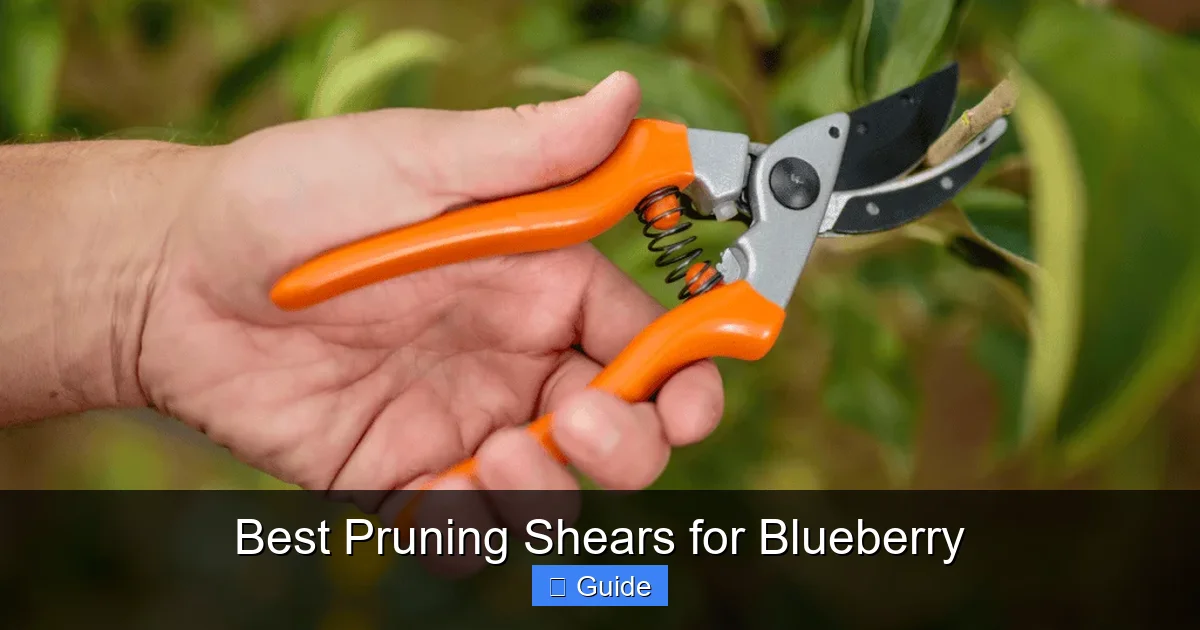
Best Pruning Shears for Blueberry
Finding the best pruning shears for blueberry bushes makes all the difference in your harvest quality and plant health. This guide covers top-rated bypass pruners, essential features to consider, and expert pruning techniques to help your blueberry plants thrive season after season.
Growing blueberries is one of the most rewarding gardening experiences you can have. There is nothing quite like walking out to your backyard and picking sun-warmed berries straight from the bush. But here is the thing many gardeners learn the hard way – those beautiful harvests do not happen by accident. They happen because of proper pruning. And proper pruning starts with the right tools.
I remember my first year with blueberry bushes. I used an old pair of kitchen scissors, thinking it would be fine. The results were disappointing. Jagged cuts. Crushed stems. Disease creeping in where clean cuts should have been. That was the year I learned that the best pruning shears for blueberry bushes are not a luxury – they are a necessity. The difference between struggling plants and thriving ones often comes down to the quality of your cuts.
Key Takeaways
- Bypass pruners are superior to anvil types: They make clean cuts that heal faster, reducing disease risk in blueberry bushes.
- Look for high-carbon steel blades: These stay sharp longer and resist sap buildup from woody blueberry stems.
- Ergonomic handles prevent fatigue: Pruning mature blueberry plants takes time, so comfort matters for your hands and wrists.
- Size matters for different growth stages: Smaller snips work for young plants, while larger loppers handle mature canes.
- Clean cuts at 45-degree angles promote healing: Proper technique matters as much as tool quality for blueberry health.
- Regular maintenance extends tool life: Clean, sharpen, and oil your shears after each pruning session for best results.
- Timing is critical – prune in late winter: Dormant-season pruning stimulates vigorous spring growth and better fruit production.
Quick Answers to Common Questions
What type of pruning shears is best for blueberry bushes?
Bypass pruners are the best type for blueberry bushes because they make clean, precise cuts that heal quickly without crushing woody canes.
When should I prune my blueberry bushes?
Prune blueberry bushes in late winter (February to March) while they are fully dormant but before buds begin to swell and break.
How much of the blueberry bush should I prune each year?
Remove twenty to twenty-five percent of the oldest canes annually on mature plants, never exceeding one-third of the total wood in a single season.
Do I need different pruning tools for young versus mature blueberry bushes?
Young bushes need only precision hand pruners, while mature bushes require loppers or a pruning saw for thick renewal cuts at the base.
How do I maintain my pruning shears for blueberry pruning?
Clean blades after each use, disinfect between bushes, sharpen regularly with a diamond file, oil the pivot point, and store dry to prevent rust.
📑 Table of Contents
- Why Pruning Shears Matter for Blueberry Bushes
- Top Features to Look for in Blueberry Pruning Shears
- Best Pruning Shears for Blueberry: Top Picks by Category
- Matching Shears to Your Blueberry Type and Age
- Pruning Techniques That Protect Your Plants and Tools
- Maintaining Your Pruning Shears for Decades of Service
- Common Pruning Mistakes and How to Avoid Them
- Building Your Complete Blueberry Pruning Kit
- Seasonal Pruning Calendar for Blueberry Success
- Conclusion: Your Bushes Deserve the Best
Why Pruning Shears Matter for Blueberry Bushes
Blueberry bushes have specific needs that make tool selection critical. Unlike soft-stemmed annuals, blueberries develop woody canes that can reach an inch or more in diameter on mature plants. These canes are dense, fibrous, and full of sap that gums up inferior blades. When you make a poor cut on a blueberry cane, you create an entry point for fungal diseases like botrytis and stem blight. These diseases can kill entire branches or even whole plants.
The best pruning shears for blueberry work give you clean, precise cuts that heal quickly. A clean cut seals naturally. The plant can compartmentalize the wound and move on. A crushed or torn cut stays open longer, oozes sap, and invites trouble. This is why bypass pruners – where two curved blades pass each other like scissors – are the gold standard for blueberries. Anvil pruners, where a single straight blade hits a flat plate, tend to crush woody stems before cutting through them.
Understanding Blueberry Growth Habits
Before we dive into specific tool recommendations, it helps to understand what you are actually pruning. Blueberries produce fruit on one-year-old wood. The most productive canes are typically two to four years old. After that, productivity declines. Your job as a gardener is to maintain a constant cycle of renewal – removing the oldest canes, keeping the prime-age ones, and encouraging new growth from the base.
This means you will be cutting everything from pencil-thin new shoots to thumb-thick mature canes. Some years you might remove twenty percent of the plant. Other years, a light touch is all that is needed. Having the right tool for each cut makes this cycle manageable rather than exhausting.
The Cost of Cheap Tools
Let us talk about the budget trap. Those twelve-dollar pruners at the big box store? They will last one season if you are lucky. The springs fail. The blades chip. The handles crack. And in the meantime, they are damaging your plants. A quality pair of pruning shears costs fifty to eighty dollars but can last twenty years with basic care. That is two to four dollars per year for a tool that protects your investment in plants that can produce for decades. The math is simple.
Top Features to Look for in Blueberry Pruning Shears
Not all bypass pruners are created equal. When you are shopping for the best pruning shears for blueberry maintenance, certain features separate the professionals from the pretenders. Let me walk you through what actually matters.
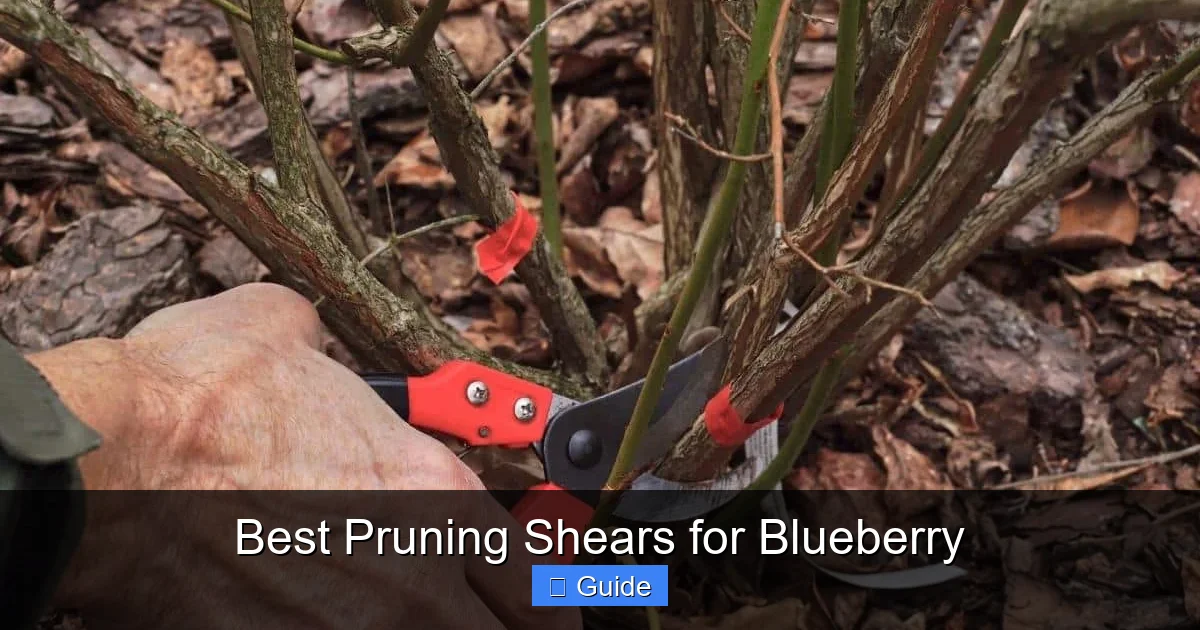
Visual guide about Best Pruning Shears for Blueberry
Image source: epicgardening.com
Blade Material and Quality
High-carbon steel is the gold standard. It takes a finer edge than stainless steel and holds it longer. Some premium brands use Japanese SK5 steel or Swiss hardened steel. These blades can be sharpened to a razor edge and will stay sharp through hundreds of cuts. Stainless steel resists rust better but cannot achieve the same keenness. For blueberries, where sap buildup is constant, many gardeners prefer high-carbon steel with a non-stick coating. The coating reduces friction and makes cleaning easier.
Look for blades that are replaceable. Even the best steel eventually wears down or gets nicked. Being able to swap in a fresh blade for fifteen dollars beats buying a whole new tool. Brands like Felco, ARS, and Bahco all offer replaceable blades on their professional models.
Cutting Capacity
For blueberries, you want a minimum one-inch cutting capacity. Mature highbush blueberry canes regularly reach three-quarters to one inch in diameter. If your pruners max out at three-quarters inch, you will struggle with the oldest canes – exactly the ones you most need to remove. Some gardeners keep two pairs: a lightweight one-inch bypass for daily work and a larger lopper for the thickest renewal cuts.
Ergonomics and Handle Design
This is where personal preference matters most. You will make hundreds of cuts in a single pruning session. Handles that feel fine for five minutes can cause cramping after an hour. Look for:
- Rotating handles that move with your grip rather than against it
- Shock-absorbing bumpers between the handles
- Non-slip grips that work even with wet or gloved hands
- Handles sized for your hand – many brands offer small, medium, and large
Left-handed gardeners should seek out true left-handed models, not just ambidextrous ones. The blade orientation and lock mechanism make a real difference in comfort and safety.
Spring Mechanism and Lock
A good spring returns the handles smoothly without fighting you. Coiled wire springs are common but can snag on branches. Flat volute springs or internal coil springs are smoother and more durable. The lock should engage and release with one thumb movement, ideally without changing your grip. Test this before buying if possible – some locks are stiff or awkwardly placed.
Weight and Balance
Heavy pruners cause fatigue. Light pruners can feel flimsy. The sweet spot for most gardeners is eight to twelve ounces. Balance matters more than raw weight – a well-balanced twelve-ounce pruner feels lighter than a poorly balanced eight-ounce one. The center of gravity should sit near the pivot point, not out toward the tips.
Best Pruning Shears for Blueberry: Top Picks by Category
After years of testing and talking with commercial blueberry growers, here are the standout performers in each category. Every tool here has proven itself in real-world blueberry pruning.
Best Overall: Felco F-2 Classic Manual Hand Pruner
If you buy one pair of pruners for the rest of your gardening life, make it the Felco F-2. This Swiss-made tool has been the professional standard since 1948. The forged aluminum handles are virtually indestructible. The hardened steel blade takes a scary-sharp edge and holds it. Every part is replaceable – blades, springs, handles, even the tiny screws. The rotating handle reduces wrist strain by twenty percent according to ergonomic studies. At eight and a half ounces, it hits the perfect weight balance.
For blueberries specifically, the F-2 excels at the full range of cuts you will make. The one-inch capacity handles mature canes cleanly. The precision tip lets you snip tiny lateral branches without damaging nearby buds. The sap groove prevents the blades from sticking together. Commercial growers buy these by the case. That tells you everything.
Best Value: ARS HP-VS8Z Signature Heavy Duty Pruner
Japanese manufacturer ARS makes some of the finest cutting tools in the world, and the HP-VS8Z delivers professional performance at a mid-range price. The high-carbon steel blades are chrome-plated for rust resistance and reduced friction. The die-cast aluminum handles are lightweight but rigid. At seven and a half ounces, these are lighter than the Felco but feel equally solid.
The standout feature for blueberry work is the blade geometry. ARS uses a unique curved blade profile that pulls the branch into the sweet spot of the cut automatically. You get clean cuts with less hand force. The locking mechanism is ambidextrous and glove-friendly. Replacement blades cost under twenty dollars. For the home gardener with ten to twenty bushes, this is often the sweet spot of price and performance.
Best for Small Hands: Felco F-6 Classic Pruner for Smaller Hands
The Felco F-6 is essentially an F-2 scaled down for smaller grips. Same forged aluminum handles, same replaceable blade system, same Swiss precision – just shorter handles and a narrower grip spread. If you have found standard pruners cause your hand to cramp or the lock is hard to reach, this is your answer. The cutting capacity remains a full one inch, so you lose nothing in capability.
Many women gardeners and those with arthritis prefer the F-6. The reduced leverage requirement means less grip strength needed per cut. Over a three-hour pruning session, that difference compounds dramatically. Do not let the “small hands” label fool you – this is a full professional tool, not a compromise.
Best Budget Option: Corona BP 3180D Forged Classic Bypass Pruner
Sometimes you need a capable tool without the professional price tag. The Corona BP 3180D delivers surprising quality for under thirty dollars. The forged steel construction (not stamped) gives real durability. The high-carbon blade takes a decent edge. The non-slip grips are comfortable for moderate use. At nine ounces, the weight is reasonable.
Where it differs from the premium tools: the spring is a basic coil that can snag. The lock requires two hands to operate smoothly. Parts are not replaceable – when the blade wears out, the tool is done. But for a gardener with five to ten bushes who prunes once a year, this tool will last five to seven years with care. It is the best genuine bypass pruner in the budget category.
Best for Arthritic Hands: Fiskars PowerGear2 Pruner
The PowerGear2 uses a patented gear mechanism that multiplies your cutting force by three times. This means you can cut one-inch blueberry canes with the effort normally needed for half-inch stems. For gardeners with arthritis, carpal tunnel, or limited hand strength, this is transformative. The contoured handles distribute pressure across the palm rather than concentrating it on fingers.
The tradeoff: the gear mechanism adds weight (eleven ounces) and complexity. The blades are not replaceable. The anvil-style lower blade (though it functions as bypass) can accumulate sap more readily. But if hand pain keeps you from pruning properly, this tool pays for itself in one season of healthy bushes.
Best Lopper for Mature Bushes: Bahco P160-SL-50 Lopper
Once your blueberry bushes pass the five-year mark, you will encounter canes too thick for hand pruners. The Bahco P160-SL-50 handles branches up to two inches with ease. The fifty-centimeter handles give tremendous leverage without being unwieldy. The high-carbon steel blades are PTFE-coated for low friction. The elliptical aluminum handles are strong but light – this lopper weighs just over two pounds.
The bump stop absorbs shock at the end of each cut, protecting your shoulders and elbows. The blades are fully replaceable. For renewal pruning of mature highbush blueberries, this is the tool that makes the job possible rather than a struggle. Keep it alongside your hand pruners for the ten percent of cuts that need extra reach and power.
Matching Shears to Your Blueberry Type and Age
Not all blueberries are the same, and your tool needs change as plants mature. Let me break down the specifics.
Young Plants (Years 1-3): Precision Over Power
First-year blueberry bushes need minimal pruning – mostly removing flower buds to establish roots and removing any damaged wood. The stems are pencil-thin. You need precision, not power. A lightweight bypass pruner with a fine tip is ideal. The ARS HP-130DX or Felco F-7 (the compact model) excels here. Their narrow blades slip into tight branch crotches without damaging adjacent buds.
During these early years, you are training the plant structure. You want to create an open, vase-shaped bush with six to eight main canes emerging from the crown. Every cut matters. A tool that lets you place the blade exactly where you want it prevents mistakes that take years to correct.
Prime Production Years (Years 4-8): The Daily Driver
This is when your bushes hit full stride. You are removing two to three of the oldest canes each year, thinning crowded centers, and heading back vigorous shoots. The canes are half to three-quarters inch thick. This is where the Felco F-2 or ARS HP-VS8Z shines. They handle the full range of cuts without switching tools. The rotating handle (Felco) or low-friction coating (ARS) keeps your hand fresh through twenty or thirty bushes.
During these years, you will also appreciate a good holster. Walking between bushes with pruners in hand leads to lost tools and accidental cuts. A leather belt holster keeps your pruners ready and safe.
Mature Bushes (Years 9+): Renewal Requires Reach
Older blueberry bushes develop thick, gnarly canes at the base – often an inch or more in diameter. Hand pruners can cut these but it is hard work and risks damaging the tool. This is when you need the Bahco lopper or a folding pruning saw for the thickest renewal cuts. The saw is especially useful for removing dead wood in the center of the crown where loppers cannot reach.
You will also appreciate longer handles on your hand pruners for reaching into the bush center without stepping on roots. Some gardeners switch to the Felco F-11 (extended reach model) or add a pole pruner for the tallest canes on rabbiteye varieties.
Lowbush and Half-High Varieties: Special Considerations
If you grow lowbush blueberries (Vaccinium angustifolium) or half-high cultivars, your pruning is different. These are often mowed to the ground every two to three years rather than selectively pruned. For this, you want hedge shears or a brush cutter, not hand pruners. But for the selective cleanup between mowing cycles, a compact bypass pruner like the Felco F-7 or ARS HP-130DX works perfectly.
Rabbiteye Blueberries: Tall and Vigorous
Rabbiteye varieties (Vaccinium virgatum) can reach fifteen feet unpruned. They are vigorous and upright. You will need a pole pruner or ladder work for the tops. The ARS LP-30 pole pruner with a fourteen-foot reach handles this beautifully. The cutting head is a scaled-down version of their famous bypass action. For the lower structure, standard hand pruners work fine – rabbiteye canes tend to be slightly smaller in diameter than highbush at the same age.
Pruning Techniques That Protect Your Plants and Tools
The best pruning shears for blueberry bushes only perform well when used correctly. Good technique extends tool life and plant health simultaneously. Here are the fundamentals.
The Three-Cut Method for Large Canes
When removing a thick, mature cane at the base, do not try to cut it in one squeeze. You will crush the bark, strain the tool, and risk tearing the remaining stub. Instead, use three cuts:
- First cut: Six inches out from the base, cut upward from the bottom about one-third through the cane. This prevents the weight of the cane from tearing bark as it falls.
- Second cut: One inch further out, cut downward from the top until the cane falls free.
- Third cut: At the base, make your final clean cut at a slight angle, leaving no stub.
This method protects the crown from damage and gives you a clean final cut that heals quickly. Your pruners only handle the final, precise cut on supported wood.
Cut Angle and Placement
Every cut on a blueberry bush should be at a forty-five-degree angle, sloping away from the bud or branch collar you are cutting back to. This sheds water and prevents rot. The cut should be close – about a quarter inch above a bud – but not so close that you damage the bud itself. When removing a whole cane at the base, cut flush with the crown soil line, not leaving a stub that will die back and invite disease.
Never cut flush against a larger branch (flush cuts). Leave the branch collar – the slightly swollen ring where the branch meets the trunk. This collar contains specialized cells that seal the wound. Cutting into it prevents proper healing.
Working With the Tool, Not Against It
Let the pruner do the work. Position the branch deep in the jaw, near the pivot point, where leverage is greatest. Do not try to cut with the tips. Apply steady pressure – do not jerk or twist. If the cut requires excessive force, the branch is too thick for that tool. Switch to loppers or a saw. Forcing a cut dulls the blade, stresses the spring, and often results in a poor cut anyway.
Rotate the tool, not your wrist. The rotating handle on Felco models is designed for this. Keep your wrist neutral and let the handle rotate in your palm. This single habit prevents more repetitive strain injuries than any other technique.
Cleaning Between Bushes
Blueberries are susceptible to several systemic diseases that spread on tools. Crown gall, stem blight, and various viruses can hitch a ride on your blades. Keep a spray bottle of seventy percent isopropyl alcohol or a ten percent bleach solution (one part bleach to nine parts water) in your tool belt. Spray the blades between bushes, especially if you see any suspicious lesions, cankers, or dieback. Wipe dry with a rag. This thirty-second habit can save years of heartbreak.
Maintaining Your Pruning Shears for Decades of Service
A quality pair of pruning shears is like a good kitchen knife – it needs regular care to perform at its best. The maintenance routine takes five minutes but adds years to the tool’s life.
Daily Cleaning During Pruning Season
After each pruning session, wipe the blades clean with a rag. Blueberry sap is acidic and sticky. Left on the blade, it corrodes the steel and gums the pivot. A quick wipe prevents buildup. If sap has dried, use a little mineral spirits or rubbing alcohol on a rag to dissolve it. Never use water – it promotes rust on high-carbon steel.
Check the pivot point. Open and close the handles a few times. If they feel gritty, blow out debris with compressed air or brush with an old toothbrush. A drop of light machine oil (3-in-1 oil works fine) on the pivot keeps the action smooth.
Sharpening: The Skill That Pays Forever
Dull pruners crush rather than cut. They damage plants and strain your hand. Learning to sharpen your own tools saves money and ensures you always have a sharp edge when you need it. You need a fine diamond file or ceramic sharpening stone – the credit card sized ones work perfectly.
Only sharpen the beveled edge of the cutting blade. The flat side stays flat. Hold the file at the existing bevel angle (usually twenty to twenty-five degrees) and push away from the edge in smooth strokes. Five to ten strokes per side is usually enough for touch-ups. Test by cutting a piece of paper – a sharp pruner slices cleanly without tearing.
Do not sharpen the anvil blade (the lower, thicker blade on bypass pruners). It should remain flat and smooth. If it develops nicks, you can lightly stone them flat, but do not create a bevel.
Seasonal Deep Maintenance
Once a year, preferably before pruning season, do a complete teardown:
- Remove the center bolt and separate the handles
- Clean all parts with mineral spirits and a brass brush
- Inspect for wear – check the bolt, spring, and handle alignment
- Sharpen the blade thoroughly
- Reassemble with fresh lubricant on the pivot and spring
- Adjust the blade alignment so they meet perfectly along their length
Most premium brands sell maintenance kits with the exact parts and lubricants needed. Felco’s kit includes their special grease, which resists washing out better than standard oil.
Storage Matters
Store your pruners clean, dry, and lightly oiled. Hang them by the handle loop, not by the blades. Keep them in a dry place – a heated garage or mudroom is better than an unheated shed where condensation cycles promote rust. If you live in a humid climate, a silica gel packet in the tool drawer helps.
Never leave pruners in the garden. Morning dew, rain, and soil contact will ruin even the best tool in one season. The holster on your belt is their home when not in your hand.
Common Pruning Mistakes and How to Avoid Them
Even with the best pruning shears for blueberry bushes, technique errors can set your plants back. Here are the mistakes I see most often – and have made myself.
Under-Pruning: The Fear of Cutting Too Much
Many gardeners are timid. They remove a few obvious dead branches and call it done. But blueberries need aggressive annual renewal. You should remove twenty to twenty-five percent of the oldest wood every year on mature plants. This feels like a lot. It looks dramatic. But it stimulates the vigorous new growth that bears the best fruit. The plants respond to this “trauma” by pushing strong shoots from the base – exactly what you want.
If you under-prune, the bush becomes a thicket of old, unproductive wood. Light cannot penetrate. Air cannot circulate. Disease flourishes. Berries become small and few. Be bold. The plant will thank you.
Over-Pruning: The Enthusiast’s Error
Conversely, some gardeners get carried away. Removing more than thirty percent of the canopy in one year shocks the plant. It responds with excessive vegetative growth at the expense of fruit. The rule: never remove more than one-third of the total wood in a single season. If a bush is severely overgrown, spread the renovation over two or three years.
Wrong Timing: Pruning at the Wrong Season
Blueberries must be pruned during dormancy – late winter to early spring, before buds break. In most regions, this is February to March. Pruning in fall stimulates tender growth that winter kills. Pruning in summer removes next year’s flower buds (which form in late summer). Pruning during bloom or fruiting is obviously disastrous.
The only exception: remove dead, diseased, or damaged wood (the three D’s) anytime you see it. But save structural pruning for the dormant window.
Ignoring the Center: The Hollow Bush Problem
Blueberries naturally want to grow outward, leaving the center bare. If you only prune the outside, you create a hollow shell with all the fruit on the perimeter. This shades the interior, reduces total yield, and makes harvesting harder. Every pruning session should include opening the center – removing crossing branches, inward-growing shoots, and any canes that crowd the middle. Aim for a vase shape: open in the center, productive wood distributed throughout.
Leaving Stubs: The Disease Highway
Cutting a cane six inches above the ground because “it might regrow” is wishful thinking. That stub will die back to the crown, creating dead wood that hosts pathogens. Always cut canes at ground level or back to a vigorous lateral branch. No stubs. Ever.
Building Your Complete Blueberry Pruning Kit
One pair of pruners handles ninety percent of the work. But a complete kit prepares you for everything. Here is what I recommend for the serious home blueberry grower.
The Essentials (Start Here)
- Primary bypass pruner: Felco F-2 or ARS HP-VS8Z
- Leather holster with belt loop
- Diamond sharpening file (credit card size)
- Spray bottle for disinfectant (seventy percent isopropyl alcohol)
- Clean rags (old cotton t-shirts work great)
- Light machine oil (3-in-1 or Felco lubricant)
The Upgrades (Add As Needed)
- Lopper for mature canes: Bahco P160-SL-50
- Folding pruning saw: Silky Gomboy 240mm (incredible cutting speed)
- Pole pruner for tall varieties: ARS LP-30
- Second pair of hand pruners (different size or for helper)
- Pruning gloves: goatskin or synthetic with reinforced fingertips
- Tool maintenance kit from your pruner manufacturer
The “Nice to Have” Extras
- Harvest apron with pruner pocket (keeps tool accessible during picking season)
- Magnifying loupe for inspecting buds and detecting bud mite damage
- Flagging tape to mark canes for removal (helpful when learning)
- Kneeling pad or garden seat (your knees will thank you)
Build the kit over time. Start with the essentials. Add pieces as your bushes mature and your skills grow. Quality tools are an investment that pays dividends in healthier plants and bigger harvests for decades.
Seasonal Pruning Calendar for Blueberry Success
Having the best pruning shears for blueberry work is only half the equation. Knowing when to use them completes the picture. Here is a year-round view.
Late Winter (February-March): Major Structural Pruning
This is the main event. Plants are fully dormant. Buds are visible but not swollen. You can see the structure clearly. Remove dead wood. Take out the oldest two to three canes at the base. Thin crowded centers. Head back overly vigorous shoots. Open the plant to light and air. This is when you use your primary pruners most intensively.
Early Spring (April): Touch-Up and Frost Damage
After bud break, inspect for winter kill. Sometimes tips die back after a hard freeze. Trim dead tips back to live wood. This is light work – your pruners barely break a sweat. But catching it early prevents disease entry.
Late Spring (May): Flower Thinning (Optional)
On very vigorous varieties or young plants, you may want to remove some flower clusters to prevent over-cropping. This is a judgment call. If the plant looks like it is setting more fruit than it can support, pinch off twenty percent of the flower clusters. Use your fingers or the pruner tips.
Summer (June-July): Post-Harvest Cleanup
After harvest, remove any canes that fruited heavily and are now exhausted (mostly on varieties that fruit on second-year wood only). This is rare for modern cultivars but worth knowing. Mostly, summer is for enjoying berries, not pruning.
Fall (September-November): Hands Off
Do not prune in fall. Period. The plant is storing energy in roots and canes for next year. Pruning now disrupts this process and stimulates vulnerable new growth. Put the pruners away. Clean and oil them. They have earned their rest.
Conclusion: Your Bushes Deserve the Best
We have covered a lot of ground. From the metallurgy of blades to the geometry of cuts, from the habits of young plants to the renewal of mature bushes. But the core message is simple: blueberries reward care. The best pruning shears for blueberry bushes are not just tools – they are the instruments through which you express that care.
Every clean cut you make is a vote for plant health. Every jagged tear is a risk you did not need to take. The difference between a thirty-dollar pruner and an eighty-dollar one is not status – it is the difference between struggling through the job and enjoying it. Between replacing tools every few years and passing them to the next generation. Between hoping for berries and knowing you did everything right.
Your blueberry bushes can live thirty, forty, fifty years. They can produce gallons of fruit every season. They can become the centerpiece of your edible landscape. But they need you to show up each winter with sharp, clean, quality tools and the knowledge to use them well. That is the bargain. And it is a bargain heavily in your favor.
So choose your pruners wisely. Maintain them faithfully. Use them confidently. And when you taste that first perfect berry next summer – sweet, complex, sun-warm – you will know exactly where it came from. Not just the bush. But the care. The cuts. The tool in your hand that made it all possible.
Happy pruning. And even happier harvesting.
Frequently Asked Questions
Can I use anvil pruners for blueberry bushes?
Anvil pruners are not recommended for blueberries because they crush woody stems rather than cutting cleanly. This damages the plant tissue and creates entry points for disease. Bypass pruners are the standard for all woody fruit plants.
What cutting capacity do I need for blueberry pruning shears?
Choose pruners with at least a one-inch cutting capacity. Mature highbush blueberry canes regularly reach three-quarters to one inch in diameter, and you need clean cuts on the thickest renewal wood.
Are expensive pruning shears worth it for home gardeners?
Yes, quality pruners like Felco or ARS last twenty-plus years with basic maintenance, while budget models fail in one to two seasons. The cost per year is lower, and they protect your plants with cleaner cuts.
How do I know if my pruning shears are sharp enough?
Test by cutting a piece of standard printer paper. Sharp pruners slice cleanly without tearing or requiring excessive force. If the paper bends or tears, or you feel resistance on live wood, it is time to sharpen.
Should I disinfect pruning shears between each blueberry bush?
Yes, spray blades with seventy percent isopropyl alcohol or a ten percent bleach solution between bushes. This prevents spreading systemic diseases like crown gall and stem blight that can devastate your planting.
What is the difference between highbush and rabbiteye blueberry pruning?
Highbush blueberries are pruned to a vase shape with six to eight main canes. Rabbiteye varieties grow taller and more upright, often requiring pole pruners for top growth, but the same renewal principles apply – remove oldest canes annually.