Liquid Fertilizer for Parsley
Using a liquid fertilizer for parsley gives fast nutrient uptake, stronger stems, and richer flavor. Apply it every two weeks during the growing season for the best results.
Parsley is a popular herb that adds fresh flavor to many dishes. It grows best when it receives a steady supply of nutrients. A liquid fertilizer for parsley can provide that supply in a form the plant can use right away.
Many gardeners choose a liquid fertilizer for parsley because it mixes easily with water. The nutrients move quickly to the roots. This fast action helps the plant develop strong stems and deep green leaves.
In this guide you will learn why parsley needs extra feeding, how to pick the right product, and how to apply it for the best harvest.
Key Takeaways
- Fast absorption: Liquid fertilizer for parsley reaches roots quickly.
- Balanced nutrients: Look for a formula with nitrogen, phosphorus, and potassium.
- Regular feeding: Apply every 10 to 14 days for steady growth.
- Dilution matters: Follow label rates to avoid leaf burn.
- Soil test first: Know your soil pH before you fertilize.
- Combine with compost: Organic matter improves soil structure and nutrient hold.
Quick Answers to Common Questions
What is the best liquid fertilizer for parsley?
A balanced formula with an N‑P‑K ratio near 3‑1‑2 works well for most garden situations.
How often should I feed parsley with liquid fertilizer?
Apply every 10 to 14 days during active growth, adjusting for weather and harvest intensity.
Can I use liquid fertilizer for parsley on indoor plants?
Yes, use a diluted solution and ensure good drainage to prevent salt buildup.
What dilution rate is safe for parsley?
Start with the lowest label rate, typically 1 ml per liter of water, and increase only if needed.
Does liquid fertilizer for parsley improve flavor?
Proper potassium and magnesium levels from a quality feed enhance essential oil production, boosting flavor.
📑 Table of Contents
Why Parsley Needs Nutrients
Rapid Growth Demands
Parsley grows fast during the spring and summer. The plant produces new leaves every few days. A liquid fertilizer for parsley supplies nitrogen that fuels this rapid leaf production. Without enough nitrogen the leaves turn pale and growth slows.
When you use a liquid fertilizer for parsley you see results within days. The quick uptake means the plant can keep up with its own demand. This is especially important in containers where soil volume is limited.
Leaf Quality and Flavor
Flavor comes from essential oils that develop in healthy leaves. A balanced liquid fertilizer for parsley provides potassium and magnesium which support oil synthesis. Strong oils give the herb its characteristic bright taste.
If the plant lacks potassium the leaves become bland. A regular feed with a liquid fertilizer for parsley keeps the flavor intense throughout the season.
Root Health
Healthy roots absorb water and nutrients efficiently. Phosphorus in a liquid fertilizer for parsley encourages root branching. Deep roots help the plant survive dry spells.
Applying a liquid fertilizer for parsley early in the season sets up a strong root system. This foundation pays off later when the plant faces heat stress.
Choosing the Right Liquid Fertilizer for Parsley
Nutrient Ratios to Look For
Look for a product with an N‑P‑K ratio close to 3‑1‑2 or 4‑1‑3. These ratios give enough nitrogen for leaf growth while supplying phosphorus for roots and potassium for flavor. A liquid fertilizer for parsley with this balance works well for both garden beds and pots.
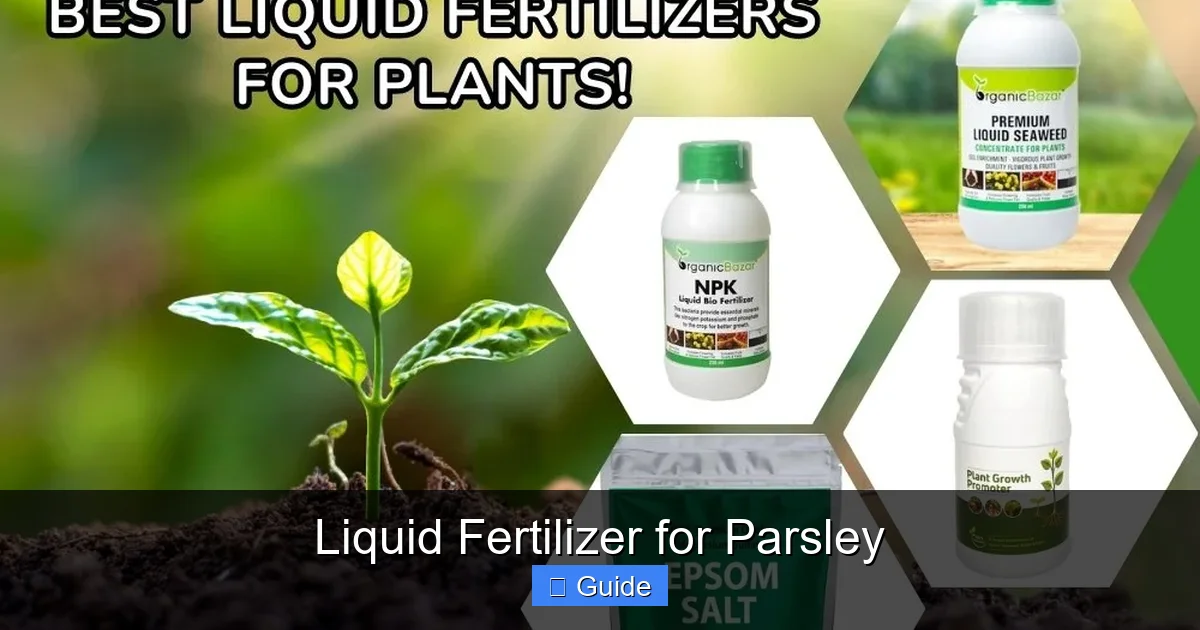
Visual guide about Liquid Fertilizer for Parsley
Image source: blog.organicbazar.net
Check the label for secondary nutrients like calcium and magnesium. They prevent tip burn and support cell structure. A complete liquid fertilizer for parsley includes these micronutrients.
Organic vs Synthetic Options
Organic liquid fertilizer for parsley often derives from fish emulsion, seaweed, or compost tea. These sources release nutrients slowly and improve soil biology. Synthetic liquid fertilizer for parsley delivers precise nutrient amounts instantly.
Both types can work. Choose organic if you prefer a natural approach. Choose synthetic if you need exact control over nutrient levels.
Reading the Label
Read the dilution rate carefully. Most labels give a range such as 1 ml per liter of water. A liquid fertilizer for parsley that is too concentrated can scorch leaves. Always start at the low end of the range.
Note the recommended frequency. Some products suggest weekly feeding while others recommend every two weeks. Match the schedule to your growing conditions.
How to Apply Liquid Fertilizer for Parsley
Mixing the Solution
Fill a clean watering can with the required amount of water. Add the measured amount of liquid fertilizer for parsley. Stir gently until the solution is uniform. Avoid creating foam which can trap air bubbles.
For a 10‑liter bucket use 10 ml of a 1 ml per liter product. This simple math ensures you apply the correct dose every time.
Watering Techniques
Pour the solution evenly around the base of each plant. Aim for the soil not the foliage. Wet leaves can promote fungal diseases. A liquid fertilizer for parsley applied to the soil reaches the root zone directly.
If you grow parsley in rows, use a hose‑end sprayer set to a gentle shower. This mimics rain and distributes the feed uniformly.
Foliar Feeding Tips
Foliar feeding can give a quick boost when leaves look pale. Dilute the liquid fertilizer for parsley to half the soil rate. Spray early in the morning or late in the afternoon to avoid leaf burn.
Cover both sides of the leaves. Repeat every ten days only if the plant shows deficiency symptoms. Do not replace soil feeding with foliar feeding alone.
Timing and Frequency for Best Results
Early Season Feeding
Start feeding when the first true leaves appear. A light dose of liquid fertilizer for parsley every ten days jump‑starts growth. Early nutrition builds a strong framework for later harvests.
In cool weather the plant absorbs nutrients slower. You may extend the interval to fourteen days until temperatures rise.
Mid Season Maintenance
During peak growth, maintain a regular schedule. Apply liquid fertilizer for parsley every ten days. Keep the soil moist but not soggy to help nutrient uptake.
If you harvest heavily, increase the frequency to weekly. The plant replaces lost foliage faster with extra nutrients.
Late Season Taper
As daylight shortens, reduce feeding. Stop liquid fertilizer for parsley applications about four weeks before the first frost. This helps the plant harden off and store energy for the next year.
In mild climates you can continue a light monthly feed through winter. Use a low‑nitrogen formula to avoid soft growth.
Common Mistakes and How to Avoid Them
Overfeeding Risks
Too much liquid fertilizer for parsley causes salt buildup in the soil. Salts draw water away from roots leading to wilting. Flush the soil with plain water if you see white crust on the surface.
Stick to the label rate. More is not better. A consistent moderate feed outperforms occasional heavy doses.
Wrong Dilution
Mixing a concentrate incorrectly is a common error. Always measure with a calibrated syringe or measuring cup. A liquid fertilizer for parsley diluted at double strength can burn leaf tips within hours.
Label instructions are based on extensive testing. Trust them.
Ignoring Soil pH
Parsley prefers a pH between 6.0 and 7.0. If the soil is too acidic or alkaline the plant cannot absorb nutrients even from a perfect liquid fertilizer for parsley. Test the soil before the season starts.
Amend with lime or sulfur as needed. Proper pH makes every feeding more efficient.
Final Thoughts on Growing Great Parsley
Combining Feeding with Good Culture
Feeding alone will not guarantee a great crop. Provide full sun, well‑drained soil, and regular watering. A liquid fertilizer for parsley works best when the plant’s other needs are met.
Mulch around the plants to conserve moisture and keep roots cool. This simple step reduces stress and improves nutrient uptake.
Monitoring Plant Response
Watch the color and size of the leaves. Dark green, large leaves indicate the feeding program is working. Pale or small leaves signal a need to adjust the liquid fertilizer for parsley rate or frequency.
Keep a garden journal. Note the date, product, and dilution each time you feed. Patterns emerge that guide future decisions.
Enjoying the Harvest
Harvest parsley by snipping outer stems first. This encourages new growth from the center. A well‑fed plant produces abundant, flavorful sprigs all season long.
Use fresh parsley in salads, soups, and sauces. The bright taste is a direct reward for the care you gave with a quality liquid fertilizer for parsley.
Frequently Asked Questions
Can I make my own liquid fertilizer for parsley?
Yes, compost tea or diluted fish emulsion can serve as a homemade liquid fertilizer for parsley. Ensure the brew is well‑aerated and strained before use.
Is organic liquid fertilizer for parsley better than synthetic?
Organic options improve soil biology and release nutrients slowly, while synthetic feeds give precise, immediate nutrition. Choose based on your gardening philosophy and goals.
How do I know if my parsley is over‑fertilized?
Signs include leaf tip burn, white crust on the soil surface, and sudden wilting despite moist soil. Flush the soil with clean water to remediate.
What time of day is best to apply liquid fertilizer for parsley?
Early morning or late afternoon avoids leaf scorch and allows the solution to soak into the root zone before heat evaporates it.
Can I combine liquid fertilizer for parsley with other nutrients?
You can add micronutrient supplements if a soil test shows deficiencies, but avoid mixing multiple concentrated fertilizers without guidance.
How long does liquid fertilizer for parsley stay effective in soil?
Nutrients from a liquid feed are typically available for 1 to 2 weeks, after which reapplication is needed to maintain steady growth.