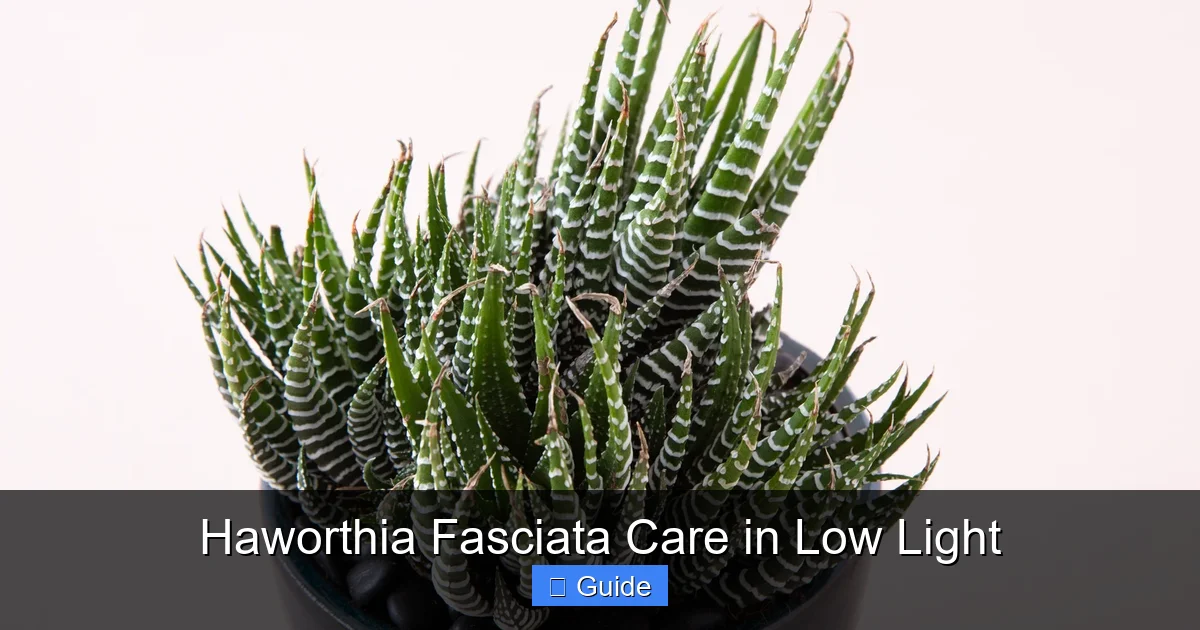
Haworthia Fasciata Care in Low Light
Haworthia fasciata adapts well to low light, making it perfect for offices and north-facing windows. Water sparingly, use gritty soil, and watch for stretching or pale leaves to keep your zebra plant healthy year-round.
You bought a Haworthia fasciata. Maybe someone gave it to you as a gift. Maybe you saw its striking white stripes at a nursery and couldn’t resist. Now it sits on your desk or a shelf far from any window. You wonder if it will survive. Good news. This plant is tough. It handles low light better than almost any other succulent. But low light does not mean no care. It means different care.
In this guide, we walk through everything you need to know about Haworthia fasciata care in low light. You will learn what low light really means. You will learn how to water, what soil to use, and how to spot trouble early. We keep it simple. No jargon. Just practical steps you can follow today.
Key Takeaways
- Haworthia fasciata tolerates low light better than most succulents: It grows naturally under rocks and bushes in South Africa, so it handles shade well.
- Low light means slower growth and less water: Soil stays wet longer, so water only when completely dry to prevent rot.
- Watch for etiolation (stretching): If leaves grow long and spaced out, your plant needs brighter indirect light.
- Use a gritty, fast-draining soil mix: Add perlite, pumice, or coarse sand to standard cactus soil for better drainage.
- Choose a small pot with drainage holes: Terracotta works best because it wicks moisture away from roots.
- Fertilize lightly or not at all in low light: Once per year in spring is enough; too much fertilizer causes weak growth.
- Rotate the pot monthly: This prevents leaning and promotes even, compact growth on all sides.
Quick Answers to Common Questions
Can Haworthia fasciata survive in a windowless office?
Only with a grow light. It needs some light to photosynthesize. A desk LED grow light running 12 hours daily works well.
How do I know if my Haworthia is getting too little light?
Leaves stretch long and thin with wide gaps between them. The plant leans dramatically toward the light source. Stripes fade significantly.
Should I mist my Haworthia fasciata in low light?
No. Misting keeps leaves wet and encourages rot. Water the soil only, and only when completely dry.
Why are my Haworthia leaves turning mushy and transparent?
That is root rot from overwatering. Unpot, cut away rot, let callus, and replant in dry gritty mix. Water sparingly after one week.
Can I use regular potting soil for Haworthia fasciata?
Not recommended. It holds too much water. Mix cactus soil with perlite and pumice (1:1:1) for fast drainage.
📑 Table of Contents
- Understanding Haworthia Fasciata and Its Light Needs
- What Low Light Really Means for Succulents
- Setting Up the Perfect Low-Light Environment
- Watering Strategies for Low-Light Conditions
- Soil and Potting Considerations
- Common Problems and Solutions in Low Light
- Fertilizing in Low Light
- Propagation in Low Light
- Seasonal Care Calendar
- Design and Display Ideas
- Conclusion
Understanding Haworthia Fasciata and Its Light Needs
Where This Plant Comes From
Haworthia fasciata grows in the Eastern Cape of South Africa. There, it hides under shrubs. It nestles in rock crevices. Direct sun is rare. The canopy filters most light. This history matters. It tells us the plant evolved for shade. It does not need full sun like an echeveria or a sedum. It wants bright shade. It tolerates deep shade. That is why it works inside homes and offices.
Why It Handles Low Light So Well
The leaves are thick. They store water. They also store energy. The white stripes are not just decoration. They are translucent windows. In nature, light hits the leaf tips. The windows let light penetrate deeper into the leaf tissue. This helps the plant photosynthesize with less light. Clever design. This adaptation makes Haworthia fasciata one of the best succulents for low light conditions.
The Difference Between Low Light and No Light
Low light is not a dark corner. It is not a windowless bathroom. Low light means bright indirect light. Think of a north-facing window. Think of a spot three feet from an east window. Think of an office with fluorescent lights on twelve hours a day. The plant casts a faint shadow. You can read a book there without a lamp. That is low light. No light means you cannot see your hand in front of your face. Haworthia fasciata will die in no light. It needs some photons.
What Low Light Really Means for Succulents
How Light Affects Growth Rate
Light drives photosynthesis. Photosynthesis makes sugar. Sugar fuels growth. Less light means less sugar. Less sugar means slower growth. In low light, your Haworthia fasciata may put out only two or three new leaves per year. That is normal. Do not panic. Do not fertilize more to speed it up. That backfires. Accept the slow pace. The plant stays compact. It stays neat. That is a feature, not a bug.
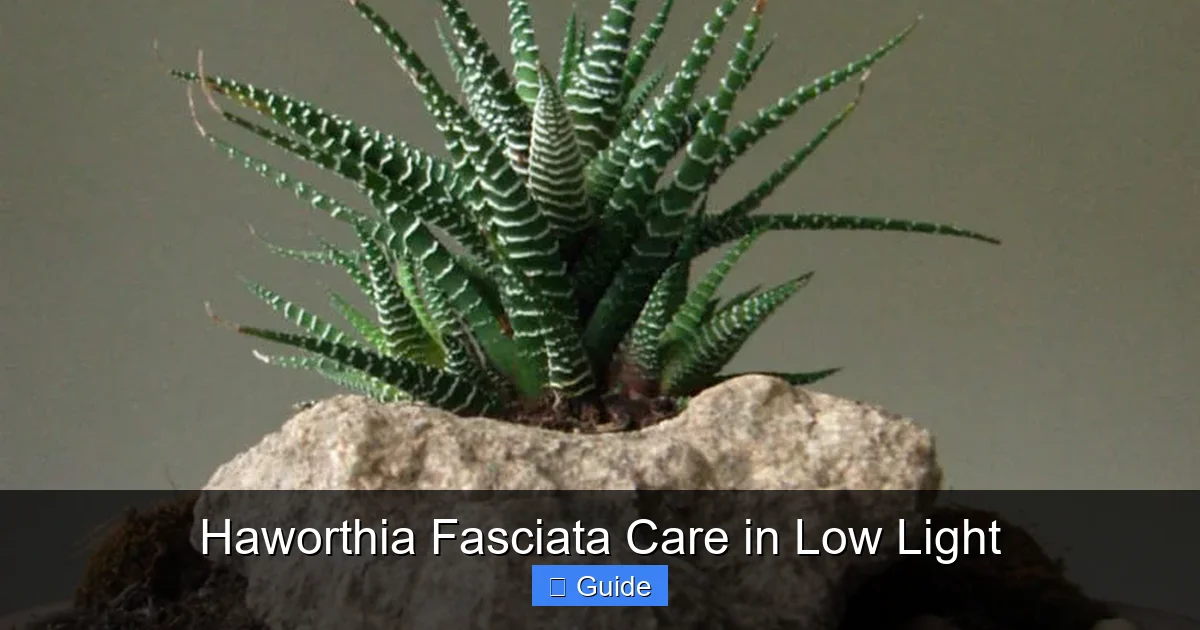
Visual guide about Haworthia Fasciata Care in Low Light
Image source: worldofsucculents.com
How Light Affects Water Needs
This is the most important part. In bright light, soil dries fast. The plant drinks fast. In low light, soil stays wet. The plant drinks slow. If you water on the same schedule as a sunny succulent, you will rot the roots. Root rot is the number one killer of Haworthia fasciata in low light. The fix is simple. Water less often. Much less often. We cover the exact method in the watering section.
How Light Affects Color and Shape
Good light keeps the white stripes bright. Good light keeps leaves tight and upright. Low light may turn the stripes paler. The green may deepen to a darker shade. The plant may lean toward the light source. Leaves may spread out slightly. This is not death. This is adaptation. But if leaves grow long, thin, and widely spaced, that is etiolation. That means the light is too low. We fix that later.
Setting Up the Perfect Low-Light Environment
Best Window Placements
North-facing windows are the gold standard. They give steady, gentle light all day. No harsh rays. No sunburn risk. East-facing windows work too. Morning sun is mild. Place the plant a few feet back from the glass. West and south windows are tricky. They give intense afternoon sun. In low light care, we avoid those. If those are your only windows, pull the plant back six feet. Or use a sheer curtain. Filter the light.
Using Artificial Lights
No good window? Use a grow light. LED grow lights are cheap now. They use little electricity. They run cool. Choose a full-spectrum white light. Aim for 2000 to 3000 lux at leaf level. Run it twelve to fourteen hours a day. A simple timer does the job. Clip lights work for single plants. Panel lights work for shelves. Keep the light six to twelve inches above the plant. Adjust as it grows. Artificial light gives you total control. Many collectors grow prize Haworthia fasciata under lights only.
Temperature and Humidity Considerations
Haworthia fasciata likes normal home temperatures. Sixty-five to eighty degrees Fahrenheit is perfect. It handles brief dips to fifty. It hates frost. Keep it away from cold drafts in winter. Keep it away from heating vents that blast hot dry air. Humidity is not critical. Average home humidity (thirty to fifty percent) is fine. High humidity with low light increases rot risk. If your air is very humid, increase airflow. A small fan on low helps.
Airflow Matters More Than You Think
Stagnant air encourages fungus. It keeps soil wet longer. It lets pests hide. Gentle air movement dries the soil surface. It strengthens the plant. Open a window occasionally. Run a ceiling fan on low. Do not point a strong fan directly at the plant. That dries it too fast. Just keep the air moving. Good airflow is a secret weapon for low light succulents.
Watering Strategies for Low-Light Conditions
The Soak and Dry Method
This is the standard for succulents. But in low light, the timing changes. Wait until the soil is bone dry. Not just the top inch. All the way to the bottom. Stick a wooden skewer deep into the pot. Pull it out. If it feels cool or damp, wait. If it is dry and clean, water. Then water thoroughly. Pour water until it runs out the drainage holes. Let it drain completely. Empty the saucer. Do not let the pot sit in water. Ever.
How Often to Water in Low Light
There is no fixed schedule. It depends on your pot, your soil, your temperature, your humidity. In low light, expect to water every three to four weeks in spring and fall. Every four to six weeks in winter. Maybe every two weeks in summer if it gets warm. The plant tells you. Wrinkled leaves mean thirst. Plump firm leaves mean full. Learn to read the leaves. The skewer test confirms it. When in doubt, wait one more week. Underwatering is recoverable. Overwatering often is not.
Water Quality Matters
Tap water is usually fine. But if your water is very hard (high minerals), you may see white crust on the soil or pot. That is mineral buildup. It can burn roots over time. Rainwater is best. Distilled water works. Filtered water works. If you use tap water, flush the soil once every few months. Water heavily until water runs out the bottom for a minute. This washes out excess salts.
Bottom Watering vs Top Watering
Both work. Top watering is faster. Bottom watering ensures even moisture. For bottom watering, set the pot in a tray of water. Let it sit twenty minutes. The soil wicks water up. Remove the pot. Let it drain. This method avoids wet leaves. Wet leaves in low light can rot. But top watering is fine if you avoid the crown. Water the soil, not the plant. Use a narrow spout. Go slow.
Seasonal Watering Adjustments
Winter is the danger zone. Growth stops. Light drops. Temperatures drop. Water barely at all. Maybe once every six to eight weeks. Just enough to keep roots from desiccating. Spring wakes the plant up. Increase frequency slightly. Summer heat may dry soil faster. Check more often. Fall tapers off again. Match your watering to the season, not the calendar.
Soil and Potting Considerations
The Ideal Soil Mix
Drainage is everything. Standard potting soil holds too much water. Cactus soil from the bag is better but often still too organic. Make your own mix. Start with two parts cactus soil. Add one part perlite. Add one part pumice or coarse sand. Mix well. The result should feel gritty. Water should run through in seconds. If water pools on top, add more grit. This mix works for Haworthia fasciata in any light. In low light, it is essential.
Choosing the Right Pot
Terracotta is king. It is porous. It breathes. It wicks moisture from the soil. This forgiveness saves many overwatered plants. Plastic works too but demands more discipline. Glazed ceramic holds water longest. Avoid it for low light. Size matters. Choose a pot just slightly wider than the root ball. One inch extra space max. Big pots hold too much soil. Too much soil stays wet too long. That kills roots.
Drainage Holes Are Non-Negotiable
No holes, no exceptions. A layer of rocks at the bottom does not create drainage. It creates a perched water table. The soil above stays soggy. Drill holes if you must. Use a masonry bit for ceramic. Use a regular bit for plastic. If you love a decorative pot without holes, use it as a cache pot. Put the plant in a plastic nursery pot with holes. Set that inside the pretty pot. Remove it to water. Let it drain. Put it back.
Repotting Timeline
Haworthia fasciata grows slow. It likes being snug. Repot every two to three years. Spring is best. Signs it needs repotting: roots poking out drainage holes, soil breaking down and staying wet, plant pushing up out of the pot. Go up one pot size only. Fresh soil refreshes nutrients. It also resets the drainage clock. Old soil compacts. New soil breathes.
Common Problems and Solutions in Low Light
Etiolation: The Stretch
Leaves grow long. Gaps appear between leaves. The plant looks loose, open, reaching. This is etiolation. The plant is desperate for light. Fix: move it to brighter light. Gradually. Sudden bright sun burns etiolated growth. Increase light over two weeks. The stretched leaves will not shrink. New growth will be compact. You can behead the plant if it bothers you. Let the cut callus. Replant the top. The base may pup. But prevention is easier. Rotate the pot. Give the best light you have.
Root Rot: The Silent Killer
Leaves turn yellow. Then mushy. Then transparent. The base smells funky. Roots are brown and slimy. This is root rot. Cause: wet soil too long. Low light makes this happen fast. Fix: unpot the plant. Rinse roots. Cut all rot with sterile scissors. Let the plant sit bare-root for three days. Replant in fresh dry gritty mix. Do not water for one week. Then water lightly. If the rot reached the stem, behead above the rot. Treat the top as a cutting. Toss the base.
Pale or Faded Stripes
The white bands lose contrast. The plant looks washed out. This is usually low light. Sometimes it is nutrient deficiency. Fix: increase light slightly. If light cannot improve, accept it. The plant is healthy. It just has less pigment. Do not over-fertilize to force color. That causes weak growth. Pale stripes in low light are normal. They are not a crisis.
Pests: Mealybugs and Spider Mites
Low light and stagnant air invite pests. Mealybugs look like white cotton in leaf axils. Spider mites make fine webbing. Leaves get stippled yellow. Fix: isolate the plant. Dab mealybugs with alcohol on a cotton swab. Spray spider mites with neem oil or insecticidal soap. Repeat weekly for three weeks. Improve airflow. Check neighboring plants. Quarantine new plants for two weeks.
Leaf Tip Burn
Tips turn brown and crispy. This can be from fluoride in tap water. It can be from fertilizer salt buildup. It can be from too much direct sun (unlikely in low light). Fix: use filtered water. Flush the soil. Trim brown tips with sterile scissors. Cut at an angle to mimic natural shape. The plant will seal the cut.
Fertilizing in Low Light
Less Is More
Fertilizer fuels growth. Low light limits growth. Adding fertilizer without light creates weak, soft tissue. That tissue rots easily. It attracts pests. In low light, fertilize once per year. Spring. Use a balanced liquid fertilizer at quarter strength. Or use a slow-release pellet at half the label rate. That is it. No monthly feeding. No bloom boosters. The plant does not need it.
Signs You Over-Fertilized
Leaves get soft and floppy. New growth is elongated. White crust on soil surface. Root tips burn brown. Fix: flush the soil heavily. Water until it runs clear for several minutes. Do not fertilize again for a year. The plant will recover.
Organic vs Synthetic
Both work. Organic (worm castings, fish emulsion) releases slow. It builds soil life. Synthetic gives precise control. In low light, organic is safer. It is harder to burn roots. A teaspoon of worm castings mixed into the top soil once a year is plenty. Smell is minimal indoors.
Propagation in Low Light
Offsets (Pups)
Haworthia fasciata makes pups at the base. In low light, this happens slower. Wait until the pup has its own roots. Ideally, wait until it is one-third the mother size. Gently separate. Use a clean knife if needed. Let both parts callus two days. Plant pup in its own small pot with gritty mix. Do not water for five days. Then water lightly. Keep in same low light. It will establish.
Leaf Cuttings
Leaf propagation works but is slower in low light. Pull a healthy leaf cleanly. Get the base. Let it callus three days. Lay on dry gritty mix. Mist occasionally. Roots may appear in months. A tiny plant follows. Low light makes this take forever. Bright indirect light speeds it up. If you want to propagate, move the leaf to better light temporarily.
Seed
Not practical for home growers. Haworthia seed is tiny. It needs specific conditions. It takes years to get a mature plant. Buy a plant. Or get a pup from a friend. Seed is for breeders.
Seasonal Care Calendar
Spring: Wake Up
Days lengthen. Light increases slightly. Growth resumes. Check for pups. Repot if needed. Fertilize once at quarter strength. Increase watering frequency slightly. Watch for mealybugs emerging. Rotate the pot for even light.
Summer: Maintain
Heat may dry soil faster. Check weekly. Water when dry. Keep out of direct AC drafts. If outdoors (shade only), watch for pests. No fertilizer. Enjoy the steady growth.
Fall: Wind Down
Light drops. Growth slows. Reduce watering. Stop fertilizing. Bring outdoor plants in before fifty degrees. Check for hitchhiker pests. Clean leaves with a soft brush.
Winter: Rest
Lowest light. Coolest temps. Water minimally. Once every six to eight weeks. Just a sip. Keep away from cold windows at night. Keep away from heat vents. No fertilizer. Accept the pause. The plant is alive. It is waiting.
Design and Display Ideas
Desk Companions
Haworthia fasciata is the ultimate desk plant. Small footprint. Low light tolerant. Architectural shape. Pair with a ZZ plant or snake plant for a tough trio. Use a simple terracotta pot. Or a matte white ceramic. Keep it professional.
Shelf Styling
On a bookshelf, it adds texture. The stripes catch light. Group three in matching pots. Vary heights with risers. Add a small grow light clip above the shelf. Timer set. Zero maintenance beauty.
Terrariums: Proceed With Caution
Closed terrariums kill Haworthia. Too humid. No airflow. Open terrariums work if wide open. Use gritty mix. Do not overwater. Skip the moss. Moss stays wet. That rots the succulent. Better: a shallow dish garden with other Haworthia species. Gasteria. Small aloes. Same care. Looks great.
Gifting
This plant makes a perfect gift. It survives neglect. It survives offices. It survives beginners. Include a care card. Write: Water when dry. Bright shade. No direct sun. That is all they need.
Conclusion
Haworthia fasciata care in low light is not complicated. It is different. You water less. You expect slower growth. You watch for stretching. You use gritty soil. You pick a breathing pot. That is the formula. Follow it and your zebra plant will live for decades. It will pup. It will surprise you with flowers on long wiry stems. It will become a friend.
Start today. Check your soil. Is it bone dry? Water if yes. Wait if no. Move the plant to your brightest indirect spot. Rotate it. Set a calendar reminder to check in two weeks. That is it. You are now a Haworthia fasciata grower. Welcome to the club.
Frequently Asked Questions
How often should I water Haworthia fasciata in low light?
Water only when the soil is completely dry throughout the pot. In low light, this typically means every 3-4 weeks in spring and fall, every 4-6 weeks in winter, and every 2-3 weeks in summer. Always check with a wooden skewer before watering.
What is the best window for Haworthia fasciata?
A north-facing window is ideal because it provides bright, steady indirect light all day without risk of sunburn. East-facing windows work well too if the plant is placed a few feet back from the glass.
Why is my Haworthia fasciata stretching and looking leggy?
This is etiolation caused by insufficient light. The plant is reaching for more photons. Move it to a brighter location gradually over two weeks, or add a grow light. New growth will be compact; stretched leaves will not revert.
Does Haworthia fasciata need fertilizer in low light?
Very little. Fertilize once per year in spring with a balanced liquid fertilizer diluted to quarter strength, or use a half-dose of slow-release pellets. Over-fertilizing in low light causes weak, rot-prone growth.
Can I propagate Haworthia fasciata in low light?
Yes, but slowly. Offsets (pups) with their own roots can be separated and potted in gritty mix. Leaf cuttings work but may take many months to root and form new plants in low light. Brighter light speeds propagation significantly.
What temperature range is best for Haworthia fasciata?
65-80°F (18-27°C) is ideal. It tolerates brief drops to 50°F (10°C) but cannot survive frost. Keep it away from cold drafts, heating vents, and hot radiators which cause stress and uneven drying.