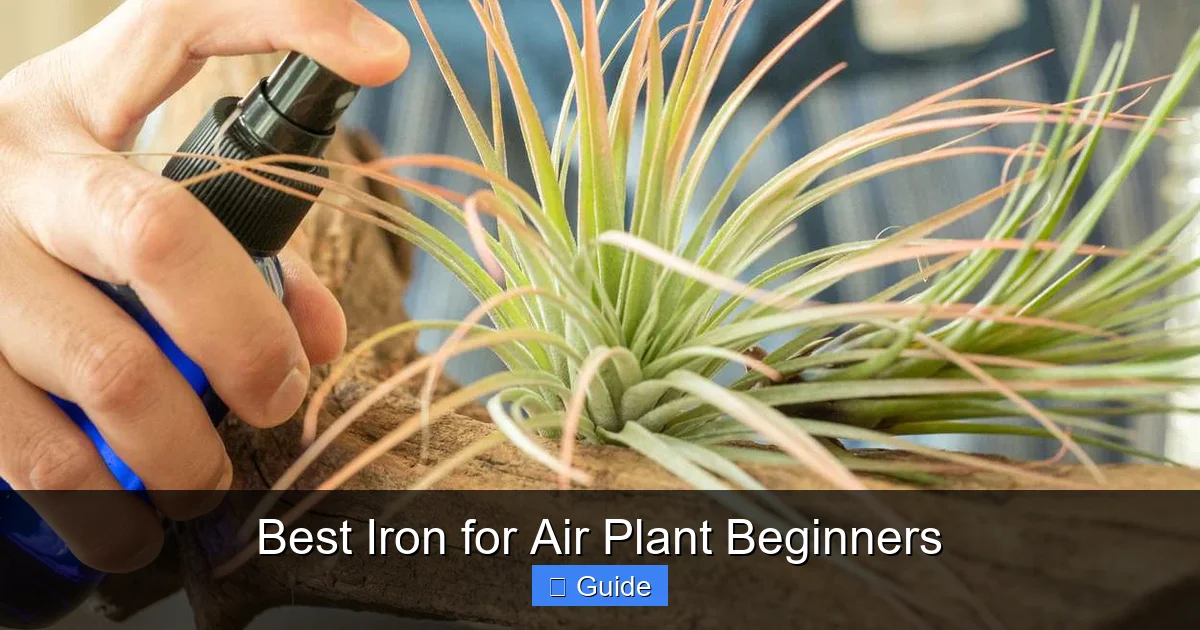
Best Iron for Air Plant Beginners
Iron is a crucial micronutrient for air plants that prevents chlorosis and supports vibrant green growth. This guide covers the best iron supplements for beginners, application methods, dosage tips, and common mistakes to avoid so your Tillandsia collection thrives.
Key Takeaways
- Iron prevents yellowing: Iron deficiency causes chlorosis (yellowing leaves) in air plants, especially new growth.
- Chelated iron works best: Look for EDTA or DTPA chelated iron formulas that remain available in varying pH conditions.
- Less is more: Air plants need only trace amounts of iron; over-application causes toxicity and leaf burn.
- Monthly application is ideal: Apply iron supplements once per month during the growing season for optimal results.
- Combine with balanced fertilizer: Iron works best as part of a complete nutrition program including nitrogen, phosphorus, and potassium.
- Watch for signs of deficiency: Pale new growth with green veins indicates iron shortage; adjust your feeding schedule accordingly.
- Water quality matters: Hard water can lock out iron; use rainwater, distilled, or RO water for best absorption.
Quick Answers to Common Questions
Can I use regular plant fertilizer on air plants?
Only if it is urea-free and contains chelated micronutrients. Standard fertilizers rely on soil bacteria to break down urea, which air plants lack. Look for “orchid fertilizer” or “epiphyte fertilizer” labels.
How often should I add iron to my air plants?
Once per month during active growing season (spring through fall) as part of a complete fertilizer. If treating a deficiency, you can do a foliar spray at 1/8 strength weekly for 3 weeks, then return to monthly.
Why are my air plant’s new leaves yellow but veins are green?
This is classic interveinal chlorosis caused by iron deficiency. The iron is either missing from your fertilizer, locked out by high pH water, or blocked by excess phosphorus. Test your water pH and switch to a chelated iron formula.
Can I put iron supplement in my spray bottle for daily misting?
No. Daily misting with fertilizer causes salt buildup on trichomes, blocking water absorption. Use iron only during the monthly soak, or as a separate weekly foliar spray at very low concentration (1/8 strength) in the morning.
Is rusty water good for air plants since it has iron?
Absolutely not. Rust is iron oxide, which is insoluble and unavailable to plants. It can also clog trichomes and introduce harmful bacteria. Always use chelated iron that stays dissolved in water.
📑 Table of Contents
- Why Iron Matters for Your Air Plants
- Understanding Iron Deficiency in Tillandsia
- Types of Iron Supplements for Air Plants
- Top Product Recommendations
- How to Apply Iron Supplements Correctly
- Water Quality: The Hidden Factor
- Common Mistakes Beginners Make
- Building a Complete Nutrition Plan
- Troubleshooting Iron Issues
- Conclusion
Why Iron Matters for Your Air Plants
If you are new to the world of Tillandsia, you might focus on light and water. Those are the big two. But there is a quiet hero in plant nutrition that often gets overlooked. That hero is iron. Iron is not needed in huge amounts like nitrogen. But without it, your air plants simply cannot make chlorophyll. Chlorophyll is the green pigment that catches sunlight. No iron means no chlorophyll. No chlorophyll means no energy. No energy means a slow decline.
I learned this the hard way with my first Ionantha. It looked fine for months. Then the new leaves came in pale. Almost yellow. The veins stayed green. That is the classic signature of iron deficiency. It is called interveinal chlorosis. Once I added a chelated iron supplement to my routine, the next flush of growth came in deep, rich green. The difference was night and day. This guide will walk you through everything you need to know about choosing and using the best iron for air plant beginners.
Understanding Iron Deficiency in Tillandsia
The Telltale Signs
Spotting iron deficiency early saves your plant. The most obvious sign is yellowing on the newest leaves. Older leaves usually stay green. This happens because iron is immobile in the plant. The plant cannot move iron from old leaves to new ones. So the new growth suffers first. You will see a distinct pattern. The tissue between the veins turns yellow or creamy white. The veins themselves stay dark green. This contrast is your smoking gun.
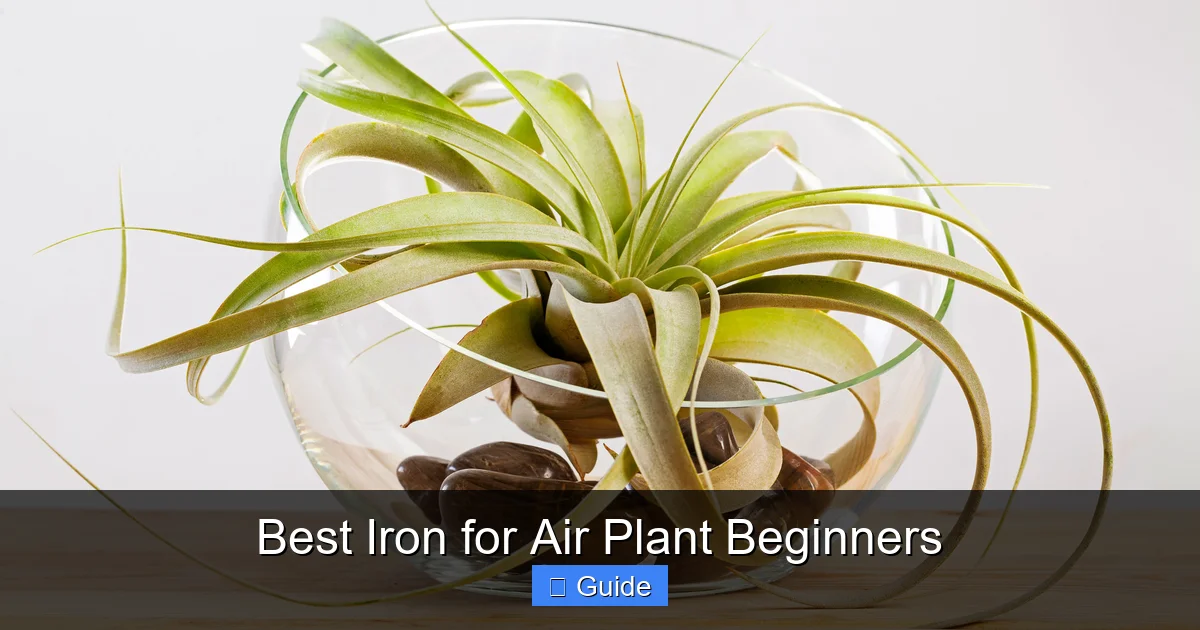
Visual guide about Best Iron for Air Plant Beginners
Image source: cdn.mos.cms.futurecdn.net
Other signs include stunted growth. The plant just stops putting out size. The leaves may be thinner than usual. In severe cases, the growing tip can die back. Flowering may be poor or non-existent. The bracts (colorful leaves during bloom) might be washed out instead of vibrant red or pink. If you see any of this, do not panic. It is fixable.
Why It Happens
Air plants absorb nutrients through their leaves. They do not have soil to buffer pH. This makes them sensitive. High pH water is the number one cause of iron lockout. Tap water in many areas is alkaline. It often sits above 7.5 pH. At that level, iron precipitates out. It turns into a solid the plant cannot absorb. It is right there in the water, but the plant cannot use it. It is like having a feast behind a locked glass door.
Using the wrong fertilizer can also cause issues. Some orchid fertilizers are high in phosphorus. Excess phosphorus blocks iron uptake. Cold temperatures slow down metabolism. The plant cannot pull in nutrients fast enough. Even low light reduces the plant’s demand for iron. It is a chain reaction. Fix the root cause, and the symptom disappears.
Types of Iron Supplements for Air Plants
Chelated Iron: The Gold Standard
If you buy one thing, buy chelated iron. Chelation is a chemical process. It wraps the iron ion in an organic molecule. This claw-like molecule holds the iron tight. It prevents the iron from reacting with other minerals. It keeps the iron soluble in water. It keeps the iron available across a wider pH range. This is critical for air plants. They have no soil buffer. They face the full pH of your water head-on.
There are different chelating agents. EDTA is the most common. It works well up to about pH 6.5. DTPA is stronger. It holds iron up to pH 7.5. EDDHA is the strongest. It works even in highly alkaline conditions up to pH 9. For most beginners using tap water, DTPA or EDDHA based products are the safest bet. They cost a bit more. They are worth every penny. Look for labels that say “Iron Chelate” or “Fe-DTPA” or “Fe-EDDHA”.
Iron Sulfate and Iron Gluconate
You will see ferrous sulfate at garden centers. It is cheap. It is high in iron. But it is not chelated. In water above pH 7, it turns to rust almost instantly. The plant cannot use rust. It can also burn delicate Tillandsia leaves. Iron gluconate is sometimes sold for aquariums. It is gentler. But it breaks down fast in light. It is not stable enough for a monthly soak routine. I do not recommend these for beginners. The risk of lockout or burn is too high.
Complete Fertilizers with Iron
Many Tillandsia-specific fertilizers already contain chelated iron. Brands like Epiphyte’s Delight, Grow More, or MSU Orchid formula include a full micronutrient package. This is the easiest route. You get your macros (NPK) and micros (including iron) in one bottle. The ratio is balanced. You do not have to mix separate bottles. You do not have to guess the dose. For a beginner, this is often the best iron for air plant beginners because it removes complexity.
Top Product Recommendations
Best All-in-One: Epiphyte’s Delight
This is a cult favorite in the air plant community. It is a urea-free formula. Urea needs soil bacteria to break down. Air plants do not have soil bacteria. Epiphyte’s Delight uses nitrate nitrogen. It is immediately available. It contains a full micronutrient suite with chelated iron (EDTA). The ratio is 17-8-22. It promotes strong growth and blooming. You mix 1/4 teaspoon per gallon. It lasts forever. A small jar feeds a large collection for a year. It is simple, effective, and trusted.
Best Standalone Iron: Southern Ag Chelated Liquid Iron
If you already have a fertilizer you love but it lacks iron, this is the add-on. It uses HEDTA chelate. It works in slightly alkaline water. It is a liquid. Easy to measure. You add a few drops to your soak water. It is very concentrated. A pint bottle will last a hobbyist years. It turns the water a dark amber. Do not let the color scare you. Follow the label rate for “foliar application” or “hydroponics”. Cut that rate in half for air plants. They are sensitive.
Best for Hard Water: Sequestrene 138 Fe-EDDHA
If your tap water is very hard (high pH, high calcium), standard chelates fail. EDDHA is the answer. Sequestrene 138 is a professional greenhouse product. It is a dark red powder. It dissolves into a blood-red solution. It holds iron at pH levels that would crash EDTA or DTPA. It is expensive per ounce. But you use tiny amounts. A 1-pound bag is a lifetime supply for a home grower. This is the nuclear option for iron lockout.
Best Budget Option: Dyna-Gro Foliage-Pro
Dyna-Gro makes excellent complete fertilizers. Foliage-Pro is 9-3-6. It has all 16 essential elements. The iron is chelated with EDTA. It is widely available at hydroponic stores and online. It is very concentrated. 1 teaspoon per gallon is the standard rate. For air plants, use 1/4 teaspoon per gallon. It is affordable. A quart bottle costs around $20 and lasts a long time. It is a great “set it and forget it” single bottle solution.
How to Apply Iron Supplements Correctly
The Soak Method
Air plants drink through their leaves. The best way to feed them is a bath. Fill a bowl with water. Room temperature. Rainwater, distilled, or RO water is best. If you must use tap water, let it sit overnight. This lets chlorine gas off. It does not lower pH much, but it helps. Add your fertilizer or iron supplement. Mix gently. Submerge the plants. Leave them for 20 to 60 minutes. I do 30 minutes usually. Shake off excess water vigorously. Place upside down on a towel. They must dry fully within 4 hours. Rot is the enemy. Wet crowns at night kill plants.
Frequency and Timing
Feed weekly, weakly. That is the old orchid adage. It applies perfectly here. Use 1/4 strength fertilizer every week. Or use full strength once a month. I prefer monthly full strength. It fits my schedule. I pick the first Saturday of the month. It becomes a ritual. Do not feed in the dead of winter if your plants are dormant. Low light means low metabolism. They cannot use the nutrients. Salt buildup on leaves is a real risk. Resume in spring when growth restarts.
Foliar Spraying: A Supplemental Trick
For a quick green-up, you can foliar spray. Mix a very dilute solution. 1/8 strength or less. Put in a spray bottle. Mist the plants thoroughly. Do this in the morning. The leaves stay wet longer. Absorption happens over hours. This is great for a plant showing early chlorosis. It bypasses the roots (which don’t exist functionally) and goes straight to the leaves. Do not do this in direct sun. Wet leaves + sun = burn. Do not replace soaking with spraying. Soaking hydrates. Spraying feeds. You need both.
Water Quality: The Hidden Factor
Test Your Water
You cannot fix what you do not measure. Buy a simple pH pen or test strips. Test your tap water. Test your rainwater. Test your RO water. Know your baseline. If your tap water is 8.2 pH, standard EDTA iron will not work well. You need DTPA or EDDHA. If your water is 6.8, EDTA is fine. Knowledge saves money. Knowledge saves plants.
Hard Water Solutions
Hard water has high calcium and magnesium. It has high alkalinity (buffering capacity). It resists pH change. It locks out iron. You have three options. Option one: Collect rainwater. It is naturally soft and slightly acidic. Perfect for air plants. Option two: Buy an RO (reverse osmosis) unit or RO water from a grocery store machine. It strips everything out. You get pure H2O. You must add calcium/magnesium back if you use pure RO. Option three: Use an acidifier. Citric acid or phosphoric acid drops lower the pH of your soak water. This keeps iron soluble. Test after adding acid. Aim for 5.5 to 6.5 pH.
The Chlorine and Chloramine Issue
Municipal water has disinfectants. Chlorine gasses off overnight. Chloramine does not. Chloramine is chlorine bonded to ammonia. It is stable. It does not evaporate. It can harm sensitive Tillandsia trichomes. It can kill beneficial microbes on the leaf surface. If your city uses chloramine, you need a dechlorinator. Seachem Prime is popular. One drop per gallon neutralizes chloramine. It is cheap insurance. Let the water sit 15 minutes after treating. Then add your nutrients.
Common Mistakes Beginners Make
Overdosing Iron
More is not better. Iron toxicity is real. It shows up as bronzing or brown spots on leaves. The tips may curl and crisp. The plant looks “dirty”. It happens fast with strong chelates like EDDHA. Always measure. Use a dedicated measuring spoon. Do not eyeball drops from a bottle. If the label says 1 teaspoon per gallon for soil, use 1/4 teaspoon for air plants. Start low. Watch for two weeks. Increase slightly if needed. You can always add. You cannot take away.
Mixing Incompatible Products
Never mix iron supplements with calcium supplements in the same concentrate bottle. They react. Iron + Calcium = Iron precipitate (rust) + Calcium precipitate (lime). Both become unavailable. If you use a Cal-Mag supplement and an iron supplement, add them to the soak water separately. Fill bowl with water. Add Cal-Mag. Swirl. Add Iron. Swirl. Add plants. Do not pre-mix them in a stock solution. They will ruin each other in the bottle.
Ignoring the Seasons
Air plants have seasons. Even indoors. Winter light is weak. Days are short. Metabolism slows. Feeding full strength in December causes salt burn. The plant sits in nutrient-rich water it cannot process. The salts stay on the leaf. They draw moisture out. The leaf desiccates. Cut feeding to once every 6-8 weeks in winter. Or stop entirely if growth stops. Ramp up in March. Match your care to the plant’s reality.
Using Water Softener Water
This is a silent killer. Water softeners swap calcium for sodium. Sodium is toxic to plants. It builds up in leaf tissue. It destroys cell structure. The plant collapses from the inside. Never use softened water for air plants. Never. Use the bypass spigot. Use rainwater. Use RO. Use distilled. Anything but softened water. This is the number one “I did everything right but they died” cause I see in forums.
Building a Complete Nutrition Plan
The Base Fertilizer
Iron does not work in a vacuum. It needs nitrogen to build the proteins that hold chlorophyll. It needs magnesium for the chlorophyll molecule center. It needs sulfur for amino acids. It needs manganese for photosynthesis enzymes. A complete fertilizer provides the team. Iron is just one player. Pick a urea-free, complete formula. Use it as your foundation. Add standalone iron only if you see deficiency symptoms despite regular feeding.
Supplementing Calcium and Magnesium
If you use RO or rainwater, you have zero calcium and magnesium. Air plants need both. Calcium builds cell walls. Magnesium is the center of chlorophyll. Without them, iron cannot do its job. Add a Cal-Mag supplement once-monthly soak with Cal-Mag. Or use a fertilizer that includes them (like MSU RO formula). Do not skip this. Soft water growers see dramatic improvements adding Cal-Mag. The leaves get thicker. The plant gets rigid. It resists rot better.
Tracking and Adjusting
Keep a simple log. Date. Water source. Fertilizer used. Dose. Observations. Take photos monthly. Compare leaf color. Compare growth speed. Note bloom cycles. This data teaches you more than any article. You learn your plants’ language. You see patterns. “Oh, every February the new growth yellows.” That tells you to increase iron or lower pH in January. You become the expert on your conditions.
Troubleshooting Iron Issues
Yellowing Persists After Treatment
You added iron. Two weeks later. Still yellow. Check three things. First: pH of soak water. Is it below 7? If not, iron is locked out. Second: Is the plant actually growing? No growth means no uptake. Fix light first. Third: Is it really iron deficiency? Magnesium deficiency looks similar but hits older leaves first. Manganese deficiency looks like iron but with necrotic spots. Nitrogen deficiency is uniform yellowing of old leaves. Match the symptom to the nutrient.
Leaf Burn After Iron Application
Brown tips. Crispy edges. Bronze patches. You burned them. Flush immediately. Soak in pure water (RO or rain) for 2 hours. Shake dry. Skip next feeding. Resume at half strength. Check your measuring. Check your water volume. A “gallon” jug might be 3.5 liters. A “teaspoon” might be a tablespoon. Precision matters. Use a digital scale for powders. 1 gram per liter is a safe baseline for most chelates.
Algae Growth in Soak Bowl
Iron feeds algae too. If your soak water turns green, you have light + nutrients. Algae competes with your plants. It can smother trichomes. Clean the bowl with bleach (rinse well) or vinegar between uses. Do not soak in direct sunlight. Use an opaque bucket. Dump the water after each use. Do not reuse soak water. It is spent. It has waste metabolites. It has altered pH. Fresh water every time.
Conclusion
Iron is small but mighty. It is the key that unlocks green growth. For air plant beginners, the best approach is simple. Start with a quality complete fertilizer that includes chelated iron. Epiphyte’s Delight or Dyna-Gro Foliage-Pro are perfect starting points. Use rainwater or RO water if you can. Feed monthly at 1/4 to 1/2 label strength. Watch your plants. They talk to you through their leaves. Pale new growth? Check pH. Check iron. Adjust one thing at a time.
Do not chase magic potions. Consistency beats intensity. A weak weekly feed beats a strong monthly burn. Clean water beats perfect fertilizer in bad water. Observation beats rigid schedules. You are growing living things. They have good days and bad days. Your job is to provide the conditions for them to thrive. Iron is just one piece. But it is a piece that, when missing, stops the whole show. Get it right, and your Tillandsia will reward you with colors you did not know existed. Deep greens. Electric reds. Vibrant purples. And those impossible, alien flowers. Happy growing.
Frequently Asked Questions
What is the best type of iron for air plants?
Chelated iron (Fe-EDTA, Fe-DTPA, or Fe-EDDHA) is best because it remains soluble and available to the plant across varying pH levels. Avoid ferrous sulfate or non-chelated forms which precipitate in alkaline water.
How do I know if my air plant needs iron?
Look for yellowing or whitening of the newest leaves while the veins remain green (interveinal chlorosis). Stunted growth, pale bloom bracts, and thin leaves are also signs. Older leaves typically stay green since iron is immobile in the plant.
Can too much iron hurt my air plants?
Yes, iron toxicity causes bronzing, brown leaf tips, curled edges, and necrotic spots. Always measure supplements precisely and start at 1/4 the label rate for terrestrial plants. Air plants are far more sensitive to mineral buildup.
Should I use rainwater or tap water for mixing iron supplements?
Rainwater, distilled, or RO water is ideal because they are low in minerals and slightly acidic, keeping iron available. If using tap water, test pH first; if above 7.5, use Fe-DTPA or Fe-EDDHA chelates and consider adding a pH buffer.
Can I mix iron supplement with my regular fertilizer?
If your fertilizer already contains chelated iron, you do not need extra. If adding standalone iron, mix it into the soak water at the same time as fertilizer but never pre-mix concentrates together—especially not with calcium supplements—as they will react and become unavailable.
How long does it take to see results after treating iron deficiency?
New growth should emerge green within 2-3 weeks of correcting the deficiency. Existing yellow leaves will not turn green; iron is immobile so the plant cannot fix damaged tissue. Focus on the color of the next set of leaves produced.