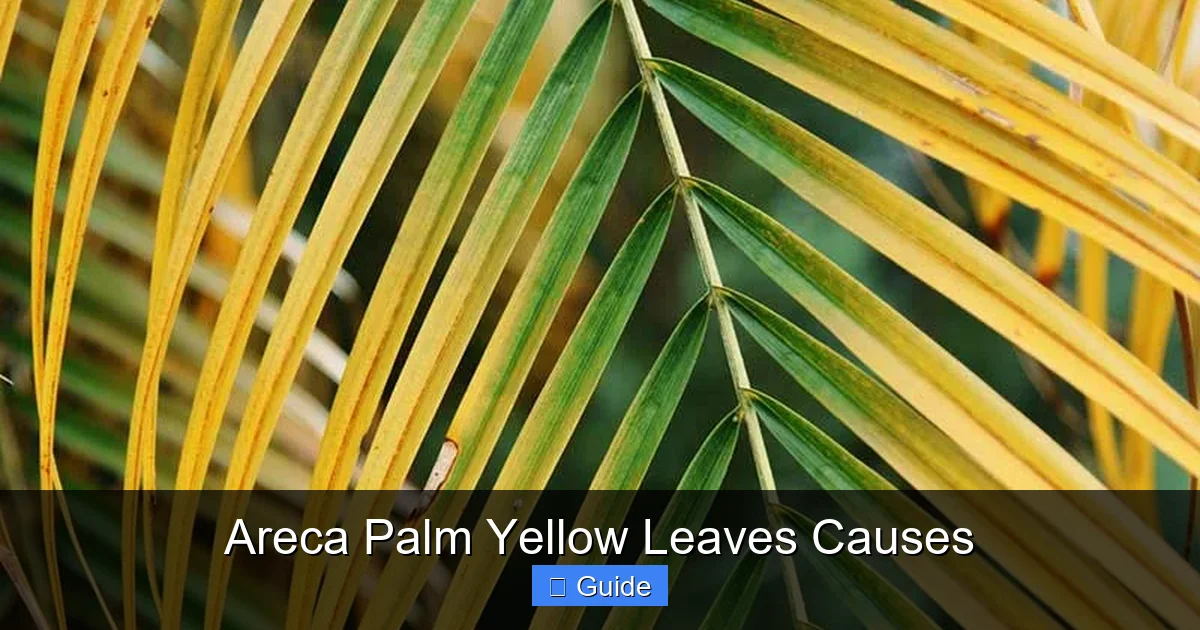
Areca Palm Yellow Leaves Causes
Areca palm yellow leaves usually signal watering issues, light problems, or nutrient deficiencies. This guide covers every cause and gives you step-by-step solutions to bring your palm back to vibrant green health.
You walk past your areca palm and notice something wrong. Those lush green fronds are turning yellow. Your stomach drops. Is it dying? Did you kill it? Take a deep breath. Yellow leaves on an areca palm are common. They are a cry for help, not a death sentence. This guide walks you through every reason why this happens. We will cover watering, light, nutrients, pests, and more. By the end, you will know exactly what to do.
Areca palms, also called butterfly palms or Dypsis lutescens, are popular houseplants. They bring a tropical vibe to any room. But they can be dramatic. They show stress fast. Yellow leaves are their main language. Learning to read that language changes everything. You stop guessing. You start fixing. Let us dive in.
Key Takeaways
- Overwatering is the #1 cause: Soggy soil suffocates roots and leads to yellowing fronds starting from the bottom.
- Underwatering causes crispy yellow tips: Dry soil makes leaves turn yellow then brown at the edges.
- Light matters: Too much direct sun scorches leaves; too little light causes pale, yellowing growth.
- Nutrient deficiencies show specific patterns: Nitrogen deficiency yellows older leaves; magnesium shows yellow bands on older fronds.
- Pests like spider mites cause stippled yellowing: Check leaf undersides for tiny webs and moving dots.
- Natural aging is normal: Bottom fronds yellow and die as the plant grows new ones at the top.
- Quick action saves the plant: Identify the cause, adjust care, and prune only fully dead fronds.
Quick Answers to Common Questions
Why are my areca palm leaves turning yellow and brown?
Yellow and brown tips usually mean underwatering, low humidity, or fertilizer burn. Check soil moisture first. If dry, water thoroughly. If wet, check for root rot. Increase humidity and flush soil if you fertilized recently.
Can yellow areca palm leaves turn green again?
No, once a leaf turns yellow, it will not turn green again. The plant has abandoned that frond. Focus on fixing the cause so new growth emerges green. Prune fully yellow fronds at the base.
How often should I water my areca palm?
Water when the top 1-2 inches of soil feel dry. This is typically every 5-7 days in summer and every 10-14 days in winter. Always check with your finger rather than following a strict schedule.
What is the best fertilizer for areca palms with yellow leaves?
Use a palm-specific slow-release fertilizer with magnesium, iron, and manganese. Apply at half strength monthly during spring and summer. Avoid high-nitrogen lawn fertilizers which can burn palm roots.
Should I mist my areca palm to fix yellow leaves?
Misting provides minimal humidity increase and can promote fungal spots. Use a humidifier, pebble tray, or group plants instead. Misting does not fix yellowing caused by watering, light, or nutrient issues.
📑 Table of Contents
- Understanding Normal vs. Problematic Yellowing
- Watering Issues: The Top Cause of Areca Palm Yellow Leaves
- Light Problems: Too Much or Too Little
- Nutrient Deficiencies and Fertilizer Issues
- Pests and Diseases That Cause Yellowing
- Environmental Stress Factors
- Seasonal Care Adjustments
- Step-by-Step Diagnosis Guide
- Pruning Yellow Leaves: Do It Right
- Prevention: Keep Your Areca Palm Green
- When to Call It Quits
- Conclusion
Understanding Normal vs. Problematic Yellowing
Before you panic, look at which leaves are yellow. Not all yellowing is bad. Areca palms grow from the center. New fronds emerge at the top. Old fronds at the bottom naturally die off. This is the circle of life.
Natural Aging Process
If only the lowest, oldest fronds are turning yellow, relax. This is normal. The plant is shedding old growth to fuel new growth. These fronds will turn completely brown and dry. You can prune them off at the base. Do not cut green tissue. Only remove fronds that are fully dead. If yellowing happens higher up or on many fronds at once, you have a problem.
Signs of Real Trouble
Problematic yellowing looks different. It affects younger fronds. It spreads fast. It comes with other clues. Look for yellow tips, yellow edges, or entire fronds turning pale. Check for brown crispy tips. Look for mushy stems. Check the soil. Smell it. These clues tell you the cause. We will decode each one below.
Watering Issues: The Top Cause of Areca Palm Yellow Leaves
Water is the number one reason for areca palm yellow leaves causes. These palms like moisture but hate wet feet. Getting the balance right is tricky. Most people overwater. Some underwater. Both cause yellowing but the signs differ.
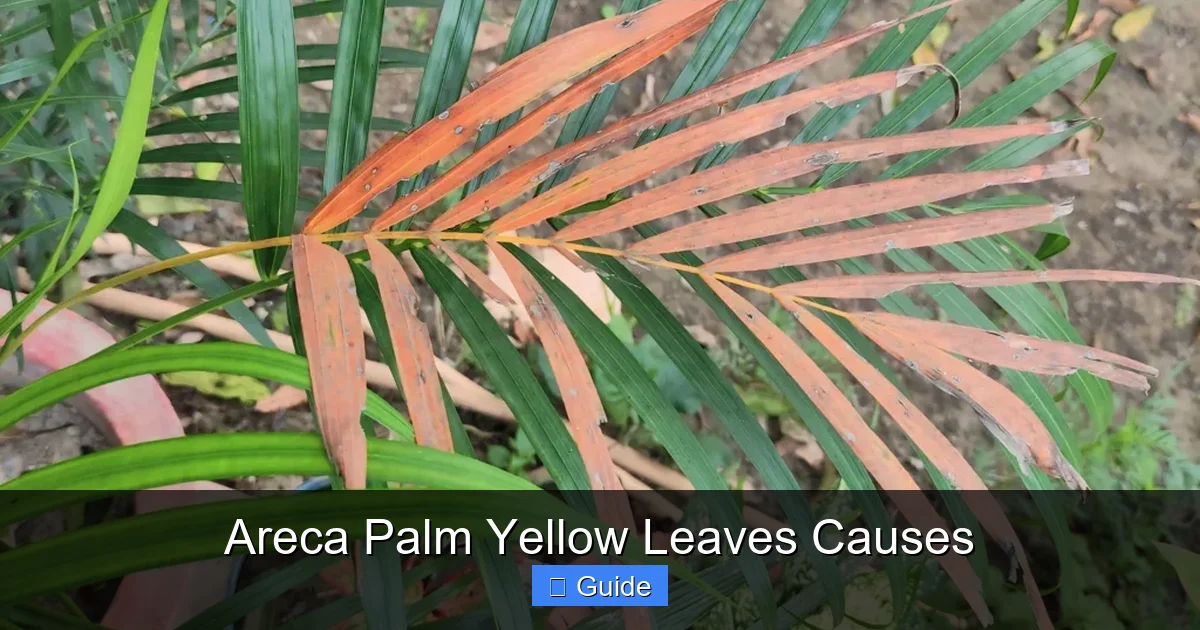
Visual guide about Areca Palm Yellow Leaves Causes
Image source: rootsandearth.in
Overwatering Symptoms and Fixes
Overwatering is the silent killer. The soil stays soggy. Roots cannot breathe. They rot. The plant cannot take up water or nutrients. Ironically, the leaves yellow because the roots are drowning.
Signs of overwatering:
- Yellowing starts on lower, older fronds
- Fronds feel soft or mushy, not crispy
- Soil stays wet for days
- Pot feels heavy
- Fungus gnats flying around
- Sour smell from soil
- Black, mushy roots if you check
How to fix it:
- Stop watering immediately.
- Check drainage holes. Are they blocked? Clear them.
- If soil is sopping, repot in fresh, well-draining mix.
- Use a mix of peat, perlite, and pine bark.
- Choose a pot with good drainage.
- Water only when top 2 inches of soil feel dry.
- Use your finger. Do not guess.
Recovery takes time. New growth will be green. Old yellow fronds will not turn green again. Prune them when fully brown.
Underwatering Symptoms and Fixes
Underwatering happens when life gets busy. The soil pulls away from the pot edges. Roots dry out and die. The plant sacrifices lower leaves to save the crown.
Signs of underwatering:
- Yellow tips and edges first
- Fronds feel crispy and papery
- Soil is bone dry, maybe hydrophobic
- Pot feels very light
- Leaves curl or fold
- Slow growth
How to fix it:
- Water thoroughly until it drains out bottom.
- If soil is hydrophobic, bottom water. Sit pot in tray of water for 30 minutes.
- Set a reminder to check soil every 3-4 days.
- Increase humidity around plant.
- Consider a moisture meter if you struggle.
The plant bounces back fast once hydrated. Crispy tips stay crispy. Trim them with clean scissors at an angle for looks.
Finding the Sweet Spot
The perfect watering schedule changes. It depends on light, temperature, humidity, pot size, and season. In summer, you might water twice a week. In winter, once every 10-14 days. Always check the soil first. The top 1-2 inches should be dry. The middle should be moist. Never let it sit in a saucer of water. Empty the saucer 30 minutes after watering.
Light Problems: Too Much or Too Little
Light is the second big factor in areca palm yellow leaves causes. These palms grow under forest canopies in nature. They want bright, indirect light. Direct sun burns them. Deep shade starves them.
Too Much Direct Sun
A south or west window with harsh afternoon sun is dangerous. The leaves get sunburned. This shows as bleached, yellow, or white patches. Usually on the side facing the window. The texture becomes papery. Brown crispy edges follow.
Fixes for sunburn:
- Move plant 3-5 feet back from window.
- Use a sheer curtain to filter light.
- Rotate plant weekly for even growth.
- Morning sun is okay. Afternoon sun is not.
Sunburned leaves do not recover. Prune them off. New growth will adapt to the new light level.
Too Little Light
A dark corner or north window in winter causes slow decline. The plant cannot photosynthesize enough. It drops lower leaves. Remaining leaves turn pale green then yellow. Stems stretch and get weak. New fronds are smaller and farther apart.
Fixes for low light:
- Move to brightest indirect light spot.
- Supplement with grow light 12-14 hours daily.
- Clean leaves monthly. Dust blocks light.
- Rotate for even exposure.
Recovery is slow in low light. Be patient. Do not overwater a low-light plant. It uses less water.
Ideal Light Conditions
An east window is perfect. Bright north window works. South or west with sheer curtain works. Aim for 1000-2000 foot-candles. If you can read a book comfortably without artificial light, it is probably bright enough. Watch the plant. It tells you. Compact growth with deep green color means happy.
Nutrient Deficiencies and Fertilizer Issues
Nutrients fuel growth. A lack of key minerals causes distinct yellowing patterns. Too much fertilizer burns roots. Both cause areca palm yellow leaves. Reading the pattern tells you what is missing or in excess.
Nitrogen Deficiency
Nitrogen drives green leaf growth. Without it, older leaves turn uniformly yellow. The yellowing starts at the tip and moves down. New growth is pale and small. The whole plant looks washed out.
Fix: Apply balanced liquid fertilizer at half strength. Use 3-1-2 or 3-1-3 ratio. Fertilize monthly in spring and summer. Stop in fall and winter.
Magnesium Deficiency
Very common in palms. Shows as yellow bands on older fronds. The center stays green. Edges turn yellow. Tips may brown. This is classic “palm yellowing.”
Fix: Use palm-specific fertilizer with magnesium. Or add Epsom salts. Mix 1 teaspoon per gallon water. Apply monthly during growing season. Do not overdo it.
Iron Deficiency
New growth turns yellow between veins. Veins stay green. This is interveinal chlorosis. Caused by high soil pH. Iron becomes unavailable. Common if you use tap water high in calcium.
Fix: Use chelated iron foliar spray for fast fix. Acidify soil with peat moss or sulfur. Use rainwater or distilled water. Check soil pH. Aim for 6.0-6.5.
Potassium Deficiency
Older fronds get yellow-orange spots. Tips and edges turn brown and frizzle. Spots look translucent. Very serious for palms. Can kill the plant.
Fix: Palm fertilizer with high potassium. Slow-release spikes work well. Apply per package directions. Takes months to correct.
Fertilizer Burn
Too much fertilizer salts build up. Roots burn. Leaf tips turn brown and yellow. Crusty white salt on soil surface. Plant wilts despite wet soil.
Fix: Flush soil thoroughly. Run water through pot for 5-10 minutes. Let drain completely. Repeat weekly for a month. Stop fertilizing 2-3 months. Repot in fresh soil if severe.
Best Fertilizer Practices
- Use palm-specific slow-release fertilizer.
- Apply at half recommended strength.
- Fertilize only during active growth (March-September).
- Water before and after fertilizing.
- Flush soil monthly to prevent salt buildup.
- Less is more. Palms are sensitive.
Pests and Diseases That Cause Yellowing
Bugs and pathogens love stressed palms. They suck sap or rot tissue. This causes yellow stipples, patches, or general decline. Check weekly. Catch early.
Spider Mites
Tiny red or brown dots. Barely visible. They spin fine webs on leaf undersides and between fronds. Leaves get yellow stipples. Then turn bronze or gray. Heavy infestation kills fronds fast. They love dry air.
Treatment:
- Shower plant with strong water spray.
- Wipe fronds with damp cloth.
- Apply neem oil or insecticidal soap weekly for 3 weeks.
- Increase humidity. Mites hate moisture.
- Isolate from other plants.
Mealybugs
White cottony masses in leaf axils and undersides. They suck sap. Leaves yellow and drop. Sticky honeydew attracts sooty mold. Ants farm them.
Treatment:
- Dab with alcohol-soaked cotton swab.
- Spray neem oil weekly.
- Systemic insecticide for heavy infestation.
- Check roots for root mealybugs.
Scale Insects
Brown or tan bumps on stems and leaf veins. Hard shell. Do not move. Suck sap. Cause yellow halos around attachment points. Hard to kill due to shell.
Treatment:
- Scrape off with fingernail or soft brush.
- Spray horticultural oil to suffocate.
- Systemic granules in soil work best.
- Repeat monthly for 3 months.
Fungal Leaf Spot
Yellow spots with brown centers. Halos around spots. Spots merge. Frond dies. Caused by wet leaves, poor air flow, high humidity.
Treatment:
- Remove affected fronds.
- Improve air circulation.
- Water at soil level, not on leaves.
- Copper fungicide if spreading.
Root Rot
The ultimate result of overwatering. Roots turn black and mushy. Smell foul. Plant yellows from bottom up. Wobbles in pot. Stems get soft at base.
Treatment:
- Unpot and wash roots.
- Cut all black mushy roots.
- Dip in hydrogen peroxide 3%.
- Repot in fresh sterile mix.
- New pot with drainage.
- Water sparingly until new growth.
Environmental Stress Factors
Sometimes the cause is not water, light, food, or bugs. It is the environment. Temperature, humidity, drafts, and water quality all matter.
Temperature Stress
Areca palms like 65-75°F (18-24°C). Below 55°F causes cold damage. Leaves get dark yellow patches. Tips brown. Growth stops. Above 85°F with low humidity causes heat stress. Leaves yellow and crisp.
Fix: Keep away from AC vents, heaters, drafty doors, cold windows in winter. Maintain stable temps.
Low Humidity
These are tropical plants. They want 50-60% humidity. Most homes are 30-40%. Low humidity causes brown tips that spread to yellow edges. Spider mites thrive.
Fixes:
- Humidifier nearby (best).
- Pebble tray with water.
- Group plants together.
- Mist daily (helps little but better than nothing).
- Bathroom or kitchen placement.
Drafts and Air Flow
Cold drafts shock the plant. Hot dry air from vents desiccates leaves. Both cause yellowing. Keep plant out of direct air flow paths.
Water Quality Issues
Tap water often has chlorine, fluoride, and salts. Palms are sensitive. Fluoride causes tip burn. Salts build up. Chlorine kills beneficial soil microbes.
Best water options:
- Rainwater (ideal).
- Distilled water.
- Filtered water (RO or carbon).
- Tap water left out 24 hours (removes chlorine only).
If you must use tap water, flush soil monthly. Repot annually to refresh soil.
Pot Bound Roots
Roots fill the pot. No soil left to hold water. Nutrients depleted. Plant yellows despite care. Roots circle and strangle.
Signs: Roots out drainage holes. Water runs straight through. Pot cracks. Plant lifts out of pot.
Fix: Repot in spring. Go up 2 inches in pot size. Loosen root ball. Trim circling roots. Fresh soil.
Seasonal Care Adjustments
Your care must change with seasons. What works in July kills in January. Understanding seasonal needs prevents yellowing.
Spring: Wake Up Season
Light increases. Growth starts. Increase watering frequency. Start fertilizing at half strength. Check for pests. Repot if needed. This is the best time for major changes.
Summer: Peak Growth
Max light. Max heat. Water most frequently. Fertilize monthly. Watch for sunburn if moved outside. High humidity helps. Mist or humidify. Check soil daily in heat waves.
Fall: Slow Down
Light drops. Growth slows. Reduce watering. Stop fertilizing by October. Bring outdoor plants in before 55°F nights. Check for hitchhiking pests. Clean leaves.
Winter: Rest Period
Low light. Cool temps. Water sparingly. Maybe every 2-3 weeks. No fertilizer. Keep away from heat vents. Humidify. Accept some lower leaf loss. Do not panic. Spring brings recovery.
Step-by-Step Diagnosis Guide
When you see yellow leaves, follow this checklist. Do not skip steps. The order matters.
- Check soil moisture. Finger test 2 inches down. Wet? Dry? Just right?
- Check drainage. Holes clear? Saucer empty? Pot not sitting in water?
- Check light. Where is plant? Hours of direct sun? Bright indirect?
- Inspect leaves closely. Top and bottom. Look for bugs, webs, spots, patterns.
- Check roots (if needed). Gently slip pot off. White firm roots = good. Black mushy = rot.
- Review recent changes. Moved? Repotted? Fertilized? Season change? New heater?
- Check humidity and temp. Near vent? Drafty window? Hygrometer reading?
- Review water quality. What water? When last flushed?
- Review fertilizer. What type? How often? Strength? Last application?
Match your findings to the sections above. Fix the root cause. Not the symptom.
Pruning Yellow Leaves: Do It Right
Pruning helps the plant look better. It removes dead weight. But wrong pruning hurts.
When to Prune
Only prune fronds that are fully yellow or brown. No green left. Partially green fronds still feed the plant. Wait until completely dead.
How to Prune
- Use clean, sharp pruners or scissors.
- Wipe blades with alcohol between cuts.
- Cut at base of frond stem, near trunk.
- Do not tear. Clean cut heals fast.
- Do not cut the growing tip (crown shaft). That kills the palm.
- Remove only 1-2 fronds at a time if many are bad.
After Pruning Care
Water lightly. No fertilizer for 2 weeks. Watch for new growth. That is your success sign.
Prevention: Keep Your Areca Palm Green
Prevention beats cure. Build these habits.
Weekly Routine
- Check soil moisture.
- Inspect leaves top and bottom.
- Rotate plant 1/4 turn.
- Wipe dust off fronds.
- Empty saucer.
Monthly Routine
- Flush soil with thorough watering.
- Check root ball (lift pot slightly).
- Fertilize (in season).
- Deep clean leaves with damp cloth.
- Check humidity.
Seasonal Routine
- Repot in spring (every 2 years).
- Adjust watering for season.
- Move for light changes.
- Pest preventative spray (neem oil monthly).
The Golden Rules
- Drainage is everything.
- Check before you water.
- Bright indirect light.
- Feed weakly, weekly (in season).
- Humidity matters.
- Clean leaves photosynthesize better.
- Observe daily. Catch early.
When to Call It Quits
Sometimes the plant is too far gone. Root rot is advanced. Crown is mushy. No green tissue left. All fronds dead. Stem is soft. If the crown (growing point) is dead, the palm cannot regrow. It is not like a shrub. One growing point. If that rots, it is over.
Signs it is too late:
- Crown pulls out easily.
- Base smells rotten.
- No firm white roots anywhere.
- Stem is hollow or mushy.
- No green after 3 months of correct care.
It hurts. But compost it. Learn. Buy a new one. Apply what you learned.
Conclusion
Yellow leaves on your areca palm are not a mystery. They are a message. Overwatering. Underwatering. Light issues. Nutrient gaps. Pests. Environment. Each has a distinct signature. You now know how to read them. You have the tools to fix them.
Start with the soil check. It is the most common cause. Fix drainage. Adjust watering. Move to better light. Feed appropriately. Watch for bugs. Be patient. Palms are slow. New growth takes months. But it will come. Green fronds will unfurl. Your palm will thrive.
Remember the golden rule: observe, diagnose, act, wait. Do not guess. Do not panic. Do not overcorrect. One change at a time. Watch the response. Your areca palm wants to be green. Help it get there.
Keep this guide handy. Refer back when yellow appears. Share it with plant friends. Every palm parent faces this. You are not alone. You are now equipped. Go grow something beautiful.
Frequently Asked Questions
Why are the bottom leaves of my areca palm turning yellow?
Bottom leaves yellowing is often natural aging if only the oldest 1-2 fronds are affected. If many bottom fronds yellow at once, it indicates overwatering, nitrogen deficiency, or root binding. Check soil moisture and root health first.
Can too much light cause areca palm yellow leaves?
Yes, direct afternoon sun scorches areca palm fronds, causing bleached yellow patches that turn brown and crispy. Move the plant to bright indirect light or filter harsh sun with a sheer curtain to prevent further damage.
How do I know if my areca palm has root rot?
Root rot shows as yellowing lower fronds, mushy stems at the base, foul soil smell, and black mushy roots when unpotted. The plant may wilt despite wet soil. Immediate repotting with root trimming is required to save it.
What nutrient deficiency causes yellow bands on areca palm leaves?
Magnesium deficiency causes distinct yellow bands along the edges of older fronds while the center stays green. Apply palm fertilizer with magnesium or 1 teaspoon Epsom salts per gallon of water monthly during growing season.
Why is my areca palm turning yellow after repotting?
Post-repotting yellowing is usually transplant shock or root damage. Ensure the new pot has drainage, use well-draining soil, water thoroughly once, then wait until top soil dries. Do not fertilize for 6-8 weeks. Keep in stable conditions.
Can spider mites cause yellow leaves on areca palm?
Yes, spider mites cause yellow stippling on fronds that progresses to bronze discoloration. Look for fine webbing on leaf undersides and between fronds. Treat with neem oil or insecticidal soap weekly for 3 weeks and increase humidity.