Hemp Vs Hemp for Golden Pothos
Choosing the right hemp product for your golden pothos can transform its growth and health. This guide breaks down the differences between hemp poles, hemp mats, and hemp-enriched soil so you can pick the perfect match for your plant’s needs.
If you have ever walked down the plant aisle and spotted a golden pothos climbing a moss pole, you know how lush those vines can look. But moss poles can be messy, they dry out fast, and they sometimes harbor fungus gnats. Enter hemp. Hemp products have surged in popularity among houseplant lovers because they are clean, sustainable, and surprisingly effective. Yet not all hemp is created equal. A hemp pole, a hemp mat, and a handful of hemp fiber mixed into soil each serve a different purpose. In this guide we will walk through every major hemp option for golden pothos, compare their pros and cons, and help you decide which one fits your space, budget, and watering habits.
Golden pothos, known scientifically as Epipremnum aureum, is a tropical vine that loves to climb. In its native habitat it scrambles up tree trunks, anchoring itself with aerial roots that absorb moisture and nutrients from bark and humid air. When we grow it indoors we try to recreate that vertical journey. The support we choose determines how big the leaves get, how fast the plant grows, and how healthy the root system stays. Hemp offers three main formats: rigid poles wrapped in hemp rope, flat mats made of needle-punched hemp fiber, and loose hemp hurd or fiber used as a soil amendment. Each format interacts with the plant in a unique way. Understanding those interactions is the key to making a smart purchase.
Key Takeaways
- Hemp poles mimic natural climbing surfaces: They give aerial roots a textured grip that encourages larger leaves and stronger vines.
- Hemp mats retain moisture evenly: Perfect for bottom-watering setups, they reduce root rot risk while keeping humidity high.
- Hemp soil amendments improve aeration: Adding hemp fiber or hurd to potting mix creates air pockets that roots love.
- Durability varies by product type: Poles last years, mats degrade in 12-18 months, and soil amendments break down in one season.
- Cost differs significantly: Poles are priciest upfront, mats are mid-range, and bulk hemp fiber is the most budget-friendly.
- Sustainability is a win across the board: All hemp products are biodegradable, renewable, and pesticide-free.
- Match the product to your care style: Hands-off growers prefer poles, attentive waterers like mats, and DIY mixers choose loose fiber.
Quick Answers to Common Questions
Can I use a hemp pole for a trailing golden pothos instead of a climbing one?
Yes, you can lay a hemp pole horizontally on the soil surface and pin the vines to it. The aerial roots will still attach, creating a fuller, bushier plant without vertical height.
How often should I replace a hemp mat?
Plan to replace hemp mats every twelve to eighteen months. They thin out and lose wicking ability as they biodegrade.
Is hemp hurd the same as hemp mulch sold for gardens?
Often yes, but garden mulch may be coarser and dustier. Look for horticultural-grade hemp hurd labeled for potting mixes to ensure clean, consistent chip size.
Do I need to sterilize hemp products before use?
No. Hemp’s natural antimicrobial properties make sterilization unnecessary. A quick rinse to remove dust is sufficient for loose hurd and fiber.
Can I combine a hemp pole with a moss pole for extra moisture?
You can wrap sphagnum moss around a hemp pole core, but the moss will dry faster and may introduce fungus gnats. A hemp mat wrapped around the pole is a cleaner, longer-lasting alternative.
📑 Table of Contents
- Why Hemp Makes Sense for Golden Pothos
- Hemp Poles: The Classic Climbing Support
- Hemp Mats: The Horizontal Humidity Booster
- Loose Hemp Fiber and Hurd: The Soil Amendment Approach
- Comparing Cost, Longevity, and Maintenance
- Matching Hemp Products to Your Growing Style
- Sustainability and End-of-Life Considerations
- Common Mistakes to Avoid
- Seasonal Adjustments for Year-Round Success
- Troubleshooting: When Things Go Wrong
- Final Thoughts: Picking Your Perfect Hemp Match
Why Hemp Makes Sense for Golden Pothos
Before we dive into the specific products, let’s talk about why hemp has become a go-to material for plant supports and soil additives. Hemp fibers come from the stalk of the Cannabis sativa plant, specifically varieties bred for industrial use. They contain almost no THC, so there is no legal or psychoactive concern. The fibers are long, strong, and naturally resistant to mold and bacteria. That resistance is a huge plus in the warm, humid microclimate around a climbing pothos. Unlike sphagnum moss, which can stay soggy and breed unwanted microbes, hemp wicks moisture without staying waterlogged. It also breaks down slowly, releasing trace minerals back into the environment rather than turning into anaerobic sludge.
Another reason growers love hemp is its sustainability profile. Hemp grows quickly, requires little water, needs no synthetic pesticides, and sequesters carbon as it grows. When you finish with a hemp pole or mat, you can toss it in the compost pile where it will decompose into rich humus. That closed-loop lifecycle appeals to anyone trying to reduce plastic waste in their plant hobby. Finally, hemp has a neutral pH, so it will not skew your soil chemistry the way some peat-based products can. All of these traits make hemp a versatile foundation for the three product categories we will explore next.
Hemp Poles: The Classic Climbing Support
What a Hemp Pole Looks Like
A hemp pole usually consists of a sturdy core, often made of PVC, bamboo, or recycled plastic, wrapped tightly with thick hemp rope. The rope provides a rough, fibrous texture that aerial roots can grab onto. Poles come in various heights, typically twelve to forty-eight inches, and diameters from one to two inches. Some models are extendable, letting you add sections as your pothos grows taller. The top often has a pointed tip for easy insertion into the pot.
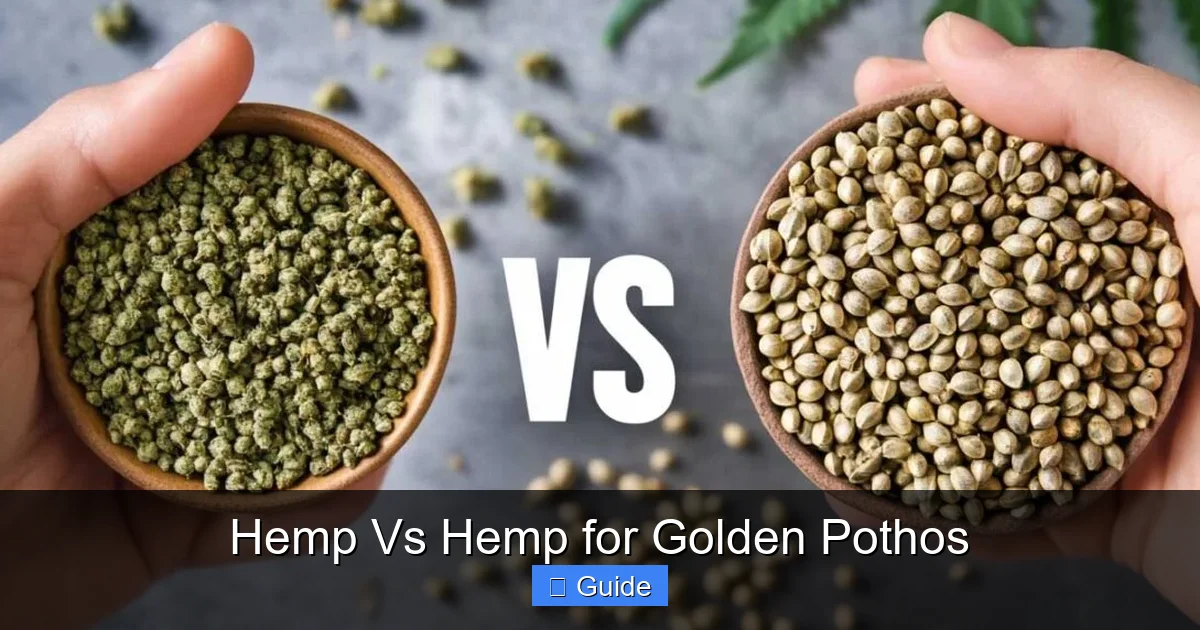
Visual guide about Hemp Vs Hemp for Golden Pothos
Image source: mycbdadvisor.com
How It Benefits Golden Pothos
When a golden pothos vine contacts a hemp pole, its aerial roots latch onto the fibers. This physical attachment signals the plant to shift energy from trailing to climbing. The result is larger leaves, shorter internodes, and a more upright, architectural shape. Because the hemp rope holds moisture from misting or ambient humidity, the roots stay hydrated without sitting in standing water. That consistent moisture encourages root penetration into the pole itself, effectively expanding the plant’s root zone beyond the pot.
Installation Tips
Insert the pole at planting time or during repotting to avoid damaging established roots. Push it all the way to the bottom of the pot for stability. If the plant is already mature, you can still add a pole by carefully making a narrow hole with a chopstick and sliding the pole in. Secure the main vine to the pole with soft plant ties or strips of hemp fabric. Mist the pole daily for the first two weeks to help roots find their grip.
Pros and Cons
- Pros: Long lifespan (three to five years), excellent structural support, encourages dramatic leaf size increase, reusable if you unwrap and rewrap the rope.
- Cons: Higher upfront cost (fifteen to forty dollars), takes up vertical space, requires regular misting in dry homes, can be top-heavy in lightweight pots.
Hemp Mats: The Horizontal Humidity Booster
What a Hemp Mat Looks Like
Hemp mats are flat sheets of needle-punched hemp fiber, usually sold in rolls or pre-cut squares ranging from six by six inches to twelve by twenty-four inches. They resemble thick felt, with a dense but breathable structure. Some mats come with a biodegradable backing; others are pure fiber. They are lightweight, flexible, and easy to cut with scissors.
How It Benefits Golden Pothos
Place a hemp mat on top of the soil surface or use it as a liner in a decorative cache pot. The mat acts like a mulch layer: it slows evaporation, keeps the topsoil evenly moist, and creates a humid microclimate right at the base of the stems. For golden pothos, which often produces new growth nodes at soil level, that extra humidity encourages basal shoots and a fuller plant. The mat also prevents soil splash during watering, keeping leaves clean and reducing fungal spores.
Creative Uses Beyond Top-Dressing
You can wrap a hemp mat around a wooden stake to make a DIY pole, line the inside of a hanging basket to retain moisture, or cut strips to tie vines gently without cutting into stems. Some growers place a mat in a tray, add water, and set the pot on top for passive bottom watering. The mat wicks water up steadily, preventing the dry pockets that cause leaf curl.
Pros and Cons
- Pros: Low cost (five to fifteen dollars), versatile, improves humidity without daily misting, compostable after twelve to eighteen months, easy to customize size.
- Cons: Degrades faster than poles, provides no vertical structure, can harbor fungus gnats if kept too wet, needs replacement annually.
Loose Hemp Fiber and Hurd: The Soil Amendment Approach
Understanding Fiber vs. Hurd
When hemp stalks are processed, two main byproducts emerge. The long outer fibers are used for rope and textiles. The woody inner core, called hurd or shive, is chopped into small chips. Both can be added to potting mix, but they behave differently. Fiber is stringy and creates a mesh-like network in the soil. Hurd is chunky and acts more like perlite or orchid bark, creating large air pockets.
How They Improve Potting Mix
Golden pothos thrives in a chunky, well-draining medium that still holds some moisture. Adding ten to twenty percent hemp fiber by volume increases water retention without compaction. The fibers hold water along their length and release it slowly as the surrounding mix dries. Hurd, on the other hand, boosts drainage and aeration. It resists breakdown for about a year, keeping the soil structure open. Both materials are pH neutral and add small amounts of silica, which strengthens cell walls and improves pest resistance.
Mixing Your Own Golden Pothos Blend
A simple DIY recipe: two parts high-quality peat-free potting soil, one part coarse hemp hurd, one part perlite, and a handful of hemp fiber. Moisten the mix thoroughly before potting. The hurd prevents the mix from collapsing over time, while the fiber ensures even moisture distribution. This blend works especially well in terracotta pots, where evaporation is high.
Pros and Cons
- Pros: Very affordable in bulk, customizable ratios, improves both drainage and retention, fully compostable, adds trace minerals.
- Cons: Requires mixing effort, breaks down in one growing season (needs refresh at repot), fiber can mat if overwatered, dust from hurd can irritate lungs (wear a mask when mixing).
Comparing Cost, Longevity, and Maintenance
Upfront Investment
If you are buying for a single plant, a hemp pole is the biggest single expense, typically twenty to forty dollars for a quality thirty-six-inch model. A hemp mat large enough to cover a six-inch pot costs about eight dollars. Bulk hemp hurd or fiber runs ten to twenty dollars for a five-liter bag, enough for several repots. For a large collection, the per-plant cost of loose amendments drops dramatically.
Lifespan and Replacement Cycle
Poles last the longest. The core remains rigid for years; only the outer rope may need rewrapping after three to four seasons. Mats degrade visibly after twelve to eighteen months, thinning out and losing wicking ability. Loose amendments disappear into the soil food web within one growing season, so you replenish them at each annual repot.
Ongoing Care Demands
Poles demand the most attention. You must mist them regularly, especially in winter when indoor humidity plummets. Mats are set-and-forget until they break down. Loose amendments require no extra steps beyond your normal watering routine. If you travel often or prefer low-maintenance care, mats or amended soil win over poles.
Matching Hemp Products to Your Growing Style
The Hands-Off Minimalist
You water when you remember, you do not mist, and you want a product that just works. Choose a hemp mat as a top dressing. It buffers moisture swings, reduces watering frequency, and needs zero daily interaction. Replace it once a year at repot time.
The Enthusiast Who Loves Big Leaves
You want those dinner-plate-sized golden pothos leaves that only happen with strong vertical support. Invest in a hemp pole. Commit to misting it every morning or setting up a small humidifier nearby. The payoff is a show-stopping specimen plant.
The DIY Soil Mixer
You enjoy crafting custom blends and repot annually anyway. Buy bulk hemp hurd and fiber. Tailor the ratio to your pot type and climate. This route gives you the most control over drainage and moisture retention.
The Small-Space Apartment Dweller
Vertical space is limited. A tall pole may not fit. Use a hemp mat cut to fit a shallow, wide planter. Train the vines horizontally across the mat, pinning them down with floral pins. The mat keeps the soil surface humid, encouraging roots at every node for a dense, bushy look.
Sustainability and End-of-Life Considerations
One of the biggest selling points for hemp is its eco-friendly story. Hemp crops sequester up to fifteen tons of CO2 per hectare, improve soil health through deep taproots, and require no synthetic herbicides. When your hemp product reaches the end of its useful life, you have several green options. Poles with natural fiber rope can be unwrapped; the rope goes to compost, the core (if bamboo or wood) can be reused as a stake. Pure hemp mats and loose fiber go straight into the compost bin or municipal green waste. They break down into carbon-rich humus within six months in an active pile. Avoid sending them to landfill, where anaerobic decomposition releases methane. If you buy hemp products with plastic cores or synthetic backings, separate the materials before disposal.
Common Mistakes to Avoid
Over-Misting the Pole
More water is not better. Constantly dripping wet rope invites algae and can rot the vine where it touches the pole. Mist until the surface glistens, then let it dry to the touch before misting again. In humid summer months you may only need to mist every other day.
Burying the Mat Too Deep
If you cover a hemp mat with more than half an inch of soil, it stops wicking effectively and can create a perched water table. Keep it at or just below the surface.
Using Too Much Fiber in the Mix
Over thirty percent hemp fiber can create a dense mat that holds too much water and suffocates roots. Stick to the ten to twenty percent range.
Ignoring Pot Stability
A tall hemp pole in a light plastic pot will tip over once the vine gets heavy. Use a heavy ceramic cache pot or add weight (clean stones) to the bottom of the decorative pot.
Seasonal Adjustments for Year-Round Success
Spring and Summer
Growth is fastest. Poles need daily misting. Mats stay moist longer due to higher ambient humidity. Loose amendments break down quicker in warm soil, so monitor soil structure.
Fall and Winter
Growth slows. Reduce misting to every two or three days for poles. Check mats for mold; if you see white fuzz, let the mat dry fully and sprinkle cinnamon as a natural fungicide. Soil with hemp amendments will stay wet longer; water less frequently.
Repotting Season
Early spring is ideal. When you repot, assess each hemp product. Rewrap pole rope if frayed. Replace mats that have thinned. Refresh loose amendments by adding new hurd and fiber to the fresh mix.
Troubleshooting: When Things Go Wrong
Yellowing Leaves Near the Pole
Could be over-misting causing stem rot. Let the pole dry, increase air circulation, and trim affected leaves.
Fungus Gnats on the Mat
Let the top inch of soil and the mat dry completely. Apply mosquito bits (Bacillus thuringiensis israelensis) to the soil. Replace the mat if infestation persists.
Soil Staying Soggy with Hurd
You may have used fine hurd dust instead of chips. Repot with coarser material and add extra perlite.
Vine Refusing to Climb the Pole
Roots need humidity to attach. Wrap the pole in a damp hemp mat for two weeks to jump-start rooting, then remove the mat.
Final Thoughts: Picking Your Perfect Hemp Match
There is no single best hemp product for golden pothos. The right choice depends on what you value most: dramatic vertical growth, low-maintenance humidity, or total control over your soil mix. A hemp pole delivers the wow factor of giant leaves but asks for daily misting. A hemp mat quietly balances moisture and asks for almost nothing in return. Loose hemp fiber and hurd let you engineer the perfect root environment from the ground up. Many experienced growers actually combine two or three formats: a pole for climbing, a mat for top-dressing, and hurd in the soil. That layered approach mimics the plant’s natural habitat most closely, giving you a golden pothos that looks like it just descended from a tropical canopy. Start with one product that matches your current routine, observe how your plant responds, and expand from there. Your pothos will thank you with vigorous vines, glossy variegation, and the quiet satisfaction of knowing you gave it a sustainable, plant-friendly foundation.
Frequently Asked Questions
Will hemp products change the pH of my potting soil?
Hemp is naturally pH neutral, typically between 6.5 and 7.0. It will not acidify or alkalize your mix, making it safe for golden pothos and most other houseplants.
Can I use hemp rope from a hardware store to make my own pole?
Yes, but choose untreated, natural hemp rope without synthetic binders or chemical finishes. Hardware store rope may be treated for UV resistance, which can leach into the plant.
How do I know when my hemp pole needs rewrapping?
When the rope becomes loose, frayed, or no longer holds moisture after misting, it is time to rewrap. This usually happens after three to four years of use.
Are hemp mats safe for pets if they chew on them?
Hemp fiber is non-toxic, but ingesting large amounts could cause digestive upset or blockage. Keep mats out of reach of curious pets.
Can I compost hemp products in a small indoor worm bin?
Yes, hemp breaks down well in vermicompost. Shred mats and rope into small pieces so worms can process them faster.
Does hemp attract pests like spider mites or thrips?
Hemp itself does not attract pests. However, the humid microclimate around a wet pole or mat can favor spider mites. Regular inspection and good airflow prevent outbreaks.