Best Bamboo for Succulents and Cacti
Choosing the right bamboo for succulents and cacti makes all the difference in plant health and stability. Natural bamboo stakes provide excellent support without damaging delicate roots or stems. This guide covers everything you need to know about selecting, using, and maintaining bamboo supports for your desert plant collection.
Key Takeaways
- Natural bamboo stakes outperform plastic and metal alternatives: They breathe, prevent rot, and blend naturally with desert aesthetics while providing sturdy support for top-heavy succulents and cacti.
- Select bamboo diameter based on plant size: Use 4-6mm stakes for small succulents, 8-12mm for medium cacti, and 15-20mm for large columnar specimens to ensure proper support without overwhelming the plant.
- Always cure and treat bamboo before use: Fresh bamboo can harbor pests and fungi. Proper drying, heat treating, or sealing prevents introducing problems to your succulent collection.
- Position stakes at planting time to avoid root damage: Insert supports during repotting rather than driving them into established root systems, which can sever critical roots and stress the plant.
- Use soft ties that accommodate growth: Velcro plant ties, cotton twine, or silicone-coated wire prevent stem damage as succulents and cacti expand, unlike rigid wire or plastic zip ties that cut into tissue.
- Monitor for mold in humid conditions: Bamboo can develop surface mold in high humidity. Regular inspection and good air circulation prevent fungal issues from spreading to your plants.
- Replace bamboo stakes every 1-2 years: Even treated bamboo eventually degrades in soil contact. Plan annual replacement during repotting season to maintain reliable support.
Quick Answers to Common Questions
What diameter bamboo stake should I use for a 2-foot tall cactus?
For a 2-foot tall cactus, use an 8-10mm diameter bamboo stake. This provides adequate support without overwhelming the plant visually or physically.
Can I use fresh bamboo from my yard for succulent stakes?
Fresh bamboo must be cured and heat-treated before use. Untreated fresh bamboo harbors pests, fungi, and high sugar content that causes rot and can damage your succulents.
How often should I replace bamboo stakes in succulent pots?
Replace bamboo stakes every 1-2 years, ideally during repotting. Even treated bamboo degrades at the soil line over time and can harbor pests or rot.
What is the best tie material for attaching succulents to bamboo stakes?
Velcro plant ties are the best option. They adjust as the plant grows, breathe well, and never cut into delicate succulent or cactus stems like wire or twine can.
Why is my bamboo stake getting moldy in my humid climate?
Bamboo develops surface mold in high humidity with poor air circulation. Improve airflow with a fan, water at soil level only, and wipe stakes monthly with 3% hydrogen peroxide.
📑 Table of Contents
- Why Bamboo Makes Perfect Sense for Succulent Support
- Understanding Bamboo Types for Plant Support
- Selecting the Right Diameter for Your Plants
- Preparing Bamboo Stakes for Safe Use
- Installation Techniques That Protect Roots
- Tying Materials and Methods
- Common Problems and Solutions
- Seasonal Care and Maintenance
- Creative Applications Beyond Basic Staking
- Sourcing Quality Bamboo Stakes
- Environmental Considerations
- Conclusion
Why Bamboo Makes Perfect Sense for Succulent Support
If you have ever watched a beautiful tall cactus slowly lean until it topples over, you know the heartbreak of inadequate support. I learned this lesson the hard way with a gorgeous Cereus peruvianus that grew three feet tall before a summer storm sent it crashing into its neighbors. The search for better solutions led me to bamboo, and honestly, I wish I had discovered it years earlier.
Bamboo brings a unique combination of properties that make it ideal for succulents and cacti. Unlike metal stakes that can heat up in direct sun and burn delicate plant tissue, bamboo stays cool. Unlike plastic that becomes brittle and snaps after a season in UV light, quality bamboo lasts for years. And unlike treated lumber that can leach chemicals into your carefully crafted soil mix, bamboo is completely natural.
The best bamboo for succulents and cacti offers something else too – aesthetics. There is something deeply satisfying about seeing natural materials supporting natural beauty. The warm golden tones of cured bamboo complement the blues, greens, and silvers of desert plants perfectly. But not all bamboo works equally well, and choosing the wrong type can create more problems than it solves.
Understanding Bamboo Types for Plant Support
Running vs Clumping Bamboo Species
Before diving into specific products, you need to understand a fundamental distinction. Bamboo falls into two main categories – running and clumping. Running bamboo spreads aggressively through underground rhizomes and can become invasive. Clumping bamboo stays in a tight cluster and expands slowly. For plant stakes, this distinction matters because it affects harvest sustainability and cane characteristics.
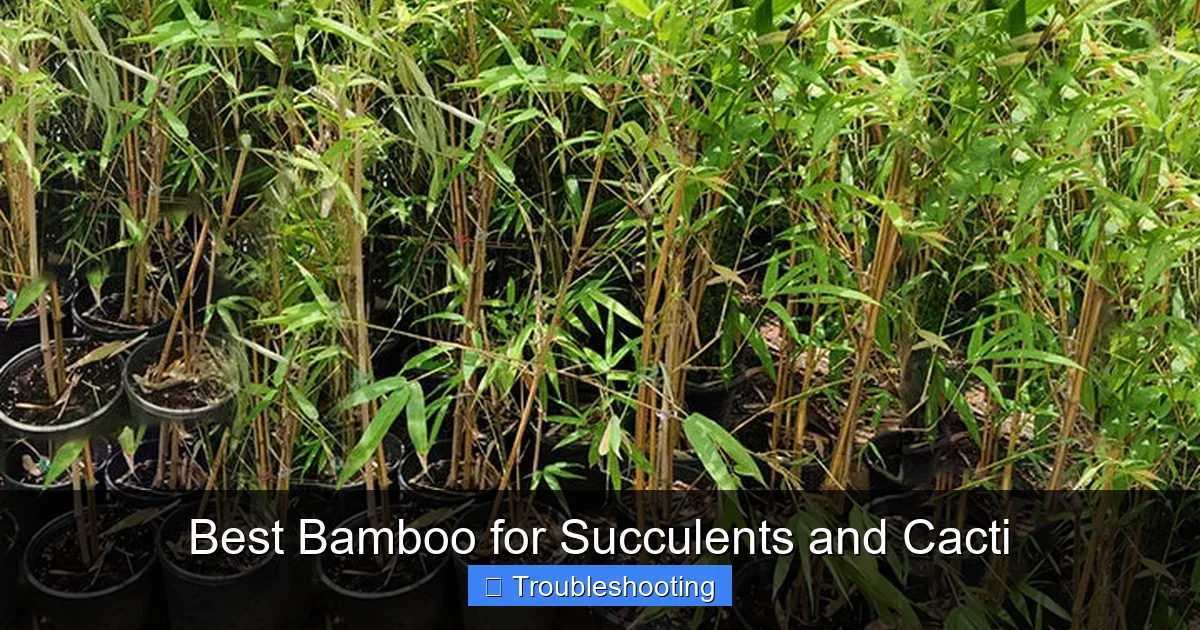
Most commercial bamboo stakes come from Phyllostachys species, which are running bamboos. These produce straight, strong canes with thick walls – perfect for stakes. Moso bamboo (Phyllostachys edulis) dominates the market and provides excellent material. However, some specialty suppliers offer stakes from clumping species like Bambusa oldhamii, which produce slightly different characteristics.
Wall Thickness and Node Spacing
The structural integrity of a bamboo stake depends heavily on wall thickness and node spacing. Thick-walled bamboo resists splitting and bending better than thin-walled varieties. Nodes – those ring-like joints along the cane – act as natural reinforcement points. Closer node spacing generally means stronger stakes.
For succulent and cactus use, you want bamboo with walls at least 3mm thick for medium stakes, and 5mm or more for large stakes. Node spacing of 8-12 inches provides good reinforcement without creating weak points between nodes. Moso bamboo typically hits these numbers perfectly, which explains its market dominance.
Age at Harvest Matters Tremendously
This is where many gardeners go wrong. Bamboo reaches full hardness and strength at 3-5 years of age. Younger canes (1-2 years) still contain high sugar content, making them susceptible to mold, insect damage, and premature decay. They also lack the structural density needed for long-term support.
Quality suppliers harvest only mature canes. You can often tell the difference by weight – mature bamboo feels dense and heavy for its size. The surface should feel hard, almost woody, not slightly soft or fibrous. Color should be a consistent golden-tan, not pale yellow or greenish. If a stake feels light or you can dent it with a fingernail, it was harvested too young.
Selecting the Right Diameter for Your Plants
Small Succulents and Offsets (4-6mm Stakes)
For echeverias, haworthias, sedums, and other compact succulents, thin bamboo stakes or even bamboo skewers work beautifully. These tiny supports help newly propagated offsets stay upright while they establish roots. They also work well for supporting flower stalks on smaller succulents that might otherwise bend under the weight of blooms.
I keep a jar of 4mm bamboo stakes near my propagation station. When I behead an echeveria and the top starts to root, a tiny stake keeps it perfectly centered in the new pot. The stake disappears visually once the rosette fills out. For flower stalks, I insert the stake at an angle and use a tiny clip of soft twine – the stalk straightens within days.
Medium Cacti and Tall Succulents (8-12mm Stakes)
This is the sweet spot for most home collections. Cereus, trichocereus, euphorbia, aloe, and agave species in the 12-36 inch range need this diameter. The stake provides genuine structural support without looking bulky. An 8mm stake works for a 12-inch euphorbia, while a 36-inch cereus wants 10-12mm.
My trichocereus collection sits in 10mm bamboo stakes. These cacti get top-heavy fast, especially after rain plumps them up. The stakes disappear visually behind the ribs but provide rock-solid anchoring. I drive them to the bottom of the pot during repotting, which means the stake moves with the root ball – no wobbling, no loosening over time.
Large Specimens and Columnar Cacti (15-20mm Stakes)
For the big boys – mature saguaros, large cereus, organ pipe cactus, big agaves – you need serious hardware. Stakes in the 15-20mm range (roughly 5/8 to 3/4 inch) provide the necessary backbone. These stakes can support plants 4-8 feet tall, especially when used in pairs or tripods.
I learned this requirement with a 5-foot Cereus repandus that snapped a 12mm stake in a windstorm. The replacement 18mm stake has held firm through multiple storms. For really large specimens, I now use three stakes in a tripod configuration, tied together at the top with natural jute. This distributes forces beautifully and looks intentional rather than industrial.
Preparing Bamboo Stakes for Safe Use
Why Fresh Bamboo Creates Problems
Here is a mistake I see constantly – gardeners buying fresh-cut bamboo from a neighbor’s yard or a craft store and driving it straight into succulent pots. Fresh bamboo carries risks. The high starch and sugar content attracts fungi and insects. As it dries unevenly in the pot, it can split, creating sharp edges that damage stems. Worst of all, it can harbor bamboo-specific pathogens that might jump to your plants.
Commercial bamboo stakes should be properly cured, but “should be” and “are” differ. I always treat new stakes myself regardless of source. It takes minimal effort and eliminates variables. Think of it like quarantining new plants – a small investment that prevents major headaches.
Heat Treatment Method
The most effective home treatment uses heat. You need a temperature of 140-160°F (60-70°C) for 30 minutes. This kills insects, eggs, and fungal spores without damaging the bamboo structure. A kitchen oven works perfectly for small batches. Lay stakes on a baking sheet, heat at the lowest setting (usually 170°F), prop the door open slightly, and bake for 30 minutes.
For larger quantities, a solar oven or even a black contractor bag in full summer sun works. The bag needs to reach target temperature – use a probe thermometer to verify. This method treats dozens of stakes at once. Just ensure good air circulation around stakes so heat penetrates evenly.
Borate Treatment for Long-Term Protection
For stakes that will stay in pots for years, borate treatment adds excellent protection. Dissolve 1 cup of borax (sodium borate) in 1 gallon of hot water. Submerge stakes for 24 hours, then dry thoroughly in sun for several days. This creates a mild fungicide and insecticide barrier throughout the bamboo.
Borate-treated stakes last significantly longer in soil contact. The treatment leaches slowly, providing ongoing protection. It is safe for plants at these concentrations – boron is actually a micronutrient – but don’t use treated stakes in edible gardens. For ornamentals and succulents, it is perfectly fine.
Sealing the Ends
One simple step dramatically extends stake life: seal the cut ends. The open ends absorb water like straws, accelerating rot from the inside. A dip in melted beeswax, paraffin, or even exterior-grade wood sealer closes the vascular bundles. Do both top and bottom ends.
I use a small crockpot to melt beeswax – it stays liquid for hours and costs pennies per stake. Dip each end for 3 seconds, let cool. The wax also creates a slightly tacky surface that helps ties grip better. For the bottom end that sits in soil, I add a second dip after the first cools.
Installation Techniques That Protect Roots
The Golden Rule: Stake at Repotting Time
This cannot be emphasized enough. Never drive a stake into an established root ball. Succulent and cactus roots are often shallow, brittle, and slow to regenerate. A stake driven blindly can sever the main taproot or critical lateral roots, setting the plant back months or even killing it.
Always install stakes during repotting. This lets you see exactly where roots are, position the stake in open soil, and ensure it reaches the pot bottom for maximum stability. If you must stake an established plant, use the “gentle probe” method – insert a thin bamboo skewer first to map root locations, then drive the real stake along a clear path.
Depth and Angle Considerations
Stakes should reach within 1 inch of the pot bottom. This anchors them against leverage forces. For tall plants in shallow pots (common with succulents), angle the stake slightly outward at the base, creating a wider footprint. Think of it like a tent stake – angled resistance beats vertical every time.
In deep pots, vertical placement works fine. In shallow wide pots (like bonsai dishes for succulents), I angle stakes at 15-20 degrees from vertical, leaning away from the plant. This creates a tripod effect with the pot rim. The stake top ends up further from the plant center, giving more working room for ties.
Multiple Stake Configurations
Single stakes work for straight, single-trunk plants. But many succulents and cacti branch, lean, or grow in clusters. Multiple stakes provide better control. Two stakes opposite each other create a “channel” that keeps a leaning plant centered. Three stakes in a triangle handle multi-branched specimens beautifully.
For a clustering aloe or agave, I place three stakes at 120-degree intervals around the pot rim, angled slightly inward at the top. Soft ties connect each major rosette to its nearest stake. The plant looks natural – supported but not constrained. As new offsets appear, they get their own tie to the nearest stake.
Tying Materials and Methods
Why Tie Choice Matters as Much as Stake Choice
You can have the perfect bamboo stake and still damage your plant with the wrong tie. Succulent and cactus stems expand significantly – sometimes doubling in girth over a growing season. A tie that fits perfectly in spring can strangle the plant by fall. I have seen beautiful cacti permanently scarred by wire ties that bit deep into ribs before anyone noticed.
The ideal tie material stretches slightly, breathes, and degrades slowly enough to last a season but not so slowly that it becomes embedded. It should be wide enough to distribute pressure (at least 1/4 inch) and soft enough to never cut tissue.
Velcro Plant Ties – My Top Choice
Self-gripping velcro tape designed for plants hits every requirement. It adjusts infinitely, expands with growth, breathes, and releases easily for repositioning. Cut it to any length. It comes in green, brown, and black – choose brown to blend with bamboo. A 50-foot roll costs $10-15 and lasts years.
I wrap velcro around the stake once, then around the plant stem, then back to the stake, creating a loose figure-eight. The crossover point sits between stake and plant, preventing rubbing. Leave enough slack to insert two fingers comfortably. Check monthly during growing season and loosen as needed.
Natural Fiber Options
Cotton twine, jute, and hemp twine work well and look completely natural. They degrade over 6-12 months, which is actually a feature – they force you to re-evaluate tie placement regularly. The downside: they can hold moisture against stems in humid climates, potentially encouraging rot.
If using natural fiber, wrap loosely in a figure-eight and check weekly in humid weather. Replace at first sign of fraying or mold. For dry climates, these are excellent choices. I use jute for my outdoor agave collection – it weathers to a beautiful silver-gray that matches the bamboo perfectly.
Silicone-Coated Wire for Heavy Loads
For very heavy branches or top-heavy cacti that need rigid support, silicone-coated training wire provides strength without cutting. The thick silicone jacket (look for 2mm+ coating) distributes pressure over a wide area. It bends easily but holds position firmly.
Use this sparingly and only on woody, mature stems – never on soft succulent tissue. Create a loose loop around the stem, twist the ends around the stake, and cover any exposed wire tips with heat-shrink tubing or electrical tape. Check monthly – this material does not stretch.
Common Problems and Solutions
Mold on Bamboo Stakes
In humid climates or with frequent watering, bamboo stakes can develop surface mold – usually white, green, or black fuzzy patches. This rarely harms the plant directly but looks unsightly and indicates conditions that could encourage root rot. The solution is multi-layered.
First, improve air circulation. Space pots further apart. Use a small fan in enclosed growing areas. Second, water at soil level, not over the stakes. Third, wipe stakes down with 3% hydrogen peroxide monthly during humid seasons – it kills surface mold without harming plants. Fourth, consider switching to borate-treated stakes if mold persists.
I had a mold issue in my greenhouse last summer. The fix was simple: a $20 clip-on fan running 4 hours daily, plus monthly peroxide wipes. The mold disappeared within two weeks and never returned. The fan also strengthened plant stems – a bonus benefit.
Stake Rot at Soil Line
The portion of stake at and just below soil level rots fastest. This is where moisture, microbes, and oxygen meet perfectly. You will notice the stake becoming soft, discolored, or crumbly at this zone. Once rot starts, it progresses upward.
Prevention starts with the end-sealing mentioned earlier. But also: use a well-draining soil mix that dries quickly at the surface. Top-dress with coarse gravel or pumice – this keeps the immediate stake area drier. And replace stakes proactively. I mark the installation date on each stake with a silver Sharpie. At 18 months, it gets replaced during the next repotting.
Stakes Loosening Over Time
As soil settles and roots grow, stakes can work loose. A wobbling stake damages roots with every movement. The fix is simple but requires repotting. When you repot, drive the stake deeper – all the way to the pot bottom if possible. In fabric pots, drive it through the bottom drainage holes into the ground or tray below for ultimate stability.
For pots where deeper driving is not possible (solid bottom, on a shelf), use a “deadman” anchor. Tie the stake base to a heavy object – a large stone, a piece of rebar, a brick – buried in the bottom soil layer. This prevents leverage from tipping the stake.
Pests in Bamboo
Bamboo can harbor mealybugs, spider mites, and scale insects in the node cavities. These pests can migrate to your succulents. Inspect stakes before use – shine a flashlight into each node cavity. Look for white cottony deposits, tiny moving dots, or small brown bumps.
If you find pests, the heat treatment described earlier kills them. For stakes already in use, spray node cavities with 70% isopropyl alcohol using a spray bottle with a narrow nozzle. Repeat weekly for three weeks. Quarantine affected plants. I now heat-treat all new stakes as standard practice – prevention beats treatment every time.
Seasonal Care and Maintenance
Spring Inspection Routine
When growing season starts, do a complete stake audit. Check each stake for: firmness in soil, signs of rot at soil line, mold on surface, pest evidence in nodes, tie condition and tightness, and stake-to-plant alignment. Tighten loose stakes. Loosen tight ties. Replace compromised stakes. This 10-minute routine prevents 90% of support-related problems.
I combine this with my spring repotting schedule. Plants getting repotted get new stakes automatically. Plants staying in place get the full inspection. Any stake showing more than surface weathering gets replaced. The old stakes become kindling or garden markers – nothing wasted.
Summer Monitoring
Summer brings rapid growth. Check ties every two weeks during peak growth. A cactus rib can expand 1/4 inch in a month – enough to turn a loose tie into a tourniquet. Summer storms test stake stability. After any high wind event, verify stakes have not shifted.
Water management matters too. Stakes wick water upward. In extreme heat, this can actually help by creating a tiny humid microclimate at the plant base. But in humid summers, it adds unwanted moisture. Adjust watering accordingly – maybe skip the top inch of soil near stakes.
Fall Preparation
As growth slows, do a final tie check. Loosen everything to maximum comfortable slack – plants will not grow much until spring, but stems may still swell slightly from fall rains. In freeze-prone areas, consider stake removal for dormant plants. Frozen soil expands and can snap stakes or heave them out, damaging roots.
For hardy outdoor succulents, I leave stakes in place but add a mulch layer around the base. This reduces freeze-thaw cycles at the soil line. For tender plants moving indoors, I remove stakes entirely, clean them, and store dry. This gives both plant and stake a rest period.
Winter Storage for Stakes
Clean stakes store better. Brush off soil. Wipe with dilute bleach solution (1:10) if any disease was present. Dry thoroughly in sun. Store in a dry, ventilated container – a cardboard box with holes works fine. Avoid plastic bags which trap residual moisture.
I bundle stakes by diameter with rubber bands and label the bundles. This makes spring setup fast. Stored properly, treated bamboo stakes last 3-4 seasons. Untreated stakes last 1-2. The small effort of proper storage pays off in stake longevity.
Creative Applications Beyond Basic Staking
Bamboo Trellises for Climbing Succulents
Some succulents climb or trail naturally – certain sedums, dischidia, hoya (technically not succulents but often grown with them), and epiphytic cacti like epiphyllum. A simple bamboo trellis transforms these from sprawling messes to vertical features.
Create a fan trellis by splaying 5-7 thin stakes (4-6mm) from a single point at the pot rim, fanning upward. Tie intersections with jute. The plant grows through the fan, displaying flowers beautifully. For heavier climbers, use a grid trellis – horizontal and vertical stakes lashed at intersections.
Bamboo Rings for Clumping Support
For mounding succulents like large echeverias, sempervivums, or small agaves that tend to splay open, a bamboo ring keeps the form tight. Bend a thin, green (fresh) bamboo cane into a circle, overlap ends, and secure with wire. Let it dry in place – it will hold the shape permanently.
Place the ring over the plant early in the season. As the plant grows, it fills the ring naturally. The support is invisible at maturity but prevents the “donut hole” effect where centers open up. Works beautifully for show plants.
Bamboo Labels That Last
This is not structural support, but it uses the same material. Cut 6-inch sections of 8-10mm bamboo. Split lengthwise with a sharp knife (carefully!). Write plant names on the flat inner surface with a permanent paint marker or wood-burning tool. Drive into soil at pot edge.
These labels last years, look completely natural, and cost pennies. The split face weathers to a nice patina. I have labels from 5 years ago still perfectly legible. Much better than plastic tags that fade, break, or blow away.
Sourcing Quality Bamboo Stakes
What to Look for in a Supplier
Not all bamboo stakes are created equal. Garden centers often carry stakes that sat in damp warehouses for months. Online bulk suppliers vary wildly. Here is what I look for: clear harvest age statement (3+ years), species identification (preferably Phyllostachys edulis), dimensions listed precisely (not “approximately”), and photos showing actual product, not stock images.
Good suppliers will answer questions about curing, treatment, and storage. If they cannot tell you how the bamboo was dried or whether it was heat-treated, keep looking. Price should not be the primary factor – a $15 bundle of quality stakes outperforms a $8 bundle of questionable ones every time.
Local vs Online Sources
Local bamboo growers can be goldmines. Many areas have bamboo farms or landscapers who thin clumps annually. They often give away or sell cheaply canes that are perfect for stakes – you just need to cut, cure, and treat them yourself. This gives you total control over quality.
Online, look for specialists rather than general marketplaces. Companies dedicated to bamboo products understand the material. Read reviews specifically mentioning use for plants – stakes sold for crafts or construction may have different treatments. Check return policies in case quality disappoints.
Bulk Buying Economics
If you have more than 20-30 plants, bulk buying makes sense. A 100-count bundle of 10mm x 3ft stakes costs $40-60 delivered – roughly half the per-stake price of garden center packs. Split an order with gardening friends. Stakes store indefinitely if kept dry.
I buy 200 stakes every other year – mixed diameters. The per-stake cost drops to $0.35. At that price, I replace stakes annually without hesitation. Fresh stakes every repotting season means zero stake-related failures. It is cheap insurance.
Environmental Considerations
Sustainability of Bamboo Harvest
Bamboo is one of the most sustainable materials available. It grows to harvest maturity in 3-5 years (vs 20-50 for timber), regenerates from the same root system after cutting, requires no replanting, and sequesters carbon rapidly. However, not all bamboo is harvested sustainably.
Look for FSC (Forest Stewardship Council) certification or equivalent. Some regions clear-cut natural bamboo forests for plantation conversion – this destroys habitat. Responsible suppliers harvest selectively from managed stands. Ask about sourcing. The best suppliers are transparent about their supply chain.
Carbon Footprint of Transport
Most bamboo stakes sold in North America and Europe come from China. Ocean freight is relatively efficient per unit, but it still represents a carbon cost. Local sources (where bamboo grows) eliminate this. If you live in the US South, Pacific Northwest, or parts of California, local bamboo is a realistic option.
For the rest of us, the carbon footprint of a 200-stake bundle shipped once every two years is minimal compared to driving to garden centers repeatedly. Consolidate orders. Choose suppliers who use minimal plastic packaging. Many bamboo specialists now ship in recycled cardboard with paper tape.
End-of-Life Disposal
Bamboo stakes are fully biodegradable. When they finally fail, they become compost, mulch, or kindling. No landfill guilt. Compare this to plastic stakes that persist for centuries, or metal stakes that require energy-intensive recycling. Bamboo’s circular lifecycle is a genuine environmental advantage.
I compost my spent stakes in a slow compost pile (they take 12-18 months to break down fully). The resulting compost goes back to the garden. Or I use them as kindling for the fire pit – they burn hot and clean. Either way, the carbon returns to the atmosphere as part of the natural cycle.
Conclusion
Finding the best bamboo for succulents and cacti transformed my growing experience. No more toppling cacti, no more scarred stems from wire ties, no more ugly green plastic stakes ruining the aesthetic. Natural bamboo stakes, properly selected, prepared, and installed, provide invisible support that works with your plants instead of against them.
The key takeaways are simple: choose mature, thick-walled bamboo in the right diameter for your plant size. Treat it before use – heat and borate treatment take an afternoon but protect for years. Install at repotting time to avoid root damage. Use soft, adjustable ties like velcro plant tape. Inspect regularly and replace proactively.
Your succulents and cacti invest enormous energy in growing those beautiful, architectural forms. They deserve support that honors that investment. Bamboo delivers – strong, beautiful, sustainable, and surprisingly affordable. Next repotting season, try a bundle of quality bamboo stakes. Your plants will thank you with stronger growth, better form, and zero dramatic toppling incidents.
And honestly? There is a quiet satisfaction in driving a golden bamboo stake into fresh soil, knowing it will stand guard over your plant for seasons to come. It connects you to generations of gardeners who used what nature provided. Simple. Effective. Right.
Frequently Asked Questions
Can bamboo stakes rot and spread fungus to my succulents?
Yes, untreated bamboo can rot at the soil line and harbor fungal spores. Proper heat treatment, borate soaking, end sealing, and well-draining soil prevent this. Replace stakes at first sign of softening.
How deep should I drive a bamboo stake in a succulent pot?
Drive the stake to within 1 inch of the pot bottom for maximum stability. Always install during repotting to avoid damaging established roots.
Will bamboo stakes work for heavy agave plants?
For large agaves, use 15-20mm diameter stakes in a tripod configuration (three stakes angled inward at the top). This distributes the substantial weight safely.
Do I need to treat store-bought bamboo stakes before use?
Yes, always heat-treat store-bought stakes at 140-160°F for 30 minutes. Commercial curing is inconsistent, and heat treatment eliminates pests and pathogens.
Can I use bamboo stakes for outdoor succulents in winter?
In freeze-prone areas, remove stakes from dormant outdoor succulents. Frozen soil expands and can snap stakes or heave them, damaging roots. Store stakes dry until spring.
What length bamboo stakes should I buy for mixed succulent sizes?
Buy 3-foot stakes and cut to size. This gives you 12-inch stakes for small pots, 24-inch for medium, and full length for large specimens. A handsaw cuts bamboo cleanly.