Troubleshooting Macrame for Bird of Paradise
Troubleshooting macrame for bird of paradise projects helps you create beautiful, functional plant hangers that support heavy foliage. This guide covers common knots, sizing issues, weight distribution, and plant care integration so your macrame and plant both thrive.
So you decided to make a macrame hanger for your bird of paradise. Great choice. These plants look stunning suspended in woven cord. But then something went wrong. The knots slipped. The pot tilted. The cords stretched. Maybe the plant outgrew the hanger in just a few months. Don’t worry. Every maker faces these issues. Troubleshooting macrame for bird of paradise projects is part of the learning curve. This guide walks you through every common problem and how to fix it. You will learn how to choose better materials, tie stronger knots, plan for growth, and keep both your plant and your handmade hanger happy for years.
Bird of paradise plants are heavy. A mature plant in a ceramic pot with wet soil can weigh 30 to 50 pounds or more. That is a serious load for any macrame project. Most online tutorials show small pots with lightweight plants. They do not account for the unique needs of strelitzia. The broad leaves catch air currents. The root ball gets dense. The watering schedule means frequent weight changes. All of this stresses your knots and cords in ways a pothos or spider plant never would. Understanding these forces is the first step to building something that lasts.
Key Takeaways
- Choose the right cord thickness: Thicker cords (4-6mm) support the heavy weight of mature bird of paradise plants better than thin decorative cords.
- Master the gathering knot: A secure gathering knot at the top prevents slipping and distributes weight evenly across all cords.
- Account for plant growth: Build extra length into your design since bird of paradise leaves can reach 3-5 feet tall and need clearance.
- Use a sturdy ring or dowel: Metal rings or wooden dowels at the top provide better anchor points than simple loops for heavy pots.
- Test weight before hanging: Always test your finished hanger with the actual pot and wet soil weight before installing hooks in ceilings.
- Prevent cord rot: Keep cords away from constant moisture by using a waterproof saucer and allowing airflow around the pot base.
- Balance aesthetics and function: Decorative knots add beauty but reduce weight capacity; prioritize structural knots for large plants.
Quick Answers to Common Questions
What thickness of macrame cord is best for a bird of paradise plant hanger?
Use at least 4mm three-ply cotton cord, though 5mm or 6mm is better for mature plants. Three-ply construction resists stretching and holds knots tighter than single-strand cord, which is essential for supporting 30-50 pounds of pot, soil, and plant.
How do I prevent my macrame hanger from stretching over time?
Pre-stretch your cords by hanging them with a 10-pound weight for 24 hours before cutting, or buy pre-stretched low-stretch macrame cord. Also make the hanger 3-4 inches shorter than your target length to account for natural cotton stretch.
Why does my bird of paradise hanger sit crooked?
Crooked hangers result from uneven cord lengths or inconsistent knot tension. Measure and cut all cords at once, mark centers precisely, and count knots per side to match exactly. Use a notebook to track knot counts per row.
Can I wash my macrame plant hanger in the washing machine?
No, machine washing destroys knots and weakens fibers. Instead, spot clean with mild soap and a damp cloth, then air dry for 24 hours. For deep cleaning, remove the plant, shake out dust, vacuum with a brush attachment on low, and brush knots gently.
How much clearance do bird of paradise leaves need from the macrame cords?
Plan for at least 18 inches of clear space below the pot rim. Bird of paradise leaves arch outward and can span 3-5 feet. New emerging leaves can snag on textured knots, so keep the cage area near the pot simple with parallel cords.
📑 Table of Contents
Choosing the Right Materials for Heavy Plants
Cord Thickness Matters More Than You Think
Let us start with the cord. This is where most projects succeed or fail. For a bird of paradise, you need at least 4mm cord. Better yet, use 5mm or 6mm three-ply twisted cotton. Single-strand cord looks pretty but stretches under constant load. Three-ply construction resists stretching. It holds knots tighter. It distributes tension across multiple fibers. You will feel the difference when you pull a knot tight. The cord grips itself. It does not slide.
Avoid jute or hemp for indoor hangers. These fibers rot when damp. Bird of paradise plants need consistent moisture. Water drips down the pot. Condensation forms. Natural fibers absorb that moisture and weaken over time. Cotton resists rot better. Polyester or nylon blends work too but feel less natural. If you want that organic look, stick with high-quality cotton. Look for cord labeled “macrame cord” not “craft cord.” The difference is in the twist and the finish.
Ring and Dowel Selection
The top anchor takes all the weight. A weak ring bends. A thin dowel snaps. For birds of paradise, use a 2-inch or larger steel ring. Welded rings are stronger than open ones. If you prefer wood, choose a hardwood dowel at least 1 inch thick. Oak, maple, or walnut work well. Sand the edges smooth so cords do not fray. Drill small holes through the dowel for cord ends if you want a clean finish. This prevents the cords from sliding off the ends.
Some makers use a wooden ring. These look beautiful but check the grain. Straight grain resists splitting. Avoid rings with knots or cracks. Test the ring by hanging your full weight from it. If it holds you, it holds the plant. Always overspec your hardware. The cost difference between a $2 ring and a $5 ring is tiny compared to replacing a broken pot and damaged plant.
Pot Considerations
Your pot choice affects the hanger design. Terracotta breathes but weighs a lot. Glazed ceramic holds moisture but adds pounds. Plastic is light but can look cheap. Consider a lightweight fiberstone or composite pot. These mimic stone but weigh half as much. Whatever pot you choose, measure the diameter at the widest point. Your hanger net must fit this measurement with room for growth. Also check for a drainage hole. You need a saucer. The saucer catches water but also adds weight and width. Factor this in.
Mastering Structural Knots for Weight Bearing
The Gathering Knot Is Your Foundation
Every hanger starts with a gathering knot. This knot bundles all cords at the top ring. It must not slip. Use a 24-inch separate cord for the gathering knot. Wrap it around all working cords 6 to 8 times. Pull each wrap tight. Thread the end through the loop. Pull the standing end to cinch the loop around the wraps. Trim and tuck. Test it. Hang weight. Watch for any movement. If it shifts, redo it. A loose gathering knot fails everything below it.
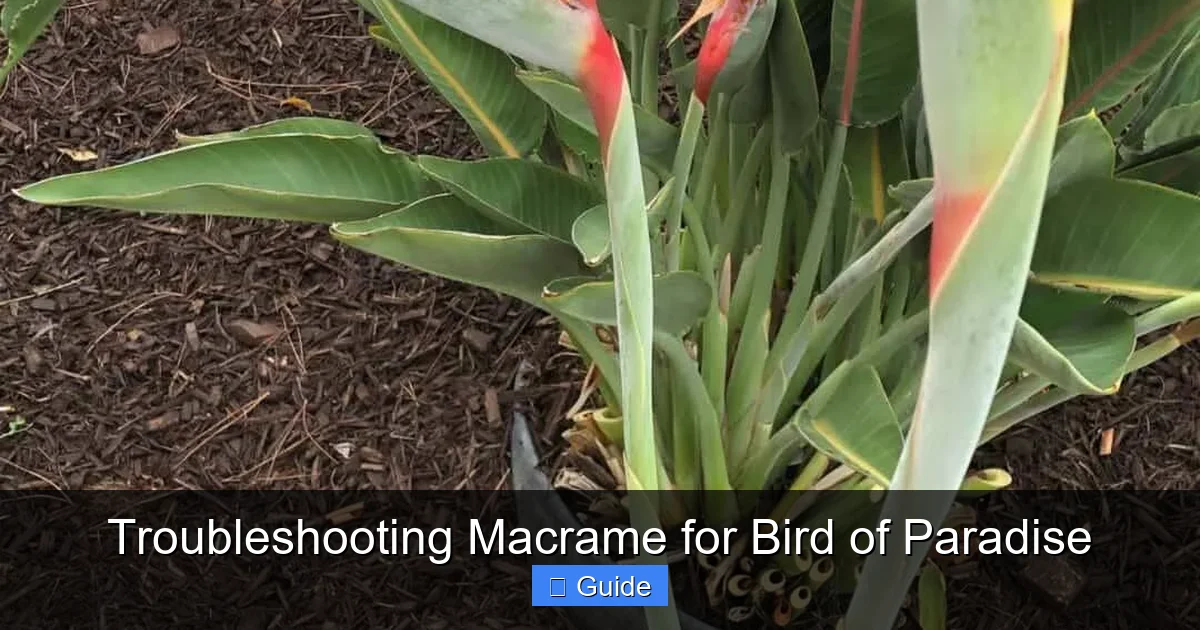
Visual guide about Troubleshooting Macrame for Bird of Paradise
Image source: simplifyplants.com
Pro tip: wrap the gathering cord in the opposite direction of your cord twist. This locks the fibers together. Also, dampen the gathering cord slightly before tying. Cotton shrinks as it dries. This makes the knot even tighter. Do not soak it. Just a light mist. Let it dry fully before hanging the plant.
Square Knots vs. Spiral Knots
Square knots are your workhorse. They are flat, stable, and strong. Each square knot uses four cords. Two anchor cords in the middle. Two working cords on the sides. Alternate left-over-right then right-over-left. This balances tension. Spiral knots (half square knots repeated) twist the cord bundle. They look pretty but concentrate stress on one side. For bird of paradise hangers, use square knots for the main cage. Save spiral knots for decorative sections near the top where load is lower.
Count your knots. Consistency matters. If one section has 10 square knots and another has 12, the pot sits crooked. Use a measuring tape. Mark your cord with a fabric pen at each knot interval. This keeps rows level. Level rows distribute weight evenly. Uneven rows create pressure points. Pressure points lead to cord failure.
Double Half Hitch for Shaping
The double half hitch (DHH) lets you shape the hanger. You use it to create the curved net that holds the pot. One cord becomes the holding cord. Others wrap around it. Keep tension even. If you pull too tight on one side, the curve distorts. Practice on scrap cord first. Make a sample net. Put a weighted object in it. See how it stretches. Adjust your tension for the real project.
Wrapping Knots for Clean Finishes
At the bottom, you gather cords again. Use a wrapping knot. Similar to the gathering knot but tighter. This creates the base of the pot pocket. Make sure all cords are even length before starting. Trim after the knot is set. Leave 1 inch of fringe if you like the look. Or trim flush and add a drop of fabric glue for a clean end. The bottom knot takes sudden shock loads when you set the pot down. Make it robust.
Designing for Plant Growth and Movement
Leaf Clearance Is Critical
Bird of paradise leaves are huge. They arch outward. They need space. A common mistake is making the hanger too short. The leaves press against cords. This damages leaves. It also stresses knots as the plant pushes against the hanger. Plan for at least 18 inches of clear space below the pot rim. More if your plant is mature. Measure your plant’s current leaf span. Add 6 inches. That is your minimum hanger length from ring to pot base.
New leaves emerge tightly curled. They unfurl upward and outward. They can catch on cords during this process. Smooth cords help. Avoid heavily textured knots near the pot rim. A simple square knot cage works best. The cords run parallel. Leaves slide past them. Complex patterns with lots of picots or fringes snag new growth. Keep it simple near the plant.
Wind and Air Current Movement
Indoor plants still move. HVAC vents create drafts. Open windows bring breezes. Bird of paradise leaves act like sails. The whole plant sways. Your hanger must allow this movement without tipping the pot. A wider cage base adds stability. Think of it like a pyramid. Wide base. Narrow top. The gathering knot at the ring is the apex. The bottom wrapping knot is the base center. The cords form the pyramid edges. Wider angle = more stability.
If your hanger swings too much, add a stabilizer cord. Run a single cord from the ring down through the center of the cage. Attach it to the bottom knot. This centers the pot. It reduces lateral swing. The plant can still move naturally but the pot stays level. This is especially helpful for tall, top-heavy plants.
Root Growth and Repotting Access
Bird of paradise roots grow fast. You will repot every 1-2 years. Your hanger must come off easily. Do not tie the hanger permanently to the pot. The cage should lift off as one piece. Test this before adding the plant. Put the empty pot in. Lift the hanger by the ring. The pot should stay seated. Now lift the pot out. The hanger should hold its shape. If it collapses, your tension is off. Adjust knots until the cage holds its form empty.
Consider a split design. Two halves that join at the ring. This lets you remove the hanger without lifting the whole plant. Use a carabiner or quick link at the ring. Unclip. Open the halves. Slide the pot out. This saves your back and the plant’s leaves during repotting.
Solving Common Macrame Problems
Knots That Slip or Loosen
Slipping knots usually mean wrong cord or wrong technique. Single-strand cord slips. Switch to three-ply. Knots tied too loosely slip. Pull each step tight as you go. Do not wait until the end to tighten. Knots tied on slick cord (some polyester) slip. Rough up the cord with fine sandpaper first. This adds grip. Or use a drop of clear fabric glue on the final pull of critical knots. Not too much. Just a touch on the knot core.
If a knot has already slipped in a finished hanger, you can often fix it without redoing everything. Work the knot loose carefully. Retie with more tension. Use pliers to pull cords tight if your hands hurt. Macrame pliers have smooth jaws. They grip without damaging fibers. Worth the $15 investment if you make hangers regularly.
Uneven Pot Sitting
Crooked pots drive everyone crazy. The cause is almost always uneven cord lengths or uneven knot tension. Measure every cord before you start. Cut all cords at once from the same spool. Do not cut as you go. Tension varies day to day. If you cut Monday and tie Tuesday, cords may differ. Mark the center of each cord with a pen. Fold at the mark over the ring. Now both halves are identical length.
Count knots per side. Write it down. Row 1: 4 square knots each side. Row 2: 3 DHH each side. Keep a notebook. When you switch sides, match the count exactly. If you lose count, undo and recount. It is faster than fixing a lopsided hanger later.
Cord Stretch Over Time
Cotton stretches. It is a fact. A new hanger sits high. Three months later, the pot touches the floor. Plan for this. Make the hanger 3-4 inches shorter than your target length. The stretch will bring it to perfect height. Or use pre-stretched cord. Some brands sell “low stretch” macrame cord. It costs more but saves frustration. You can also pre-stretch your cords. Hang each cord with a 10-pound weight for 24 hours before cutting. This removes most initial stretch.
If your hanger has already stretched too much, you have options. Shorten at the top. Undo the gathering knot. Pull cords through. Retie. Or add a decorative tassel at the bottom to hide the extra length. Or accept it and raise your ceiling hook. Adjustable hooks solve this elegantly.
Fraying and Wear Points
Cords fray where they rub. The ring contact point. The knot intersections. The pot rim edge. Wrap these areas. Use a thin contrasting cord to wrap the working cords where they touch the ring. This protects the main cords. It also looks intentional. At knot intersections, a tiny drop of fray check (fabric sealant) on the cord ends prevents unraveling. Do not soak the knot. Just the very tips.
Rotate your hanger monthly. This distributes wear. The same cords always face the window. They get more UV. They fade and weaken faster. A quarter turn each month evens exposure. While rotating, inspect every knot. Catch problems early.
Integrating Plant Care with Macrame Design
Watering Without Ruining Cords
Water is the enemy of macrame. Wet cords stretch unevenly. They develop mold. They rot. You must keep cords dry. Use a pot with a deep saucer. The saucer catches runoff. But saucers hold water. The pot bottom sits in moisture. This wicks up. Use pot feet inside the saucer. Or add a layer of pebbles. The pot sits above the water line. Air circulates. The bottom stays dry.
Water carefully. Use a long-spout can. Aim for soil only. Do not splash cords. If cords get wet, blot immediately with a towel. Let the hanger air dry fully before night. Damp cords in cool evening air grow mildew. A small fan on low helps dry them faster.
Consider a watering schedule that lets you remove the plant. Take the whole hanger down. Water in a sink or tub. Let drain completely. Rehang. This is easier with the split design mentioned earlier. It also lets you inspect the hanger regularly.
Fertilizer and Salt Buildup
Fertilizer salts crust on pot rims. They drip down cords. They crystallize in fibers. This weakens cotton. It looks ugly. Wipe the pot rim after each watering. Flush the soil monthly with plain water. This prevents salt buildup. If cords get salt on them, rinse that section gently. Use a spray bottle. Blot dry. Do not soak the whole hanger.
Light Requirements and Hanger Placement
Bird of paradise needs bright light. South or west window is best. But direct sun fades cords. UV degrades cotton. Place the hanger where the plant gets light but cords get filtered light. Sheer curtains work. Or hang slightly off to the side of the window. The plant leans toward light. Rotate weekly for even growth. This also rotates cord exposure.
If you use grow lights, keep them 12-18 inches from leaves. Lights generate heat. Heat dries cords. Dry cords become brittle. Brittle cords snap. Monitor humidity. Bird of paradise likes 50-60% humidity. Dry air hurts both plant and cords. A humidifier nearby helps both.
Advanced Troubleshooting and Repair
Fixing a Broken Cord
A cord snaps. Now what? Do not panic. You can splice it. Overlap the broken ends by 6 inches. Use a thin cord to wrap the splice tightly. Like a whipping knot. Work from the center outward. This restores most strength. The splice will be visible. Make it decorative. Use a contrasting color. Turn a repair into a design feature.
If the broken cord is a main structural cord (one of the long cords from the ring), the repair is trickier. The splice must pass through knots above and below. You may need to undo several knots to thread the splice through. Retie those knots. This is why extra cord length at the top helps. You have room to work.
Reinforcing a Weak Cage
Sometimes the cage spreads too wide. The pot sits too low. The cords bow outward. Add vertical support cords. Run new cords from the ring down alongside existing cords. Attach at the bottom knot. These share the load. They reduce stretch on the original cords. You can hide them inside the cage pattern. They become invisible but effective.
Another fix: add a second bottom ring. A small metal ring at the base of the cage. Thread all cords through it before the final wrapping knot. This ring holds the cage shape. It prevents the diamond pattern from collapsing inward. The pot sits on this ring. Weight transfers to the ring, not just the knots.
Adapting for Outdoor Use
Moving your bird of paradise outside for summer? Great for the plant. Hard on the hanger. Sun, rain, wind, temperature swings. Cotton will not last a full season outdoors. Switch to polyester or polypropylene cord. These resist UV and moisture. They do not rot. They cost more but last years outside. Use stainless steel hardware. No rust stains.
Outdoor hangers need more stability. Wind loads are higher. Use a wider cage angle. Add the center stabilizer cord. Consider a four-point hanging system. Four cords from the ring to a single hook. This distributes wind force. A swivel hook prevents cord twisting. Twisted cords weaken and tangle.
When to Retire a Hanger
Nothing lasts forever. Inspect annually. Look for: thinning cords, fuzzy fibers (sign of wear), stiff sections (salt or mineral buildup), knots that won’t hold tension, discoloration that won’t wash out. If you see these, plan a replacement. Make the new one while the old still works. Swap them during repotting. The plant never knows.
Keep a log. Date made. Cord type. Knot pattern. Pot size. Plant size. Notes on issues. This helps you improve each version. Your third hanger will be far better than your first. That is the joy of making.
Creating a Maintenance Routine
Monthly Checkups
Set a calendar reminder. First Saturday of each month. Takes 10 minutes. Check: all knots tight, cords intact, no fraying, pot level, saucer clean, hook secure, no mold spots. Rotate hanger 90 degrees. Wipe cords with a dry microfiber cloth. This removes dust. Dust holds moisture. Moisture causes problems.
If you find a loose knot, tighten it immediately. Do not wait. A loose knot shifts load to neighbors. They loosen. Cascade failure follows. One tight knot prevents a remake.
Seasonal Deep Clean
Twice a year, deep clean. Spring and fall. Take hanger down. Remove plant. Shake out dust. Use a soft brush on knots. Vacuum with brush attachment on low. Spot clean stains with mild soap and damp cloth. Rinse cloth. Blot. Air dry 24 hours. Do not machine wash. Agitation destroys knots. Do not dry clean. Chemicals weaken fibers.
While down, oil the hardware. A drop of mineral oil on the ring. Wipe excess. Check the ceiling hook. Tighten if loose. Replace if corroded. A $3 hook holds a $100 plant. Do the math.
Tracking Plant Growth
Measure your bird of paradise quarterly. Height. Leaf span. Pot diameter. Write it in your log. When leaf span exceeds cage width by 6 inches, plan a larger hanger. When height exceeds clearance by 6 inches, plan a longer hanger. Anticipate needs. Reactive making is stressful. Proactive making is enjoyable.
Share your measurements in macrame groups. Other makers with similar plants can advise on sizing. The community knowledge is vast. Someone has solved your exact problem. Ask. Learn. Share your solutions too.
Conclusion
Troubleshooting macrame for bird of paradise projects teaches you more than any perfect tutorial. Each slipped knot. Each stretched cord. Each crooked pot. These are lessons in physics, botany, and craft. You learn how weight moves. How plants grow. How fibers behave. This knowledge transfers to every future project. The hanger you make next year will be stronger, smarter, and more beautiful because of the problems you solved today.
Remember the core principles. Use substantial materials. Tie structural knots with intention. Design for the plant’s future size, not its current size. Keep cords dry. Inspect regularly. Fix small issues before they become big failures. And most importantly, enjoy the process. A handmade hanger carries your attention and care. The plant feels it. You feel it. That connection is why we make things by hand.
Your bird of paradise deserves a hanger that honors its majesty. With these troubleshooting skills, you can build it. Start with good cord. Tie tight knots. Plan for growth. Hang it proud. Watch both plant and craft thrive together. That is the goal. That is the reward.
Frequently Asked Questions
What type of ring or dowel should I use for a heavy bird of paradise hanger?
Use a 2-inch or larger welded steel ring or a 1-inch thick hardwood dowel (oak, maple, or walnut). Test the hardware by hanging your full weight from it before committing to the project. Avoid rings with knots, cracks, or open seams that can fail under constant load.
How do I water my bird of paradise without damaging the macrame cords?
Use a deep saucer with pot feet or pebbles to keep the pot bottom above standing water. Water with a long-spout can aimed only at soil, blotting any splashes immediately. Better yet, remove the hanger entirely for watering in a sink, letting it drain fully before rehanging.
Can I use jute or hemp cord for an indoor bird of paradise hanger?
Avoid jute or hemp for indoor hangers because these fibers absorb moisture and rot over time. Bird of paradise plants need consistent watering, creating damp conditions that degrade natural fibers. Stick with high-quality three-ply cotton or polyester blends for durability.
How often should I inspect and maintain my macrame plant hanger?
Do a quick monthly check: tighten any loose knots, rotate the hanger 90 degrees, wipe cords with a dry cloth, and verify the ceiling hook is secure. Deep clean twice yearly (spring/fall) by removing the plant, brushing knots, vacuuming on low, and spot cleaning stains.
What should I do if a structural cord breaks on my finished hanger?
Splice the broken ends by overlapping 6 inches and wrapping tightly with thin cord (whipping knot). If the broken cord passes through knots above and below, you may need to undo those knots to thread the splice through, then retie them. Keep extra cord length at the top for this reason.
How do I adapt my macrame hanger for outdoor summer use?
Switch to UV-resistant polyester or polypropylene cord and stainless steel hardware. Widen the cage angle for stability, add a center stabilizer cord, and consider a four-point hanging system with a swivel hook to prevent cord twisting from wind. Cotton will not survive a full outdoor season.