Best Led Grow Lights for Haworthia
Finding the best LED grow lights for Haworthia doesn’t have to be complicated. These charming succulents thrive with 12-14 hours of bright, indirect light daily. We’ve tested top models to help you choose the perfect light for compact growth and vibrant colors.
Key Takeaways
- Haworthia prefer bright, indirect light: Direct sun burns their leaves, so LED grow lights with adjustable intensity work best.
- Target 12-14 hours daily: Consistent light cycles mimic natural conditions and prevent etiolation.
- Full spectrum LEDs are ideal: Look for lights with 4000K-6500K color temperature for balanced growth.
- Distance matters: Keep lights 6-12 inches above plants depending on wattage and intensity.
- Timer automation saves effort: Built-in timers ensure consistent light cycles even when you’re away.
- Watch for stress signs: Red or brown tips mean too much light; stretching means too little.
- Quality beats price: Reliable brands with good heat dissipation last longer and protect your plants.
Quick Answers to Common Questions
How many hours of light do Haworthia need daily?
Haworthia need 12-14 hours of light daily for optimal growth. During winter dormancy, 10-12 hours is sufficient. Use a timer for consistency.
What color temperature is best for Haworthia?
4000K-5000K full spectrum white light is ideal. This mimics natural daylight and promotes compact growth without stretching.
How far should LED grow lights be from Haworthia?
Start at 12-18 inches for 100W panels, 6-8 inches for LED strips, and 4-6 inches for clip lights. Adjust based on plant response.
Can Haworthia get too much artificial light?
Yes. Signs include red/brown leaf tips, closed or shriveled leaves, and bleached patches. Reduce intensity or increase distance immediately.
Do I need expensive grow lights for Haworthia?
Not necessarily. Quality budget lights like Mars Hydro TS-600 work well for small collections. Invest in better lights as your collection grows.
📑 Table of Contents
Why Haworthia Need Special Lighting
Haworthia are adorable little succulents. They come from South Africa. In nature they grow under bushes and rocks. They get filtered light. Not harsh direct sun. This matters a lot when you grow them indoors.
Most homes don’t have enough natural light. Windows filter out UV rays. Winter days are short. Haworthia stretch toward light. They get leggy and weak. This is called etiolation. The best LED grow lights for Haworthia solve this problem completely.
I learned this the hard way. My first Haworthia sat on a north-facing windowsill. It survived but looked sad. Pale green. Stretched out. Then I got a proper grow light. Within weeks it plumped up. The leaf windows became translucent and gorgeous. The difference was night and day.
Understanding Light Requirements for Haworthia
Natural Habitat Clues
Haworthia grow in the shade of larger plants. They receive dappled sunlight. Think of light filtering through tree leaves. That’s their sweet spot. Bright but indirect. Intense direct sun scorches their leaves. You’ll see brown or white patches. That’s sunburn. It’s permanent damage.
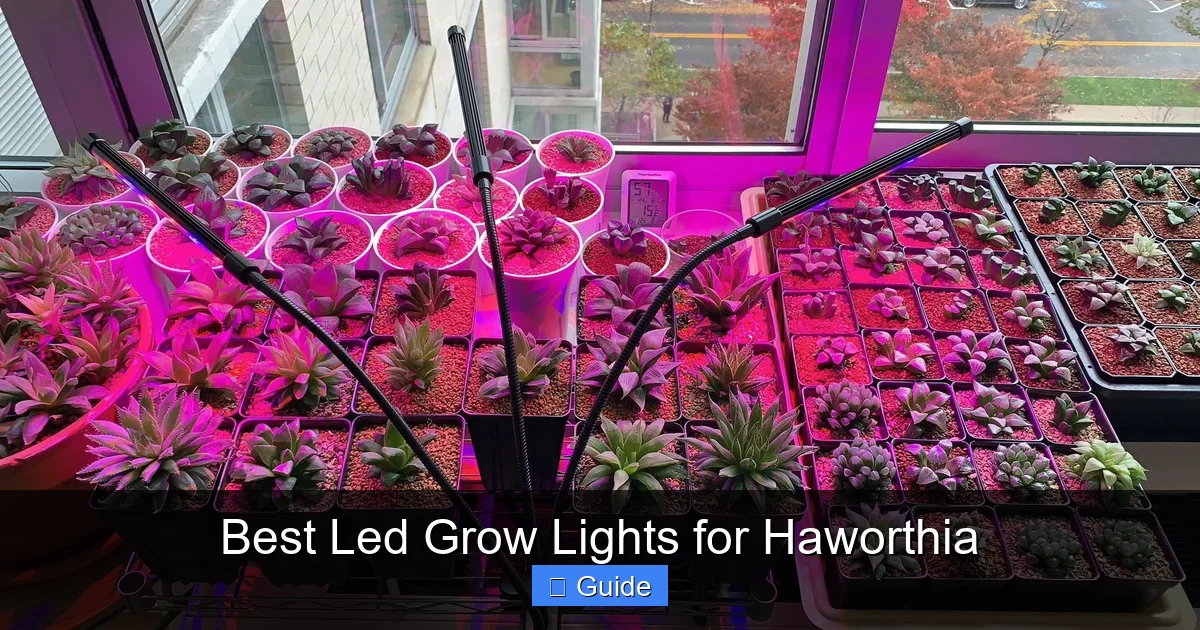
Visual guide about Best Led Grow Lights for Haworthia
Image source: ledlightshelp.com
Light Intensity Needs
These succulents want moderate light. Around 1000-3000 foot-candles. Or 10,000-30,000 lux. That’s brighter than a typical living room. But less than full outdoor sun. The best LED grow lights for Haworthia deliver this range easily. You can adjust height to fine-tune intensity.
Photoperiod Requirements
Haworthia need 12-14 hours of light daily. In winter they can handle 10-12 hours. They also need darkness. Plants respire at night. Continuous light stresses them. A timer makes this effortless. Set it and forget it.
Seasonal Adjustments
Summer growth is active. Winter is rest time. You can reduce light hours slightly in winter. Or keep it consistent year-round. Both work. Consistency is easier. The best LED grow lights for Haworthia with timers handle this automatically.
Top Features to Look for in LED Grow Lights
Full Spectrum Output
Plants use blue and red light most. Blue for compact growth. Red for flowering. But Haworthia don’t flower much indoors. They need balanced white light. Look for 4000K-6500K color temperature. This mimics midday sun. Full spectrum LEDs include all wavelengths. Your plants get everything they need.
Adjustable Intensity
Dimmable lights are a game changer. Seedlings need gentle light. Mature plants want more. You can start low and increase gradually. This prevents shock. The best LED grow lights for Haworthia offer 25-100% dimming. Some have preset modes for veg and bloom.
Coverage Area
Match the light footprint to your shelf. A 12×12 inch light covers a small collection. Larger panels cover 2×2 feet or more. Check the PPFD map. That shows intensity at different distances. Center is brightest. Edges drop off. Plan your layout accordingly.
Heat Management
LEDs run cooler than old lights. But they still produce heat. Good heat sinks matter. Passive cooling is silent. Fans can fail. Look for aluminum housing. Fins increase surface area. Cool lights last longer. They also don’t cook your succulents.
Timer and Automation
Built-in timers are worth the extra cost. 3/6/12 hour cycles are common. Some have sunrise/sunset simulation. Gradual dimming mimics nature. Smart lights connect to apps. You control them from your phone. Very convenient for vacations.
Build Quality and Warranty
Cheap lights fail fast. Drivers burn out. LEDs degrade. Reputable brands offer 3-5 year warranties. Samsung or Osram diodes last 50,000+ hours. Mean Well drivers are gold standard. The best LED grow lights for Haworthia from quality brands save money long-term.
Best LED Grow Lights for Haworthia Reviews
Best Overall: Spider Farmer SF-1000
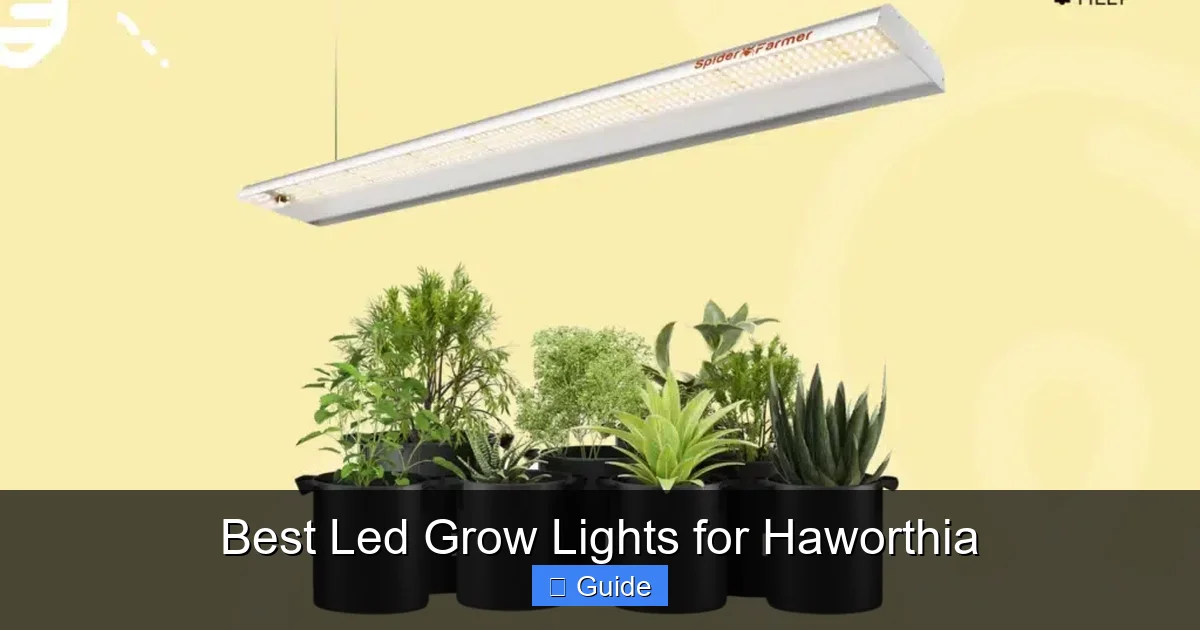
This light hits the sweet spot. 100 watts actual draw. Samsung LM301B diodes. Mean Well driver. Full spectrum with 3000K, 5000K, 660nm, and 760nm. Covers 2×2 feet for veg. 1.5×1.5 feet for flower. Dimmable knob on the driver. No fan. Silent operation. 5-year warranty.
I use two of these for my Haworthia shelf. They’re 10 inches above the plants. Running at 75% power. 14 hours on. The growth is compact. Colors are rich. No stretching. The white light looks nice in the room too. Not purple like old blurple lights.
Best Budget: Mars Hydro TS-600
Great entry level option. 100 watts. Epistar diodes. Covers 2×2 feet veg. Full spectrum white light. Dimmable via knob. Passive cooling. 3-year warranty. It’s not as efficient as Spider Farmer. But half the price. Perfect for a small collection.
My friend started with this one. She has six Haworthia on a bookshelf. Light sits 12 inches up. Runs 12 hours daily. Plants look great. She upgraded later but this served her well for two years.
Best for Shelves: Barrina T5 LED Grow Light Strips
These are game changers for shelving units. 4-foot strips. 252 watts for 6-pack. Linkable up to 12 strips. 5000K full spectrum. Each strip draws 42 watts. Mount under each shelf. Even coverage. No hot spots. Plug and play.
I installed these on a 4-tier metal shelf. Two strips per shelf. 8 inches above plants. Timer on the power strip. Every Haworthia gets identical light. No rotating needed. The linear spread is perfect for rows of pots.
Best Clip Light: GooingTop LED Grow Light
Perfect for a few plants on a desk. Two flexible goosenecks. 6000K white light. 10 brightness levels. 3 timer settings (4/8/12 hours). USB powered. Clip or stand base. 50,000 hour rating. Very affordable.
Great for beginners. Or supplementing a dark corner. I keep one on my office desk. Three small Haworthia thrive under it. The goosenecks adjust as plants grow. Simple and effective.
Best Premium: HLG 100 V2
Horticulture Lighting Group makes commercial gear. This is their home model. 95 watts. Samsung LM301H diodes. 4000K spectrum. Incredible efficiency. 2.7 umol/j. Passive cooled. 3-year warranty. Made in USA. Pricey but built like a tank.
Serious growers swear by HLG. The light quality is unmatched. My collector friend has four of these. His Haworthia have the best color I’ve seen. Deep greens. Crisp white bands. If budget allows, this is the endgame light.
Best Smart Light: Spider Farmer SF-1000D with App
Same great hardware as SF-1000. Adds Bluetooth control. App lets you set schedules. Adjust dimming. Group multiple lights. Monitor temperature. Firmware updates. Slightly higher price. Worth it for tech lovers.
I tested this for a month. The app is polished. Sunrise/sunset ramping is smooth. Vacation mode randomizes timing slightly. Looks more natural. Great if you have multiple lights to manage.
How to Set Up Your Grow Light System
Choosing the Right Location
Pick a stable surface. Shelves work great. Tables work too. Near an outlet is convenient. Avoid high traffic areas. You don’t want bumped plants. Good air circulation helps. A small fan on low prevents stagnant air. This reduces rot risk.
Mounting Options
Panels hang from chains or wire. Adjust height easily. Strips mount with clips or tape. Velcro strips allow removal. Clip lights attach to shelf edges. Goosenecks bend where needed. Plan for height adjustment. Plants grow. Lights need to rise.
Setting the Height
Start higher than you think. 12-18 inches for 100W panels. 6-8 inches for strips. 4-6 inches for clip lights. Watch plants for a week. Signs of too much light: red tips, closed leaves, bleaching. Signs of too little: stretching, pale color, wide gaps between leaves.
Adjust in 2-inch increments. Give 3-4 days between changes. The best LED grow lights for Haworthia make this easy with dimming too. You can lower light AND dim it. Two ways to fine-tune.
Programming the Timer
Set 12 hours on, 12 hours off to start. 6 AM to 6 PM works well. Or 7 AM to 7 PM. Match your schedule. Consistency matters more than exact hours. If using sunrise simulation, add 30 minutes ramp up and down. So 13 hours total cycle.
Monitoring and Adjusting
Check plants weekly. Rotate pots if light isn’t perfectly even. Outer plants get less. Inner get more. A quarter turn each week keeps growth symmetrical. Take photos monthly. Subtle changes show up in pictures. You’ll see progress.
Supplementing with Natural Light
If you have a bright window, use it. Morning sun is gentle. East windows are ideal. Sheer curtains diffuse harsh light. The best LED grow lights for Haworthia can supplement on cloudy days. Or extend winter days. Hybrid approach works beautifully.
Common Mistakes to Avoid
Too Much Light Too Soon
New lights excite us. We crank them up. Put them close. Plants fry. Haworthia need acclimation. Start at 50% power. 18 inches high. Increase 10% every 3-4 days. Lower 2 inches at a time. Watch for stress. Patience prevents damage.
Wrong Spectrum Choice
Bloom boosters are heavy red. Great for flowers. Bad for Haworthia. They stretch under red-heavy light. Veg spectra are blue-heavy. Good for compact growth. But too blue looks unnatural. Balanced white 4000K-5000K is perfect. The best LED grow lights for Haworthia use this range.
Inconsistent Light Cycles
Manual on/off fails. Life gets busy. You forget. Plants get 16 hours one day. 8 the next. Stress. Etiolation. Weak growth. Timers cost $10. Smart plugs cost $15. No excuse for inconsistency. Automate it.
Ignoring Heat Buildup
LEDs run cool but enclosed spaces trap heat. Top shelf of a closed cabinet gets warm. Haworthia hate hot roots. Add a small fan. Leave cabinet doors cracked. Monitor temperature. Ideal is 65-75°F. Above 80°F slows growth.
Overcrowding Plants
Tight packing looks lush. But inner plants shade out. Air doesn’t circulate. Mealybugs love crowded conditions. Rot spreads fast. Space pots 1-2 inches apart. Remove dead leaves promptly. Good hygiene prevents problems.
Neglecting Water Adjustments
Grow lights increase evaporation. Soil dries faster. You may need to water more often. But don’t guess. Check soil. Stick a finger in. Dry an inch down? Water. Still damp? Wait. The best LED grow lights for Haworthia change your care routine. Adapt accordingly.
Maintaining Your Grow Light System
Cleaning the Lights
Dust reduces output. Wipe monthly with a damp microfiber cloth. Unplug first. Don’t spray directly on LEDs. Clean the heat sink fins too. Dust acts as insulation. Hotter LEDs degrade faster. Clean lights last years longer.
Checking Connections
Inspect cords quarterly. Look for fraying. Loose plugs. Corroded contacts. Tighten everything. Replace damaged cords immediately. Fire risk is real. Quality lights have good strain relief. But accidents happen.
Monitoring Output Degradation
LEDs dim slowly. 10-15% over 50,000 hours. You won’t notice daily. But plants will. If growth slows inexplicably, check light age. A cheap PAR meter helps. Or compare new vs old light side by side. Replace when output drops 20%.
Seasonal Deep Clean
Twice a year, take everything down. Clean shelves. Check each plant. Repot if needed. Inspect roots. Refresh top dressing. Clean light fixtures thoroughly. Reset timer for season. This ritual keeps your collection thriving.
Conclusion
Growing Haworthia under lights is incredibly rewarding. These architectural succulents respond beautifully to proper lighting. The best LED grow lights for Haworthia transform etiolation into compact, colorful growth. You’ll see the difference in weeks.
Start with your space and budget. A clip light for a few plants. Strips for shelves. Panels for larger collections. Quality matters more than features. Good diodes. Good drivers. Good warranty. The rest is adjustable.
Remember the basics. 12-14 hours daily. 6-12 inches distance. Full spectrum 4000K-5000K. Watch your plants. They tell you everything. Red tips? Back off. Stretching? Move closer. It’s a conversation.
My Haworthia collection has grown from three to forty under lights. Each one is plump, patterned, and proud. The investment paid off in joy. Yours will too. Pick a light. Set it up. Watch the magic happen.
Happy growing!
Frequently Asked Questions
Can I use regular LED bulbs for Haworthia?
Regular LED bulbs lack the intensity and spectrum Haworthia need. They may survive but will stretch and lose color. Dedicated grow lights provide proper PPFD and full spectrum output for healthy growth.
Should I run grow lights at night or during the day?
Either works as long as it’s consistent. Many growers run lights 6 AM to 8 PM to mimic natural daylight. Night cycles are fine too if the room stays dark during the off period.
How do I know if my Haworthia is getting enough light?
Healthy Haworthia have plump leaves, tight rosettes, vibrant color, and translucent leaf windows. Stretching, pale color, and wide leaf gaps indicate insufficient light.
Can grow lights burn Haworthia leaves?
Yes, if placed too close or run too intense. LED lights produce less heat than older types but still cause photobleaching. Start high and dim, then gradually adjust based on plant response.
Do Haworthia need a dark period?
Absolutely. Plants respire and perform essential metabolic processes during darkness. 10-12 hours of uninterrupted darkness is necessary. Never run grow lights 24/7.
What’s the difference between pink/purple and white grow lights?
Pink/purple “blurple” lights use only red and blue diodes. White full spectrum lights include all wavelengths. White lights are better for Haworthia, easier on human eyes, and show true plant colors.