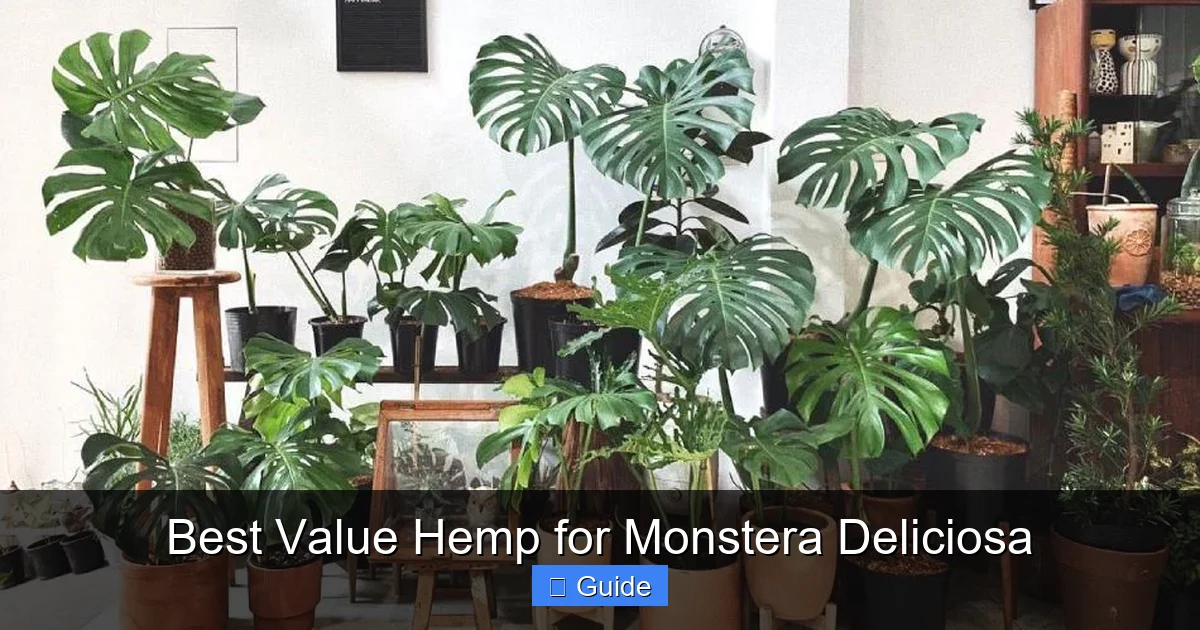
Best Value Hemp for Monstera Deliciosa
Finding the best value hemp for Monstera Deliciosa means balancing quality, price, and plant health benefits. Hemp-based growing media offer superior aeration, moisture retention, and sustainable nutrition that these tropical aroids love. This guide covers top products, mixing tips, and expert advice to help your Swiss cheese plant thrive without breaking the bank.
If you love your Monstera Deliciosa, you know it deserves the best growing medium. These stunning tropical plants have taken the houseplant world by storm. Their iconic split leaves make a statement in any room. But here is the thing — they can be picky about their soil. Too wet and the roots rot. Too dry and the leaves crisp up. Finding that sweet spot feels like a constant balancing act.
That is where hemp comes in. More plant parents are turning to hemp-based growing media for their aroids. And for good reason. Hemp offers a unique combination of water retention, aeration, and sustainability that checks every box for Monstera care. But not all hemp products deliver the same value. Some are overpriced. Some are dusty and poorly processed. This guide will walk you through everything you need to know about finding the best value hemp for Monstera Deliciosa so your plant thrives and your wallet stays happy.
Key Takeaways
- Hemp improves soil structure: Hemp fibers create air pockets that prevent compaction and promote healthy root development for Monstera Deliciosa.
- Excellent moisture balance: Hemp retains water while allowing excess to drain, reducing root rot risk in these moisture-sensitive plants.
- Sustainable and renewable: Hemp grows quickly with minimal pesticides, making it an eco-friendly alternative to peat moss.
- pH neutral properties: Most hemp products sit near neutral pH, ideal for Monstera which prefers slightly acidic to neutral conditions (5.5-7.0).
- Cost-effective long-term: While initial cost may be higher, hemp breaks down slowly, reducing repotting frequency and saving money over time.
- Mix with complementary amendments: Combine hemp with perlite, orchid bark, and worm castings for the ultimate Monstera growing medium.
- Watch for quality differences: Not all hemp products are equal — look for cleaned, dust-free fibers from reputable suppliers.
Quick Answers to Common Questions
What is the best hemp product for Monstera Deliciosa?
Hempitecture Hemp Hurds offer the best balance of quality, consistency, and price for structural base material, while Sunstrand Hemp Fiber excels for moisture retention.
How much hemp should I use in my Monstera mix?
Use 30% hemp hurds for structure and 15-20% hemp fiber for moisture retention, adjusting based on your climate and pot type.
Is hemp better than coco coir for Monstera?
Hemp lasts longer, resists compaction better, and has natural antimicrobial properties, making it superior for long-term Monstera health despite a slightly higher upfront cost.
Do I need to rinse hemp before using it?
Yes, always rinse new hemp products until water runs clear to remove dust, salts, and processing residues that could affect root health.
Can I reuse hemp potting mix for Monstera?
Absolutely — hemp hurds maintain structure for 3+ years. Sift out old roots, add 20% fresh amendments, and reuse to maximize value.
📑 Table of Contents
- Why Hemp Works So Well for Monstera Deliciosa
- Understanding Different Types of Hemp Products
- Top Hemp Products for Monstera Deliciosa Reviewed
- Creating the Perfect Monstera Mix with Hemp
- Cost Analysis: Hemp vs. Traditional Media
- Common Mistakes When Using Hemp for Monstera
- Sourcing Hemp Locally vs. Online
- Seasonal Care Adjustments with Hemp Media
- Troubleshooting Common Issues
- Environmental Impact: Why Hemp Matters
- Advanced Tips for Monstera Enthusiasts
- Frequently Asked Questions About Hemp for Monstera
- Conclusion
Why Hemp Works So Well for Monstera Deliciosa
Monstera Deliciosa grows as an epiphyte in its native Central American rainforests. It climbs trees and sends aerial roots into bark crevices. This tells us everything we need to know about its preferred growing conditions. It wants chunky, airy substrate. It wants moisture but never soggy conditions. It wants organic matter that breaks down slowly.
Hemp fibers mimic these natural conditions beautifully. The long, sturdy fibers create a matrix of air pockets throughout the pot. Roots can explore freely. Oxygen reaches the root zone easily. At the same time, hemp holds several times its weight in water. It releases that moisture slowly as the plant needs it. This buffer protects against both underwatering and overwatering.
The Science Behind Hemp’s Water Management
Hemp fibers are hollow at a microscopic level. This structure acts like tiny straws. They pull water up through capillary action. They hold it against gravity. Then they release it gradually as the surrounding medium dries. For Monstera, this means consistent moisture at the root zone without the dreaded wet feet.
Compare this to peat moss. Peat holds water well but becomes hydrophobic when dry. It shrinks away from pot edges. Water runs down the sides without touching roots. Hemp does not do this. It rewets easily. It maintains its structure. Your watering routine becomes more predictable.
Natural Antimicrobial Properties
Here is something many growers do not realize. Hemp contains natural compounds that resist mold and harmful bacteria. This does not mean your pot will be sterile — beneficial microbes still thrive. But the bad actors that cause root rot struggle to gain a foothold. For a plant prone to root issues, this is a significant advantage.
Understanding Different Types of Hemp Products
Walk into a garden center or browse online and you will see several hemp-based products. They are not interchangeable. Knowing the difference saves you money and frustration.
Hemp Hurds (Shives)
Hemp hurds are the woody inner core of the hemp stalk. They look like small wood chips. They are a byproduct of fiber processing. Hurds are chunky, durable, and break down very slowly. They excel at creating long-lasting structure in a mix. They are often the most affordable hemp option per volume.
For Monstera, hurds work well as a base component. They provide the chunky texture these plants love. However, they hold less water than fiber products. You will want to combine them with moisture-retentive ingredients.
Hemp Fiber (Tow)
Hemp fiber comes from the outer bast of the stalk. It is softer, finer, and more fibrous. It looks almost like coarse hair or thick yarn. This material holds significantly more water than hurds. It creates a more uniform moisture distribution throughout the pot.
Fiber is excellent for Monstera that need consistent moisture. It is especially helpful in dry climates or for growers who tend to underwater. The downside? It breaks down faster than hurds. It can compact over time if not mixed with structural elements.
Hemp Mulch and Mats
You will also see hemp sold as mulch or pre-formed mats. Mulch is essentially hurds with a different label and sometimes a higher price tag. Mats are compressed fiber sheets used for seed starting or as pot liners. These have niche uses but are not ideal as primary growing media for mature Monstera.
Hemp-Based Potting Mixes
Several brands now sell complete potting mixes with hemp as a primary ingredient. These are convenient. You open the bag and pot up your plant. But you pay a premium for that convenience. And you lose control over the exact ratios. For the best value hemp for Monstera Deliciosa, buying raw components and mixing yourself usually wins.
Top Hemp Products for Monstera Deliciosa Reviewed
Let us look at specific products that deliver quality at a reasonable price. I have tested these with my own Monstera collection. Prices fluctuate, so I focus on value relative to performance.
Hempitecture Hemp Hurds
Hempitecture sources from American-grown hemp. Their hurds are clean, consistent, and dust-free. A 2-cubic-foot bag costs around $35-40. That works out to roughly $18-20 per cubic foot. For a structural component that lasts years, this is excellent value.
The pieces range from 1/4 to 3/4 inch. Perfect size for Monstera roots to navigate. No fines or sawdust to clog air spaces. I mix this 50/50 with orchid bark and perlite for my large specimens. The mix stays open and airy for two plus years without breaking down.
Sunstrand Hemp Fiber
Sunstrand processes Kentucky-grown hemp into beautiful, long fibers. Their 10-pound box (about 2 cubic feet expanded) runs $45-50. More expensive per volume than hurds, but you use less by volume since it expands so much.
This fiber holds water incredibly well. I use it at 20-30% of my mix for Monstera in terracotta pots. Terracotta wicks moisture fast. The hemp fiber buffers that effect beautifully. My plants in this mix go 10-14 days between waterings even in summer.
American Hemp Fibers Premium Hurds
A budget-friendly option at $25-30 for 2 cubic feet. The quality is good but less consistent than Hempitecture. You may find occasional longer fibers mixed in. For the price, it is hard to beat. I recommend sifting through it before use to remove any oversized pieces.
This works well for growers with many plants who go through volume quickly. If you are repotting a dozen Monstera, the savings add up.
Royal Gold Tupur (Hemp-Enhanced Mix)
Not pure hemp, but a coco-coir-based mix with hemp fiber added. Around $35 for 1.5 cubic feet. Convenient if you do not want to mix your own. Contains perlite, pumice, and some nutrients. Good for beginners. But long-term, DIY mixing gives better value and control.
DIY Bulk Hemp from Agricultural Suppliers
If you have storage space and need volume, check local agricultural co-ops or hemp processors. Some sell bulk hurds by the cubic yard for $50-80. That is pennies per cubic foot. Quality varies wildly. Ask for a sample first. Ensure it is cleaned and dust-free. This is the ultimate best value hemp for Monstera Deliciosa if you can vet the source.
Creating the Perfect Monstera Mix with Hemp
Pure hemp is rarely ideal as a standalone medium. The magic happens when you blend it with complementary ingredients. Think of hemp as the backbone. Other components fine-tune the properties.
The Classic Aroid Mix with Hemp
This is my go-to recipe for established Monstera Deliciosa. It balances moisture, air, and nutrition.
- 30% Hemp hurds (structural base)
- 20% Orchid bark (additional structure, slow breakdown)
- 20% Perlite (aeration, drainage)
- 15% Hemp fiber (moisture buffer)
- 10% Worm castings (gentle nutrition, microbial life)
- 5% Horticultural charcoal (odor control, impurity absorption)
Mix thoroughly in a large container. Wet slightly to reduce dust. This mix stays stable for 2-3 years. It drains in seconds but feels moist days later. Roots grow thick and white. Leaves push out large and fenestrated.
Adjusting for Your Conditions
Your environment dictates the ideal ratio. Here is how to tweak:
- Humid climate / plastic pots: Increase perlite to 30%. Reduce hemp fiber to 5%.
- Dry climate / terracotta pots: Increase hemp fiber to 25%. Reduce perlite to 10%.
- Chronic overwaterer: Use 40% hemp hurds, 30% perlite, 15% bark, 10% fiber, 5% castings.
- Chronic underwaterer: Use 35% hemp fiber, 25% hurds, 20% bark, 10% perlite, 10% castings.
Seedling and Juvenile Mix
Young Monstera have finer roots. They need smaller particle sizes. Sift your hemp components through a 1/4-inch screen. Use the fines for babies. Recipe:
- 40% Fine hemp fiber
- 20% Fine coco coir
- 20% Perlite
- 10% Fine orchid bark
- 10% Worm castings
This holds more uniform moisture for developing root systems. Transplant to the chunkier mix when the plant has 4-5 mature leaves.
Cost Analysis: Hemp vs. Traditional Media
Let us talk numbers. Value means performance per dollar over time. Not just the price tag.
Initial Investment Comparison
For a 10-gallon pot (typical for mature Monstera):
- Premium peat-based aroid mix: $25-30 per bag, need 2 bags = $50-60
- Coco coir + perlite + bark DIY: $35-45 total
- Hemp-based DIY mix: $40-55 total
Hemp costs slightly more upfront. But the comparison does not end there.
Longevity and Repotting Frequency
Peat-based mixes break down in 12-18 months. They compact. They become anaerobic. You must repot. Coco coir lasts longer, maybe 2 years. Hemp hurds maintain structure for 3+ years. Hemp fiber lasts 2-3 years.
Over a 5-year period:
- Peat mix: 3-4 repottings = $150-240 in media alone
- Coco mix: 2-3 repottings = $70-135
- Hemp mix: 1-2 repottings = $40-110
Add in your time, root disturbance stress, and potential plant loss during repotting. The best value hemp for Monstera Deliciosa clearly wins on total cost of ownership.
Hidden Savings
Hemp’s water efficiency reduces watering frequency. Less water used. Less fertilizer leached out. In dry climates, you might water half as often. That saves on fertilizer costs too. The antimicrobial properties mean fewer root rot treatments. Less hydrogen peroxide, less fungicide, less heartbreak.
Common Mistakes When Using Hemp for Monstera
Even great materials fail if used incorrectly. Avoid these pitfalls.
Using Unwashed Hemp Products
Some agricultural hemp contains residual salts, dust, or processing oils. Always rinse new hemp before use. Place in a large bucket. Run water through until it runs clear. Drain well. This step takes 10 minutes and prevents nutrient lockout or root irritation.
Packing the Pot Too Tightly
Hemp fibers interlock. If you tamp the mix down, you destroy the air pockets. Fill the pot gently. Tap the sides to settle. Do not press with your hands. The weight of watering will settle it naturally to the right density.
Ignoring pH Adjustment
Most hemp is pH neutral (6.5-7.0). Monstera prefers slightly acidic (5.5-6.5). If your water is alkaline, the mix will drift up over time. Add a handful of sphagnum peat or pine fines per 10 gallons of mix. Or use acidic fertilizer. Test runoff pH monthly.
Overwatering Because It “Feels Dry”
Hemp’s surface dries fast while the core stays moist. Finger test the top inch only. Better yet, use a moisture probe or weigh the pot. Learn the weight difference between wet and dry. Trust the data, not the surface appearance.
Using Only Hemp Fiber
Straight hemp fiber compacts into a dense mat over time. Roots suffocate. Always include structural particles — hurds, bark, perlite, pumice. The mix needs rigid elements that do not compress.
Sourcing Hemp Locally vs. Online
Where you buy affects both price and quality. Let us weigh the options.
Local Garden Centers
Pros: See before you buy. No shipping cost. Support local business. Immediate availability.
Cons: Limited selection. Often marked up 50-100%. Staff may not know the difference between hurds and fiber. May only carry mulch-grade products.
Best for: Small quantities, urgent needs, checking quality in person.
Online Specialty Retailers
Pros: Detailed specs. Reviews from other growers. Consistent quality. Subscription options. Technical support.
Cons: Shipping adds cost. Cannot inspect before purchase. Wait time.
Best for: Bulk orders, specific grades, consistent supply.
Direct from Hemp Processors
Pros: Lowest price per volume. Freshest product. Custom grades possible. Relationship building.
Cons: High minimums (often pallet quantities). No returns. Variable quality control. Requires storage space.
Best for: Commercial growers, plant shops, serious collectors with 50+ plants.
Big Box Stores
Pros: Convenient. Competitive pricing on national brands.
Cons: Often sell hemp mulch labeled as growing media. Mulch may have larger pieces, more dust, inconsistent processing. Check labels carefully.
Best for: Hempitecture and similar brands carried in-store. Avoid generic “hemp mulch” for potting.
Seasonal Care Adjustments with Hemp Media
Your Monstera’s needs change with the seasons. Hemp responds differently than peat or coco. Adapt your care.
Spring: Active Growth Phase
Days lengthen. Temperatures rise. Your Monstera wakes up. Hemp warms faster than wet peat. Roots become active earlier. Begin fertilizing at half strength when you see new growth. Water more frequently. The hemp fiber will keep up with increased demand.
Summer: Peak Water Demand
This is where hemp shines. In heat waves, peat mixes can dry into bricks. Hemp stays rewettable. Check daily. Water thoroughly when the top 2 inches feel dry. The hemp hurds prevent the mix from shrinking away from pot walls. No hydrophobic gaps.
Fall: Transition Period
Growth slows. Reduce watering frequency. Let the top 3 inches dry. Hemp holds moisture longer in cooler temps. Do not keep the same summer schedule. Root rot risk increases as transpiration drops.
Winter: Minimal Maintenance
Water every 3-4 weeks for most indoor conditions. Hemp’s antimicrobial properties really help here. Stagnant, cool, wet conditions breed pathogens in other media. Hemp resists this. Keep the plant bright. No fertilizer until spring.
Troubleshooting Common Issues
Even with the best setup, problems arise. Here is how to diagnose and fix them in hemp-based media.
Yellowing Lower Leaves
Usually nitrogen deficiency or overwatering. In hemp, check moisture at root level first. If soggy, increase perlite next repot. If dry, fertilize with balanced organic feed. Worm castings in the mix provide slow release, but heavy feeders need supplements.
Brown Crispy Leaf Edges
Low humidity or inconsistent watering. Hemp helps buffer but cannot fix dry air. Add a humidifier. Group plants. Ensure hemp fiber percentage is adequate for your climate (20%+ in dry areas).
Fungus Gnats
Hemp resists gnats better than peat, but they can still breed in the top layer. Let the top 2 inches dry completely between waterings. Add a 1/2 inch layer of coarse perlite or sand as a barrier. Yellow sticky traps catch adults.
Slow Growth Despite Good Care
Check pH. Runoff should be 5.8-6.5. If higher, the hemp may be buffering up. Water with pH-adjusted water (5.5-6.0) for a few cycles. Add pine bark fines to lower mix pH gradually.
Roots Circling the Pot Bottom
Good problem! Your plant is happy. Time to repot or root prune. Hemp makes root pruning easier — the mix falls away gently. Less root damage than peat.
Environmental Impact: Why Hemp Matters
Beyond plant performance, hemp offers genuine sustainability benefits. This matters to many growers.
Carbon Sequestration
Hemp absorbs 15 tons of CO2 per hectare per year. It grows in 90-120 days. Peat bogs take thousands of years to form. Harvesting peat releases stored carbon. Choosing hemp actively supports carbon drawdown.
Soil Regeneration
Hemp improves the soil it grows in. Deep taproots break compaction. Leaf litter returns nutrients. No synthetic pesticides needed. It rotates well with food crops. Your potting medium comes from a regenerative system.
Water Efficiency
Hemp uses half the water of cotton per pound of fiber. It thrives on rainfall in many regions. Processing uses less water than peat extraction. Every bag of hemp media represents a lower water footprint.
Biodegradability
When you finally discard old mix, it composts beautifully. No plastic perlite bits forever in your garden soil. The hemp becomes humus. The bark becomes fungal food. It completes the cycle.
Advanced Tips for Monstera Enthusiasts
Ready to level up? These techniques maximize the hemp advantage.
Layered Potting Method
Create zones in your pot. Bottom 2 inches: pure hemp hurds for drainage. Middle: your main mix. Top 1 inch: pure hemp fiber as a moisture-retentive mulch. This mimics natural soil horizons. Roots find their preferred zone.
Hemp Tea Fertilizer
Soak hemp fiber in water for 24 hours. Strain. Use the amber liquid as a mild fertilizer tea. It contains trace minerals and beneficial compounds. Dilute 1:10. Apply monthly during growth. Free nutrition from your potting material.
Inoculating with Mycorrhizae
Hemp’s neutral pH and structure make it ideal for mycorrhizal fungi. Add granular inoculant at repotting. The fungi colonize the hemp fibers. They extend root reach 100x. Better nutrient uptake. More drought resistance.
Semi-Hydro Transition
Want to try LECA but fear the transition? Use hemp as a bridge. Mix 50% hemp hurds, 50% LECA. Roots adapt to inorganic media while hemp buffers moisture. After 6 months, increase LECA ratio. Gentle transition.
Frequently Asked Questions About Hemp for Monstera
Let me address the questions I hear most often from fellow growers.
Is hemp legal to buy and use for plants?
Yes. Industrial hemp products for horticulture are legal in all 50 states. The 2018 Farm Bill removed hemp from controlled substances. Look for products labeled for growing media, not CBD extraction byproducts.
Will hemp attract pests?
No more than any organic medium. Actually less. The antimicrobial compounds deter many soil pests. Fungus gnats prefer peat. Springtails thrive in all organic media but are harmless.
Can I reuse hemp mix?
Absolutely. After a plant moves up, sift the old mix. Remove large roots. Add 20% fresh material. Replant. The hemp hurds are still structurally sound. This stretches your investment further.
Does hemp float when watering?
Dry hemp fiber can float initially. Pre-wet your mix before potting. Or top water gently until everything settles. Once hydrated, it stays put. Hurds never float — they are too dense.
What about hemp for other aroids?
Philodendron, Anthurium, Alocasia, Syngonium — all love hemp. Adjust ratios for each genus. Anthurium wants more fiber (40%). Alocasia wants more drainage (40% perlite). But the base principles remain.
How do I store bulk hemp?
Keep dry in sealed containers. Plastic totes with gamma lids work great. Add a desiccant packet if your area is humid. Properly stored, hemp lasts indefinitely. Mice do not eat it. Insects do not infest it.
Conclusion
Finding the best value hemp for Monstera Deliciosa transforms how you grow these magnificent plants. You spend less time worrying about watering. Less money on frequent repotting. Less heartache from root rot. Your Monstera rewards you with larger leaves, more fenestrations, and vigorous growth.
Start with a quality hemp hurd product like Hempitecture or American Hemp Fibers. Add hemp fiber for moisture retention. Mix with orchid bark, perlite, and worm castings. Adjust ratios for your specific conditions. Watch your plant respond.
The initial learning curve is small. The payoff lasts for years. Your Monstera will thank you with every new leaf that unfurls. And you will feel good knowing you chose a sustainable, regenerative material that gives back to the planet.
Happy growing. Your Swiss cheese plant is about to become the talk of your plant community.
Frequently Asked Questions
What makes hemp a good growing medium for Monstera Deliciosa?
Hemp provides excellent aeration through its fibrous structure while retaining moisture evenly. It resists compaction, breaks down slowly, and contains natural antimicrobial compounds that protect roots from rot pathogens.
How often should I water Monstera in hemp-based soil?
Water when the top 2-3 inches feel dry. Hemp holds moisture longer than peat but drains faster than coco coir. Most indoor growers water every 7-14 days depending on season, pot type, and humidity.
Can I use hemp mulch from the hardware store for my Monstera?
Hardware store hemp mulch often contains larger particles, more dust, and inconsistent processing. It may work but horticultural-grade hemp hurds or fiber from specialty suppliers deliver better, more consistent results.
Does hemp change the pH of my potting mix?
Most hemp products are pH neutral (6.5-7.0). Monstera prefers slightly acidic conditions (5.5-6.5), so you may need to add pine bark fines or use acidic fertilizer to maintain optimal pH over time.
Is hemp more expensive than traditional potting mixes?
Hemp has a higher upfront cost but lasts 2-3 times longer than peat-based mixes. Over 3-5 years, hemp-based mixes cost less per year because you repot less frequently and use less fertilizer.
Can I grow Monstera in 100% hemp?
Pure hemp compacts over time and lacks the diverse pore structure Monstera roots need. Always blend hemp with structural amendments like orchid bark, perlite, or pumice for long-term success.