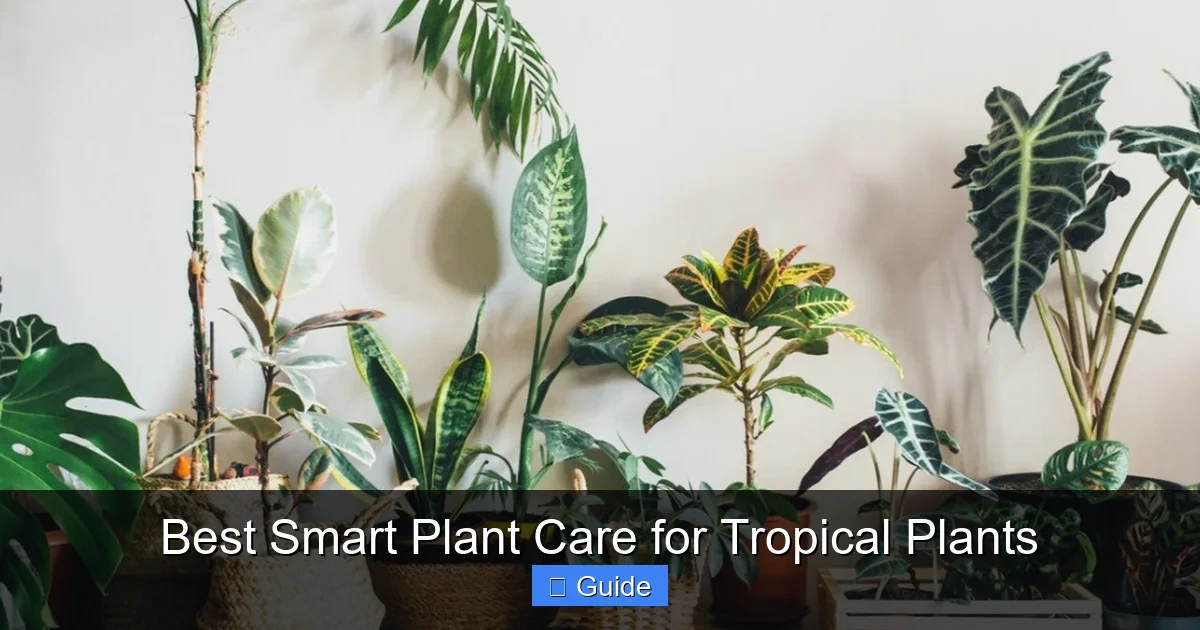
Best Smart Plant Care for Tropical Plants
Transform your tropical plant care routine with smart technology that monitors moisture, light, and humidity automatically. These devices eliminate guesswork and keep your plants thriving even when you’re away. From smart sensors to automated watering systems, we cover everything you need to know.
Key Takeaways
- Smart sensors provide real-time data: Monitor soil moisture, light levels, temperature, and humidity from your phone to catch problems early.
- Automated watering prevents overwatering: Smart irrigation systems deliver precise amounts of water based on actual plant needs, not a fixed schedule.
- Grow lights mimic tropical conditions: Full-spectrum smart lights adjust intensity and duration to replicate natural rainforest light cycles.
- Humidity control is critical for tropicals: Smart humidifiers and misters maintain the 60-80% humidity most tropical plants require.
- App integration simplifies management: Centralized apps let you track multiple plants, set custom alerts, and review historical data trends.
- Start small and scale up: Begin with one or two smart devices for your most sensitive plants, then expand as you learn the system.
- Best smart plant care for tropical plants saves time and money: Reduce plant loss, lower water waste, and eliminate daily manual checks.
Quick Answers to Common Questions
What is the most important smart device for tropical plants?
A soil moisture sensor is the single most valuable device because overwatering kills more tropical plants than anything else.
Can I automate watering for plants in different sized pots?
Yes, use individual drip emitters with adjustable flow rates or separate zones for different pot sizes.
Do smart grow lights use a lot of electricity?
Modern LED grow lights are very efficient; a 100W light running 14 hours daily costs about 4-6 dollars per month.
How often should I calibrate my smart sensors?
Check calibration monthly by comparing readings with a manual meter or the finger test in dry and wet soil.
What happens if my WiFi goes out?
Most devices store data locally and resume syncing when connection returns; critical automations should have local fallback options.
📑 Table of Contents
- Why Tropical Plants Need Special Attention
- Understanding Smart Plant Care Technology
- Building Your Smart Plant Care System
- Best Smart Plant Care for Tropical Plants by Category
- Common Mistakes and How to Avoid Them
- Advanced Tips for Power Users
- Budget-Friendly Smart Plant Care
- Seasonal Adjustments for Tropical Plants
- Troubleshooting Common Issues
- Future of Smart Plant Care
- Conclusion
Why Tropical Plants Need Special Attention
Tropical plants bring a slice of the rainforest into our homes. Their lush leaves and vibrant colors transform any space. But they come with demands. These plants evolved in stable, humid, warm environments. Our homes rarely match those conditions.
Most tropical plants need consistent moisture. They want bright but indirect light. They crave humidity levels between 60 and 80 percent. Temperature swings stress them out. Missing one factor can trigger yellow leaves, crispy edges, or pest outbreaks.
Traditional care relies on guesswork. You stick a finger in the soil. You eyeball the light. You mist when you remember. This approach works until it doesn’t. Life gets busy. You travel. Seasons change. The best smart plant care for tropical plants removes this uncertainty. Technology watches your plants 24/7. You get alerts before problems start.
Understanding Smart Plant Care Technology
Smart plant care covers several device categories. Each solves a specific challenge. Together they create a complete care ecosystem. Let’s break down the main types.
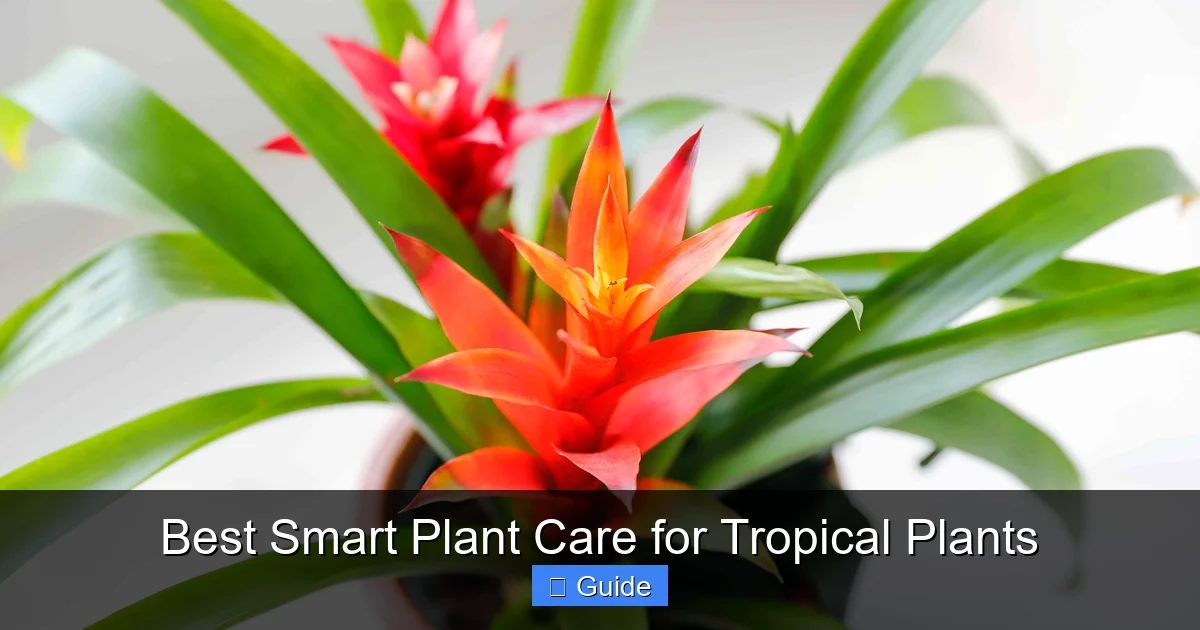
Visual guide about Best Smart Plant Care for Tropical Plants
Image source: treehugger.com
Smart Soil Sensors
These small probes sit in the pot. They measure moisture at root level. Many also track light intensity, temperature, and fertilizer levels. Data syncs to your phone via Bluetooth or WiFi. You see exact readings, not vague “wet” or “dry” estimates.
Popular models include the Xiaomi Flower Care, Parrot Flower Power, and Ecowitt soil sensors. Prices range from 15 to 60 dollars. Most run on coin cell batteries lasting months. Setup takes minutes. Insert probe. Open app. Pair device. Done.
The real value comes from trends. The app charts moisture over days. You learn each plant’s drying pattern. You water when the line hits your target threshold. No more calendar watering. No more soggy roots.
Automated Watering Systems
Smart watering goes beyond simple timers. These systems connect to sensors. They water only when moisture drops below your set point. Some use drip lines. Others use reservoir pumps. Advanced models adjust for plant size, pot type, and season.
The RainPoint WiFi irrigation controller works with standard drip tubing. The PlantLink system pairs with their soil sensor. DIY builders use Raspberry Pi or Arduino with moisture sensors and peristaltic pumps. Commercial options like the Blumat Tropf-Blumat use ceramic cones and gravity pressure.
Key features to compare: number of zones, water source compatibility, power backup, and app quality. A good system handles 4 to 12 plants per controller. Expect to spend 80 to 300 dollars for a multi-plant setup.
Smart Grow Lights
Tropical plants need 12 to 16 hours of quality light daily. Winter days fall short. Smart LED grow lights fill the gap. They offer full spectrum output. Many mimic sunrise and sunset transitions. Some adjust spectrum for growth versus flowering phases.
Look for lights with PPFD ratings above 200 for tropical foliage. The Spider Farmer SF series, Mars Hydro TS series, and Viparspectra XS series are reliable mid-range options. Smart features include app dimming, scheduling, daisy chaining, and light recipe presets.
Mount lights 12 to 24 inches above canopy. Use a PAR meter or phone app to verify coverage. Run lights on a 14-hour cycle for most tropicals. Reduce to 12 hours in winter if plants show stress.
Smart Humidity Control
Humidity is the silent killer of tropical plants. Heating systems drop indoor humidity to 20 percent. Tropicals need triple that. Smart humidifiers maintain target levels automatically. They use built-in hygrostats. Some integrate with home assistants.
Ultrasonic models like the Levoit LV600S or Dreo HM713S offer large capacity and app control. Evaporative models like the Carepod Cube are filter-free and easier to clean. For small collections, the Govee smart mister provides targeted humidity near plants.
Place humidifiers near but not directly on plants. Aim for 65 to 75 percent relative humidity. Use a separate hygrometer to verify. Group plants together to create a humidity microclimate. Add pebble trays as backup.
Environmental Monitors
Room-level monitors track ambient conditions. They measure temperature, humidity, VPD (vapor pressure deficit), and sometimes CO2. The Govee H5179, SensorPush HT1, and Inkbird IBS-TH1 are popular choices. Data logs help you spot patterns. You learn which rooms suit which plants.
Place one monitor per room. Check readings at different heights. Floor level differs from shelf level. Use data to position plants optimally. Move humidity-loving plants to bathrooms. Put high-light plants near south windows.
Building Your Smart Plant Care System
You don’t need everything at once. Start with your biggest pain point. Scale up as budget and confidence grow. Here’s a practical roadmap.
Phase One: Monitoring Only
Buy two or three soil sensors. Place them in your most finicky plants. Calamus, Alocasia, and Calathea are good candidates. Watch the data for two weeks. Learn each plant’s rhythm. Note how fast soil dries in your conditions.
Add a room monitor. See daily humidity swings. Identify problem zones. This phase costs 50 to 100 dollars. It teaches you more than any book. You stop guessing. You start knowing.
Phase Two: Automate Watering
Once you know drying patterns, automate. Choose a system matching your layout. Shelf plants need drip lines. Floor plants work with reservoir pumps. Hanging plants challenge most systems. Consider self-watering spikes for those.
Set moisture thresholds 10 to 15 percent above wilting point. Test for a week while home. Adjust as needed. This phase adds 100 to 250 dollars. It buys you vacation freedom. Plants get watered while you’re gone.
Phase Three: Optimize Light and Humidity
Add smart grow lights where natural light fails. North windows. Interior rooms. Winter months. Start with one light bar or panel. Measure results. Expand if plants respond well.
Deploy humidifiers in dry rooms. Set target to 70 percent. Use circulation fans to prevent mold. Clean humidifiers weekly. This phase costs 150 to 400 dollars. It completes the tropical environment.
Phase Four: Integration and Alerts
Connect devices to a hub. Home Assistant, Apple HomeKit, or Google Home work well. Create automations. Example: if humidity drops below 60, turn on humidifier. If soil moisture hits 20%, water for 3 minutes.
Set phone alerts for critical thresholds. Temperature below 60F. Humidity below 50%. Soil moisture below 15%. Light levels too low for three consecutive days. You sleep better knowing the system watches.
Best Smart Plant Care for Tropical Plants by Category
Let’s look at specific product recommendations. Prices and availability change. Check current reviews before buying.
Top Soil Sensors
Xiaomi Mi Flora / Flower Care: Budget king at 15 to 20 dollars. Measures moisture, light, temperature, conductivity. Bluetooth only. Needs gateway for remote access. Battery lasts 6 months. App stores 1 year of data.
Ecowitt WH51L: WiFi connected. No hub needed. Updates every minute. Works with Ecowitt consoles or standalone. Around 30 dollars. Great for greenhouses or distant pots.
Parrot Flower Power (discontinued but available used): Scientific grade. Four sensors. Excellent app. Bluetooth. Collectors item now. Prices vary wildly.
Wanfei Plant Monitor: Newer entrant. WiFi. Measures 5 parameters. OLED display on device. Around 35 dollars. Good reviews for accuracy.
Top Automated Watering Systems
RainPoint WiFi Water Timer: Controls 1 to 2 zones. Connects to faucet. App scheduling plus sensor input. 60 to 90 dollars. Good for balcony or patio tropicals.
Blumat Tropf-Blumat: Gravity fed. Ceramic cones self-regulate. No electricity. No app. Pure physics. 100 to 200 dollars for 12 plant kit. Extremely reliable. Set and forget.
DIY Arduino/Raspberry Pi System: Ultimate customization. Peristaltic pumps. Relay boards. Home Assistant integration. 150 to 300 dollars. Requires technical skill. Unlimited expandability.
PlantLink Basestation + Links: Sensor-driven watering. Valve connects to hose bib. 150 dollars for starter kit. Simple app. Good for beginners.
Top Smart Grow Lights
Spider Farmer SF1000 / SF2000: Samsung diodes. Mean Well driver. Dimmable. Daisy chain. 150 to 300 dollars. Proven results. 5 year warranty.
Mars Hydro TS1000 / TS2000: Similar specs. Slightly cheaper. Good penetration. 130 to 280 dollars. Reliable workhorses.
Viparspectra XS1500 / XS2000: Added UV and IR. Samsung LM301H. Mean Well. 180 to 320 dollars. Spectrum tweaks for flowering.
Grow Light Strips (Barrina, Mosthink): For shelves. T5 or T8 form factor. Linkable. 30 to 80 dollars per 4-pack. Great for under-shelf lighting.
Top Smart Humidifiers
Levoit LV600S: 6L capacity. Hybrid ultrasonic and evaporative. App control. Auto mode. 90 dollars. Covers 500 sq ft.
Dreo HM713S: 7L. Top fill. Mist height adjustment. Quiet. App with scheduling. 80 dollars. Excellent value.
Carepod Cube: Stainless steel. No filter. Boil wash cleaning. Simple dial control. Not smart but zero maintenance. 150 dollars.
Govee Smart Mister: Targeted misting. Small footprint. App control. 40 dollars. Good for plant cabinets or small groups.
Common Mistakes and How to Avoid Them
Smart tech helps. But it creates new failure modes. Learn from others’ errors.
Overreliance on Automation
Devices fail. Batteries die. WiFi drops. Pumps clog. Sensors drift. Check plants visually every few days. Keep manual watering cans ready. Never leave for two weeks without a backup plan.
Ignoring Microclimates
One room monitor doesn’t capture shelf variation. A sensor in a 6-inch pot differs from a 14-inch pot. Soil mix changes everything. Peat holds water longer than chunky aroid mix. Calibrate thresholds per plant, not globally.
Chasing Perfect Numbers
Plants tolerate ranges. Obsessing over 70% vs 71% humidity wastes energy. Focus on trends. Sudden drops matter more than absolute values. A steady 55% beats wild swings between 40 and 80%.
Neglecting Maintenance
Sensors need cleaning. Mineral buildup skews readings. Wipe probes monthly. Humidifiers breed bacteria. Clean weekly. Grow light lenses collect dust. Wipe quarterly. Water lines clog. Flush seasonally.
Wrong Thresholds
Default app settings assume generic plants. Tropicals vary. Succulents want dry. Ferns want wet. Research each species. Set custom thresholds. Start conservative. Adjust based on plant response.
Advanced Tips for Power Users
Ready to level up? These strategies maximize your smart system.
VPD-Based Control
Vapor Pressure Deficit combines temperature and humidity. It drives transpiration. Target 0.8 to 1.2 kPa for most tropicals. Smart controllers like Pulse One or custom Home Assistant automations can maintain VPD directly. This beats simple humidity targets.
Light Integral Tracking
Daily Light Integral (DLI) measures total photons per day. Tropical foliage needs 10 to 15 mol/m²/day. Smart sensors log PPFD. Apps calculate DLI. Adjust light duration to hit target. Prevents leggy growth in winter.
Predictive Watering
Advanced systems learn evaporation rates. They factor weather forecasts. They water before sensors hit threshold. This prevents stress entirely. Home Assistant with machine learning add-ons can do this. Commercial systems like CropX offer it for agriculture.
Nutrient Monitoring
EC (electrical conductivity) sensors track fertilizer levels. Prevents burn and deficiency. The Xiaomi sensor measures this. So does the Ecowitt. Log EC weekly. Flush when readings climb 50% above target. Fertilize when they drop 30% below.
Camera Monitoring
Add a cheap IP camera. Watch growth time-lapses. Spot pests early. Verify watering ran. Check light coverage. Wyze Cam v3 or similar costs 35 dollars. Integrates with most smart home platforms.
Budget-Friendly Smart Plant Care
You can start smart without breaking the bank. Prioritize high impact, low cost items.
Under 50 Dollars Total
Buy two Xiaomi sensors (30 dollars). Use free app. Add a mechanical timer for a grow light (10 dollars). Group plants on pebble trays (free). Manual misting (free). This covers monitoring and basic automation.
Under 150 Dollars Total
Previous kit plus a smart plug (15 dollars) controlling a humidifier (40 dollars). Add a Barrina grow light 4-pack (60 dollars). Now you control light and humidity on schedules. Sensors guide manual watering.
Under 300 Dollars Total
Add RainPoint timer (80 dollars) and drip kit (30 dollars). Automate watering for 8 to 12 plants. Remaining budget for extra sensors. This handles a serious collection.
DIY Savings
Build soil sensors with ESP32 and capacitive probes. Cost 5 dollars each. Use Home Assistant on Raspberry Pi. Free software. Control relays for pumps and lights. Total hardware under 100 dollars for 20 plants. Requires coding comfort.
Seasonal Adjustments for Tropical Plants
Smart systems shine during seasonal transitions. They adapt faster than humans.
Winter Strategy
Days shorten. Heating dries air. Growth slows. Reduce light duration to 10 to 12 hours. Lower watering thresholds 10 to 15%. Increase humidifier runtime. Pause fertilizing. Monitor for spider mites (they love dry heat).
Smart lights dim automatically. Humidifiers run longer. Sensors show slower drying. You verify weekly. Plants survive winter strong.
Spring Ramp-Up
Light increases. Growth accelerates. Gradually extend light to 14 hours. Raise watering thresholds. Resume half-strength fertilizer. Increase humidity target. Watch for new growth signals.
System adjusts incrementally. You approve changes. No shock to plants.
Summer Peak
Max light. High evaporation. Active growth. Full 14 to 16 hour light. Highest watering frequency. Full fertilizer schedule. Maximum humidifier output. Monitor for heat stress near lights.
Sensors work overtime. Alerts prevent crispy leaves.
Fall Wind-Down
Reverse of spring. Reduce everything gradually. Prepare for winter. Final fertilizer in early fall. Check all devices before holiday travel.
Troubleshooting Common Issues
Even the best smart plant care for tropical plants hits snags. Here’s a quick diagnostic guide.
Sensor Shows Wet But Plant Wilts
Probe placement wrong. Roots not reaching sensor depth. Or hydrophobic soil. Water channels down sides. Probe sits in wet channel. Roots stay dry. Fix: repot with fresh mix. Place probe near root ball.
Humidifier Runs But Humidity Stays Low
Room too large. Humidifier undersized. Leaky windows. HVAC pulling moisture. Fix: seal room. Add second unit. Target smaller zone. Group plants tighter.
Grow Light On But Plant Stretches
Light too far. Wrong spectrum. Not enough hours. Measure PPFD at canopy. Should exceed 150 for tropicals. Lower light. Extend duration. Check spectrum includes blue.
Watering System Overwaters
Threshold too high. Sensor faulty. Pump runs too long. No drainage. Fix: lower threshold. Test sensor in dry soil. Reduce run time. Ensure pots drain freely.
App Shows No Data
Battery dead. Bluetooth range exceeded. WiFi changed. Hub offline. Fix: replace battery. Add Bluetooth repeater. Re-pair device. Restart hub.
Future of Smart Plant Care
Technology evolves fast. Here’s what’s coming.
AI Plant Diagnosis
Apps already identify species from photos. Next: diagnose problems from leaf images. Detect pests, deficiencies, diseases early. Connect to care automation. Adjust water, light, nutrients automatically.
Spectral Analysis Sensors
Consumer devices measuring leaf reflectance. Tracks chlorophyll, water content, nitrogen. Early stress detection before visual symptoms. Research grade tech becoming affordable.
Fully Closed Loop Systems
Water, nutrients, light, CO2, climate all automated. Sensors feed controllers. Controllers adjust everything. Human sets goals. System executes. Like a mini vertical farm for home.
Community Data Sharing
Anonymous data pools. Compare your Monstera growth to thousands. Learn optimal settings for your climate. Crowdsourced plant recipes. Accelerates learning for everyone.
Conclusion
Tropical plants reward attention with stunning growth. The best smart plant care for tropical plants gives you superpower attention. Sensors see what you miss. Automation acts when you can’t. Data teaches you patterns.
Start small. One sensor. One smart plug. Learn the rhythm. Add pieces as needs appear. Before long, your indoor jungle runs itself. You enjoy the beauty. The tech handles the work.
Your plants thrive. You travel worry-free. Seasons change seamlessly. The investment pays back in healthy leaves and saved replacements. Welcome to the future of plant parenting. Your tropicals will thank you.
Frequently Asked Questions
How much does a complete smart plant care system cost?
A basic monitoring setup starts around 50 dollars with two sensors. Full automation with watering, lighting, and humidity control ranges from 300 to 800 dollars depending on collection size. DIY options can reduce costs significantly.
Can smart plant care devices work outdoors?
Many sensors and controllers are rated for indoor use only. Look for IP65 or higher ratings for outdoor use. Protect plugs and hubs from direct weather. Battery life decreases in extreme temperatures.
Do I need a smart home hub for plant devices?
Not necessarily. Many devices work standalone with their own apps. A hub like Home Assistant, Hubitat, or Apple HomeKit enables cross-device automations and local control without internet dependency.
How accurate are cheap soil moisture sensors?
Capacitive sensors in the 15-30 dollar range are surprisingly accurate for trend tracking. They may drift over time and need occasional calibration. Resistive probes corrode quickly and give false readings.
Can I use one humidifier for multiple rooms?
One humidifier effectively serves one enclosed space. For multiple rooms, you need either multiple units or a whole-house humidifier on your HVAC. Doorway fans help distribute moisture between adjacent rooms.
What’s the best way to start with smart plant care?
Begin with two soil sensors in your most difficult plants. Monitor for two weeks to learn their patterns. Then add one automation device addressing your biggest challenge, usually watering or humidity.