Coral Bell Plants
Coral bell plants (Heuchera) are versatile perennials prized for their colorful foliage and delicate bell-shaped flowers. These low-maintenance natives thrive in shade gardens across USDA zones 4-9, offering year-round interest with minimal care.
Key Takeaways
- Diverse foliage colors: Coral bells offer leaves in purple, silver, chartreuse, caramel, black, and variegated patterns for year-round visual interest.
- Shade garden champions: These perennials thrive in partial to full shade, making them perfect for difficult garden spots under trees or on north-facing walls.
- Low maintenance once established: After the first growing season, coral bells require minimal watering, fertilizing, and pruning to look their best.
- Native pollinator support: The delicate flower spikes attract hummingbirds, bees, and butterflies from late spring through summer.
- Versatile design uses: Works beautifully in borders, containers, rock gardens, woodland settings, and as ground cover when mass planted.
- Deer and rabbit resistant: The slightly fuzzy, bitter-tasting foliage naturally deters common garden browsers without chemicals.
- Easy propagation: Divide mature clumps every 3-4 years in spring or fall to rejuvenate plants and create new specimens for free.
Quick Answers to Common Questions
How much sun can coral bells tolerate?
Most coral bells prefer morning sun with afternoon shade or dappled light all day. In cooler zones (4-6), they can handle 4-6 hours of direct sun if kept moist. In hot climates, afternoon sun will scorch the foliage, especially on light-colored varieties.
When is the best time to divide coral bells?
Early spring as new growth emerges or early fall (at least 6 weeks before ground freeze) are the ideal times to divide coral bells. Divide every 3-4 years when the center becomes woody and flowering declines.
Why are my coral bells dying in the center?
This is usually crown rot caused by poor drainage, planting too deep, or excessive moisture around the crown. Plant with the crown slightly above soil level, amend heavy clay with compost, and keep mulch pulled back from the base.
Do coral bells come back every year?
Yes, coral bells are herbaceous perennials hardy in USDA zones 4-9. In warmer zones they remain evergreen; in colder zones foliage dies back but the crown survives underground and resprouts in spring.
Can coral bells grow in full shade?
Coral bells tolerate full shade but flower less and may have less intense foliage color. They perform best with at least a few hours of morning sun or bright dappled light. Deep, dense shade (like under evergreens) often leads to leggy growth.
📑 Table of Contents
- Why Gardeners Fall in Love with Coral Bell Plants
- Understanding the Coral Bell Plant Family
- Choosing the Right Coral Bell Variety for Your Garden
- Planting Coral Bells for Long-Term Success
- Ongoing Care: Watering, Feeding, and Maintenance
- Designing with Coral Bells in the Landscape
- Common Problems and How to Solve Them
- Propagating Coral Bells: Beyond Division
- Seasonal Interest: What to Expect Year-Round
- Buying Guide: Where to Find the Best Plants
- Conclusion: Making Coral Bells a Garden Staple
Why Gardeners Fall in Love with Coral Bell Plants
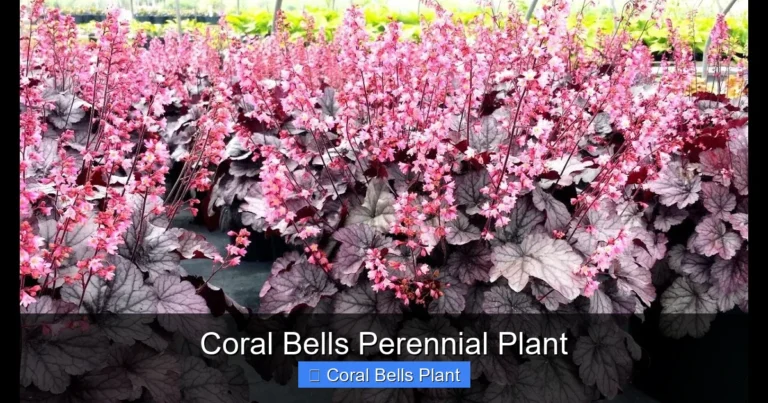
If you have ever wandered through a shade garden in midsummer and spotted mounds of ruffled leaves glowing like stained glass — deep amethyst, bright lime, warm caramel, or frosted silver — you have likely met coral bell plants. Known botanically as Heuchera, these North American natives have exploded in popularity over the last two decades. Plant breeders have introduced hundreds of cultivars, each flaunting foliage colors that would make a painter jealous.
But coral bells are not just pretty faces. They are tough, adaptable perennials that solve one of gardening’s biggest headaches: what to plant in shade. Whether you tuck them under a maple tree, line a north-facing foundation bed, or pop them into a container on a covered porch, they deliver months of color with very little fuss. In this guide, we will walk through everything you need to know — from choosing the right variety for your zone to keeping your clumps vigorous for years.
Understanding the Coral Bell Plant Family
Botanical Background and Native Range
Heuchera belongs to the saxifrage family (Saxifragaceae) and includes roughly 50 species native to North America. Most garden cultivars trace their lineage to Heuchera americana (alumroot), Heuchera micrantha, Heuchera villosa, and Heuchera sanguinea. These species hail from diverse habitats — rocky cliffs, woodland slopes, and alpine meadows — which explains why modern hybrids tolerate such a range of conditions.
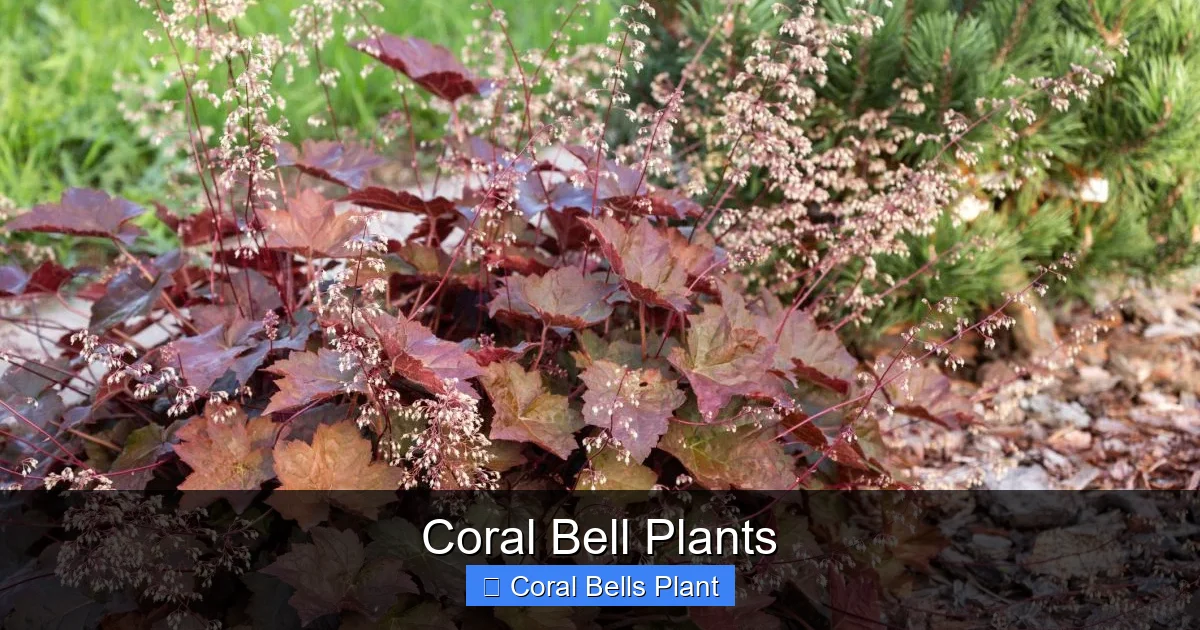
Visual guide about Coral Bell Plants
Image source: houseplantcentral.com
The common name “coral bells” comes from the species Heuchera sanguinea, which bears true coral-red, bell-shaped flowers on wiry stems. However, many contemporary varieties are grown primarily for foliage, with flowers that range from creamy white to soft pink to deep crimson. Some breeders have even developed “flowerless” selections that put all their energy into leaves.
Species vs. Cultivars: What You Are Actually Buying
When you shop at a nursery, you will almost always purchase named cultivars rather than straight species. A cultivar (cultivated variety) is a plant selected and propagated for specific traits — leaf color, habit, heat tolerance, or flower power. For example, Heuchera ‘Palace Purple’ was the breakthrough cultivar that kicked off the modern coral bell craze in the 1980s. Its glossy, maple-shaped leaves emerge bronze-green and deepen to rich mahogany.
Today, you will encounter series like the Dolce® collection (bred for heat and humidity tolerance), the Primo® line (large-leaved, bold textures), and the Forever® series (exceptional color retention through summer). Knowing the series helps you match plants to your climate. If you garden in the Deep South, Dolce® varieties often outperform older types that melt in August humidity.
Choosing the Right Coral Bell Variety for Your Garden
Foliage Color Categories and Seasonal Changes
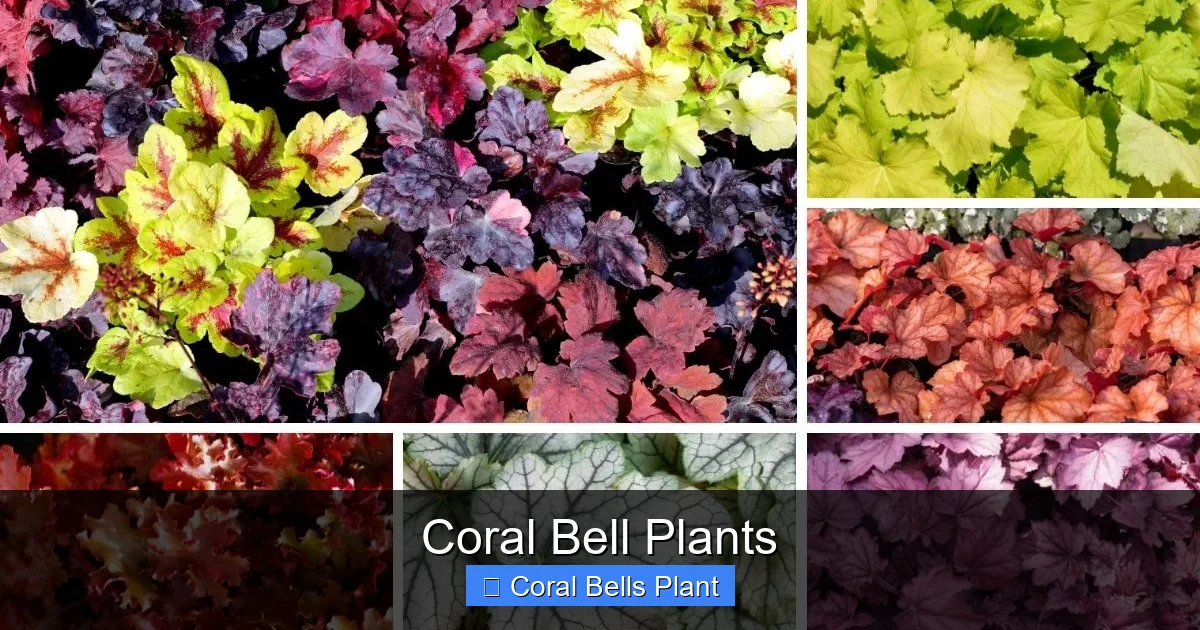
One of the joys of coral bells is that leaf color shifts with the seasons. A cultivar labeled “purple” might emerge coppery in spring, turn deep plum in summer, and take on reddish highlights after frost. Here is a quick breakdown of major color groups:
- Purple to near-black: ‘Obsidian’, ‘Black Pearl’, ‘Forever Purple’, ‘Plum Pudding’. These create dramatic contrast against chartreuse hostas or golden Japanese forest grass.
- Silver and pewter: ‘Silver Scrolls’, ‘Looking Glass’, ‘Appletini’. The metallic sheen brightens dark corners and pairs beautifully with blue hostas.
- Caramel, amber, and peach: ‘Caramel’, ‘Georgia Peach’, ‘Peach Flambe’, ‘Creme Brulee’. Warm tones glow in low autumn light.
- Chartreuse and lime: ‘Lime Rickey’, ‘Electra’, ‘Citronelle’. These act like spotlights in shade.
- Variegated and marbled: ‘Marmalade’, ‘Tiramisu’, ‘Berry Smoothie’. Multi-colored leaves add complexity.
Pro tip: Visit a local botanical garden or nursery display bed in midsummer. Catalog photos show spring color; the July garden reveals which varieties hold their hue without bleaching or burning.
Matching Varieties to Your Hardiness Zone
Most coral bells are hardy in USDA zones 4 through 9, but heat tolerance varies. Heuchera villosa hybrids (often labeled “villosa types”) handle Southern heat and humidity best. Look for ‘Caramel’, ‘Mocha’, ‘Brownies’, and the Dolce® series if you garden in zones 7b-9. Northern gardeners (zones 3-4) should choose cultivars with Heuchera americana or Heuchera richardsonii parentage for superior winter hardiness. ‘Palace Purple’, ‘Plum Pudding’, and ‘Chocolate Ruffles’ have proven track records in Minnesota and Maine.
Microclimates matter too. A protected courtyard in zone 5 may carry zone 6 plants, while an exposed hilltop in zone 6 may need zone 4 toughness. When in doubt, ask your local extension office or independent garden center — they know what survives your specific winters.
Size and Habit Considerations
Coral bell clumps range from dainty 8-inch mounds to bold 24-inch specimens. Small types like ‘Petite Pearl Fairy’ or ‘Little Cutie’ series fit rock gardens, fairy gardens, and container edges. Medium varieties (12-16 inches) — the majority — work well in front-of-border drifts. Large forms like Primo® ‘Black Pearl’ or ‘Big Top Caramel’ make striking focal points or container thrillers.
Consider flower stem height too. Some cultivars send up 30-inch wands; others stay under 18 inches. If you want flowers for cutting, choose long-stemmed types like ‘Green Spice’ or ‘Rave On’. If you prefer a tidy mound, select compact bloomers.
Planting Coral Bells for Long-Term Success
Ideal Soil Conditions and Preparation
Coral bells demand well-drained soil. They evolved on rocky slopes and cliff faces; soggy clay spells root rot. Before planting, amend heavy soil with coarse compost, pine bark fines, or expanded shale to improve aeration. Aim for a slightly acidic to neutral pH (6.0-7.0). A simple soil test from your extension service tells you exactly what to add.
If your garden is pure clay, consider raised beds or berms. Mound the amended soil 6-8 inches above grade — this ensures water moves away from the crown. In sandy soils, incorporate extra organic matter to boost moisture retention. Coral bells like consistent moisture but never standing water.
Light Requirements: Decoding “Part Shade”
Plant tags often say “part shade to full shade.” What does that mean in practice? Most coral bells perform best with morning sun and afternoon shade, or dappled light all day under a high tree canopy. In cooler climates (zones 4-6), many varieties tolerate 4-6 hours of direct sun if soil stays moist. In hot climates, afternoon sun scorches leaves — especially light-colored cultivars.
Observe your site through a full day before planting. Note when shadows fall. A spot that gets 9 AM to 1 PM sun is very different from one baked from 1 PM to 6 PM. When unsure, err toward more shade. You can always limb up a tree later to increase light; you cannot easily add shade.
Spacing, Depth, and Planting Technique
Space plants according to mature width — typically 12-18 inches apart for mass plantings, 18-24 inches for specimen clumps. Dig a hole twice as wide as the root ball but no deeper. The crown (where stems meet roots) must sit at or slightly above soil level. Burying the crown invites crown rot, the number one killer of coral bells.
Backfill with amended soil, firm gently, and water thoroughly to settle air pockets. Apply a 2-inch layer of shredded bark, pine straw, or leaf mulch, keeping it pulled back from the crown. Mulch conserves moisture, moderates soil temperature, and suppresses weeds that compete with shallow roots.
Best Planting Times by Region
Spring and fall are both excellent planting windows. In zones 6 and colder, early spring (as soon as soil is workable) gives roots maximum time to establish before winter. In zones 7 and warmer, fall planting (September through October) lets roots grow through mild winter months, yielding bigger plants by summer. Avoid planting during summer heat waves or when ground is frozen.
Container-grown plants can technically go in any time the ground isn’t frozen, but you will water much more during establishment in hot weather. If you must plant in summer, provide temporary shade cloth for the first two weeks and check soil moisture daily.
Ongoing Care: Watering, Feeding, and Maintenance
Watering Strategies for Healthy Roots
Newly planted coral bells need consistent moisture for the first 8-12 weeks. Water deeply twice a week unless rain provides an inch. Once established, they are surprisingly drought-tolerant thanks to thick, fibrous roots. However, “drought-tolerant” does not mean “thrives on neglect.” During prolonged dry spells, a weekly deep soak keeps foliage lush and prevents crispy leaf edges.
Water at the base of the plant, not overhead. Wet foliage encourages fungal diseases like powdery mildew and botrytis. Drip irrigation or soaker hoses are ideal. If you must use a sprinkler, run it early morning so leaves dry quickly.
Fertilizing: Less Is More
Coral bells are light feeders. In rich, amended soil, they may need no fertilizer at all. If growth seems slow or leaves lose vibrancy, apply a balanced slow-release granular fertilizer (10-10-10 or 14-14-14) in early spring at half the label rate. Alternatively, top-dress with an inch of compost around the crown each spring — this feeds gently and improves soil structure.
Avoid high-nitrogen fertilizers. They produce soft, lush growth that attracts aphids and is more susceptible to winter damage. Never fertilize after midsummer; you want plants hardening off before frost.
Deadheading and Seasonal Cleanup
After the main bloom flush (usually late spring to early summer), snip spent flower stems at the base. This tidies the plant and may encourage a light rebloom. In late fall, after several hard frosts, leaves may look tattered. You have two choices: leave them as winter mulch (they insulate the crown) or cut them back to 2-3 inches. In zones 6 and colder, leaving foliage is safer. In warmer zones where foliage stays evergreen, simply remove any damaged leaves in early spring before new growth emerges.
Dividing: The Secret to Perpetual Vigor
Every 3-4 years, coral bell centers become woody and flower production declines. Division rejuvenates the plant and yields free divisions. The best time is early spring as new growth appears, or early fall (at least 6 weeks before ground freeze).
Dig the entire clump with a garden fork. Shake or wash off soil to reveal the crown structure. You will see multiple growing points (eyes) connected by woody rhizomes. Using a sharp knife or hori hori, cut the clump into sections, each with 3-5 healthy eyes and attached roots. Discard the woody center. Replant divisions immediately at the same depth, water well, and mulch. They may look sad for a week but bounce back quickly.
Designing with Coral Bells in the Landscape
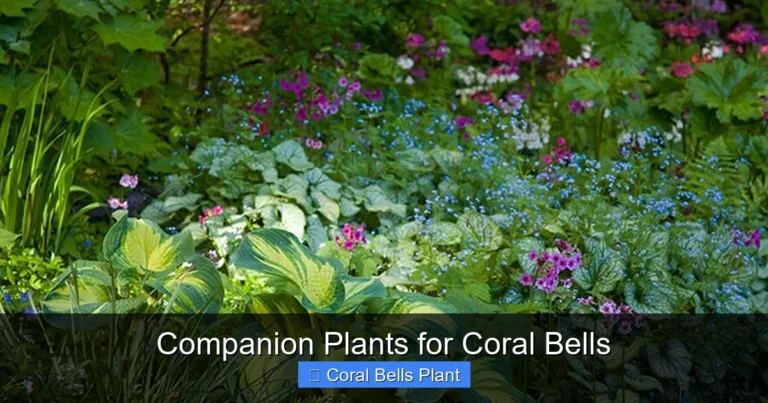
Companion Plants for Shade Gardens
Coral bells play well with others. Their mounded habit and colorful leaves bridge gaps between bold and fine textures. Classic shade companions include:
- Hostas: Large hosta leaves contrast beautifully with ruffled coral bell foliage. Pair blue hostas with silver heucheras; gold hostas with purple heucheras.
- Ferns: Japanese painted fern, autumn fern, and maidenhair fern add feathery texture. The silver tones in painted fern echo silver heucheras.
- Astilbe: Feathery plumes in pink, red, or white rise above coral bell mounds in early summer.
- Hakonechloa (Japanese forest grass): Cascading gold or green blades soften edges.
- Hellebores: Late winter blooms precede coral bell emergence; leathery evergreen leaves persist year-round.
- Pulmonaria (lungwort): Silver-spotted leaves and early blue-pink flowers complement heuchera foliage.
- Tiarella (foamflower): Close relative with similar needs; foamy white or pink spikes in spring.
For a simple three-plant combination, try: Heuchera ‘Caramel’ + Hosta ‘June’ + Hakonechloa ‘Aureola’. Warm, cool, and gold — season-long interest with almost no maintenance.
Container Combinations That Shine
Coral bells are container superstars. Their shallow roots thrive in pots, and their foliage looks lush at eye level. Use a high-quality potting mix with added perlite or pumice for drainage. Ensure the container has drainage holes — no gravel layer needed (it actually hinders drainage).
Design a “thriller, filler, spiller” pot with coral bells as filler. Example: Center a dwarf Japanese maple (thriller) in a large glazed pot. Surround with three Heuchera ‘Forever Purple’ (filler). Edge with Lysimachia ‘Goldilocks’ creeping Jenny (spiller). Water when the top inch of mix feels dry; fertilize monthly with dilute liquid fertilizer April through August.
In winter (zones 6 and colder), move pots to an unheated garage or bury them in a vegetable bed. In zones 7+, most containers survive outdoors if wrapped in burlap or bubble wrap during hard freezes.
Using Coral Bells as Ground Cover
Mass planting creates a living mulch that suppresses weeds and knits together into a colorful carpet. Space plants 12 inches apart in a staggered grid. In 2-3 years, they will touch. This works especially well on slopes where mowing is difficult. Choose vigorous, spreading cultivars like ‘Green Spice’, ‘Autumn Bride’, or the villosa hybrids. Avoid slow-growing miniatures — they will not fill in fast enough.
Rock Gardens, Edging, and Woodland Paths
Tuck coral bells into rock garden crevices where soil drains instantly. Their evergreen foliage (in mild winters) softens stone edges year-round. Along a shaded path, plant a single row 10 inches on center for a tidy border that invites touch — the ruffled leaves are irresistible to curious fingers. In a woodland garden, scatter them beneath deciduous trees among spring ephemerals like trillium and bloodroot. The heucheras emerge just as the ephemerals fade, covering bare soil.
Common Problems and How to Solve Them
Crown Rot: Prevention and Rescue
Crown rot (caused by Phytophthora or Rhizoctonia fungi) is the most serious disease. Symptoms: wilting despite moist soil, blackened crown, mushy roots, foul smell. It strikes when soil stays saturated, especially in heavy clay or containers without drainage.
Prevention: Plant high, amend soil, avoid overhead watering, mulch away from crown. Rescue: If caught early, dig the plant, wash roots, cut away all blackened tissue, dust cuts with sulfur or cinnamon, and replant in fresh, well-drained soil (or a pot). Keep barely moist and shaded. Success rate is about 50%.
Heuchera Rust: Identification and Management
Heuchera rust (Puccinia heucherae) appears as small orange-brown pustules on leaf undersides, with corresponding yellow spots on top. It thrives in humid, crowded conditions. Remove and destroy affected leaves (do not compost). Improve air circulation by thinning nearby plants. Avoid wetting foliage. Fungicides containing chlorothalonil or myclobutanil can protect new growth if applied preventively in spring. Resistant cultivars include ‘Caramel’, ‘Mocha’, and most villosa hybrids.
Pests: Vine Weevils, Aphids, and Foliar Nematodes
Vine weevil adults notch leaf edges at night; larvae eat roots. Control: apply beneficial nematodes (Steinernema kraussei) to soil in spring and fall. Aphids cluster on new growth and flower stems. Blast with water or spray insecticidal soap. Foliar nematodes cause angular brown lesions between leaf veins. No cure; remove and destroy infected plants. Prevent by avoiding overhead watering and spacing for airflow.
Winter Damage and Sunscald
In zones 4-5, repeated freeze-thaw cycles can heave plants out of the ground, exposing roots. Mulch heavily after ground freezes (late November) with straw, pine boughs, or shredded leaves. In late winter, intense sun on frozen leaves causes sunscald — white, papery patches. If this happens annually, move the plant to a shadier spot or erect a burlap screen on the south side.
Deer and Rabbit Resistance: The Reality Check
Coral bells are frequently listed as deer-resistant. In practice, deer may sample them, especially in spring when new growth is tender, but rarely devour entire plants. Rabbits sometimes nibble young leaves. Interplant with more distasteful companions (hellebores, ferns, epimedium) and use repellent sprays during peak browsing periods if pressure is high.
Propagating Coral Bells: Beyond Division
Growing from Seed
Species coral bells come true from seed; cultivars do not. If you want to experiment, collect seed pods when they turn brown and split (usually late summer). Sow fresh seed on the surface of moist seed-starting mix — light aids germination. Keep at 65-70°F. Germination takes 2-6 weeks. Seedlings are tiny; grow them under lights until they have several true leaves, then harden off and transplant to individual pots. Expect variation — this is how new cultivars are discovered!
Leaf Cuttings: A Fun Experiment
Some gardeners propagate from leaf cuttings. Select a healthy leaf with a short petiole (stem). Dip the cut end in rooting hormone. Insert into moist perlite-vermiculite mix. Cover with a clear dome or plastic bag. Place in bright indirect light. Roots and a tiny plantlet may form at the base in 6-8 weeks. Success rates are low (20-30%), but it costs nothing to try.
Tissue Culture and Commercial Production
Almost all named cultivars you buy are produced via tissue culture (micropropagation) in sterile labs. This ensures virus-free, genetically identical plants by the thousands. It is why a ‘Palace Purple’ bought in Oregon matches one bought in Maine. Home gardeners cannot replicate this, but understanding it explains why cultivars are uniform and why “seed-grown” plants of a named variety are not the same thing.
Seasonal Interest: What to Expect Year-Round
Spring: Fresh Growth and First Flowers
In early spring, new leaves unfurl in intense, saturated colors — often brighter than summer foliage. This is the showiest foliar display. Flower spikes begin elongating in mid-to-late spring. Depending on cultivar and climate, blooms appear from April (South) to June (North). The airy wands dance above the mound, catching light.
Summer: Foliage at Full Maturity
By July, leaves reach full size and mature color. Some varieties deepen; others fade slightly in heat. This is when you evaluate whether a cultivar holds its color in your garden. Keep soil evenly moist. Deadhead spent flowers. Watch for pests. In the Deep South, villosa hybrids shine while older types may sulk.
Autumn: Color Intensifies
Cool nights trigger anthocyanin production — red and purple pigments — in many cultivars. ‘Plum Pudding’ turns nearly black; ‘Caramel’ glows burnt orange; ‘Electra’ develops red veins. This second act often surpasses spring color. Flowering may resume lightly. Stop fertilizing. Reduce watering as temperatures drop.
Winter: Evergreen Structure
In zones 6b and warmer, coral bells remain largely evergreen. Leaves may flatten under snow but perk up on warm days. In colder zones, foliage dies back but the crown survives underground. The dried leaves protect the crown. Do not cut back until spring. The winter silhouette — especially with frost on ruffled edges — adds subtle beauty to the dormant garden.
Buying Guide: Where to Find the Best Plants
Local Nurseries vs. Mail Order
Independent garden centers let you see foliage color in person — crucial because catalog photos can be misleading. Staff can recommend varieties proven in your area. Prices are higher but you pay for curated selection and advice. Mail-order specialists (like Walters Gardens, Terra Nova Nurseries, Plant Delights) offer the widest range, including brand-new introductions. Plants arrive as plugs or bare-root; they establish quickly if planted promptly. Order early spring for best selection.
What to Look for When Selecting Plants
Choose plants with multiple growing points (not a single stem). Leaves should be turgid, not wilted or yellowed. Check the crown — it should be firm, not mushy. Gently lift the pot; roots should be white and fill the container but not circle tightly. Avoid plants with weeds growing in the pot — a sign of neglect. If buying bare-root, roots should be plump and moist, not dried out.
Understanding Plant Patents and Trademarks
Many modern cultivars are patented (PP followed by a number) or trademarked (® or ™). This means propagation for sale is prohibited without a license. Home gardeners dividing for personal use or sharing with friends are generally not targeted, but selling divisions at a plant swap technically infringes. Respect breeders’ work — it takes 5-10 years to develop a new cultivar.
Conclusion: Making Coral Bells a Garden Staple
Few perennials offer so much for so little effort. Coral bell plants deliver four-season foliage color, delicate flowers that feed pollinators, adaptability to shade, and a staggering palette of cultivars to suit any design scheme. Whether you tuck a single ‘Obsidian’ into a container, mass ‘Caramel’ under a maple, or collect every silver variety you can find, these natives reward you with presence and personality.
Start with one or two varieties suited to your zone and site. Watch them through a full year. Note which colors sing in your light, which hold up in your heat, which combinations make you pause on your garden path. Then expand. Divide. Share. Before long, you will be the gardener neighbors ask: “What is that amazing plant with the ruffled purple leaves?” And you will smile, because you know — it is just a coral bell, doing what it does best.
Frequently Asked Questions
What is the difference between Heuchera and coral bells?
Heuchera is the botanical genus name; coral bells is the common name. They refer to the same plants. The name “coral bells” originally described Heuchera sanguinea with its coral-red flowers, but now applies to all Heuchera species and cultivars.
How often should I water coral bells?
Water newly planted coral bells deeply twice a week for the first 2-3 months. Once established, water weekly during dry spells. They prefer consistently moist but well-drained soil. Avoid overhead watering to prevent fungal diseases.
Are coral bells deer resistant?
Coral bells are considered deer resistant due to their slightly fuzzy, bitter-tasting foliage. However, hungry deer may sample new spring growth. They rarely cause severe damage. Interplant with more distasteful perennials for added protection.
Can I grow coral bells in containers?
Yes, coral bells excel in containers. Use a well-draining potting mix with added perlite, ensure the pot has drainage holes, and water when the top inch of soil feels dry. In zones 6 and colder, overwinter pots in an unheated garage or bury them in the garden.
Why are my coral bell leaves turning brown and crispy?
Brown crispy edges usually indicate too much sun, insufficient water, or both. Light-colored varieties are especially prone to sun scorch. Move to a shadier spot, increase watering, and ensure mulch is in place to conserve moisture.
Do coral bells spread aggressively?
No, coral bells are clump-forming perennials that slowly widen over years. They do not run or self-sow aggressively. Most cultivars need division every 3-4 years to maintain vigor, which is the perfect time to expand your planting or share with friends.