Wild Ginger Missouri Plant Finder
Wild ginger (Asarum canadense) thrives in Missouri’s rich, moist woodlands and makes a wonderful native groundcover for shade gardens. This guide helps you locate, identify, and responsibly enjoy this distinctive spring wildflower across the Show-Me State.
If you’ve ever wandered through a Missouri woodland in April and caught a whiff of something spicy and sweet rising from the forest floor, you might have stumbled upon wild ginger. This charming native plant goes by the scientific name Asarum canadense, and it’s one of those woodland treasures that makes spring hiking in the Show-Me State so rewarding. The wild ginger missouri plant finder tools available today make it easier than ever to locate this species, whether you’re a curious hiker, a native plant gardener, or someone interested in the botanical heritage of our state.
But here’s the thing about wild ginger — it doesn’t announce itself with showy flowers at eye level. This plant plays hide and seek. Its fascinating blooms sit right at ground level, often concealed beneath last year’s fallen leaves. Once you learn where to look and what to look for, though, you’ll start noticing it everywhere in the right habitats. This guide walks you through everything you need to know about finding, identifying, and appreciating wild ginger across Missouri.
Key Takeaways
- Wild ginger is a native perennial: Asarum canadense grows naturally throughout Missouri in deciduous forests with rich, moist soil.
- Distinctive heart-shaped leaves: The plant features pairs of velvety, kidney-shaped leaves that make identification easy once you know what to look for.
- Hidden flowers bloom in spring: Maroon, jug-shaped flowers appear April through May but hide beneath leaf litter at ground level.
- Not related to culinary ginger: Despite the name and similar aroma, wild ginger belongs to the birthwort family (Aristolochiaceae), not the ginger family (Zingiberaceae).
- Use plant finder tools wisely: Missouri plant databases, iNaturalist, and USDA maps help locate populations while respecting private property and conservation rules.
- Excellent native groundcover: Wild ginger spreads slowly by rhizomes to form dense mats that suppress weeds in shade gardens.
- Practice ethical foraging: Never dig plants from the wild; purchase from native nurseries or propagate from seed to protect wild populations.
Quick Answers to Common Questions
When is the best time to find wild ginger blooming in Missouri?
Wild ginger flowers bloom from April through May in Missouri, with peak bloom typically in mid-to-late April in southern counties and early May in northern counties.
Is wild ginger related to the ginger root sold in grocery stores?
No, wild ginger (Asarum canadense) belongs to the birthwort family (Aristolochiaceae), while culinary ginger (Zingiber officinale) is in the ginger family (Zingiberaceae). They are not botanically related.
Can I dig up wild ginger from public land to plant in my garden?
No, collecting plants from Missouri public lands is prohibited without a permit. Always purchase from native plant nurseries or propagate from ethically sourced seeds.
What habitat should I search to find wild ginger in Missouri?
Look in moist, rich deciduous forests on north- and east-facing slopes, stream terraces, and ravine bottoms with thick leaf litter and mature canopy trees like sugar maple and basswood.
Are there any poisonous look-alikes I should worry about when identifying wild ginger?
No poisonous look-alikes closely resemble wild ginger in Missouri. The main confusion species are Canada violet, wild geranium, and golden ragwort, all easily distinguished by leaf margins and flower structure.
📑 Table of Contents
- Getting to Know Wild Ginger in Missouri
- Where to Find Wild Ginger Across the Show-Me State
- Identifying Wild Ginger with Confidence
- Seasonal Changes and Best Times to Search
- Using a Wild Ginger Missouri Plant Finder Effectively
- Growing and Conserving Wild Ginger at Home
- Cultural History and Human Connections
- Conclusion
Getting to Know Wild Ginger in Missouri
What Exactly Is Wild Ginger?
Wild ginger is a low-growing, colony-forming perennial native to eastern North America. In Missouri, it occurs naturally in every county, making it one of our most widespread spring wildflowers. The plant belongs to the Aristolochiaceae family — the birthwort family — which means it’s not related to the tropical ginger (Zingiber officinale) you buy at the grocery store. The common name comes from the ginger-like fragrance released when you crush the roots or rhizomes.
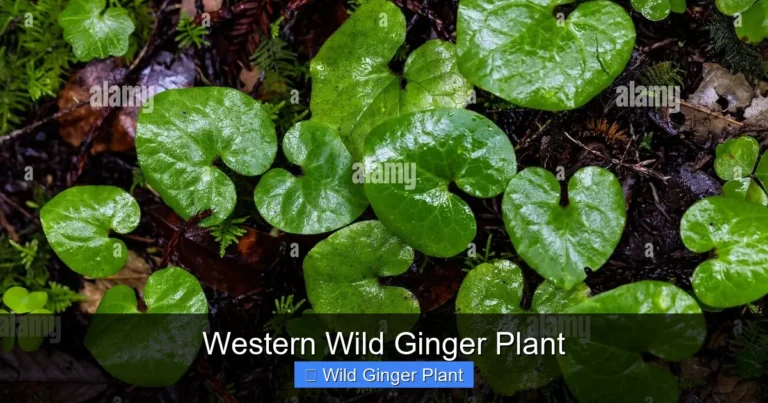
Each plant produces a pair of basal leaves that emerge on long, hairy petioles (leaf stems) from a shallow, creeping rhizome. The leaves are heart-shaped to kidney-shaped, typically 3 to 6 inches wide, with a soft, velvety texture on the upper surface. They’re a beautiful deep green that adds lush texture to the woodland floor. The rhizomes spread horizontally just below the soil surface, slowly forming colonies that can cover several square feet over time.
Why the Name “Wild Ginger”?
Early European settlers gave this plant its common name because the rhizomes smell and taste remarkably like commercial ginger. Indigenous peoples across eastern North America used the rhizomes as a flavoring and for medicinal purposes long before settlers arrived. The roots contain aromatic compounds including asarone, which provides that distinctive spicy-sweet scent. However, there’s an important caveat — modern research has identified potential carcinogenic compounds in wild ginger, particularly asarone, so culinary and medicinal use is no longer recommended.
Missouri Distribution and Range
You can find wild ginger in every single county in Missouri. That’s right — all 114 counties plus the independent city of St. Louis have documented populations. The plant thrives throughout the Ozark Highlands, the Mississippi Lowlands, the Osage Plains, and the Dissected Till Plains. Basically, wherever you find mature deciduous forests with decent soil moisture and organic matter, wild ginger likely grows there too.
The species reaches its western range limit in eastern Kansas and Oklahoma, so Missouri sits comfortably in the heart of its distribution. This widespread presence makes the wild ginger missouri plant finder search particularly rewarding — you don’t need to travel to a specific region to encounter it.
Where to Find Wild Ginger Across the Show-Me State
Preferred Habitat Conditions
Wild ginger is picky about its neighborhood, and understanding its preferences is the key to successful searching. The plant demands three things: shade, moisture, and rich organic soil. You’ll almost always find it in mesic to moist deciduous forests, particularly on north- and east-facing slopes where conditions stay cooler and wetter longer.
Look for it in bottomland forests along streams and rivers, where periodic flooding deposits rich alluvial soil. It also thrives in upland mesic forests on protected slopes and in ravines. The common denominator is a thick layer of decomposing leaf litter — wild ginger rhizomes grow right in that duff layer, not deep in mineral soil. If you see a forest floor with several inches of loose, crumbly leaf mold, you’re in prime territory.
Indicator Species and Plant Communities
Experienced botanists often use “indicator species” to locate wild ginger before they even see the plant itself. In Missouri, wild ginger commonly grows alongside several characteristic species. If you spot these companions, start looking more carefully at ground level:
- Mayapple (Podophyllum peltatum): Those distinctive umbrella-like leaves often share the same colonies.
- Bloodroot (Sanguinaria canadensis): Another early spring bloomer with similar habitat needs.
- Dutchman’s breeches (Dicentra cucullaria): Look for the ferny foliage and pantaloon-shaped flowers.
- Trillium species: Especially Trillium flexipes and Trillium sessile in Missouri.
- Wild geranium (Geranium maculatum): Blooms a bit later but occupies the same woods.
- Jack-in-the-pulpit (Arisaema triphyllum): The three-part leaves are unmistakable.
- Spicebush (Lindera benzoin): This understory shrub often grows above wild ginger colonies.
Tree canopy composition matters too. Wild ginger flourishes under sugar maple, basswood, northern red oak, white oak, and bitternut hickory. It avoids areas dominated by post oak, blackjack oak, or shortleaf pine, which indicate drier, more acidic conditions.
Public Lands Access in Missouri
Missouri offers exceptional public access for wildflower viewing. The Missouri Department of Conservation manages hundreds of conservation areas, many with excellent mesic forest habitat. Mark Twain National Forest spans 1.5 million acres across the Ozarks. State parks like Ha Ha Tonka, Meramec, and Castlewood protect beautiful woodland communities. Many county and city parks also harbor wild ginger populations.
Before you head out, check the specific regulations for your destination. Most public lands allow observation and photography but prohibit digging or collecting plants. Some natural areas have restricted access during sensitive seasons. A quick visit to the managing agency’s website saves disappointment at the trailhead.
Using a Wild Ginger Missouri Plant Finder for Specific Locations
Modern technology makes pinpointing populations much easier than wandering aimlessly. The wild ginger missouri plant finder resources I recommend most include the Missouri Botanical Garden’s PlantFinder database, the USDA PLANTS database county-level maps, and iNaturalist observations. The Missouri Botanical Garden’s tool lets you search by county, habitat type, and bloom time. iNaturalist shows recent, geotagged observations with photos — incredibly valuable for seeing what’s blooming right now.
When using these tools, remember that exact coordinates for rare plants are often obscured to prevent poaching. Wild ginger isn’t rare, but the same privacy protections sometimes apply. Use the data to identify promising general areas — a specific conservation area, a stretch of riverfront forest, a particular state park — then explore on foot.
Identifying Wild Ginger with Confidence
Leaf Characteristics — Your Primary ID Feature
Since the flowers hide at ground level, the leaves are what you’ll notice first. Each mature plant produces two leaves (sometimes one on younger plants) on long, densely hairy petioles that can reach 6 to 12 inches tall. The leaf blades are broadly heart-shaped to kidney-shaped, typically 3 to 6 inches wide and almost as long. The base is deeply cordate (heart-shaped) with a narrow sinus between the rounded lobes.
The upper leaf surface is dark green with a soft, velvety pubescence — run your fingers gently across it and you’ll feel the fine hairs. The lower surface is paler and more densely hairy. Leaf margins are entire (smooth, not toothed). The venation is palmate, with 7 to 9 main veins radiating from the base. In fall, the leaves often develop attractive yellow tones before dying back.
The Hidden Flowers — A Botanical Curiosity
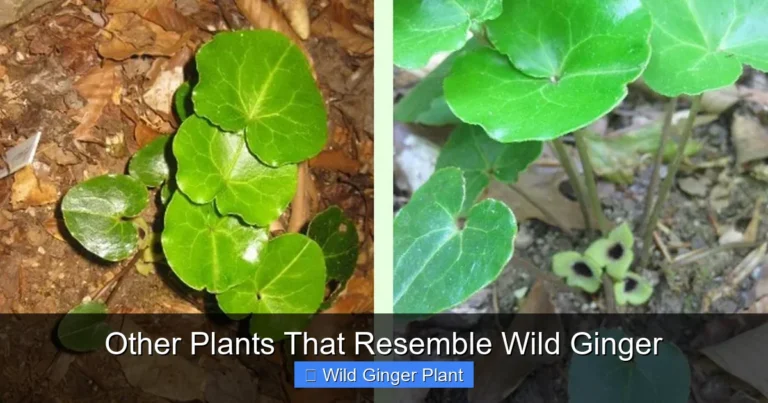
Here’s where wild ginger gets really interesting. The flowers emerge in April and May, but you have to get down on your knees and move leaf litter aside to see them. Each flower sits singly on a short, hairy pedicel at the base of the leaf petioles, right at soil level. The flower has no petals — instead, it has a three-lobed calyx that forms a jug-shaped or bell-shaped tube about half an inch to an inch long.
The calyx lobes are triangular and spread or recurve at the tips. Color ranges from deep maroon to brownish-purple, sometimes with greenish tips. The interior is often lighter, with a whitish or yellowish throat. Twelve stamens surround six fused styles. The whole structure looks like a tiny, dark urn nestled in the duff. This unusual flower morphology reflects its pollination strategy — more on that in a moment.
Pollination Strategy — Flies and Beetles, Not Bees
Those ground-level, maroon flowers aren’t trying to attract bees. They’re mimicking something else entirely — carrion or fungal fruiting bodies. The color, the position at ground level, and a faint musty odor attract small flies, gnats, and beetles that normally visit decaying matter. These insects crawl into the flower tube, pick up pollen, and carry it to the next flower.
This strategy, called sapromyiophily, is surprisingly effective. Studies show wild ginger sets abundant seed despite its inconspicuous flowers. Ants then disperse the seeds, attracted by a fleshy appendage called an elaiosome. The ants carry seeds to their nests, eat the elaiosome, and discard the seed in nutrient-rich waste piles — perfect germination sites.
Distinguishing from Look-Alikes
Several Missouri plants could confuse a beginner. Here’s how to tell them apart:
- Canada violet (Viola canadensis): Also has heart-shaped leaves, but leaf margins are toothed (crenate), not smooth. Flowers are white with purple veins, held well above leaves on distinct stems.
- Wild geranium (Geranium maculatum): Leaves are deeply palmately lobed (5-7 lobes), not heart-shaped. Flowers are pink to lavender, showy, on tall stems.
- Golden ragwort (Packera aurea): Basal leaves are heart-shaped but have coarse teeth. Yellow daisy-like flowers on tall stems in spring.
- European ginger (Asarum europaeum): Escaped ornamental with glossy, leathery, evergreen leaves. Not hairy. Rarely escapes in Missouri but possible near old homesites.
- Hexastylis species (little brown jugs): Related genus, evergreen leathery leaves, flowers similar but smaller. Not native to Missouri — more southern.
Seasonal Changes and Best Times to Search
Early Spring Emergence (March – Early April)
In southern Missouri, wild ginger leaves start pushing through the leaf litter as early as mid-March. In the north, it’s usually early April. The emerging leaves are folded along the midrib like tiny green cigars, covered in dense silvery hairs. They unfold slowly over a week or two. This is actually a great time to search because the forest floor is still relatively open — spring ephemerals haven’t fully leafed out, and the ginger’s emerging foliage stands out against the brown duff.
Peak Bloom and Full Leaf (Mid-April – May)
This is the classic wild ginger season. Leaves reach full size, forming a continuous green carpet in good habitat. Flowers are present but hidden. If you want to see the blooms, this is your window — gently pull back leaf litter at the base of leaf pairs. The maroon urns are exquisite up close. Photographers love this period for the lush, complete foliage.
Summer Persistence (June – August)
Unlike many spring ephemerals that vanish by June, wild ginger keeps its leaves all summer. The foliage remains attractive through July and August, though it may look a bit tired during drought. This persistence makes it valuable as a garden groundcover and means you can identify it long after other spring wildflowers have disappeared. In deep shade with adequate moisture, the leaves stay fresh-looking well into fall.
Fall Color and Dormancy (September – November)
As temperatures cool and daylight shortens, wild ginger leaves often turn a lovely clear yellow before collapsing. The rhizomes remain alive just below the surface, storing energy for next spring. Fall is actually a good time to locate colonies for future reference — the yellowing leaves are visible against the darker forest floor, and you can mark locations mentally or with GPS for spring visits.
Winter Dormancy (December – February)
Above ground, nothing shows. The plant survives as rhizomes with dormant buds. If you’re doing winter botany, you won’t find wild ginger. But this is a great time to study the habitat structure — canopy composition, slope aspect, soil moisture indicators — that predicts where it will appear come spring.
Using a Wild Ginger Missouri Plant Finder Effectively
Digital Tools and Databases
Let’s talk practical search strategy using the wild ginger missouri plant finder resources available today. The Missouri Botanical Garden’s PlantFinder (plantfinder.mobot.org) is the gold standard for cultivated plants, but their wild plant data is also excellent. Search “Asarum canadense” and filter by Missouri counties. You’ll get habitat notes, bloom time, and sometimes specific location hints for their properties like Shaw Nature Reserve.
The USDA PLANTS Database (plants.usda.gov) provides county-level distribution maps for every state. Search Asarum canadense, click Missouri, and you’ll see which counties have verified herbarium specimens. This is based on vouchered records, so it’s highly reliable — but absence from a county doesn’t mean the plant isn’t there, just that no one has collected and deposited a specimen.
iNaturalist (inaturalist.org) offers real-time, crowd-sourced observations. Search “Asarum canadense” and filter by Missouri. You can see photos from the past few weeks, which tells you what’s blooming now. The map view shows observation clusters. Remember that precise locations of sensitive species are automatically obscured, but wild ginger is common enough that many observations have public coordinates.
Missouri-Specific Resources
The Missouri Department of Conservation’s online field guide includes wild ginger with photos and habitat descriptions. Their “Atlas of Missouri Vascular Plants” (hosted by the University of Missouri) maps specimen records by county. The Missouri Native Plant Society (MONPS) organizes field trips to prime wildflower locations — joining a trip is one of the best ways to learn from experienced botanists.
Many Missouri state parks and conservation areas have species lists available at visitor centers or online. Call ahead or check the website. Shaw Nature Reserve, part of the Missouri Botanical Garden, maintains extensive native plantings and natural areas where wild ginger thrives.
Field Search Techniques
Once you’re in promising habitat, how do you actually find the plants? Start by slowing down. Wild ginger blends in. Walk slowly along trails through mesic forest, scanning the ground 10-15 feet to either side. Look for the distinctive paired leaves — they often catch light differently than surrounding vegetation because of their velvety texture.
Focus on north- and east-facing slopes, stream terraces, and ravine bottoms. Areas with thick leaf litter and minimal invasive species (like garlic mustard or Japanese stiltgrass) are best. If you see one plant, stop and look around — they grow in colonies, so there are almost always more nearby.
Bring a small hand lens (10x) to examine leaf pubescence and flower details. A kneeling pad makes ground-level observation comfortable. Camera or phone for photos. GPS or phone app to mark locations. And always, always stay on trails in sensitive areas — trampling destroys the very habitat you’re enjoying.
Citizen Science Contributions
Your observations can help improve the wild ginger missouri plant finder data for everyone. Submit photos and locations to iNaturalist. Join the Missouri Botanical Garden’s “Budburst” phenology project to track bloom times. Report new county records to the Missouri Native Plant Society or the herbarium at the University of Missouri. Every data point builds a better picture of this species’ distribution and response to climate change.
Growing and Conserving Wild Ginger at Home
Why Garden with Wild Ginger?
If you have a shady yard, wild ginger is one of the best native groundcovers you can plant. It forms a dense, weed-suppressing mat 6-12 inches tall that stays attractive from April through November. No mowing, no fertilizing, minimal watering once established. It’s deer-resistant (the aromatic compounds deter browsing). And it supports native insects — including the pipevine swallowtail butterfly, whose caterpillars feed on Aristolochiaceae species.
Wild ginger also solves that difficult “dry shade under trees” problem better than almost anything else. The shallow rhizomes compete well with tree roots for moisture in the duff layer. It’s a natural companion for ferns, wild geranium, Solomon’s seal, and other shade-loving natives.
Sourcing Plants Ethically
This is critical: never dig wild ginger from natural areas. It’s illegal on public land without a permit, unethical on private land without permission, and ecologically harmful everywhere. Wild ginger spreads slowly — a colony you dig up may have taken decades to form. Removing plants disrupts the seed bank, disturbs soil, and opens space for invasives.
Instead, purchase from reputable native plant nurseries. In Missouri, look for Missouri Wildflowers Nursery, Forest Keeling Nursery, or Hamilton Native Outpost. Many Missouri Department of Conservation nature centers hold native plant sales in spring. The Missouri Native Plant Society chapters often have plant swaps or sales. Ask about propagation methods — seed-grown plants have more genetic diversity than clones.
Planting and Establishment
Plant wild ginger in spring or early fall. Choose a shady spot with rich, well-drained but moisture-retentive soil. Amend with compost or leaf mold if your soil is poor. Space plants 12-18 inches apart — they’ll fill in over several years. Water well at planting and mulch with shredded leaves (not wood chips, which can mat and repel water).
First-year care is mostly about moisture. Don’t let new plantings dry out completely. After the first growing season, established plants are remarkably drought-tolerant for a mesic species, though they’ll look better with occasional summer watering. No fertilizer needed — leaf litter decomposition provides all necessary nutrients.
Propagation from Seed and Division
If you have established plants, you can expand your patch. Division is easiest — in early spring or fall, dig a section of rhizome with several leaf pairs and replant immediately. Keep watered until established. Seed propagation is slower but rewarding. Collect seeds in June when the capsules split open. Sow immediately in pots or a prepared seedbed — they need cold stratification (winter) to germinate. Seedlings take 2-3 years to reach transplant size.
Conservation Considerations
While wild ginger isn’t rare in Missouri, local populations face threats. Invasive species like garlic mustard (Alliaria petiolata), Japanese stiltgrass (Microstegium vimineum), and wintercreeper (Euonymus fortunei) outcompete it. Deer overbrowse in some areas reduces vigor. Habitat fragmentation isolates populations. Climate change may shift suitable habitat northward or to higher elevations.
You can help by removing invasives on your property, supporting land conservation organizations, and planting native species. If you manage woodland, consider prescribed fire — wild ginger tolerates low-intensity fire well, and fire suppresses many invasives. Monitor your populations and report significant declines to the Missouri Natural Heritage Program.
Cultural History and Human Connections
Indigenous Uses Across Eastern North America
Long before botanists gave it a Latin name, wild ginger was known and used by numerous Indigenous nations. The Cherokee, Iroquois, Ojibwe, Menominee, Meskwaki, and many others used the rhizomes for flavoring meats and vegetables, as a digestive aid, for colds and fevers, and as a poultice for wounds. The Meskwaki used it as a contraceptive. The Cherokee made a compound infusion for heart palpitations. These uses reflect deep ecological knowledge accumulated over generations.
In Missouri specifically, the Osage, Missouria, Illini, and other nations who stewarded these lands would have known this plant well. The rhizomes were harvested sustainably — taking only what was needed, leaving plenty to regrow. This reciprocal relationship stands in stark contrast to modern commercial wildcrafting that decimates populations.
Early Settler Adoption
European settlers quickly adopted wild ginger as a substitute for the expensive imported tropical ginger. They candied the rhizomes, made syrups, and used it in baking. Some early American cookbooks include recipes for “wild ginger preserves” and “ginger wine” made from the native root. The plant was also included in early American pharmacopeias as a stimulant and carminative.
Modern Understanding and Cautions
Here’s where contemporary science adds an essential chapter. Research has identified aristolochic acid and asarone in wild ginger — compounds with documented nephrotoxic and carcinogenic effects. Aristolochic acid is particularly concerning; it’s associated with kidney failure and urinary tract cancers. While traditional preparations likely used lower doses and different processing methods, modern health authorities including the FDA advise against internal use of Aristolochiaceae species.
This doesn’t diminish the plant’s cultural importance or ecological value. It just means we should appreciate wild ginger for its beauty, its role in the ecosystem, and its historical significance — not as a kitchen ingredient or herbal remedy. The wild ginger missouri plant finder enthusiast today is more likely to carry a camera than a collecting bag, and that’s exactly as it should be.
Wild Ginger in Missouri Culture Today
Today, wild ginger appears in native plant gardens at the Missouri Botanical Garden, Powell Gardens, and numerous nature centers. It’s featured in wildflower identification workshops across the state. The Missouri Native Plant Society includes it in their educational materials. Artists and photographers celebrate its subtle beauty. And hikers still get that little thrill of recognition when they spot those velvety hearts on the forest floor.
Some Missouri restaurants focusing on local, foraged ingredients have experimented with wild ginger — but only from cultivated sources, and with full awareness of the safety concerns. The conversation has shifted from “how can we use this?” to “how can we protect and appreciate this?” That’s a healthy evolution.
Conclusion
Finding wild ginger in Missouri connects you to something ancient and enduring. This plant has carpeted our woodlands for millennia, feeding insects, stabilizing soil, marking the seasons. When you kneel to examine those hidden maroon flowers or run your fingers over velvety leaves, you’re participating in a relationship between humans and this landscape that stretches back countless generations.
The wild ginger missouri plant finder tools we have today — databases, apps, maps, community knowledge — make it easier than ever to locate this species. But the real finding happens when you slow down on a woodland trail in April, breathe in the rich scent of decomposing leaves and living roots, and train your eyes to see what’s been there all along. The heart-shaped leaves. The colony spreading quietly. The flower hiding its beauty at ground level, waiting for a fly, not a fanfare.
Whether you’re a gardener looking for the perfect native groundcover, a hiker wanting to deepen your woods knowledge, or someone who simply loves the particular magic of Missouri spring, wild ginger rewards attention. Go find it. Go know it. And when you do, tread lightly — leave the rhizomes in the duff, take only photos and memories, and carry forward the old understanding that we’re visitors in this plant’s home, not its owners.
The next time you’re in a Missouri woodland in April or May, get down low. Pull back the leaves. Say hello to Asarum canadense. It’s been waiting for you.
Frequently Asked Questions
What is the scientific name for wild ginger found in Missouri?
The scientific name is Asarum canadense. It belongs to the Aristolochiaceae (birthwort) family and is the only Asarum species native to Missouri.
Does wild ginger grow in all Missouri counties?
Yes, wild ginger has been documented in all 114 Missouri counties plus the independent city of St. Louis. It thrives wherever suitable mesic forest habitat exists.
Can I eat wild ginger roots like store-bought ginger?
While historically used as a ginger substitute, modern research identifies carcinogenic compounds (asarone, aristolochic acid) in wild ginger. Internal use is not recommended by health authorities.
How fast does wild ginger spread in a garden setting?
Wild ginger spreads slowly by rhizomes, typically 6-12 inches per year under good conditions. It forms a dense groundcover over several years but is not aggressive or invasive.
What pollinates wild ginger flowers?
Small flies, gnats, and beetles pollinate wild ginger. The ground-level, maroon flowers mimic carrion or fungi to attract these saprophagous insects rather than bees or butterflies.
Where can I buy native wild ginger plants in Missouri?
Reputable sources include Missouri Wildflowers Nursery, Forest Keeling Nursery, Hamilton Native Outpost, and native plant sales at Missouri Department of Conservation nature centers and Missouri Native Plant Society chapters.