Forest Plants That Look Like Wild Ginger
Wild ginger has distinct heart-shaped leaves and hidden flowers, but several forest plants mimic its appearance. This guide helps you confidently identify wild ginger and avoid confusing it with similar species like hexastylis, canadense, and european ginger.
Walking through a spring forest, you spot a patch of low green plants. Heart-shaped leaves hug the ground. Your heart jumps. Is it wild ginger? You kneel down for a closer look. The leaves look right. But something feels off. Maybe the texture is wrong. Maybe the smell is missing. This moment happens to every forager and plant lover. The forest floor holds many plants that wear similar coats. Learning to tell them apart takes time, patience, and a good guide.
Wild ginger (Asarum canadense) is a native treasure of eastern North American woodlands. It carpets rich slopes and stream banks. Its leaves are soft, fuzzy, and deeply lobed at the base. The flowers are shy, hiding under leaf litter at soil level. They look like tiny jugs with three flared lips. The root smells unmistakably of ginger, warm and spicy. But wild ginger has cousins. It has mimics. Some are close relatives. Others are total strangers. This article walks you through the most common forest plants that look like wild ginger. We will compare leaves, flowers, roots, smells, and habitats. By the end, you will feel more confident on your next woods walk.
Key Takeaways
- Leaf shape matters: Wild ginger leaves are heart-shaped with deep lobes at the base, while look-alikes often have rounder or more pointed tips.
- Check the flowers: True wild ginger flowers hide at ground level and are jug-shaped with three pointed tips, unlike the showy blooms of imposters.
- Smell the roots: Crush a root gently. Real wild ginger smells strongly of ginger. Most look-alikes lack this distinct aroma.
- Growth habit differs: Wild ginger forms dense colonies from rhizomes. Many mimics grow as single clumps or spread differently.
- Habitat clues help: Wild ginger prefers rich, moist deciduous woods. Some look-alikes favor acidic soils or coniferous forests.
- Hexastylis species are close cousins: Often called little brown jugs, they share the family but have leathery, evergreen leaves with distinct patterns.
- Never eat without certainty: Some look-alikes like European ginger contain toxic compounds. Always verify with multiple features before foraging.
Quick Answers to Common Questions
How can I tell wild ginger from Hexastylis in winter?
Wild ginger is deciduous and disappears completely in winter. Hexastylis species are evergreen with leathery, often mottled leaves that persist year-round. If you see green heart-shaped leaves in January, it is not Asarum canadense.
Does European ginger grow wild in North America?
Yes, Asarum europaeum has escaped cultivation and naturalized in parts of the northeastern US and eastern Canada, particularly near old homesites, gardens, and urban parks where it was originally planted as an ornamental groundcover.
Is it safe to eat wild ginger root?
Wild ginger contains aristolochic acid which can cause kidney damage and cancer with prolonged use. Traditional use involved very small amounts. Modern herbalists recommend caution. Culinary ginger (Zingiber officinale) is a safe alternative for cooking.
What habitat indicates wild ginger versus look-alikes?
Wild ginger prefers rich, moist, deciduous forests with neutral to alkaline soils (often over limestone). Hexastylis prefers acidic, well-drained oak-hickory-pine forests on ridges. European ginger appears near disturbed areas, old gardens, and urban edges.
Can I identify wild ginger by smell alone?
No. While wild ginger roots smell strongly of ginger, so do Hexastylis species and European ginger. Smell confirms the genus Asarum/Hexastylis but cannot distinguish between species. You must also check leaf texture, evergreen vs deciduous habit, flower structure, and habitat.
📑 Table of Contents
- Why Identification Matters
- Meet the Real Wild Ginger
- The Close Cousins: Hexastylis Species
- The European Imposter: Asarum europaeum
- Distant Mimics: Plants That Fool the Eye
- Root and Rhizome Details
- Seasonal Identification Guide
- Habitat as a Clue
- Practical Field Tips
- Common Mistakes and How to Avoid Them
- Conservation and Ethics
- Growing Your Own Wild Ginger
- Conclusion
Why Identification Matters
Foraging Safety Comes First
People forage wild ginger for its rhizome. It flavors teas, syrups, and baked goods. It has a long history of use by Indigenous peoples and early settlers. But eating the wrong plant can make you sick. Some look-alikes contain aristolochic acid. This compound damages kidneys. It may cause cancer. European ginger (Asarum europaeum) has higher levels. Even some native Hexastylis species may pose risks. You cannot rely on leaf shape alone. You need multiple lines of evidence. Smell. Flower structure. Root appearance. Habitat. When in doubt, leave it out. No flavor is worth a hospital visit.
Ecological Respect Matters Too
Wild ginger grows slowly. A colony may take decades to form. Over-harvesting kills patches. Digging roots destroys the plant. If you forage, take only a small piece from a large, healthy colony. Replant the rest. Better yet, grow your own. Nurseries sell native wild ginger. It thrives in shade gardens. You get the spice without harming wild populations. Also, know your local laws. Some states list wild ginger as a species of concern. Picking may be restricted on public land. Always check regulations before you harvest.
Meet the Real Wild Ginger
Asarum canadense: The Standard
Let us start with the true plant. Asarum canadense goes by many names. Canada wild ginger. Woodland ginger. Coltsfoot (though that name belongs to another plant). It is a perennial herb. It spreads by thick, branching rhizomes. These rhizomes sit just below the soil surface. They are pale, jointed, and snap with a crisp sound. Crush one. The ginger scent rises instantly. It is warm, sweet, and peppery.
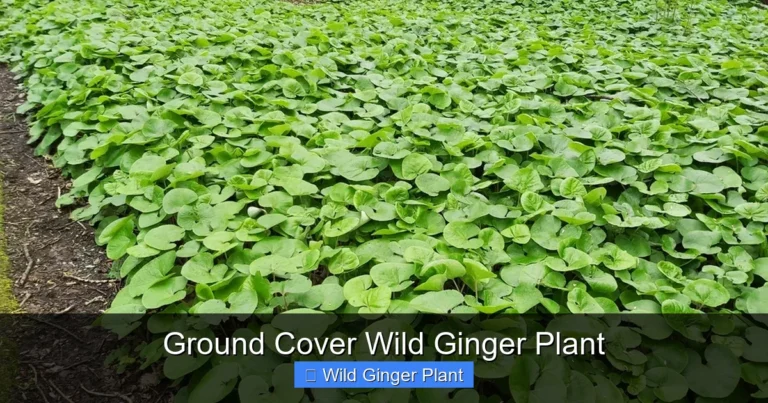
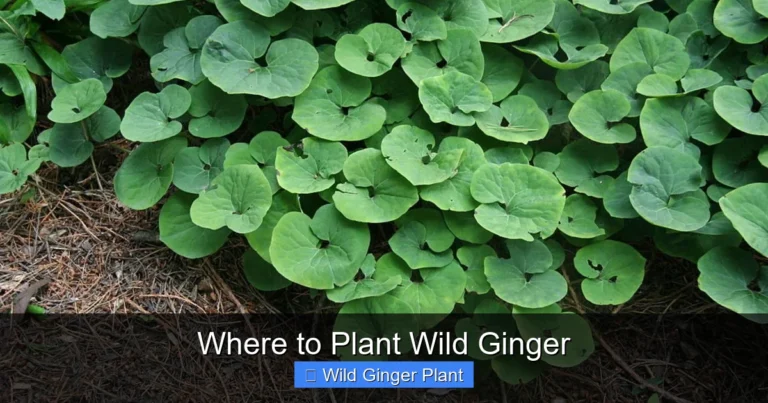
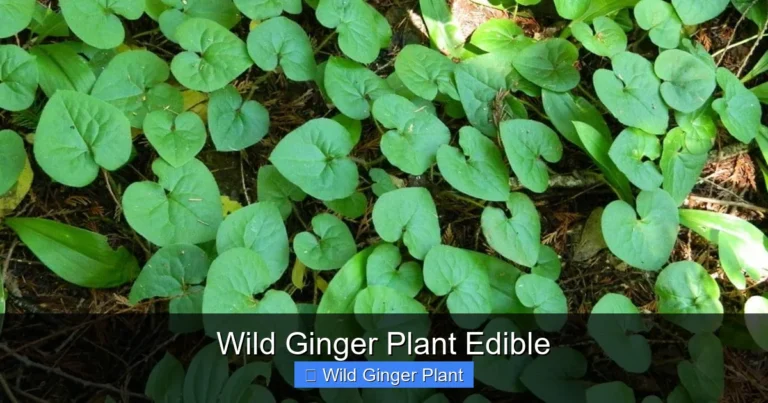
The leaves emerge in early spring. They come in pairs. Each leaf sits on a long, hairy petiole. The blade is heart-shaped. The base has two deep, rounded lobes. The tip is pointed. The margin is smooth. The upper surface is soft green with fine hairs. The underside is paler and hairier. Leaves reach six to eight inches wide. They form a dense, low carpet. In summer, the foliage stays green and lush.
The Hidden Flower
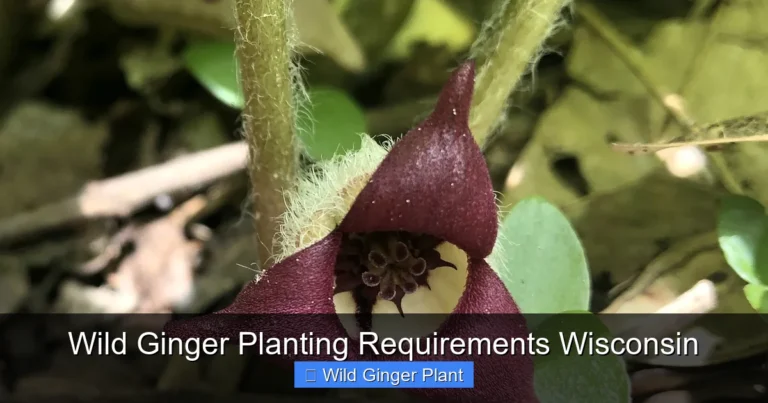
Wild ginger flowers in April or May. You must get on your knees to see them. The flower sits on a short stalk at ground level. It is often buried under dead leaves. The calyx forms a cup or jug shape. It is fleshy and hairy outside. Color ranges from brownish-purple to greenish-brown. Three long, pointed lobes flare at the rim. They look like twisted ribbons. Inside, the flower is pale with purple veins. Twelve stamens surround six styles. Flies and beetles pollinate them. The flower has no petals. After pollination, a fleshy capsule forms. It splits open to reveal seeds with oily appendages. Ants carry the seeds away. This is myrmecochory. Ants disperse the plant.
Habitat and Range
Wild ginger loves rich, moist, deciduous forests. It thrives on calcareous soils. Think limestone or dolomite bedrock. You find it on north-facing slopes. Along streams. In coves and ravines. It avoids dry ridges. It avoids acidic pine woods. Its range spans from Manitoba to Nova Scotia. South to Georgia and Alabama. West to Oklahoma and Kansas. It is common in the Appalachians. It is common in the Great Lakes region. It is common in the Ohio Valley. If you are in a rich mesic forest in this range, you are in wild ginger country.
The Close Cousins: Hexastylis Species
Little Brown Jugs and Heartleaf Gingers
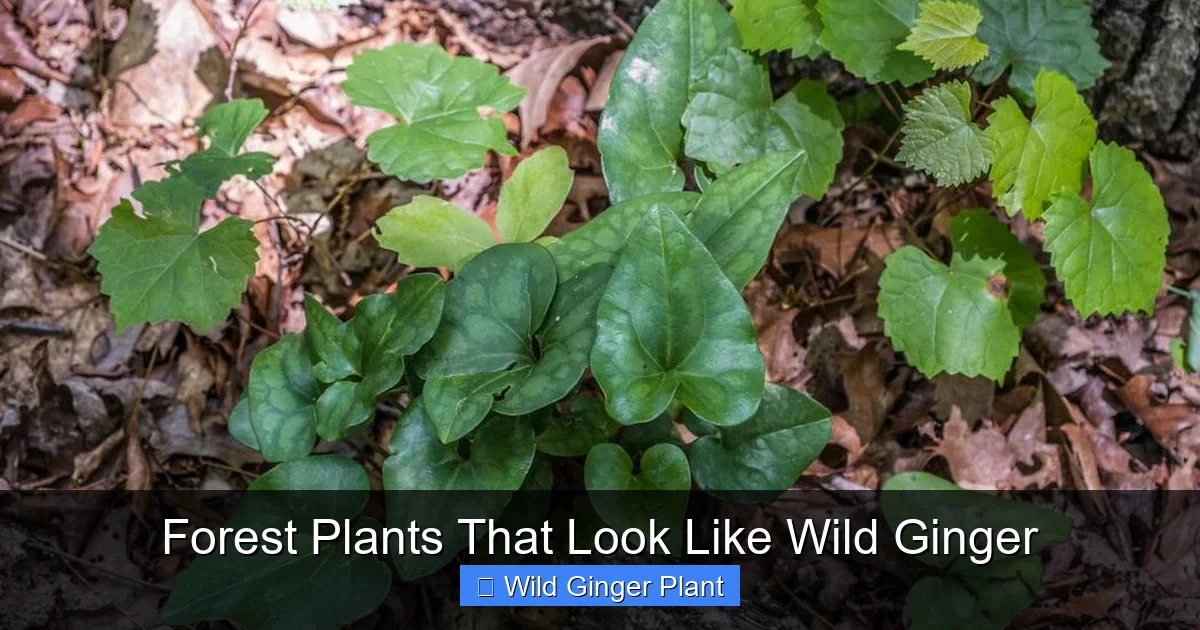
The genus Hexastylis is the closest relative to Asarum. Some botanists lump them together. Others keep them separate. They share the family Aristolochiaceae. They share the ginger scent. They share the hidden, jug-shaped flowers. But they differ in key ways. Hexastylis species are evergreen. Their leaves are leathery, thick, and often mottled. They do not die back in winter. Asarum canadense is deciduous. Its leaves are soft, thin, and plain green. They wither after frost.
Visual guide about Forest Plants That Look Like Wild Ginger
Image source: static.vecteezy.com
There are about ten Hexastylis species. Most live in the southeastern United States. A few reach the mid-Atlantic. They prefer acidic, well-drained soils. Oak-hickory forests. Pine-oak woods. Slopes and ridges. Not the rich bottomlands that Asarum loves. Common names include little brown jugs, heartleaf, and wild ginger. This name overlap causes confusion. If you buy “wild ginger” at a native plant sale, ask for the scientific name. You may get a Hexastylis instead of Asarum canadense.
Key Hexastylis Species to Know
Hexastylis arifolia (Little Brown Jugs) has arrow-shaped leaves. The base lobes are pointed, not rounded. The leaves are dark green with pale silver veins. The flower is small, jug-shaped, and purple-brown. It grows in the coastal plain and piedmont.
Hexastylis virginica (Virginia Heartleaf) has more rounded lobes. The leaves are leathery and often mottled. The flower is similar. It grows in the mountains and piedmont of Virginia and the Carolinas.
Hexastylis shuttleworthii (Large-flowered Heartleaf) has the showiest flower. The calyx lobes are longer and more flared. Leaves are broadly heart-shaped with silver patterning. It lives in the southern Appalachians.
Hexastylis minor (Dwarf Heartleaf) is tiny. Leaves are under two inches. It grows in sandhills and dry woods.
How to Tell Them Apart
Check the calendar. In January, Hexastylis has green leaves. Asarum canadense is dormant. Check leaf texture. Hexastylis leaves feel like thick plastic. Asarum leaves feel like velvet. Check leaf pattern. Hexastylis often has silver veins or mottling. Asarum is solid green. Check the flower. Hexastylis flowers are usually smaller. The lobes are shorter. The jug is more rounded. Check the roots. Both smell of ginger. But Hexastylis rhizomes are often thinner and darker. Check the soil. Hexastylis likes acid. Asarum likes lime. If you are on a dry, acidic ridge with evergreen gingers, it is Hexastylis. If you are in a rich, moist cove with soft deciduous leaves, it is Asarum canadense.
The European Imposter: Asarum europaeum
An Escaped Garden Plant
European ginger (Asarum europaeum) is native to Europe and western Asia. It has been grown in shade gardens for centuries. It sometimes escapes into nearby woods. In the northeastern US and eastern Canada, it naturalizes. It forms dense patches. It looks very similar to our native wild ginger. The leaves are heart-shaped. The flowers are jug-shaped. The roots smell of ginger. But differences exist.
Spot the Differences
Asarum europaeum leaves are evergreen. They are leathery and glossy. The upper surface is dark, shiny green. The veins are not prominent. The leaf margin is often slightly wavy. Asarum canadense leaves are deciduous, soft, matte, and prominently veined. The European species flowers earlier. Sometimes in March. The flower is similar but the lobes are shorter and blunter. The color is often more greenish-yellow outside. The rhizome is thinner. The ginger scent is present but may be weaker. The big chemical difference is aristolochic acid. Asarum europaeum contains higher concentrations. This makes it riskier for consumption. Some herbalists avoid it entirely. If you find a ginger patch in an old homestead site, near a former garden, or in a city park, suspect European ginger. It spreads aggressively. It can outcompete native spring ephemerals. Land managers often remove it.
Distant Mimics: Plants That Fool the Eye
Canadian Wild Ginger vs. Canada Violet
Canada violet (Viola canadensis) grows in the same rich woods. Young leaves can trick you. They are heart-shaped. They have long petioles. They emerge early. But violet leaves are thinner. They are not fuzzy. The veins are different. Violet leaves have a distinct network of fine veins. Wild ginger veins are more parallel, arcing from the base. Violets have stipules. These are small, leafy appendages at the base of the petiole. Wild ginger lacks stipules. And violets flower above ground. Showy white flowers with purple veins. Five petals. A spur at the back. Wild ginger flowers hide. If you see a white violet bloom, it is not ginger.
Wild Ginger vs. Golden Ragwort
Golden ragwort (Packera aurea) basal leaves are rounded-heart-shaped. They form a rosette. They grow in wet woods and seeps. Sometimes near ginger. But ragwort leaves are thinner. They are not fuzzy. They have coarse teeth on the margin. Wild ginger margins are smooth. Ragwort sends up a tall flower stalk in spring. Yellow daisy flowers. Wild ginger stays low. Ragwort smells like nothing special. Crush a ragwort leaf. It smells green, maybe slightly rank. No ginger zing.
Wild Ginger vs. Kidney-leaf Buttercup
Kidney-leaf buttercup (Ranunculus abortivus) has small, kidney-shaped basal leaves. They are shiny. They grow in moist, disturbed woods. The leaves are much smaller than ginger. Usually under three inches. The plant is an annual or biennial. It does not form colonies from rhizomes. It has a taproot. Flowers are tiny, yellow, five-petaled. They bloom above ground. The sap can irritate skin. No ginger smell.
Wild Ginger vs. Ground Ivy
Ground ivy (Glechoma hederacea) creeps across forest edges and lawns. Leaves are round to kidney-shaped. They have scalloped edges. They are opposite on square stems. Wild ginger leaves are alternate (one per node) on a rhizome, not a stem. Ground ivy smells minty when crushed. It is in the mint family. Flowers are purple, tubular, in whorls. Very different. Ground ivy is an aggressive exotic. It is edible but strong. Not a ginger substitute.
Wild Ginger vs. Hepatica
Round-lobed hepatica (Hepatica americana) has leathery, three-lobed leaves. The lobes are rounded. The leaves are evergreen, often mottled purple underneath. They lie flat on the ground. Wild ginger leaves are two-lobed at the base, not three-lobed. Hepatica flowers early. Showy blue, pink, or white flowers on hairy stalks. Six to ten petal-like sepals. No jug flower. Hepatica grows on drier, often rocky slopes. Not the deep rich soils ginger prefers.
Root and Rhizome Details
What to Look For Below Ground
If you have permission to dig a small sample, the rhizome tells the truth. Asarum canadense rhizomes are thick. Half an inch to an inch wide. They branch. They are pale cream to light brown. The surface is smooth with leaf scars. Nodes are visible. Internodes are short. Snap a piece. It breaks clean. The scent is immediate. Strong. Sweet. Spicy. It smells like the ginger in your spice jar but earthier.
Hexastylis rhizomes are similar but often thinner. Darker brown. More wiry. The scent is there but sometimes fainter. Asarum europaeum rhizomes are thinner still. Darker. The scent is present but less intense. Violet rhizomes are thin, fibrous. are thin, white, stringy. No scent. Ragwort has a taproot with fibrous roots. No rhizome. Buttercup has a taproot. Ground ivy has thin, creeping stems that root at nodes. Not a true rhizome. Hepatica has a short, thick caudex with fibrous roots. No ginger smell.
Root Chemistry and Safety
All Asarum and Hexastylis species contain aristolochic acid. Levels vary. Asarum canadense generally has lower levels. Traditional use involved small amounts. Tea. Flavoring. Not large doses. Modern herbalists debate safety. The FDA warns against aristolochic acid. It causes kidney failure. It causes urinary tract cancer. If you use wild ginger, use sparingly. Do not use during pregnancy. Do not use with kidney issues. Do not use long-term. European ginger has higher levels. Many experts say avoid it. Hexastylis species are less studied. Assume they have it. The safest approach: enjoy the scent. Enjoy the plant in the woods. Buy culinary ginger (Zingiber officinale) for cooking. It is safe. It is cheap. It is the real deal.
Seasonal Identification Guide
Early Spring (March-April)
This is the easiest time. Asarum canadense leaves are just emerging. They are folded like prayer hands. Fuzzy. Bright green. Hexastylis leaves are already out. Leathery. Dark. Mottled. Asarum europaeum leaves are out. Glossy. Dark. Violets are emerging. Leaves folded. Hepatica flowers are blooming. Leaves from last year are on the ground. Ragwort rosettes are green. Ground ivy is creeping. Buttercup seedlings are tiny. Look for the fuzzy, folded new leaves of native wild ginger. They feel like a kitten’s ear.
Mid Spring (May)
Full leaf out. Asarum canadense forms a solid carpet. Leaves are flat. Soft. Flowers are at peak. You must move leaf litter to see them. Hexastylis flowers now too. Violets bloom. Ragwort sends up flower stalks. Hepatica flowers fade. New hepatica leaves emerge. This is prime comparison time. Walk a rich cove. Find a ginger patch. Then walk a dry ridge. Find a Hexastylis patch. Compare side by side. Touch. Smell. Look at flowers. The differences become obvious.
Summer (June-August)
Asarum canadense leaves stay green. Large. Lush. They shade the ground. Hexastylis leaves stay green. Leathery. Asarum europaeum stays glossy. Violets get larger. Ragwort flowers go to seed. Fluffy white seed heads. Ground ivy spreads. Hepatica leaves get tough. Summer is good for leaf texture comparison. But flowers are gone. You rely on leaves, habit, and habitat.
Fall (September-November)
Asarum canadense leaves yellow. They collapse after hard frost. By November, they are gone. Hexastylis stays green. Asarum europaeum stays green. Hepatica stays green. Ground ivy stays green. Ragwort basal leaves persist. Violets persist. If you see heart-shaped green leaves in December, it is not native wild ginger. It is one of the evergreen mimics.
Winter (December-February)
Only evergreen species show leaves. Hexastylis. Asarum europaeum. Hepatica. Some violets. Ground ivy. Native wild ginger is invisible. Dormant. This is a good time to scout Hexastylis patches. Mark them. Return in spring to compare with emerging Asarum.
Habitat as a Clue
Rich Mesic Forests: The Ginger Zone
Wild ginger indicates high-quality habitat. It grows where the soil is deep. Moist but drained. Rich in organic matter. Neutral to slightly alkaline pH. Indicator trees: sugar maple, basswood, white ash, black walnut, butternut, slippery elm, bitternut hickory. Spring ephemerals abound: trillium, bloodroot, spring beauty, Dutchman’s breeches, squirrel corn, blue cohosh, black cohosh, wild leek. If you see these companions, you are in the right place. The forest floor is open in spring. Light filters through before canopy closure. Ginger takes advantage. It photosynthesizes fast. Stores energy in rhizomes. By summer, shade is deep. Ginger coasts on stored reserves.
Acidic Oak-Hickory Forests: The Hexastylis Zone
Hexastylis prefers different company. Trees: white oak, chestnut oak, black oak, pignut hickory, mockernut hickory, shortleaf pine, Virginia pine. Soil is thinner. Rockier. Acidic. pH 4.5 to 5.5. Drier. Spring ephemerals are fewer. You see mountain laurel, rhododendron, blueberry, huckleberry. The understory is shrubbier. Hexastylis grows in the duff. It tolerates deeper shade. It tolerates drier soil. Its leathery leaves resist desiccation. If you are on a ridge top with oaks and pines, look for little brown jugs. Not wild ginger.
Disturbed and Urban Edges: The European Ginger Zone
Asarum europaeum shows up near old homes. Old gardens. Cemetery plantings. City parks. College campuses. It spreads into adjacent woods. It tolerates a range of soils. It tolerates compaction. It tolerates pollution. It forms monocultures. It pushes out natives. If you see a perfect, glossy, evergreen ginger carpet in a suburban woods, it is likely the European. Check the leaf shine. Check the evergreen habit. Check the location.
Practical Field Tips
Carry a Hand Lens
A 10x loupe changes everything. Look at leaf hairs. Asarum canadense has dense, soft, simple hairs. Hexastylis has fewer, stiffer hairs or none on the upper surface. Look at flower interior. Asarum has 12 stamens. Hexastylis has 12 stamens too but the style shape differs. Look at seed. Asarum seeds have a large elaiosome (ant food). Hexastylis seeds have a smaller one. A loupe fits in your pocket. It costs ten dollars. It makes you a better botanist.
Use All Your Senses
Touch the leaves. Soft or leathery? Fuzzy or smooth? Smell the roots. Ginger or grass? Look at the ground. Deciduous leaves or evergreen needles? Rich black humus or gray sandy duff? Listen to the forest. Maples and basswoods whisper. Oaks and pines sigh. The trees tell you the soil. The soil tells you the ginger.
Take Photos, Not Plants
Photograph the whole plant. Habitat. Leaf top. Leaf bottom. Flower (gently lift leaf litter, replace it). Rhizome (if exposed by erosion, do not dig). Petiole base. Stipules (absence noted). Notes on smell. Date. GPS. Share on iNaturalist. Experts will confirm. You learn. The record stays. The plant stays.
Learn the Companions
Plants grow in communities. Learn the friends of wild ginger. Trillium grandiflorum. Sanguinaria canadensis. Claytonia virginica. Dicentra cucullaria. Dicentra canadensis. Caulophyllum thalictroides. Actaea racemosa. Allium tricoccum. When you see these, ginger is likely near. Learn the friends of Hexastylis. Galax urceolata. Epigaea repens. Chimaphila maculata. Goodyera pubescens. When you see these, Hexastylis is likely near. Community context is a powerful ID tool.
Common Mistakes and How to Avoid Them
Mistake 1: Relying on Leaf Shape Alone
Heart-shaped leaves are common. Violets. Ragwort. Buttercup. Ground ivy. Hepatica. All have them. Leaf shape is a starting point. Not an endpoint. Always check texture. Venation. Petiole. Stipules. Smell. Flower. Habitat.
Mistake 2: Confusing Deciduous and Evergreen
Seeing green heart-leaves in January and calling it wild ginger. Native wild ginger is deciduous. It disappears. If it is green in winter, it is Hexastylis, Asarum europaeum, hepatica, or a violet. Mark the patch. Return in April. Watch what emerges.
Mistake 3: Assuming All Ginger-Smelling Roots Are Equal
Asarum, Hexastylis, and Asarum europaeum all smell like ginger. But they are not the same plant. They have different chemistries. Different toxicities. Different ecologies. Different conservation statuses. Identify to species. Then decide.
Mistake 4: Digging Without Permission or Knowledge
Digging on public land is often illegal. Digging on private land needs permission. Digging kills the plant. Wild ginger colonies are old. They take decades to form. A single careless dig destroys years of growth. If you must have the root, grow it. Buy from a native nursery. Plant in your shade garden. Harvest your own patch sustainably.
Mistake 5: Using Field Guides That Are Too Simple
Some guides show one picture of “wild ginger.” They do not show Hexastylis. They do not show Asarum europaeum. They do not show violets or ragwort. Use technical keys. Use Flora of the Southeastern United States. Use Newcomb’s Wildflower Guide. Use Peterson Field Guide to Medicinal Plants (with caution on edibility). Use Go Botany. Use the Vascular Plants of North Carolina website. Cross-reference. Be skeptical. Be thorough.
Conservation and Ethics
Know the Status
Asarum canadense is secure globally (G5). But it is listed as special concern, threatened, or endangered in several states at the edge of its range. Maine. New Hampshire. Vermont. Rhode Island. Iowa. Kansas. Oklahoma. Check your state’s Natural Heritage Program. Even where secure, local populations matter. A patch in your town park may be the only one for miles. Treat it with care.
Hexastylis Conservation
Several Hexastylis species are rare. Hexastylis naniflora (Dwarf-flowered Heartleaf) is federally threatened. It grows only in a few counties in North and South Carolina. Hexastylis rhombiformis is rare. Hexastylis lewisii is rare. If you are in the Southeast, learn the rare ones. Do not collect them. Photograph only. Report to your state heritage program.
Invasive Species Awareness
Asarum europaeum is not yet widely listed as invasive. But it shows invasive traits. It forms dense monocultures. It spreads by rhizomes and seeds. It displaces native spring flora. It is hard to eradicate. If you see it spreading in a natural area, report it. Land managers need to know. Early detection allows control. Do not plant it in your garden if you live near woods. Choose the native Asarum canadense instead. It is just as beautiful. It belongs here.
Sustainable Foraging Principles
If you forage, follow the honorable harvest. Ask permission. Take only what you need. Never take the first. Never take the last. Leave half. Minimize harm. Use everything you take. Be grateful. Share. Reciprocate. For wild ginger, this means: do not dig the rhizome. Harvest a leaf for tea if you must. But even leaves feed the rhizome. Better: buy a plant. Grow it. Harvest your own. The wild patch stays wild. You get your ginger. Everyone wins.
Growing Your Own Wild Ginger
Why Cultivate?
Growing wild ginger solves the identification problem. You know what you have. You know it is Asarum canadense. You know it is safe (relatively). You take pressure off wild populations. You create habitat. You enjoy the plant daily. It is a beautiful groundcover. Soft green carpet. Hidden flowers. Ginger scent when you weed. It is deer resistant. It is low maintenance. It is a native plant success story.
How to Start
Buy from a reputable native plant nursery. Look for “nursery propagated” not “wild collected.” Ask for source. Local ecotype is best. Plant in spring or fall. Choose a shady spot. Morning sun is okay. Afternoon shade is essential. Soil should be rich, moist, humusy. Add compost. Mulch with leaf mold. Space plants 12 inches apart. They will fill in. Water the first year. After that, they are drought tolerant once established. They spread slowly. A patch doubles in a few years. Divide in early spring to expand.
Companion Planting
Plant with other shade lovers. Ferns: maidenhair, Christmas, lady fern. Spring ephemerals: trillium, bloodroot, Virginia bluebells. Sedges: Carex plantaginea, Carex platyphylla. Shrubs: spicebush, witch-hazel, hydrangea. Trees: dogwood, redbud, serviceberry. Create a woodland garden. It will feed your soul. And your kitchen.
Conclusion
The forest floor is a library. Each plant is a book. Wild ginger is a classic volume. But the shelf holds many similar bindings. Hexastylis are the leather-bound cousins. Asarum europaeum is the imported edition. Violets, ragwort, buttercup, ground ivy, hepatica are the paperbacks that mimic the cover. To read the forest, you must learn the details. Texture. Scent. Flower. Root. Habitat. Season. Community. This takes time. It takes knees in the dirt. It takes a hand lens. It takes mistakes. But each mistake teaches. Each correct ID builds confidence. The ginger scent on your fingers connects you to centuries of foragers. The soft leaf connects you to the soil. The hidden flower connects you to the flies and ants. The colony connects you to time.
Next spring, walk a rich cove. Find the fuzzy, folded leaves emerging. Greet them. Thank them. Leave them be. Or take a leaf for tea. But know them. Truly know them. And when you see the leathery, mottled leaves on the dry ridge, greet them too. They are Hexastylis. Little brown jugs. Heartleaf. Cousins. Not the same. But kin. The forest is full of kin. Learning them makes the woods feel like home. And that is the real harvest.
Frequently Asked Questions
What is the scientific name for wild ginger?
The scientific name for North American wild ginger is Asarum canadense. It belongs to the birthwort family, Aristolochiaceae. The genus Asarum contains about 60-70 species worldwide, with several in eastern North America.
Are Hexastylis and Asarum the same genus?
Taxonomists disagree. Some classify Hexastylis as a separate genus based on floral morphology (style shape) and evergreen habit. Others include them in Asarum as a section. Both are in the family Aristolochiaceae and share the characteristic ginger scent and jug-shaped flowers.
Why are wild ginger flowers so hard to find?
Wild ginger flowers bloom at ground level, often hidden beneath leaf litter. They are pollinated by flies and beetles that crawl on the forest floor. The flowers are fleshy, jug-shaped, and brownish-purple, camouflaging them against the soil and dead leaves.
Can I grow wild ginger in my garden?
Yes, Asarum canadense makes an excellent native groundcover for shade gardens. It prefers rich, moist, well-drained soil with plenty of organic matter. Purchase nursery-propagated plants from reputable native plant nurseries rather than digging from the wild.
What animals eat wild ginger?
Deer generally avoid wild ginger due to its aromatic compounds. Ants disperse the seeds (myrmecochory) attracted to the fleshy elaiosome. Flies and beetles pollinate the flowers. The foliage is toxic to most herbivores, though some insects have adapted to feed on it.
How fast does wild ginger spread?
Wild ginger spreads slowly by rhizomes, typically forming a colony a few feet across over many years. A single plant may take 5-10 years to form a substantial patch. It does not spread aggressively like some non-native groundcovers.