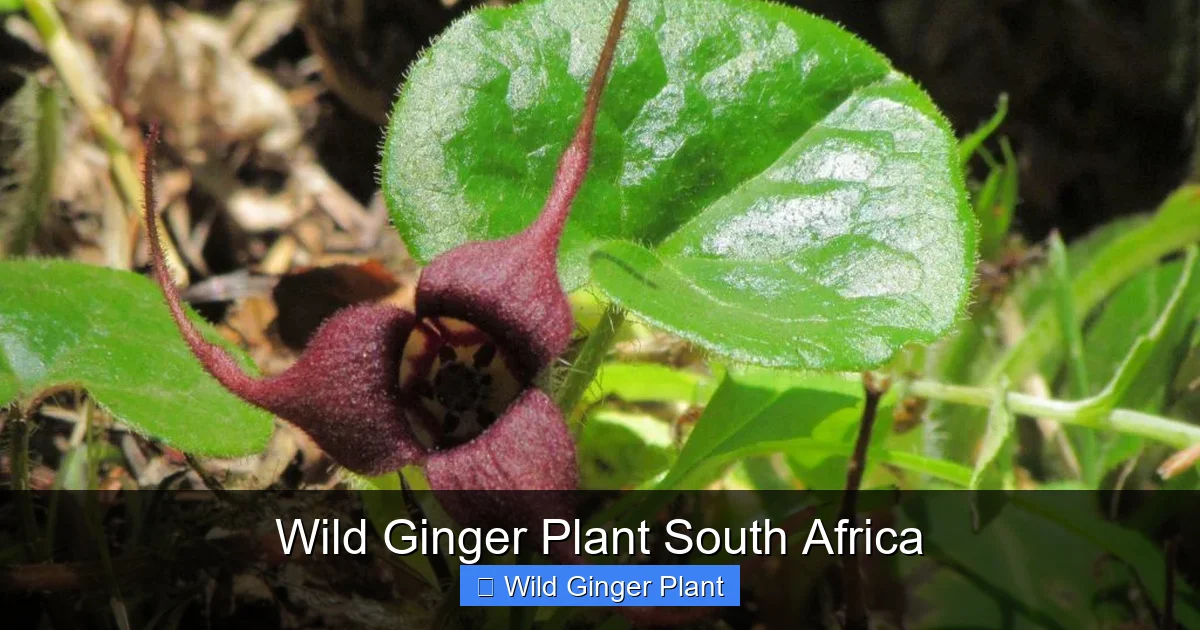
Wild Ginger Plant South Africa
Wild ginger plant South Africa refers primarily to Siphonochilus aethiopicus, a rare and endangered medicinal herb native to southern Africa. This aromatic rhizome has been used for centuries in traditional medicine to treat respiratory issues, pain, and inflammation. Due to overharvesting, wild populations are critically threatened, making cultivation essential for both conservation and sustainable use.
If you have ever walked through a misty forest in KwaZulu-Natal or the Eastern Cape, you might have caught a whiff of something spicy and sweet rising from the forest floor. That scent belongs to one of South Africa’s most treasured and threatened plants. The wild ginger plant South Africa is not just a pretty face in the undergrowth. It is a powerful medicine, a cultural icon, and a species fighting for survival.
Many people confuse this plant with the ginger you buy at the grocery store. They are not the same. Culinary ginger is Zingiber officinale, native to Southeast Asia. Our local wild ginger plant South Africa is Siphonochilus aethiopicus. It belongs to the same family but has its own unique chemistry, its own story, and its own urgent needs. In this guide, we will explore everything you need to know. We will look at its history, its healing powers, how to grow it, and why protecting it matters more than ever.
Key Takeaways
- Botanical identity: The true wild ginger plant South Africa is Siphonochilus aethiopicus, a member of the Zingiberaceae family distinct from culinary ginger.
- Conservation status: Listed as critically endangered due to overharvesting for traditional medicine and habitat loss across its natural range.
- Medicinal properties: Contains bioactive compounds like siphonochilone and eucalyptol with proven anti-inflammatory, antimicrobial, and analgesic effects.
- Traditional uses: Used by Zulu, Xhosa, and Sotho healers for colds, flu, asthma, headaches, menstrual pain, and as a protective charm.
- Cultivation potential: Grows well in shaded, well-drained soils with high organic matter; ideal for forest gardens and conservation gardens.
- Propagation methods: Best propagated from rhizome divisions in spring; seeds have low viability and slow germination rates.
- Legal protection: Protected under South African law; harvesting from wild populations requires permits and is strictly regulated.
Quick Answers to Common Questions
What is the scientific name of the wild ginger plant South Africa?
The scientific name is Siphonochilus aethiopicus. It belongs to the Zingiberaceae family, the same family as culinary ginger, but it is a distinct species native to southern Africa.
Is wild ginger plant South Africa endangered?
Yes, it is listed as Critically Endangered by SANBI and the IUCN due to overharvesting for traditional medicine and habitat loss from deforestation and urban expansion.
Can I grow wild ginger plant South Africa in my garden?
Yes, you can grow it in shady, moist, well-drained soil rich in organic matter. It thrives in forest garden conditions and can be grown in pots on shaded patios or balconies.
How do I harvest wild ginger plant South Africa sustainably?
Wait two to three years for the plant to mature. In winter dormancy, dig up the clump, take only the largest older rhizomes, and replant the younger pieces with buds attached so the plant continues growing.
Where can I buy ethically sourced wild ginger plant South Africa?
Buy from licensed nurseries, botanical garden shops, or healer-led cultivation projects that provide TOPS permits. Avoid informal markets where rhizomes are likely wild-harvested illegally.
📑 Table of Contents
- What Is The Wild Ginger Plant South Africa
- Traditional Uses And Cultural Significance
- Chemical Composition And Modern Research
- Conservation Crisis And Legal Status
- Growing Wild Ginger Plant South Africa At Home
- Propagation Methods In Detail
- Integrating Wild Ginger Plant South Africa Into Permaculture And Forest Gardens
- Ethical Sourcing And Supporting Conservation
- Future Prospects And Research Directions
What Is The Wild Ginger Plant South Africa
Botanical Profile And Classification
Let us start with the science. The wild ginger plant South Africa bears the scientific name Siphonochilus aethiopicus. It sits in the Zingiberaceae family. That is the ginger family. It is a herbaceous perennial. This means it dies back in winter and returns in spring. It grows from a fleshy underground stem called a rhizome. The rhizome is the part most sought after.
The leaves are large, lance-shaped, and a deep glossy green. They rise directly from the rhizome on long stalks. The plant reaches about thirty to fifty centimeters in height. The flowers are the real showstopper. They bloom at ground level, often hidden by leaf litter. Each flower is large, orchid-like, and ranges from pale pink to deep mauve with a bright yellow throat. They last only a day or two but appear in succession through summer.
Natural Distribution And Habitat
Historically, the wild ginger plant South Africa ranged from the Eastern Cape through KwaZulu-Natal, into Eswatini, Mpumalanga, and Limpopo. It also occurs in Zimbabwe, Mozambique, and Malawi. Today, its range is fragmented. It prefers the dappled shade of evergreen forests and dense woodlands. It loves deep, humus-rich soils that stay moist but drain well. You will often find it on south-facing slopes or along stream banks where the air stays humid.
It is a plant of the forest floor. It does not like full sun. It does not like dry wind. It needs a stable, sheltered microclimate. This specific habitat requirement makes it vulnerable. When forests are cleared or degraded, the wild ginger plant South Africa disappears with them.
Common Names And Cultural Identity
This plant wears many names. In isiZulu it is called indungulo or isiphepheto. In isiXhosa it is iNkunzi or umhlonyane though that name is shared with Artemisia afra. In Sepedi it is serokolo. In Afrikaans it is wildegemyne or gemyne. The name “wild ginger” is the common English term. Each name reflects a relationship. A use. A memory. The diversity of names tells you how widely known and deeply valued this plant has been across cultures.
Traditional Uses And Cultural Significance
Medicine Of The Ancestors
For generations, traditional healers have turned to the wild ginger plant South Africa. It is a staple in the muthi markets of Johannesburg, Durban, and Cape Town. The rhizome is the primary medicine. It is chewed fresh, boiled as a decoction, powdered, or burned as an inhalant. The list of ailments it treats is long. Colds. Flu. Sinusitis. Asthma. Bronchitis. Coughs. Fevers. Headaches. Toothache. Menstrual cramps. Stomach aches. Rheumatism. Malaria. Even snakebite.
It is also used as a protective charm. Rhizomes are placed in the rafters of homes or buried at gateways to ward off lightning, evil spirits, and bad luck. Some healers use it to cleanse divining bones. Others give it to hunters for courage and success. The spiritual and the physical are not separate in African traditional medicine. The wild ginger plant South Africa bridges both worlds.
Preparation Methods
Traditional preparation is an art. For respiratory issues, a common method is steam inhalation. Fresh rhizomes are crushed and added to boiling water. The patient covers their head with a blanket and breathes the aromatic steam. This delivers the volatile oils directly to the lungs and sinuses. For pain and fever, a cold infusion is made. The rhizome is pounded and soaked in cold water overnight. The liquid is sipped through the day. For topical use on wounds or swollen joints, the fresh pulp is applied as a poultice.
Dosage is critical. Healers know that too much can cause nausea or irritation. The knowledge of how much, how often, and for whom is passed down through apprenticeship. It is not written on a label. This oral tradition is as endangered as the plant itself.
Role In Cultural Ceremonies
Beyond medicine, the wild ginger plant South Africa plays a role in rites of passage. In some Zulu communities, it is used during umemulo, the coming-of-age ceremony for young women. It may be included in the herbal baths that prepare initiates for marriage or adulthood. In Xhosa tradition, it can be part of the intonjane seclusion period. The plant marks transitions. It protects the vulnerable. It connects the living to the ancestors.
Chemical Composition And Modern Research
Key Bioactive Compounds
Science is catching up to tradition. Phytochemical analysis of the wild ginger plant South Africa has revealed a rich profile. The essential oil from the rhizome contains over fifty compounds. The major ones are siphonochilone, eucalyptol (1,8-cineole), beta-pinene, camphor, and borneol. Siphonochilone is unique to this genus. It is a sesquiterpene with a distinctive structure. The leaves also contain flavonoids, phenolic acids, and terpenoids.
These compounds explain the aroma. They also explain the medicine. Eucalyptol is a known expectorant and bronchodilator. It clears mucus and opens airways. Camphor and borneol are analgesic and anti-inflammatory. They reduce pain and swelling. The flavonoids are antioxidants. They protect cells from damage.
Pharmacological Studies
Laboratory studies confirm what healers have known. Extracts of the wild ginger plant South Africa show strong anti-inflammatory activity. They inhibit COX-2 enzymes and reduce prostaglandin production. This is the same pathway targeted by common anti-inflammatory drugs. But the plant extract does it without the stomach ulcers caused by synthetic NSAIDs.
Antimicrobial tests show activity against Staphylococcus aureus, Escherichia coli, Pseudomonas aeruginosa, and Candida albicans. This supports its use for infections, wounds, and thrush. Antispasmodic effects on smooth muscle explain its relief of menstrual cramps and asthma. There is even early research on anticancer potential. Siphonochilone has shown cytotoxicity against certain cancer cell lines. Much more work is needed. But the foundation is solid.
Comparison With Culinary Ginger
How does it stack up against Zingiber officinale? Both share the ginger family trait of warming, moving energy. Both treat nausea, colds, and pain. But the wild ginger plant South Africa is more pungent, more resinous, and more focused on the respiratory system. Its eucalyptol content is far higher. Culinary ginger has more gingerols and shogaols. These are great for digestion and nausea. The wild ginger plant South Africa is the specialist for lungs and sinuses. Think of them as cousins with different superpowers.
Conservation Crisis And Legal Status
Why Is It Endangered
The wild ginger plant South Africa is in trouble. Big trouble. The South African National Biodiversity Institute (SANBI) lists it as Critically Endangered. The IUCN Red List agrees. The main driver is unsustainable harvesting for the traditional medicine trade. Tons of rhizomes are pulled from the wild every year. The plant grows slowly. It takes years to reach maturity. When you dig up the rhizome, you kill the plant. There is no regrowth from the root crown. Whole populations are wiped out in a single harvesting event.
Habitat loss is the second blow. Forests are cleared for agriculture, timber plantations, and urban expansion. The remaining fragments are often too small or too degraded to support viable populations. Climate change adds a third pressure. Shifting rainfall patterns and increased temperatures dry out the moist microhabitats this plant needs. It is a perfect storm.
Market Pressure And Trade
Visit any major muthi market and you will see sacks of wild ginger plant South Africa rhizomes. The demand is huge. An estimated several hundred tonnes are traded annually in South Africa alone. Prices have skyrocketed as supply dwindles. This creates a vicious cycle. Higher prices incentivize more harvesting. Harvesters travel further into remote areas. They dig up every plant they find. No thought for tomorrow. The trade is largely informal and unregulated. Monitoring is nearly impossible.
Legal Protection And Permits
The wild ginger plant South Africa is protected under the National Environmental Management: Biodiversity Act (NEMBA) of 2004. It is listed as a Threatened or Protected Species (TOPS). This means you cannot harvest, possess, transport, or sell it without a permit. Provincial nature conservation ordinances add further restrictions. In KwaZulu-Natal, it is specially protected under the Nature Conservation Ordinance.
Permits are issued for research, cultivation, and limited sustainable use. But enforcement is weak. The sheer volume of trade suggests widespread non-compliance. Many traders and healers are unaware of the laws. Others ignore them out of economic necessity. Education and alternatives are more effective than punishment alone.
Conservation Initiatives
Good work is happening. SANBI runs ex-situ conservation collections at Kirstenbosch, Pretoria, and other national botanical gardens. They bank seeds (though viability is low) and maintain living collections. The Silverglen Medicinal Plant Nursery in Durban propagates thousands of plants annually for distribution to healers and community gardens. The University of KwaZulu-Natal researches cultivation protocols and genetic diversity.
Community-based projects are the most promising. In the Eastern Cape and KwaZulu-Natal, traditional healers are being trained to cultivate the wild ginger plant South Africa in forest gardens. They learn to harvest sustainably, taking only a portion of the rhizome and replanting the rest. They learn to propagate from divisions. These projects reduce wild harvesting. They secure supply. They empower healers. They keep knowledge alive.
Growing Wild Ginger Plant South Africa At Home
Site Selection And Preparation
You can grow this plant. You should grow this plant. Every garden plant reduces pressure on the wild. But you must mimic its forest home. Choose a shady spot. Under mature trees is ideal. The north side of a building works if it gets no direct sun. Dappled light is perfect. Deep shade is okay. Full sun will burn the leaves and dry the rhizome.
Soil is everything. The wild ginger plant South Africa needs rich, loose, well-drained soil with high organic matter. If your soil is clay, dig in lots of compost, leaf mold, and coarse sand. If it is sandy, add compost and coconut coir to hold moisture. The target is a forest floor texture. Dark. Spongy. Smelling of humus. Raised beds work well if drainage is poor. Mulch heavily with leaves, bark chips, or straw. This keeps roots cool and moist.
Planting Time And Technique
Spring is the best time to plant. September to November in the southern hemisphere. The soil is warming. Rains are starting. The plant has a full growing season ahead. Buy rhizomes from a reputable nursery. Never buy from informal roadside sellers. That supports wild harvesting. Look for firm, plump rhizomes with visible buds or shoots. Avoid shriveled, moldy, or damaged pieces.
Plant horizontally, about five centimeters deep. Space plants twenty to thirty centimeters apart. Water well after planting. Keep the soil consistently moist but not waterlogged. New shoots should appear within two to four weeks. If planting in pots, use a wide, shallow container. A depth of twenty centimeters is enough. Use a high-quality potting mix with added perlite and compost.
Watering And Feeding
Water is critical. The wild ginger plant South Africa hates drying out. In summer, water deeply two to three times a week. In winter, when the plant is dormant, reduce watering to once a month or rely on rain. Never let the soil become bone dry. Mulch reduces evaporation dramatically. A drip irrigation system on a timer is ideal.
Feed lightly. This is not a heavy feeder. In spring, top-dress with well-rotted compost or a slow-release organic fertilizer. A handful per plant is plenty. Liquid seaweed or fish emulsion once a month during active growth gives a gentle boost. Avoid high-nitrogen chemical fertilizers. They promote soft, sappy growth prone to pests and disease.
Pest And Disease Management
Good news. The wild ginger plant South Africa has few serious pests. Snails and slugs may nibble young leaves. Beer traps or copper tape work. Caterpillars of the ginger butterfly (Papilio demodocus) may appear. They are beautiful. Relocate them if you can bear the damage. Fungal rots are the main risk. They come from overwatering or poor drainage. Ensure air circulation. Don’t overcrowd. Remove any yellowing or mushy leaves promptly.
Root knot nematodes can attack rhizomes in sandy soils. Rotate with marigolds or mustard as a biofumigant if this is a known issue. Viral diseases are rare but possible. Buy clean stock. Destroy any plants showing mosaic patterns, stunting, or distortion. Do not compost diseased material.
Harvesting Your Own Crop
Patience. The wild ginger plant South Africa needs two to three years to develop a decent rhizome. Harvest in late autumn or winter when the plant is dormant. The leaves will have died back. Gently dig around the clump. Lift the whole rhizome mass. Select the largest, oldest rhizomes for use. Replant the younger, vigorous pieces with buds attached. Water them in. They will shoot in spring.
This selective harvesting is the key to sustainability. You get medicine. The plant gets to live. Over time, your clump expands. You can divide it every few years. Share divisions with friends. Start a neighborhood network. This is how we save the species. One garden at a time.
Container Growing For Small Spaces
No garden? No problem. The wild ginger plant South Africa thrives in pots. Choose a wide, shallow pot. Thirty centimeters diameter, twenty deep. Ensure drainage holes. Use a mix of two parts potting soil, one part compost, one part perlite or coarse sand. Place in bright shade. A covered patio, a balcony with a shade cloth, a bright bathroom window. Water frequently. Pots dry faster. Feed monthly with dilute organic liquid fertilizer. Repot every two years in spring. Divide at the same time.
Propagation Methods In Detail
Rhizome Division
This is the gold standard. The wild ginger plant South Africa propagates vegetatively with high success. In early spring, just as new shoots emerge, lift a mature clump. Wash the soil off gently. You will see a network of rhizomes with buds at intervals. Using a clean, sharp knife, cut sections. Each division needs at least one active bud (preferably two) and a piece of rhizome five to ten centimeters long. Dust cuts with cinnamon or sulfur to prevent rot. Plant immediately as described above. Keep moist and shaded. Success rate is ninety percent plus.
Seed Propagation
Seeds are tricky. The wild ginger plant South Africa produces seed capsules after flowering. Each capsule contains several seeds with a fleshy aril. Ants disperse them in nature. Fresh seeds have the best viability. Sow immediately in a tray of fine seedling mix. Press lightly into the surface. Do not cover deeply. Keep humid under a clear lid or plastic bag. Place in warm shade. Germination is erratic. It can take one to six months. Rates are often below thirty percent. Seedlings are slow. They stay tiny for a year. Division is faster and more reliable for gardeners.
Tissue Culture And Micropropagation
For large-scale conservation, labs use tissue culture. Tiny pieces of meristem tissue are sterilized and grown on nutrient gels with hormones. This produces thousands of identical, disease-free plantlets. It is expensive and technical. Not for home growers. But it is vital for rebuilding wild populations and supplying the nursery trade with clean stock. Several South African labs now protocol this species.
Integrating Wild Ginger Plant South Africa Into Permaculture And Forest Gardens
The Forest Garden Layer
Permaculture designs mimic natural ecosystems. A forest garden has seven layers. Canopy. Low tree. Shrub. Herbaceous. Ground cover. Rhizosphere. Vertical. The wild ginger plant South Africa fits perfectly in the herbaceous and rhizosphere layers. It occupies the shaded understory. It mines nutrients from deep soil with its fleshy roots. It provides medicine, mulch, and habitat. Its flowers feed pollinators. Its decaying leaves feed soil life.
Companion Planting
Good neighbors make happy plants. Pair the wild ginger plant South Africa with other shade-loving medicinals. Clivia miniata (bush lily) for spring color. Dietes grandiflora (wild iris) for structure. Plectranthus species for ground cover and aromatic leaves. Asystasia gangetica (African spinach) for edible greens. Scadoxus species for dramatic flowers. Trees above could be Harpephyllum caffrum (wild plum) or Curtisia dentata (assegai). Both are evergreen, deep-rooted, and bird-friendly.
Guild Design For Resilience
A guild is a group of plants that support each other. Build a wild ginger guild. Center: the wild ginger plant South Africa. Nitrogen fixers: Dalbergia obovata (climbing flat-bean) or Millettia grandis (umzimbeet). Dynamic accumulators: Comfrey (Symphytum) if you can keep it contained, or Urtica dioica (nettle) in a buried pot. Pest confusers: strong-smelling Tulbaghia violacea (wild garlic) or Artemisia afra (wild wormwood). Mulch makers: Banana or Canna for chop-and-drop biomass. Pollinator attractors: Salvia species, Leonotis leonurus (wild dagga). This guild feeds itself, protects itself, and yields medicine, food, and beauty.
Ethical Sourcing And Supporting Conservation
How To Buy Responsibly
If you need the wild ginger plant South Africa but cannot grow it yet, buy ethically. Look for cultivated material. Ask the seller for proof of origin. A TOPS permit number. A nursery license. Reputable muthi shops and online herbal suppliers increasingly stock farmed rhizomes. The price may be higher. Pay it. You are funding conservation. You are voting with your wallet. Avoid “bargain” rhizomes at informal markets. They are almost certainly wild-harvested.
Supporting Healer-Led Cultivation
Some of the best cultivation projects are run by traditional healers themselves. Organizations like the Traditional Healers Organization and various community trusts coordinate these. They sell certified cultivated rhizomes. Buying from them supports livelihoods. It keeps knowledge in the community. It ensures the medicine is prepared with intention and expertise. Ask your local herbalist or muthi shop if they source from healer gardens.
Citizen Science And Monitoring
You can help track the wild ginger plant South Africa. Join iNaturalist. Record sightings (location obscured automatically for threatened species). Report illegal harvesting to your provincial conservation authority. Participate in bioblitzes. Volunteer at botanical gardens. Donate to organizations like the Botanical Society of South Africa, the Endangered Wildlife Trust, or SANBI’s Millennium Seed Bank. Every action counts.
Future Prospects And Research Directions
Developing Sustainable Agroforestry Models
The future of the wild ginger plant South Africa lies in agroforestry. Integrating it into shade-grown systems with timber, fruit, and other medicinals. Research is underway to optimize spacing, shading, and intercropping. The goal: a crop that pays for the forest that hosts it. If landowners earn more from standing forest with wild ginger than from clearing it for maize, the forest stays. The ginger thrives. Everyone wins.
Phytochemical Standardization
For the plant to enter formal phytomedicine markets, standardization is needed. Researchers are developing HPLC fingerprints for quality control. They are identifying marker compounds for batch consistency. They are testing extraction methods to maximize yield of siphonochilone and eucalyptol. This could create a high-value legal industry. But benefit-sharing agreements with traditional knowledge holders are essential. The Nagoya Protocol demands it. South African law requires it. Justice demands it.
Climate Adaptation Strategies
Climate models predict range shifts. The wild ginger plant South Africa may lose habitat in the north and gain it in the south. Or move to higher elevations. Conservation planning must anticipate this. Seed collections from across the range capture genetic diversity. Assisted migration trials test performance in new sites. Ex-situ collections serve as insurance. The plant’s future depends on our foresight.
Education And Cultural Revival
Ultimally, saving the wild ginger plant South Africa means saving the culture that values it. School programs teaching plant identification and propagation. University courses integrating traditional knowledge with botany. Media celebrating healers as conservation heroes. Children learning the names indungulo, iNkunzi, serokolo. When a culture loves a plant, the plant survives. When the plant survives, the culture thrives. They are one.
The wild ginger plant South Africa is more than a herb. It is a thread in the web of life. A bridge between past and future. A teacher of patience, reciprocity, and respect. Growing it connects you to that web. Protecting it honors the ancestors who knew its secrets. Using it wisely keeps the knowledge alive. Let us be the generation that turns the tide. Plant one. Share one. Speak for one. The forest floor is waiting.
Frequently Asked Questions
What are the main medicinal uses of wild ginger plant South Africa?
Traditional healers use wild ginger plant South Africa for respiratory conditions like colds, flu, sinusitis, and asthma, as well as for pain relief, headaches, menstrual cramps, fever, and as a protective charm. Modern research confirms anti-inflammatory, antimicrobial, and bronchodilator properties.
How does wild ginger plant South Africa differ from culinary ginger?
Wild ginger plant South Africa (Siphonochilus aethiopicus) is a different species from culinary ginger (Zingiber officinale). It has higher eucalyptol content, making it more specific for respiratory issues, while culinary ginger is richer in gingerols for digestion and nausea.
What are the legal requirements for harvesting wild ginger plant South Africa?
Wild ginger plant South Africa is protected under NEMBA as a Threatened or Protected Species (TOPS). Harvesting, possessing, transporting, or selling it requires a permit from provincial conservation authorities. Wild harvesting without a permit is illegal.
How long does wild ginger plant South Africa take to mature?
The plant takes two to three years to develop harvestable rhizomes. It grows slowly in its natural forest understory habitat, which is why overharvesting devastates populations faster than they can recover.
What growing conditions does wild ginger plant South Africa prefer?
It prefers dappled to deep shade, moist but well-drained soil rich in organic matter, high humidity, and protection from wind and frost. It thrives in forest gardens, under trees, or in shaded containers with consistent moisture.
How can I help conserve wild ginger plant South Africa?
Grow it in your garden, buy only cultivated material with permits, support healer-led cultivation projects, report illegal harvesting, participate in citizen science monitoring, and donate to organizations working on its conservation like SANBI and the Botanical Society.