Wild Ginger Plant in Georgia
The wild ginger plant in Georgia is a beautiful native groundcover found in rich, moist forests across the state. Learn how to identify Asarum canadense by its heart-shaped leaves and hidden flowers, plus discover its historical uses and how to grow it responsibly in your shade garden.
Walking through a North Georgia forest in early spring, you might miss one of the most fascinating plants at your feet. The wild ginger plant in Georgia hugs the ground, hiding its secrets beneath a canopy of heart-shaped leaves. I remember the first time I found a patch on a shaded ridge near Dahlonega. I almost stepped on it. Then I saw the strange, fleshy flower peeking out from the leaf litter. It looked like something from a fairy tale. That moment sparked a deep appreciation for this unassuming native perennial.
Many people hear the name and think of the spicy root in their kitchen. But the wild ginger plant in Georgia is a completely different species. It belongs to the birthwort family, Aristolochiaceae. It shares a scent with its tropical namesake, but the similarities end there. This guide will walk you through everything you need to know. We will cover identification, where to find it, its history, and how to grow it. Whether you are a hiker, a gardener, or a nature lover, there is something here for you.
Key Takeaways
- Native Identity: The wild ginger plant in Georgia refers primarily to Asarum canadense, a low-growing perennial native to eastern North America.
- Distinctive Features: Look for pairs of fuzzy, heart-shaped leaves and unusual jug-shaped flowers hiding at ground level.
- Preferred Habitat: This plant thrives in rich, moist, deciduous forests with dappled shade and humus-rich soil.
- Not Culinary Ginger: Despite the name and spicy scent, it is not related to commercial ginger (Zingiber officinale) and contains aristolochic acid.
- Ecological Value: It provides early-season nectar for flies and beetles and forms a dense groundcover that prevents erosion.
- Garden Cultivation: It makes an excellent shade garden plant when sourced ethically from nurseries, not wild populations.
- Conservation Note: While not federally listed, habitat loss and over-collection threaten local populations in some Georgia counties.
Quick Answers to Common Questions
Is wild ginger in Georgia the same as the ginger root I buy at the grocery store?
No, they are completely unrelated plants. The wild ginger plant in Georgia (Asarum canadense) is a native woodland perennial in the birthwort family, while culinary ginger (Zingiber officinale) is a tropical plant in a different family. They share a similar scent but have different chemistry and uses.
Can I eat the wild ginger plant in Georgia?
You should not eat it. The plant contains aristolochic acid, which causes kidney failure and cancer. The FDA warns against consuming any Asarum species. Traditional cooking or drying does not remove this toxin. Use store-bought ginger for cooking instead.
Where is the best place to find wild ginger in Georgia?
Look in rich, moist, deciduous forests in North Georgia, particularly in the Blue Ridge Mountains and upper Piedmont. North-facing slopes, coves, and stream banks in counties like Lumpkin, Union, and Rabun are prime habitats. It grows under mature hardwoods like tulip poplar and sugar maple.
When does wild ginger bloom in Georgia?
The wild ginger plant in Georgia typically blooms from April through early May. The flowers are hidden at ground level beneath the leaf litter, so you have to search carefully to find the unusual maroon, jug-shaped blooms.
How can I grow wild ginger in my Georgia garden?
Buy nursery-propagated plants from reputable native plant sellers — never dig from the wild. Plant in full to deep shade with rich, moist, well-drained soil amended with leaf compost. Mulch with shredded leaves, water during droughts, and let the leaves decompose naturally to build humus.
📑 Table of Contents
Identifying the Wild Ginger Plant in Georgia
Knowing what to look for is the first step. The wild ginger plant in Georgia has a very specific look. Once you learn the pattern, you will spot it easily. It grows in colonies. These colonies spread slowly by underground rhizomes. A single patch can be decades old.
Leaf Characteristics
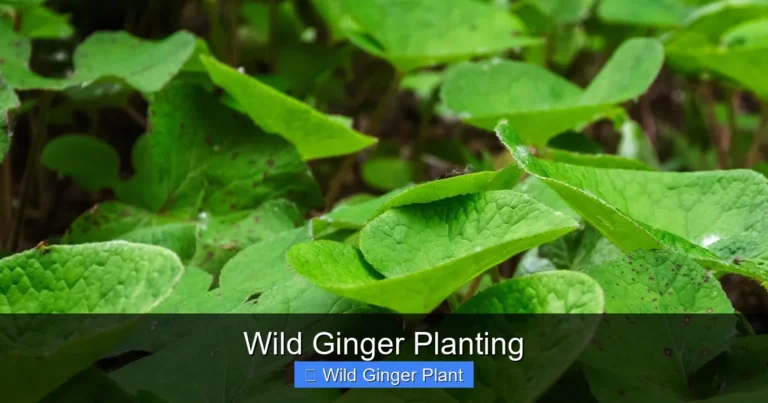
The leaves are the most obvious feature. They grow in pairs. Each pair rises on a hairy stem about six to twelve inches tall. The leaves are heart-shaped or kidney-shaped. They can be three to six inches wide. The texture is soft and velvety. Fine hairs cover the surface and the leaf stems. This fuzz helps distinguish it from look-alikes. In spring, the leaves are a bright, fresh green. By summer, they deepen to a richer emerald. They often persist until the first hard frost.
The Hidden Flower
The flower is the real surprise. It blooms in early spring, usually April to May in Georgia. You have to get down on your knees to see it. The flower sits at ground level, often buried under dead leaves. It has no petals. Instead, it has three pointed sepals. These sepals are fused into a cup or jug shape. The color is a deep, purplish-brown or maroon. The inside is often lighter with a intricate pattern. This strange shape mimics a fungus. It attracts specific pollinators like gnats and flies. The flower smells faintly of decaying matter. This scent helps lure in the insects.
Root and Rhizome
Beneath the soil lies the rhizome. It creeps horizontally just under the surface. It is thick and fleshy. When broken, it releases a strong ginger-like aroma. This scent gives the plant its common name. The roots are fibrous and shallow. This shallow root system makes the plant easy to transplant. It also makes it vulnerable to disturbance. If you dig one up, you will see the segmented rhizome. Each segment can produce a new shoot.
Distinguishing from Look-Alikes
Several plants share the same habitat. You must know the differences. Hexastylis species, often called “little brown jugs” or “heartleaf,” are close relatives. They grow in the same woods. Hexastylis leaves are evergreen and leathery. They are often mottled with silver or white patterns. Wild ginger leaves are deciduous, soft, and fuzzy. They are solid green. Violets also have heart-shaped leaves. But violet leaves have toothed edges. Wild ginger leaf edges are smooth. Mayapple grows nearby too. It has deeply lobed, umbrella-like leaves. It looks nothing like ginger once you compare them side by side.
Natural Habitat and Range Across Georgia
The wild ginger plant in Georgia is not found everywhere. It has specific needs. Understanding its habitat helps you find it. It also helps you protect it.
Preferred Growing Conditions
This plant is a true forest dweller. It needs deep shade. It thrives under a canopy of mature hardwoods. Think oaks, hickories, maples, and beeches. The soil must be rich. It loves deep, loose humus. This is the dark, crumbly layer created by centuries of decaying leaves. Moisture is critical. The soil should stay damp but not waterlogged. You will often find it on north-facing slopes. These slopes stay cooler and wetter. It also grows well in coves and ravines. Stream banks with high banks are prime spots. The key words are rich, moist, and shady.
Geographic Distribution in the State
The wild ginger plant in Georgia is most common in the northern half of the state. The Blue Ridge Mountains are a stronghold. Counties like Lumpkin, Union, Towns, and Rabun have extensive populations. The Piedmont region also supports it. Look in the foothills and along major river corridors. The Chattahoochee, Chestatee, and Etowah river valleys have good habitat. As you move south into the Coastal Plain, it becomes rare. The soils are often too sandy and dry. It disappears entirely in the deep southern counties. It is essentially a plant of the mountains and upper Piedmont.
Associated Plant Communities
When you find wild ginger, you find friends. It grows in “rich cove forests.” This is a specific natural community type. Indicator species include trilliums, bloodroot, mayapple, and blue cohosh. You will see Christmas fern and maidenhair fern nearby. The canopy usually includes tulip poplar, basswood, sugar maple, and buckeye. These trees create the perfect soil chemistry. They produce leaves that decay into neutral or slightly alkaline humus. Wild ginger dislikes highly acidic soils. Pine plantations are usually devoid of it. The pine needles create acidity the plant cannot tolerate.
Seasonal Timeline
Timing your search matters. In March, the rhizomes wake up. Tight, fuzzy fists of new leaves push through the leaf litter. By April, leaves unfurl fully. This is peak flower time. You must search carefully at ground level. In May, seeds develop. The flower withers. The leaves reach full size. Summer is a quiet period. The plant photosynthesizes and stores energy. Fall brings yellowing leaves. They die back after frost. Winter shows nothing above ground. Only the rhizome waits below.
Historical Uses and Cultural Significance
The wild ginger plant in Georgia has a long human history. Indigenous peoples and early settlers both valued it. However, modern science has changed how we view its safety.
Indigenous Knowledge
Cherokee and Creek peoples used this plant extensively. They knew the wild ginger plant in Georgia as a medicine. The rhizome was the primary part used. They made teas and poultices. It treated colds, fevers, and sore throats. It was used for digestive upset and cramps. Women used it for menstrual pain and childbirth. It was also a flavoring agent. The rhizome was dried and ground. It seasoned meats and stews. It was a valuable trade item. Tribes from areas without the plant would trade for it. The knowledge of its location was guarded.
Early Settler Adoption
European settlers learned from Native Americans. They adopted the medicinal uses quickly. They called it “colic root” or “Indian ginger.” It was a staple in frontier medicine chests. Doctors in the 18th and 19th centuries prescribed it. It was listed in the US Pharmacopeia for a time. Settlers also used it as a spice substitute. Real ginger was expensive and imported. Wild ginger grew free in the woods. They candied the roots. They made syrups and beers. It was a taste of the exotic from the backyard.
The Aristolochic Acid Concern
This is the most critical modern fact. The wild ginger plant in Georgia contains aristolochic acid. This compound is found in the Aristolochiaceae family. Scientific studies have linked it to kidney failure. It is also a potent carcinogen. It causes urothelial cancers. The FDA has issued warnings against consuming any Aristolochia or Asarum species. Traditional preparation methods do not remove the toxin. Drying does not destroy it. Boiling does not destroy it. Do not eat this plant. Do not make tea. Do not use it as a spice. The risk is severe and irreversible. Admire it. Photograph it. Grow it. But do not consume it.
Modern Herbalism Perspective
Responsible herbalists today avoid internal use. Some may use it externally with extreme caution. A poultice for a wound or sore muscle is sometimes cited. However, skin absorption is a concern. Most modern practitioners recommend safer alternatives. Ginger (Zingiber officinale) is safe and effective for nausea. Peppermint helps digestion. Willow bark helps pain. There is no need to risk wild ginger. Its value today is ecological and ornamental. Let the history be a lesson. It reminds us that “natural” does not always mean “safe.”
Ecological Role and Wildlife Value
The wild ginger plant in Georgia is not just a pretty face. It plays a vital role in the forest ecosystem. It is a keystone groundcover in rich cove forests.
Pollination Strategy
The flower is a masterpiece of deception. It mimics a fungus. The color, the shape, the smell — all say “mushroom” to a fly. Small flies and gnats enter the flower. They expect to lay eggs on fungus. Instead, they get dusted with pollen. The flower traps them temporarily. The inner surface of the sepals is waxy. The insects slide down. They crawl around the reproductive parts. Eventually, the flower tilts or the insect finds an exit. It flies to the next “fungus.” This is sapromyiophily — pollination by carrion/dung flies. It is a rare and fascinating strategy. Without these tiny flies, the plant sets little seed.
Seed Dispersal by Ants
This is called myrmecochory. The seeds have a fleshy attachment called an elaiosome. It is rich in lipids and proteins. Ants love it. They carry the seeds back to their nests. They eat the elaiosome. They discard the intact seed in their midden pile. This is a perfect planting spot. It is nutrient-rich. It is protected from birds and mice. The seed germinates in the spring. This partnership moves the plant slowly across the forest floor. It explains why colonies are often clumped. It also means the plant cannot easily recolonize disturbed areas. Ants don’t cross open fields or roads.
Groundcover and Soil Stability
The rhizomes form a dense mat. The leaves create a continuous canopy. This shades out invasive species. It prevents soil erosion on steep slopes. The leaf litter decomposes into rich humus. This builds the soil the plant needs. It creates a positive feedback loop. In areas with heavy deer browse, wild ginger often survives. Deer seem to avoid the fuzzy leaves. This makes it a refuge for other small creatures. Salamanders hunt under the leaves. Insects overwinter in the rhizome mat. It is a mini-ecosystem unto itself.
Indicator Species
Botanists use the wild ginger plant in Georgia as an indicator. Its presence signals high-quality habitat. It means the soil is intact. The canopy is mature. The hydrology is stable. It means the site has not been clear-cut recently. It means invasive plants like Japanese stiltgrass have not taken over. If you see a healthy patch, you are in a special place. It is a remnant of the original forest. These sites are priorities for conservation.
Cultivating Wild Ginger in Your Georgia Garden
You can grow the wild ginger plant in Georgia at home. It makes a stunning native groundcover. But you must do it right. Ethics and site preparation are everything.
Sourcing Plants Ethically
Never dig plants from the wild. This is the golden rule. Wild populations are fragile. Digging destroys the rhizome mat. It opens the soil to invasives. It removes genetic diversity. It is often illegal on public land. In Georgia, collecting on state parks or national forests requires a permit. Permits are rarely granted for personal use. Buy from reputable native plant nurseries. Look for nurseries that propagate their own stock. Ask them about their source. Good nurseries in Georgia include Nearly Native Nursery, Night Song Nursery, and the State Botanical Garden of Georgia plant sales. The Georgia Native Plant Society holds sales. These plants are nursery-grown. They establish better. They have intact root systems. They are free of forest pests.
Site Selection and Preparation
Mimic the forest. Choose a spot with full to deep shade. Morning sun is okay. Afternoon sun will burn the leaves. The soil must be rich. If you have clay, amend heavily. Add compost, leaf mold, and rotted wood chips. Create a raised bed if drainage is poor. The soil pH should be neutral to slightly acidic (6.0 to 7.0). Do a soil test. Remove all invasive plants first. English ivy, periwinkle, and Japanese stiltgrass will choke ginger. Clear the area by hand. Do not use herbicide near where you will plant. The ginger roots are shallow and sensitive.
Planting Technique
Plant in early spring or fall. Spring lets roots establish before heat. Fall lets roots grow all winter. Space plants 12 to 18 inches apart. They will fill in over a few years. Dig a shallow hole. The rhizome should sit just below the surface. The growing tips should be level with the soil. Backfill with amended soil. Water deeply. Mulch with shredded leaves or pine straw. Do not use heavy bark mulch. It can bury the crown. The mulch mimics the forest duff layer. It keeps roots cool and moist.
Ongoing Care and Maintenance
This is a low-maintenance plant. Once established, it mostly cares for itself. Water during droughts. The first two years are critical. After that, the rhizome mat holds moisture. Leave the leaves. Do not rake them in fall. They are the mulch. They are the fertilizer. They protect the crowns. Weed carefully by hand. Pull invasives before they seed. Disturb the soil as little as possible. Divide clumps every 5 to 10 years if they get too dense. Do this in early spring. Replant divisions immediately. Share with friends. This is how you expand your patch ethically.
Companion Planting
Create a mini rich cove forest. Pair wild ginger with foamflower (Tiarella), wild geranium (Geranium maculatum), and solomon’s seal (Polygonatum). Add ferns like Christmas fern or lady fern. Plant trilliums if you have the patience. They take years to bloom. Bloodroot and trout lily bloom early and go dormant. Ginger covers the ground after they fade. This succession of bloom supports pollinators all spring. It looks natural. It functions ecologically.
Conservation Status and Threats
The wild ginger plant in Georgia faces several pressures. It is not currently listed as endangered. But that does not mean it is safe. Local populations are disappearing.
Habitat Loss and Fragmentation
This is the biggest threat. Development consumes forest land. Roads fragment the remaining patches. Rich cove forests are prime real estate. They are flat, well-watered, and beautiful. People build homes there. Logging degrades the habitat. Even selective logging opens the canopy. Sunlight dries the soil. Invasive species move in. The microclimate changes. The ginger cannot survive. It does not disperse well into new areas. Ants move seeds meters, not miles. Once a population is gone, it is likely gone forever.
Invasive Species Pressure
Japanese stiltgrass (Microstegium vimineum) is the enemy number one. It thrives in the same moist shade. It forms a dense monoculture. It smothers ginger seedlings. It alters soil chemistry. English ivy (Hedera helix) and periwinkle (Vinca minor) are escapees from old homesites. They carpet the ground. Nothing native grows under them. Garlic mustard (Alliaria petiolata) releases chemicals that kill soil fungi. Wild ginger depends on mycorrhizal fungi. Garlic mustard destroys this partnership. Managing invasives is a constant battle.
Over-Collection and Poaching
Plant poaching is real. People dig wild ginger for gardens. Herbalists dig it for medicine. Both are damaging. A single digger can wipe out a decades-old colony in an hour. The rhizomes are shallow. It is too easy. On public land, it is theft. On private land without permission, it is trespassing and theft. The Georgia Department of Natural Resources monitors this. But vast forest areas are hard to patrol. Education is the best tool. Spread the word: Buy nursery-propagated plants.
Climate Change Impacts
Georgia is getting hotter. Summers are longer. Droughts are more intense. The wild ginger plant in Georgia needs cool, moist soil. Higher temperatures increase evaporation. The plant may retreat to higher elevations. It may disappear from the lower Piedmont. The southern edge of its range will contract. This is a slow process. But combined with other threats, it accelerates decline. Protecting north-facing slopes and stream corridors becomes even more critical. These are climate refugia.
How You Can Help
You have power. Plant natives in your yard. Create habitat corridors. Remove invasives on your property. Volunteer with the Georgia Native Plant Society or Trees Atlanta. They do removal workdays. Report poaching on public land to the DNR. Support land trusts like the Georgia-Alabama Land Trust. They protect rich cove forests permanently. Teach others. Show a child the hidden flower. Wonder creates advocates. Every small action adds up.
Conclusion
The wild ginger plant in Georgia is a treasure hidden in plain sight. It asks for little — just shade, moisture, and time. In return, it gives us beauty. It gives us a living link to the past. It stabilizes the soil. It feeds the flies and the ants. It tells us the forest is healthy. My hope is that you will seek it out this spring. Go to a north-facing cove in the mountains. Get down on your hands and knees. Push aside the leaves. Find that strange, jug-shaped flower. Smell the rhizome (but don’t eat it). Feel the soft fuzz on the leaf. Connect with this ancient plant. And then, go home and plant a nursery-grown one in your shade garden. Be part of the solution. The wild ginger plant in Georgia deserves to thrive for the next thousand years. It is up to us to make sure it does.
Frequently Asked Questions
What is the scientific name of the wild ginger plant in Georgia?
The primary species is Asarum canadense, commonly called Canadian wild ginger. In Georgia, you may also encounter Asarum arifolium (little brown jug) and other Hexastylis species, which are close relatives often confused with true wild ginger.
Is wild ginger endangered in Georgia?
It is not currently listed as state or federally endangered in Georgia. However, it is considered a species of concern in some regions due to habitat loss, invasive species competition, and over-collection. Local populations can be very vulnerable to disturbance.
Why are the flowers of wild ginger so hard to see?
The flowers bloom at ground level and are often covered by last year’s leaf litter. This position facilitates their unique pollination strategy: they mimic fungi to attract ground-dwelling flies and gnats, which crawl into the flower thinking it is a mushroom.
Does wild ginger spread aggressively in a garden?
No, it spreads slowly by rhizomes to form a well-behaved clump. It typically expands a few inches per year. It is not invasive and will not take over garden beds. It makes an excellent, polite groundcover for shade gardens.
What animals eat wild ginger?
Deer and rabbits generally avoid the fuzzy, aromatic leaves. The primary consumers are small flies and gnats that pollinate the flowers, and ants that disperse the seeds. The rhizomes may be eaten by chipmunks or mice occasionally, but it is not a preferred food source.
Can I transplant wild ginger from a friend’s garden?
Yes, dividing plants from an established garden patch is a great ethical way to acquire it. Do this in early spring before leaves fully unfurl. Ensure each division has a section of rhizome with roots and a growing bud. Replant immediately at the same depth and water well.