Wild Ginger Plant Facts
Wild ginger is a low‑growing, shade‑loving perennial native to North American woodlands. Its heart‑shaped leaves and hidden flowers make it a favorite for native‑plant gardens.
When you walk through a cool, damp forest in early spring, you might notice a carpet of glossy green leaves hugging the ground. That carpet is often wild ginger, a modest plant with a big reputation among native‑plant lovers. In this article we share a wealth of wild ginger plant facts so you can recognize, appreciate, and even grow this charming herb yourself.
We’ll cover where it lives, how to spot it, ways people have used it, and tips for adding it to a shady garden. Whether you are a curious hiker, a home gardener, or a student of botany, these wild ginger plant facts will give you a solid foundation.
Key Takeaways
- Native Range: Wild ginger thrives in moist, deciduous forests across eastern North America.
- Distinctive Leaves: The plant has paired, kidney‑shaped leaves that stay green all season.
- Hidden Flowers: Small, bell‑shaped blooms appear at ground level and are often missed.
- Culinary Use: The rhizome has a mild ginger flavor and can be used sparingly in teas or syrups.
- Medicinal History: Indigenous peoples used it for digestive relief and as a poultice.
- Garden Friendly: It spreads slowly, forming an attractive ground cover in shady beds.
- Conservation Note: Over‑harvesting threatens wild populations; cultivate instead of wild‑collecting.
Quick Answers to Common Questions
What is the scientific name of the common wild ginger?
The common eastern wild ginger is Asarum canadense.
Can you eat wild ginger rhizomes raw?
Yes, the rhizomes can be eaten raw in very small amounts, but they are usually cooked or steeped to mellow the flavor.
Does wild ginger like full sun?
No, wild ginger prefers dappled to full shade; direct sun can scorch its leaves.
How fast does wild ginger spread?
It spreads slowly, forming a dense mat over several years rather than aggressively colonizing.
Is wild ginger endangered?
It is not federally listed, but local populations can be threatened by habitat loss and over‑harvesting.
📑 Table of Contents
What Is Wild Ginger?
Scientific Background
Wild ginger belongs to the genus Asarum in the birthwort family, Aristolochiaceae. The most common species in eastern North America is Asarum canadense. Despite the name, it is not related to the tropical ginger (Zingiber officinale) used in cooking. The similarity lies only in the faint, spicy aroma of the rhizome.
Growth Habit
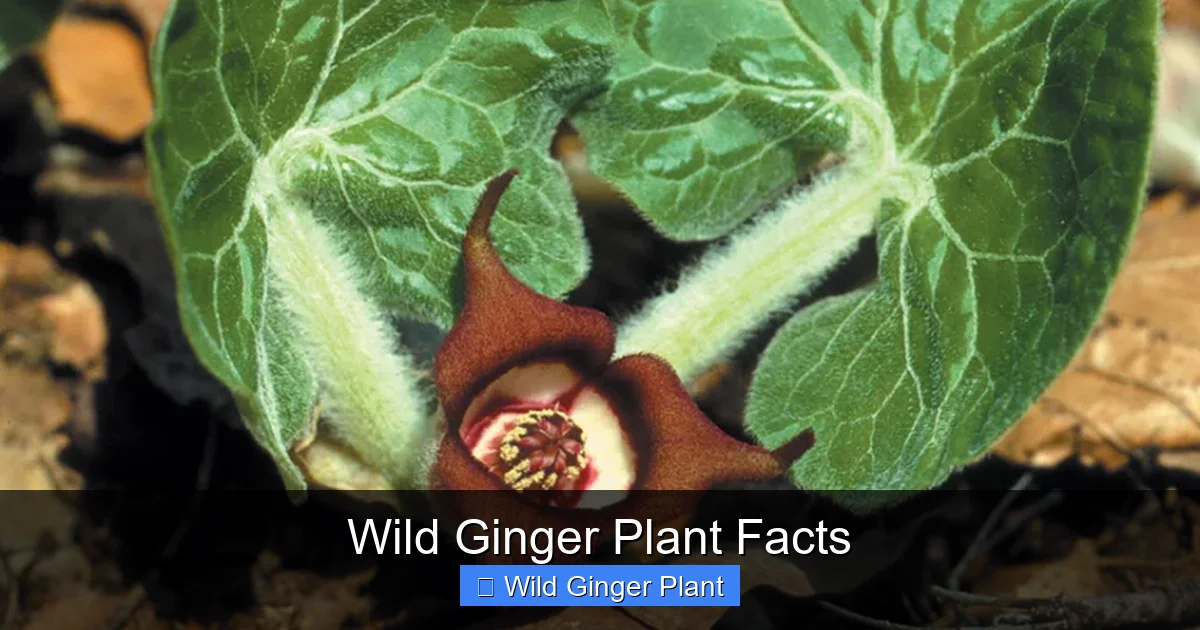
This plant is a perennial herb that spreads by short, creeping rhizomes. Each year it sends up a pair of basal leaves that remain evergreen in mild climates. The leaves are kidney‑shaped, about 3 to 6 inches wide, with a deep, glossy green color. Because the plant stays low, it forms a dense mat that suppresses weeds.
Flowering Details
Flowers appear in early spring, usually April to May. They are solitary, bell‑shaped, and sit at ground level hidden beneath the leaf litter. The three‑lobed calyx is purplish‑brown, and the interior is a pale yellow. Pollination is mainly by small flies and beetles that crawl into the flower.
Habitat and Distribution
Preferred Environment
Wild ginger thrives in rich, moist, well‑drained soils under a canopy of deciduous trees. It likes a pH range of 5.5 to 7.0 and benefits from a thick layer of leaf mulch. You will often find it on north‑facing slopes, along stream banks, and in ravines where humidity stays high.
Geographic Range
The native range stretches from southern Canada down through the Appalachian Mountains to northern Georgia and west to the Great Lakes region. Isolated populations also occur in the Ozarks and the Ouachita Mountains. Because it prefers undisturbed forest floor, it is an indicator of healthy, mature woodlands.
Microhabitat Variations
In the northern part of its range, wild ginger may experience a brief period of dormancy in winter. In the southern Appalachians it can stay green year‑round. Soil texture matters less than moisture; sandy loam, clay loam, and even rocky soils can support it if organic matter is abundant.
Identification Tips
Leaf Characteristics
Look for a pair of opposite, heart‑shaped leaves emerging from a single point on the rhizome. The leaf margins are smooth, and the surface feels slightly leathery. When you crush a leaf, you may detect a faint, sweet‑spicy scent.
Flower Clues
Because the flowers hide under leaf litter, you often need to gently lift the leaves to see them. The flower’s three‑lobed calyx and lack of petals are distinctive. No other low‑growing forest herb has this combination of hidden, bell‑shaped bloom and paired kidney leaves.
Rhizome Features
The rhizome is thin, brown, and segmented, resembling a tiny ginger root. It grows horizontally just below the soil surface. If you dig a small section, you will notice a mild ginger aroma, confirming the identity.
Common Look‑Alikes
Some beginners confuse wild ginger with Canadian wild ginger (Asarum caudatum) found on the West Coast, or with the unrelated wild sarsaparilla (Aralia nudicaulis). The key difference is the leaf shape: wild sarsaparilla has compound leaves, while wild ginger has simple, paired leaves.
Uses and Benefits
Culinary Applications
The rhizome can be harvested in early spring before the plant puts energy into leaf growth. Wash it thoroughly, peel the thin skin, and slice thinly. It adds a subtle, earthy ginger note to herbal teas, syrups, and even baked goods. Use sparingly; the flavor is milder than tropical ginger.
Traditional Medicine
Indigenous peoples across the range used wild ginger for a variety of ailments. A decoction of the rhizome was taken for stomach upset, nausea, and colds. Poultices made from crushed leaves were applied to wounds and skin irritations. Modern herbalists still value it for its mild carminative properties.
Ecological Role
Wild ginger provides early‑season nectar for small pollinators when few other flowers are open. Its dense foliage offers shelter for amphibians and invertebrates. The rhizomes help stabilize soil on slopes, reducing erosion in forest understories.
Ornamental Value
In shade gardens, wild ginger creates a lush, evergreen carpet that stays attractive through winter. Its glossy leaves contrast nicely with ferns, hostas, and spring ephemerals like trillium. Because it spreads slowly, it rarely becomes invasive.
Growing Wild Ginger in Your Garden
Site Selection
Choose a spot that mimics its natural home: dappled to full shade, moist but well‑drained soil, and a generous layer of leaf mulch. Avoid areas that receive hot afternoon sun, as the leaves can scorch.
Soil Preparation
Amend the planting hole with compost or well‑rotted leaf mold to increase organic matter. A slightly acidic to neutral pH works best. If your soil is heavy clay, mix in coarse sand or fine bark to improve drainage.
Planting Methods
You can start wild ginger from nursery‑grown divisions, rhizome cuttings, or seed. Divisions are the quickest: plant each piece with the growing tip just below the soil surface, spacing 12 to 18 inches apart. Water thoroughly after planting and keep the area mulched.
Watering and Mulching
Keep the soil consistently moist during the first growing season. After establishment, wild ginger tolerates short dry spells but performs best with regular moisture. Apply a 2‑inch layer of shredded leaves each fall to mimic natural leaf litter.
Maintenance Tips
Remove any competing weeds by hand to avoid disturbing the shallow rhizomes. Fertilize lightly in early spring with a balanced organic fertilizer if growth seems slow. Divide clumps every 4‑5 years to rejuvenate vigor and share plants with friends.
Common Problems
Slugs and snails may nibble the tender leaves in wet springs. Use beer traps or copper barriers rather than chemical baits. Fungal leaf spots can appear in overly humid, stagnant air; improve air circulation by thinning nearby shrubs.
Conservation and Ethical Harvesting
Threats to Wild Populations
Habitat loss from logging, development, and invasive species like garlic mustard reduces suitable forest floor. Over‑collection for herbal markets also pressures local stands. Because wild ginger spreads slowly, recovery from heavy harvest can take decades.
Guidelines for Responsible Use
If you must harvest from the wild, follow the “one‑in‑ten” rule: take no more than 10 % of the rhizomes in a given patch, and only from large, healthy colonies. Always leave the leaf crowns intact so the plant can photosynthesize. Better yet, source plants from reputable native‑plant nurseries that propagate sustainably.
Supporting Conservation
Join local native‑plant societies or land trusts that monitor wild ginger populations. Participate in citizen‑science projects that map its distribution. Planting it in your own shade garden creates a refuge and reduces demand on wild sources.
Conclusion
Wild ginger is a modest yet remarkable plant that rewards careful observation. Its glossy paired leaves, hidden flowers, and gentle ginger scent make it a treasure of the forest floor. By learning these wild ginger plant facts you can identify it on hikes, appreciate its ecological role, and even cultivate a patch in your own shady garden. Remember to harvest responsibly, support conservation efforts, and share the joy of this native herb with fellow plant lovers. Happy exploring and gardening!
Frequently Asked Questions
What are the key wild ginger plant facts for beginners?
Wild ginger is a low, shade‑loving perennial with paired kidney‑shaped leaves and hidden bell‑shaped flowers. It spreads by rhizomes and has a mild ginger scent.
Where can I find wild ginger in the wild?
Look in moist, deciduous forests across eastern North America, especially on north‑facing slopes and near streams.
How do I propagate wild ginger at home?
Divide established clumps in early spring or plant rhizome cuttings just below the soil surface in a shady, mulched bed.
Are there any toxic look‑alikes?
Wild ginger can be confused with wild sarsaparilla, which has compound leaves, but wild sarsaparilla is not toxic; still, proper identification is essential.
Can wild ginger be used in cooking like regular ginger?
The rhizome offers a subtle ginger flavor and works well in teas, syrups, and light desserts, but it is much milder than tropical ginger.
What conservation steps should I take when harvesting?
Harvest no more than 10 % of a colony, leave leaf crowns intact, and prefer cultivated sources to protect wild populations.