Best Succulent Fertilizer
Finding the best succulent fertilizer doesn’t have to be complicated. This guide breaks down everything you need to know about NPK ratios, fertilizer types, and proper application schedules so your succulents stay vibrant and strong all year long.
You stare at your succulent collection. The echeveria looks a little pale. The jade plant hasn’t put out new leaves in months. You wonder if it’s time to feed them. But then you remember the horror stories. Burnt roots. Mushy leaves. Plants that stretched into weird, weak shapes overnight. Fertilizing succulents feels risky.
Here’s the truth. Succulents do need nutrients. They just need them differently than your tomatoes or roses. The best succulent fertilizer isn’t about power. It’s about precision. It’s about giving just enough, at the right time, in the right form. Get this right and your plants reward you with rich color, tight rosettes, and steady growth. Get it wrong and you watch your favorites decline fast.
This guide walks you through everything. We’ll cover what numbers on the bottle actually mean. We’ll compare liquid, granular, and organic options. We’ll share exact application schedules. And we’ll help you pick the best succulent fertilizer for your specific setup. Whether you’re growing a single haworthia on a windowsill or a rock garden full of sedum, you’ll finish this article knowing exactly what to buy and how to use it.
Key Takeaways
- Low nitrogen is key: Succulents need fertilizers with low nitrogen content (like 2-7-7 or 1-2-2) to prevent weak, leggy growth.
- Liquid fertilizers offer control: Dilutable liquid feeds let you adjust strength easily, making them ideal for sensitive succulents.
- Fertilize during active growth only: Feed in spring and summer. Stop completely in fall and winter when plants are dormant.
- Always dilute more than directed: Use half or quarter strength to avoid root burn. Succulents prefer lean conditions.
- Organic options build soil health: Worm castings, compost tea, and fish emulsion provide slow-release nutrients naturally.
- Watch for signs of over-fertilizing: Burnt leaf tips, rapid weak growth, and white crust on soil mean it’s time to flush the pot.
- Match fertilizer to your setup: Indoor pots need different feeding than outdoor landscape succulents.
Quick Answers to Common Questions
What is the best NPK ratio for succulents?
The best NPK ratio for succulents has a low first number (nitrogen) like 2-7-7, 1-2-2, or 1-7-6. Low nitrogen prevents weak, stretched growth while higher phosphorus and potassium support roots and stress tolerance.
How often should I fertilize my succulents?
Fertilize every 2-3 weeks during active growth (spring through early fall) at half strength. Stop completely in winter. Adjust frequency based on your specific species and growing conditions.
Can I use regular houseplant fertilizer on succulents?
Only if diluted to 1/10th strength. Regular fertilizers like 20-20-20 contain too much nitrogen. A dedicated cactus fertilizer with low nitrogen is safer and more effective.
Should I fertilize succulents when repotting?
No. Wait 4-6 weeks after repotting before fertilizing. Fresh soil contains nutrients, and damaged roots are vulnerable to burn. Let plants establish first.
What are signs of over-fertilizing succulents?
Brown crispy leaf tips, white crust on soil surface, rapid weak growth with wide leaf spacing, and mushy lower leaves. Flush the pot with plain water and stop feeding until recovery.
📑 Table of Contents
- Why Succulents Need Special Fertilizer
- Understanding NPK Ratios for Succulents
- Types of Succulent Fertilizers
- Top Fertilizer Recommendations by Category
- How and When to Fertilize Succulents
- Common Fertilizing Mistakes to Avoid
- Matching Fertilizer to Your Growing Style
- Signs Your Fertilizer Program Is Working
- Troubleshooting Fertilizer Problems
- Advanced Tips for Enthusiasts
- Conclusion
Why Succulents Need Special Fertilizer
Most houseplants love nitrogen. It drives leafy green growth. Succulents are different. They evolved in harsh environments. Nutrient-poor soil. Intense sun. Very little water. Their strategy is storage, not speed. They hold water and nutrients in thick leaves and stems. They grow slowly. They conserve resources.
Standard fertilizers push fast, soft growth. High nitrogen makes succulents stretch. Stems get long and weak. Leaves space out. The plant loses its compact, architectural shape. This is called etiolation. It ruins the look and weakens the plant. Weak tissue invites pests and rot.
The best succulent fertilizer respects this biology. It delivers low nitrogen. It emphasizes phosphorus and potassium instead. Phosphorus supports root development and flowering. Potassium strengthens cell walls. This helps succulents handle drought, heat, and cold. It keeps them firm and colorful.
Native Habitat Clues
Think about where your plants come from. Most cultivated succulents originate in semi-arid regions. Rocky slopes. Desert margins. High elevations. The soil is mineral-rich but low in organic matter. Rain comes in rare, heavy bursts. Between rains, the soil dries completely.
This cycle matters. When rain falls, nutrients become available briefly. The plant takes them up fast. Then dormancy returns. The best succulent fertilizer mimics this pulse. You feed during the growing season. You stop when the plant rests. You never maintain a constant nutrient drip.
Container vs. Ground Culture
Potted succulents have different needs than in-ground plants. Containers hold limited soil volume. Nutrients leach out with every watering. Salt buildup happens faster. The best succulent fertilizer for pots is gentle and fully soluble. It leaves minimal residue.
Landscape succulents access a larger soil reservoir. They benefit from slow-release organic matter. Compost. Worm castings. Aged manure. These break down gradually. They feed soil microbes. They improve structure. They hold moisture without staying soggy.
Understanding NPK Ratios for Succulents
Every fertilizer label shows three numbers. N-P-K. Nitrogen-Phosphorus-Potassium. The ratio tells you the weight percentage of each nutrient. A 10-10-10 fertilizer contains ten percent nitrogen, ten percent phosphorus, ten percent potassium. The rest is filler.
Visual guide about Best Succulent Fertilizer
Image source: toolboxadvice.com
For succulents, you want the first number low. Really low. Look for ratios like 2-7-7. Or 1-2-2. Or even 0.5-1-1. Some specialty cactus fertilizers go as low as 1-7-6. The best succulent fertilizer always has nitrogen as the smallest number.
What Each Nutrient Does
Nitrogen builds proteins and chlorophyll. It makes leaves green and large. Too much creates thin, watery tissue. Succulents store water in their leaves. Thin leaves lose water fast. They also sunburn easily. Low nitrogen keeps leaves thick and waxy.
Phosphorus drives energy transfer. It powers root growth and flower formation. Succulents need strong roots to anchor in rocky soil and find scarce moisture. Phosphorus also helps the plant convert sunlight into stored energy. This is critical for plants that face intense light.
Potassium regulates water movement. It controls stomata opening. It activates enzymes. Strong cell walls resist pests and disease. Potassium helps succulents survive drought by managing internal water pressure. It also enhances color. Many succulents show their best reds and purples with adequate potassium.
Reading Labels Carefully
Don’t just trust the front of the bottle. Turn it over. Check the guaranteed analysis. Some “cactus fertilizers” still have 5-10-5 ratios. That’s too much nitrogen. The best succulent fertilizer will clearly state it’s formulated for cacti and succulents. It will show a low first number.
Also check the nutrient sources. Urea nitrogen releases fast and can burn. Ammonium nitrate is also harsh. Look for nitrate nitrogen or organic sources. These release slower. They’re gentler on sensitive roots. Chelated micronutrients (iron, manganese, zinc) are a bonus. They prevent deficiency in high-pH soils.
Micronutrients Matter Too
Succulents need trace elements. Iron prevents yellowing between leaf veins. Magnesium supports chlorophyll. Calcium strengthens cell walls. The best succulent fertilizer includes a full micronutrient package. This is especially important for plants in pure pumice or coarse sand mixes. These media have zero nutrient-holding capacity.
Types of Succulent Fertilizers
Walk into any garden center and you’ll see shelves of options. Liquid concentrates. Granular spikes. Slow-release pellets. Organic teas. Each has pros and cons. The best succulent fertilizer for you depends on your routine, your plants, and your growing conditions.
Liquid Concentrates
Liquid fertilizers are the most popular choice. They mix with water. You apply them during normal watering. This gives you total control over dosage. You can go half strength. Quarter strength. You can skip a feeding easily. The best succulent fertilizer in liquid form feeds instantly. Roots absorb nutrients within hours.
Look for concentrates specifically labeled for cacti and succulents. General houseplant fertilizers are too strong. Even at half strength, they often deliver too much nitrogen. Good liquid options include Schultz Cactus Plus (2-7-7), Espoma Organic Cactus Food (1-2-2), and Grow More Cactus Juice (1-7-6).
Pro tip: Mix your fertilizer solution in a dedicated watering can. Label it. Never use it for plain water. This prevents accidental over-feeding. Always apply to moist soil. Dry roots burn faster.
Granular and Slow-Release
Granular fertilizers sprinkle on the soil surface. Water activates them. Slow-release pellets (like Osmocote) have a polymer coating. They release nutrients over months based on temperature and moisture. These are convenient. You apply once or twice a season. Done.
But they have drawbacks for succulents. You can’t adjust the dose. If a heat wave hits, release accelerates. Your plants get a surge they can’t use. In cool weather, release slows. Plants may starve. The best succulent fertilizer in granular form should be low-nitrogen and applied very sparingly. Scratch it into the top inch of soil. Water thoroughly.
Fertilizer spikes seem easy. Push them in. Forget them. But they create concentrated nutrient zones. Roots can burn if they grow into a spike. Nutrient distribution is uneven. Most succulent growers avoid spikes entirely.
Organic Options
Organic fertilizers feed the soil, not just the plant. Worm castings. Compost. Fish emulsion. Kelp meal. Bat guano. These build microbial life. They improve soil structure. They release nutrients slowly as microbes break them down. The best succulent fertilizer for long-term soil health is organic.
Worm castings are a top choice. They’re gentle. They contain beneficial bacteria. They hold moisture without compaction. Mix ten to twenty percent into your potting mix. Top-dress established plants twice a year. Fish emulsion works well as a liquid feed. It smells strong but plants love it. Dilute heavily. One tablespoon per gallon is plenty.
Compost tea is easy to make. Steep finished compost in water for twenty-four hours. Strain. Use immediately. It’s a probiotic for your soil. Apply monthly during growing season. Kelp meal adds trace minerals and growth hormones. It helps plants handle stress.
Specialty and DIY Blends
Some growers create custom mixes. A common recipe: one part bone meal (phosphorus), one part kelp meal (potassium and micros), one part rock dust (minerals). Mix into soil at repotting. This feeds for months. No liquid feeding needed.
Others use diluted orchid fertilizer. Orchids and succulents share similar needs. Low nitrogen. High phosphorus. Weekly weakly feeding works for both. The best succulent fertilizer might already be on your shelf if you grow multiple plant types.
Top Fertilizer Recommendations by Category
After testing dozens of products and talking to collectors, here are the standouts in each category. Prices and availability vary. Always buy from reputable sellers. Counterfeit fertilizers exist online.
Best Overall Liquid: Schultz Cactus Plus 2-7-7
This is the gold standard for a reason. The 2-7-7 ratio is perfect. Seven drops per quart of water. That’s it. The dropper bottle makes dosing foolproof. It’s widely available at hardware stores and nurseries. A four-ounce bottle lasts a small collection all year. The nitrogen is urea-free. Roots stay safe. Plants respond with visible growth within weeks.
Best Organic Liquid: Espoma Organic Cactus Plant Food 1-2-2
Espoma uses fish protein, bone meal, and kelp. It’s certified organic. The smell is mild for fish fertilizer. The 1-2-2 ratio is conservative. You can use it every watering at half strength. It builds soil health over time. Great for indoor growers who want synthetic-free care. The measuring cap prevents spills.
Best Concentrate for Large Collections: Grow More Cactus Juice 1-7-6
This comes in one-pound and five-pound tubs. One teaspoon makes five gallons. Extremely economical. The 1-7-6 ratio is heavily weighted toward phosphorus and potassium. Contains chelated micronutrients. Calcium is included. This prevents the tip burn common in fast-growing succulents. Commercial growers use this. Home collectors with fifty-plus plants should too.
Best Slow-Release: Osmocote Plus 15-9-12 (Use at Quarter Rate)
Wait. 15-9-12? That’s high nitrogen. Yes. But the coating controls release. At quarter rate (one tablespoon per gallon of soil), it delivers a steady low feed for six months. Only use this for outdoor pots in active growth. Never for indoor or dormant plants. The “Plus” version includes micros. Standard Osmocote does not.
Best Soil Amendment: Worm Castings (Any Reputable Brand)
Not a fertilizer per se. But the best succulent fertilizer foundation. Pure worm castings. No fillers. Mix twenty percent into new soil. Top-dress one-half inch twice yearly. Water in. The microbial diversity transforms your mix. Plants become more resilient. Pest resistance improves. Color deepens. It’s the single best investment for long-term succulent health.
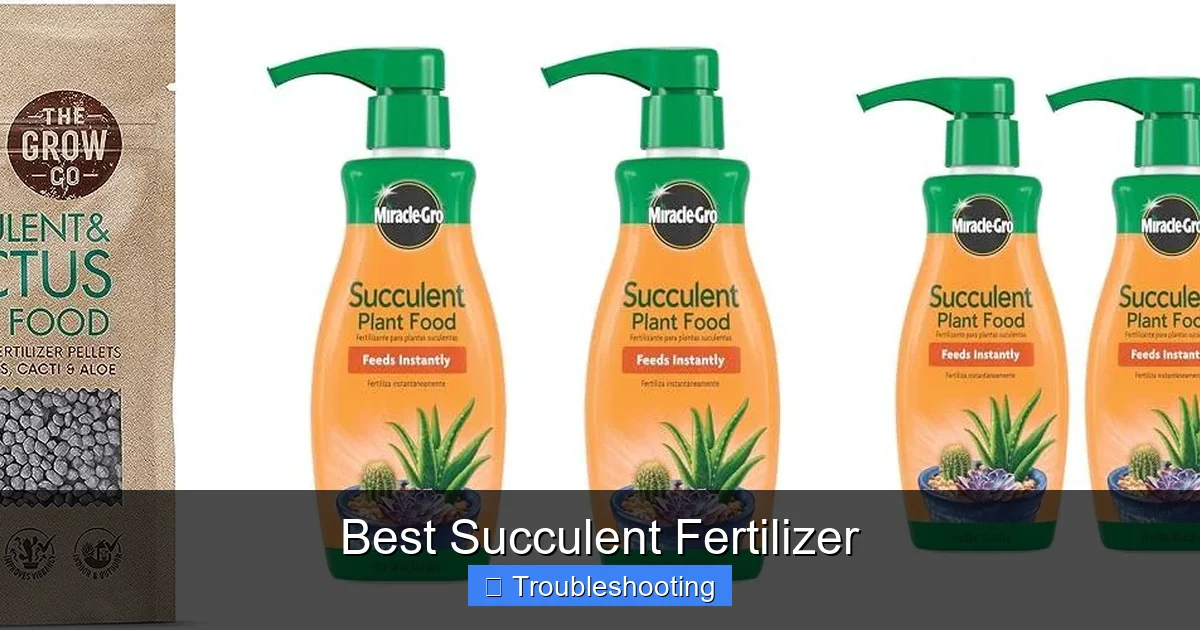
Best Budget Option: Miracle-Gro Succulent Plant Food 0.5-1-1
Available everywhere. Very cheap. The ratio is safe. The pump bottle dispenses two pumps per quart. Easy. But it’s synthetic. No micros listed. Salt buildup happens faster. Flush pots monthly if using this. It works fine for common varieties. Rare or sensitive species deserve better.
How and When to Fertilize Succulents
Timing matters more than product. The best succulent fertilizer applied at the wrong time hurts plants. Applied at the right time, even a mediocre product helps. Let’s break down the calendar.
Spring: Wake Up Feeding
Days lengthen. Temperatures rise. New growth appears at the center of rosettes. This is your signal. Start fertilizing. Begin with quarter strength. Apply every second or third watering. Watch the plants. If they respond with compact growth, increase to half strength. If they stretch, back off.
Spring is also repotting season. Fresh soil has nutrients. Don’t fertilize newly repotted plants for four to six weeks. Let roots establish. The best succulent fertilizer won’t help damaged roots. It will burn them.
Summer: Peak Growth Support
This is the main feeding window. Most succulents grow actively in early summer. Some go semi-dormant in extreme heat. Know your species. Aeoniums sleep in summer. Echeverias grow. Adjust accordingly.
For active growers, feed every two to three weeks at half strength. For heat-dormant types, stop feeding when temperatures exceed ninety degrees consistently. Resume when nights cool. The best succulent fertilizer respects dormancy signals.
Fall: Taper Off
Growth slows. Days shorten. Reduce frequency. Half strength becomes quarter strength. Every two weeks becomes monthly. By late fall, stop entirely. You want plants to harden off before winter. Soft new growth freezes easily. The best succulent fertilizer schedule ends before first frost.
Winter: Rest Period
No fertilizer. Period. Even for indoor plants under grow lights. Winter growth is weak. Low light produces etiolated stems. Fertilizing makes this worse. Let plants rest. Water sparingly. Resume in spring. The only exception: tropical succulents like epiphyllums or rhipsalis that grow year-round in warm, bright conditions. Even then, use quarter strength monthly.
Application Techniques
Always water first. Wait an hour. Then apply fertilizer solution. This prevents root burn. Dry soil pulls solution straight to roots. Moist soil distributes it evenly. Use room temperature water. Cold shocks roots.
Bottom watering with fertilizer works well. Place pots in a tray of solution. Let them soak twenty minutes. Remove. Drain. This ensures even distribution. Top watering can channel down sides, missing the root ball.
Flush pots monthly. Run plain water through until it drains freely. Do this twice. This prevents salt accumulation. White crust on soil or pot rims means you’re overdue for a flush. The best succulent fertilizer routine includes regular flushing.
Common Fertilizing Mistakes to Avoid
Even experienced growers mess up. Here are the most frequent errors and how to fix them.
Mistake 1: Using Regular Houseplant Fertilizer
That blue powder for “all plants” is 20-20-20. At half strength, it’s still 10-10-10. That’s five times the nitrogen your succulents want. Result: stretched, pale, weak plants. Fix: Buy a dedicated cactus fertilizer. Or dilute houseplant food to one-tenth strength. But why risk it? The best succulent fertilizer costs pennies per application.
Mistake 2: Fertilizing Dry Soil
You’re busy. The soil is bone dry. You mix fertilizer and pour. Roots burn. Leaf tips brown. Growth stops. Fix: Always pre-water. Set a timer if you forget. Make it a two-step habit. Water. Wait. Feed.
Mistake 3: Feeding Dormant Plants
Your aeonium looks sad in July. You feed it to “help.” It rots. Summer-dormant succulents cannot use nutrients. They have no active roots. Fertilizer sits in soil. Salts concentrate. Roots die. Fix: Learn your species’ dormancy patterns. Mark your calendar. The best succulent fertilizer respects the plant’s calendar, not yours.
Mistake 4: Ignoring Water Quality
Hard water. High pH. Softened water with sodium. These interact with fertilizer. High pH locks out iron. Sodium burns roots. The best succulent fertilizer can’t overcome bad water. Fix: Use rainwater. Distilled. RO filtered. Or at least let tap water sit overnight. Test your pH. Aim for 6.0 to 6.5.
Mistake 5: Over-Feeding “Fast Growers”
Sedum. Graptopetalum. Some kalanchoes. They grow fast naturally. You feed more to “maximize.” They explode. Stems get hollow. Leaves get thin. Pests swarm. Fix: Feed fast growers less. They’re efficient. They need less help. The best succulent fertilizer for vigorous types is barely any at all.
Mistake 6: Fertilizing Stressed or Sick Plants
Mealybugs. Root rot. Sunburn. Transplant shock. You think fertilizer will “boost recovery.” It won’t. It adds stress. Fix: Solve the problem first. Recover the roots. Then feed lightly. The best succulent fertilizer is medicine for healthy plants, not sick ones.
Mistake 7: Not Adjusting for Soil Mix
Pure pumice. Fifty-fifty cactus mix. Heavy peat. Each holds nutrients differently. Fast-draining mixes leach instantly. Peat holds fertilizer longer. The best succulent fertilizer schedule adapts to your medium. Fix: In gritty mixes, feed more often at lower strength. In organic mixes, feed less often.
Matching Fertilizer to Your Growing Style
There’s no single best succulent fertilizer for everyone. Your setup dictates the right choice. Let’s match products to situations.
Windowsill Grower (Low Light, Small Pots)
Light limits growth. Plants use fewer nutrients. Use Espoma Organic at quarter strength monthly. Or worm castings top-dress only. Skip liquid feeds in winter. Focus on maximizing light instead. The best succulent fertilizer here is practically none.
Grow Light Setup (High Light, Indoor)
Artificial light drives year-round growth. But intensity is lower than sun. Plants grow steadily but not explosively. Use Schultz Cactus Plus at half strength every three weeks. Flush monthly. Monitor for stretch. Reduce nitrogen if internodes lengthen.
Outdoor Patio Collection (Seasonal, Mixed Sizes)
Spring through fall. Real sun. Temperature swings. Use Grow More Cactus Juice at half strength biweekly for active growers. Top-dress with worm castings in spring. Stop by September. The best succulent fertilizer for outdoors handles heat and rain.
Landscape Succulents (In-Ground, Established)
These need almost nothing. Annual compost ring in spring. Maybe one granular feeding at quarter rate. Native soil provides minerals. The best succulent fertilizer for landscape is patience. Let them find their own balance.
Collector with Rare Species (High Value, Sensitive)
Lithops. Conophytums. Rare haworthias. These hate fertilizer. Use quarter strength Schultz once in spring. Once in fall. That’s it. Or just worm castings. The best succulent fertilizer for rare plants is restraint. When in doubt, don’t feed.
Propagation and Seedlings
Baby plants have tiny roots. They burn instantly. No fertilizer until established. For leaf props, wait until mother leaf withers and pup has own roots. Then quarter strength monthly. Seedlings get zero fertilizer for first six months. The best succulent fertilizer for babies is time.
Signs Your Fertilizer Program Is Working
How do you know you’ve found the best succulent fertilizer and schedule? Plants tell you. Look for these positive indicators.
Color Intensity
Stress colors deepen appropriately. Echeveria edges turn pink in cool weather. Sedum tips go orange in sun. Graptopetalum blushes purple. This means potassium and light are balanced. Nitrogen isn’t washing out the pigments.
Compact Growth
New leaves sit tight. Rosettes stay symmetrical. Stems don’t elongate between nodes. The plant looks like a sculpture, not a vine. This confirms low nitrogen is working.
Root Development
When you repot, you see white, firm roots filling the pot. No brown mush. No hollow centers. Phosphorus is doing its job. The plant anchors securely.
Flowering
Mature plants bloom on schedule. Flower stalks are sturdy. Buds don’t abort. Pollen is viable. Seeds set. This is the ultimate sign of nutritional balance. The best succulent fertilizer supports reproduction.
Pest Resistance
Mealybugs ignore your plants. Spider mites don’t explode. Fungus gnats stay minimal. Strong cell walls and balanced sap chemistry deter pests. Healthy plants fight their own battles.
Troubleshooting Fertilizer Problems
Even with the best succulent fertilizer, issues arise. Here’s how to diagnose and fix common symptoms.
Symptom: Lower Leaves Yellow, Mushy, Fall Off
Diagnosis: Overwatering exacerbated by fertilizer. Salts damage roots. Rot follows. Fix: Stop fertilizing. Unpot. Inspect roots. Trim rot. Repot in fresh dry mix. Wait two weeks before watering. Resume feeding at quarter strength after new growth appears.
Symptom: Leaf Tips Brown and Crispy
Diagnosis: Fertilizer burn. Salt accumulation at leaf margins. Fix: Flush pot thoroughly. Three times pot volume. Let drain completely. Skip next two feedings. Resume at half previous strength.
Symptom: Rapid Growth, Large Pale Leaves, Wide Gaps
Diagnosis: Excess nitrogen. Etiolation. Fix: Stop fertilizing immediately. Increase light if possible. Wait for growth to normalize. Resume with lower nitrogen formula.
Symptom: No Growth for Months During Season
Diagnosis: Possible deficiency. Or root bound. Or dormant species. Fix: Check roots first. If pot-bound, repot. If roots healthy, apply half strength balanced feed once. Observe two weeks. The best succulent fertilizer jump-starts stalled plants gently.
Symptom: White Crust on Soil Surface and Pot Rim
Diagnosis: Salt buildup. Hard water plus fertilizer. Fix: Scrape off top half-inch of soil. Replace with fresh. Flush heavily. Switch to rainwater or distilled. Reduce fertilizer frequency.
Advanced Tips for Enthusiasts
Ready to level up? These strategies separate good collections from great ones.
Foliar Feeding
Spray dilute fertilizer on leaves. Early morning. Stomata open. Nutrients absorb directly. Use quarter strength liquid. Add a drop of surfactant (yucca extract or mild soap). Covers undersides too. Great for root-bound plants. Don’t do this in full sun. Wet leaves burn.
Seasonal Formula Switching
Spring: Higher phosphorus for roots and flowers. Summer: Balanced with extra potassium for heat tolerance. Fall: Zero nitrogen. Just phosphorus-potassium for hardening. The best succulent fertilizer program changes with the calendar.
Calcium Supplementation
Calcium prevents tip burn in fast growers. It strengthens new tissue. Add calcium nitrate at one-tenth label rate monthly. Or use cal-mag supplement. Or top-dress with gypsum (calcium sulfate) twice yearly. Doesn’t affect pH much. The best succulent fertilizer regimen includes calcium.
Silica for Structure
Potassium silicate. Diatomaceous earth. Rice hull ash. Silica deposits in cell walls. Plants become physically tougher. More upright. More resistant to pests. Add to soil mix. Or foliar spray monthly. The best succulent fertilizer toolkit includes silica.
Mycorrhizal Inoculation
Beneficial fungi colonize roots. They extend reach for phosphorus and water. They protect against pathogens. Apply at repotting. Use powder or granular inoculant. Works best in mineral-heavy mixes. The best succulent fertilizer partner is living soil biology.
Conclusion
Finding the best succulent fertilizer isn’t about chasing the highest numbers or the fanciest bottle. It’s about understanding what these remarkable plants actually need. They need respect for their slow, steady nature. They need low nitrogen. They need phosphorus for roots. Potassium for strength. They need you to stop feeding when they rest.
Start simple. Pick one quality liquid fertilizer with a low first number. Schultz. Espoma. Grow More. Any will work. Apply at half strength. Feed actively growing plants only. Flush monthly. Top-dress with worm castings twice a year. Watch your plants. They’ll tell you if you’re right.
Over time, you’ll develop intuition. You’ll see the subtle shift in color. The tightening of a rosette. The plumpness of a leaf. You’ll adjust without thinking. That’s the real goal. Not a perfect product. A perfect partnership with your plants.
Your succulents don’t want to be pushed. They want to be understood. Give them the best succulent fertilizer for their biology, not your ambition. They’ll reward you with years of architectural beauty. Quiet resilience. The kind of growth that lasts.
Frequently Asked Questions
Can I use coffee grounds as succulent fertilizer?
Used coffee grounds are mildly acidic and contain some nitrogen. Use sparingly as a top dressing (thin layer) no more than twice yearly. They can compact and hold too much moisture if applied heavily. Worm castings are a better organic choice.
Is fish emulsion good for succulents?
Yes, fish emulsion works well when heavily diluted (1 tablespoon per gallon). It provides gentle nitrogen plus micronutrients. The smell dissipates quickly outdoors. Indoor users may prefer less odorous options like worm casting tea.
Do succulents need fertilizer in winter?
No. Most succulents are dormant in winter and cannot use nutrients. Fertilizing during dormancy causes salt buildup and weak growth. Resume feeding in spring when new growth appears.
Can I use orchid fertilizer for succulents?
Yes, many orchid fertilizers have suitable low-nitrogen ratios (like 11-35-15 or similar bloom formulas). Use at quarter strength. They often contain calcium and magnesium which benefit succulents.
How do I fix fertilizer burn on succulents?
Remove the plant from its pot. Gently wash all old soil from roots. Trim any brown, mushy roots. Repot in fresh, dry succulent mix. Do not water for 5-7 days. Resume watering only, no fertilizer, for 4-6 weeks.
What’s the difference between cactus fertilizer and succulent fertilizer?
There is no meaningful difference. Cacti are succulents. Products labeled for either group typically share similar low-nitrogen ratios. The best succulent fertilizer works equally well for cacti and other succulent species.