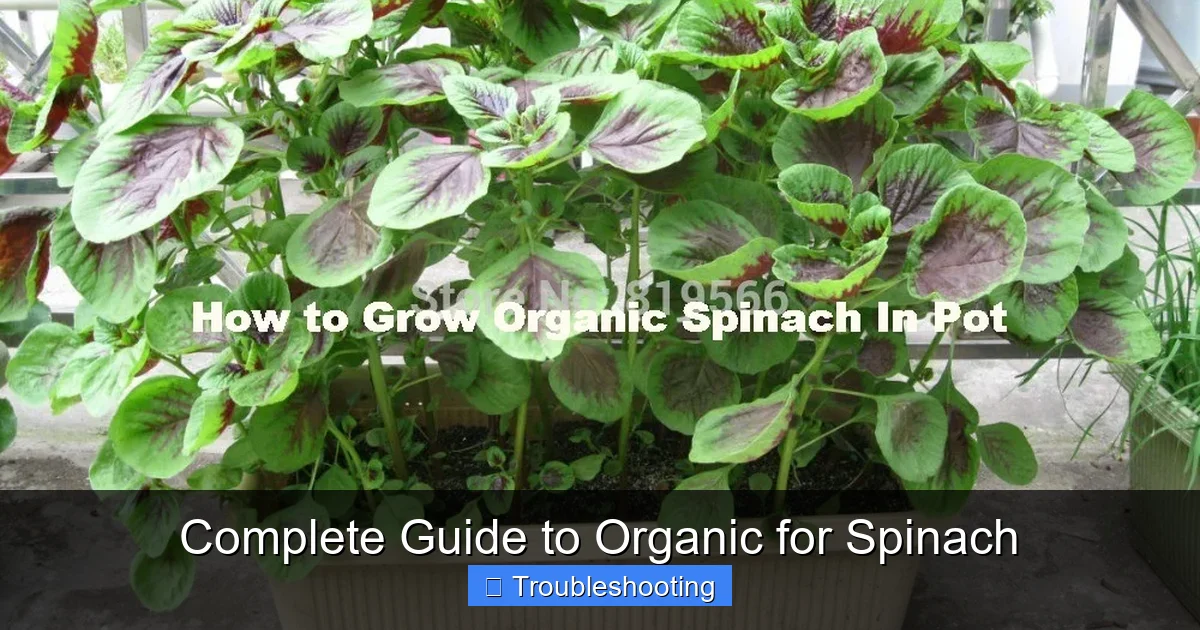
Complete Guide to Organic for Spinach
Growing organic spinach is rewarding but requires attention to soil health, pest management, and proper timing. This comprehensive guide walks you through every step from seed selection to harvest, with expert troubleshooting tips for common problems like bolting, leaf miners, and nutrient deficiencies. Master the art of organic spinach cultivation and enjoy fresh, nutrient-dense greens all season long.
There is something deeply satisfying about walking into your garden and snipping fresh spinach leaves for dinner. That vibrant green color, the crisp texture, the knowledge that no synthetic chemicals touched your food. It is a simple pleasure that connects you to generations of gardeners before you. But if you have ever tried growing spinach organically, you know it comes with its fair share of headaches. Bolting in the heat. Tiny trails marring perfect leaves. Yellowing that signals something is wrong beneath the surface.
I have been there. Standing in my garden in June, watching a beautiful spring crop send up flower stalks practically overnight. Finding leaf miner tunnels in what looked like pristine foliage. Wondering why my fall planting never quite took off. The good news? Every one of those problems has a solution. Organic spinach is not magic. It is a set of practices. Timing. Soil care. Observation. Patience. This guide puts all of it in one place so you can skip the trial and error and go straight to the good part. Eating.
Key Takeaways
- Soil preparation is everything: Organic spinach thrives in rich, well-draining soil with a pH between 6.0 and 7.0, amended with compost and organic matter.
- Timing prevents bolting: Plant in early spring or fall when temperatures stay cool; heat triggers premature flowering and bitter leaves.
- Succession planting extends harvest: Sow new seeds every 2-3 weeks for continuous yields throughout the growing season.
- Row covers are your best defense: Lightweight fabric barriers protect young plants from leaf miners, flea beetles, and aphids without chemicals.
- Harvest strategically for regrowth: Cut outer leaves first or harvest whole plants at the base to encourage multiple cuttings.
- Nitrogen feeds leaf production: Apply organic nitrogen sources like blood meal or fish emulsion every 3-4 weeks for vigorous growth.
- Crop rotation breaks disease cycles: Avoid planting spinach in the same spot year after year to prevent soil-borne pathogens.
Quick Answers to Common Questions
When is the best time to plant organic spinach?
Plant spinach in early spring as soon as soil can be worked (4-6 weeks before last frost) or in late summer for fall harvest (6-8 weeks before first frost). Spinach germinates best at 50-65°F and bolts in heat.
How do I prevent leaf miners organically?
Use floating row cover from planting day, sealed at edges. Rotate crops yearly. Crush eggs on leaf undersides daily. Remove mined leaves. Attract parasitic wasps with flowering herbs like dill and alyssum.
Why is my spinach bolting so fast?
Bolting is triggered by long days (14+ hours) and temperatures above 75°F. Water stress and root disturbance accelerate it. Plant bolt-resistant varieties, provide afternoon shade, and keep soil consistently moist.
What is the best organic fertilizer for spinach?
Spinach needs steady nitrogen. Apply blood meal, fish emulsion, or feather meal every 3-4 weeks. Side dress lightly along rows. Stop fertilizing 2 weeks before harvest to avoid nitrate buildup.
Can I grow spinach in containers?
Yes. Use pots at least 6-8 inches deep with quality potting mix. Water daily in heat. Fertilize every 2 weeks with liquid organic fertilizer. Move to shade during hot spells. Row cover works on containers too.
📑 Table of Contents
- Understanding Spinach Biology and Growth Habits
- Building Living Soil for Organic Spinach
- Planting Strategies for Success
- Watering and Mulching for Consistent Growth
- Organic Pest and Disease Management
- Troubleshooting Common Growth Problems
- Harvest, Storage, and Season Extension
- Advanced Organic Techniques
- Container and Small Space Growing
- Common Mistakes and How to Avoid Them
- Regional Considerations
- Building a Spinach Year Plan
- Conclusion
Understanding Spinach Biology and Growth Habits
Before we talk about problems, let us talk about the plant itself. Spinach (Spinacia oleracea) is a cool-season annual in the amaranth family. It is related to beets and Swiss chard. This matters because they share pests and diseases. Knowing the family helps you plan rotations.
Spinach grows as a rosette of leaves from a central crown. It has a taproot that goes deep if the soil allows. The leaves are the harvest. We eat them before the plant bolts. Bolting is when the plant shifts energy from leaf production to flower and seed production. It happens when days get long and temperatures rise. Once bolting starts, leaves turn bitter and tough. The window for good eating closes fast.
Types of Spinach for Organic Gardens
Not all spinach is created equal. Choosing the right variety for your season and climate is half the battle.
Savoy Types
These have crinkled, dark green leaves. They handle cold beautifully. The texture holds up well in cooking. ‘Bloomsdale Long Standing’ is the classic. It is slow to bolt. ‘Winter Giant’ lives up to its name for fall and winter harvests.
Semi-Savoy Types
Less crinkled than savoy but more than flat leaf. Easier to clean. ‘Tyee’ and ‘Teton’ are popular. Good disease resistance. Reliable performers.
Flat or Smooth Leaf Types
Flat leaves. Very easy to wash. Often used for baby leaf production. ‘Space’ and ‘Red Cardinal’ (with red stems) fall here. Fast growing. Great for spring and fall.
Heat-Tolerant Alternatives
True spinach hates heat. If you want summer greens, look at New Zealand spinach (Tetragonia tetragonioides) or Malabar spinach (Basella alba). They are not true spinach but fill the culinary niche when it is too hot for the real thing.
Life Cycle Timeline
Germination: 5-14 days depending on soil temperature. Ideal is 50-65°F. Above 75°F, germination drops sharply.
Seedling stage: 2-3 weeks. Vulnerable to damping off, flea beetles, birds.
Vegetative growth: 3-6 weeks. This is your harvest window. Leaves expand rapidly with adequate nitrogen and water.
Bolting: Triggered by day length (14+ hours) and heat (75°F+). Once the central stem elongates, quality declines.
Building Living Soil for Organic Spinach
Organic growing starts and ends with soil. Spinach is a heavy feeder for a leaf crop. It wants nitrogen. But it also needs balanced minerals, good structure, and active biology. You cannot fix poor soil with liquid fertilizer alone. The foundation must be solid.
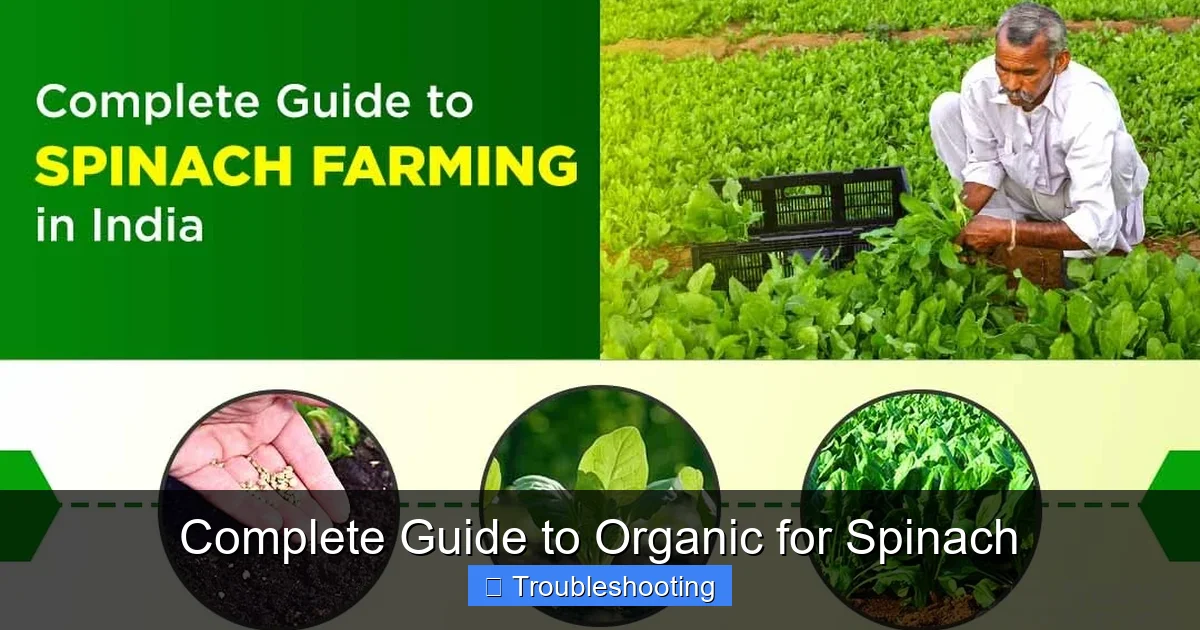
Visual guide about Complete Guide to Organic for Spinach
Image source: tractorkarvan.com
Soil Testing: Your Starting Point
Do not guess. Test. A basic soil test from your extension office costs $15-30 and tells you pH, organic matter percentage, and major nutrient levels. Spinach prefers pH 6.0-7.0. Below 6.0, nutrients lock up. Above 7.5, micronutrients become unavailable. If pH is off, nothing else works right.
Test in fall for spring planting. Amendments take time to integrate. Lime raises pH. Sulfur lowers it. Both need months.
Organic Matter: The Engine
Compost is non-negotiable. Work in 2-3 inches of finished compost before planting. It improves drainage in clay, water retention in sand, and feeds soil microbes that cycle nutrients. Leaf mold, aged manure, and cover crop residues all count.
Fresh manure? No. It burns roots and carries pathogen risk. Age it 120 days before harvest for food safety. Or compost it properly first.
Nitrogen Management
Spinach needs steady nitrogen. Not a huge dump at planting. That grows big leaves fast but weak cells. Aphids love that. Instead, feed moderately and consistently.
Good organic nitrogen sources:
- Blood meal (12-0-0) – fast acting, apply lightly every 3-4 weeks
- Fish emulsion (5-1-1) – liquid, foliar or soil drench, gentle
- Feather meal (12-0-0) – slower release, good for pre-plant
- Alfalfa meal (2-1-2) – contains growth promoters, mild
- Cottonseed meal (6-2-1) – acidic, good if pH runs high
Side dress along rows. Scratch in lightly. Water after. Stop feeding 2 weeks before harvest to reduce nitrate accumulation in leaves.
Micronutrients Matter
Spinach is sensitive to boron deficiency. Shows as cracked, distorted new growth. A borax solution (1 tablespoon per 100 sq ft) once per season prevents it. Do not overdo. Boron toxicity is real.
Magnesium deficiency shows as yellowing between veins on older leaves. Epsom salts (1 tablespoon per gallon) as a foliar spray fixes it fast.
Bed Preparation Methods
Double Digging
Old school. Effective. Loosens soil to 24 inches. Great for first-time beds. Hard work. Do it once, then maintain with broadfork and compost.
Broadforking
My preference. Aerates without inverting soil layers. Preserves soil structure and fungal networks. Do it each season before planting.
No-Till / Sheet Mulching
Cardboard, compost, straw layers. Builds soil over time. Slower start but incredible long-term. Spinach does well in established no-till beds with good compost topdressing.
Planting Strategies for Success
When and how you plant determines 80% of your outcome. Spinach is unforgiving of poor timing.
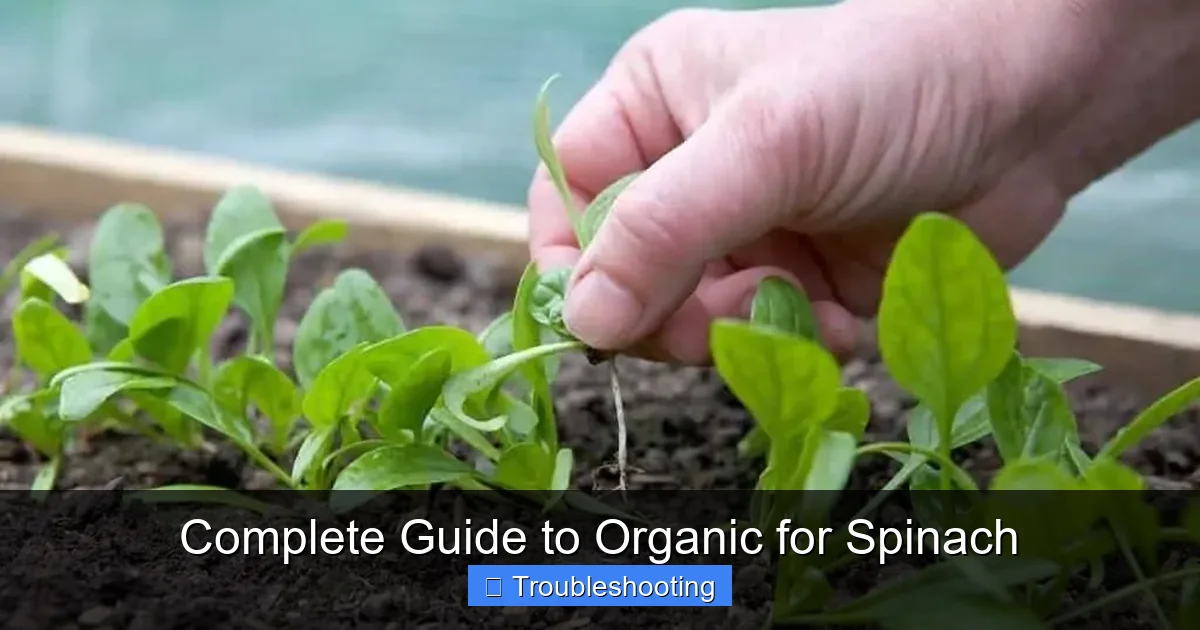
Visual guide about Complete Guide to Organic for Spinach
Image source: urbanorganicyield.com
Spring Planting
As soon as soil can be worked. That means crumbly, not sticky. Soil temperature 40°F minimum. 50-60°F ideal. In most zones, this is 4-6 weeks before last frost.
Direct seed. Spinach hates transplanting. The taproot resents disturbance. If you must start inside, use soil blocks or deep cells. Transplant at 2-3 true leaves. Handle by leaves, never stems.
Sow seeds 1/2 inch deep. 1 inch apart in rows 12-18 inches apart. Thin to 4-6 inches for mature plants. Eat the thinnings. They are delicious.
Germination trick: Pre-sprout seeds. Soak 24 hours. Drain. Keep damp in fridge 3-5 days until tiny roots show. Plant gently. Cuts germination time in half. Critical for spring when soil is cold.
Fall Planting
Often better than spring. Soil is warm. Days shortening. Less bolting pressure. Pests declining. Target planting 6-8 weeks before first hard frost.
For winter harvest in mild climates (zone 6+), plant through October. In colder zones, use low tunnels or cold frames. Spinach survives down to 15°F with protection. It actually gets sweeter after frost. Starches convert to sugars as antifreeze.
Succession Planting
Do not plant it all at once. Sow a short row every 2 weeks. Spring succession stops when days hit 14 hours. Resume in late summer for fall. This gives steady harvest instead of a glut then nothing.
Spacing for Airflow
Crowding invites disease. Downy mildew loves humid, still air. Space plants 6 inches apart each way for mature harvest. 3 inches for baby leaf. Rows 12-18 inches apart. Wide beds with staggered spacing work great.
Companion Planting
Spinach plays well with others. Good neighbors:
- Peas and beans – fix nitrogen, light shade
- Radishes – mark rows, break crust, harvest fast
- Strawberries – similar needs, different root zones
- Cabbage family – shade spinach in late spring
- Onions/garlic – deter aphids and leaf miners
Avoid planting near fennel. It inhibits growth.
Watering and Mulching for Consistent Growth
Spinach has shallow roots relative to its leaf mass. It cannot chase water deep. Consistent moisture is non-negotiable. Fluctuations cause stress, bolting, and bitter leaves.
How Much Water
1-1.5 inches per week. More in heat, wind, sandy soil. Less in clay, cool weather, heavy mulch. Check with your finger. Soil should be damp 2 inches down. Not soggy. Not dry.
When to Water
Morning. Always morning. Leaves dry before evening. Wet leaves overnight = fungal diseases. Drip irrigation or soaker hoses are ideal. Keep water off foliage. If overhead watering is your only option, do it early so sun dries leaves fast.
Mulch: Your Moisture Insurance
Apply 2-3 inches of organic mulch once plants are 3 inches tall. Straw, shredded leaves, grass clippings (herbicide-free), pine needles. Keeps soil cool, moist, weed-free. Prevents soil splash on leaves (disease vector). Adds organic matter as it breaks down.
Pull mulch back from crowns slightly to prevent rot. Replenish as it decomposes.
Critical Watering Windows
- Germination: Keep surface constantly moist. Light watering daily or twice daily.
- Seedling establishment: Deepen watering as roots grow.
- Rapid growth phase: Most critical. Water stress now = bolting later.
- Pre-harvest: Reduce slightly to concentrate flavor, but never let wilt.
Organic Pest and Disease Management
This is where organic spinach gets real. The pests are persistent. The diseases are sneaky. But you have tools. The key is prevention, monitoring, and early intervention.
Leaf Miners: The Number One Foe
Tiny flies lay eggs on leaf undersides. Larvae tunnel between leaf layers. White squiggly trails. Leaves become inedible. They love spinach, beets, chard, lambsquarters.
Prevention:
- Row cover from day one. Agribon-19 or similar. Seal edges with soil. Remove only to harvest.
- Crop rotation. Do not plant spinach family in same spot 2 years running.
- Destroy wild hosts. Lambsquarters and pigweed harbor miners.
- Yellow sticky traps catch adults. Place at canopy level.
Control:
- Crush eggs by hand. Check undersides daily.
- Remove and destroy mined leaves. Do not compost.
- Spinosad (Entrust) works but harms bees. Apply only at dusk when bees are gone. Last resort.
- Parasitic wasps (Diglyphus isaea) attack larvae. Attract with flowering herbs (dill, cilantro, alyssum).
Aphids: The Sap Suckers
Green peach aphid and potato aphid love spinach. Clusters on new growth. Sticky honeydew. Sooty mold. Virus vectors.
Prevention:
- Do not over-fertilize nitrogen. Succulent growth attracts them.
- Interplant with onions, garlic, chives.
- Encourage predators. Lady beetles, lacewings, syrphid flies, parasitic wasps.
Control:
- Strong water spray knocks them off. Repeat daily.
- Insecticidal soap (potassium salts of fatty acids). Cover undersides. Repeat weekly.
- Neem oil. Disrupts feeding and reproduction. Evening application.
- Reflective mulch (aluminum foil or silver plastic) repels winged aphids.
Flea Beetles: Tiny Shot Holes
Small jumping beetles. Chew round holes. Worst on seedlings. Can kill small plants.
Control:
- Row cover. The only reliable prevention.
- Trap crop: Plant radishes or mustard nearby. They prefer them. Destroy trap crop when beetles congregate.
- Diatomaceous earth around plants. Reapply after rain.
- Beneficial nematodes (Steinernema carpocapsae) target larvae in soil.
Slugs and Snails: Night Raiders
Irregular holes. Slime trails. Love cool, damp, mulched beds. Irony: your good mulch hides them.
Control:
- Beer traps. Bury container to rim. Fill with cheap beer. Empty daily.
- Iron phosphate bait (Sluggo). Safe for pets, wildlife. Scatter at dusk.
- Copper tape around raised beds. Gives them a shock.
- Hand pick at night with headlamp. Drop in soapy water.
- Ducks. If you have space, they love slugs.
Downy Mildew: The Fungal Ghost
Yellow patches on upper leaves. Purple-gray fuzz underneath. Spreads fast in cool, wet, humid conditions. Can wipe out a planting in days.
Prevention:
- Resistant varieties. ‘Corvair’, ‘Space’, ‘Seaside’, ‘Whale’ have good resistance packages.
- Wide spacing. Airflow is everything.
- Drip irrigation. Keep leaves dry.
- Morning water only.
- Crop rotation. 3 years away from spinach family.
- Remove crop debris promptly.
Control:
- Copper-based fungicides (organic approved). Preventive. Spray before symptoms.
- Potassium bicarbonate (GreenCure). Changes leaf surface pH. Prevents spore germination.
- Bacillus subtilis (Serenade). Beneficial bacteria. Competes with pathogen.
- Remove and destroy infected plants. Do not compost.
Damping Off: Seedling Killer
Seedlings topple at soil line. Stem pinched, dark. Caused by Pythium, Rhizoctonia, Fusarium. Cool, wet, poorly drained soil.
Prevention:
- Well-drained soil. Raised beds help.
- Do not overwater. Let surface dry slightly between waterings.
- Thin promptly. Crowding = humidity.
- Chamomile tea spray. Mild antifungal. Brew strong, cool, spray.
- Cinnamon on soil surface. Antifungal.
- Sterile seed starting mix if using trays.
Spinach Blight / Cucumber Mosaic Virus
Mottled leaves. Stunting. Transmitted by aphids. No cure. Remove infected plants. Control aphids. Use resistant varieties.
Troubleshooting Common Growth Problems
Even with good practices, things go wrong. Here is how to read the signs and respond.
Bolting: The Premature Flower
Signs: Central stem elongates rapidly. Leaves become arrow-shaped, smaller, bitter. Flower buds form.
Causes: Long days (14+ hours), heat (75°F+), water stress, root disturbance, overcrowding.
Response:
- Harvest immediately. Cut whole plant at base.
- Provide afternoon shade with 30% shade cloth.
- Keep water consistent.
- Plant bolt-resistant varieties next time (‘Bloomsdale Long Standing’, ‘Tyee’, ‘Olympia’).
- Plant earlier or later. Avoid the long-day window.
Yellowing Leaves (Chlorosis)
Older leaves yellow first: Nitrogen deficiency. Apply fish emulsion or blood meal.
New leaves yellow, veins stay green: Iron deficiency. Usually high pH. Test soil. Apply chelated iron foliar. Lower pH long-term with sulfur.
Yellow between veins on older leaves: Magnesium deficiency. Epsom salts spray.
Uniform yellowing, stunting: Root problem. Check for root rot, nematodes, compaction.
Stunted Growth
Causes: Cold soil, compacted soil, low fertility, root pests, wrong pH, overcrowding, herbicide carryover (from contaminated compost or manure).
Response: Broadfork. Test soil. Check roots. Side dress with balanced organic fertilizer. Ensure adequate water.
Tough, Leathery Leaves
Causes: Heat, drought stress, maturity, bolting initiation.
Response: Harvest younger. Water more. Mulch thicker. Shade cloth. Succession plant for tender leaves.
Poor Germination
Causes: Soil too warm (>75°F), soil too cold (<40°F), seeds too deep, soil crusting, old seeds, damping off, birds.
Response: Pre-sprout seeds. Shade soil with burlap until emergence. Light daily watering. Fresh seed each year. Row cover excludes birds.
White Spots on Leaves
Could be: Downy mildew (fuzzy underneath), white rust (pustules), edema (corky, from overwatering), pesticide residue, mineral deposits.
Response: Check underside. If fuzzy, treat for downy mildew. If corky bumps, reduce watering. If powdery, could be powdery mildew (rare on spinach).
Harvest, Storage, and Season Extension
The payoff. Doing it right means more food, better quality, longer season.
Harvest Methods
Cut-and-Come-Again
Snip outer leaves 1 inch above crown. Leave center growing point intact. Plant regrows. Get 3-5 harvests per plant. Best for baby leaf and extended spring harvest.
Whole Plant Harvest
Cut at soil level or pull entire plant. One harvest. Best for fall crop, before hard freeze, or when bolting starts.
Root Harvest (For Overwintering)
In mild climates, leave roots in ground. Mulch heavily. They resprout in late winter for earliest spring harvest.
When to Harvest
Baby leaf: 20-30 days. Leaves 2-3 inches. Tender, mild.
Mature leaf: 40-50 days. Leaves 4-6 inches. Full flavor, more texture.
Morning harvest. Leaves are crisp, hydrated, highest sugar content. Cool immediately.
Post-Harvest Handling
Rinse in cold water. Spin dry or pat gently. Store in plastic bag with paper towel to absorb moisture. Refrigerate 32-36°F. Lasts 7-10 days. Do not wash until ready to use if storing.
Freezing Spinach
Blanch 2 minutes. Ice bath. Drain well. Pack in freezer bags. Remove air. Freezes 10-12 months. Great for soups, smoothies, cooked dishes.
Season Extension Tools
Low Tunnels
Wire hoops. Row cover or plastic. Adds 4-6 weeks each end of season. Vent on sunny days. Spinach tolerates freezing under cover.
Cold Frames
Bottomless box with clear lid. Old windows work. South-facing. Insulate sides with straw bales. Vent daily. Harvest all winter in zones 5+.
High Tunnels / Hoop Houses
Walk-in structures. Unheated. Extends season 8-12 weeks. Spinach is a star winter crop in high tunnels. Plant September, harvest through March.
Mulch for Winter Protection
12-18 inches of straw or leaves over plants in late fall. Pull back in early spring. Works in zones 6+ for overwintering.
Advanced Organic Techniques
Once you have the basics down, these practices take your spinach to the next level.
Cover Cropping Before Spinach
Plant winter rye + hairy vetch in fall. Terminate in spring (crimp, mow, or tarp). Transplant or direct seed spinach into residue. Mulch suppresses weeds. Legume fixes nitrogen. Organic matter feeds soil life. This is regenerative agriculture at garden scale.
Living Mulch / Intercropping
Broadcast clover between spinach rows after thinning. White clover fixes nitrogen, suppresses weeds, hosts beneficials. Mow occasionally. Does not compete aggressively.
Biochar Amendment
Charcoal made from biomass. Charged with compost tea. Added at 5-10% volume. Improves nutrient retention, water holding, microbial habitat. Long-term soil investment.
Compost Tea and Extracts
Actively aerated compost tea brews beneficial microbes. Foliar spray protects against disease. Soil drench builds biology. Weekly applications during growth. Not a fertilizer. A probiotic for your soil.
Seed Saving
Spinach is wind pollinated. Dioecious (separate male and female plants). Need 20+ plants for genetic diversity. Isolate 1 mile from other spinach/beet/chard. Harvest when seeds dry on plant. Clean. Store cool, dry. Viable 3-5 years.
Note: Hybrid varieties (F1) will not breed true. Save only open-pollinated types.
Soil Blocking for Transplants
Compressed soil cubes. No plastic pots. Roots air-prune at edges. No transplant shock. Perfect for early starts in unheated greenhouse. 3/4 inch mini blocks for spinach.
Container and Small Space Growing
No garden? No problem. Spinach thrives in containers.
Container Requirements
- Minimum 6 inches deep. 8-10 inches better.
- Wide as possible. Window boxes, fabric pots, half barrels.
- Drainage holes. Critical.
- Quality potting mix. Not garden soil. Mix: 1/3 compost, 1/3 peat or coir, 1/3 perlite or vermiculite. Add slow-release organic fertilizer.
Container Care
Water more often. Daily in heat. Fertilize more often. Liquid feed every 2 weeks. Move to shade in hot spells. Row cover still works on containers.
Indoor Growing
Grow lights. 12-14 hours. Cool room (60-65°F). Good airflow. Hydroponic or soil. Baby leaf in 3 weeks. Continuous harvest with succession trays.
Common Mistakes and How to Avoid Them
Learn from others’ errors. These are the ones I see over and over.
Planting Too Late in Spring
Waiting for “safe” weather. By then, days are long. Heat comes. Bolting follows. Plant early. Risk a frost. Spinach laughs at frost.
Skipping Row Cover
“I’ll watch for bugs.” You won’t see leaf miner eggs. You won’t catch flea beetles at dawn. Cover from day one. It is the single highest ROI practice.
Overcrowding
“More plants = more food.” False. Crowded plants get diseased, bolt fast, yield less total weight. Thin ruthlessly. Eat the thinnings.
Inconsistent Watering
Weekend warrior watering. Soak then neglect. Spinach needs steady. Automate with timer if needed.
Ignoring Soil pH
Assuming compost fixes everything. It buffers but does not correct major imbalances. Test. Amend. Retest.
Planting All at Once
Feast then famine. Succession plant. Two weeks. Every two weeks. Calendar it.
Using Contaminated Inputs
Herbicide carryover in manure, compost, straw. Aminopyralid, clopyralid persist years. Causes curled, distorted growth. Source carefully. Bioassay test: plant beans in the material. If they grow normal, it is clean.
Regional Considerations
Your climate dictates your calendar. Here are broad strokes.
Cool Maritime (PNW, UK, Coastal)
Long cool springs. Fall through winter harvest easy. Downy mildew pressure high. Choose resistant varieties. Raised beds for drainage. Slugs are major.
Hot Summers / Cold Winters (Midwest, Northeast, Interior West)
Narrow spring window. Plant the moment soil works. Fall is main season. Winter kill without protection. Low tunnels essential for winter.
Mild Winters / Hot Summers (South, Southwest, California)
Fall through spring crop. Summer impossible for true spinach. Switch to heat-tolerant alternatives. Shade cloth extends spring. Watch for aphids year-round.
Short Season / High Elevation
Fast-maturing varieties only. ‘Bloomsdale’, ‘Space’, ‘Lavewa’. Start indoors. Transplant at 2 true leaves. Row cover always. Cold frames extend both ends.
Building a Spinach Year Plan
Put it on paper. Adjust for your zone.
January-February
Order seed. Plan beds. Start indoor transplants for very early spring (zones 5+).
March
Direct seed as soon as soil works. Row cover on. Pre-sprout seeds. Succession 1.
April
Succession 2, 3. Thin aggressively. Monitor for leaf miners, aphids. Harvest baby leaf.
May
Peak spring harvest. Shade cloth if heat arrives early. Stop succession when days >14 hours. Plant heat-tolerant alternatives.
June
Harvest final spring crop. Pull bolting plants. Solarize beds if disease pressure high. Plan fall.
July
Start fall seedlings in shade (zones 4-6). Direct seed in cool microsites (zones 7+).
August
Main fall planting window. Direct seed. Row cover for flea beetles. Keep moist.
September
Fall crop establishing. Thin. Fertilize. Low tunnels ready.
October
Harvest begins. Cover at night if frost. Plant final succession for winter (mild zones).
November
Heavy mulch for overwintering. Low tunnels on. Harvest continues.
December
Winter harvest in tunnels. Plan next year. Rotate beds.
Conclusion
Growing organic spinach is not about perfection. It is about attention. The gardener who walks the rows daily, who notices the first yellow leaf, the tiny white egg, the soil pulling away from the pot—that gardener eats spinach all year. The problems we covered? They are not mysteries. They are signals. Bolting says “too hot, too late.” Yellowing says “feed me.” Holes say “cover me.” Tunnels say “rotate me.”
Your soil will improve each season. Your timing will sharpen. Your eye will catch things earlier. The harvests will grow. There is no substitute for time in the garden. But there is also no reason to repeat every mistake yourself. Use this guide. Adapt it to your place. Write your own notes in the margins. Next spring, when you pull that first handful of sweet, crisp, deeply green leaves, you will know. This is what food is supposed to taste like. And you grew it. Organically. With your own hands.
Now get out there. The soil is waiting.
Frequently Asked Questions
How long does organic spinach take to grow from seed to harvest?
Baby leaf spinach is ready in 20-30 days. Full-size leaves take 40-50 days. Germination takes 5-14 days depending on soil temperature. Cool soil slows germination; pre-sprouting seeds in the fridge for 3-5 days speeds it up significantly.
What causes yellow leaves on organic spinach plants?
Yellowing older leaves usually mean nitrogen deficiency. Yellowing new leaves with green veins indicate iron deficiency, often from high soil pH. Yellowing between veins on older leaves suggests magnesium deficiency. Test soil and apply appropriate organic amendments.
Can I save seeds from my organic spinach plants?
Yes, but only from open-pollinated varieties, not hybrids. Spinach is wind-pollinated with separate male and female plants. You need 20+ plants for genetic diversity and 1-mile isolation from other spinach, beets, and chard. Harvest when seeds dry on the plant.
How do I overwinter spinach in cold climates?
In zones 5-6, plant in September, then cover with low tunnels or cold frames before hard freezes. Mulch heavily with 12-18 inches of straw. In zones 7+, spinach often survives with just row cover. Growth pauses in deep winter but resumes in late winter for early spring harvest.
What are the white trails on my spinach leaves?
Those are leaf miner tunnels. Tiny fly larvae feed between leaf layers. Prevent with row cover from day one. Crush eggs on leaf undersides. Remove and destroy affected leaves. Spinosad is a last-resort organic spray applied at dusk to protect bees.
Is it safe to eat spinach with holes from flea beetles?
Yes, cosmetic damage from flea beetles does not affect edibility. The tiny shot holes are harmless. Wash leaves well. Prevent future damage with row cover, trap crops like radishes, or diatomaceous earth around plants.