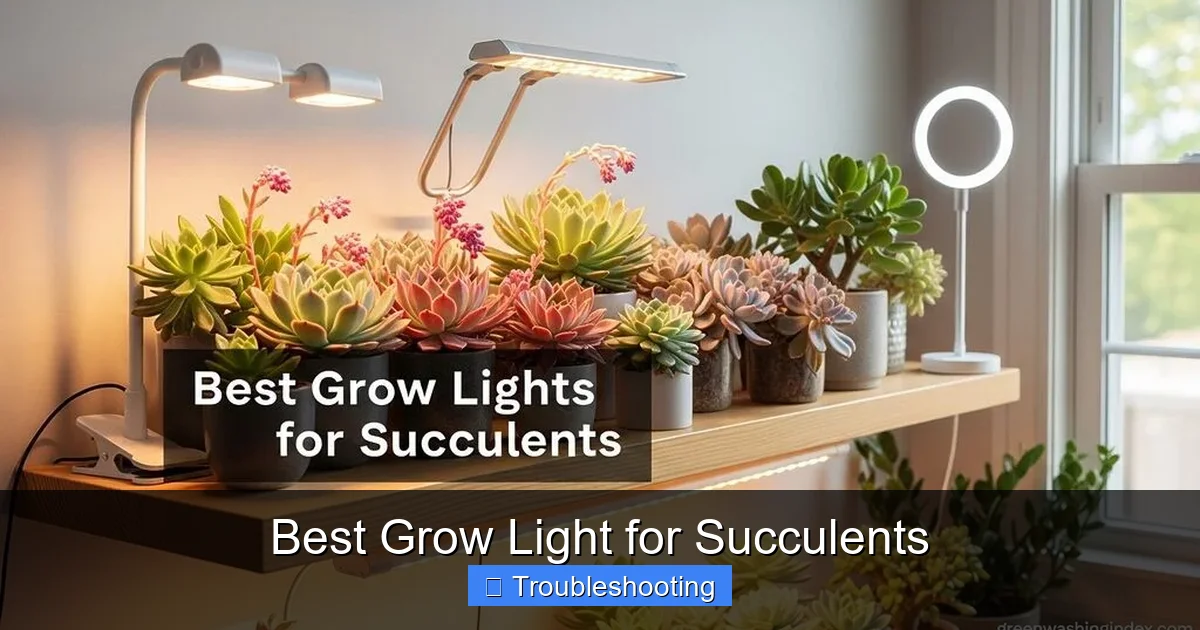
Best Grow Light for Succulents
Finding the best grow light for succulents doesn’t have to be complicated. This guide breaks down everything you need to know about light spectrum, intensity, and duration to keep your indoor succulents thriving year-round.
Key Takeaways
- Full-spectrum LED lights are ideal: They mimic natural sunlight and provide the red and blue wavelengths succulents need for photosynthesis and compact growth.
- Light intensity matters more than wattage: Look for PPFD values between 100-300 µmol/m²/s for most succulents, with higher needs for light-hungry varieties like echeveria.
- Duration should mimic seasonal changes: Provide 12-14 hours of light daily during growing season, reducing to 8-10 hours in winter dormancy periods.
- Distance affects light intensity dramatically: Keep lights 6-12 inches above plants, adjusting based on heat output and plant response to prevent etiolation or burning.
- Color temperature between 5000K-6500K works best: This cool white range promotes tight, colorful rosettes rather than stretched, pale growth.
- Timer automation prevents human error: Consistent light cycles are crucial for succulent health, and affordable timers eliminate missed or extended lighting periods.
- Watch your plants for feedback: Compact growth with vibrant colors means perfect lighting; stretching means too little; bleaching or brown tips mean too much.
Quick Answers to Common Questions
How many hours of grow light do succulents need daily?
Most succulents need 12-14 hours of grow light daily during active growth (spring/summer) and 8-10 hours during winter dormancy. Consistency is key — use a timer to maintain exact schedules.
What color temperature is best for succulent grow lights?
5000K-6500K (cool white/daylight spectrum) is ideal for succulents. This range provides strong blue wavelengths that promote compact rosette growth and vibrant colors, preventing etiolation.
How far should grow lights be from succulents?
Start with 12-18 inches for high-power panels (100W+), 8-12 inches for mid-power panels, 6-10 inches for bulbs/strips (20-40W), and 4-8 inches for clip lights. Adjust based on plant response — stretching means too far, burning means too close.
Can I use regular LED bulbs instead of grow lights for succulents?
Regular household LEDs (typically 2700K-3000K, 800 lumens) lack the intensity and proper spectrum for most succulents. They may sustain low-light varieties like haworthia but will cause stretching in echeveria, sedum, and other high-light succulents.
Do succulents need a dark period or can I leave grow lights on 24/7?
Succulents absolutely need a dark period. Continuous light causes oxidative stress and disrupts essential metabolic processes like respiration. Always provide 10-16 hours of darkness depending on the season.
📑 Table of Contents
- Why Your Succulents Are Begging for Better Light
- Understanding What Succulents Actually Need
- Types of Grow Lights: Which One Wins?
- Top Grow Light Recommendations by Setup
- Setting Up Your Grow Light System
- Troubleshooting Common Grow Light Problems
- Advanced Tips for Serious Growers
- Seasonal Adjustments: Working With Nature
- Common Myths Busted
- Building Your First Setup: A Step-by-Step Plan
- Conclusion: Your Succulents Will Thank You
Why Your Succulents Are Begging for Better Light
Let me paint a picture. You bring home a gorgeous echeveria with tight, colorful rosettes. Three weeks later, it looks like a completely different plant. The stem stretches tall and weak. The leaves space out. The vibrant colors fade to pale green. Sound familiar?
This is etiolation, and it happens when succulents don’t get enough light. They literally stretch toward any available light source, sacrificing their compact beauty for survival. The good news? You can fix this completely with the right grow light setup. I’ve helped hundreds of plant parents transform their stretched succulents back into the showstoppers they were meant to be.
In this guide, we’ll walk through everything you need to know about choosing, setting up, and using the best grow light for succulents. No jargon overload. Just practical advice that works.
Understanding What Succulents Actually Need
The Science Made Simple
Succulents evolved in harsh, sunny environments. Their thick leaves store water. Their compact shapes minimize surface area. Their colorful pigments act like sunscreen. Everything about them screams “I need intense light.”
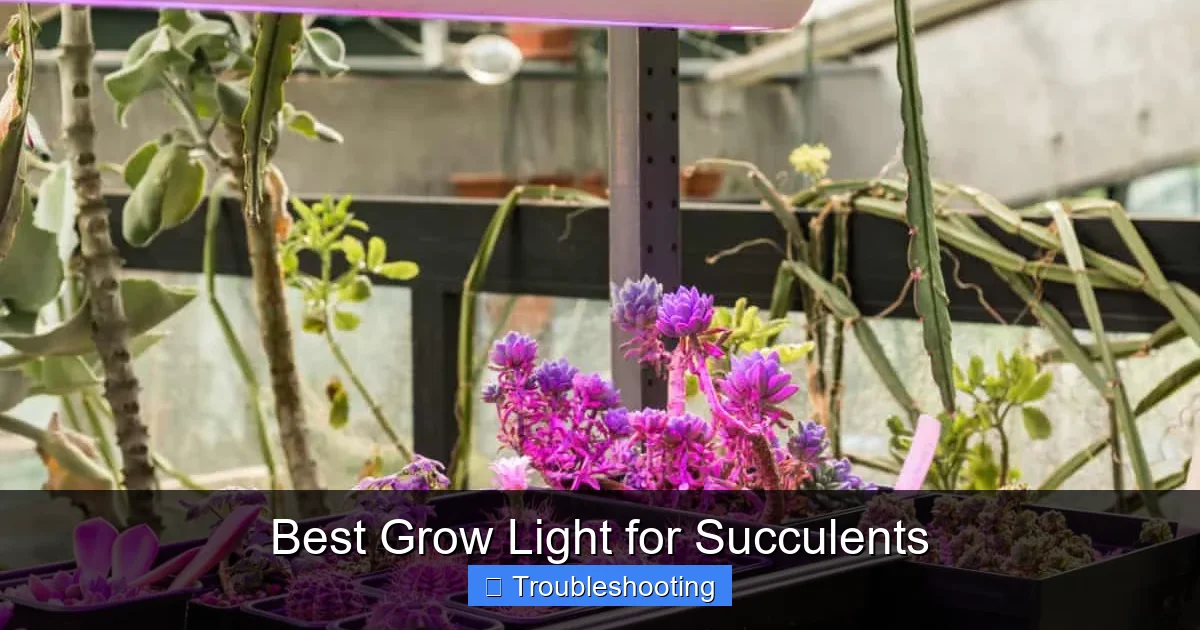
Visual guide about Best Grow Light for Succulents
Image source: sublimesucculents.com
But here’s what gets confusing. Not all light is created equal. Plants use specific wavelengths for photosynthesis. Blue light (400-500nm) promotes compact, sturdy growth. Red light (600-700nm) drives flowering and stem development. Green light? Plants reflect most of it, which is why they look green to us.
The best grow light for succulents delivers strong output in both blue and red ranges. Full-spectrum white LEDs do this beautifully because they contain all wavelengths, just like sunlight.
Light Intensity: The Real Game Changer
Here’s where most people go wrong. They buy a “grow light” based on wattage. But wattage tells you energy consumption, not light output. What matters is PPFD — Photosynthetic Photon Flux Density. This measures how many usable light particles actually hit your plant’s leaves each second.
For succulents, you generally want:
- Low-light succulents (haworthia, gasteria): 50-150 µmol/m²/s
- Medium-light succulents (jade, aloe): 150-250 µmol/m²/s
- High-light succulents (echeveria, sedum, sempervivum): 250-400 µmol/m²/s
Most quality LED grow lights list PPFD values at specific distances. If they don’t, that’s a red flag.
Color Temperature: What Those K Numbers Mean
You’ll see ratings like 3000K, 4000K, 5000K, 6500K on grow lights. This describes the “color” of white light. Lower numbers are warmer (more red/yellow). Higher numbers are cooler (more blue).
For succulents, aim for 5000K-6500K. This “cool white” or “daylight” spectrum keeps growth tight and colors vibrant. Warmer lights (3000K-4000K) can encourage stretching. They’re better for flowering plants, not foliage-focused succulents.
Types of Grow Lights: Which One Wins?
LED Grow Lights: The Clear Winner
If you’re buying a grow light today, LED should be your default choice. Here’s why they dominate:
- Energy efficient — use 40-50% less electricity than fluorescent
- Run cool — minimal heat damage risk to tender leaves
- Long lifespan — 50,000+ hours means years of daily use
- Customizable spectrum — manufacturers can tune diodes for plants
- Compact — fit in tight spaces, under shelves, on windowsills
Within LEDs, you have two main styles: panels and bulbs. Panels cover more area. Bulbs screw into standard fixtures. Both work. Your space dictates the choice.
Full-Spectrum White LEDs vs. “Blurple” LEDs
You’ll see two LED types. “Blurple” lights use separate red and blue diodes, creating a purple glow. Full-spectrum white LEDs blend many diodes to create natural-looking white light.
For home growers, I strongly recommend full-spectrum white. Blurple lights make it hard to assess plant health — you can’t see true leaf colors, pest damage, or early stress signs. White light lets you monitor plants normally. Plus, they look better in living spaces.
Fluorescent Lights: Still Viable for Some
T5 HO (High Output) fluorescent tubes were the gold standard before LEDs. They still work well for succulents. Pros: lower upfront cost, good spectrum options, proven track record. Cons: run hotter, use more electricity, bulbs degrade faster (replace yearly), contain mercury.
If you already have a T5 setup, keep using it. But for new purchases? LED wins on almost every metric.
HID and Other Options: Skip These
Metal Halide (MH) and High Pressure Sodium (HPS) lights are overkill for succulents. They’re designed for large-scale commercial grows. They run extremely hot, use massive electricity, and require ballasts and ventilation. Not worth it for a shelf of echeverias.
Top Grow Light Recommendations by Setup
Best Overall: Spider Farmer SF-1000
This 100-watt full-spectrum LED panel covers a 2×2 foot area beautifully. Samsung LM301B diodes. Mean Well driver. Dimmable. Passive cooling (no fan noise). At 12 inches, it delivers ~300 µmol/m²/s — perfect for high-light succulents. Price sits around $150, but the efficiency pays back in electricity savings.
I’ve run these for three years straight. Zero diode failures. The dimmer lets you start seedlings low and crank up for mature plants.
Best Budget Panel: Viparspectra P1000
Similar specs to the Spider Farmer at a lower price point (~$100). Slightly less efficient diodes, but still Samsung LM281B. Good coverage for 2×2 feet. Dimmable. Solid choice if budget is tight. The spectrum leans a touch warmer (4000K) but still grows great succulents.
Best Bulb Option: Sansi 36W LED Grow Light Bulb
Screws into any E26 socket. 36 actual watts. Full-spectrum 4000K. At 12 inches, delivers ~200 µmol/m²/s — enough for most succulents. Ceramic heat sink keeps it cool. $30-40 each. Perfect for a single shelf or a few pots on a desk.
Pro tip: Buy two and put them in a dual-bulb clamp fixture for double coverage.
Best for Shelves: Barrina T5 LED Grow Light Strips
These 4-foot strips link together (up to 6 in a chain). 4000K full spectrum. Each 20W strip covers about 2×4 feet at 6-8 inch height. Mount under shelves with included clips or magnets. $100 for a 6-pack covers a massive shelf unit. Great for the “IKEA greenhouse cabinet” crowd.
Best Clip Light: GooingTop LED Grow Light
Dual flexible goosenecks with 6000K LEDs. Clip base. Timer built in (4/8/12 hour settings). 30W total. Covers a small area well — maybe 12×12 inches per head. $35-40. Ideal for a windowsill or a few pots on a side table. The built-in timer is surprisingly reliable.
Setting Up Your Grow Light System
Distance: The Goldilocks Zone
Distance is everything. Too close = heat stress and light burn. Too far = stretching. Start with these guidelines and adjust based on plant response:
- High-power panels (100W+): 12-18 inches
- Mid-power panels (50-100W): 8-12 inches
- Bulbs and strips (20-40W): 6-10 inches
- Clip lights (10-20W): 4-8 inches
Watch your plants daily for the first two weeks. Signs you’re too close: brown crispy leaf tips, bleached patches, leaves curling inward. Signs you’re too far: stretching, pale color, wide leaf spacing. Adjust in 2-inch increments.
Duration: Mimic the Seasons
Succulents need a daily light/dark cycle. They also need seasonal cues. Here’s a simple schedule:
- Spring/Summer (active growth): 12-14 hours on, 10-12 hours off
- Fall (transition): 10-12 hours on, 12-14 hours off
- Winter (dormancy for most): 8-10 hours on, 14-16 hours off
Some winter-growing succulents (like certain aeoniums and senecios) want more winter light. Research your specific varieties.
Timers: Set It and Forget It
Don’t rely on memory. A $10 mechanical timer or $15 digital timer plugs into the wall, your light plugs into it. Done. Consistency prevents stress. Plants measure night length precisely — even 30 minutes off schedule can confuse them.
If your light has a built-in timer (like the GooingTop), use it. Just verify it keeps accurate time.
Airflow: The Forgotten Factor
Grow lights create heat. Even LEDs. Stagnant air + heat + humidity = fungal problems. Add a small clip fan ($15) to circulate air across your plants. Run it 24/7 or on the same timer as lights. Gentle breeze strengthens stems and prevents rot.
Troubleshooting Common Grow Light Problems
Problem: Plants Still Stretching
Check these in order:
- Distance — lower the light 2 inches
- Duration — add 1-2 hours daily
- Spectrum — verify 5000K+ color temperature
- Coverage — are edge plants getting enough? Add a second light
- Variety — some succulents (sedum morganianum) naturally trail
Give changes 2-3 weeks before assessing. Succulents respond slowly.
Problem: Bleached or Burned Leaves
Classic light stress. Raise the light immediately. Increase distance by 4-6 inches. Reduce duration by 2 hours. Damaged leaves won’t recover, but new growth will be normal. Remove severely damaged leaves if they’re mushy (rot risk).
Problem: Uneven Growth
Plants lean toward the light center. Rotate pots 180 degrees weekly. Or add supplemental side lighting. For shelves, ensure strips run the full shelf length. Dark corners = stretched plants.
Problem: Algae or Mold on Soil
Too much moisture + light = algae. Let soil dry completely between waterings. Top-dress with grit or pebbles. Increase airflow. The light isn’t the problem — the watering is.
Problem: High Electricity Bills
LEDs are efficient, but 24/7 operation adds up. Calculate: Watts × Hours ÷ 1000 × $/kWh = daily cost. A 100W light at 14 hours/day at $0.15/kWh = $0.21/day or ~$6/month. Use dimmers. Reduce winter hours. The cost is usually minimal.
Advanced Tips for Serious Growers
Light Meters: Worth the Investment?
A $30-50 PAR meter (like the Apogee MQ-500 or cheaper Dr. Meter models) measures actual PPFD. Invaluable for dialing in distance. You’ll know exactly what your plants receive. Not essential for beginners, but game-changing for optimizing.
Supplemental UV for Color
Some high-end LEDs include UV diodes (365-395nm). UV stress triggers anthocyanin production — those gorgeous reds, purples, and blues in echeveria and graptopetalum. A little UV (supplemental, not primary) can intensify colors. Don’t overdo it — too much damages DNA.
Far Red for Flowering
Far red (700-750nm) triggers flowering responses. Some succulents bloom better with far red exposure. Not necessary for foliage growth, but fun if you want flowers.
DIY Light Movers
Commercial light movers slowly slide lights along rails, mimicking sun movement. Covers more area with one light. Reduces hot spots. DIY versions use garage door tracks and slow motors. Advanced project, but effective for large setups.
Seasonal Adjustments: Working With Nature
Spring Wake-Up
As days lengthen naturally, increase artificial light by 30 minutes weekly until you hit 14 hours. Resume fertilizing at quarter strength. Watch for new growth — that’s your signal the plant is active.
Summer Peak
Maximum light. 14 hours if using artificial only. If supplementing window light, you may need less artificial time. Monitor temperatures — lights + summer heat can cook plants. Increase airflow.
Fall Transition
Reduce by 30 minutes weekly. Stop fertilizing. This signals dormancy preparation. Some succulents color up beautifully in fall with cooler nights and shorter days.
Winter Rest
Most succulents want 8-10 hours light, cooler temps (50-60°F ideal), minimal water. This rest period is crucial for spring flowering and strong growth. Don’t skip it. If you must grow year-round (no cool space), keep light at 12 hours but accept weaker growth.
Common Myths Busted
Myth: “Regular LED Bulbs Work Fine”
Household LEDs (2700K-3000K, 800 lumens) lack intensity and proper spectrum. They’ll keep a haworthia alive. They’ll stretch an echeveria into a noodle. Grow lights exist for a reason.
Myth: “More Watts = Better Growth”
A 100W cheap LED with poor diodes delivers less usable light than a 60W quality LED with Samsung diodes. Compare PPFD, not watts.
Myth: “Succulents Need 24/7 Light”
Plants need dark periods for respiration and metabolic processes. Continuous light causes oxidative stress. Always provide a night cycle.
Myth: “Window Light Is Enough”
For most indoor locations, window light provides 10-25% of outdoor intensity. Glass blocks UV. Winter days are short. A south-facing window might work for low-light succulents in summer. That’s it.
Myth: “All Succulents Need the Same Light”
Haworthia thrives in bright shade. Lithops need blasting sun. Treat them the same, and one will suffer. Group by light needs.
Building Your First Setup: A Step-by-Step Plan
Step 1: Assess Your Space
Measure your growing area. Count plants. Note outlet locations. Decide: shelf? table? windowsill supplement? This determines light type.
Step 2: Choose Your Light
Match light to space:
- Single shelf (2×4 ft): Barrina strips or 2x Sansi bulbs
- Small tent or rack (2×2 ft): Spider Farmer SF-1000 or Viparspectra P1000
- Windowsill boost: GooingTop clip light
- Desk or side table: Single Sansi bulb in clamp fixture
Step 3: Add Essentials
- Timer (mechanical or digital)
- Small clip fan
- Power strip with surge protection
- Light hangers or mounting hardware
Step 4: Set Up and Test
Hang light at recommended starting distance. Plug into timer. Set 12-hour cycle. Turn on. Check for hot spots (hand test at plant level). Adjust.
Step 5: Monitor and Document
Take a “day 0” photo. Weekly photos for 8 weeks. Note watering, distance changes, observations. This creates your personal reference guide.
Conclusion: Your Succulents Will Thank You
Here’s the truth. The best grow light for succulents isn’t a single product. It’s the one that matches your space, budget, and plant collection — and that you actually use consistently.
Start simple. A quality full-spectrum LED, a timer, and a fan. Watch your plants. They’ll tell you everything you need to know. Compact growth, vibrant colors, maybe even flowers — that’s the feedback loop of success.
I’ve seen windowsill collections transform into Instagram-worthy displays within a single growing season. The investment pays off in plant health, propagation success, and the pure joy of seeing your succulents look the way nature intended.
Your stretched echeveria? Give it two months under proper light. You won’t recognize it. And that’s the best feeling in plant parenthood.
Ready to start? Pick your light. Set it up tomorrow. Your succulents have been waiting.
Frequently Asked Questions
What is the best grow light for succulents on a budget?
The Sansi 36W LED grow light bulb offers exceptional value at $30-40. It screws into any standard fixture, delivers full-spectrum 4000K light at ~200 µmol/m²/s from 12 inches, and covers a 12×12 inch area well. For shelf setups, the Barrina T5 LED strips (6-pack for ~$100) provide massive coverage per dollar.
How do I know if my succulent is getting too much light?
Signs of excessive light include bleached or whitish patches on leaves, brown crispy leaf tips, leaves curling inward or closing up tightly, and reddish-purple stress colors that look washed out rather than vibrant. If you see these, raise the light 4-6 inches immediately and reduce daily duration by 2 hours.
Can grow lights burn succulents?
Yes, grow lights can burn succulents if placed too close or run too long. Even cool-running LEDs produce some heat, and intense light alone can cause photobleaching. Always start at the recommended distance for your light type and monitor plants daily for the first two weeks. Brown crispy patches that don’t wipe off indicate light burn.
Should I use different grow lights for different succulent types?
Ideally, yes. Group high-light succulents (echeveria, sedum, sempervivum, graptopetalum) under your most intense lights at closer distances. Low-light varieties (haworthia, gasteria, sansevieria) can sit at the edges or under lower-intensity lights. If you only have one light, position high-light plants in the center (brightest spot) and low-light plants at the perimeter.
How long does it take for a stretched succulent to recover under grow lights?
Existing stretched growth will not revert — those elongated stems and spaced leaves are permanent. However, new growth from the center will be compact and colorful within 2-4 weeks of proper lighting. For rosette succulents, you can behead the stretched plant, let the cutting callus, and re-root it for a fresh start. The old base often produces compact offsets too.
Do I need a PAR meter to set up my grow lights correctly?
A PAR meter ($30-50 for basic models) is helpful but not essential for beginners. You can successfully dial in light distance by observing plant response: compact growth with good color = correct distance; stretching = too far; bleaching/burning = too close. A meter becomes valuable when optimizing multiple shelves, comparing lights, or growing commercially.