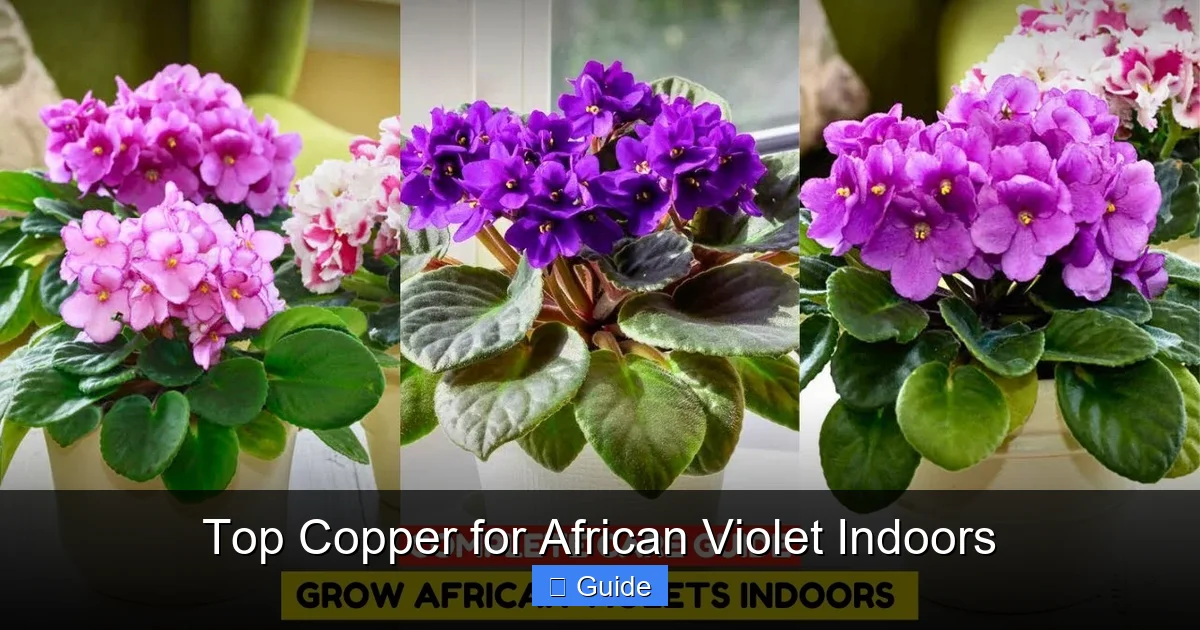
Top Copper for African Violet Indoors
Choosing the right copper supplement can transform your African violet’s health and flowering. The top copper for african violet indoors delivers a balanced chelated form that the plant absorbs quickly. Follow the dosage tips in this guide to avoid toxicity and enjoy vibrant blooms all year.
African violets bring color to any windowsill, but they can be picky about micronutrients. Copper is one of those hidden helpers that keeps leaves green and flowers coming. When you understand why copper matters, you can pick the right product and apply it with confidence.
Many growers notice pale new leaves or weak stems before they realize a copper shortage is the cause. A small, regular dose of the top copper for african violet indoors solves the problem without risking toxicity. This guide walks you through every step, from choosing a form to tracking results.
You do not need a chemistry degree to succeed. Simple language, clear tables, and practical tips make the process easy. By the end you will know exactly which product to buy, how much to use, and when to apply it for the best blooms all year.
Key Takeaways
- Copper is essential: It activates enzymes that drive photosynthesis and bloom formation.
- Choose chelated copper: Chelated forms stay soluble and are gentle on delicate roots.
- Read the label carefully: Look for the exact copper concentration and the chelating agent used.
- Apply at the right rate: Too much copper causes leaf burn; too little shows no effect.
- Match the method to your setup: Soil drench works for potted plants; foliar spray gives a quick boost.
- Monitor and adjust: Track leaf color, growth speed, and flowering cycles each month.
- Combine with balanced fertilizer: Copper works best when nitrogen, phosphorus, and potassium are also adequate.
Quick Answers to Common Questions
What is the best copper form for African violets indoors?
A chelated copper such as EDTA or DTPA works best because it stays soluble and gentle on roots.
How often should I apply copper to my African violets?
Apply once every four weeks during active growth and once every eight weeks in winter.
Can I use copper sulfate on my indoor violets?
Only if you monitor pH closely; otherwise chelated copper is safer and more reliable.
What are the signs of copper toxicity?
Leaf tip burn, dark brown spots, and stunted new growth indicate too much copper.
Do I need to flush the pot after copper applications?
Yes, a monthly flush with plain water removes excess salts and prevents buildup.
📑 Table of Contents
- Why Copper Matters for African Violets Indoors
- Understanding Copper Forms: Chelated vs. Sulfate vs. Oxide
- How to Choose the Top Copper for African Violet Indoors
- Application Methods and Dosage Guidelines
- Common Mistakes and How to Avoid Them
- Long‑Term Care, Monitoring, and Advanced Tips
- Final Thoughts on the Top Copper for African Violet Indoors
Why Copper Matters for African Violets Indoors
The Role of Copper in Plant Metabolism
Copper activates several enzymes that drive photosynthesis and respiration. It also helps the plant build lignin, which strengthens stems and leaf veins. Without enough copper, the plant cannot move energy efficiently, and growth slows down.
Enzymes such as polyphenol oxidase and cytochrome c oxidase rely on copper ions. When these enzymes work well, the plant converts light into sugars faster. The top copper for african violet indoors supplies a steady stream of copper that keeps these pathways open.
Visual Symptoms of Copper Deficiency
Look for young leaves that turn yellow between the veins while the veins stay green. Stems may become brittle, and flower buds can abort before opening. If you see these symptoms, a copper boost is likely needed.
Deficiency often appears first on the newest growth because copper is not mobile in the plant. Older leaves stay green while the tip of the plant shows the tell‑tale interveinal chlorosis. Early detection prevents long‑term stunting.
How Copper Influences Flower Production
When copper levels are optimal, African violets produce larger, more vibrant blooms. Leaves stay deep green, and the plant resists fungal attacks better. The top copper for african violet indoors delivers a steady supply that supports these benefits throughout the growing season.
Copper participates in the synthesis of ethylene, a hormone that triggers flower opening. Adequate copper means more buds reach full bloom and stay open longer. Growers who supplement correctly report a noticeable increase in flower count.
Long‑Term Effects of Chronic Low Copper
Chronic low copper weakens the plant’s immune system, making it prone to root rot and leaf spot diseases. Over months the crown can become thin, and the plant may never regain its former vigor. Regular, low‑dose supplementation prevents this decline.
A simple monthly regimen with the top copper for african violet indoors keeps the micronutrient pool stable. Consistency is more effective than a single heavy dose that can cause toxicity.
Understanding Copper Forms: Chelated vs. Sulfate vs. Oxide
Chelated Copper – Why It Stays Soluble
Chelated copper binds the metal to an organic molecule, keeping it soluble in water across a wide pH range. This form is gentle on roots and is absorbed quickly. Most indoor growers prefer chelated products because they reduce the risk of leaf burn.

Visual guide about Top Copper for African Violet Indoors
Image source: cdn.mos.cms.futurecdn.net
The chelate acts like a protective shield, releasing copper only when the plant’s root exudates ask for it. This controlled release matches the plant’s uptake rhythm and minimizes waste.
Copper Sulfate – Pros and Cons for Indoor Use
Copper sulfate is inexpensive and widely available. It dissolves easily but can become toxic if the soil pH drops below 5.5. For African violets, which like slightly acidic media, sulfate can work if you monitor pH closely.
Because sulfate releases free copper ions quickly, any pH fluctuation can spike the concentration. Growers who use a reliable pH meter and adjust the mix can use sulfate safely, but it demands more attention.
Copper Oxide – Slow Release Characteristics
Copper oxide is a slow‑release solid that breaks down over months. It is less likely to cause sudden spikes, but the release rate can be unpredictable indoors. It is usually reserved for outdoor beds rather than pots.
In a container the limited moisture and temperature variation slow the breakdown even further. The result is often an insufficient supply during the active growth window.
Choosing the Right Form for Your Setup
For most indoor collections, a chelated copper product labeled for houseplants gives the most consistent results. The top copper for african violet indoors typically uses EDTA or DTPA chelation, ensuring the nutrient stays available in the potting mix.
If you already own a high‑quality pH meter and enjoy fine‑tuning, copper sulfate can be a cost‑effective alternative. Just remember to test the medium before each application.
How to Choose the Top Copper for African Violet Indoors
Reading the Guaranteed Analysis
Check the guaranteed analysis for copper percentage. A typical indoor formula contains 0.5 % to 1 % copper by weight. Avoid products that list only “copper” without a chelation statement.
The analysis also shows the chelating agent. Knowing whether it is EDTA, DTPA, or EDDHA helps you predict stability at your potting mix pH.
Evaluating Chelation Agents (EDTA, DTPA, EDDHA)
EDTA chelation works well up to pH 6.5, while DTPA remains stable up to pH 7.5. Since African violet media often sits around pH 6.0, either chelate is fine, but DTPA offers a safety margin.
EDDHA is the most stable across a very wide pH range but is usually more expensive. For most hobbyists, DTPA provides the best balance of performance and price.
Concentration, Cost, and Value Calculations
Higher concentration means you use less product per gallon, which can save money over time. Compare cost per milligram of actual copper to find the best value.
A 1 % copper chelate at $15 for 250 mL delivers 2.5 g of copper. A 0.5 % product at $10 for the same volume delivers only 1.25 g. The higher‑concentrate option often wins on a per‑gram basis.
Third‑Party Testing and Brand Reputation
Reputable brands provide a certificate of analysis from an independent lab. This confirms the copper content and verifies that no harmful contaminants are present.
Look for seals from organizations such as the Association of Official Agricultural Chemists. A trusted brand reduces the risk of buying a mislabeled or diluted product.
Packaging and Shelf Life Considerations
Chelated copper solutions can degrade if exposed to light and heat. Choose opaque bottles with tight caps and store them in a cool, dark cabinet.
Check the expiration date. A fresh product guarantees the labeled concentration; an old bottle may have lost potency, leading to under‑dosing.
Application Methods and Dosage Guidelines
Soil Drench Technique Step‑by‑Step
Mix the recommended amount of chelated copper into a gallon of lukewarm water. Water each pot until the solution drains from the bottom. This method distributes copper evenly through the root zone.
Use a watering can with a fine rose to avoid splashing leaves. Allow the pot to sit for a few minutes so the medium fully absorbs the solution.
Foliar Spray Technique for Quick Uptake
For a quick green‑up, dissolve a half‑strength dose in a spray bottle and mist the leaves early in the morning. Avoid spraying flowers directly to prevent spotting.
Foliar absorption bypasses the root system, delivering copper to the chlorophyll‑producing tissues within hours. Repeat only once per month to avoid buildup on leaf surfaces.
Timing – Growth Phase vs. Rest Phase
Apply copper once every four weeks during active growth (spring through early autumn). Reduce to once every eight weeks in winter when the plant rests.
During the rest phase the plant’s metabolic demand drops, so a lower frequency prevents unnecessary accumulation.
Measuring Tools and Avoiding Overdose
Use a calibrated syringe or a small measuring cup. Even a slight overdose can cause leaf tip burn, so precision matters.
Mark the syringe with the exact volume for your pot size. Consistency eliminates guesswork and keeps the copper level stable.
Flushing Schedule to Prevent Salt Build‑Up
Once a month, run plain water through the pot until it drains freely. This flush removes excess salts from fertilizer and copper, protecting root health.
A thorough flush also resets the medium’s EC (electrical conductivity), giving you a clean baseline for the next feeding cycle.
Common Mistakes and How to Avoid Them
Over‑Applying Copper and Toxicity Signs
More is not better. Excess copper accumulates in the medium and can lock out iron and zinc. Stick to the label rate and flush the pot with plain water once a month.
Toxicity shows as dark brown leaf tips, curled margins, and a sudden slowdown in new growth. If you see these signs, stop copper applications and flush heavily for two weeks.
Using the Wrong Form for Your pH
Applying copper sulfate in a low‑pH mix can release free copper ions that damage roots. Choose a chelated product unless you have a reliable pH meter and can adjust the medium.
Test the potting mix before each feeding. If the pH is below 5.5, raise it with a small amount of dolomite lime before adding sulfate.
Ignoring pH Drift in the Potting Mix
Copper availability drops sharply above pH 7.0. Test your potting mix every few weeks and amend with a little sulfur or peat if the pH climbs.
A simple handheld pH meter costs under $20 and pays for itself by preventing nutrient lockout.
Skipping Regular Flushes
Salts from fertilizer and copper builds up over time. A thorough flush with clear water removes excess salts and restores a healthy root environment.
Without flushing, the EC can rise to levels that inhibit water uptake, leading to wilting even when the medium is moist.
Mixing Copper with Incompatible Fertilizers
Some high‑phosphate fertilizers can precipitate copper, making it unavailable. Apply copper separately or use a fertilizer labeled as compatible with micronutrient chelates.
Read the fertilizer label for “micronutrient compatible” statements. When in doubt, space the applications by at least 24 hours.
Long‑Term Care, Monitoring, and Advanced Tips
Tracking Leaf Color, Growth Rate, and Bloom Count
Take a photo of each plant every month. Compare the hue of new leaves to older ones. A steady deep‑green color signals that copper levels are adequate.
Record the number of open flowers per plant. A rising trend confirms that your copper regimen supports reproductive development.
Seasonal Adjustments to Copper Feeding
Increase the copper dose slightly when you see a surge of new growth in spring. Cut back in late autumn as the plant prepares for a rest period.
Seasonal tweaks keep the micronutrient supply in sync with the plant’s metabolic calendar, avoiding both deficiency and excess.
Combining Copper with a Complete Fertilizer Program
Use a complete 20‑20‑20 fertilizer at half strength alongside your copper regimen. Balanced nutrition prevents secondary deficiencies that mimic copper problems.
When nitrogen, phosphorus, and potassium are sufficient, the plant can fully utilize the copper you provide for enzyme activation.
Keeping a Simple Care Log for Year‑Over‑Year Insight
Write down the date, product name, amount used, and any observations. Over a year this log becomes a powerful tool for fine‑tuning your care routine.
A spreadsheet or notebook works equally well. The key is consistency; even a single line per feeding builds a valuable dataset.
Troubleshooting Unexpected Symptoms
If leaves develop interveinal chlorosis despite regular copper, check for iron or manganese deficiency first. These nutrients interact closely with copper in the plant’s enzyme systems.
Adjust the overall fertilizer mix before adding more copper. Often a balanced micronutrient blend resolves the issue faster than a single‑element boost.
Final Thoughts on the Top Copper for African Violet Indoors
Choosing the right copper supplement does not have to be a guessing game. By understanding the role of copper, selecting a chelated form, and following a clear schedule, you give your African violets the micronutrient they need for nonstop blooms. Remember to measure accurately, watch pH, and flush regularly. With a little consistency, the top copper for african violet indoors will become a reliable part of your indoor garden toolkit.
Start today by picking a reputable chelated product, mixing a first dose, and noting the results in your log. Your violets will thank you with richer color, stronger stems, and a parade of flowers that brighten every room.
Frequently Asked Questions
Is copper necessary for African violets year‑round?
Copper is essential during active growth; a reduced schedule in winter still supports root health.
Can I mix copper with my regular fertilizer?
Yes, but apply copper separately or at half strength to avoid nutrient interactions.
What chelation agent should I look for on the label?
EDTA or DTPA are the most common and effective for indoor pH ranges.
How do I test the pH of my potting mix?
Use a simple soil pH meter or a slurry test with distilled water and a pH strip.
Will copper help my violets bloom more?
Adequate copper supports enzyme function that drives flower formation, leading to more blooms.
Where can I buy a reliable top copper for african violet indoors?
Specialty garden centers, reputable online retailers, and hydroponic stores carry tested chelated copper products.