Hanging Vs Hanging for Thyme
Hanging thyme to dry is the most traditional preservation method, but not all hanging techniques work equally well. This guide compares bunch hanging versus screen hanging, identifies common problems like mold and flavor loss, and provides step-by-step solutions for perfectly dried thyme every time.
You’ve just harvested a beautiful bounty of thyme from your garden. The aromatic stems fill your basket, and now comes the critical question: how do you dry it without losing that incredible flavor? If you’ve ever ended up with moldy bunches, dusty leaves, or thyme that tastes like old hay, you’re not alone. The difference between okay dried thyme and exceptional dried thyme often comes down to one decision: how you hang it.
Most gardeners assume hanging thyme is straightforward—tie it up, hang it, wait. But after years of testing different methods, I’ve learned that “hanging vs hanging for thyme” isn’t a typo—it’s a genuine comparison between two distinct approaches that produce dramatically different results. Bunch hanging and screen hanging each have their place, and choosing the wrong one for your situation can ruin an entire harvest. Let me walk you through everything I wish I’d known when I started drying herbs.
Key Takeaways
- Bunch hanging works best for small harvests: Tie 5-10 stems together and hang upside down in a dark, ventilated space for 1-2 weeks.
- Screen hanging prevents mold on large batches: Spread stems single-layer on mesh screens for faster, more even drying with better airflow.
- Darkness preserves essential oils: Light degrades thymol and carvacrol, the compounds responsible for thyme’s flavor and medicinal properties.
- Humidity above 60% causes mold: Use a dehumidifier or fan in damp climates to maintain ideal drying conditions.
- Test dryness by crumbling: Properly dried thyme leaves crumble easily between fingers; stems should snap, not bend.
- Strip leaves after drying: Removing leaves before storage reduces bulk and prevents stem fragments in your cooking.
- Store in airtight containers away from heat: Glass jars in a cool cupboard keep dried thyme potent for 12-18 months.
Quick Answers to Common Questions
Can I hang thyme to dry in my kitchen?
Kitchens are poor drying locations due to fluctuating humidity from cooking, dishwashing, and appliances. Choose a spare room, closet, basement, or attic with stable conditions instead.
How do I know when hanging thyme is completely dry?
Leaves crumble easily between fingers and stems snap rather than bend. Test daily after the first week for bunches or third day for screens.
Should I wash thyme before hanging it to dry?
Avoid washing unless visibly dirty. Surface moisture adds days to drying time and increases mold risk. Shake gently to remove insects and debris instead.
Can I use a dehydrator instead of hanging thyme?
Yes, dehydrators at 95-105°F work well and are faster (4-8 hours). However, hanging preserves more volatile oils since there’s no forced heat. Use dehydrators only in high-humidity emergencies.
Why did my hung thyme turn brown?
Browning indicates light exposure, excessive heat, or oxidation. Move to a darker, cooler location immediately. Brown thyme is safe but has reduced flavor and medicinal potency.
📑 Table of Contents
- Understanding Why Hanging Method Matters
- Method One: Traditional Bunch Hanging
- Method Two: Screen Hanging (Flat Drying)
- Hybrid Approaches for the Best of Both Worlds
- Troubleshooting Common Hanging Problems
- Environmental Control: The Hidden Variable
- Harvest Timing: The Foundation of Quality
- Post-Drying: Stripping, Storing, and Using
- Variety-Specific Considerations
- Scaling Up: From Garden to Market
- Conclusion
Understanding Why Hanging Method Matters
Before we dive into the specifics, let’s talk about what actually happens when thyme dries. Thyme’s magic lives in its essential oils—primarily thymol and carvacrol. These volatile compounds give thyme its distinctive earthy, slightly minty flavor and its antimicrobial properties. They’re also incredibly fragile. Heat, light, oxygen, and moisture all degrade them at different rates.
When you hang thyme to dry, you’re essentially managing a race. You need moisture to leave the plant tissue before mold spores activate, but you also need to protect those precious oils from evaporating or oxidizing. The hanging method you choose determines airflow, light exposure, drying speed, and how much physical handling the leaves endure. Each factor shifts the outcome.
The Science of Moisture Migration
Fresh thyme stems contain roughly 70-80% water by weight. For safe storage, that needs to drop below 10%. As moisture migrates from the center of stems outward, it creates a microclimate around each leaf. In tight bunches, that microclimate becomes humid—perfect for mold. On screens, moisture escapes freely but oils can also evaporate faster if airflow is too aggressive.
Temperature plays a crucial role too. Ideal drying happens between 65-75°F (18-24°C). Above 85°F, you start losing volatile oils rapidly. Below 60°F, drying slows enough that mold gains a foothold. Your hanging setup needs to maintain this Goldilocks zone naturally or with minimal intervention.
Light: The Silent Flavor Killer
Here’s something many gardeners miss: light degrades thymol surprisingly fast. Even indirect sunlight through a window can reduce potency by 20-30% over a two-week drying period. That’s why the old herbalist’s rule—”dry in darkness, store in darkness”—holds true. Your hanging location matters as much as your hanging method.
Method One: Traditional Bunch Hanging
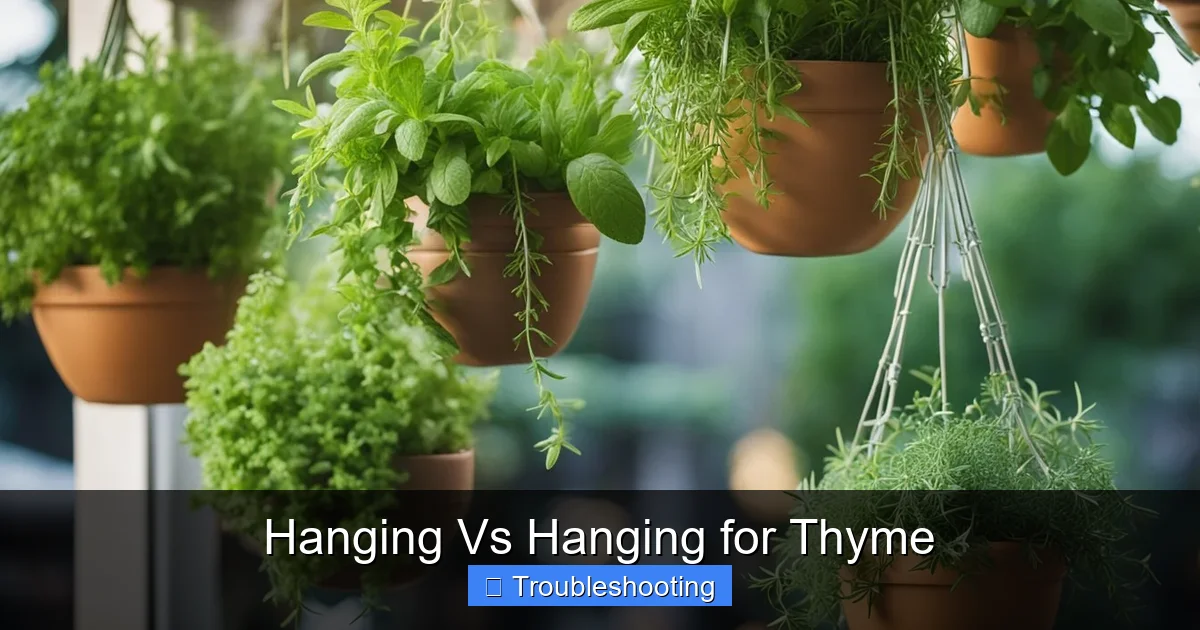
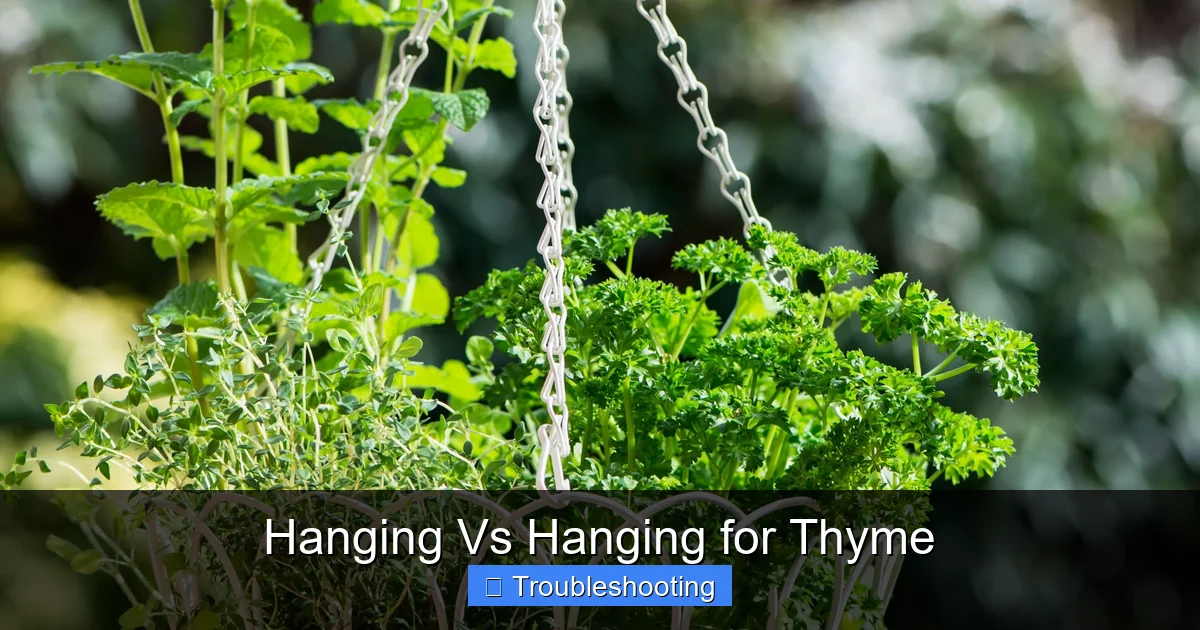
Bunch hanging is what most people picture when they think of drying herbs. You gather stems, bind them, and suspend them upside down. It’s romantic, space-efficient, and works beautifully—when conditions are right.
Visual guide about Hanging Vs Hanging for Thyme
Image source: backyardboss.net
How to Bunch Hang Properly
Start with clean, dry stems. Harvest in mid-morning after dew evaporates but before the day’s heat stresses the plants. Shake gently to dislodge insects. Don’t wash unless absolutely necessary—surface moisture adds days to drying time and invites mold.
Gather 5-10 stems per bunch. More than that creates a dense center that traps moisture. Fewer stems waste space and string. Secure stems with rubber bands rather than twine. Here’s why: as stems shrink during drying, twine loosens and bunches slip. Rubber bands contract with the stems, maintaining tension throughout the process.
Hang bunches upside down from hooks, nails, or a drying rack. Space them at least 4-6 inches apart for airflow. Choose a dark, well-ventilated room—an unused closet with the door cracked, a basement with a fan, or an attic with vents. Avoid kitchens and bathrooms where humidity fluctuates wildly.
When Bunch Hanging Shines
Bunch hanging excels for small to medium harvests (under 2 pounds fresh weight). It’s perfect for home gardeners with a few thyme plants. The method requires minimal equipment—just string and hooks. It also keeps leaves attached to stems, which some cooks prefer for bouquet garni or easy stripping later.
The upside-down orientation helps essential oils migrate toward the leaves rather than draining into cut stem ends. This theoretical advantage is debated among herbalists, but many swear by it for maximum flavor retention.
Common Bunch Hanging Problems
The biggest issue? Mold in the bunch center. Thick stems dry slower than leaves, creating a moisture gradient. The outer leaves crisp while inner stems stay damp. In humid climates, this almost guarantees mold unless you use a dehumidifier or fan.
Dust accumulation is another drawback. Hanging bunches act like dust magnets over 1-2 weeks. If your drying space isn’t pristine, you’ll be rinsing dried thyme—which rehydrates it and restarts the mold risk cycle.
Uneven drying occurs when bunches are too large or spaced too tightly. Stems touching each other create moisture bridges. Check bunches every few days and rotate if needed.
Method Two: Screen Hanging (Flat Drying)
Screen hanging—also called flat drying or rack drying—involves spreading individual stems or small sprigs in a single layer on mesh screens. Think of it as the commercial herb farm approach, scaled down for home use.
Setting Up Screen Drying
You need food-grade mesh screens. Window screen material works, but stainless steel or food-grade plastic mesh is better—no metal oxidation concerns. Frame screens in wood or use stackable commercial herb drying racks. Elevate screens on blocks or hang from chains for 360° airflow.
Strip large leaves from lower stems if they’re woody. Arrange thyme sprigs in a true single layer—no overlapping. This is non-negotiable. Overlapping creates the same moisture pockets as tight bunches. Process stems in batches if needed.
When Screen Hanging Wins
Screen hanging dominates for large harvests (over 2 pounds), humid climates, and when speed matters. Drying time drops to 3-7 days versus 10-14 for bunches. The dramatic airflow increase prevents mold even at 65-70% humidity.
It’s also superior for seed saving. Thyme flowers dry flat without shattering into bunch bindings. You can collect seeds by gently rubbing dried flower heads over a clean sheet.
Quality control is easier too. You see every sprig daily. Remove any questionable pieces immediately without disturbing the rest.
Screen Hanging Trade-offs
The downside? Space. A pound of fresh thyme needs roughly 4-6 square feet of screen space. Vertical stacking helps but requires careful rotation. Essential oil loss can be slightly higher with aggressive airflow—some studies show 5-10% more volatiles lost versus gentle bunch drying.
Leaves also detach more easily from stems during handling. If you want whole sprigs for presentation, bunch hanging preserves stem attachment better.
Hybrid Approaches for the Best of Both Worlds
After years of experimentation, I’ve settled on a hybrid method that captures the advantages of both techniques. It’s not complicated—just a thoughtful sequence.
The Two-Stage Method
Stage one: Bunch hang for 48-72 hours. This initial phase lets stems release bulk moisture slowly while oils migrate to leaves. The bunch structure supports itself—no screen space needed yet.
Stage two: Unbind bunches and spread sprigs on screens for final drying. At this point, stems are partially dry, mold risk drops dramatically, and airflow finishes the job fast. You get the oil-retention benefits of early bunch hanging with the safety and speed of screen finishing.
This approach works especially well in variable climates. If a humid spell hits during stage one, you can move to screens early. If it’s bone dry, extend bunch time for maximum oil retention.
Micro-Bunch Compromise
Another hybrid: tiny bunches of 3-4 stems, hung with extra spacing (8-12 inches). This reduces center density enough to prevent most mold while keeping leaves on stems. It’s a good middle ground if you lack screen space but have humidity concerns.
Troubleshooting Common Hanging Problems
Even with the right method, things go wrong. Here’s how to diagnose and fix the most frequent issues.
Problem: White Fuzzy Mold on Stems
Diagnosis: Botrytis or other fungal growth. Usually appears in bunch centers or where sprigs touch on screens.
Immediate action: Remove affected pieces. Don’t compost—burn or trash to prevent spore spread. Increase airflow immediately. Add a fan on low, not blowing directly on herbs but circulating room air.
Prevention: Smaller bunches, wider spacing, pre-drying with a fan for 24 hours before hanging. In humid seasons, skip bunch hanging entirely—go straight to screens with a dehumidifier.
Problem: Thyme Turns Brown or Black
Diagnosis: Oxidation or heat damage. Brown usually means too much light or heat. Black suggests fungal issues or freezing damage if harvested too late.
Fix: Move to darker, cooler location immediately. If only tips are brown, strip green leaves for use—discard discolored parts. Black stems mean the whole batch is compromised.
Problem: Leaves Fall Off During Drying
Diagnosis: Over-drying or rough handling. Some varieties (like creeping thyme) naturally shed more.
Fix: Check daily after day 5. When leaves crumble at touch, they’re done—don’t wait for stems. Strip leaves immediately and store. Loose leaves are fine for cooking; just label the jar “crumbled.”
Problem: Dust and Cobwebs
Diagnosis: Drying area isn’t clean enough for 2-week exposure.
Fix: Cover bunches loosely with paper bags (punched with holes) or cheesecloth. Not plastic—traps moisture. For screens, use a second screen on top as a dust barrier.
Problem: Uneven Drying—Some Crisp, Some Pliable
Diagnosis: Variable stem thickness or airflow shadows.
Fix: Sort by stem thickness before hanging. Thick woody stems take 2-3x longer than tender tips. Dry separately or strip thick-stem leaves for screen drying while bunch-hanging tender tops.
Environmental Control: The Hidden Variable
Your hanging method matters less than your environment. I’ve seen perfect bunch drying in an Arizona garage and failed screen drying in a Florida laundry room. Let’s optimize your space.
Measuring What Matters
Buy a $15 digital hygrometer/thermometer. Place it at herb level, not on the wall. Target: 40-55% relative humidity, 65-75°F. If humidity exceeds 60%, you need active intervention—dehumidifier, air conditioning, or heated drying.
Airflow Without Wind
Gentle air movement prevents boundary layer humidity around leaves. A small fan on lowest setting, aimed at a wall (not herbs), creates ideal circulation. Oscillating fans work well for screen setups. For bunches, ensure the room has cross-ventilation—crack two windows on opposite sides.
Darkness Solutions
If you lack a naturally dark space, create one. A cardboard box with ventilation holes works for screens. For bunches, hang inside a closet or drape dark fabric behind them. Blackout curtains over windows transform any room.
Harvest Timing: The Foundation of Quality
No hanging method compensates for poor harvest timing. This is where many gardeners unknowingly sabotage their results.
Optimal Harvest Window
Harvest thyme just as flower buds form but before they open. This is peak oil concentration. For most varieties, that’s late spring to early summer. Morning harvest (9-11 AM) captures oils after dew dries but before midday heat volatilizes them.
Cut stems 4-6 inches long, leaving 2-3 inches of growth for regrowth. Never harvest more than 1/3 of the plant at once. Stressed plants produce fewer oils.
Weather Watch
Check the forecast. Harvest after 2-3 dry days if possible. Rain-soaked plants have diluted oils and surface moisture that adds days to drying. If you must harvest damp, pat gently with towels and fan-dry 2 hours before hanging.
Post-Drying: Stripping, Storing, and Using
The hanging phase ends, but your decisions still affect final quality.
The Crumble Test
Properly dried thyme passes the crumble test: leaves disintegrate between thumb and forefinger. Stems snap cleanly, not bend. If stems bend, dry longer. Test daily after day 7 (bunches) or day 3 (screens).
To Strip or Not to Strip
Strip leaves from stems for storage. Stems add bulk without flavor and can puncture storage bags. Hold stem top, run fingers downward against leaf growth—leaves release cleanly. Discard woody stems or save for fire starters (they smell amazing burning).
Exception: Keep some whole sprigs if you make bouquet garni regularly. Store separately.
Storage Containers and Conditions
Glass jars with airtight lids are gold standard. Mason jars work perfectly. Fill to 3/4 capacity—headspace allows you to shake and redistribute, preventing compaction. Label with variety and date.
Store in a cool, dark cupboard. Not above the stove. Not near the dishwasher. Temperature stability matters—aim for 55-65°F. Light exposure during storage degrades oils just like during drying.
Shelf Life Reality Check
Properly dried and stored thyme maintains peak flavor 12-18 months. It’s safe indefinitely but loses potency. After a year, you’ll need 1.5x the recipe amount. After two years, 2x. Rotate stock—use oldest first.
Variety-Specific Considerations
Not all thyme dries the same. Understanding your variety prevents frustration.
Common Thyme (Thymus vulgaris)
The standard culinary thyme. Woody stems, small leaves. Dries beautifully both ways. Bunch hanging works well due to upright growth habit. High oil content forgives minor mistakes.
Lemon Thyme (Thymus citriodorus)
More delicate oils—citral degrades faster than thymol. Screen drying at lower temps (65°F max) preserves lemon notes. Bunch hanging risks losing the citrus top notes to oxidation.
Creeping Thymes (Thymus serpyllum, T. praecox)
Tiny leaves, very thin stems. Dry in 2-3 days on screens. Bunch hanging is frustrating—stems slip rubber bands, leaves shed. Harvest in small clumps, dry flat.
Woolly Thyme (Thymus pseudolanuginosus)
Fuzzy leaves trap moisture. Screen drying essential. Bunches mold reliably. Spread extra thin—single layer with gaps.
Scaling Up: From Garden to Market
If you’re drying for CSA shares, farmers markets, or value-added products, your hanging strategy shifts.
Batch Tracking
Label every batch with date, variety, field location, and weather notes. Use waterproof tags on bunches or screen sections. This traceability is required for commercial sales and invaluable for quality improvement.
Food Safety Compliance
Commercial drying requires documented HACCP plans. Key control points: harvest sanitation, drying temperature logs, final moisture verification (water activity meter), and packaging sanitation. Screen drying is preferred commercially—easier to monitor and document.
Efficiency Upgrades
Consider a dedicated drying room with dehumidifier, circulating fans, and tiered screen racks on wheels. A 10×10 foot room can process 50+ pounds weekly. Solar dehydrators work in arid climates but risk overheating in sun.
Conclusion
The debate between hanging methods for thyme isn’t about one being universally better—it’s about matching method to your specific situation. Bunch hanging offers simplicity, space efficiency, and excellent oil retention for small harvests in dry climates. Screen hanging provides speed, mold resistance, and scalability for larger harvests or humid conditions. The hybrid two-stage method captures the best of both.
What matters most isn’t the string or the screen—it’s your attention. Daily checks, environmental awareness, and willingness to adapt mid-process separate mediocre dried thyme from the jar you reach for first every time you cook. Your nose knows the difference. Trust it.
Start with one method this season. Take notes. Adjust next year. The thyme you dry yourself, imperfect as it may be, will always outshine the dusty bottle from the grocery store shelf. And that’s the real victory.
Frequently Asked Questions
What’s the ideal humidity for hanging thyme to dry?
Target 40-55% relative humidity for optimal thyme drying. Above 60%, mold risk increases significantly. Use a hygrometer to monitor conditions and add a dehumidifier or fan if humidity climbs too high.
How many thyme stems should I put in each bunch?
Bundle 5-10 stems per bunch for traditional hanging. More stems create dense centers that trap moisture and invite mold. Fewer stems waste hanging space. Secure with rubber bands that contract as stems shrink.
Can I hang thyme outside to dry?
Outdoor drying risks dew rehydration, dust contamination, insect damage, and UV degradation of essential oils. If you must dry outside, use a covered porch with screens, bring in at night, and expect 20-30% more oil loss.
Should I strip thyme leaves before or after hanging?
Strip leaves after drying, not before. Leaves on stems during drying protect oils and make handling easier. Once fully dry (leaves crumble, stems snap), strip by running fingers downward along stems.
How long does hung thyme take to dry completely?
Bunch hanging takes 10-14 days in ideal conditions. Screen hanging takes 3-7 days. The two-stage hybrid method takes 5-9 days total. Humidity, temperature, and stem thickness all affect exact timing.
Can I hang different herbs together with thyme?
Dry thyme separately from high-moisture herbs like basil, mint, or parsley. Their different drying rates and moisture release can compromise thyme quality. Woody herbs (rosemary, oregano, sage) can share space with thyme.