Galvanized Vs Galvanized for Hoya
Not all galvanized steel is created equal. When choosing supplies for your Hoya collection, the difference between hot-dip and electro-galvanized finishes impacts plant health, rust resistance, and longevity. This guide explains the critical distinctions so you can pick the best metal for your trellises and pots.
If you have spent any time shopping for Hoya supplies lately, you have probably seen the label “galvanized” stamped on everything from wire trellises to stylish metal planters. It sounds straightforward. Steel is dipped in zinc. It stops rust. Done. But then you start digging into the product descriptions. You see “hot-dip galvanized” on a heavy pipe trellis. You see “electro-galvanized” on a cheaper wire roll. You see “pre-galvanized” on a sheet metal planter box. Suddenly, the simple word “galvanized” feels like a trick question.
Welcome to the confusing world of galvanized vs galvanized for Hoya gardening. The title of this article isn’t a typo. It is a reflection of the real dilemma growers face. You are not comparing galvanized steel to plastic or terracotta. You are comparing different types of galvanizing against each other to see which one actually keeps your wax plants happy, healthy, and safe. The difference isn’t just marketing fluff. It changes how long your trellis lasts, whether your soil turns toxic, and if your beautiful Hoya carnosa or rare Hoya kentiana thrives or struggles. Let’s unpack the metal, the chemistry, and the practical reality so you can buy right the first time.
Key Takeaways
- Terminology matters: “Galvanized vs Galvanized” usually compares hot-dip galvanizing (thick, dull coating) against electro-galvanizing (thin, shiny coating).
- Zinc toxicity risk: Acidic Hoya soil mixes can leach zinc from thin coatings; hot-dip is generally safer for direct soil contact.
- Trellis durability: Hot-dip galvanized wire or pipe withstands outdoor elements and heavy Hoya vines far longer than electro-plated alternatives.
- Heat conductivity: Metal pots heat up fast; galvanized steel requires insulation or shade to protect sensitive Hoya roots.
- Drainage is non-negotiable: Drilling holes in galvanized containers requires touch-up paint to prevent rust at the exposed edge.
- Cost vs. lifespan: Electro-galvanized is cheaper upfront but fails faster; hot-dip is an investment that lasts decades.
- White rust warning: New galvanized items develop white powdery zinc carbonate; weather them or wash with vinegar before planting.
Quick Answers to Common Questions
Is galvanized steel safe for Hoya plants?
Yes, but with caveats. Hot-dip galvanized steel is safest for structural use. For direct planting, acidic Hoya mixes can leach zinc; use a plastic liner or cache pot to prevent soil contact with the metal.
What is the difference between hot-dip and electro-galvanized for trellises?
Hot-dip galvanizing creates a thick, metallurgically bonded coating (3-8 mils) lasting 20+ years. Electro-galvanizing applies a thin, shiny layer (0.2-0.5 mils) via electricity, lasting only 1-3 years in damp conditions.
Can I put my Hoya directly in a galvanized stock tank?
Only if you prepare it correctly. Drill massive drainage holes, coat the interior with food-safe epoxy or pond liner, add a gravel base, use a pH-buffered mix, and monitor soil pH. The cache pot method is safer and easier.
Why is my new galvanized trellis turning white and powdery?
That is “white rust” (zinc carbonate), a normal passivation layer on new zinc. Wash it with a 1:10 vinegar solution, scrub, rinse, and dry before use to stop the powder from washing into your potting mix.
Does the type of galvanizing matter for hanging Hoya baskets?
Absolutely. Use hot-dip galvanized or stainless steel chains and hooks. Electro-galvanized hardware rusts quickly under the dynamic load and moisture of a hanging basket, creating a safety hazard.
📑 Table of Contents
- What Does “Galvanized” Actually Mean for Plant Parents?
- Round One: Hot-Dip Galvanizing (HDG) – The Heavyweights
- Round Two: Electro-Galvanizing (EG) – The Lightweights
- Round Three: Pre-Galvanized / Continuous Galvanized – The Sheet Metal Middle Ground
- The Hoya Soil Factor: Chemistry Meets Metal
- Application Showdown: Trellises, Pots, and Hardware
- Heat Management: The Silent Killer in Metal Pots
- Drainage Drilling: Don’t Ruin the Coating
- Cost Analysis: Pay Now or Pay Later
- Identifying What You Are Buying: Label Decoding
- Special Considerations for Rare and Sensitive Hoyas
- Environmental and Safety Notes
- Summary Decision Matrix
- Conclusion: Stop Guessing, Start Growing
What Does “Galvanized” Actually Mean for Plant Parents?
Before we pit the processes against each other, we need a baseline. Galvanizing is the process of applying a protective zinc coating to steel or iron to prevent rusting. The zinc acts as a sacrificial anode. It corrodes slowly so the steel underneath doesn’t corrode at all. For a Hoya grower, this is the theory. The practice gets messy because the thickness and bond of that zinc layer vary wildly.
The Sacrificial Science
Zinc is more reactive than iron. When moisture and oxygen attack the metal, the zinc gives up its electrons first. It sacrifices itself. This is great for a fence post. For a plant pot, it introduces a variable: zinc ions entering your soil. Hoya plants are epiphytes in nature. They hate wet feet. They hate heavy metals. They love airflow. A thick zinc coating lasts longer but leaches more total zinc over time if the soil is acidic. A thin coating fails fast, exposing raw steel to rust, which creates iron oxide—also not great for sensitive roots. The “Galvanized vs Galvanized” debate is really a debate about coating thickness, application method, and your specific soil pH.
Why Hoya Care Makes This Unique
You might use a galvanized trough for tomatoes and never think twice. Tomatoes are vigorous, terrestrial, and tolerate a wider pH range. Hoyas are different. They are often grown in chunky, airy mixes—orchid bark, perlite, charcoal, coco husk. These mixes break down into organic acids. Acidic environments accelerate zinc corrosion. If you use a thinly coated “galvanized” pot for a prized Hoya linearis, the coating might degrade in two years. You get rust stains on your shelf, zinc buildup in the mix, and a stressed plant. Understanding the specific type of galvanizing matches the material to the unique demands of epiphytic culture.
Round One: Hot-Dip Galvanizing (HDG) – The Heavyweights
This is the gold standard. If a product says “Hot-Dip Galvanized” or “HDG,” it means the finished steel piece—pipe, wire, bent bracket—was submerged in a kettle of molten zinc at roughly 840°F (450°C).
Visual guide about Galvanized Vs Galvanized for Hoya
Image source: runsom.com
The Metallurgical Bond
The heat creates a diffusion reaction. The zinc doesn’t just sit on top; it alloys with the steel surface. You get distinct layers: Gamma, Delta, Zeta alloy layers, and a pure Eta zinc layer on top. This bond is incredibly tough. It resists mechanical damage. If you bang your HDG trellis against a shelf while moving your Hoya pubicalyx, the coating stays put. For Hoya growers building permanent trellis structures or using heavy pipe for archways, HDG is the only serious choice.
Coating Thickness and Longevity
Standard HDG coatings range from 3.5 mils (85 microns) to over 8 mils (200+ microns) depending on steel thickness. What does that mean in years? In a rural/suburban atmosphere, 3.5 mils lasts 35-50 years. In a humid greenhouse? Maybe 20-30. For a planter box sitting in damp soil, you might get 15-20 years before perforation. That is a “buy it once” timeline. Your grandkids could inherit that trellis.
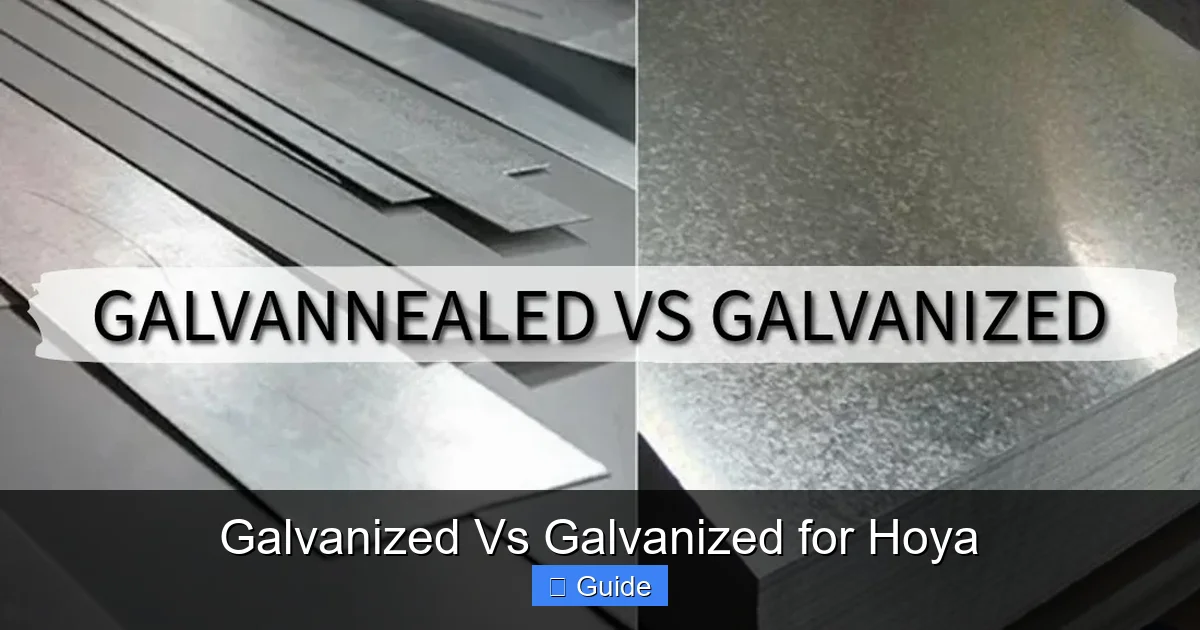
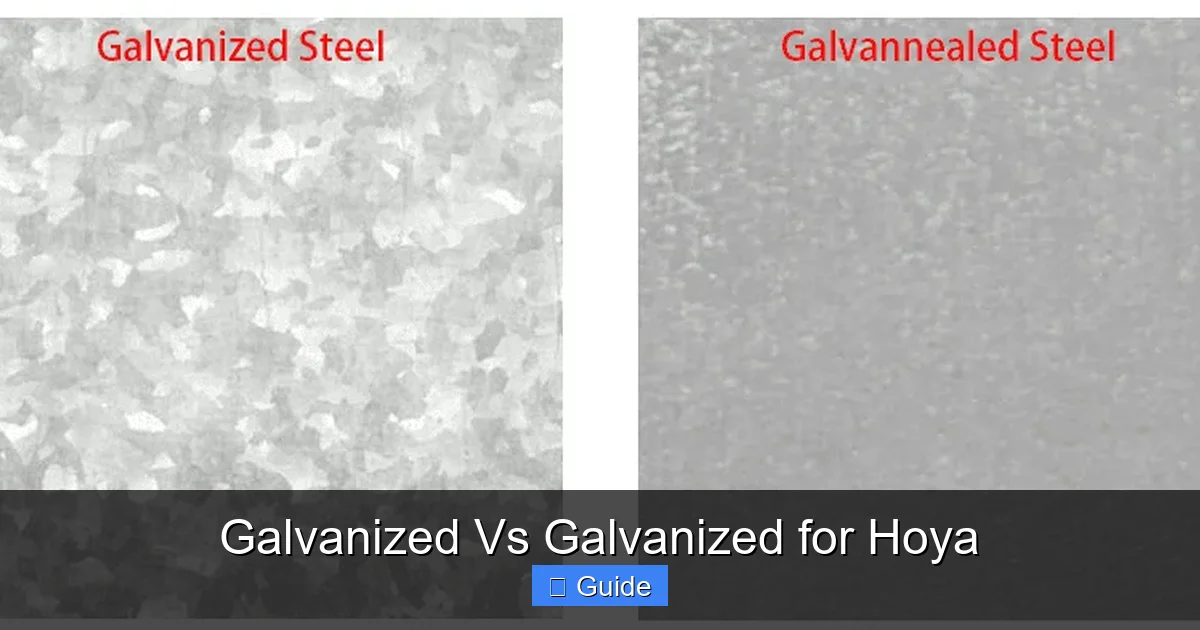
The Aesthetic: Spangle and Patina
HDG has a distinct look. It often shows “spangle”—those crystalline snowflake patterns on the surface. It starts bright silver and dulls to a matte gray patina. That patina is stable zinc carbonate. It actually slows down further corrosion. Many growers love this industrial, vintage look for displaying structural Hoyas like Hoya imperialis or Hoya macgillivrayi. It looks like serious horticulture equipment.
Downsides for the Home Grower
HDG is heavy. A 10-foot length of 1-inch HDG pipe is a workout to move. It is more expensive upfront—often 30-50% more than electro-galvanized. The high heat of the process can warp thin sheet metal or delicate wire mesh, limiting its use for intricate shapes. And critically, the thick zinc layer means a larger reservoir of zinc available for leaching if used as a direct planter with acidic mix. We will circle back to mitigation strategies.
Round Two: Electro-Galvanizing (EG) – The Lightweights
Electro-galvanizing (also called electroplating or cold galvanizing) uses an electrical current to deposit zinc onto steel in a cold chemical bath. No molten metal. No alloy layers. Just a pure zinc plate stuck on by electrostatic attraction.
Thin, Shiny, and Uniform
EG coatings are thin. Typically 0.2 to 0.5 mils (5-12 microns). That is roughly 1/10th to 1/20th the thickness of HDG. The finish is bright, shiny, and very uniform. It looks like chrome or shiny silver jewelry. You see this on cheap hardware store wire mesh, “galvanized” buckets from big box stores, and many decorative metal planters. It looks pretty on the shelf. It feels light.
The “Sacrificial” Math Doesn’t Work Long Term
With only 5-10 microns of zinc, the sacrificial protection runs out fast. In a damp potting mix, that zinc layer can be consumed in 1-3 years. Once the zinc is gone at a scratch or the bottom edge, the steel rusts. Rust expands. It flakes. It stains your floor. It clogs drainage holes. For a Hoya trellis made of EG wire, you might see white rust (zinc carbonate powder) in month six and red rust in year two. It is disposable infrastructure.
Where EG Wins: Formability and Cost
Because the steel isn’t heated to 840°F, it doesn’t warp. Manufacturers can stamp intricate shapes, deep draw pots, and weld complex trellis designs after galvanizing (though welds on EG are weak points). EG steel sheet is cheap. If you need a pretty, lightweight cache pot to sit a plastic nursery pot inside of? EG is fine. If you need a trellis for a lightweight Hoya bella indoors? EG wire works for a few years. Just don’t bury it in wet soil.
The “Cold Galvanizing” Paint Confusion
Walk down the paint aisle. You see “Cold Galvanizing Compound” or “Zinc-Rich Primer.” This is paint with 90%+ zinc dust. It is not galvanizing. It is a maintenance coating. If you scratch your HDG trellis, you brush this on. If you buy bare steel wire and paint it, it is not “galvanized wire.” It is painted wire. For Hoya trellis repairs, zinc-rich paint is excellent. For new purchases, don’t confuse it with factory galvanizing.
Round Three: Pre-Galvanized / Continuous Galvanized – The Sheet Metal Middle Ground
There is a third player often hiding behind the generic “galvanized” label. Pre-galvanized steel (often called “mill galvanized” or “continuous galvanized” – G90, G60 designations).
Coil Coating Process
Huge coils of steel sheet run through a molten zinc bath at the steel mill before being cut and formed. The coating is controlled by air knives—usually G90 (0.9 oz/ft² total both sides) or G60. This translates to roughly 0.8 – 1.0 mils per side. Thicker than EG. Thinner than HDG. The coating is mostly pure zinc with a thin alloy layer.
The “Cut Edge” Problem
This is the killer for planters. The coil is galvanized. Then it is slit, cut, punched, and bent into a planter box. Every cut edge, every drilled drainage hole, every folded corner exposes raw steel. No zinc there. In a wet planter, those cut edges rust immediately. The rust creeps under the adjacent zinc coating (undercutting), lifting it off. A pre-galvanized planter box often fails at the corners and drainage holes within 2-5 years.
Best Use Case for Hoya
Pre-galvanized is great for structural framing you build yourself—like a greenhouse bench frame or a trellis frame where you weld or bolt it (and then paint the joints). It is not ideal for a finished, watertight planter unless you seal the interior heavily with a pond liner or epoxy coating. If you see a cheap “galvanized raised bed” kit, it is almost certainly pre-galvanized sheet. Budget for a liner.
The Hoya Soil Factor: Chemistry Meets Metal
This is where the rubber meets the road for galvanized vs galvanized for Hoya. Your potting mix dictates the corrosion speed.
Acidic Mixes Accelerate Zinc Loss
Standard Hoya mix: Orchid bark, perlite, pumice, charcoal, maybe coco coir. As bark decomposes, it releases tannins and organic acids. pH drops to 5.0 – 5.5. Zinc corrosion rate doubles for every pH unit drop below 7. In a pH 5.5 mix, zinc dissolves 30-50x faster than in neutral water. That thin EG coating? Gone in months. That HDG coating? It will last years, but it will leach measurable zinc into the soil solution.
Zinc Toxicity in Epiphytes
Zinc is a micronutrient. Plants need tiny amounts (ppm levels). High zinc causes “zinc toxicity”—interveinal chlorosis (yellowing between veins), stunted roots, phosphorus lockout. Hoyas, with their fine, sensitive epiphytic roots, show this fast. Symptoms look like nutrient deficiency or root rot. If you use a bare HDG stock tank as a planter for a rare Hoya, and you fertilize with acidic fertilizer, you are running a zinc leaching experiment. The plant usually loses.
The “White Rust” Phase
New galvanized metal (especially HDG) reacts with moisture and CO2 to form zinc carbonate—a white, powdery film. This is “white rust” or “wet storage stain.” It looks alarming. It is actually the passive layer forming. But it is loose powder. If you plant immediately, this powder washes into your mix. It spikes zinc levels. Pro Tip: Weather new galvanized items outdoors for 4-6 weeks (rain cycles) or wash thoroughly with a 1:10 vinegar/water solution, scrub, rinse, and dry. This stabilizes the surface and removes the loose carbonate before soil touches it.
Application Showdown: Trellises, Pots, and Hardware
Let’s map the galvanizing type to the specific Hoya hardware you need.
Trellises and Support Structures
Winner: Hot-Dip Galvanized (Pipe or Heavy Wire). Hoyas get heavy. A mature Hoya carnosa ‘Krimson Queen’ vine is thick and woody. It pulls. It weighs down thin wire. HDG pipe (1/2″ or 3/4″ conduit) bent into arches or ladders lasts 20+ years. HDG welded wire mesh (4″x4″ grid, 10-12 gauge) makes rigid panels. EG wire (19-22 gauge) bends under vine weight, rusts at the welds, and snaps. Pre-galvanized tube (EMT conduit) is okay for indoor arches but rusts at the cut ends if outdoors. Spend the money on HDG. You install it once.
Planters and Pots (Direct Planting)
Winner: None (Use a Liner) / HDG Stock Tank with Prep. Direct planting in bare galvanized metal is risky for Hoyas due to heat, zinc leaching, and drainage issues. Best practice: Use the metal as a decorative cache pot. Drop a plastic nursery pot inside. Air gap prevents heat transfer. No soil touches metal. No leaching. No rust. If you must direct plant (e.g., a large HDG stock tank for a specimen Hoya imperialis): Drill massive drainage holes. Coat interior with food-safe epoxy or pond liner. Add a 2-inch gravel layer. Use a pH-buffered mix (add dolomite lime). Monitor pH. It is high effort.
Hanging Hardware (Chains, Hooks, S-Hooks)
Winner: Hot-Dip Galvanized or Stainless Steel. Hanging baskets are dynamic loads. They swing. They get wet. They hold weight. EG chain rusts in one season outdoors. HDG chain lasts decades. Stainless (304/316) is best for coastal/salt air but pricey. Check the rating. “Galvanized chain” at the hardware store is often Grade 30 EG. Look for “Hot-Dip Galvanized Grade 43 or 70” for serious hanging. Your Hoya linearis curtain deserves a chain that won’t snap.
Greenhouse Benches and Shelving
Winner: Pre-Galvanized Tubing (Frame) + HDG Wire Mesh (Top). Build the frame from cheap pre-galvanized square tube (EMT or fence pipe). Paint the cut ends and welds with zinc-rich paint. Lay HDG welded wire mesh (hardware cloth 1/2″x1/2″ or 1″x1″) on top. The mesh takes the wet pots. The frame stays dry. Best cost/performance ratio. Replace mesh in 15 years if needed. Frame lasts 30.
Heat Management: The Silent Killer in Metal Pots
Galvanized steel is a thermal conductor. In full sun, a metal pot hits 120°F+ (49°C) fast. Hoya roots die at 95°F (35°C) sustained. The galvanizing type doesn’t change physics. HDG, EG, Pre-galv—all cook roots.
Mitigation Strategies
- Cache Pot Method: The only foolproof fix. Plastic pot inside. Air gap insulates.
- Insulation Liners: Bubble wrap, foam board, or coconut coir mats glued inside the metal pot. Helps, but not perfect.
- Shade/Placement: Morning sun only. Never full afternoon sun on metal.
- Light Colors: White or light gray paint (over galvanizing) reflects heat. Dark “aged” patina absorbs more.
- Double Potting with Air Gap: Pot -> Air -> Metal. Essential.
If you see a gorgeous galvanized trough in full sun at a nursery filled with succulents, know they water daily and those succulents tolerate heat. Your Hoyas do not. Treat metal pots as decorative sleeves, not root zones.
Drainage Drilling: Don’t Ruin the Coating
You bought a nice HDG stock tank or EG decorative bucket. It has no holes. You grab a drill. Stop.
The Cut Edge Vulnerability
Drilling tears the zinc coating. The hole edge is raw steel. Water sits there. Rust starts instantly. It creeps under the zinc. The hole enlarges. The pot fails.
Best Practice Protocol
- Use a sharp cobalt or titanium step drill bit. Low speed. High pressure. Clean cut.
- Immediately deburr the hole (remove sharp metal lips).
- Apply Zinc-Rich Cold Galvanizing Compound (95% zinc paint) to the hole edge, inside and out. Let cure 24 hours.
- Optional: Insert a rubber grommet or bulkhead fitting for a watertight seal if used as reservoir.
- For HDG: The thick coating self-heals slightly via zinc runoff, but paint is insurance.
- For EG/Pre-galv: Paint is mandatory. The coating is too thin to self-heal.
Do this for every hole. Every single one. Your future self will thank you when the pot isn’t a rust bucket in year three.
Cost Analysis: Pay Now or Pay Later
Let’s talk budget. A 100ft roll of 14ga EG wire: $40. 100ft of 14ga HDG welded wire mesh: $120. A 2ft x 4ft EG sheet planter kit: $60. HDG Stock Tank (2ft x 4ft): $180.
The 10-Year Math
- EG Wire Trellis: Replace every 2-3 years. 4 replacements = $160 + labor + plant disturbance.
- HDG Wire Trellis: Buy once. $120. Zero labor. Plant grows uninterrupted.
- EG Planter: Rusts at holes in 3 years. Replace. $60 x 3 = $180.
- HDG Stock Tank (Lined): $180 + $30 liner. 20+ years.
For permanent collection infrastructure (trellises, benches, large specimen pots), HDG wins financially. For temporary, indoor-only, lightweight displays (a small Hoya kerrii heart leaf on a shelf), EG is acceptable disposable decor. Match the material to the mission.
Identifying What You Are Buying: Label Decoding
Standing in the aisle. The tag just says “Galvanized Steel.” How do you know?
Visual Clues
- Spangle (Crystal flowers): HDG. (Note: “Minimized spangle” HDG exists for painting, looks dull gray).
- Bright, mirror-shiny, no texture: EG.
- Dull gray, slight texture, visible coating on cut edges (if cut at mill): Pre-galv.
- Weld marks look burned/black: HDG (welded before dip) or Pre-galv (welded after). EG usually welded before plating (plating covers weld).
Specs to Ask For
- “Is this Hot-Dip Galvanized to ASTM A123 / A153?” (Structural/Pipe/Wire).
- “What is the coating weight? G90? G60? Oz/ft²?” (Sheet/Pre-galv).
- “Is this Electro-Galvanized / Electroplated?” (Thin/Shiny).
If the seller doesn’t know, assume EG or Pre-galv. HDG is a selling feature; they advertise it loudly.
Special Considerations for Rare and Sensitive Hoyas
You have a Hoya sp. ‘Vietnam’ or Hoya walliniana. They cost hundreds. They are fussy. Do not gamble with EG pots. Do not direct plant in bare HDG.
The “Nuclear Option” for Specimen Plants
- Plastic net pot / slotted orchid pot.
- High quality chunky mix.
- Inside a decorative cache pot (ceramic, concrete, plastic, wood).
- Metal trellis (HDG) inserted into the plastic pot, not the cache pot.
Zero metal contact with soil. Zero heat transfer. Zero zinc leaching. Maximum airflow. This is how winners grow show plants. The metal serves structure only. Never the root zone.
Trellis Material for Delicate Stems
Thin EG wire can cut into swelling Hoya stems (especially Hoya carnosa varieties) as they thicken. HDG pipe (1/2″ or 3/4″) or thick HDG wire (9-10 gauge) has a gentler radius. Better yet: Wrap HDG pipe with jute twine, moss pole material, or plastic vine tape. Protect the stem. The metal disappears visually. The plant attaches to the organic texture.
Environmental and Safety Notes
Zinc runoff. It happens. In municipal water systems, zinc from galvanized roofs is a tracked pollutant. In your backyard, it goes into your soil. For a few pots? Negligible. For a commercial nursery with acres of HDG benches? Regulated. Be a good steward. Don’t let galvanized runoff flow directly into storm draams or ponds. Use the water on tolerant landscape plants, not sensitive wetlands.
Cutting/Welding Galvanized: Metal Fume Fever. Heating galvanized steel (welding, cutting with angle grinder, torch) vaporizes zinc oxide. Inhaling it causes flu-like symptoms (fever, chills, nausea) 4-12 hours later. It can be severe. Always grind off the coating 1-2 inches back from any weld or cut line. Wear a P100 respirator. Ventilate. Drink milk (old wives tale, but calcium helps bind metals). Don’t weld galvanized in your garage. Take it outside. This applies to HDG, Pre-galv, and EG. All have zinc.
Summary Decision Matrix
Quick reference for your next purchase:
- Permanent Outdoor Trellis / Arch / Heavy Vine Support: Hot-Dip Galvanized Pipe or Heavy Mesh. Non-negotiable.
- Indoor Decorative Trellis (Light Vine, Hoya bella, Hoya mathilde): Electro-Galvanized Wire or Bamboo/Plastic. EG is fine here.
- Large Specimen Planter (Direct Plant): HDG Stock Tank + Epoxy Liner + Gravel Base + pH Buffered Mix. High effort. High reward.
- Decorative Cache Pot (Drop-in Plastic Pot): Any Galvanized (EG, Pre-galv, HDG). Aesthetics only. EG is cheapest/lightest.
- Greenhouse Bench Top: HDG Welded Wire Mesh on Pre-galv Frame (painted joints).
- Hanging Basket Chain: HDG Chain or Stainless Steel. Safety critical.
- Seedling Trays / Propagation Flats: Plastic. Metal conducts cold/heat too fast. Wrong tool.
Conclusion: Stop Guessing, Start Growing
The phrase “galvanized vs galvanized for Hoya” sounds redundant until you realize it hides a spectrum of metal quality that directly impacts your plants. We have walked through the molten bath of Hot-Dip, the chemical bath of Electro-Plating, and the mill rollers of Pre-Galvanized sheet. We have seen how your acidic, airy Hoya mix attacks zinc. We have felt the heat of summer sun on metal walls. We have calculated the cost of replacing cheap wire versus installing heavy pipe once.
The takeaway is simple. Match the coating to the consequence of failure. If failure means a fallen mature vine, a cracked rare pot, or a rust-stained shelf—spend the extra 30% for Hot-Dip Galvanized. It is the only coating with the metallurgical muscle to back the name. If failure means a slightly ugly indoor trellis for a $15 plant in three years? Electro-Galvanized is perfectly fine. If you are building a frame you will paint anyway? Pre-Galvanized saves money.
And please, for the love of your Hoya macgillivrayi, use the cache pot method. Keep the soil in plastic. Keep the metal as art. Your roots will breathe. Your leaves will shine. Your metal will stay pretty. That is the real win in the galvanized vs galvanized debate. Happy growing.
Frequently Asked Questions
What does “G90” mean on galvanized sheet metal for planters?
G90 is a coating weight designation meaning 0.90 ounces of zinc per square foot total (both sides). It equals roughly 0.8-1.0 mils per side. It is a pre-galvanized (mill galvanized) standard, thinner than hot-dip but thicker than electro-galvanized. Cut edges remain uncoated.
Can I paint galvanized steel to stop zinc leaching into my Hoya soil?
Yes. Use a dedicated galvanized metal primer (etching or water-based acrylic) followed by exterior acrylic latex or epoxy paint. This seals the zinc. Ensure the paint is fully cured (2-4 weeks) before adding soil. This works for all galvanizing types.
Will vinegar damage the galvanized coating on my trellis?
A brief wash with diluted vinegar (1:10) removes white rust without significantly damaging the underlying zinc coating. Do not soak the metal. Rinse thoroughly with water and dry immediately. This is a standard prep step for new hot-dip galvanized items.
Is stainless steel better than galvanized for Hoya trellises?
Stainless steel (Grade 304 or 316) is superior for longevity and zero leaching, but costs 3-5x more than hot-dip galvanized. For most home growers, HDG offers the best value. Use stainless in coastal/salt-air environments or for heirloom-quality builds.
How do I fix a rust spot on my galvanized Hoya trellis?
Wire brush the rust to bare steel. Wipe clean. Apply two coats of zinc-rich cold galvanizing compound (95% zinc paint). Let cure. This restores the sacrificial protection. Do not use regular rust paint; it lacks the zinc content to protect the surrounding galvanizing.
Can I use galvanized chicken wire for a Hoya trellis?
Standard “chicken wire” (hex netting) is usually thin electro-galvanized (EG) 20-22 gauge. It will sag under vine weight and rust in 1-2 years outdoors. Use 12-14 gauge HDG welded wire mesh (square grid) or HDG hardware cloth for a rigid, long-lasting trellis.