Wild Ginger Plant Grow in Va
Wild ginger plant grow in VA gardens beautifully as a native groundcover for shady areas. This low-maintenance perennial thrives in Virginia’s climate with proper soil preparation and moisture management.
Key Takeaways
- Native Species: Asarum canadense is the primary wild ginger native to Virginia woodlands
- Shade Lover: Thrives in full to partial shade with rich, moist soil conditions
- Groundcover Excellence: Forms dense mats that suppress weeds and prevent erosion
- Deer Resistant: Naturally unpalatable to deer and most garden pests
- Spring Blooms: Produces unique jug-shaped flowers hidden beneath foliage in early spring
- Easy Propagation: Spreads slowly by rhizomes; easily divided in spring or fall
- Medicinal History: Used traditionally by Native Americans; not related to culinary ginger
Quick Answers to Common Questions
Is wild ginger related to the ginger I cook with?
No, wild ginger (Asarum canadense) is not related to culinary ginger (Zingiber officinale). They’re in completely different plant families. Wild ginger gets its name from the gingery scent of its roots.
Will wild ginger take over my garden?
Wild ginger spreads slowly by rhizomes, forming a colony over years. It’s not aggressive like English ivy or mint. You can easily control it by dividing every few years or edging the bed.
Can I grow wild ginger in full sun in Virginia?
No, wild ginger requires shade. Afternoon sun in Virginia will scorch the leaves. Plant in full shade to part shade, ideally under deciduous trees.
When is the best time to plant wild ginger in VA?
Spring (April-May) or fall (September-October) are ideal. Spring gives roots time before summer heat. Fall allows root establishment before winter.
Is wild ginger deer resistant?
Yes, wild ginger is highly deer resistant. The foliage contains compounds deer avoid. Rabbits may occasionally nibble early spring growth, but damage is minimal.
📑 Table of Contents
- Getting to Know Wild Ginger in Virginia
- Identifying Virginia’s Wild Ginger Species
- Perfect Growing Conditions for Virginia Gardens
- Planting and Establishing Your Colony
- Long-Term Care and Maintenance
- Wild Ginger Through the Virginia Seasons
- Ecological Value and Conservation
- Common Problems and Solutions
- Designing with Wild Ginger
- Harvesting and Uses – With Cautions
- Buying Guide for Virginia Gardeners
- Conclusion
Getting to Know Wild Ginger in Virginia
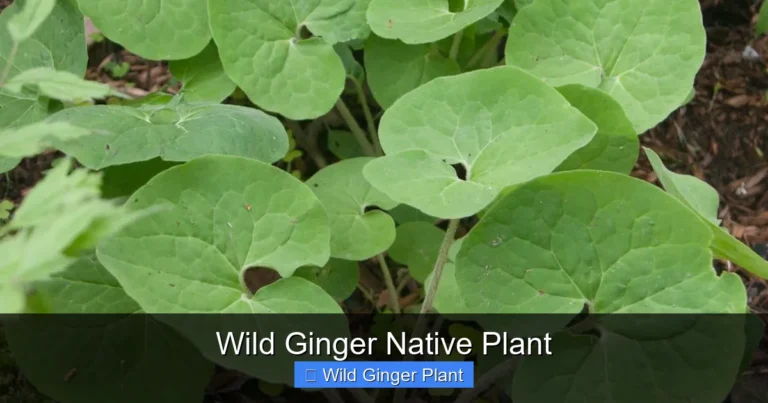
If you’ve ever wandered through a Virginia woodland in early spring, you might have missed one of the most charming native plants growing right at your feet. Wild ginger hugs the forest floor with heart-shaped leaves that stay green through most of the growing season. It’s not flashy. It doesn’t shout for attention. But once you know what to look for, you’ll spot it everywhere in the right conditions.
Many gardeners hear the name and think of the spicy root in their kitchen spice rack. Here’s the thing though. Wild ginger plant grow in VA forests naturally, but it’s not related to culinary ginger at all. Different family entirely. The roots do have a gingery scent when crushed, which is how it earned the common name. Native Americans and early settlers used it medicinally and as a flavoring. Today, we mostly value it as a tough, beautiful groundcover for those difficult shady spots where grass simply refuses to grow.
Virginia sits in a sweet spot for this plant. Our climate zones range from 5a in the mountains to 8a near the coast. Wild ginger handles this whole range without complaint. It’s native from Canada down to Georgia and west to the Mississippi. That means it’s adapted to our humidity, our clay soils, our hot summers, and our variable winters. When you plant natives, you’re working with nature instead of fighting it.
Identifying Virginia’s Wild Ginger Species
Asarum Canadense – The Main Character
This is the one you’ll find in most Virginia woodlands. Common names include Canadian wild ginger, broad-leaved wild ginger, and simply wild ginger. The leaves are kidney-shaped to heart-shaped, usually 4 to 8 inches wide. They emerge in pairs from the rhizome, creating a layered look as the colony expands. Each leaf sits on a hairy petiole that can reach 6 to 12 inches tall.
The flowers are the weird part. They bloom at ground level, often hidden under leaf litter. Shaped like little jugs or bells, they’re purplish-brown with three pointed lobes. No petals, just a calyx that does the job. Flies and beetles pollinate them, attracted by the faint carrion scent. You really have to get down on your knees and move leaves aside to see them. Blooming happens April through May in most of Virginia.
Asarum Virginicum – Virginia’s Own
Less common but special. Virginia heartleaf or Virginia wild ginger grows in the central and southwestern counties. The leaves are more distinctly heart-shaped with a deeper sinus where the stem attaches. They’re often evergreen here, holding decent color through winter. The flowers are similar but slightly smaller. If you’re in the Piedmont or mountains, this might be your local species.
Asarum Caudatum – The Western Visitor
Not native to Virginia but sometimes sold in nurseries. Western wild ginger has longer leaf tips and showier flowers with long tails on the calyx lobes. It’s from the Pacific Northwest. Beautiful plant, but if you want true Virginia natives, stick with the first two. Check labels carefully when shopping.
European Ginger – The Imposter
Asarum europaeum shows up in garden centers sometimes. Glossy, leathery leaves that stay perfectly evergreen. It’s slower spreading and less adapted to our heat. Nice for formal shade gardens, but it doesn’t support our native insects the same way. Know what you’re buying.
Perfect Growing Conditions for Virginia Gardens
Light Requirements Decoded
Full shade to part shade. That’s the sweet spot. Morning sun with afternoon shade works beautifully. Deep shade under mature trees? Perfect. Dappled light through a high canopy? Also perfect. What kills it is hot afternoon sun, especially July and August in the Piedmont and Coastal Plain. The leaves scorch, turn yellow, and the plant declines. If your only shady spot gets blasted by 3 PM sun, this isn’t your plant.
Under deciduous trees is ideal. Spring sun before leaf-out lets the plant photosynthesize and build energy. Summer shade protects it. Fall leaf drop provides natural mulch. It’s the cycle this plant evolved with. Pine shade works too, but you’ll need to manage the needle drop and acidic soil.
Soil That Makes Wild Ginger Happy
Rich, moist, well-drained. Lots of organic matter. Think forest floor. That means leaf mold, decomposed wood, years of accumulated duff. If you have heavy Virginia clay, amend heavily with compost, leaf mold, or aged hardwood mulch. Work it in 8 to 12 inches deep. The rhizomes stay near the surface, but they need that loose, rich layer to spread.
pH between 5.5 and 7.0. Slightly acidic to neutral. Most Virginia soils fall in this range naturally. If you’re in limestone areas of the Valley and Ridge, you might be more alkaline. A soil test from Virginia Tech’s lab costs $10 and saves guesswork. Add elemental sulfur if needed to lower pH.
Moisture is non-negotiable. Consistent moisture. Not soggy, not bone dry. The large thin leaves transpire heavily. In a dry spell, they’ll wilt dramatically. They recover if watered promptly, but repeated drought stress weakens the colony. Mulch heavily with shredded leaves or pine fines. Two to three inches. Keep it pulled back from the crowns to prevent rot.
Temperature and Hardiness
Zones 4 through 8. That covers all of Virginia comfortably. Mountain gardeners in zone 5a: it handles your winters fine. Coastal gardeners in zone 8a: it handles your heat if shaded and watered. The foliage may look rough after a harsh winter or brutal summer, but fresh leaves emerge in spring. It’s tougher than it looks.
Planting and Establishing Your Colony
When to Plant
Spring or fall. Spring planting lets roots establish before summer heat. Aim for April to early May in most of Virginia. Fall planting works September through October, giving roots time before ground freeze. Summer planting is risky unless you’re committed to daily watering. Winter planting only if the ground isn’t frozen and you’re in the coastal region.
Starting from Divisions
This is how most people start. A friend shares a clump. A nursery sells potted divisions. Each piece needs a section of rhizome with roots and at least one growing point (where leaves emerge). Plant horizontally, just below the soil surface. The growing point should be at or slightly above soil level. Space 12 to 18 inches apart for eventual fill-in. Water deeply after planting. Mulch.
If you’re buying, look for healthy white roots. Avoid plants with mushy, brown roots or yellowing leaves. Reputable native plant nurseries in Virginia include Hill House Farm and Nursery, Hummingbird Hill Native Plant Nursery, and several Virginia Native Plant Society chapter sales. The VNPS website lists sales by region.
Starting from Seed – The Patient Approach
Seeds need double dormancy breaking. Warm moist period, then cold moist period. In nature, seeds ripen in early summer, sit in warm soil, then go through winter. Germination happens the second spring. You can simulate this: sow fresh seeds in pots, keep warm and moist 60 days, then refrigerate 60 to 90 days, then move to cool bright conditions. Or just sow in a prepared bed in early summer and wait. Mark the spot. Don’t disturb. Two years later, you might see seedlings.
Most gardeners don’t bother with seed. Divisions are faster and you know what you’re getting. But seed-grown plants have genetic diversity, which matters for long-term resilience. If you’re restoring a woodland area, consider adding some seed-grown plants to your divisions.
Site Preparation Steps
Clear the area of invasive plants first. English ivy, Japanese stiltgrass, periwinkle – remove them thoroughly. They’ll outcompete young wild ginger. If the area has lawn, smother with cardboard and mulch for a season, or use a sod cutter. Don’t just till – that brings up weed seeds and chops up invasive roots into more pieces.
Amend the soil as described above. Work in 3 to 4 inches of compost or leaf mold. Rake smooth. Water the prepared bed a day before planting so the soil is moist but not muddy. This helps the divisions settle in without air pockets around roots.
First Year Care
Water weekly if rain doesn’t provide an inch. More in heat waves. Don’t fertilize the first year. The amended soil has plenty. Watch for slugs – they love the tender new leaves. Beer traps, diatomaceous earth, or hand-picking at night. Deer rarely bother it, but rabbits might nibble in early spring. A temporary cage helps.
Don’t panic if leaves look rough after planting. Transplant shock is normal. New leaves will emerge. By fall, you should see rhizomes extending horizontally just under the mulch. That’s the colony establishing.
Long-Term Care and Maintenance
Watering Through the Seasons
Spring: Usually rainfall is sufficient. Supplement during dry weeks. Summer: Critical period. Check soil moisture weekly. Stick your finger in. If dry past the first knuckle, water deeply. Soaker hoses or drip irrigation work great under the mulch. Fall: Taper off as temperatures cool. Winter: Only water during extended dry spells when ground isn’t frozen.
Established colonies (3+ years) handle drought better. The rhizome network stores water and the dense foliage shades the soil. But even established plants appreciate water during July-August droughts. It’s the difference between thriving and merely surviving.
Mulching Matters
Refresh mulch annually in fall after leaf drop. Shredded leaves are perfect – free, local, and they break down into the exact soil this plant loves. Pine fines work well too. Avoid hardwood bark mulch in thick layers; it can mat and repel water. Two to three inches max. Keep crowns clear.
If you have deciduous trees, let some leaves stay. That’s natural mulch. Just don’t let matted layers smother the plants. A light raking to fluff the leaves is perfect.
Dividing and Expanding
Every 4 to 6 years, the center of a clump may thin out. Or you want more plants. Early spring (March-April) or fall (September-October) are division times. Dig the clump with a fork, not a shovel – less root damage. Tease apart rhizome sections with your hands. Each piece needs roots and a growing point. Replant immediately at same depth. Water well. Share extras with gardening friends.
Dividing also rejuvenates old colonies. The centers often die out as the plant spreads outward in a ring. Division breaks that pattern.
Pest and Disease Issues
Remarkably few. Slugs and snails are the main annoyance. They chew holes in leaves, especially in wet springs. Beer traps work. Copper tape around beds helps. Diatomaceous earth needs reapplication after rain. Encourage toads and ground beetles – they eat slugs.
Fungal leaf spots occasionally appear in very wet, humid summers with poor air circulation. Remove affected leaves. Thin nearby shrubs if needed for airflow. Don’t overhead water. Root rot happens in poorly drained soil. That’s a site problem, not a plant problem. Fix drainage or move the plant.
Deer? Rarely touch it. Rabbits? Sometimes nibble early spring growth. Voles? May tunnel through rhizomes in winter. Hardware cloth barriers if voles are bad.
Companion Planting Ideas
Wild ginger plays well with others. Great companions for Virginia shade gardens:
- Christmas fern (Polystichum acrostichoides) – evergreen structure
- Foamflower (Tiarella cordifolia) – spring flowers, similar conditions
- Wild geranium (Geranium maculatum) – pink flowers, spreads politely
- Bloodroot (Sanguinaria canadensis) – early spring ephemeral
- Mayapple (Podophyllum peltatum) – umbrella leaves, colonizes
- Solomon’s seal (Polygonatum biflorum) – arching stems, bell flowers
- Jack-in-the-pulpit (Arisaema triphyllum) – unique flower, red berries
- Native sedges (Carex species) – grassy texture, many shade-tolerant
Avoid aggressive spreaders like English ivy, periwinkle, Japanese pachysandra. They’ll smother wild ginger. Also avoid planting right at the base of large trees where root competition is fierce. Give it a few feet of breathing room.
Wild Ginger Through the Virginia Seasons
Spring Awakening
March brings the first leaf tips pushing through leaf litter. Fuzzy, folded, like little cigars unfurling. By April, leaves expand rapidly. Flowers appear at ground level – easy to miss. Pollinators find them anyway. This is peak energy-gathering time. The plant photosynthesizes heavily before the canopy closes. If you’re dividing, do it now as leaves emerge.
Summer Steady State
May through August, the colony just grows. Rhizomes extend. New leaf pairs emerge. The foliage forms a dense weed-suppressing mat. This is when water matters most. Hot dry spells cause wilting. Water deeply. The leaves are large and thin – high transpiration. Mulch saves you watering time.
Fall Transition
September brings slower growth. Leaves may show some wear – slug damage, sun spots if shade shifted. That’s fine. The plant is storing energy in rhizomes for next year. Fall is a great planting time. Divisions establish roots before winter. Let tree leaves accumulate as mulch.
Winter Rest
In most of Virginia, wild ginger is semi-evergreen. Leaves persist but lie flat, often reddish-burn flatter after hard freezes. In the mountains, they may disappear under snow. Coastal plants stay greener. Don’t clean up the leaves – they protect the crowns. Wait until new growth pushes in spring to remove old tattered leaves.
Ecological Value and Conservation
Wildlife Relationships
Pipevine swallowtail caterpillars feed on wild ginger. Not their primary host (that’s pipevine, Aristolochia), but they’ll use it. Ants disperse the seeds – they’re attracted to the elaiosome, a fleshy appendage on the seed. The ants carry seeds to their nests, eat the elaiosome, and discard the seed in their nutrient-rich midden. Perfect planting. This is myrmecochory, and wild ginger is a textbook example.
Small mammals may eat the rhizomes. The dense cover provides shelter for salamanders, toads, and invertebrates. Ground-nesting birds like ovenbirds may forage in it. It’s a small plant with outsized ecological impact.
Conservation Status
Globally secure. Not rare. But local populations face threats: habitat loss, invasive species, over-collection, deer overbrowse (of companion plants, changing the community), and climate change shifting suitable ranges. Never dig from the wild without permission. It’s illegal on public land. On private land, get written permission. Better yet, buy from nurseries propagating ethically.
Virginia Native Plant Society maintains a list of ethical native plant nurseries. Support them. Ask about propagation methods. Seed-grown or division-grown from nursery stock, not wild-collected.
Restoration Uses
Excellent for woodland restoration projects. Plant after invasive removal. It establishes relatively quickly, suppresses new invasives, and rebuilds the herbaceous layer. Pair with other native groundcovers for diversity. The Virginia Department of Conservation and Recreation includes it in many restoration seed mixes for mesic forests.
Common Problems and Solutions
Leaves Yellowing in Summer
Usually too much sun or not enough water. Check: does the spot get afternoon sun? Has a tree limb fallen, opening the canopy? Water deeply. Consider transplanting to a shadier spot in fall. If it’s a new planting, the roots haven’t reached deep moisture yet. Baby it with water.
Colony Not Spreading
Three main causes: too dry, too sunny, or poor soil. Wild ginger spreads by rhizomes. Rhizomes need energy from photosynthesis and moisture to extend. Fix the conditions. Sometimes it just takes time – a new division spends year one on roots, year two on leaves, year three on spreading. Patience.
Center of Clump Dying Out
Natural aging. The plant spreads outward in a ring. The center exhausts local nutrients. Solution: divide every 4-6 years. Replant vigorous outer sections. Discard the woody center. Amend soil before replanting.
Slug Damage Severe
Reduce mulch depth temporarily. Slugs hide in thick mulch. Beer traps. Go out at night with a flashlight and pick them off. Encourage predators. If it’s a wet year, accept some damage – the plant outgrows it.
Winter Burn on Leaves
Evergreen leaves desiccate in winter wind and sun when ground is frozen. Can’t replace lost water. Site in protected spots. Mulch crowns heavily after ground freezes. Accept some tattered leaves – they’ll be hidden by new growth.
Designing with Wild Ginger
Woodland Garden Groundcover
This is its superpower. Under trees, between shrubs, along shaded paths. Plant in drifts of 5, 7, 9 plants. Space 12-18 inches. In 3 years, a solid carpet. The texture is bold – large leaves create a calm, lush look. It makes a woodland feel intentional, not messy.
Erosion Control on Shady Slopes
Rhizomes knit the soil. Plant on contour lines across a slope. Combine with native sedges and ferns for root diversity. Don’t till the slope – plant into existing vegetation after killing invasives. Use erosion control blanket on steep grades until established.
Edging Shady Beds
Single row along a path or bed edge. Keeps a clean line. Doesn’t flop onto paths. Easy to maintain – just clip rhizomes that cross the line. The heart-shaped leaves look great against hardscape.
Container Culture
Possible but not ideal. Needs large pot (18+ inches), rich moisture-retentive mix, consistent water, winter protection. In a pot, it’s more vulnerable to drying and freezing. If you try it, use a weatherproof pot, insulate sides in winter, water during winter thaws. Better in the ground.
Harvesting and Uses – With Cautions
Traditional Uses
Native Americans used root tea for colds, fevers, digestive issues, and as a contraceptive. Early settlers adopted it as a ginger substitute and for “the vapors.” The roots contain aristolochic acid, which is nephrotoxic and carcinogenic. Modern herbalists generally avoid internal use. External poultices for wounds were also documented.
Culinary Use – Not Recommended
The roots smell like ginger. They taste gingery with bitter notes. But aristolochic acid makes regular consumption dangerous. Some foragers use tiny amounts as flavoring. I don’t recommend it. Culinary ginger (Zingiber officinale) is safe, cheap, and available. Use that.
If You Must Harvest
Fall after leaf die-back or early spring before emergence. Dig a small section from the edge of a large colony. Take 10% max. Wash roots thoroughly. Dry for tea or tincture. But seriously, just buy ginger at the grocery store. Leave the wild ginger to do its ecological job.
Buying Guide for Virginia Gardeners
Where to Shop
Virginia Native Plant Society chapter sales – spring and fall. Best prices, local ecotypes, expert advice. Hill House Farm and Nursery (Castleton) – mail order and pickup. Hummingbird Hill Native Plant Nursery (Charlottesville). Monticello’s Tufton Farm sales. Lewis Ginter Botanical Garden sales. Local independent nurseries increasingly carry natives – ask.
Avoid big box stores. They rarely carry true natives, often sell European ginger mislabeled, and plants may be treated with systemic insecticides harmful to pollinators.
What to Look For
Healthy white roots visible at pot bottom. No circling roots. Several leaf pairs. No yellowing, spots, or holes. Label with scientific name (Asarum canadense). Ask: “Is this seed-grown or division-grown? Local ecotype?” Good nurseries know the answers.
Pricing Expectations
Quart pots: $8-12. Gallon pots: $14-20. Bare root divisions (mail order): $5-8 each. VNPS sales: $5-8 for nice divisions. Buying 5-10 plants gets you a colony faster. Split an order with a friend.
Conclusion
Wild ginger plant grow in VA gardens like it was made for them – because it was. This native groundcover solves the shade problem beautifully. It asks for so little: shade, decent soil, moisture. In return, it gives you a lush carpet of heart-shaped leaves, weird hidden flowers, ecological value, and the satisfaction of growing something that belongs here.
Start small. A few divisions in a prepared bed. Watch them through the seasons. Learn their rhythms. Share divisions with neighbors. Before you know it, you’ll have a colony that outlives you. That’s the thing about natives. They connect you to this place, this soil, this web of life. Wild ginger isn’t just a plant. It’s a piece of Virginia you can hold.
Happy planting. And remember – get down on your knees in April. The flowers are waiting.
Frequently Asked Questions
What type of soil does wild ginger need in Virginia?
Wild ginger thrives in rich, moist, well-drained soil with high organic matter. Amend Virginia clay with compost or leaf mold. Ideal pH is 5.5 to 7.0. Consistent moisture is essential.
How fast does wild ginger spread?
Wild ginger spreads slowly, typically 6-12 inches per year via rhizomes. A small division takes 3-5 years to form a dense mat. Patience yields a long-lived, weed-suppressing groundcover.
Can wild ginger grow under pine trees?
Yes, wild ginger grows well under pines if you manage needle drop and soil acidity. Rake excess needles, mulch with shredded leaves, and monitor pH. The dappled shade is ideal.
Does wild ginger flower in Virginia gardens?
Yes, wild ginger blooms April through May in Virginia. The unique jug-shaped flowers are purplish-brown and hidden at ground level under the foliage. You must search to see them.
How do I propagate wild ginger?
Divide established clumps in early spring or fall. Each division needs a rhizome section with roots and a growing point. Replant immediately at the same depth. Seed propagation takes two years.
Is wild ginger endangered in Virginia?
No, Asarum canadense is common and secure throughout Virginia. However, never dig plants from wild populations. Purchase from ethical native plant nurseries or Virginia Native Plant Society sales.