What Does a Catmint Plant Look Like
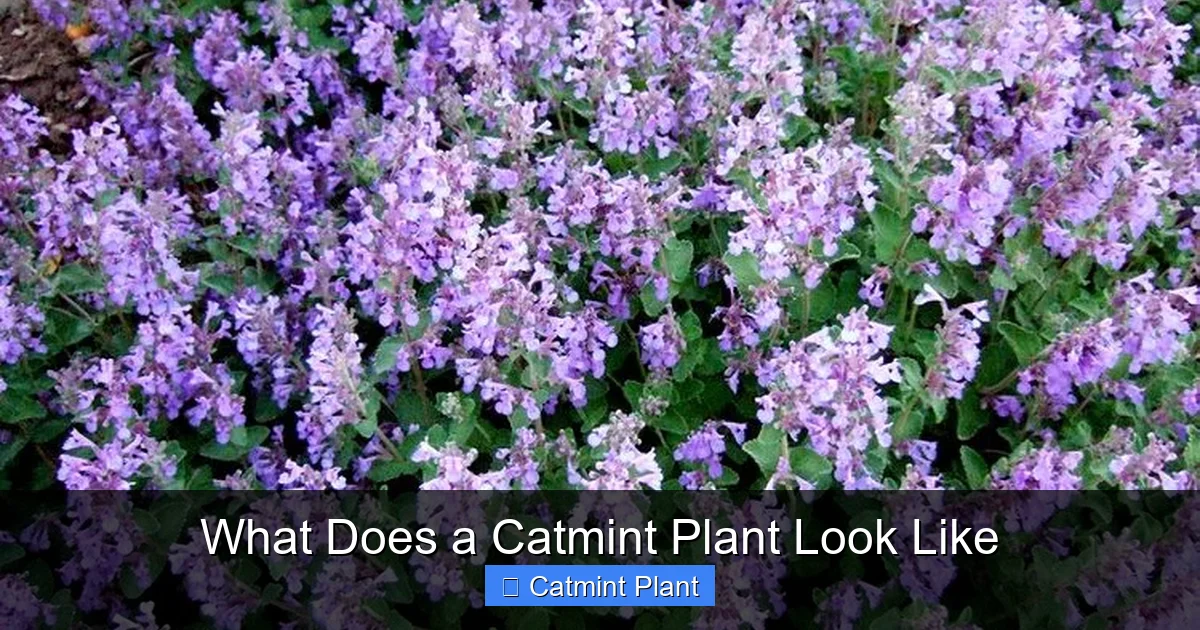
Catmint (Nepeta) is a low-growing perennial with aromatic gray-green foliage and spikes of lavender-blue flowers. It forms loose mounds 12-36 inches tall with square stems, toothed leaves, and tubular blooms that attract pollinators all summer long.
If you have ever wandered through a sunny garden in early summer and noticed clouds of soft blue flowers buzzing with bees, chances are you were looking at catmint. This tough, beautiful perennial has earned a permanent spot in gardens across the country, and for good reason. It blooms for months, asks for very little, and brings a relaxed, cottage-garden charm that few other plants can match. But if you are new to gardening or just trying to identify a mystery plant in your yard, you might wonder what does a catmint plant look like up close.
Let us walk through every detail together. We will cover the overall shape, the leaves, the flowers, the stems, and how the plant changes through the seasons. We will also look at popular varieties so you can spot the differences, and we will compare catmint to a few look-alikes so you never confuse them again. By the end, you will be able to point at a catmint plant and say, “Yes, that is it,” with total confidence.
Key Takeaways
- Distinctive foliage: Gray-green, heart-shaped leaves with scalloped edges and a fuzzy texture release a minty scent when crushed.
- Signature flowers: Small tubular blooms in lavender-blue, purple, or white appear on tall spikes from late spring through fall.
- Mounding habit: Plants form relaxed, billowy mounds 12-36 inches tall and wide depending on variety.
- Square stems: Like all mint family members, catmint has four-sided stems that are slightly hairy.
- Seasonal changes: Foliage emerges early spring, peaks in summer, and may rebloom after shearing.
- Variety differences: ‘Walker’s Low’ grows taller while ‘Cat’s Meow’ stays compact; flower color varies by cultivar.
- Easy identification: Combine aromatic leaves, square stems, and flower spikes to distinguish from similar plants like lavender or salvia.
Quick Answers to Common Questions
How tall does catmint grow?
Most garden catmints grow 12 to 30 inches tall depending on variety. Compact types like ‘Cat’s Meow’ stay around 18 inches while ‘Six Hills Giant’ can reach 36 inches.
What color are catmint flowers?
The classic color is lavender-blue, but cultivars also bloom in deep violet, pale pink, pure white, and soft yellow.
Does catmint spread aggressively?
No, catmint forms a clump that slowly expands. It does not run by rhizomes like true mint. Some varieties may self-seed lightly but are not invasive.
When does catmint bloom?
Catmint blooms from late spring (May/June) through fall. A midsummer shear encourages a heavy second flush in late summer.
Is catmint the same as catnip?
They are cousins in the same genus (Nepeta) but different species. Catnip (N. cataria) is weedy, taller, and drives cats wild. Garden catmint is ornamental, tidier, and less potent for cats.
📑 Table of Contents
- Getting to Know Catmint: A Quick Overview
- The Overall Shape and Growth Habit
- Leaves: Texture, Color, and Aroma
- Flowers: The Real Showstopper
- Stems and Branching Structure
- Seasonal Changes Throughout the Year
- Popular Varieties and How They Differ
- Catmint vs. Look-Alikes: Telling Them Apart
- Growing Conditions That Affect Appearance
- Using Catmint in Garden Design
- Common Problems That Change the Look
- Propagation: Making More of a Good Thing
- Final Thoughts on Catmint Identification
Getting to Know Catmint: A Quick Overview
Before we zoom in on the details, let us start with the big picture. Catmint belongs to the genus Nepeta, which includes around 250 species. The ones you see most often in gardens are hybrids like Nepeta x faassenii and Nepeta racemosa. These are herbaceous perennials, meaning they die back to the ground in winter and return fresh each spring. They thrive in USDA zones 3 through 8, handle drought like champs, and laugh in the face of poor soil.
The name “catmint” comes from the plant’s effect on cats. The leaves contain nepetalactone, the same compound that makes catnip (Nepeta cataria) drive felines wild. Garden catmint has less of it, so your cat might roll around in it but probably will not destroy the planting. The “mint” part of the name hints at its family ties. Catmint is a proud member of the Lamiaceae family, also known as the mint family. That lineage explains the square stems, the opposite leaves, and the aromatic oils you smell when you brush against the foliage.
Why Gardeners Love It
Catmint checks almost every box on a gardener’s wish list. It blooms from late spring well into fall if you give it a midseason haircut. The flowers are a magnet for bees, butterflies, and hummingbirds. Deer and rabbits usually leave it alone thanks to the strong scent. It tolerates heat, humidity, and dry spells once established. And it looks gorgeous spilling over a wall, edging a path, or mingling with roses and ornamental grasses.
Botanical Basics
Botanically speaking, catmint is a subshrub or herbaceous perennial with a woody base. The crown sits at or just below soil level. From there, dozens of stems rise and arch outward, creating that signature fountain shape. The root system is fibrous and relatively shallow, which helps the plant grab moisture quickly after rain but also means it appreciates a mulch layer to keep roots cool.
The Overall Shape and Growth Habit
When you stand back and look at a mature catmint plant, the first word that comes to mind is “mound.” But it is not a tight, rigid mound like a sheared boxwood. It is a loose, billowy, relaxed mound that seems to flow. The stems grow upward and then gracefully arch downward, especially when weighted with flowers. This creates a soft, cascading effect that softens hard edges in the garden.
Visual guide about What Does a Catmint Plant Look Like
Image source: bhg.com
Size Range by Variety
Height and spread vary quite a bit depending on which catmint you are growing. The classic ‘Walker’s Low’ reaches 24 to 30 inches tall and spreads 30 to 36 inches wide. Despite the name, it is not particularly low. On the other end, compact cultivars like ‘Cat’s Meow’ or ‘Junior Walker’ stay around 12 to 18 inches tall and wide. There are also taller selections like ‘Six Hills Giant’ that can hit 36 inches or more in rich soil. Width usually matches or slightly exceeds height, giving the plant a roughly rounded footprint.
Spacing and Fill-In Time
If you plant catmint in spring from a one-gallon nursery pot, it will look a bit sparse at first. Do not worry. These plants grow fast. By midsummer, a single plant can fill a two-foot circle. In year two, it doubles down. By year three, you have a substantial presence. Space plants 18 to 30 inches apart depending on the variety’s mature spread. They will knit together into a continuous drift if planted on the closer end of that range.
Form in the Landscape
The relaxed habit makes catmint a natural for informal designs. It works beautifully as a groundcover on a sunny slope, where the arching stems help hold soil. It shines at the front of a mixed border, where its fine texture contrasts with bolder leaves like peonies or hostas. It also thrives in containers, where the stems spill over the rim in a lovely cascade. Just make sure the pot has excellent drainage.
Leaves: Texture, Color, and Aroma
Move in closer and the foliage takes center stage. Catmint leaves are one of the plant’s most distinctive features. They are small, typically one to two inches long, and shaped like a broad heart or a rounded triangle with a notch at the base. The edges are gently scalloped or toothed, giving each leaf a slightly ruffled look.
Color and Surface
The color is a beautiful gray-green, sometimes described as sage or sea-green. This comes from a fine layer of tiny hairs covering the leaf surface. Those hairs serve a purpose. They reflect sunlight, reduce water loss, and give the foliage a soft, almost velvety texture. Run your fingers across a leaf and you will feel a subtle fuzziness, not sticky, just pleasantly tactile. The undersides are often paler, almost silvery, which adds a nice two-tone effect when the wind flips the leaves.
Arrangement on the Stem
Leaves grow in opposite pairs along the square stems. Each pair sits at a 90-degree angle to the pair above and below, creating a neat, cross-crossed pattern if you look down the stem. The leaf stems (petioles) are short, so the leaves hug the main stem closely. This dense leaf coverage is part of what makes the plant look so full and lush even before it flowers.
The Scent Test
Crush a leaf between your thumb and forefinger. A strong, minty, slightly citrusy aroma rises instantly. It is cleaner and more herbal than catnip, less skunky, more like a blend of spearmint and lemon verbena. This scent is your best field identification tool. If you are unsure whether a plant is catmint, give it a sniff. The aroma is unmistakable once you know it.
Seasonal Leaf Changes
In early spring, new growth emerges a brighter, fresher green. As summer heat builds, the gray cast deepens. In very hot, dry spells, the leaves may curl slightly at the edges to conserve moisture. After the first flush of flowers fades, the foliage can look a bit tired, especially lower leaves that get shaded out. This is normal and a good signal to shear the plant back (more on that later). Fresh growth returns quickly, looking crisp and clean again.
Flowers: The Real Showstopper
Now for the part everyone loves. Catmint flowers are small individually but massed together they create a haze of color that catches the light and draws the eye. The bloom season is impressively long, often starting in late May or early June and continuing with waves of flowers into September or even October.
Flower Structure Up Close
Each flower is a tiny tube, about half an inch long, with two lips. The upper lip is hooded, the lower lip is three-lobed and acts as a landing pad for pollinators. Inside, four stamens arch under the hood. The flowers are arranged in whorls around the stem, forming a dense, interrupted spike that can reach six to twelve inches long. From a distance, the spike looks like a fuzzy caterpillar of color.
Color Palette
The classic catmint color is lavender-blue, a cool, dreamy shade that reads as purple in some light and blue in others. But breeders have expanded the range. You can find cultivars with deep violet flowers (‘Blue Wonder’), pale pink (‘Pink Cat’), pure white (‘Snowflake’ or ‘Alba’), and even soft yellow (‘Yellow Catmint’ – Nepeta govaniana, a different species). The calyx, the green or purplish cup that holds the flower, often stays colorful after the petals drop, extending the show.
Bloom Timeline
The first flush is the heaviest, usually peaking in June. After that, the plant continues to produce flower spikes at the stem tips, but the display becomes looser. If you shear the whole plant back by half in midsummer, right after the first big bloom, you will get a tidy mound of fresh foliage and a second heavy flush in late summer. This “Chelsea chop” technique keeps the plant looking sharp and prevents the center from opening up.
Pollinator Activity
Stand near a blooming catmint on a sunny morning and you will hear it before you see it. Honeybees, bumblebees, native solitary bees, hoverflies, and butterflies work the flowers nonstop. Hummingbirds dart in for nectar too. The long bloom season makes catmint a keystone plant for pollinator gardens. It bridges the gap between spring bulbs and late-summer perennials like coneflowers and sedums.
Stems and Branching Structure
Stems might not be the first thing you notice, but they hold the whole show together. Understanding the stem structure helps you understand how the plant grows, where to cut, and why it looks the way it does.
Square Stems: The Mint Family Tell
Roll a catmint stem between your fingers. You will feel four distinct edges. It is square in cross-section, a hallmark of the Lamiaceae family. The stems are green when young, often tinged with purple at the nodes (where leaves attach). They are covered in the same fine hairs as the leaves, giving them a slightly rough, matte feel. As the season progresses, the lower portions of the stems become woody and brown, especially near the crown.
Branching Pattern
Each node produces a pair of leaves and, in the upper nodes, a pair of flower spikes. The branching is naturally dense because the plant produces many lateral shoots from the base and from lower nodes. This creates the full, multi-stemmed mound. However, the center of an older plant can become bare if stems all lean outward. That is why periodic shearing or division every few years keeps the plant youthful and dense.
Stem Strength and Flopping
Catmint stems are wiry and flexible, not thick and rigid. In rich soil or with too much water, they grow long and soft, and the whole plant can flop open in the middle after a heavy rain. This is the classic “catmint donut” look, green ring, dead center. Lean conditions, full sun, and a midseason trim prevent this. Some gardeners use a low grow-through support or a ring of stakes and twine installed early, but proper culture usually makes it unnecessary.
Seasonal Changes Throughout the Year
A catmint plant is not static. It moves through distinct phases, and knowing what to expect each season helps you care for it and appreciate its rhythm.
Early Spring: The Wake-Up
In March or April (depending on your zone), you will see small gray-green shoots pushing up from the crown. They look like tiny fists unclenching. This is the time to cut back last year’s dead stems to the ground. Do not be shy. Cut everything to an inch or two. The new growth will emerge clean and strong. If you leave the old stems, they just get in the way and look messy.
Late Spring: The Rush
By May, the plant is growing visibly day by day. Stems lengthen, leaves expand, and the mound fills out rapidly. Flower buds form at the tips. The foliage is at its freshest, most vibrant gray-green. This is a great time to apply a thin layer of compost around the base if your soil is poor, but skip fertilizer. Catmint flowers better in lean conditions.
Early Summer: Peak Bloom
June brings the main event. The plant is a cloud of color. Bees are everywhere. The scent is strong on warm afternoons. This is peak catmint. Enjoy it. Cut stems for bouquets if you like; they last five to seven days in a vase and the scent fills a room.
Midsummer: The Trim
By July, the first flush fades. Spent flower spikes turn brown. The center may open up. This is decision time. You can deadhead individual spikes, but shearing the whole plant to six to twelve inches is faster and better. It looks drastic for a week, then fresh green growth erupts. By August, you have a tight green mound again.
Late Summer into Fall: The Encore
September brings the second bloom, usually smaller but still lovely. The foliage stays clean if you sheared. As nights cool, the gray-green deepens. Flowers continue until hard frost. In mild climates, you might see blooms into November.
Winter: Dormancy
After a few hard freezes, the stems die back. The plant goes dormant. In zones 5 and colder, a light mulch of shredded leaves or straw over the crown helps prevent winter heaving. In spring, you do it all again.
Popular Varieties and How They Differ
Walk into a nursery in spring and you will likely see several catmint varieties side by side. They share the family traits but differ in size, flower color, and habit. Here are the ones you will meet most often.
‘Walker’s Low’ – The Classic
Named Perennial Plant of the Year in 2007, ‘Walker’s Low’ is the gold standard. It grows 24 to 30 inches tall and wide with lavender-blue flowers and aromatic gray-green leaves. It is vigorous, reliable, and widely available. The name confuses people; it is not a groundcover. It was named after a garden in Ireland, not its height.
‘Cat’s Meow’ – The Compact Pro
Bred for a tighter habit, ‘Cat’s Meow’ stays 17 to 20 inches tall and spreads 24 to 30 inches. It does not flop. The flower color is a slightly deeper blue. It blooms heavily and reblooms well after shearing. Perfect for smaller spaces, containers, or the front of the border.
‘Junior Walker’ – The Mini Me
Think of this as ‘Walker’s Low’ shrunk down. It hits 15 to 18 inches tall and wide. Same great flower power, same toughness, just smaller. Great for edging a path or tucking into a rock garden.
‘Six Hills Giant’ – The Big One
An older cultivar, ‘Six Hills Giant’ lives up to its name. It can reach 36 inches tall and wide in good soil. The flowers are a soft lavender-blue. It makes a bold statement but needs room and may require staking or a midseason cut to stay upright.
‘Blue Wonder’ – Intense Color
If you want the deepest blue flowers, this is it. ‘Blue Wonder’ grows 12 to 18 inches tall with a spreading habit. The flowers are a rich, saturated violet-blue. It blooms early and long. A favorite for color impact.
‘Snowflake’ and ‘Alba’ – White Options
White-flowered catmints bring a cool, crisp look. ‘Snowflake’ is compact at 12 inches with pure white blooms. ‘Alba’ is taller, around 24 inches. Both pair beautifully with pastel roses or dark-leaved heucheras.
‘Pink Cat’ – Something Different
Soft pink flowers on a 12 to 15 inch mound. The color is unusual for catmint and works well in a pink-and-blue scheme. It is a bit less vigorous than the blues but worth it for the novelty.
Species Types: Nepeta racemosa and Nepeta x faassenii
You may see the straight species Nepeta racemosa (sometimes sold as N. mussinii) or the hybrid Nepeta x faassenii. N. racemosa is lower, 12 inches, with a loose habit and pale lavender flowers. N. x faassenii is the parent of many named cultivars, 18 to 24 inches, sterile (does not self-seed), with grayer foliage. Both are excellent garden plants, just less uniform than selected cultivars.
Catmint vs. Look-Alikes: Telling Them Apart
Several plants share catmint’s color palette or growth habit. Here is how to tell them apart at a glance.
Catmint vs. Lavender
Both have gray-green foliage and purple-blue flowers. But lavender (Lavandula) has needle-like leaves, not broad heart-shaped ones. Lavender stems become woody and brown faster. Lavender flowers are in tighter, more cylindrical spikes on longer, leafless stems. And the scent is floral-sweet, not minty-herbal. Lavender also demands sharper drainage and hates wet feet more than catmint.
Catmint vs. Russian Sage
Russian sage (Perovskia atriplicifolia) is taller, airier, and blooms later (mid to late summer). Its leaves are deeply cut, almost feathery, not toothed hearts. The stems are silvery-white, not green. The flowers are smaller, in wispy panicles, creating a haze rather than a dense spike. Russian sage is a subshrub with a woody base that persists; catmint dies to the ground.
Catmint vs. Salvia
Perennial salvias (Salvia nemorosa, S. x sylvestris) have similar flower spikes but the leaves are larger, more wrinkled, and a deeper green, not gray. The stems are stiffer, more upright. Salvia blooms earlier (late spring) and often takes a longer break before reblooming. Crush a salvia leaf; it smells sage-like, not minty.
Catmint vs. Catnip
Catnip (Nepeta cataria) is the wild cousin. It grows taller, 3 to 4 feet, with a rangy, weedy habit. The leaves are larger, coarser, more triangular, and a brighter green. The flowers are white with pale purple spots, in looser spikes. The scent is stronger, funkier, and cats go crazy for it. Catnip self-seeds aggressively; garden catmint rarely does.
Catmint vs. Hyssop
Anise hyssop (Agastache foeniculum) has similar flower spikes but the leaves are larger, more pointed, and smell strongly of licorice-anise. The plant is taller, 3 to 4 feet, with a more vertical habit. It is a short-lived perennial that self-seeds; catmint is long-lived and clump-forming.
Growing Conditions That Affect Appearance
What a catmint plant looks like in your garden depends heavily on where and how you grow it. The same variety can look compact and floriferous in one spot and leggy and sparse in another.
Sun Exposure
Full sun (six to eight hours direct) produces the densest growth, the most flowers, and the best foliage color. In part shade (four to six hours), stems stretch toward the light, the plant gets looser, flowering decreases, and the gray-green color fades to a greener tone. Catmint will survive in shade but it will not thrive or look its best.
Soil Fertility
Lean, well-drained soil (sandy, gravelly, even rocky) keeps catmint compact and floriferous. Rich, moist, fertile soil encourages lush, soft, floppy growth with fewer flowers. If your soil is heavy clay, amend with grit or plant on a mound. Do not add compost to the planting hole; just loosen the existing soil.
Watering
Established catmint is drought-tolerant. Overwatering leads to weak stems, root rot, and a shorter lifespan. Water deeply but infrequently. Let the soil dry between waterings. In containers, water when the top inch of mix is dry.
Pruning and Maintenance
We mentioned the midseason shear. That is the single biggest factor in keeping catmint looking good all season. Without it, the plant gets leggy, the center opens, and flowering declines. Shear to six to twelve inches in early July. Also, divide clumps every three to four years in early spring. Dig the whole plant, cut into sections with a sharp spade or knife, and replant the vigorous outer pieces. Discard the woody center. This rejuvenates the plant and gives you free plants.
Using Catmint in Garden Design
Knowing what catmint looks like helps you place it for maximum impact. Its soft mounding form, long bloom, and cool color make it incredibly versatile.
Edging and Borders
Plant a row of compact catmint along a path or driveway. The billowy habit softens the hard line. The scent releases when you brush past. The flowers provide months of color at knee height. Space plants 18 inches apart for a quick fill.
Rose Companions
Catmint is a classic underplanting for roses. It covers the bare canes at the base, blooms at the same time as the first rose flush, and the blue flowers make pink, red, yellow, or white roses pop. The loose habit contrasts with the upright rose form. And it may help deter aphids.
Pollinator and Wildlife Gardens
Mass catmint in a sunny meadow or pollinator patch. Combine with coneflowers, bee balm, black-eyed Susans, and ornamental grasses. The long bloom feeds bees when other sources are scarce. The seeds feed goldfinches in fall if you leave some spent spikes.
Rock Gardens and Slopes
Catmint thrives in the sharp drainage of a rock garden. Let it spill over stones. On a slope, the arching stems help stabilize soil. Pair with creeping thyme, sedums, and dwarf conifers.
Containers
Use a pot at least 12 inches wide and deep. Fill with a gritty, well-draining mix (half potting soil, half perlite or coarse sand). Water when dry. Fertilize lightly once in spring. Shear after first bloom. In cold zones, move the pot to an unheated garage for winter or sink it in the ground.
Common Problems That Change the Look
Even easy plants have off days. Here is what might make your catmint look less than stellar, and what to do.
Flopping Open Center
As mentioned, this is usually too much water, too much fertility, or not enough sun. Fix the culture. Shear hard in midsummer. Stake early next year if needed.
Yellowing Leaves
Usually overwatering or poor drainage. Roots rot, leaves yellow from the bottom up. Improve drainage. Cut back watering. If it is in a low spot, move it to higher ground.
Powdery Mildew
A white dusty coating on leaves in humid weather, especially with poor air circulation. Space plants properly. Water at the base, not overhead. Shear affected growth. It is rarely fatal, just unsightly.
Spider Mites
Tiny pests that suck leaf juices, causing stippling and bronzing. They love hot, dry, dusty conditions. Blast with water. Increase humidity. Insecticidal soap works if caught early.
Crown Rot
Mushy, blackened base. Plant collapses. Caused by wet soil over winter or deep planting. Ensure crown sits at soil level, not buried. Mulch away from crown, not over it.
Propagation: Making More of a Good Thing
If you love what your catmint looks like, make more. It is easy.
Division
Best done in early spring as new growth appears. Dig the clump. Cut into fist-sized pieces with roots and shoots. Replant immediately. Water well. They will bloom the same year.
Stem Cuttings
In late spring or early summer, take four-inch cuttings from non-flowering shoots. Strip lower leaves. Dip in rooting hormone (optional). Stick in moist perlite or sand. Cover with a plastic bag. Roots in three to four weeks. Pot up and grow on.
Seed
Named cultivars do not come true from seed. But species types and self-sown seedlings from hybrids can be fun. Sow indoors six to eight weeks before last frost. Barely cover. Keep moist. Transplant after frost. Expect variation.
Final Thoughts on Catmint Identification
So, what does a catmint plant look like? It looks like a relaxed mound of aromatic gray-green leaves topped with spikes of lavender-blue flowers that dance in the breeze and hum with bees. It looks like a plant that asks for little and gives months of beauty. It looks like a garden staple that belongs in every sunny spot.
Next time you see those square stems, scalloped leaves, and fuzzy flower spikes, you will know. You will crush a leaf, smell that minty citrus, and smile. That is catmint. And now, it is yours to grow, share, and enjoy.
Frequently Asked Questions
What does a catmint plant look like in early spring?
In early spring, catmint emerges as small gray-green shoots from the crown. The new growth looks like tiny fists unclenching. Last year’s dead stems should be cut to the ground to make way for fresh foliage.
How can I tell catmint apart from lavender?
Catmint has broad, heart-shaped, toothed leaves with a minty scent. Lavender has narrow, needle-like leaves and a floral-sweet aroma. Catmint stems stay green longer; lavender becomes woody faster.
Why is my catmint flopping open in the middle?
Flopping usually means too much water, rich soil, or insufficient sun. Shear the plant back by half in midsummer. Next year, plant in leaner soil, full sun, and water less.
Does catmint stay green all year?
No, catmint is herbaceous perennial. It dies back to the ground after hard frost in fall. In spring, new growth emerges from the crown. In mild winters, a few basal leaves may persist.
Can catmint grow in shade?
Catmint tolerates part shade (4-6 hours sun) but becomes leggy, flowers less, and loses its compact form. Full sun (6+ hours) is best for dense growth and maximum blooms.
How often should I divide catmint?
Divide catmint every 3-4 years in early spring. This rejuvenates the plant, prevents center die-out, and gives you free plants. Discard the woody center; replant vigorous outer sections.