Thyme Watering Schedule and Tips
Thyme thrives on neglect and prefers dry conditions over wet feet. Water deeply but infrequently, allowing soil to dry completely between sessions. Adjust your thyme watering schedule based on season, container type, and climate for the healthiest, most flavorful harvest.
If you have ever killed a thyme plant, chances are you loved it to death with water. I have been there. You see the soil looking dry on top, you reach for the can, and suddenly your aromatic herb turns into a mushy, yellow mess. The truth is thyme comes from the rocky hillsides of the Mediterranean. It evolved to survive scorching sun, poor soil, and weeks without rain. Its roots want air as much as they want moisture. Understanding the right thyme watering schedule changes everything. You stop guessing. You start growing.
This guide walks you through every nuance of watering thyme. We cover frequency, volume, seasonal shifts, container quirks, and the telltale signs your plant is begging for a drink or drowning in one. Whether you grow a single pot on a windowsill or a sprawling patch in a raised bed, you will finish this article knowing exactly what to do and when to do it.
Key Takeaways
- Less is more: Thyme prefers drought to drowning; water only when the top inch of soil feels completely dry.
- Deep watering wins: Soak the root zone thoroughly rather than frequent light sprinkles to encourage deep roots.
- Season matters: Cut water by half in winter; increase slightly during peak summer heat for container plants.
- Drainage is critical: Use gritty, well-draining soil and pots with holes to prevent root rot.
- Morning is best: Water early so foliage dries before evening, reducing fungal disease risk.
- Container vs. ground: Pots dry faster; check daily in summer. In-ground plants need water only during extended drought.
- Watch for signs: Yellow leaves mean too much water; woody stems and leaf drop mean too little.
Quick Answers to Common Questions
How often should I water thyme in a pot during summer?
Check daily. Water deeply when the top inch of soil is dry, typically every three to four days for large pots and every one to two days for small pots in extreme heat.
Can I water thyme at night?
Avoid night watering. Wet foliage overnight invites fungal disease. Water in the early morning so leaves dry quickly.
Why is my thyme turning yellow and mushy?
Classic overwatering. Roots are rotting. Stop watering, improve drainage, and consider repotting in fresh gritty mix.
Does thyme need water in winter?
In-ground thyme needs no winter water. Potted thyme needs a light drink once a month if kept above freezing.
What is the best soil mix for thyme drainage?
One part coarse sand or grit, one part compost, one part potting soil or native soil. Add perlite or pumice for extra aeration.
📑 Table of Contents
- Understanding Thyme Natural Habitat
- Establishing a Baseline Thyme Watering Schedule
- Seasonal Adjustments to Your Thyme Watering Schedule
- Container vs. In-Ground Watering Nuances
- Reading Your Plant: Signs of Overwatering and Underwatering
- Special Situations and Pro Tips
- Common Myths About Watering Thyme
- Building Your Personal Thyme Watering Calendar
- Conclusion
Understanding Thyme Natural Habitat
Thyme originates from the Mediterranean basin. Think of the hills of Greece, the coast of southern France, the islands of the Aegean. The soil there is thin, rocky, and alkaline. Rain falls in sudden winter storms, then the sun bakes the ground for months. Thyme adapted by sending roots deep into cracks, storing water in woody stems, and growing small, waxy leaves that limit evaporation.
What This Means for Your Garden
You do not need to recreate a Greek hillside. You do need to respect the plant’s biology. Thyme hates wet feet. Soggy soil suffocates roots and invites fungal pathogens like root rot and botrytis. The number one killer of thyme is not neglect. It is kindness expressed through a watering can. Keep this mental image: thyme roots want a sip, then a breath, then a sip. Never a soak that lasts for days.
Soil Structure Is Half the Battle
Before you even think about a schedule, check your soil. Heavy clay holds water like a sponge. Pure peat moss stays wet for weeks. Thyme needs sharp drainage. Mix one part coarse sand or fine grit, one part compost, and one part native soil or quality potting mix. In containers, add a handful of perlite or pumice per gallon of mix. The water should run through the pot in seconds, not minutes. If you squeeze a moist handful and it clumps, add more grit. If it crumbles instantly, you are golden.
Establishing a Baseline Thyme Watering Schedule
There is no universal calendar date for watering thyme. The schedule depends on temperature, humidity, wind, pot size, and plant maturity. Instead of counting days, use the finger test. Push your index finger into the soil up to the second knuckle. If the tip feels bone dry, water. If it feels cool or damp, wait. This simple habit beats any app or reminder.
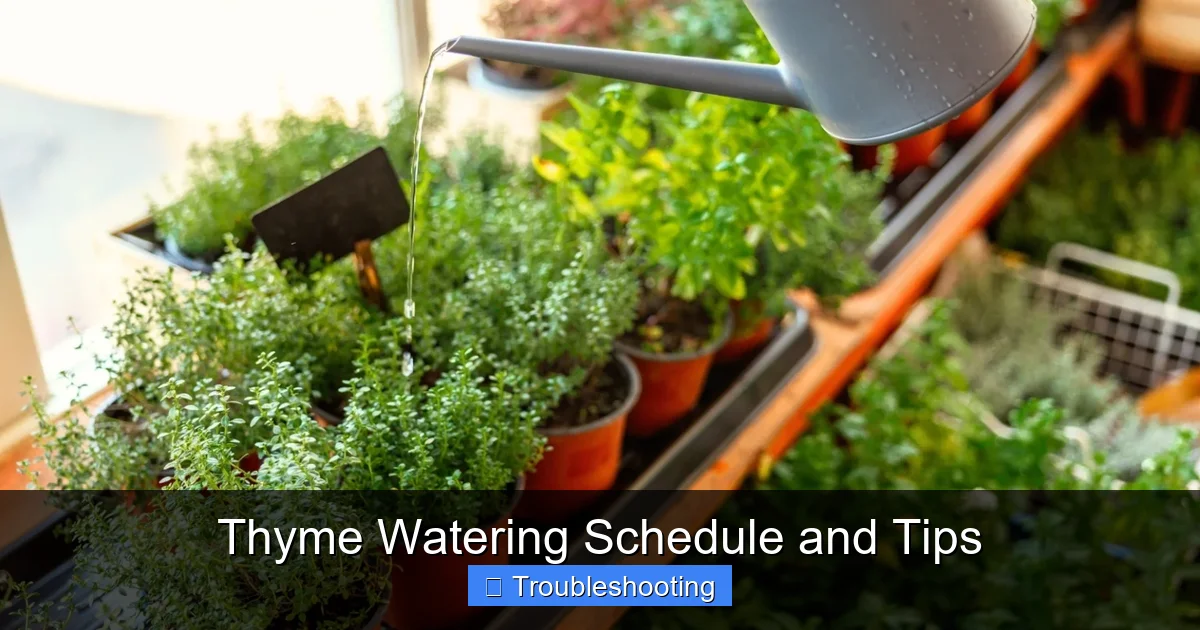
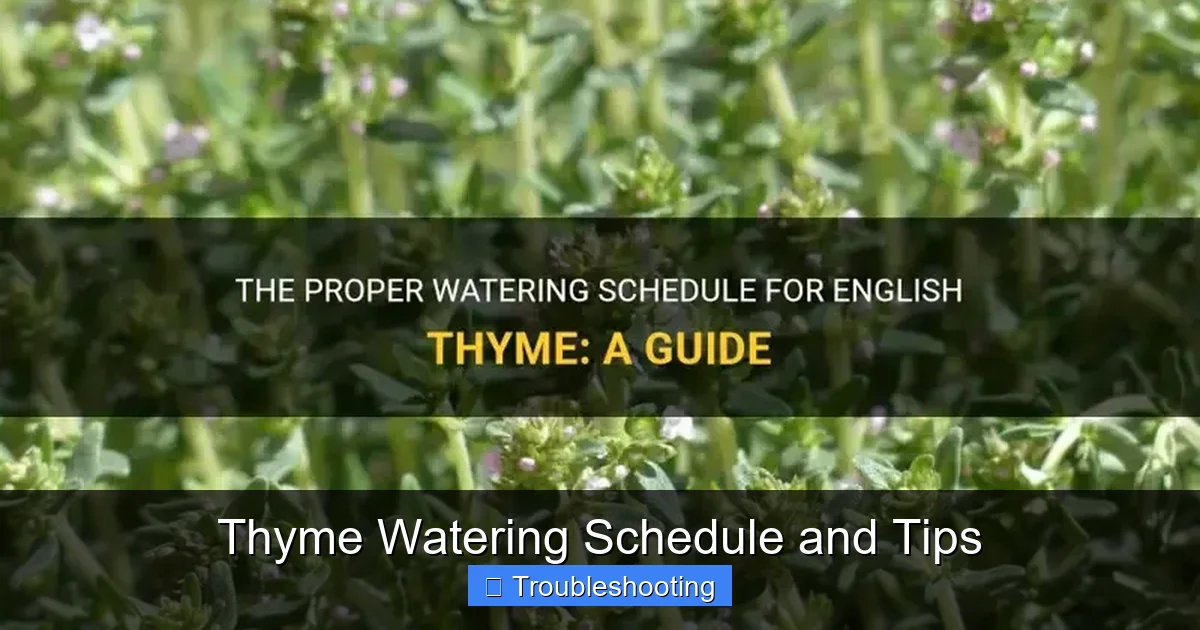
Visual guide about Thyme Watering Schedule and Tips
Image source: epicgardening.com
General Frequency Guidelines
In spring and fall, when days are mild and nights cool, established in-ground thyme often needs zero supplemental water. Rain does the job. Container thyme might need water every seven to ten days. In summer heat, pots may need water every three to four days. In-ground plants might need a deep soak every two weeks if rain fails. In winter, dormant thyme in the ground needs nothing. Potted thyme in a cold frame or unheated garage needs a light drink once a month just to keep roots from desiccating.
Deep Watering Technique
When you water, water deep. Apply water slowly at the base of the plant until the soil is moist six to eight inches down. For a ten-inch pot, that means water until it streams from the drainage holes, wait a minute, then water again. Shallow sprinkling encourages roots to stay near the surface where they fry in heat and freeze in cold. Deep watering trains roots to chase moisture downward, building drought resilience.
Morning vs. Evening
Always water in the morning. Foliage has all day to dry. Wet leaves at night are a fungal buffet. If you absolutely must water late, aim strictly at the soil, not the leaves. Use a watering wand or a narrow-spout can. Avoid overhead sprinklers for herbs. They waste water and invite disease.
Seasonal Adjustments to Your Thyme Watering Schedule
Seasons change. Your watering must change with them. A rigid year-round schedule kills thyme faster than almost anything else. Here is how to adapt month by month.
Spring Awakening
As days lengthen and soil warms, thyme breaks dormancy. New growth appears. Roots wake up and start drinking. Check soil every four to five days. Water when the top inch is dry. Spring rains often handle this for you. If you get a good soaking rain, skip the next scheduled check. Fertilize lightly with compost tea after the first heavy watering of the season. Do not overdo nitrogen. It produces lush, weak growth with less flavor.
Summer Heat Management
July and August test thyme. In-ground plants with deep roots often sail through without help. Containers are different. A black plastic pot in full sun can hit root-zone temperatures over one hundred degrees. Soil dries in hours. Check pots daily during heat waves. Water deeply in the early morning. Consider moving pots to afternoon shade if temps exceed ninety-five Fahrenheit. Mulch with gravel or white stone. It reflects heat and slows evaporation without holding moisture against stems like organic mulch can.
Fall Transition
As nights cool, growth slows. Water needs drop fast. Stretch intervals to every ten to fourteen days for pots. Stop watering in-ground thyme entirely unless you hit a three-week dry spell. This dry-down period hardens the plant for winter. Wet roots going into a freeze turn to mush. Let the soil dry. The plant will look a little tired. That is good. It is preparing.
Winter Dormancy
In zones five and above, in-ground thyme needs zero water from November through March. Snow melt and rain suffice. In zones four and below, a thick straw mulch after the ground freezes prevents heaving. For containers, the rules shift. If pots stay outdoors in a sheltered spot, water once a month on a mild day above freezing. If you bring pots into an unheated garage or basement, water lightly every three to four weeks. The goal is survival, not growth. Do not fertilize. Do not prune. Just keep roots barely alive.
Container vs. In-Ground Watering Nuances
Where you grow thyme dictates how you water. The physics of a pot versus the earth are wildly different. Master both and you master thyme anywhere.
Container Challenges
Pots have finite soil volume. They heat up faster. They dry out faster. They leach nutrients faster. A thyme plant in a six-inch terra cotta pot in July might need water every two days. The same plant in a sixteen-inch ceramic pot might go a week. Terra cotta breathes, pulling moisture from the sides. Plastic and glazed ceramic hold water longer. Always choose pots with multiple drainage holes. One hole clogs. Three holes survive. Elevate pots on feet or bricks. Never let them sit in saucers full of water. That is a root rot guarantee.
In-Ground Advantages
Earth acts as a massive buffer. Temperature swings are muted. Moisture spreads laterally. A mature thyme plant in the ground can send roots three feet deep and wide. It accesses water you cannot see. After the first year, in-ground thyme in most climates needs zero supplemental water except in extreme drought. The first year is different. Treat first-year plants like container plants. Water when the top inch dries. By year two, taper off. By year three, forget the hose exists.
Raised Bed Middle Ground
Raised beds drain faster than ground soil but hold more volume than pots. They warm earlier in spring. They dry faster in summer. Water raised bed thyme like a large container. Check every five to seven days in summer. Mulch heavily with gravel. The sides of the bed lose moisture to air. The center stays wet longer. Check multiple spots.
Reading Your Plant: Signs of Overwatering and Underwatering
Your thyme talks. You just need to learn the language. The leaves, stems, and even the smell tell you exactly what is happening below the surface.
Overwatering Red Flags
Yellow leaves starting at the bottom. Stems turning brown or black at the soil line. A sour, swampy smell when you sniff the pot. Soil that stays dark and wet for days. Fungus gnats hovering. Mold on the soil surface. Leaves that feel soft and limp, not crisp. If you see these, stop watering immediately. Pull back mulch. Increase airflow. If the plant is in a pot, consider repotting into fresh, dry gritty mix. Trim away any mushy roots. Dust cuts with cinnamon as a natural fungicide. Cross your fingers.
Underwatering SOS
Leaves curling inward like tiny tacos. Stems becoming brittle and snapping easily. Leaf drop, especially lower leaves. The plant looks gray-green instead of vibrant green. Growth stops completely. The soil pulls away from the pot edges. When you water, it runs straight through without absorbing. This is hydrophobic soil. Fix it by bottom watering. Set the pot in a tray of water for twenty minutes. Let the soil drink from below. Then resume normal deep watering on a shorter interval.
The Sweet Spot
Healthy thyme looks perky. Leaves are small, dense, and slightly glossy. Stems are flexible but firm. The scent is strong when you brush the foliage. New growth appears at the tips regularly. The soil is light in color on top, dark and cool an inch down. This is the zone. Stay here.
Special Situations and Pro Tips
Real gardens throw curveballs. Here are the scenarios that confuse even experienced growers and how to handle them.
Newly Planted or Transplanted Thyme
Roots are damaged or confined. They cannot hunt water yet. Water every two to three days for the first two weeks. Then stretch to every four days. By week six, treat as established. Never let a new transplant dry out completely. Never let it sit soggy. It is a tightrope. Morning watering is non-negotiable here.
Heat Wave Emergency Protocol
Temps above one hundred for days. Pots baking. Move containers to dappled shade or east-only sun. Water deeply at dawn. Water again at dusk only if soil is bone dry at two inches. Mist foliage at midday to lower leaf temperature, but only if humidity is low. Do not fertilize. Do not prune. Survival mode only.
Vacation Watering Solutions
Going away for a week in July? Group pots together in a shady spot. Water deeply before you leave. Set up a drip irrigation timer if you have one. No timer? Use wine bottle stakes or ceramic spikes. Test them a week before. They vary wildly. For in-ground plants, a two-inch gravel mulch and a deep soak before departure usually covers seven to ten days.
Indoor Thyme on a Windowsill
Indoor air is dry. Heating vents blast hot air. Pots are small. Light is lower. Check soil every three days. Water when the top half-inch is dry. Use a saucer with pebbles and water to raise humidity without wetting roots. Rotate the pot weekly for even growth. Expect slower growth and less intense flavor. That is normal. Harvest sparingly.
Hydroponic and Aquaponic Thyme
Yes, thyme grows in water-based systems. But the roots need oxygen. Use an air stone. Keep water temperature below seventy-five. Let roots have air exposure cycles. Ebb and flow works better than deep water culture. Nutrient strength at half of what basil wants. pH at six point zero to six point five. This is advanced. Master soil first.
Common Myths About Watering Thyme
Myths persist because they sound logical. Let us kill the big ones.
Myth: Thyme Needs No Water Ever
False. Established in-ground thyme in a Mediterranean climate needs little. But thyme in a pot in Phoenix in July needs water every two days. Thyme in a Seattle winter needs zero. Context is everything. The plant adapts. You must adapt with it.
Myth: Misting Replaces Watering
Misting wets leaves. Roots drink. Misting raises humidity briefly. It does not hydrate the root zone. In fact, frequent misting encourages powdery mildew on thyme’s dense foliage. Water the soil. Skip the mist.
Myth: Gravel at the Bottom of Pots Improves Drainage
This is the perched water table myth. A layer of coarse material under fine soil creates a barrier. Water saturates the soil above before crossing the texture change. You get wetter roots, not drier. Fill the pot with uniform gritty mix from bottom to top. Use a coffee filter or landscape fabric over holes to stop soil loss. That is it.
Myth: Wilting Always Means Thirst
Wilting means the plant cannot move water to leaves. That happens when soil is dry. It also happens when roots are rotted from too much water. Always check soil before watering a wilted plant. If wet, do not water. Diagnose roots instead.
Building Your Personal Thyme Watering Calendar
Take the principles above. Build a simple calendar. Paper or phone. It does not need to be fancy.
Monthly Template
January: Check pots monthly. Water lightly if soil bone dry. Ground: nothing.
February: Same. Watch for early warm spells.
March: Increase checks to biweekly. Water as growth resumes.
April: Weekly checks. Water when top inch dry.
May: Every five days for pots. Ground after dry spells.
June: Every three to four days for pots. Deep soak ground if no rain two weeks.
July: Daily checks for small pots. Every three days for large. Morning only.
August: Same as July. Mulch check.
September: Stretch to weekly. Stop ground watering.
October: Biweekly pots. Prep for dormancy.
November: Monthly pots. Mulch ground plants.
December: Monthly pots. Rest.
Adjust for Your Zone
Zone nine to eleven: Shift everything earlier. Summer watering is intense. Winter is barely a pause.
Zone five to eight: Follow template closely.
Zone three to four: Shorten growing season. Winter protection critical. Pots need indoor or heavily protected storage.
Track and Tweak
Write down what you did and how the plant responded. Next year you have data. Data beats memory. Note rain amounts. Note heat waves. Note fertilizer dates. After two seasons, you will know your thyme better than any article can tell you.
Conclusion
Watering thyme is not about following a rigid rule. It is about observing, adapting, and respecting a plant that evolved to thrive on very little. The best thyme watering schedule is the one you build by sticking your finger in the soil, watching the leaves, and learning the rhythm of your specific garden. Start with the baseline. Water deep. Water morning. Let it dry. Adjust for season, container, and climate. Trust the plant’s signals over the calendar. Do that, and you will harvest fragrant, flavorful thyme for years. The plant does not want your constant attention. It wants your informed restraint. Give it that, and it rewards you with abundance.
Frequently Asked Questions
How do I know if my thyme needs water?
Push your finger into the soil up to the second knuckle. If the tip feels completely dry, water. If cool or damp, wait. Also watch for leaves curling inward, which signals thirst.
Should I use a moisture meter for thyme?
You can, but the finger test is more reliable and free. Cheap meters often give false readings in gritty, well-draining mixes. Trust your finger.
Can thyme recover from root rot?
Early stages, yes. Unpot, trim mushy roots, dust with cinnamon, repot in dry gritty mix, and withhold water for a week. Advanced rot is usually fatal.
Is bottom watering good for thyme?
Bottom watering works well for rehydrating hydrophobic soil. Do not leave the pot sitting in water longer than thirty minutes. Top watering is fine for routine care.
How much water does a mature thyme plant need per session?
Enough to moisten the root zone six to eight inches deep. For a twelve-inch pot, water until it flows freely from drainage holes, pause, then repeat once.
Can I use tap water for thyme?
Yes, unless your water is heavily softened with sodium. Sodium builds up in soil and harms thyme. If softened, use rainwater, filtered, or let tap water sit overnight.