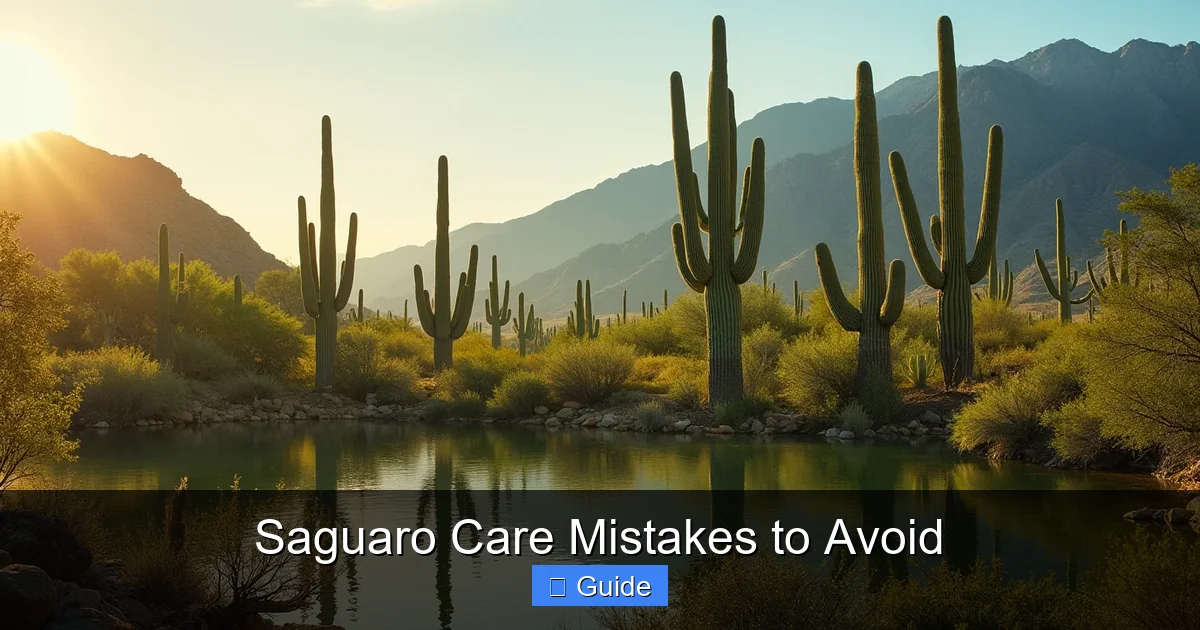
Saguaro Care Mistakes to Avoid
Saguaro cacti are iconic desert giants that can live for centuries, but they’re surprisingly fragile in cultivation. Most failures come from overwatering, poor drainage, wrong soil, or planting too deep. This guide covers the top saguaro care mistakes to avoid so your cactus thrives for generations.
You bought a saguaro. Maybe it was a tiny seedling from a specialty nursery. Maybe it was a foot-tall spear from a garden center. Maybe you inherited one with a new house. Whatever brought this iconic cactus into your life, you want it to thrive. You picture it decades from now — arms raised against an Arizona sunset, a living landmark.
Here is the hard truth. Most saguaros in cultivation die within the first five years. Not from pests. Not from disease. From well-meaning owners making the same handful of saguaro care mistakes to avoid. These cacti survived ice ages and megadroughts. They did not evolve to survive weekly watering, rich compost, or a shovel slicing through their roots.
This guide walks through every major error that kills saguaros in captivity. You will learn what these cacti actually need — and why the advice that works for your tomatoes or roses will murder your saguaro. Read it once. Bookmark it. Come back when you are tempted to water “just a little more.”
Key Takeaways
- Overwatering is the number one killer: Saguaros need deep, infrequent watering that mimics desert rain patterns, not regular irrigation schedules.
- Soil drainage matters more than soil nutrients: Use a gritty, fast-draining mix with minimal organic matter to prevent root rot.
- Plant at the same depth as the nursery container: Burying the root crown leads to stem rot and eventual collapse of the cactus.
- Young saguaros need shade protection: Despite being desert plants, seedlings and juveniles burn easily in full sun without nurse plant cover.
- Never transplant a mature saguaro without professional help: Their shallow but extensive root systems shatter easily, and the cactus weighs tons.
- Fertilizer does more harm than good: Saguaros evolved in nutrient-poor soils; feeding causes weak, rapid growth prone to splitting and disease.
- Patience is essential: Saguaros grow inches per year for decades; rushing care creates problems that appear years later.
Quick Answers to Common Questions
How often should I water my saguaro?
Water deeply only when soil is completely dry at root depth. Established in-ground saguaros rarely need supplemental water. New plantings need water every 2-3 weeks in first summer, monthly in year two, only during extreme drought after that. Winter watering: zero times.
Can I plant a saguaro in regular garden soil?
No. Regular garden soil holds too much moisture and lacks drainage. Mix native soil 50/50 with coarse mineral material like pumice, perlite, or crushed lava rock. No compost, peat, or fertilizer. The mix should drain in minutes, not hours.
Why is my saguaro turning yellow?
Yellowing usually means sunburn (if firm) or rot (if soft). New saguaros need gradual sun acclimation over weeks. Rot starts from overwatering or planting too deep. Check soil moisture and root crown condition immediately.
Should I fertilize my saguaro to make it grow faster?
Never. Fertilizer forces weak, watery growth that splits and rots. Saguaros evolved in nutrient-poor soils. Their slow growth creates dense, strong tissue. “Helping” with fertilizer kills them.
Can I trim the arms off my saguaro?
No. Arms produce flowers and fruit. Removing them creates massive wounds that invite rot and weaken structure. A saguaro arm can weigh hundreds of pounds — cutting one risks tearing the main stem. Let the cactus choose its shape.
📑 Table of Contents
Understanding What a Saguaro Actually Is
Not a Typical Landscape Plant
A saguaro (Carnegiea gigantea) is not a shrub. It is not a tree. It is a massive, columnar cactus with a physiology completely different from woody plants. Its stem is the photosynthetic organ. Its roots are shallow, widespread, and fragile. Its vascular tissue expands and contracts like an accordion based on water storage. Treating it like a tree — staking it, mulching it, fertilizing it, pruning it — is the root of most saguaro care mistakes to avoid.
In the wild, a saguaro seed germinates in the shade of a nurse plant — usually a palo verde, ironwood, or mesquite. The nurse plant provides shade, traps organic debris, and its roots create fungal networks the saguaro taps into. The saguaro grows one inch per year for the first decade. It may not bloom until age 35. It may not grow its first arm until 70. It can live 200 years. Your care timeline must match this reality.
Legal Protection Matters
Before you do anything — buy, move, trim, or remove a saguaro — check the law. In Arizona, saguaros are protected native plants. You need a permit from the Arizona Department of Agriculture to move one, even on your own property. Damaging or stealing a saguaro is a felony. Other states have similar protections. Nursery-grown saguaros should come with tags proving legal propagation. No tag? Do not buy. This is not a suggestion. It is the law.
Watering Mistakes That Kill Saguaros
The Overwatering Epidemic
If you remember one thing from this article, make it this: overwatering kills more saguaros than every other cause combined. Saguaros are built for drought. Their tissues store water for months. Their roots rot in days of soggy soil. The number one saguaro care mistake to avoid is watering on a schedule instead of watering based on conditions.
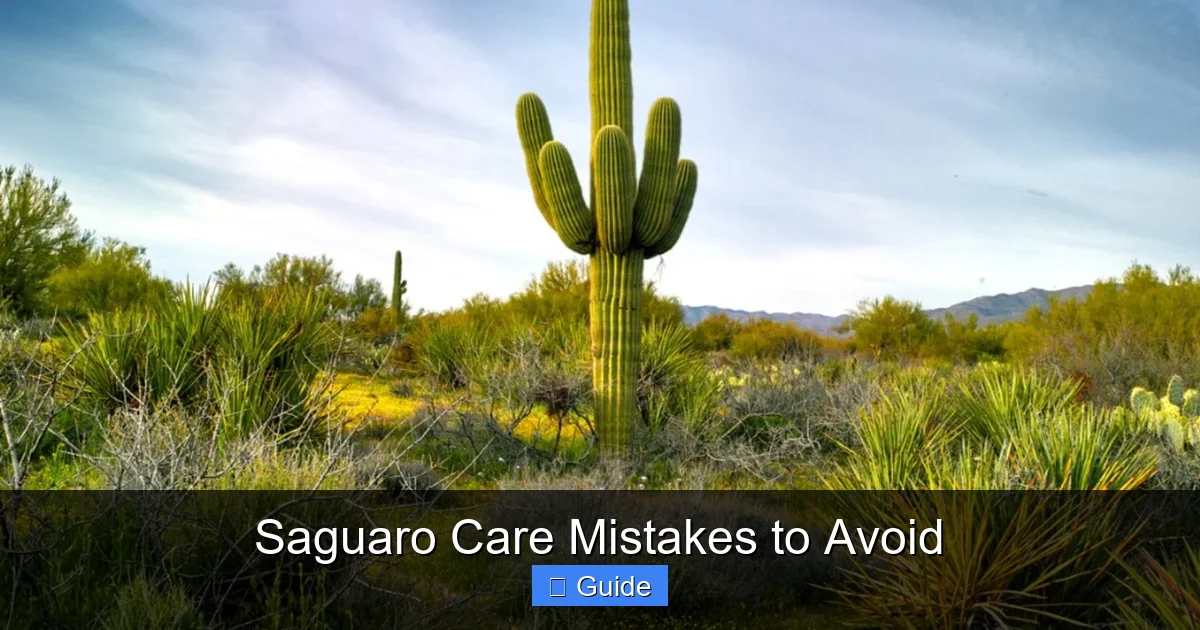
Visual guide about Saguaro Care Mistakes to Avoid
Image source: cdn.mos.cms.futurecdn.net
People water saguaros like they water lawns. Once a week. Twice a week in summer. Every sprinkler cycle. The cactus swells. The skin splits. Fungi enter. Rot travels down from the split or up from the roots. The cactus turns mushy, leans, and collapses. By the time you notice, it is too late.
How to Water Correctly
Water deeply. Then wait. Wait until the soil is bone dry several inches down. Wait until the cactus shows slight wrinkling or shrinkage — that is the accordion contracting, and it is normal. In summer monsoon season, nature provides. In winter, the cactus is dormant. Water zero times. Zero. Not “a little sip.” Zero.
A newly planted saguaro needs water every two to three weeks in its first summer — if no rain falls. Year two, stretch to monthly. Year three, only during extreme drought. After establishment, a saguaro in the ground rarely needs supplemental water. A potted saguaro needs more attention but the same principle: soak, then dry completely.
Irrigation Systems Are Dangerous
Drip irrigation near a saguaro is a death sentence. The emitter creates a permanent wet zone. Roots grow into it. They rot. The cactus falls. If you have an irrigation system, cap the emitters near your saguaro. Hand water only. If you must automate, use a smart controller with a soil moisture sensor placed at root depth — and set the threshold very dry.
Rainwater vs Tap Water
Saguaros prefer rainwater. Tap water contains salts, chlorine, and minerals that build up in soil over years. This raises pH and creates crusts that repel water. If you can, collect rainwater for your saguaro. If you use tap water, deep soak occasionally to flush salts. Never use softened water — the sodium destroys soil structure and poisons roots.
Soil and Planting Errors to Avoid
The Drainage Imperative
Saguaro roots need oxygen. They evolved in coarse, mineral soils — decomposed granite, gravel, sand — where water drains in minutes. Heavy clay holds water for days. Rich loam holds water for weeks. Both suffocate and rot saguaro roots. The second major saguaro care mistake to avoid is planting in unamended native soil or “improved” garden soil.
Test your drainage. Dig a hole one foot deep. Fill with water. Let it drain. Fill again. If the second fill takes more than 30 minutes to drain, you have a drainage problem. Do not plant a saguaro there until you fix it. Fix it by creating a raised mound of fast-draining mix, not by digging deeper. Digging deeper creates a sump that collects water.
The Ideal Soil Mix
For in-ground planting, mix your native soil 50/50 with coarse material: pumice, perlite, crushed lava rock, or coarse sand (not play sand — it compacts). No compost. No peat moss. No manure. No fertilizer. The mix should feel gritty. Water should pour through it like a sieve. For containers, use 70% mineral grit to 30% cactus potting soil. Top dress with gravel to prevent perlite from floating up.
Planting Depth Is Critical
Plant the saguaro at the exact same soil line it had in its nursery container. The root crown — where the green stem meets the roots — must sit at grade. Not one inch deeper. Not mounded higher. Burying the crown traps moisture against photosynthetic tissue that has no bark to protect it. Rot starts there. Mounding too high exposes roots and destabilizes the cactus.
If the nursery planted it too deep in the pot, gently remove soil until you find the true crown. Let the exposed area callus for a week in shade before planting. This feels wrong. It feels like you are exposing roots. You are not. You are finding the boundary between root and stem. That boundary must breathe.
No Staking, No Guy Wires
People stake saguaros like trees. Do not. Stakes rub the skin. Guy wires cut into the flesh. Both create entry points for pathogens. A properly planted saguaro in well-draining soil anchors itself. Its roots radiate horizontally, often farther than the cactus is tall. If your saguaro leans, the problem is usually root rot or uneven watering — not lack of stakes. Fix the cause. Do not mask it with hardware.
Container Culture Complications
Saguaros can live in pots for decades — but the pot must be wide, not deep. Roots spread sideways. A deep narrow pot traps water at the bottom. Use a wide, shallow container with massive drainage holes. Unglazed terra cotta breathes best. Repot only when the cactus is truly root-bound, which takes years. When repotting, keep the same soil line. Do not “upgrade” to richer soil.
Sunlight and Temperature Missteps
The Full Sun Myth
“Desert plant equals full sun” is a dangerous oversimplification. A mature saguaro in the open desert tolerates brutal sun because it grew there from a seedling, slowly acclimating over decades. Its skin thickened. Its waxy cuticle developed. Its internal structure hardened. A nursery-grown saguaro — even one labeled “full sun” — was grown under shade cloth. Put it in direct June sun and it will scorch.
Acclimation Is Mandatory
New saguaros need gradual sun exposure. Start with morning sun only — two hours. Increase by 30 minutes every few days. Watch for yellowing or whitening of the skin. That is sunburn. It does not heal. The damaged tissue remains a permanent weak spot. If you buy a saguaro in fall or winter, keep it in its nursery shade conditions until spring, then begin acclimation. This patience prevents one of the most common saguaro care mistakes to avoid.
Young Saguaros Need Nurse Plants
In nature, no saguaro seedling survives in the open. They all start under nurse plants. If your saguaro is under three feet tall, it needs afternoon shade. Plant it on the east side of a large shrub, boulder, or wall. Use 30% shade cloth on a frame — not touching the cactus — for the first few summers. Remove protection gradually as the cactus gains height and girth.
Winter Cold Damage
Saguaros are surprisingly cold-hardy — mature ones survive 15°F (-9°C) briefly. But cold plus wet kills. A hydrated cactus freezes and bursts. A dry cactus survives much colder. Stop all watering by October. Let the cactus dehydrate slightly before winter. If a hard freeze is forecast and your saguaro is small, cover it with frost cloth — not plastic — supported by a frame. Remove cloth during the day. Never use Christmas lights or heaters; they create condensation and rot.
Heat Reflection Burns
Walls, pavement, and rocks reflect intense heat. A saguaro planted two feet from a west-facing stucco wall gets double sun — direct plus reflected. The skin cooks. Plant at least six feet from reflective surfaces. If you cannot, erect a shade screen on the reflective side for the first several years.
Pruning and Physical Damage Mistakes
Never Top a Saguaro
Topping — cutting off the growing tip — destroys a saguaro. The apical meristem is the only source of vertical growth. Remove it and the cactus cannot grow taller. It may produce offsets (pups) at the cut, but these are weakly attached and prone to breaking. Topping also creates a flat surface that collects water, guaranteeing rot. There is no reason to top a saguaro. None. If it is too tall for your space, you planted the wrong species.
Arms Are Not Optional
People sometimes remove arms that grow “in the wrong direction.” Do not. Arms are the saguaro’s reproductive future — flowers and fruit form on arm tips. Removing arms reduces the cactus’s ability to reproduce and creates massive wounds. A saguaro arm can weigh hundreds of pounds. Cutting one risks the arm tearing down the main stem, splitting the cactus open. Let the saguaro decide its shape.
Dead Skin Is Not Dead Weight
Old saguaros develop brown, corky skin at the base — “corking.” This is normal aging, like bark on a tree. It protects the cactus. Do not peel it. Do not scrub it. Do not spray it with “cactus cleaner.” The green skin underneath is not ready for sun exposure. Peeling corking is one of the saguaro care mistakes to avoid that causes permanent scarring and sunburn.
Physical Injury Prevention
Weed whackers kill saguaros. The high-speed string slices the skin. The wound never fully seals. Fungi enter. Rot starts. Keep a three-foot mulch-free, plant-free radius around the base. Hand-pull weeds. Use herbicide only with extreme caution and a shield — drift damages cactus skin. Never lean ladders, tools, or hoses against a saguaro. The ribs are strong but the skin is thin.
Bird Damage Is Usually Harmless
Gila woodpeckers and gilded flickers excavate nest holes in mature saguaros. The cactus seals the wound with a hard “boot” — a woody capsule. This is a mutualism, not damage. The birds eat insects that harm the cactus. Do not fill the holes. Do not scare the birds. Enjoy the wildlife. The only exception: if a hole appears on a young, arm-less saguaro, it may weaken the structure. Consult an arborist familiar with cacti.
Long-Term Care and Monitoring Errors
Fertilizer Creates Weak Growth
Saguaros evolved in some of the most nutrient-poor soils on Earth. Their metabolism is slow. Their tissues are dense. Fertilizer — especially nitrogen — forces rapid, watery growth. The skin stretches. The ribs separate. Splits form. Rot enters. The cactus becomes top-heavy and falls. One of the most insidious saguaro care mistakes to avoid is “helping” with fertilizer. Do not fertilize. Ever. Not cactus fertilizer. Not organic tea. Not slow-release spikes. Nothing.
Mulch Traps Death
Organic mulch — wood chips, bark, straw, leaves — holds moisture against the root crown. It breeds fungi. It attracts rodents that gnaw the base. It decomposes into rich soil that encourages shallow, weak roots. Keep the base bare. Use decorative gravel if you want a finished look. Gravel allows evaporation. It does not decompose. It does not hide problems.
Ignoring Early Warning Signs
Saguaros communicate distress slowly. Learn the language. Slight wrinkling between ribs: normal dehydration. Deep wrinkling, softening, or yellowing: severe dehydration or root rot. Leaning: root failure on one side. Black or brown soft spots: bacterial or fungal rot. Oozing liquid: advanced infection. White cottony patches: cochineal scale or mealybugs. Small holes with sawdust: borers. Check your saguaro monthly. Photograph it seasonally. Compare photos year to year. Slow changes are easy to miss.
Transplanting Mature Saguaros
Moving a saguaro over six feet tall is a professional job. Period. The root system extends radially 20-50 feet, mostly in the top 12 inches of soil. Severing these roots kills the cactus. Professionals use hydraulic spades, root wrapping, and cranes. They orient the cactus to the same compass direction — the south side has thicker skin for sun protection. Replanting at the wrong orientation causes sunscald. The cost is thousands of dollars. The survival rate, even with pros, is not 100%. If you must move a large saguaro, hire a certified cactus salvager. Do not attempt it yourself.
Propagation Patience
You can grow saguaros from seed. It is rewarding. It is also slow. Seeds need fresh fruit pulp removed, then surface-sown on sterile grit. They need humidity, warmth, and light — but not direct sun. Germination takes 1-3 weeks. Seedlings are microscopic for months. They need daily misting, then gradual drying. Most die in the first year from damping off, sunburn, or drying out. If you want a saguaro now, buy a nursery-grown one. If you want the experience, grow from seed — but do not expect a landscape specimen in your lifetime.
Common Scenarios and Solutions
Scenario: “My Saguaro Is Turning Yellow at the Base”
Yellowing at the soil line usually means one of two things: sunburn on a newly exposed area, or the start of rot. If the tissue is firm, it is likely sunburn — the cactus was planted deeper in the nursery pot, and you exposed tender skin. Shade it with a loose wrap of shade cloth for the summer. If the tissue is soft, mushy, or smelly, it is rot. Stop watering immediately. Excavate carefully around the base to expose the crown to air. Dust with powdered sulfur or copper fungicide. Pray. Rot at the crown is often fatal.
Scenario: “My Saguaro Leaned After a Storm”
Wind plus wet soil equals toppling. If the lean is slight and the cactus is small (under four feet), you can gently straighten it and backfill with dry grit mix. Do not stake. Do not water. Let it re-root. If the lean is severe, the cactus is large, or roots are visible — call a professional. A falling saguaro kills people. They weigh 80-100 pounds per foot of height. A 20-foot saguaro is two tons. Do not risk your life or property.
Scenario: “I Think I Overwatered”
Stop. Do not water again until the soil is completely dry at root depth. Use a soil probe or long screwdriver — if it comes out with damp soil, wait. Increase air circulation. Remove any mulch. If the cactus is in a container, tip the pot to drain excess, or repot into dry mix. Watch for splitting, softening, or odor. Damage may not show for weeks. The cactus may look fine then suddenly collapse. There is no “undo” for overwatering. Only damage control.
Scenario: “White Fuzzy Stuff on My Saguaro”
Cochineal scale looks like white cotton. It is a tiny insect that sucks sap. It weakens the cactus and attracts ants. Blast it off with a strong jet of water. Repeat weekly. For heavy infestations, use insecticidal soap or neem oil — but test on a small area first; some saguaros are sensitive. Mealybugs look similar but are waxier. Same treatment. Check roots too — root mealybugs are common in pots.
Scenario: “My Saguaro Has Not Grown in Years”
First, measure. Saguaros grow slowly. An inch a year is normal for a juvenile. If it truly has not grown in three years, check: Is it root-bound? Is the soil compacted? Is it getting enough sun (after acclimation)? Is it planted too deep? Is there a girdling root? Gently excavate the root crown. Look for circling roots. If found, cut them cleanly with a sterilized knife. Let the cut callus. Replant at correct depth in fresh gritty mix. Water once. Then wait.
Building a Saguaro-Friendly Landscape
Companion Plants That Help
Plant native companions that share the saguaro’s needs: creosote, brittlebush, globe mallow, penstemon, desert marigold. These need little water, no fertilizer, and provide light shade for young saguaros. Their roots do not compete aggressively. Avoid thirsty plants — citrus, roses, lawn, tropicals — anywhere near the saguaro’s root zone. The root zone extends far beyond the drip line. Plan accordingly.
Designing for the Future
Plant your saguaro where it can reach full size — 40 feet tall, 10 feet wide, with arms spreading. Not under power lines. Not against the house. Not over the septic tank. Not near the pool. Visualize the mature cactus. Give it space. A crowded saguaro becomes a hazard. A well-sited saguaro becomes a legacy.
Lighting Without Damage
Uplighting a saguaro is dramatic. Do it right. Use low-voltage LED fixtures placed at least three feet from the base. Aim light upward, not at the skin. Use warm white (2700K-3000K) — cool white looks harsh and attracts more insects. Timer off by 10 PM. Saguaros need dark nights for CAM photosynthesis. Constant light disrupts their metabolism.
Conclusion
Caring for a saguaro is not difficult. It is different. The saguaro care mistakes to avoid all stem from one error: treating a desert icon like a garden plant. Water less. Fertilize never. Plant shallow. Drain fast. Shade young. Wait long. That is the entire formula.
Your saguaro will outlive you. It will outlive your house. It may outlive your grandchildren’s grandchildren. Every decision you make today echoes for centuries. A saguaro planted correctly, watered correctly, left alone correctly — becomes a monument. One planted in rich soil, watered weekly, fertilized monthly — becomes compost.
You are not just growing a cactus. You are stewarding a piece of the desert. Respect its rules. Enjoy its patience. Watch it raise its arms to a sky it has known for millennia. That is the reward. Not fast growth. Not lush foliage. The quiet pride of keeping something ancient alive in a modern world.
Now go check your soil drainage. Put away the fertilizer. Turn off the drip emitter. And let your saguaro be a saguaro.
Frequently Asked Questions
How deep should I plant a saguaro?
Plant at the exact same soil line as the nursery container. The root crown — where green stem meets roots — must sit at grade. Burying it causes stem rot. Mounding too high exposes roots and destabilizes the cactus.
Do saguaros need full sun?
Mature saguaros tolerate full sun, but nursery-grown plants need gradual acclimation. Young saguaros (under 3 feet) require afternoon shade from a nurse plant or 30% shade cloth for their first few summers.
Can I move a large saguaro myself?
No. Saguaros over 6 feet tall require professional salvage. Their shallow roots extend 20-50 feet radially. Severing them kills the cactus. Professionals use hydraulic spades, cranes, and compass orientation. Survival is not guaranteed even with experts.
What soil mix is best for a potted saguaro?
Use 70% coarse mineral grit (pumice, perlite, lava rock) to 30% cactus potting soil. Pot must be wide and shallow with large drainage holes. Unglazed terra cotta is ideal. Top dress with gravel.
Why is my saguaro leaning?
Leaning usually indicates root rot on one side from overwatering, or wet soil combined with wind. Stop watering. If small, gently straighten and backfill with dry grit. If large or severe, call a professional — falling saguaros are deadly.
Is it legal to own a saguaro?
Yes, if nursery-propagated with proper tags. In Arizona, saguaros are protected native plants. You need a permit from the Arizona Department of Agriculture to move, transport, or remove one — even on your own property. Wild collection is a felony.