Perennial Plant Combinations Catmint Companion Plants
Catmint (Nepeta) is a garden superstar that pairs beautifully with roses, salvias, ornamental grasses, and coneflowers. These perennial plant combinations catmint companion plants create low-maintenance, pollinator-friendly displays that bloom from spring through frost with minimal care.
If you have ever walked through a garden in June and noticed a cloud of lavender-blue flowers buzzing with bees, chances are you were looking at catmint. This tough, beautiful perennial has earned its place in gardens across the country. It asks for little and gives a lot. But the real magic happens when you start thinking about perennial plant combinations catmint companion plants that make both partners shine.
I have spent years testing different pairings in my own beds and helping clients design borders that look great from April through October. Catmint is one of those rare plants that plays well with almost everyone. Its soft, aromatic foliage provides a lovely foil for bold flowers. Its long bloom season bridges gaps between other perennials. And its relaxed habit softens hard edges without becoming a thug. Let me walk you through the best companions, design strategies, and care tips so you can create stunning combinations in your own garden.
Key Takeaways
- Catmint thrives in full sun and well-drained soil: Most varieties need at least six hours of direct sunlight and prefer lean, sandy, or rocky soil over rich, heavy clay.
- Pair catmint with roses for a classic look: The soft blue-gray foliage and lavender-blue flowers hide rose canes and complement rose blooms perfectly.
- Choose companions with similar water needs: Drought-tolerant plants like lavender, Russian sage, and sedum make ideal partners since they share catmint’s low-water requirements.
- Stagger bloom times for continuous color: Combine early, mid, and late-season bloomers so your garden always has something flowering from spring to fall.
- Use catmint as a ground cover or edging plant: Low-growing varieties like ‘Walker’s Low’ and ‘Junior Walker’ spread gently to suppress weeds and soften pathway edges.
- Cut back after first bloom for a second flush: Shearing plants by half in midsummer encourages fresh foliage and another round of flowers in late summer.
- Divide clumps every three to four years: This keeps plants vigorous, prevents center die-out, and gives you free plants to expand your combinations.
Quick Answers to Common Questions
What are the best companion plants for catmint?
Roses, salvias, coneflowers, Russian sage, lavender, ornamental grasses, yarrow, sedums, bee balm, and daylilies all make excellent companions for catmint due to similar sun, soil, and water requirements.
When should I cut back catmint for a second bloom?
Shear catmint back by half in early to midsummer, typically late June through July, after the first heavy flush of flowers fades. This promotes fresh foliage and a second bloom period in late summer and fall.
Can catmint grow in shade?
Catmint needs full sun (at least six hours) to bloom well and stay compact. In partial shade, it becomes leggy, produces fewer flowers, and is more susceptible to powdery mildew.
How far apart should I space catmint plants?
Space catmint 18 to 24 inches apart for most cultivars. Dwarf varieties like ‘Junior Walker’ can go 12 to 18 inches. Larger types like ‘Six Hills Giant’ need 24 to 30 inches.
Is catmint invasive?
Catmint (Nepeta x faassenii) is not invasive. It forms well-behaved clumps that slowly expand. It may self-sow lightly, but unwanted seedlings are easy to remove. True catnip (Nepeta cataria) can be more aggressive.
📑 Table of Contents
- Understanding Catmint Basics
- Classic Catmint and Rose Combinations
- Drought-Tolerant Mediterranean Combinations
- Pollinator Paradise Combinations
- Season-Long Bloom Strategies
- Design Principles for Stunning Combinations
- Practical Planting and Care Guide
- Container Combinations with Catmint
- Regional Considerations
- Creative Combination Ideas for Specific Spaces
- Conclusion
Understanding Catmint Basics
What Makes Catmint Special
Catmint belongs to the genus Nepeta. It is related to catnip but much showier and better behaved in the garden. The most common species is Nepeta x faassenii, a hybrid that gives us popular cultivars like ‘Walker’s Low,’ ‘Blue Wonder,’ and ‘Junior Walker.’ There is also Nepeta racemosa, Nepeta sibirica, and the larger Nepeta subsessilis for wetter spots.
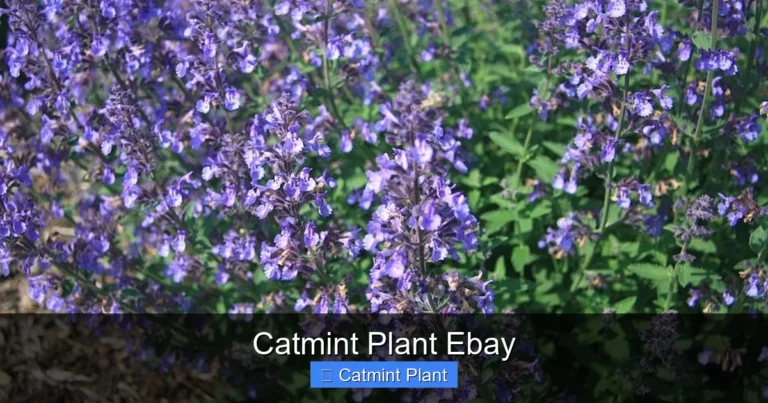
All catmints share certain traits. They have square stems, a hallmark of the mint family. Their leaves are gray-green to green, often with a soft, fuzzy texture. When crushed, the foliage releases a minty, slightly citrusy scent that deer and rabbits dislike. The flowers appear in spikes above the foliage, typically in shades of lavender, blue, violet, or white. Bloom usually starts in late spring and continues heavily into early summer. With a midseason haircut, you often get a second flush in late summer and fall.
Growing Conditions for Success
Before we talk companions, let’s cover what catmint needs. This plant hails from dry, rocky regions of Europe and Asia. It wants full sun. Six hours is the minimum. Eight is better. Soil must drain sharply. Wet feet, especially in winter, will kill catmint faster than anything else. If you have heavy clay, amend with grit, coarse sand, or plant in raised beds.
Fertility is another surprise. Catmint prefers lean soil. Rich soil or heavy fertilizing produces floppy stems and fewer flowers. A light handful of compost in spring is plenty. Once established, catmint is remarkably drought tolerant. Its deep taproot seeks moisture far below the surface. Water regularly the first season. After that, rainfall is usually enough except in extreme drought.
Choosing the Right Cultivar
Size matters when planning perennial plant combinations catmint companion plants. ‘Walker’s Low’ reaches 24 to 30 inches tall and wide. It won the Perennial Plant of the Year award in 2007 for good reason. ‘Blue Wonder’ is more compact at 12 to 18 inches. ‘Junior Walker’ is a dwarf version of ‘Walker’s Low,’ topping out at 18 inches. ‘Six Hills Giant’ is a big boy at 36 inches. ‘Cat’s Pajamas’ and ‘Cat’s Meow’ are newer Proven Winners introductions with tidy, mounded habits around 14 inches.
Match the cultivar to your design. Use taller types behind roses or in the middle of borders. Edge paths with compact varieties. Let larger ones sprawl over retaining walls. Knowing the mature size prevents overcrowding later.
Classic Catmint and Rose Combinations
Why This Pairing Works
If you only try one combination, make it catmint and roses. This is the gold standard of perennial plant combinations catmint companion plants for good reason. Roses often have bare lower canes that look leggy. Catmint’s billowy mounds hide those “knees” beautifully. The soft blue-gray foliage cools down hot rose colors like red, orange, and bright pink. And the lavender-blue flowers harmonize with almost any rose hue.

Visual guide about Perennial Plant Combinations Catmint Companion Plants
Image source: as2.ftcdn.net
Both plants want full sun and well-drained soil. Both benefit from good air circulation. Catmint’s aromatic foliage may even help deter some rose pests, though don’t count on it as your only defense. The bloom seasons overlap perfectly. Roses hit their stride in June. Catmint is going strong then too. After the rose’s first flush, catmint keeps the show going while roses rest.
Design Tips for Rose and Catmint Beds
Plant catmint in a drift along the front of a rose border. Space plants 18 to 24 inches apart depending on the cultivar. They will knit together into a continuous mound. For a more natural look, stagger the planting in a loose zigzag rather than a straight line. Let a few plants spill onto the lawn edge or path. That relaxed informality is part of the charm.
Consider color echoes. Pair pink roses with ‘Walker’s Low’ for a classic cottage garden feel. Try white roses like ‘Iceberg’ with white-flowered catmint such as ‘Snowflake’ or ‘White Wonder’ for a moon garden effect. Yellow roses like ‘Graham Thomas’ pop against blue catmint flowers. The color wheel is your friend here. Complementary colors (blue and orange, purple and yellow) create excitement. Analogous colors (blue, purple, pink) create harmony.
Maintenance for the Rose-Catmint Duo
Both plants appreciate a cleanup in late winter or early spring. Cut catmint back to the basal foliage. Prune roses according to their type. Apply a balanced organic fertilizer around roses. Skip fertilizing catmint. Mulch both with compost or shredded leaves, keeping mulch away from crowns. Deadhead roses to encourage rebloom. Shear catmint by half after its first big flush. This keeps it tidy and prompts a second bloom that coincides with the rose’s second flush.
Drought-Tolerant Mediterranean Combinations
Lavender, Russian Sage, and Catmint
If you garden in a hot, dry climate or just want to save water, build your perennial plant combinations catmint companion plants around Mediterranean natives. Lavender (Lavandula), Russian sage (Perovskia atriplicifolia), and catmint share the same DNA: full sun, sharp drainage, low fertility, and minimal water. Together they create a silver-and-blue tapestry that looks right at home in gravel gardens, hellstrips, and sunny slopes.
Russian sage adds height and airy texture. Its lavender-blue spires reach three to four feet. Lavender contributes structure and that iconic fragrance. Catmint fills the middle ground with softer mounds. All three bloom in summer. The effect is cooling and cohesive. Bees and butterflies will thank you. This combination practically thrives on neglect once established.
Adding Texture with Ornamental Grasses
Grasses bring movement and winter interest to Mediterranean plantings. Blue fescue (Festuca glauca) echoes catmint’s blue foliage in a spiky, tufted form. Mexican feather grass (Nassella tenuissima) adds blonde ponytails that catch the light. Switchgrass (Panicum virgatum) cultivars like ‘Northwind’ or ‘Heavy Metal’ provide strong vertical accents. Little bluestem (Schizachyrium scoparium) turns copper-orange in fall.
Plant grasses in groups of three or five for impact. Intersperse them among the catmint and lavender. The fine grass blades contrast beautifully with catmint’s broader leaves. In winter, leave everything standing. The seed heads feed birds. The dried stems catch frost. Cut back in early spring before new growth emerges.
Succulents and Sedums for the Front Edge
Low sedums (Sedum spurium, Sedum kamtschaticum) and hens-and-chicks (Sempervivum) make perfect edging for these dry combinations. They hug the ground, suppress weeds, and offer late-season flowers in pink, red, or yellow. Their succulent foliage adds a completely different texture. Plus they root easily from pieces that break off, filling gaps for free.
Pollinator Paradise Combinations
Coneflowers and Catmint
Few perennial plant combinations catmint companion plants attract more pollinators than catmint paired with coneflowers (Echinacea). Coneflowers bring big, bold daisies in purple, pink, white, orange, yellow, and even green. Their prominent cones offer landing pads for butterflies and seeds for goldfinches in fall. Catmint’s smaller flowers feed bees and beneficial wasps. Together they create a buffet from June through September.
Plant coneflowers behind or among catmint. The coneflowers’ stiff stems hold their flowers high. Catmint’s mounds fill the space below. Good cultivars include ‘Magnus’ (classic purple), ‘White Swan’ (white), ‘Cheyenne Spirit’ (mixed warm colors), and the compact ‘PowWow Wild Berry.’ Deadhead coneflowers for more blooms, but leave some late flowers for birds.
Bee Balm, Salvias, and Agastache
Bee balm (Monarda) adds shaggy, crown-like flowers in red, pink, purple, and white. It spreads by rhizomes, so give it room or choose clumping cultivars like ‘Petite Delight.’ Salvias (Salvia nemorosa, Salvia x sylvestris) offer dense spikes of blue, purple, pink, or white. ‘May Night,’ ‘Caradonna,’ and ‘Blue Hill’ are reliable. Agastache (hummingbird mint) brings tubular flowers in sunset colors that hummingbirds adore. ‘Blue Fortune,’ ‘Golden Jubilee,’ and ‘Rosie Posie’ are standouts.
All these plants share catmint’s preferences. They create layers of bloom at different heights. Salvias and catmint bloom together in early summer. Bee balm and agastache take over in midsummer. The color palette stays in the blue-purple-pink range for harmony, or you can mix in hot colors for excitement.
Adding Native Plants for Ecological Value
Consider weaving in natives like butterfly weed (Asclepias tuberosa), black-eyed Susan (Rudbeckia fulgida), blazing star (Liatris spicata), and goldenrod (Solidago). These support specialist pollinators and add regional character. Butterfly weed’s orange flowers look stunning with blue catmint. Goldenrod’s yellow plumes in late summer extend the season. Just choose clumping goldenrods like ‘Fireworks’ or ‘Golden Fleece’ to avoid aggressive spreaders.
Season-Long Bloom Strategies
Spring Partners for Early Color
Catmint doesn’t hit its stride until late spring. Bridge the gap with early bloomers. Alliums (ornamental onions) are perfect. Their purple globes rise above emerging catmint foliage in May. ‘Globemaster,’ ‘Purple Sensation,’ and ‘Christophii’ are spectacular. Plant allium bulbs in fall among catmint crowns. The catmint’s growing foliage hides the allium’s yellowing leaves after bloom.
Peonies make another great spring partner. Their lush, fragrant flowers in pink, white, red, and coral coincide with catmint’s first buds. Peony foliage stays attractive all season, providing a dark green backdrop for catmint’s gray-green leaves. Plant peonies behind catmint. Give them space. They don’t like crowding.
Baptisia (false indigo) offers lupine-like spires in blue, yellow, white, or bicolor in late spring. Its deep taproot makes it drought tolerant like catmint. The blue-green foliage looks good all summer. ‘American Goldfinch,’ ‘Blueberry Sundae,’ and ‘Cherries Jubilee’ are excellent modern cultivars.
Summer Stars That Overlap
This is catmint’s prime time. Choose companions that bloom simultaneously for maximum impact. Daylilies (Hemerocallis) offer strappy foliage and trumpet flowers in every color but blue. Reblooming varieties like ‘Stella de Oro,’ ‘Happy Returns,’ and ‘Pardon Me’ flower for months. Their arching leaves contrast with catmint’s mounded habit.
Shasta daisies (Leucanthemum x superbum) bring classic white petals and yellow centers. ‘Becky’ is a tall, sturdy classic. ‘Snowcap’ and ‘Banana Cream’ are shorter. The white flowers make catmint’s blue pop. Yarrow (Achillea) adds flat-topped clusters in yellow, pink, red, white, and terracotta. ‘Moonshine’ (soft yellow) and ‘Paprika’ (red with yellow centers) are favorites. Yarrow’s ferny foliage adds fine texture.
Late Summer and Fall Extenders
After you shear catmint in July, it regrows and blooms again in August and September. Pair this second flush with fall bloomers. Sedum ‘Autumn Joy’ and its improved cousins like ‘Autumn Fire’ and ‘Neon’ develop broccoli-like buds in summer that open to pink, then deepen to rust. Their succulent foliage looks fresh all season.
Asters (Symphyotrichum) burst into starry flowers in purple, blue, pink, and white just as many perennials fade. ‘October Skies,’ ‘Raydon’s Favorite,’ and the compact ‘Purple Dome’ are mildew-resistant. Japanese anemones (Anemone hupehensis) send up graceful wands of pink or white flowers on wiry stems. ‘Honorine Jobert’ (white) and ‘September Charm’ (pink) are classics. They spread slowly, so site them carefully.
Ornamental grasses hit their stride now too. Miscanthus, panicum, and calamagrostis produce showy plumes that catch low autumn light. Leave them standing all winter.
Design Principles for Stunning Combinations
Working with Color Theory
Color is the first thing people notice. With perennial plant combinations catmint companion plants, you have a built-in anchor: blue-lavender flowers and gray-green foliage. This cool, neutral base works with almost everything. For a calm, sophisticated garden, stick to analogous colors. Combine catmint with purple salvias, pink coneflowers, blue veronicas, and white shasta daisies. The transitions are gentle.
For energy and contrast, use complementary colors. Orange butterfly weed, yellow coreopsis, red yarrow, or coral roses against blue catmint create visual vibration. The eye bounces between them. Triadic schemes (three colors equally spaced on the color wheel) like blue, yellow, and red are bold and balanced. Try catmint, black-eyed Susan, and bee balm.
Don’t forget foliage color. Catmint’s gray-green leaves pair beautifully with purple-leaved plants like Heuchera ‘Palace Purple,’ Sedum ‘Dark Magic,’ or Cotinus ‘Grace.’ Chartreuse foliage (Hakonechloa ‘All Gold,’ Sedum ‘Angelina,’ Spirea ‘Gold Mound’) makes catmint’s blue flowers sing. Variegated foliage adds sparkle in shade, but most catmint companions want sun.
Playing with Height and Form
A border that’s all one height looks flat. Create layers. Tall plants (four feet plus) go in back or center: Russian sage, tall grasses, joe-pye weed, hollyhocks. Medium plants (two to three feet) fill the middle: catmint, coneflowers, bee balm, salvias, daylilies. Short plants (under 18 inches) edge the front: sedums, dwarf catmint, heucheras, dianthus, creeping thyme.
Vary plant forms too. Catmint is a soft mound. Pair it with vertical spikes (salvias, veronicas, liatris), flat umbels (yarrow, sedum, achillea), globes (alliums, echinops), and fountains (grasses, daylilies). This diversity keeps the eye moving. Repeat key plants or colors at intervals to create rhythm. A drift of catmint every six feet ties a long border together.
Considering Texture and Leaf Shape
Texture is the secret weapon of great garden design. Catmint has small, soft, slightly fuzzy leaves. Contrast this with bold, smooth leaves (bergenia, hosta in part shade, ligularia). Pair with fine, needle-like foliage (grasses, coreopsis ‘Moonbeam,’ asparagus fern). Mix in ferny, dissected leaves (yarrow, filipendula, thalictrum). Add strappy, linear leaves (daylilies, iris, kniphofia).
When flowers fade, foliage carries the show. A border with varied leaf shapes stays interesting all season. Catmint’s foliage looks fresh from spring to frost if you shear it midseason. Without shearing, it can look tired by August. That haircut is the single most important maintenance task for good looks.
Practical Planting and Care Guide
Site Preparation and Planting
Success starts before the first plant goes in. Clear the area of weeds thoroughly. Perennial weeds like bindweed and quackgrass will haunt you if left. Loosen soil to 12 inches. Amend heavy clay with coarse sand, fine gravel, and compost. Aim for a gritty, well-drained mix. Do not add fertilizer. Catmint and its companions want lean conditions.
Lay out plants in their pots first. Step back. Adjust spacing. Most catmint cultivars need 18 to 24 inches. Check labels for companions. Plant at the same depth they grew in the pot. Firm soil gently. Water well. Mulch with gravel, crushed stone, or a thin layer of shredded bark. Avoid piling mulch against crowns. Gravel mulch is ideal for Mediterranean schemes. It reflects heat, improves drainage, and looks natural.
Watering for Establishment
New plants need consistent moisture their first season. Water deeply twice a week unless it rains. Check soil with your finger. If the top two inches are dry, water. By year two, most of these plants handle drought. But they bloom better with occasional deep watering in prolonged dry spells. Drip irrigation or soaker hoses deliver water efficiently without wetting foliage.
The Midseason Shear
I cannot emphasize this enough. Shear catmint back by half in early to midsummer after the first heavy bloom. Use hedge shears or a string trimmer. It looks brutal. Do it anyway. Within two weeks, fresh gray-green growth appears. Within four weeks, flower buds form. You get a second show that lasts into fall. This also prevents the center from opening up and keeps plants compact.
Some companions benefit from similar treatment. Salvias rebloom better if cut back after first flush. Nepeta sibirica and Nepeta subsessilis may not need shearing if they bloom continuously. But the common catmints definitely do. Mark your calendar for late June or early July.
Dividing and Propagating
Every three to four years, catmint clumps develop dead centers. Spring is the best time to divide. Dig the whole clump. Use a sharp spade or knife to cut into sections with healthy roots and shoots. Replant the best pieces. Compost the woody center. Water well. You will have more plants than you know what to do with. Share with friends. Expand your perennial plant combinations catmint companion plants to new beds.
You can also propagate from softwood cuttings in late spring. Take four-inch cuttings from non-flowering shoots. Strip lower leaves. Dip in rooting hormone. Stick in moist sand or perlite. Cover with a plastic bag. Roots form in three to four weeks. This is how nurseries produce uniform cultivars.
Dealing with Problems
Catmint is remarkably trouble-free. Powdery mildew can appear in humid climates with poor air circulation. Space plants properly. Water at the base, not overhead. Choose resistant cultivars. Root rot happens in wet soil. Fix drainage or plant elsewhere. Aphids occasionally cluster on new growth. Blast with water or spray insecticidal soap. They rarely cause serious damage.
Deer and rabbits usually avoid catmint due to its aromatic oils. But hungry animals eat anything. If browsing is severe, use repellents or fencing. Cats may roll in catmint, flattening plants. ‘Walker’s Low’ and other Nepeta x faassenii cultivars are less attractive to cats than true catnip (Nepeta cataria). If neighborhood cats are a nuisance, plant catmint in hanging baskets or protected courtyards.
Container Combinations with Catmint
Choosing the Right Pot
Catmint grows well in containers, which is great for patios, balconies, and gardens with poor soil. Choose a pot at least 14 inches wide and deep. Terra cotta, concrete, and glazed ceramic all work. Ensure drainage holes. Use a gritty potting mix. Combine two parts potting soil, one part coarse sand or perlite, and one part fine gravel. This mimics the sharp drainage catmint loves.
Thriller, Filler, Spiller Formula
Apply the classic container design formula. Catmint makes an excellent filler with its mounded habit. For a thriller (tall centerpiece), try purple fountain grass (Pennisetum ‘Rubrum’), dwarf canna, or a small ornamental grass like Calamagrostis ‘Karl Foerster’ (though it gets big). For spillers (trailing over the edge), use creeping thyme, sedum ‘Angelina,’ calibrachoa, or trailing verbena.
A sun-loving container recipe: center ‘Karl Foerster’ grass, surround with three ‘Junior Walker’ catmints, edge with sedum ‘Angelina’ and white bacopa. Another: center a red canna, ring with ‘Blue Wonder’ catmint, trail with purple verbena and silver dichondra. Water containers daily in heat. Fertilize monthly with half-strength balanced liquid fertilizer. Overwinter pots in an unheated garage in cold climates, or treat as annuals.
Regional Considerations
Hot, Humid Climates (Southeast, Gulf Coast)
High humidity challenges catmint. Fungal diseases thrive. Choose Nepeta subsessilis ‘Cool Cat’ or ‘Prelude,’ which tolerate more moisture. Space plants widely for airflow. Morning sun with afternoon shade helps. Mulch with gravel, not organic matter. Consider raised beds or containers. Partners that handle humidity include salvias, rudbeckias, echinaceas, and ornamental grasses.
Cold Climates (Zones 3-4)
Catmint is hardy to zone 3 or 4 depending on cultivar. ‘Walker’s Low,’ ‘Six Hills Giant,’ and ‘Dropmore’ are very cold tolerant. Ensure excellent winter drainage. Wet cold kills more than dry cold. Cut back in spring, not fall. The dead foliage protects crowns. Good cold-climate companions: peonies, baptisia, liatris, monarda, hemmerocallis, and hardy grasses like calamagrostis and panicum.
Arid Climates (Southwest, High Desert)
Catmint thrives here with minimal water once established. It loves the intense sun and alkaline soils. Pair with desert natives: penstemon, agastache, salvia greggii, eriogonum, and ornamental grasses like Muhlenbergia. Use gravel mulch. Water deeply but infrequently. Shear after spring bloom. The second flush coincides with monsoon season in some areas.
Pacific Northwest and Coastal Areas
Mild, wet winters can rot catmint. Plant on slopes or in raised beds. Amend heavily with grit. Choose Nepeta subsessilis types. Good companions: hardy fuchsias, hydrangeas (in part shade), heucheras, and grasses. In rain shadow areas (east of mountains), treat like arid climate.
Creative Combination Ideas for Specific Spaces
Hellstrip and Curbside Plantings
That narrow strip between sidewalk and street is perfect for tough perennial plant combinations catmint companion plants. It gets baked by reflected heat, compacted by foot traffic, and sprayed with road salt. Catmint handles it all. Pair with sedums, yuccas, ornamental grasses, Russian sage, and yarrow. Keep plants under three feet for sight lines. Check local regulations. Mulch with gravel. Water only to establish.
Slopes and Erosion Control
Catmint’s spreading habit and deep roots stabilize slopes. Plant in drifts diagonally across the slope. Mix with creeping junipers, cotoneaster, creeping phlox, and sedums. Add deeper-rooted shrubs like sumac or shrub roses for structural stability. The catmint fills gaps quickly. Shear annually to keep dense.
Pollinator Gardens and Meadows
Dedicate a sunny area to pollinators. Plant catmint in large groups of five or more. Surround with native milkweeds, coneflowers, bee balm, goldenrod, asters, and grasses. Include a water source (shallow dish with stones). Avoid pesticides. Certify your garden through programs like Monarch Waystation or Pollinator Partnership. The buzz of life is its own reward.
Cottage Garden Borders
The classic English cottage garden relies on abundance and informality. Catmint is a staple. Let it self-sow gently (deadhead if you want to prevent this). Mix with roses, foxgloves, delphiniums, hollyhocks, lady’s mantle, hardy geraniums, and poppies. Allow plants to mingle and lean on each other. Edit ruthlessly in spring. The controlled chaos is the art.
Conclusion
Creating beautiful perennial plant combinations catmint companion plants is one of gardening’s great pleasures. Catmint gives you a forgiving, long-blooming, pollinator-friendly foundation. From there, the possibilities are endless. Roses for romance. Mediterranean herbs for scent and resilience. Native wildflowers for ecology. Grasses for movement and winter structure. Containers for flexibility.
Start small. Try one new combination this season. Observe what works in your light, your soil, your climate. Take photos. Make notes. Divide and share successes. Gardening is a conversation with place. Catmint speaks a language almost every garden understands. Listen. Experiment. Enjoy the process. Your garden will thank you with months of color, fragrance, and life.
Remember the basics: sun, drainage, the midseason shear. Everything else is creativity. Whether you edge a rose bed with ‘Junior Walker,’ drift ‘Walker’s Low’ through a meadow, or pot ‘Blue Wonder’ on a balcony, catmint delivers. It’s a plant that makes gardeners look good. And isn’t that what we all want?
Frequently Asked Questions
What is the difference between catmint and catnip?
Catmint (Nepeta x faassenii and related ornamental species) is grown for its showy flowers and attractive foliage. Catnip (Nepeta cataria) is grown for its effect on cats and has less ornamental value with smaller, white flowers and a rangier habit.
Why is my catmint flopping open in the center?
Catmint centers open up due to age, rich soil, too much shade, or lack of midseason shearing. Divide clumps every three to four years in spring, avoid fertilizing, ensure full sun, and shear back by half after the first bloom.
Can I grow catmint in containers?
Yes, catmint grows well in containers at least 14 inches wide and deep. Use a gritty, well-draining potting mix with added sand or perlite. Water regularly and fertilize monthly at half strength. Choose compact cultivars like ‘Junior Walker’ or ‘Blue Wonder.’
When is the best time to plant catmint?
Spring and early fall are ideal planting times. Spring planting gives roots time to establish before summer heat. Fall planting works in zones 5 and warmer if done six weeks before ground freeze. Avoid planting in summer heat.
How do I propagate catmint?
Divide established clumps in spring every three to four years. Take softwood cuttings in late spring from non-flowering shoots. Some cultivars can be grown from seed, but named varieties won’t come true from seed.
What causes powdery mildew on catmint?
Powdery mildew appears in humid conditions with poor air circulation, overcrowding, or overhead watering. Prevent it by spacing plants properly, watering at the base, choosing resistant cultivars, and ensuring full sun exposure.