Pepper Watering Schedule and Tips
Peppers need consistent moisture but hate soggy roots. This guide covers the ideal pepper watering schedule for every growth stage, plus pro tips for container and garden beds to boost your harvest.
Growing peppers is one of those gardening joys that feels like a small miracle every summer. You plant a tiny seedling, watch it stretch toward the sun, and before you know it, you are harvesting glossy bells, fiery habaneros, or sweet banana peppers by the basketful. But here is the thing nobody tells you at the nursery: the difference between a so-so plant and a superstar often comes down to one simple habit. That habit is your pepper watering schedule.
I learned this the hard way. My first year, I treated peppers like tomatoes. I watered them every morning with the hose, gave them a quick shower, and called it good. The plants looked okay at first. Then came the blossom end rot. Then the flower drop. Then the sad, shriveled fruits that never reached full size. It turns out peppers have a personality all their own when it comes to moisture. They want consistency. They want depth. And they absolutely do not want wet feet. Once I dialed in the right rhythm, everything changed. The plants got stockier, the fruit set held, and the flavor? Unbeatable. Let me walk you through exactly how to nail your pepper watering schedule so you can skip the trial and error.
Key Takeaways
- Water deeply, not daily: Aim for 1-2 inches per week, adjusting for heat and rain.
- Check soil first: Stick your finger 2 inches down; water only when dry at that depth.
- Morning is best: Water early so leaves dry before night, preventing disease.
- Mulch matters: A 2-3 inch layer of straw or shredded leaves cuts evaporation in half.
- Containers dry faster: Check pots daily in summer; they may need water twice a day.
- Cut back before harvest: Reduce watering slightly as fruit ripens to concentrate flavor.
- Watch for signs: Wilting at noon is normal; wilting at dawn means you waited too long.
Quick Answers to Common Questions
How often should I water pepper plants in summer?
In-ground peppers typically need deep watering 1-2 times per week in summer. Containers may need daily or twice-daily watering in extreme heat. Always check soil moisture 2 inches deep before watering.
What time of day is best for watering peppers?
Early morning (5-9 AM) is ideal. This allows foliage to dry before evening, preventing fungal diseases. Avoid midday watering due to evaporation loss and late evening watering which keeps leaves wet overnight.
How much water do pepper plants need per week?
Peppers need 1-2 inches of water per week including rainfall. This equals about 0.6-1.2 gallons per square foot. Adjust up for sandy soil, containers, and extreme heat; adjust down for clay soil, heavy mulch, and cool weather.
Why are my pepper plant leaves wilting at noon?
Midday wilting on hot days is often normal heat stress, not thirst. Large leaves lose water faster than roots can absorb it. If plants recover by evening, no action needed. If wilted at dawn, water immediately.
Can I overwater pepper plants?
Yes. Overwatering suffocates roots by pushing oxygen out of soil pores. Signs include yellowing lower leaves, soft stems, edema (corky bumps on leaf undersides), and root rot. Always let the top 1-2 inches dry between waterings.
📑 Table of Contents
- Understanding Pepper Water Needs
- Building Your Pepper Watering Schedule by Stage
- Container vs. In-Ground: Different Rules
- Watering Methods: From Can to Automation
- Reading Your Plants: The Feedback Loop
- Seasonal Adjustments and Special Situations
- Common Mistakes and How to Fix Them
- Advanced Tips for Bigger Harvests
- Putting It All Together: Your Weekly Checklist
- Conclusion
Understanding Pepper Water Needs
Before we talk schedule, let us talk biology. Peppers (Capsicum annuum and friends) originated in warm, seasonally dry regions of the Americas. Their wild ancestors grew in spots where rain came in heavy bursts, then the soil dried out before the next storm. That history shaped a root system that wants to chase moisture down deep, not lounge around in a permanent puddle.
Why Consistency Beats Frequency
Here is the golden rule: peppers prefer a thorough soak followed by a drying period over a daily sprinkle. When you water lightly every day, roots stay near the surface where the water is. That makes the plant vulnerable. A hot afternoon, a missed morning, or a broken hose and your pepper is in crisis mode. Deep watering trains roots to dive downward. A plant with deep roots accesses cooler soil, more nutrients, and a moisture reserve that buys you time on busy days.
The Sweet Spot: Moist but Not Wet
Imagine a wrung-out sponge. That is your target soil moisture. If you squeeze a handful of soil and water drips out, you are too wet. If it crumbles and refuses to hold a shape, you are too dry. If it holds together in a loose ball and feels cool against your palm, you nailed it. This texture tells you oxygen is still moving through pore spaces. Roots need that oxygen. Saturated soil pushes air out, and roots literally suffocate. That is when root rot fungi move in.
How Growth Stage Changes the Game
A seedling with two true leaves has a root system the size of a thimble. A waist-high plant loaded with fruit has roots stretching two feet deep and three feet wide. Your pepper watering schedule must evolve with the plant. Early on, you are keeping the top inch damp. Later, you are charging a massive underground reservoir. The volume changes. The frequency changes. The technique changes. But the principle stays the same: deep, infrequent, consistent.
Building Your Pepper Watering Schedule by Stage
Let us break the season into chapters. Each phase has a distinct rhythm. Print this, tape it to your shed, and adjust for your climate.
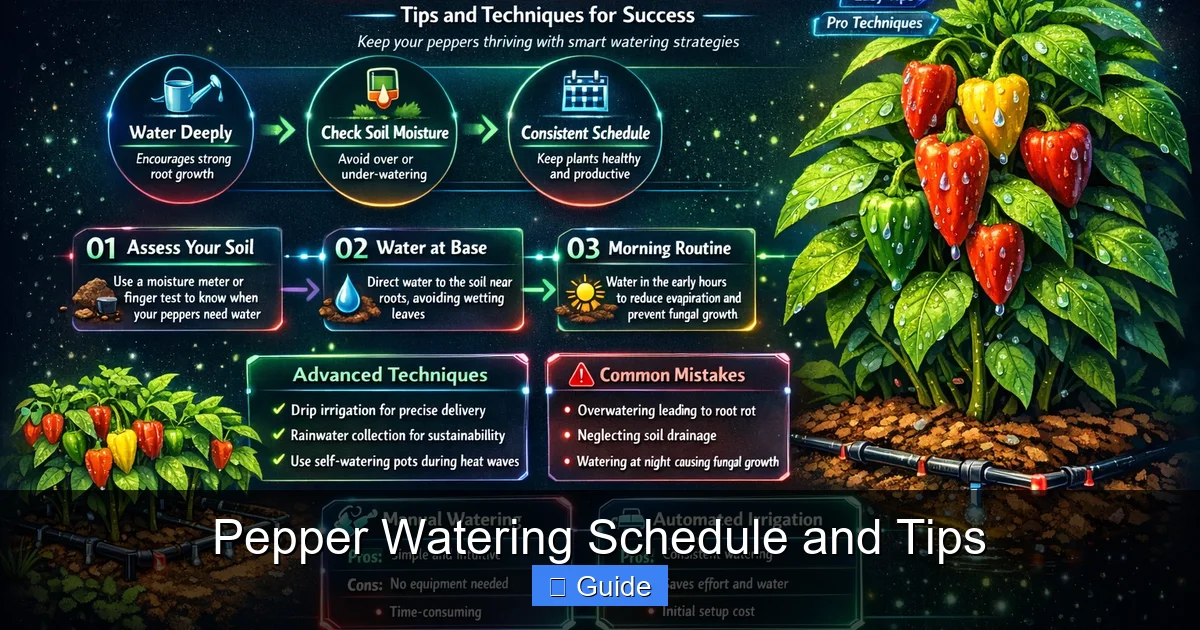
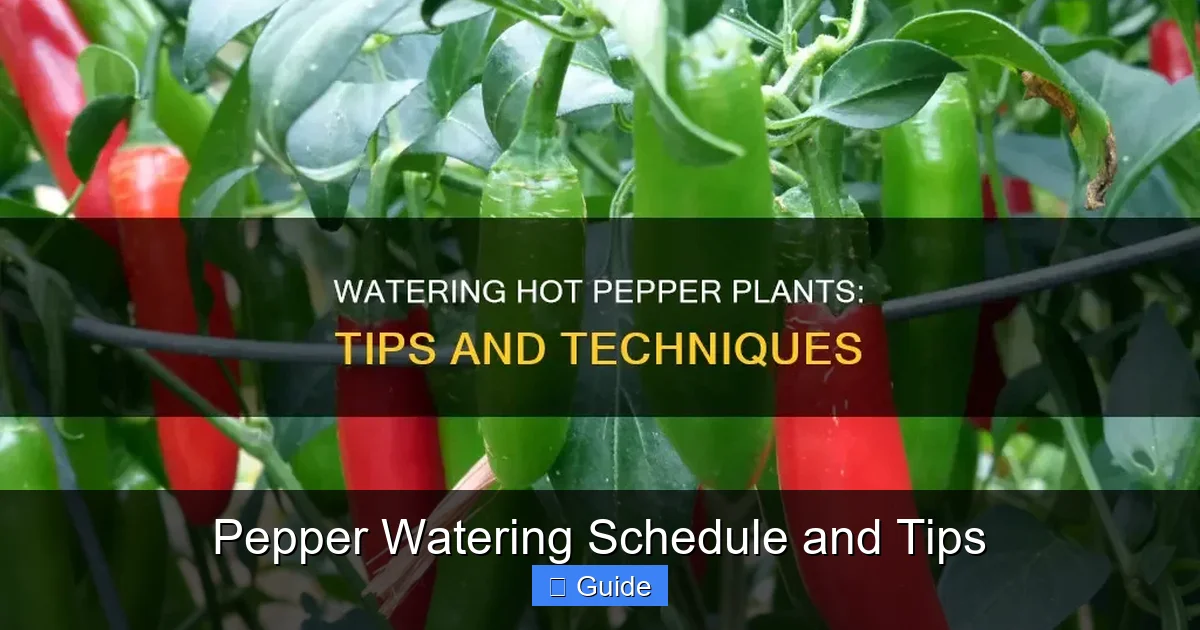
Visual guide about Pepper Watering Schedule and Tips
Image source: shuncy.com
Seedlings and Transplants (Weeks 1-3 After Planting)
Tiny roots. Tiny soil volume. High vulnerability. During this window, the top half-inch of soil should never fully crust over. Check morning and evening. A gentle shower from a watering can with a rose attachment works best. You want to settle soil around roots without blasting them. If you started seeds indoors, bottom-water trays until the surface darkens, then dump excess. Harden off transplants by letting the top dry slightly between waterings the week before planting out. This toughens them up.
Establishment Phase (Weeks 3-6)
Roots are exploring. Stretch the interval. Water when the top inch feels dry. Apply enough to wet the root zone to 6-8 inches deep. For most soils, that means 30-45 minutes with a soaker hose or drip line. If you are hand-watering, count to twenty seconds per plant at a moderate flow. Mulch now. Two inches of straw, grass clippings (herbicide-free), or shredded leaves. Mulch is the single biggest labor-saver in your pepper watering schedule. It cuts evaporation, suppresses weeds, and keeps soil temperature steady.
Vegetative Growth (Weeks 6-10)
Plants are bulking up. Leaves are broad. Transpiration is high. This is peak water demand. Check soil at 2-inch depth every morning. In 90°F heat with wind, you might water every other day. In humid 80s, every third or fourth day. The finger test never lies. Water early, between 5 and 9 AM. Wet leaves at night invite bacterial spot and powdery mildew. If you must water late, keep water off foliage entirely. Drip irrigation or soaker hoses shine here.
Flowering and Fruit Set (Weeks 10-14)
This is the make-or-break window. Water stress now causes flower abortion. The plant decides it cannot support fruit and drops blossoms to survive. Inconsistent moisture also triggers blossom end rot, that leathery black bottom on fruit. It is not a calcium deficiency in the soil. It is a calcium delivery failure caused by uneven water. Keep the soil evenly moist like that wrung-out sponge. No extremes. If a heatwave hits, check twice daily. A shade cloth during the hottest afternoon hours can reduce water demand by 30%.
Fruit Ripening (Week 14 to Frost)
Here is a pro secret: slightly reduce water as fruit colors up. Not drought stress. Just a gentle taper. Cut volume by 20-25%. This concentrates sugars and capsaicin, giving you sweeter bells and hotter chiles. Commercial growers do this. It works. But do not let plants wilt. Wilting at this stage ruins texture and can cause cracking. Monitor closely. The finger test at 3 inches deep is your guide.
Container vs. In-Ground: Different Rules
Where you grow changes everything. A pepper in a 5-gallon fabric pot lives in a different universe than one in a raised bed or native soil.
The Container Challenge
Containers have finite soil volume. They heat up faster. They drain faster. They have no groundwater backup. In July, a mature pepper in a 10-gallon pot may need water twice a day. Morning and late afternoon. The finger test is non-negotiable. Stick it in to the second knuckle. Dry? Water until it runs out the bottom. Wet? Walk away. Self-watering containers with reservoirs extend the interval. So does a thick mulch layer on top of the potting mix. Group pots together. They create a humid microclimate that slows transpiration.
In-Ground Advantages
Garden soil acts like a battery. It stores water deep down. Roots tap that reserve. In-ground peppers typically need water once or twice a week in summer, sometimes less if you mulched well and have decent clay or loam. Sandy soil? You are closer to container frequency. Amend with compost. Lots of it. Organic matter is a sponge. Every 1% increase in organic matter holds roughly 20,000 gallons more water per acre. In a 4×8 bed, that translates to real staying power.
Raised Beds: The Middle Ground
Raised beds drain better than native soil but hold more than pots. They warm faster in spring (great for early planting) and dry faster in summer. Treat them like large containers. Check daily in heat. Water deeply. A drip line with emitters every 12 inches, run for 45-60 minutes, usually nails it. Add a timer. Timers save vacations and forgetful mornings.
Watering Methods: From Can to Automation
How you deliver water matters almost as much as when. Each method has trade-offs.
Hand Watering: The Connection Method
There is no substitute for standing over your plants with a wand. You see the aphids. You spot the first yellow leaf. You notice the fruit hiding under foliage. Use a watering wand with a shut-off valve. Water at the base. Avoid the leaves. Count seconds per plant for consistency. A 2-gallon can takes about 40 seconds to empty at a gentle pour. That is roughly 1.5 gallons per minute. Do the math for your bed size. Hand watering is meditation. It is also labor. Be honest about your time.
Soaker Hoses: Low Tech, High Effect
Lay a porous rubber hose along the row, cover with mulch, connect to the spigot. Water seeps out slowly, directly into the root zone. Zero evaporation. Zero leaf wetness. Run 30-60 minutes depending on pressure. Check penetration with a trowel after the first run. Adjust time so moisture reaches 8-10 inches deep. Soaker hoses clog over time. Flush them yearly. Replace every 3-4 seasons. They are cheap enough.
Drip Irrigation: Precision Control
Emitters at each plant. Pressure regulator. Filter. Timer. This is the gold standard. You deliver exactly 0.5 or 1 gallon per hour per plant. No waste. No foliar disease. Easy to automate. Expensive upfront. Fiddly to repair. But if you have more than a dozen plants, it pays for itself in water savings and peace of mind. Pro tip: use pressure-compensating emitters on slopes. They deliver the same flow uphill and down.
Ollas: Ancient Tech, Modern Win
Buried unglazed clay pots. Fill them. Water seeps out through micropores as soil dries. Roots hug the olla. Zero evaporation. Zero runoff. Refill weekly. Works beautifully in containers and small beds. You can make your own with terracotta pots and silicone caulk. Two pots rim-to-rim, bottom holes sealed, buried to the neck. Fill, cap, walk away. It is passive, elegant, and foolproof.
Reading Your Plants: The Feedback Loop
No schedule beats observation. Your peppers will tell you what they need if you learn the language.
Wilting: Not Always Thirst
Midday wilt on a 95°F day is normal. Large leaves lose water faster than roots can replace it. The plant conserves by drooping. If it perks up by sunset, you are fine. If it is still limp at 7 AM, you have a problem. Water immediately. Chronic morning wilt stunts growth permanently. The plant remembers.
Leaf Curl and Cupping
Leaves curling upward like tacos often mean heat stress, not water stress. But if they curl downward, get leathery, and turn dull green, that is chronic underwatering. Overwatering looks different: leaves yellow from the bottom up, feel soft, and may develop edema (corky bumps on undersides). The finger test resolves the ambiguity every time.
Blossom End Rot: The Calcium Delivery Failure
Black, sunken bottoms on fruit. Heartbreaking. It is not low soil calcium. It is interrupted water flow. Calcium moves only in the transpiration stream. When soil dries, flow stops. Calcium never reaches the fruit tip. The tissue collapses. Prevention is simple: never let the root zone dry out during fruit set. Mulch. Drip. Timer. Done.
Cracking and Splitting
Radial or concentric cracks on ripe fruit. Usually follows a dry spell then heavy rain or overwatering. The skin hardens during drought. Sudden water influx swells the fruit faster than skin can stretch. It splits. Harvest ripe fruit before big rains. Keep moisture steady. Some varieties resist cracking better. Look for “crack-resistant” in catalog descriptions.
Seasonal Adjustments and Special Situations
Your pepper watering schedule is not set in stone. Weather, soil, and life events demand flexibility.
Heatwaves: Emergency Protocol
Forecast shows three days over 95°F. Pre-water deeply the evening before. Morning of, water again at dawn. Add shade cloth 30-40% density. Mist foliage at noon if humidity is low (evaporative cooling). Do not fertilize. Stressed roots cannot process nutrients. Check containers twice daily. Move pots to afternoon shade if possible. A heatwave is not the time to stick to your calendar.
Rain Events: Skip or Supplement?
Half an inch of gentle rain? Skip next watering. Quarter inch? Check soil at 2 inches. If dry, water anyway. Light rain often wets only the mulch. Thunderstorm dumping 2 inches in an hour? Most runs off. Check soil next morning. Do not assume nature did the job. A rain gauge in the bed tells you what actually landed.
Vacation Proofing
Going away for a week? Timer on drip or soaker hose. Mulch heavily. Harvest all ripe and near-ripe fruit. Cluster containers in shade. Ask a neighbor to check once, with clear instructions: “Water if soil is dry at 2 inches.” Leave a trowel and a note. Offer them peppers. Bribery works.
End of Season: The Wind-Down
First frost warning. Stop watering 7-10 days before. Let soil dry. This stresses plants slightly, signaling fruit to ripen fast. Pull any remaining green fruit before hard freeze. They will ripen indoors in a paper bag with a banana. Clean up beds. Store hoses. Dream of next year.
Common Mistakes and How to Fix Them
We all make them. Here are the big ones and the course corrections.
Mistake 1: Watering the Leaves
Overhead sprinklers on peppers are a disease delivery system. Bacterial leaf spot, powdery mildew, anthracnose all love wet foliage. Fix: water at soil level. Always. If rain wets leaves, that is nature. You do not add to it.
Mistake 2: The Daily Sprinkle
Five minutes every morning with a hose nozzle. Roots stay shallow. Plants become needy. Fix: switch to deep, infrequent. It feels wrong at first. Trust the process.
Mistake 3: Ignoring Mulch
Bare soil loses 1/4 inch of water per day in summer sun. Mulched soil loses 1/8 inch or less. That difference compounds. Fix: mulch everything. Now.
Mistake 4: Same Schedule All Season
May watering does not work in July. September watering does not work in July. Fix: adjust weekly. The finger test automates this.
Mistake 5: Fertilizing Dry Soil
Granular fertilizer on dry soil burns roots. Liquid fertilizer on dry soil shocks them. Fix: water deeply, wait an hour, fertilize, water lightly to rinse. Or fertigate through drip.
Advanced Tips for Bigger Harvests
Once you have the basics locked in, these tweaks push yields higher.
Pre-Plant Soil Charge
Two weeks before transplanting, water the bed deeply. Let it drain. Water again. This builds a deep moisture reservoir. Roots hit it running. Do this in fall for spring planting too. Winter rain charges the profile.
Basin Watering for In-Ground
Form a 3-inch soil berm 12 inches around each plant. Fill the basin. Let it soak. Fill again. This forces water straight down, not sideways. Works great for hand watering without drip.
Pulse Watering on Slopes
Run drip 10 minutes on, 20 minutes off, 10 minutes on. Water infiltrates instead of running off. Smart controllers do this automatically. Manual timers need you to cycle.
Water Quality Matters
High sodium? High chlorine? Let municipal water sit 24 hours in buckets before using. Chlorine off-gasses. Sodium is harder. Rain barrels are gold if legal in your area. Peppers hate salt buildup. Flush containers monthly with double volume of clean water.
Companion Planting for Moisture
Low-growing companions like sweet alyssum or white clover act as living mulch. They shade soil, reduce evaporation, and attract beneficials. Trim them so they do not compete. Chop and drop as mulch mid-season.
Putting It All Together: Your Weekly Checklist
Print this. Laminate it. Keep it with your tools.
- Monday: Finger test 3 plants. Check mulch depth. Top off if thin.
- Wednesday: Finger test. Run drip/soaker if needed. Inspect leaves while you are there.
- Friday: Finger test. Harvest ripe fruit. Adjust timer for weekend forecast.
- Daily (containers): Finger test morning. Water if dry. Check saucers, empty excess.
- After rain: Check gauge. Finger test. Do not assume.
- Monthly: Flush containers. Clean drip filters. Check emitters for clogs.
That is it. The whole system. No magic. Just attention.
Conclusion
There you have it. The complete pepper watering schedule, from seedling to frost, containers to acres, drought to deluge. It boils down to three habits: check soil before you water, water deep when you do, and mulch like your harvest depends on it. Because it does.
I still remember the first year I got it right. The plants were chest-high by August. Thick stems. Dark green leaves. Fruit hanging like ornaments. I picked a fully ripe red bell, still warm from the sun, bit into it standing in the garden, and the sweetness made me laugh out loud. That flavor came from consistency. From roots that went deep because I made them work for it. From a schedule I stuck to even when I was busy, tired, or distracted.
Your peppers want to thrive. They are programmed for it. Give them the moisture rhythm they evolved for, and they will reward you with more color, more heat, more sweetness, and more joy than you thought possible from a few square feet of dirt. Now go stick your finger in the soil. Your plants are waiting.
Frequently Asked Questions
Should I water peppers every day?
No, daily light watering encourages shallow roots. Water deeply 1-2 times per week for in-ground plants, allowing the top 1-2 inches of soil to dry between waterings. Containers in hot weather are the exception and may need daily checks.
How do I know if my peppers need water?
Stick your finger 2 inches into the soil. If it feels dry at that depth, water. If it feels cool and damp, wait. Visual cues like morning wilting, dull leaf color, and soil pulling away from container edges also signal thirst.
Is drip irrigation better than hand watering for peppers?
Drip irrigation is more consistent, keeps foliage dry, and saves water. However, hand watering lets you inspect plants closely. Many gardeners use drip for baseline moisture and hand-water to supplement or fertilize.
Why do my peppers have blossom end rot?
Blossom end rot is caused by inconsistent watering interrupting calcium transport to developing fruit, not by soil calcium deficiency. Maintain even soil moisture with mulch and regular deep watering, especially during fruit set.
Can I use rainwater for my pepper plants?
Yes, rainwater is excellent for peppers. It is free of chlorine, has a neutral pH, and contains trace nutrients. Collect it in barrels and use at ambient temperature. Avoid water from roofs treated with moss killer or zinc strips.
Should I stop watering peppers before harvest?
Reduce watering by 20-25% as fruit ripens to concentrate sugars and capsaicin for better flavor. Do not stop entirely or let plants wilt, which causes cracking and reduces yield. Resume normal watering after heavy harvests.