Pairing Container Plants Obsidian Coral Bells
Obsidian coral bells bring dramatic, near-black foliage to container gardens, making them a perfect anchor plant for stunning combinations. Pairing container plants with Obsidian coral bells successfully means choosing companions that share similar light, water, and soil needs while offering contrasting colors and textures. This guide covers the best plant partners, design principles, and care tips to help you create gorgeous, long-lasting container displays that thrive all season.
There is something undeniably magnetic about Heuchera ‘Obsidian.’ Those glossy, near-black leaves catch the light in a way that stops you in your tracks. I remember the first time I saw one at a local nursery. It sat among a sea of green, looking like a piece of polished stone. I bought it on impulse, tucked it into a pot on my shaded porch, and spent the next few weeks figuring out what to plant around it. That journey of trial and error taught me everything I know about pairing container plants Obsidian coral bells successfully.
If you are here, you likely already appreciate the drama this plant brings. You want to build a container that looks intentional, not accidental. You want neighbors that play nice, share the same schedule for water and light, and make those dark leaves sing. The good news? Obsidian is surprisingly easy to please once you understand its rhythm. The even better news? The list of plants that love the same conditions is long and beautiful. Let us walk through the principles, the plant partners, and the practical steps to create containers that look like they were designed by a pro.
Key Takeaways
- Obsidian coral bells thrive in part shade: They need 4-6 hours of morning sun or dappled light for the deepest foliage color.
- Choose companions with similar needs: Pair with plants that prefer moist, well-draining soil and part-shade conditions.
- Contrast creates drama: Silver, chartreuse, and variegated foliage plants make Obsidian’s dark leaves pop.
- Consider seasonal interest: Select partners that bloom at different times for continuous color.
- Container size matters: Use pots at least 12-14 inches wide to accommodate root systems of multiple plants.
- Water consistently: Coral bells dislike drying out completely; check soil moisture daily in summer.
- Refresh annually: Repot or divide in early spring to maintain vigor and prevent overcrowding.
Quick Answers to Common Questions
Can Obsidian coral bells take full sun?
No. Obsidian prefers part shade with 4-6 hours of morning sun. Hot afternoon sun will scorch the leaves and fade the black color to brown. In cooler northern zones, it may tolerate more sun with constant moisture.
What is the best pot size for pairing container plants Obsidian coral bells?
Use a container at least 12-14 inches wide and deep. Larger pots (18-24 inches) are better for mixed plantings as they hold more soil, buffer temperature swings, and reduce watering frequency.
Do I need to fertilize Obsidian coral bells in containers?
Yes. Mix slow-release fertilizer into the potting soil at planting. Supplement with half-strength liquid fertilizer every two weeks during active growth (April-August). Stop fertilizing by late August to allow growth to harden off.
Will Obsidian coral bells survive winter in a pot?
In zones 7-9, usually yes with minimal protection. In zones 4-6, move pots to an unheated garage, bury them in the ground, or wrap with burlap and straw. Container plants lose one hardiness zone compared to in-ground plants.
How often should I divide Obsidian coral bells in containers?
Every 3-4 years in early spring. The center of the clump becomes woody and less vigorous. Lift, divide with a sharp knife ensuring each piece has roots and growth points, and replant the healthiest sections.
📑 Table of Contents
- Understanding Obsidian Coral Bells
- Design Principles for Stunning Combinations
- Top Companion Plants for Shade Containers
- Sun-Tolerant Combinations for Brighter Spots
- Seasonal Strategies for Year-Round Interest
- Practical Planting and Maintenance Guide
- Creative Container Recipes
- Troubleshooting Common Issues
- Conclusion
Understanding Obsidian Coral Bells
What Makes Obsidian Special
Obsidian is a cultivar of Heuchera, commonly called coral bells or alumroot. It was bred for one standout trait: foliage so dark it reads as black. The leaves are large, rounded, and deeply lobed with a high-gloss finish. In spring, the new growth emerges with a subtle purple undertone before settling into that signature deep hue. Come summer, slender stems rise above the mound, bearing tiny cream-colored bells that attract hummingbirds and bees.
This plant forms a tidy clump, typically reaching 10 to 12 inches tall and wide. The flower spikes can add another 12 to 18 inches of height. It is evergreen in mild winters and semi-evergreen in colder zones, providing structure when most perennials have retreated underground. That year-round presence makes it a valuable anchor in container designs.
Growing Requirements You Must Match
Successful pairing container plants Obsidian coral bells starts with respecting its non-negotiables. Obsidian prefers part shade. That means four to six hours of morning sun or dappled light all day. Hot afternoon sun, especially in southern zones, will scorch the leaves and fade the color to a muddy brown. If you only have full shade, it will survive but grow slower and flower less.
Soil must be well-draining yet moisture-retentive. Think rich, humusy, slightly acidic to neutral pH. Heavy clay spells root rot. Pure sand spells drought stress. A high-quality potting mix amended with compost or leaf mold hits the sweet spot. Water consistently. The soil should feel like a wrung-out sponge — never bone dry, never soggy. Mulch the surface with shredded bark or cocoa hulls to conserve moisture and keep roots cool.
Hardiness and Container Considerations
Obsidian is hardy in USDA zones 4 through 9. In containers, plants lose a zone of hardiness because roots are exposed to freezing air on all sides. If you garden in zone 5, treat it as zone 4. Options include moving pots to an unheated garage, burying them in the ground, or wrapping them in burlap and straw. In zones 7 and up, they usually sail through winter with minimal protection.
Choose a container at least 12 inches wide and deep. Larger is better. More soil volume buffers temperature swings and holds water longer. Ensure drainage holes. Elevate the pot on feet or bricks so water exits freely. A saucer is fine, but dump standing water after rain.
Design Principles for Stunning Combinations
The Thriller, Filler, Spiller Framework
Container design often follows a simple recipe: thriller, filler, spiller. The thriller provides height and drama. The filler adds mass and bridges the gap. The spiller cascades over the edge, softening the pot’s rim. Obsidian coral bells usually play the filler role. Its mounding habit fills the middle layer beautifully. Sometimes, in a smaller pot, it can serve as the thriller if paired with low creepers.

Visual guide about Pairing Container Plants Obsidian Coral Bells
Image source: images.squarespace-cdn.com
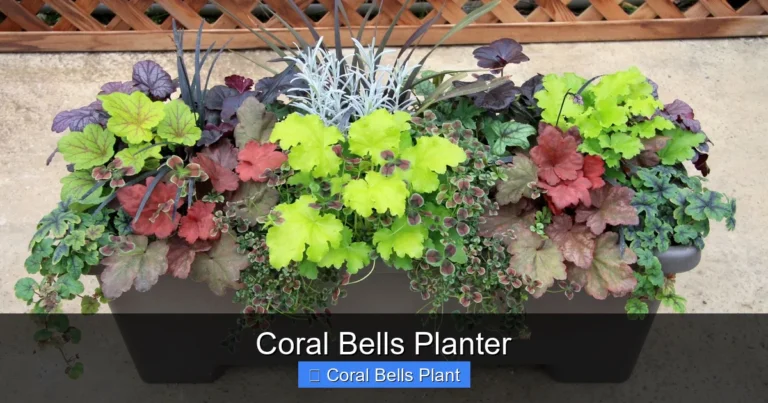
When pairing container plants Obsidian coral bells, think in layers. Place a tall, airy grass or a vertical accent like a fern in the center or back. Surround it with Obsidian. Let trailing plants spill over the front and sides. This creates depth and ensures every plant gets its moment in the light.
Color Theory: Making Black Pop
Black foliage is a design powerhouse. It recedes visually, making a small space feel larger. It also makes adjacent colors appear more saturated. The classic partners are silver, chartreuse, and white. Silver reflects light, creating a cool, sophisticated glow. Chartreuse brings energy and a modern edge. White flowers or variegation add crisp contrast.
Avoid pairing with other dark-leaved plants unless you want a moody, low-contrast vignette. Deep purple, burgundy, and chocolate brown can muddy the composition. If you love the dark-on-dark look, separate them with a ribbon of silver or a white-flowering plant to give the eye a resting place.
Texture and Form Matter
Color gets the glory, but texture does the heavy lifting. Obsidian has smooth, shiny, rounded leaves. Pair it with plants that offer contrast: feathery ferns, strappy grasses, ruffled hostas, or needle-like conifers. Mix leaf sizes. Large leaves next to small leaves create rhythm. Consider plant habit too. Upright, mounding, and trailing forms together keep the arrangement from looking like a flat pancake.
Top Companion Plants for Shade Containers
Silver and White Foliage Stars
Japanese painted fern (Athyrium niponicum ‘Pictum’) is a top-tier partner. Its fronds are a watercolor of silver, burgundy, and green. The metallic sheen echoes Obsidian’s gloss. Both love the same moist, rich soil. Plant the fern behind or beside the coral bells for a layered look.
Lungwort (Pulmonaria) offers silver-spotted or fully silvered leaves plus early spring flowers in pink and blue. ‘Silver Bouquet’ and ‘Majesté’ are standout cultivars. They bloom when Obsidian is just waking up, extending the season of interest.
Brunnera ‘Jack Frost’ brings large, heart-shaped leaves heavily overlaid with silver crackle. Its tiny blue forget-me-not flowers in spring are a bonus. It forms a substantial mound that holds its own next to Obsidian.
Heucherella ‘Silver Streak’ or ‘Twilight’ are intergeneric hybrids between coral bells and foamflower. They inherit the best of both: colorful foliage and foamy flower spikes. Silver-leaved varieties create a monochromatic silver-and-black scheme that feels curated and calm.
Chartreuse and Gold Accents
Hakone grass (Hakonechloa macra ‘Aureola’ or ‘All Gold’) is arguably the best grass for shade. Its arching, bamboo-like blades glow in low light. ‘Aureola’ has green stripes; ‘All Gold’ is solid chartreuse. Both move with the slightest breeze, adding life to static arrangements.
Golden creeping Jenny (Lysimachia nummularia ‘Aurea’) is a classic spiller. Its round, coin-sized leaves trail aggressively. It roots where nodes touch soil, so it can fill gaps quickly. Keep it in check by trimming runners. The gold foliage against Obsidian’s black is high-impact, low-effort.
Hostas offer endless gold and chartreuse options. ‘Sum and Substance’ gets huge. ‘Guacamole’ has fragrant flowers. ‘Rainforest Sunrise’ stays compact with cupped leaves. Choose slug-resistant varieties with thick substance. Hostas and coral bells share the same cultural needs, making them natural roommates.
Coleus brings instant color in endless patterns. Look for shade-tolerant varieties like ‘Wasabi’ (chartreuse), ‘Electric Lime’, or ‘Henna’ (ruffled copper-gold). Pinch flowers to keep foliage lush. They are annuals in most zones, so treat them as seasonal color you refresh each spring.
Flowering Partners for Seasonal Color
Astilbe contributes feathery plumes in pink, red, white, or lavender. Its ferny foliage contrasts nicely with Obsidian’s smooth leaves. It needs consistent moisture — perfect for the same watering schedule. Choose dwarf varieties like ‘Pumila’ or ‘Visions’ for containers.
Bleeding heart (Dicentra) offers romantic heart-shaped flowers in spring. ‘Gold Heart’ has golden foliage that pairs beautifully. After flowering, it may go dormant in summer heat. Plan a late-season filler like coleus or impatiens to take its place.
Coral bells cousins — other Heuchera varieties — expand the palette. ‘Caramel’ (amber), ‘Lime Rickey’ (chartreuse), ‘Berry Smoothie’ (rose-pink), and ‘Forever Purple’ (deep purple) all share the same care. Mix three or five different cultivars in a large trough for a tapestry effect.
Tiarella (foamflower) is a native woodland perennial with maple-like leaves and foamy white or pink spikes. It spreads gently by runners, knitting the planting together. ‘Spring Symphony’ and ‘Sugar and Spice’ are excellent compact selections.
Trailing and Cascading Plants
Ivy (Hedera helix) in variegated forms like ‘Glacier’ or ‘Gold Child’ adds year-round evergreen structure. It trails elegantly and tolerates deep shade. Keep it contained; it can become aggressive in the ground but behaves in pots.
Vinca minor (periwinkle) offers glossy green or variegated leaves and blue spring flowers. ‘Illumination’ has gold centers with green margins. It is tough, drought-tolerant once established, and evergreen.
Sweet potato vine (Ipomoea batatas) in ‘Blackie’ (deep purple) or ‘Marguerite’ (chartreuse) grows fast and trails hard. It loves heat and moisture. In cooler zones, it is an annual. The chartreuse version is a classic high-contrast partner for Obsidian.
Creeping wire vine (Muehlenbeckia axillaris) has tiny round leaves on wiry dark stems. It forms a dense mat and spills gracefully. Its fine texture is a perfect foil to Obsidian’s bold leaves. Hardy to zone 6, it may survive winter in protected pots.
Sun-Tolerant Combinations for Brighter Spots
When You Have Morning Sun
If your site gets four to six hours of direct morning sun, you open the door to more flowering options. Obsidian handles this well, especially in cooler climates or with consistent moisture. The key is avoiding the intense afternoon rays that fry the leaves.
Salvia varieties like ‘Black and Blue’ (deep cobalt with black calyces) or ‘Wendy’s Wish’ (magenta) thrive in morning sun. Their vertical spikes contrast with the mounding coral bells. Hummingbirds love them.
Penstemon ‘Husker Red’ has maroon foliage and white flowers. It bridges the gap between dark foliage and bright blooms. It prefers sharp drainage, so add extra perlite to the mix.
Geranium ‘Rozanne’ is a workhorse. Violet-blue flowers from June to frost. Mounding habit. It weaves through neighbors politely. Shear it back in midsummer if it gets leggy.
Grasses for Movement and Light
Carex oshimensis ‘Evergold’ or ‘Everillo’ are sedges, not true grasses, but they play the same role. ‘Evergold’ has green margins with a gold center. ‘Everillo’ starts lime and matures to gold. Both are evergreen, shade-tolerant, and tidy.
Carex morrowii ‘Ice Dance’ has white-edged leaves. It forms a neat fountain. The variegation picks up light in shaded corners.
Japanese forest grass (mentioned earlier) also tolerates morning sun if watered well. Its cascading habit is unmatched for softening pot edges.
Seasonal Strategies for Year-Round Interest
Spring Awakening
Early spring is when Obsidian shines. New leaves emerge glossy and intense. Pair it with spring bulbs planted the previous fall. Snowdrops, crocus, species tulips, and miniature daffodils bloom before the coral bells hit full stride. Plant bulbs deep; coral bells sit shallow. They occupy different soil zones.
Add primroses (Primula) for instant color. ‘Pacific Giants’ or ‘Belarina’ series offer double flowers in rich hues. They fade by early summer. Replace them with heat-loving annuals or let the perennials fill in.
Summer Sustenance
Summer tests container gardens. Heat, wind, and missed waterings take a toll. Obsidian holds its color if moisture is steady. Mulch heavily. Group pots together to create a humid microclimate. Use a drip irrigation line or self-watering inserts if you travel.
Impatiens (downy mildew resistant varieties like ‘Beacon’ or ‘Imara’) bloom nonstop in shade. Begonias — wax, tuberous, or rex — offer flowers and foliage. Fuchsias hang gracefully, attracting hummingbirds. Torenia (wishbone flower) tolerates heat better than impatiens.
Autumn Transition
As days shorten, Obsidian often deepens in color. Cooler nights bring out purple undertones. This is the moment to introduce fall annuals: ornamental kale and cabbage, pansies, violas, and chrysanthemums. Choose colors that harmonize — deep purples, whites, silvers.
Heuchera villosa hybrids like ‘Autumn Bride’ bloom in fall with white spikes. They extend the coral bells season. Their fuzzy leaves add texture contrast.
Winter Structure
In zones 7 and up, Obsidian stays evergreen. The pot looks good all winter with minimal care. Add evergreen boughs, red-twig dogwood stems, or birch poles for vertical interest. Tuck in winter-blooming hellebores (Christmas rose or Lenten rose) for flowers in January and February.
In colder zones, the foliage may flatten or brown. Do not cut it back until spring. The dead leaves protect the crown. Move the pot to a sheltered spot. Water monthly if the soil thaws and no snow covers it.
Practical Planting and Maintenance Guide
Step-by-Step Planting
Start with a clean pot. Cover drainage holes with a piece of landscape fabric or a coffee filter — not gravel, which creates a perched water table. Fill one-third with moistened potting mix. Mix in a slow-release fertilizer formulated for perennials. Arrange plants in their nursery pots first. Play with spacing. Step back. Adjust.
Remove plants gently. Tease circling roots. Place Obsidian slightly off-center for a natural look. Backfill with mix, firming gently. Leave an inch of headspace for watering. Water thoroughly until it drains out the bottom. Top with mulch.
Watering Wisdom
Check daily in summer. Stick your finger two inches down. If dry, water. If moist, wait. Morning watering is best. Wet foliage overnight invites fungal issues. Water the soil, not the leaves. A watering can with a long spout or a wand attachment gives control.
In spring and fall, water less frequently. In winter, water only during dry thaws. Overwatering kills more coral bells than underwatering. Soggy soil suffocates roots.
Feeding Schedule
Slow-release fertilizer at planting feeds for three to four months. Supplement with liquid fertilizer at half strength every two weeks during active growth (April through August). Stop fertilizing by late August. You want tender growth to harden off before frost.
Top-dress with compost each spring. Scratch it into the top inch. This refreshes organic matter and microbes.
Grooming and Dividing
Remove spent flower stems at the base. Trim any tattered or sunburned leaves. In early spring, cut back winter-damaged foliage to the crown. New growth emerges fast.
Every three to four years, the center of the clump may become woody and less vigorous. In early spring, lift the plant. Divide with a sharp knife or spade. Each division needs roots and several growth points. Replant the healthiest pieces. Share or compost the rest. This rejuvenation keeps Obsidian looking fresh.
Pest and Disease Watch
Coral bells are largely trouble-free. Vine weevil larvae eat roots. Adults notch leaf edges at night. Check for C-shaped white grubs in the soil. Treat with beneficial nematodes in late summer. Foliar nematodes cause angular brown patches between veins. Remove affected leaves. Avoid overhead watering.
Powdery mildew appears as white dust in humid, stagnant air. Space plants for airflow. Treat with neem oil or potassium bicarbonate if needed. Root rot from poor drainage is the biggest killer. Prevention is the cure: good mix, good drainage, no saucers full of water.
Creative Container Recipes
Recipe 1: The Midnight Garden (Cool & Sophisticated)
- Thriller: Japanese painted fern ‘Pictum’ (1 plant, center back)
- Filler: Obsidian coral bells (3 plants, middle layer)
- Filler: Brunnera ‘Jack Frost’ (2 plants, flanking Obsidian)
- Spiller: Variegated ivy ‘Glacier’ (2 plants, front edges)
- Spring bonus: White species tulips (10 bulbs, planted deep)
Pot size: 18-24 inches wide. Light: Part to full shade. Palette: Black, silver, white, green.
Recipe 2: Electric Edge (High Contrast, Modern)
- Thriller: Hakone grass ‘All Gold’ (1 plant, center)
- Filler: Obsidian coral bells (3 plants, surrounding grass)
- Filler: Coleus ‘Wasabi’ or ‘Electric Lime’ (2 plants, sides)
- Spiller: Golden creeping Jenny ‘Aurea’ (3 plants, spaced around rim)
- Summer bonus: White impatiens (tucked in gaps)
Pot size: 20 inches wide. Light: Morning sun / afternoon shade. Palette: Black, chartreuse, gold, white.
Recipe 3: Woodland Tapestry (Naturalistic, Textural)
- Thriller: Carex ‘Ice Dance’ (1 plant, center back)
- Filler: Obsidian coral bells (2 plants)
- Filler: Tiarella ‘Spring Symphony’ (2 plants)
- Filler: Heuchera ‘Caramel’ (2 plants)
- Spiller: Creeping wire vine (3 plants)
- Spring bonus: Blue woodland phlox (Phlox divaricata, 3 plants)
Pot size: Large trough or half whiskey barrel. Light: Dappled shade. Palette: Black, amber, green, white, silver.
Recipe 4: Hummingbird Haven (Wildlife Focused)
- Thriller: Salvia ‘Black and Blue’ (1 plant, center)
- Filler: Obsidian coral bells (3 plants)
- Filler: Penstemon ‘Husker Red’ (2 plants)
- Spiller: Fuchsia ‘Gartenmeister Bonstedt’ (2 plants, trailing)
- Summer bonus: Cuphea ‘Vermillionaire’ (tucked in front)
Pot size: 18 inches wide. Light: Morning sun (4-6 hours). Palette: Black, red, coral, blue, green.
Troubleshooting Common Issues
Leaves Turning Brown or Crispy
Usually sun scorch or drought stress. Move to shadier spot. Increase watering. Mulch. Trim damaged leaves; they will not recover.
Plant Looks Loose, Floppy, or Leggy
Too much shade or too much nitrogen. Reduce fertilizer. Ensure it gets at least a few hours of direct morning light. Some varieties naturally loosen in deep shade.
Center of Clump Dying Out
Time to divide. See maintenance section. Do it in early spring.
No Flowers
Too much shade, too young, or too much nitrogen. Mature plants in adequate light bloom reliably. Be patient with first-year plants.
Foliage Color Fading to Greenish-Brown
High heat, intense sun, or nutrient deficiency. Afternoon shade is critical in zones 7+. Feed with balanced fertilizer. Ensure consistent moisture.
Conclusion
Creating beautiful containers with Obsidian coral bells is not about memorizing plant lists. It is about understanding the plant’s personality — what it loves, what it tolerates, what makes it sing — and then inviting neighbors that share its rhythm. The dark foliage is your canvas. Silver, gold, chartreuse, white, and texture are your paints. The pot is your frame.
Start with one combination. Observe it through the seasons. Note what thrills you and what disappoints. Swap one plant next year. Add a bulb layer in fall. Move the pot to a new spot. Gardening in containers is uniquely forgiving. You can edit. You can move. You can start fresh without a backhoe.
Obsidian coral bells reward attention with months of sophisticated beauty. They anchor a planting with a gravity that lighter plants cannot. When you get the pairings right, the container becomes more than a collection of plants. It becomes a vignette — a small, composed scene that draws the eye and holds it. That is the joy of pairing container plants Obsidian coral bells thoughtfully. Your porch, patio, or balcony deserves that kind of presence. Go build it.
Frequently Asked Questions
What are the best companion plants for Obsidian coral bells in shade containers?
Top companions include Japanese painted fern, Brunnera ‘Jack Frost’, Hakone grass ‘Aureola’, golden creeping Jenny, lungwort, and variegated ivy. These share the same part-shade, moist-soil preferences and offer contrasting silver, gold, or chartreuse foliage.
Can I plant Obsidian coral bells with other Heuchera varieties?
Absolutely. Mixing different coral bells cultivars like ‘Caramel’, ‘Lime Rickey’, ‘Berry Smoothie’, or ‘Forever Purple’ creates a stunning tapestry effect. They have identical cultural needs and intermingle beautifully in large containers.
Why are my Obsidian coral bells turning green instead of staying black?
Color fading usually indicates too much sun (especially afternoon sun), high heat, or insufficient light for pigment development. Ensure the plant receives morning sun only and consistent moisture. Deep shade can also reduce the intensity of the black coloration.
How do I water a mixed container with Obsidian coral bells?
Check soil moisture daily by sticking your finger 2 inches deep. Water thoroughly when the top inch feels dry. Water at the soil level, not on foliage. Morning watering is best. Mulch the surface to retain moisture. Reduce frequency in spring, fall, and winter.
What pests commonly affect Obsidian coral bells in containers?
Vine weevils are the primary pest. Adults notch leaf edges at night; larvae eat roots. Check for C-shaped grubs in the soil and treat with beneficial nematodes in late summer. Foliar nematodes and powdery mildew can occur in humid, stagnant conditions.
Can I grow Obsidian coral bells indoors as a houseplant?
It is challenging. Obsidian needs a winter dormancy period triggered by cold temperatures and short days. Indoors, it often declines without a chilling period. If attempted, provide bright indirect light, cool temperatures (50-60°F in winter), high humidity, and excellent drainage.