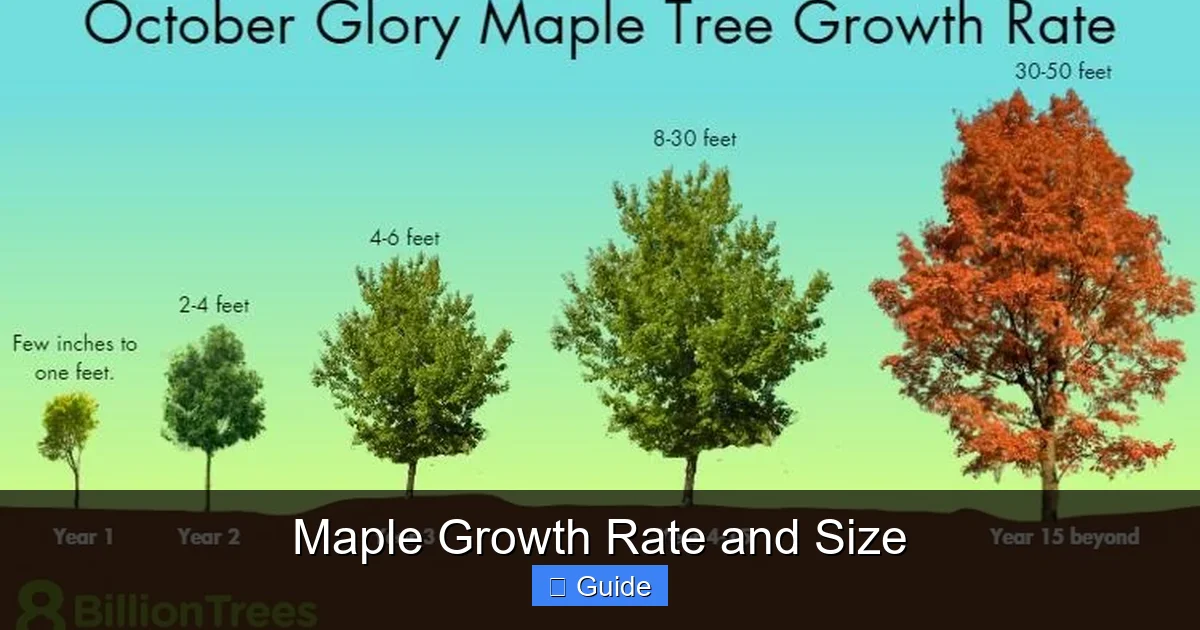
Maple Growth Rate and Size
Maples vary widely in growth rate and final size, ranging from fast‑growing silver maples that can add 2‑3 feet per year to slow‑growing Japanese maples that may only gain a few inches annually. Understanding these differences helps you pick the right tree for your space and maintenance preferences.
Maple trees are a favorite for homeowners who want shade, brilliant fall color, and a touch of elegance. The maple growth rate and size you can expect depends on the species you choose and the conditions you provide. Some maples race toward the sky while others stay compact for decades.
In this guide we break down the major groups of maples, explain what drives their growth, and give practical tips for planting and long‑term care. Whether you have a spacious yard or a modest patio, there is a maple that fits.
Read on to learn how to match a tree to your goals, avoid common mistakes, and enjoy a healthy maple for generations.
Key Takeaways
- Growth Rate Varies by Species: Silver maple grows 2‑3 ft per year while Japanese maple grows only 6‑12 in per year.
- Mature Height and Spread Differ Greatly: Large species can exceed 80 ft tall; dwarf types stay under 20 ft.
- Soil, Water, and Light Drive Performance: Rich, moist, well‑drained soil and full sun maximize the maple growth rate and size.
- Pruning Shapes Long‑Term Size: Regular structural pruning keeps fast growers strong and ornamental types compact.
- Choose Species Matched to Your Hardiness Zone: Planting outside the recommended zone stunts growth and increases winter damage.
- Plan for Future Space and Maintenance: Allow enough room for the mature canopy and schedule periodic inspections.
Quick Answers to Common Questions
Which maple grows the fastest?
Silver maple is the fastest, adding 2‑3 feet per year under ideal conditions.
How tall does a Japanese maple get?
Most Japanese maples reach 15‑25 feet tall, though dwarf cultivars stay under 10 feet.
Can I plant a maple near my house foundation?
Large species need at least 20 feet of clearance; small ornamentals can be planted 8‑10 feet away.
When is the best time to prune a maple?
Late winter, while the tree is dormant, is the optimal pruning window.
Do maples need fertilizer every year?
A light application of slow‑release fertilizer in early spring is sufficient; over‑fertilizing harms the tree.
📑 Table of Contents
Understanding Maple Growth Basics
What Determines Growth Rate?
Genetics set the ceiling for how fast a maple can grow. Soil fertility, moisture, sunlight, and climate all play supporting roles. A tree in rich, moist soil with full sun will usually outpace the same species in poor, dry shade. The maple growth rate and size is a combination of these factors.
Root health is the hidden engine. Deep, well‑aerated roots absorb water and nutrients efficiently. Compacted soil or standing water limits root expansion and slows top growth.
Typical Size Ranges
Mature height can range from 15 feet for dwarf Japanese maples to over 100 feet for silver maples. Spread often matches height but can be wider in open settings. Knowing the expected range helps you avoid planting too close to structures.
Width is as important as height. A broad crown can shade a house, interfere with power lines, or crowd neighboring plants. Plan for the full spread at maturity.
Reading a Maple Growth Rate and Size Chart
Charts list average annual height gain and mature dimensions for each species. Use them as a baseline, not a guarantee. Site conditions can shift the numbers up or down by 20‑30 percent.
Look for charts that include hardiness zones, soil preferences, and typical lifespan. This extra data guides long‑term decisions.
Fast‑Growing Maple Species
Silver Maple (Acer saccharinum)
Silver maple is the speed champion. It can add 2‑3 feet per year in ideal conditions. It thrives in wet soils and tolerates periodic flooding. Its brittle wood means branches can break in storms, so plant it away from buildings and walkways.
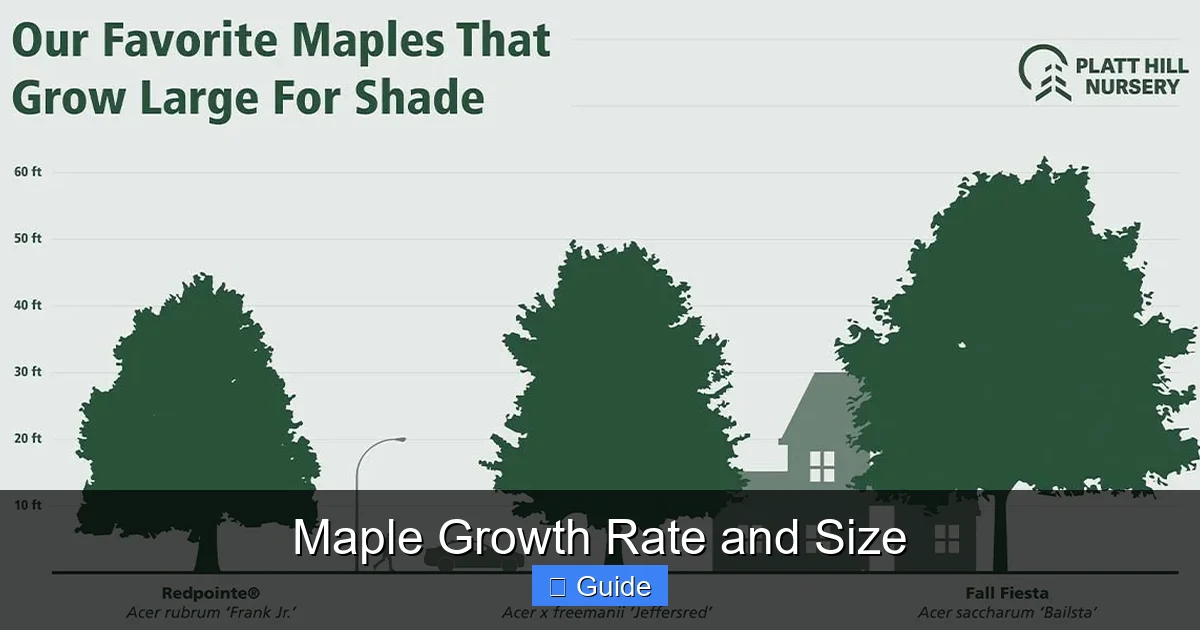
Visual guide about Maple Growth Rate and Size
Image source: platthillnursery.com
Fall color is a modest yellow. The tree’s aggressive root system can lift sidewalks if planted too close. Give it at least 30 feet of open space.
Red Maple (Acer rubrum)
Red maple adapts to a wide range of soils, from sandy loam to heavy clay. It offers brilliant red fall foliage. Growth averages 1‑2 feet per year. In very wet sites it may develop surface roots that need management.
Red maple is a good choice for urban streetscapes because it tolerates pollution. Regular pruning keeps the canopy open and reduces storm damage.
Pros and Cons of Rapid Growth
Fast growers give quick shade and privacy. They also produce weaker wood, making them prone to breakage. The maple growth rate and size of these species can overwhelm small yards if not planned.
Consider the long‑term maintenance budget. Expect more frequent pruning and possible cabling for large limbs.
Moderate‑Growth Maple Species
Sugar Maple (Acer saccharum)
Sugar maple is prized for syrup production and hard, dense wood. It prefers well‑drained, slightly acidic soil. Annual height gain is about 1‑1.5 feet. The dense canopy provides excellent summer shade.
Fall color ranges from bright orange to deep red. Sugar maple lives 200‑300 years, making it a legacy tree for future generations.
Norway Maple (Acer platanoides)
Norway maple tolerates urban pollution, compacted soil, and a range of pH levels. It grows 1‑1.5 feet per year and reaches 40‑50 feet tall. In some regions it is considered invasive, so check local regulations before planting.
Its shallow roots can compete with lawn grasses. Mulching helps reduce competition.
When to Choose a Moderate Grower
Choose these when you want a sturdy tree that still reaches a good size in 20‑30 years. The maple growth rate and size fits medium‑sized lots and provides a balance of speed and strength.
Moderate growers respond well to structural pruning early in life, establishing a strong central leader.
Slow‑Growing and Ornamental Maples
Japanese Maple (Acer palmatum)
Japanese maple offers delicate foliage and stunning fall hues. It grows only 6‑12 inches per year. It prefers dappled shade and consistent moisture. Many cultivars stay under 15 feet tall, perfect for courtyards.
Leaf shape and color vary widely among cultivars. Select a variety that matches your design palette.
Paperbark Maple (Acer griseum)
Paperbark maple is valued for its peeling cinnamon‑colored bark. It reaches 20‑30 feet tall over many decades. Growth is slow but steady, adding about 6‑8 inches per year.
Its exfoliating bark provides winter interest when leaves are gone. Plant it where the bark can be appreciated up close.
Design Tips for Small Spaces
Plant ornamental maples as focal points or in mixed borders. Use containers for the smallest cultivars to control root spread. The maple growth rate and size stays manageable with minimal pruning.
Combine with shade‑tolerant perennials for layered garden beds. Mulch annually to retain moisture and protect shallow roots.
Factors That Influence Growth Rate and Size
Soil Quality and pH
Rich, loamy soil with a pH between 5.5 and 7.0 supports the best growth. Heavy clay or sandy soil can slow a tree down. Amend soil with compost at planting to improve texture and nutrient availability.
Test soil every few years. Adjust pH with lime or sulfur as needed to keep the maple growth rate and size on track.
Water Availability
Consistent moisture, especially in the first three years, fuels rapid root development. Drought stress reduces annual height gain. Mulch helps retain soil moisture and moderates temperature extremes.
Water deeply rather than frequently. A slow soak encourages deep roots that withstand dry spells.
Sunlight Exposure
Full sun (six or more hours) maximizes photosynthesis and growth. Partial shade is fine for many ornamental maples but slows the maple growth rate and size of larger species.
Observe the site throughout the day. Morning sun with afternoon shade works well for Japanese maples.
Climate and Hardiness Zone
Maples have specific hardiness ranges. Planting outside the recommended zone can stunt growth or cause winter dieback. Choose a species matched to your USDA zone for reliable performance.
Microclimates near buildings or bodies of water can shift effective zones by half a zone.
Fertilization Practices
A balanced slow‑release fertilizer in early spring can boost growth. Over‑fertilizing leads to weak, fast shoots that break easily. Follow label rates and avoid high‑nitrogen products after midsummer.
Organic options like composted manure provide steady nutrition without the risk of burn.
Planting, Care, and Long‑Term Management
Site Selection and Spacing
Pick a spot with enough room for the mature canopy. Check overhead utilities and underground lines. Allow at least 15‑20 feet from buildings for large species and 8‑10 feet for small ornamentals.
Consider future landscape changes. A tree that fits today may crowd a patio added later.
Planting Depth and Hole Preparation
Dig a hole twice as wide as the root ball but no deeper. Set the root flare at ground level. Backfill with native soil mixed with compost. Firm gently to eliminate air pockets.
Water thoroughly after planting to settle soil around roots.
Watering Schedule for Establishment
Water deeply twice a week for the first month, then weekly for the first year. Adjust for rainfall. Consistent moisture encourages steady growth and reduces transplant shock.
Use a soaker hose or drip irrigation to deliver water directly to the root zone.
Mulching Benefits
Apply a 2‑3 inch layer of organic mulch out to the drip line. Keep mulch away from the trunk to prevent rot. Mulch conserves water, moderates soil temperature, and suppresses weeds.
Replenish mulch annually as it decomposes.
Pruning for Structure and Size Control
Prune in late winter while the tree is dormant. Remove crossing branches and establish a central leader for tall species. Light pruning each year keeps the canopy open and strong.
For ornamental maples, thin interior branches to showcase bark and foliage.
Monitoring Pests and Diseases
Watch for aphids, scale, and verticillium wilt. Early detection limits damage. Healthy trees resist pests better, so maintain good cultural practices.
Apply horticultural oil in early spring for scale control if needed.
Planning for Succession
Even long‑lived maples eventually decline. Have a succession plan. Plant a younger tree nearby so the landscape stays continuous when the mature tree reaches the end of its life.
Choose a species with a different growth habit to add diversity.
Choosing the right maple starts with understanding the maple growth rate and size of each species. Fast growers give quick shade but need space and structural pruning. Moderate growers offer a balance of strength and speed. Slow growers shine as garden jewels with minimal upkeep. Match the tree to your site, provide good soil, water, and light, and prune wisely. With thoughtful planning, your maple will thrive for generations.
Frequently Asked Questions
What is the average lifespan of a sugar maple?
Sugar maples commonly live 200‑300 years when grown in suitable conditions.
Are red maples tolerant of wet soils?
Yes, red maples handle periodic flooding better than many other maples.
How do I prevent surface roots from lifting my sidewalk?
Plant at the recommended distance, use root barriers, and mulch to encourage deeper rooting.
Can I grow a maple in a container long term?
Only dwarf or slow‑growing cultivars thrive in containers; repot every 2‑3 years.
What causes early leaf drop in maples?
Drought stress, verticillium wilt, or sudden temperature changes can trigger premature leaf loss.
Is Norway maple invasive in all regions?
It is considered invasive in parts of the Northeast and Midwest; check local guidelines before planting.