How to Plant Bare Root Wild Ginger
Planting bare root wild ginger is a rewarding way to establish a lush, native groundcover in shady areas of your garden. This comprehensive guide walks you through every step — from choosing the right site and preparing soil to proper planting depth, spacing, and ongoing care — so your wild ginger thrives for years to come.
There is something deeply satisfying about planting bare root perennials. You hold what looks like a tangle of dormant roots — lifeless to the untrained eye — and trust that with the right care, they will wake up and transform a patch of soil into something beautiful. Wild ginger (Asarum canadense) is one of those plants that rewards that trust tenfold. Native to eastern North American woodlands, this low-growing groundcover forms dense mats of heart-shaped, velvety green leaves that stay attractive from spring through fall. Its unusual, jug-shaped flowers hide beneath the foliage at soil level, pollinated by early-emerging flies and beetles — a quiet marvel of nature most gardeners never notice.
If you have ordered bare root wild ginger or received divisions from a friend, you are holding the start of a long-lived, deer-resistant, weed-suppressing carpet for your shade garden. But success depends on getting the details right. Wild ginger is not fussy, but it is particular about its woodland conditions. Plant it in full sun, and it will scorch. Plant it in dry, sandy soil, and it will sulk. Plant the crown too deep, and it may rot. Get it right, though, and you will have a self-sustaining groundcover that asks for little and gives much. In this guide, we will walk through everything you need to know — from the moment your bare roots arrive to the day your planting becomes a seamless green carpet.
Key Takeaways
- Choose the right location: Wild ginger thrives in full to partial shade with rich, moist, well-draining soil that mimics its native woodland habitat.
- Plant at the correct depth: Position the crown just at or slightly below the soil surface — planting too deep can cause rot, while too shallow exposes roots to drying out.
- Space plants 12 to 18 inches apart: This allows room for the rhizomes to spread and form a dense, weed-suppressing mat over time.
- Water consistently after planting: Keep soil evenly moist but not soggy during the first growing season to help roots establish strongly.
- Mulch with leaf litter or shredded bark: A 2-inch layer retains moisture, suppresses weeds, and slowly enriches the soil as it breaks down.
- Be patient with growth: Wild ginger spreads slowly at first; expect modest top growth in year one and fuller coverage by year three.
- Divide established clumps in early spring or fall: This rejuvenates older plants and gives you free starts to expand your planting or share with friends.
Quick Answers to Common Questions
When is the best time to plant bare root wild ginger?
Early spring, as soon as the soil is workable, is ideal. Fall planting (4–6 weeks before hard frost) also works in zones 6 and warmer.
How deep should I plant the rhizomes?
Plant the crown (where buds emerge) at or just slightly below the soil surface — no more than 1/2 inch deep. Too deep causes rot; too shallow dries out the roots.
How far apart should I space wild ginger plants?
Space plants 12 to 18 inches apart on center. Use 12-inch spacing for faster coverage; 18 inches is more economical but takes longer to fill in.
Does wild ginger need fertilizer?
No. Wild ginger thrives on a light annual top-dressing of compost or leaf mold. Avoid synthetic fertilizers, especially high-nitrogen ones.
Can I grow wild ginger in a container?
Yes. Use a wide, shallow pot (12+ inches diameter) with rich, well-draining potting mix. Keep in full shade, water frequently, and overwinter in an unheated garage or buried in the ground.
📑 Table of Contents
- Understanding Bare Root Wild Ginger
- Choosing the Perfect Planting Site
- Preparing the Soil and Planting Area
- Handling and Storing Bare Root Plants
- Step-by-Step Planting Instructions
- First-Season Care: Establishment Phase
- Long-Term Maintenance and Propagation
- Troubleshooting Common Problems
- Wild Ginger in Different Garden Settings
- Ecological Benefits and Native Plant Value
- Designing a Wild Ginger Garden: A Sample Plan
- Conclusion
Understanding Bare Root Wild Ginger
What Is Wild Ginger?
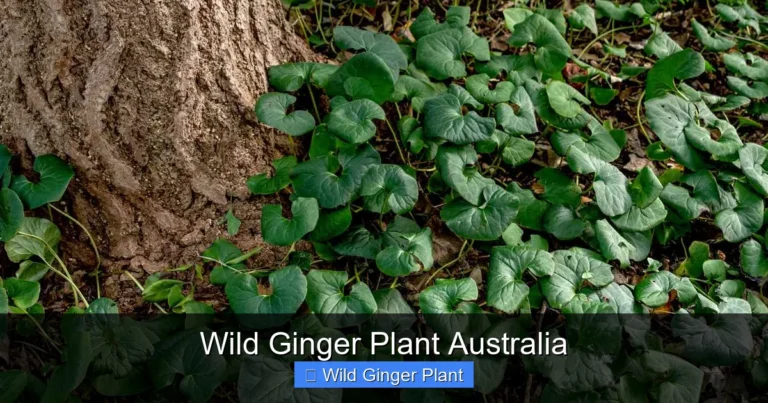
Despite its common name, wild ginger is not related to culinary ginger (Zingiber officinale). It belongs to the birthwort family (Aristolochiaceae) and grows as a perennial herb in rich, deciduous forests from Canada to the southeastern United States. The plant spreads slowly by shallow, creeping rhizomes that sit just below the soil surface. Each rhizome segment produces a pair of kidney- to heart-shaped leaves on short petioles, creating a dense, overlapping canopy 6 to 12 inches tall. In early to mid-spring, a single purplish-brown, bell-shaped flower emerges at ground level between the leaf bases — often hidden by leaf litter. The flower has no petals but three pointed sepals and emits a faint, earthy scent that attracts small flies and beetles for pollination.
Wild ginger is prized in native plant gardens for its ability to form a continuous, weed-suppressing groundcover in deep shade where few other plants thrive. It is also a host plant for the pipevine swallowtail butterfly in parts of its range. The rhizomes have a ginger-like aroma when crushed, which led to historical use by Indigenous peoples and early settlers as a flavoring and medicinal remedy — though modern guidance cautions against consumption due to the presence of aristolochic acid, a compound linked to kidney damage and cancer with prolonged use. In the garden, its value is purely ornamental and ecological.
Why Buy Bare Root?
Bare root plants are dug from fields while dormant — usually in late fall or early spring — and shipped without soil around their roots. This method offers several advantages. First, bare root wild ginger is significantly less expensive than container-grown plants, often costing one-third to one-half as much per plant. Second, you can inspect the root system before planting, ensuring you receive healthy, viable stock with firm, light-colored rhizomes and plump buds. Third, bare root plants establish quickly because they go straight into native soil without the transition shock of a potting mix. Finally, shipping is lighter and more eco-friendly, with no plastic pots or heavy wet soil.
The trade-off is timing. Bare root wild ginger must be planted while dormant — typically early spring (as soon as the ground can be worked) or fall (4 to 6 weeks before hard frost). If your plants arrive and you cannot plant immediately, they can be stored for a short period, but they must not dry out or freeze. We will cover storage in detail shortly.
Choosing the Perfect Planting Site
Light Requirements: Deep Shade to Dappled Sun
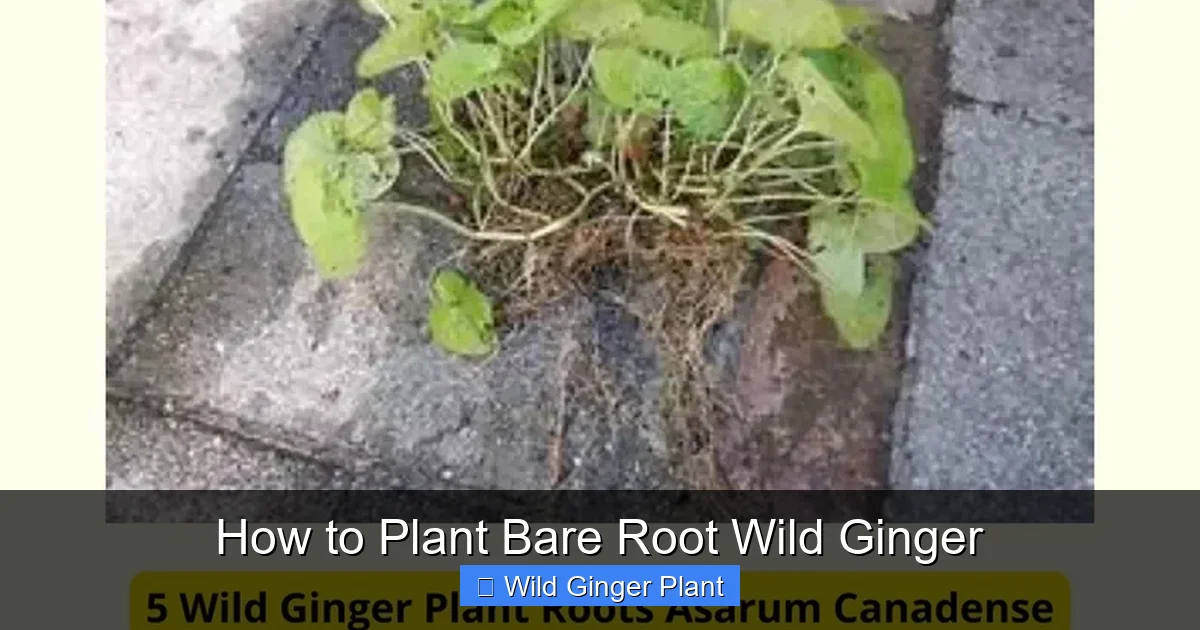
Wild ginger evolved on the forest floor beneath a canopy of deciduous trees. It thrives in full shade to partial shade — ideally receiving morning sun at most, or bright dappled light throughout the day. In its southern range, it absolutely requires full shade; even a few hours of direct afternoon sun can scorch the leaves and stress the plant. In cooler northern zones, it can tolerate a bit more light, especially if soil moisture is consistent. A north-facing slope, the east side of a building, or beneath mature oaks, maples, or beeches are ideal locations. Avoid planting under evergreens like pines or spruces, where dense shade combines with dry, acidic soil and heavy needle drop that can smother the low foliage.
Visual guide about How to Plant Bare Root Wild Ginger
Image source: i.etsystatic.com
Soil Conditions: Rich, Moist, and Well-Drained
The single most important factor for success is soil. Wild ginger wants humus-rich, consistently moist, well-draining soil with a slightly acidic to neutral pH (5.5 to 7.0). Think of the dark, crumbly, leaf-mold-rich soil of a mature hardwood forest — that is the gold standard. Heavy clay that stays soggy in winter leads to crown rot. Sandy soil that dries out quickly causes leaf scorch and stunted growth. If your soil is less than ideal, do not despair. You can amend it — and we will cover exactly how in the next section.
Before planting, do a simple drainage test. Dig a hole 12 inches deep and wide, fill it with water, and let it drain. Refill it and time how long it takes to empty. Ideal drainage is 1 to 3 inches per hour. If it takes longer than 4 hours, you have a drainage problem that needs addressing — either by amending heavily with organic matter, creating a raised bed, or choosing a different site.
Companion Plants and Design Ideas
Wild ginger shines as a living mulch beneath taller shade perennials and shrubs. Pair it with foamflower (Tiarella), wild geranium (Geranium maculatum), Solomon’s seal (Polygonatum), ferns (such as Christmas fern or maidenhair fern), and woodland phlox (Phlox divaricata). Its dense foliage suppresses weeds and keeps soil cool and moist for neighboring plants. Use it to edge a shady path, fill the base of a tree ring (keeping it a foot from the trunk), or carpet a woodland slope. Because it spreads slowly, it will not overwhelm delicate neighbors. In a native plant garden, it provides essential ground-layer structure and supports insects that birds rely on.
Preparing the Soil and Planting Area
Clearing the Site
Start by removing all existing vegetation — grass, weeds, invasive groundcovers like English ivy or periwinkle, and any debris. If the area is lawn, you can smother it with cardboard and 4 inches of wood chips for 2 to 3 months before planting, or use a sod cutter for immediate results. Avoid herbicides if possible; they can leave residues that harm sensitive woodland plants. Hand-pulling or smothering is safer and builds soil health in the process.
Visual guide about How to Plant Bare Root Wild Ginger
Image source: getbusygardening.com
Amending the Soil
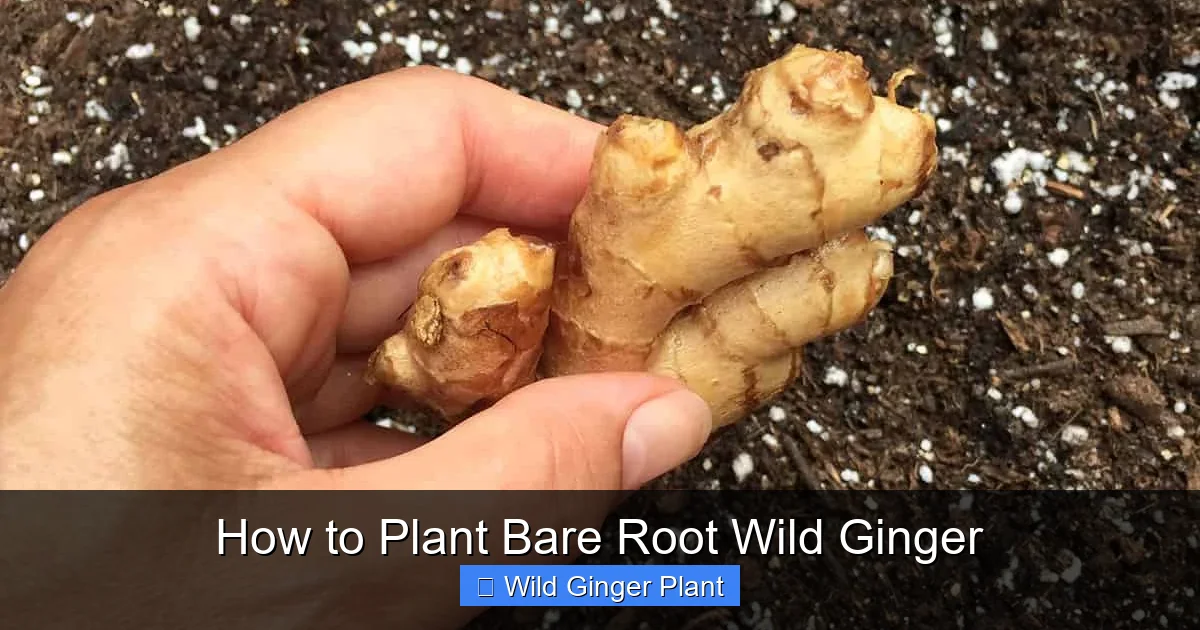
Unless you are blessed with perfect woodland loam, plan to amend the top 8 to 10 inches of soil. Spread a 3- to 4-inch layer of well-rotted leaf compost, composted pine bark, or high-quality leaf mold over the planting area. Avoid fresh manure, mushroom compost (often high in salts), or peat-heavy mixes. Work the amendment in with a garden fork or broadfork — not a rototiller, which destroys soil structure and fungal networks. If your soil is heavy clay, add coarse sand or fine grit along with the organic matter to improve aeration. For sandy soil, extra compost and a sprinkle of clay-rich topsoil can help retain moisture.
After amending, rake the bed smooth and water it deeply. Let it settle for a few days if time allows. This reveals low spots and gives the soil microbiome a chance to wake up before roots arrive.
Testing and Adjusting pH
Wild ginger prefers slightly acidic soil. A simple soil test (available through your county extension office or a reliable home kit) tells you where you stand. If pH is above 7.0, incorporate elemental sulfur or iron sulfate at the recommended rate to lower it gradually. If below 5.5, a light dusting of garden lime can raise it. Do this at least two weeks before planting so the chemistry stabilizes.
Handling and Storing Bare Root Plants
When Your Order Arrives
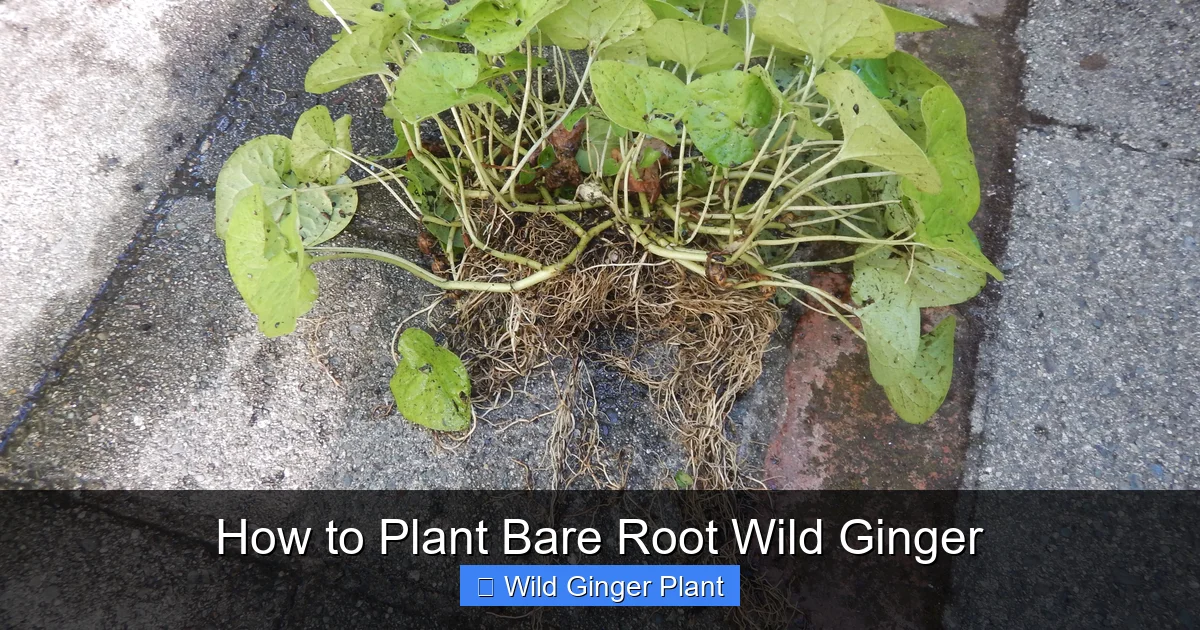
Open the package immediately. Bare root wild ginger typically arrives as rhizome segments 2 to 4 inches long, each with at least one visible growth bud (a small, pointed nub at the tip or along the side). The roots should be firm, pliable, and light tan to cream-colored — not mushy, black, or brittle. A faint, sweet, ginger-like scent is normal. If you see mold on the packing material (usually damp sphagnum moss or shredded paper), gently brush it off the roots. A light dusting of cinnamon powder can discourage fungal growth without harming the plant.
Short-Term Storage (Up to 2 Weeks)
If you cannot plant within 24 hours, store the roots in their original packaging in a cool (35 to 45°F), dark, humid location — a refrigerator crisper drawer, unheated garage, or basement works well. Check every few days to ensure the packing material stays damp but not soggy. Mist with water if it feels dry. Do not let them freeze. Do not store near ripening fruit (ethylene gas can damage buds).
Heeling In for Longer Delays
If planting will be delayed more than two weeks, heel in the plants. Dig a shallow trench in a shaded, sheltered spot. Lay the rhizomes at an angle, cover the roots and lower stems with loose soil or moist compost, and firm gently. Water well. Mulch with leaves or straw. They can stay this way for several weeks, but plant as soon as conditions allow. Heeled-in plants may break dormancy early if temperatures warm — another reason to plant promptly.
Step-by-Step Planting Instructions
Timing: When to Plant
Early spring is the ideal time — as soon as the soil is workable (crumbly, not sticky) and hard freezes are past. This gives roots the longest possible season to establish before summer heat. In zones 6 and warmer, fall planting (late September to early November) also works well, provided you plant at least 4 to 6 weeks before the ground freezes. Fall-planted roots will develop some root growth before dormancy and hit the ground running in spring. Avoid summer planting unless you can provide constant shade and irrigation.
Spacing and Layout
Space plants 12 to 18 inches apart on center. For faster coverage, use 12-inch spacing; for a more economical planting, 18 inches is fine — it will just take an extra year or two to fill in. Stagger rows in a diamond pattern rather than a grid for a more natural look and efficient space use. If planting on a slope, space slightly closer (10 to 12 inches) to reduce erosion while the mat forms. Use a tape measure or marked stick for consistency — eyeballing leads to gaps.
Planting Depth: The Critical Detail
This is where most mistakes happen. Wild ginger rhizomes grow horizontally, just below the soil surface. The crown — where the buds emerge — should sit at or just slightly below the soil line (no more than 1/2 inch deep). Planting too deep smothers the buds and invites rot. Planting too shallow leaves rhizomes exposed to drying air and temperature swings.
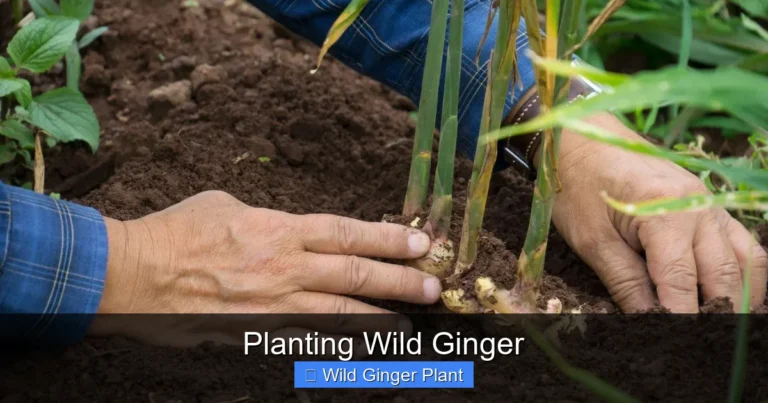
To plant: Dig a shallow trench or individual holes 2 to 3 inches deep and wide enough to spread the roots horizontally. Make a small mound of soil in the center of each hole. Drape the rhizome over the mound so the roots hang down the sides and the crown sits at the correct height. Gently spread the fibrous roots outward and downward. Backfill with amended soil, firming lightly with your fingers — not your foot — to eliminate air pockets without compacting. The crown should be barely covered or just visible. Water thoroughly to settle soil around roots.
Watering In
After planting, give each plant a deep, gentle soak. Use a watering can with a rose attachment or a hose on a slow trickle. You want water to penetrate 6 to 8 inches deep, not run off. This initial watering is critical — it collapses air pockets and ensures root-to-soil contact. If the soil settles and exposes the crown, add a bit more soil and water again.
Mulching
Apply a 2-inch layer of shredded leaves, leaf mold, pine straw, or fine bark mulch around — not on top of — the crowns. Keep mulch pulled back about an inch from the rhizome to prevent excess moisture at the crown. Mulch conserves moisture, moderates soil temperature, suppresses weeds, and slowly feeds the soil as it decomposes. In fall, add another inch of shredded leaves for winter protection, especially in zones 4 and 5.
First-Season Care: Establishment Phase
Watering Schedule
For the first 8 to 12 weeks, keep the soil consistently moist but not waterlogged. Check every 2 to 3 days by sticking your finger 2 inches into the soil near a plant. If it feels dry at that depth, water deeply. In hot, dry spells, daily watering may be needed. In cool, rainy periods, you may not need to water at all. The goal is even moisture — think of a wrung-out sponge. Avoid overhead watering late in the day, which can promote fungal issues on the foliage. Soaker hoses or drip irrigation are ideal.
Weed Management
Weeds are the biggest threat to young wild ginger. Its slow initial growth means it cannot outcompete aggressive weeds. Hand-pull weeds weekly, especially before they set seed. Disturb the soil as little as possible — wild ginger roots are shallow. The mulch layer helps, but some weeds will still emerge. Do not use pre-emergent herbicides; they can inhibit wild ginger’s rhizome spread. By year two, the densifying mat will suppress most weeds naturally.
Fertilizing: Less Is More
Wild ginger is adapted to nutrient-cycling forest floors, not rich garden beds. Do not fertilize at planting time — the amended soil provides plenty. In subsequent years, a light top-dressing of compost or leaf mold in early spring (1/2 inch) is all it needs. Avoid synthetic fertilizers, especially high-nitrogen ones, which promote lush but weak growth susceptible to pests and disease. If leaves yellow in midsummer, a dilute fish emulsion or seaweed extract can help, but usually, the issue is moisture or pH, not nutrition.
Monitoring for Pests and Diseases
Wild ginger is remarkably pest-free. Slugs and snails may nibble young leaves in wet springs — use beer traps, copper tape, or diatomaceous earth if damage is significant. Deer and rabbits almost always ignore it. The main disease risk is crown rot (Phytophthora or Pythium) from poor drainage or planting too deep. Symptoms include wilting despite moist soil, blackened crown, and foul smell. There is no cure — remove affected plants, improve drainage, and replant higher. Good air circulation (don’t overcrowd) and proper depth prevent most issues.
Long-Term Maintenance and Propagation
Year Two and Beyond
By the second growing season, your wild ginger should show noticeably more vigor. Leaves will be larger, the mat thicker, and rhizomes extending outward. Continue watering during dry spells, especially in the first two summers. Maintain the mulch layer. Remove any tree seedlings or invasive plants that sneak in. In late fall, you can leave the foliage in place — it provides winter insulation and breaks down into next year’s mulch. In early spring, before new growth emerges, gently rake off any matted leaves that could smother emerging buds.
Dividing Established Clumps
Every 4 to 6 years, or when the center of a clump becomes sparse, divide in early spring (just as buds swell) or early fall. Water the clump well the day before. Dig up the entire clump with a fork, shaking off excess soil. Using a clean, sharp knife or your hands, separate the rhizomes into sections, each with at least one strong bud and a good root system. Trim any damaged or rotted parts. Replant immediately at the same depth, water well, and mulch. Divisions establish quickly and are a great way to expand your planting or share with fellow gardeners.
Seed Propagation (For the Patient Gardener)
Wild ginger can be grown from seed, but it requires double dormancy breaking — a warm-moist period followed by a cold-moist period — and seedlings take 3 to 4 years to reach planting size. If you want to try, collect seeds in early summer when the capsules split. Sow immediately in pots of moist, sandy compost, cover lightly, and place in a shaded cold frame. Nature will handle the stratification. Germination occurs the second spring. It is a fun project but not practical for establishing a groundcover quickly.
Troubleshooting Common Problems
Leaves Scorched or Curling
Cause: Too much sun, insufficient moisture, or both. Fix: Increase shade (add a shade cloth temporarily), water more consistently, and ensure mulch is adequate. If the site is fundamentally too sunny, consider transplanting in fall to a shadier spot.
Sparse Growth, Few New Leaves
Cause: Poor soil fertility, incorrect pH, competition from tree roots, or planting too deep. Fix: Top-dress with compost, test pH, and if tree roots are the issue, consider a raised bed or container. Gently check planting depth — if crowns are buried, carefully lift and replant higher.
Yellowing Leaves (Chlorosis)
Cause: Usually iron deficiency from high pH (alkaline soil), or waterlogged roots. Fix: Test soil pH. If above 7.0, apply elemental sulfur. Check drainage. If soil stays soggy, improve it or relocate plants.
Plants Disappearing Over Winter
Cause: Heaving from freeze-thaw cycles (common in heavy clay), vole damage, or crown rot. Fix: Ensure good drainage. Apply a loose winter mulch (evergreen boughs, straw) after the ground freezes to prevent heaving. Use hardware cloth cylinders if voles are active.
Wild Ginger in Different Garden Settings
Under Deciduous Trees
This is the classic and easiest setting. The tree provides summer shade, fall leaf mulch, and root competition that keeps soil from staying too wet. Plant at least 12 inches from the trunk to avoid damaging tree roots. Avoid maples with dense surface roots (like Norway maple) — wild ginger struggles to compete. Oaks, hickories, tulip trees, and beeches are excellent companions.
North-Facing Foundations and Walls
A north-facing wall mimics a cliff face — consistent shade, reflected coolness, and often decent soil. Ensure the foundation does not leach lime (concrete can raise pH over time). Test soil periodically. This spot is often drier than expected due to roof overhang, so monitor moisture.
Woodland Slopes and Ravines
Wild ginger’s rhizomes help stabilize soil on gentle slopes. Plant in staggered rows across the contour. Mulch heavily with shredded leaves held in place by jute netting on steeper grades. Avoid planting in drainage swales where water flows — the crowns will rot.
Container Growing (Yes, It’s Possible)
For gardeners without in-ground shade, wild ginger grows well in wide, shallow containers (12+ inches diameter, 8+ inches deep) with a high-quality, compost-rich potting mix. Keep in full shade. Water frequently — containers dry faster. Overwinter in an unheated garage or bury the pot in the ground. Repot every 2 to 3 years. This is a great way to enjoy wild ginger on a shaded patio or balcony.
Ecological Benefits and Native Plant Value
Supporting Wildlife
Wild ginger is more than a pretty groundcover. Its flowers provide early nectar and pollen for small native bees, flies, and beetles when few other sources exist. The dense foliage offers shelter for ground-dwelling insects, amphibians, and small mammals. As a host plant for the pipevine swallowtail (Battus philenor) in the southern part of its range, it supports a striking butterfly whose caterpillars sequester the plant’s toxins for their own defense. By planting wild ginger, you are rebuilding a piece of the native food web.
Soil Health and Erosion Control
The shallow, matting rhizomes knit the soil surface, reducing erosion from rain impact and surface flow. The constant leaf litter contribution builds organic matter, feeds soil microbes, and improves structure over time. In a woodland restoration context, wild ginger is a keystone ground-layer species that facilitates the establishment of other natives by moderating the microclimate.
Deer Resistance
In areas with high deer pressure, wild ginger is a rare gem — consistently ignored by deer. The leaves contain aromatic compounds (including aristolochic acid) that make them unpalatable. This allows it to thrive where hostas, ferns, and other shade plants are browsed to the ground. It is not 100% deer-proof (nothing is), but it is among the most reliable choices.
Designing a Wild Ginger Garden: A Sample Plan
Imagine a 10-by-20-foot shaded bed beneath a mature oak. The soil has been amended with 4 inches of leaf compost. You order 50 bare root wild ginger plants for 12-inch spacing (about 1 plant per square foot). In early April, you lay them out in offset rows, plant each at the correct depth, water deeply, and mulch with 2 inches of shredded leaves. You interplant 12 foamflower (Tiarella cordifolia) in the front third for spring flowers, 6 Christmas ferns (Polystichum acrostichoides) in the back for evergreen structure, and a drift of Virginia bluebells (Mertensia virginica) in the center for ephemeral color. By June, the wild ginger leaves are touching. By September, the bed is a solid green carpet. Next spring, the bluebells bloom through the ginger, then vanish as the ginger fills in. The foamflower sends up foamy white spikes. The ferns unfurl. Ten years later, you are dividing clumps to start a new bed — and the original planting still looks fresh.
This is the long game of native gardening. Wild ginger teaches patience. It does not explode like a perennial border in May. It creeps. It persists. It outlives the gardener who planted it. And every year, it asks for less and gives more.
Conclusion
Planting bare root wild ginger is an act of faith in the quiet processes of the forest floor. It asks you to slow down, observe, and work with nature’s rhythms rather than against them. The steps are simple — choose a shady spot, enrich the soil, plant at the right depth, water faithfully the first year, and mulch generously. But the rewards compound over time: a living carpet that suppresses weeds, supports wildlife, resists deer, and connects your garden to the ancient woodlands that once covered this land.
Whether you are restoring a woodland edge, filling a difficult shady corner, or building a native plant sanctuary, wild ginger belongs in your plan. Start with healthy bare roots. Give them the woodland conditions they evolved for. Then step back and let them do what they have done for millennia — spread slowly, surely, and beautifully across the ground. In a few years, you will run your fingers over those velvety leaves and understand why this unassuming plant has earned a place in the hearts of native plant gardeners everywhere.
Your shade garden is waiting. The bare roots are ready. The best time to plant was ten years ago. The second best time is today.
Frequently Asked Questions
How long does it take bare root wild ginger to establish and spread?
Expect modest top growth the first year as roots establish. By year two, the clump noticeably expands. A dense, weed-suppressing mat typically forms by year three to four, depending on spacing and conditions.
Is wild ginger invasive?
No. Wild ginger (Asarum canadense) is a native North American plant that spreads slowly by rhizomes. It forms a well-behaved groundcover and does not escape into natural areas aggressively. It is not listed as invasive in any state.
Can I plant wild ginger under pine trees?
It is not recommended. Pine shade is often too dense and dry, and the heavy needle drop can smother the low foliage. The soil also tends to be too acidic. Deciduous tree shade is far better.
What should I do if my bare root plants arrive with mold on the roots?
Gently brush off the mold. If roots are firm and light-colored, they are likely fine. A light dusting of cinnamon on the roots can help prevent further fungal growth. Plant as soon as possible.
Do I need to cut back wild ginger foliage in fall?
No. The foliage dies back naturally and provides winter insulation. In early spring, gently remove any matted leaves that could smother emerging buds, but otherwise leave it alone.
Why are my wild ginger leaves turning yellow in summer?
Yellowing usually indicates high soil pH (alkaline conditions causing iron deficiency) or waterlogged roots. Test your soil pH — if above 7.0, amend with elemental sulfur. Ensure the site drains well.