How to Choose Best Adjustable for Thyme
Choosing the right adjustable for thyme means matching light, water, and space to this herb’s specific needs. This guide breaks down every feature so you can grow thriving thyme year-round.
Growing thyme at home feels rewarding. The scent hits you the moment you brush past it. Fresh leaves transform roasted chicken, soups, and marinades. But thyme can be picky. It wants strong light, sharp drainage, and good airflow. Miss one of those and the plant turns woody, leggy, or worse — it rots.
That’s where the right adjustable comes in. Whether you need an adjustable grow light, an adjustable planter, or adjustable shelving, the correct choice keeps thyme happy through every season. This guide walks you through every factor so you can shop with confidence.
Key Takeaways
- Thyme needs full sun: Choose an adjustable grow light with 6500K spectrum and 12-14 hour timer settings.
- Drainage is critical: Pick adjustable planters with multiple drainage holes and water reservoirs.
- Height adjustability matters: Look for 12-24 inch range to accommodate thyme’s growth stages.
- Airflow prevents disease: Select adjustable shelving with open wire design for circulation.
- Automation saves time: Timers and moisture sensors keep care consistent.
- Material durability counts: Powder-coated steel and UV-resistant plastic last longest.
- Budget-friendly options exist: Quality adjustables start around $40 for basic setups.
Quick Answers to Common Questions
What type of adjustable grow light works best for thyme?
A full-spectrum LED with 5000-6500K color temperature, dimming capability, and a built-in timer covers thyme’s needs from seedling to harvest.
How deep should an adjustable planter be for mature thyme?
At least 6 inches deep, preferably 8-10 inches, to accommodate thyme’s taproot and prevent the plant from becoming root-bound.
Can I use a regular shelf instead of adjustable wire shelving?
You can, but add a clip-on fan for airflow. Solid shelves trap humidity and promote fungal disease on thyme’s dense foliage.
How often should I adjust the grow light height?
Check weekly during active growth. Raise the light when leaf tips approach 6 inches from the fixture to prevent heat stress.
Is a self-watering adjustable planter good for thyme?
Only if you let the reservoir empty completely between refills. Thyme needs dry-down cycles; constant moisture causes root rot.
📑 Table of Contents
Understanding Thyme’s Core Needs
Light Requirements
Thyme originates from the Mediterranean. It evolved on rocky hillsides baked by sun. In your home, that translates to six to eight hours of direct light daily. A south-facing window works in summer. Winter light falls short. An adjustable grow light bridges the gap. Look for full-spectrum LEDs rated 5000K to 6500K. These mimic midday sun. Blue-heavy spectrum encourages compact, leafy growth. Red-heavy spectrum triggers flowering — great if you want seeds, less ideal for leaf harvest.
Water and Drainage
Thyme hates wet feet. Its roots rot fast in soggy soil. The ideal adjustable planter offers excellent drainage. Multiple holes at the bottom are non-negotiable. A raised base or feet keep the pot off saucers so water escapes completely. Some adjustable planters include a water reservoir with a wick system. These work if the wick draws moisture slowly. Test by filling the reservoir and checking soil dampness after 24 hours. The top inch should feel dry.
Air Circulation
Still air invites fungal issues like powdery mildew. Thyme’s dense foliage traps humidity. An adjustable shelf with open wire construction lets air move freely around each plant. If you use a solid shelf, add a small clip-on fan. Run it on low for a few hours daily. This mimics the breezy hillsides thyme loves.
Space for Root Development
Thyme develops a woody taproot with fine lateral roots. A pot depth of at least six inches supports mature plants. Adjustable planters that telescope deeper as the plant grows save repotting stress. Width matters too. A single thyme plant needs eight to ten inches diameter. For a small herd, choose a rectangular adjustable trough at least 18 inches long.
Types of Adjustables for Thyme
Adjustable Grow Lights
These come in three main styles. Clip-on lights attach to shelves or pot rims. They suit single plants. Gooseneck arms let you direct light precisely. Stand-alone floor lamps with telescoping poles cover multiple pots. Panel lights mount under cabinets or on adjustable racks. Each style offers height adjustability. The best models telescope 12 to 24 inches. This range covers seedling stage (light close) through mature harvest (light higher).

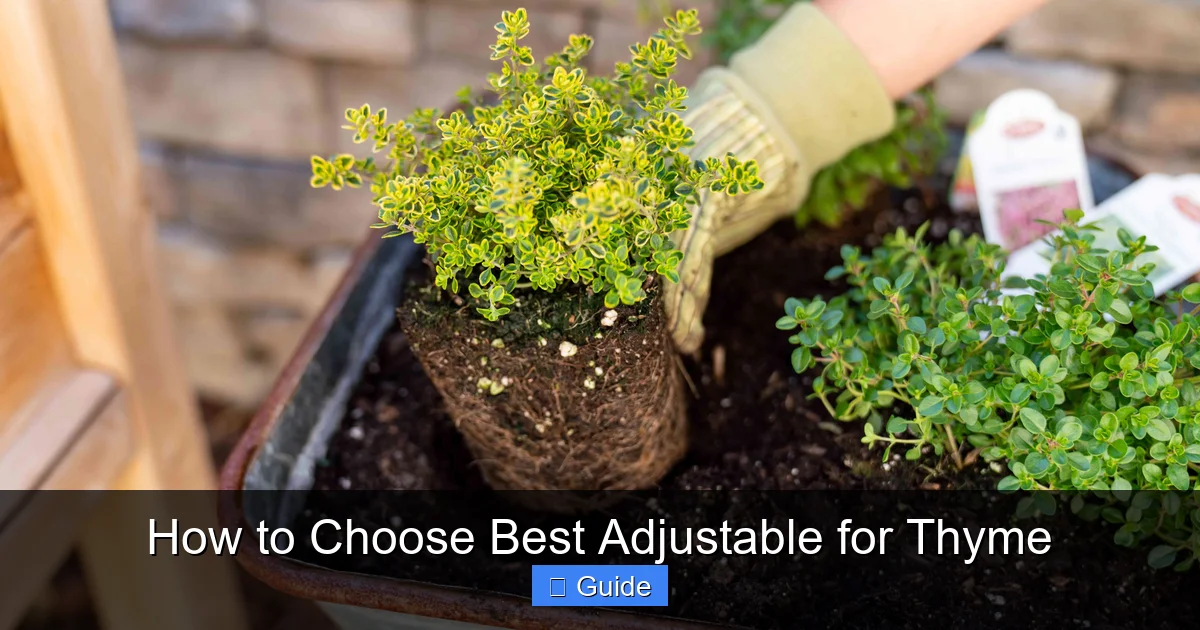
Visual guide about How to Choose Best Adjustable for Thyme
Image source: crabgrasslawn.com
Key features to compare:
- PPFD output: Aim for 200-400 µmol/m²/s at canopy level.
- Timer presets: 12/12, 14/10, 16/8 hour cycles.
- Dimming: 10-100% in 10% steps.
- Heat output: Passive cooling keeps leaves safe.
- Cord length: Six feet minimum for flexible placement.
Adjustable Planters and Pots
Self-watering adjustable planters use a reservoir and wick. The reservoir height adjusts via a float valve. This maintains consistent moisture without waterlogging. Telescoping pots expand vertically. Add rings as roots fill the space. Fabric grow bags with adjustable cinch straps let you control diameter. All three styles should use breathable materials. Terracotta, fabric, and unglazed ceramic wick excess moisture. Plastic retains water — drill extra holes if you choose plastic.
Adjustable Shelving Systems
Wire shelving units with adjustable shelf heights dominate indoor herb growing. Standard spacing starts at 12 inches. For thyme, 14-16 inches between shelves accommodates mature height plus light fixture. Look for shelves rated 50+ lbs each. Casters add mobility. Powder-coated steel resists rust in humid conditions. Some systems include integrated light tracks. These simplify wiring but lock you into one light brand.
Adjustable Watering Systems
Drip irrigation with adjustable emitters delivers precise moisture. Each thyme pot gets its own emitter. Turn the cap to dial flow from 0.5 to 2 gallons per hour. Connect to a timer for hands-off care. Moisture sensors with adjustable thresholds trigger watering only when soil hits your set point. These prevent overwatering during cloudy weeks.
Key Features to Evaluate
Height Adjustment Range
Measure your space before buying. A grow light that telescopes 18 inches fits a 24-inch shelf gap with room for the fixture. Planters that extend from 6 to 14 inches deep cover seedling to three-year plant. Shelving with one-inch increment adjustments lets you fine-tune for light distance and plant height. Avoid models with only three fixed positions — they rarely align with thyme’s growth stages.
Build Quality and Materials
Indoor humidity plus fertilizer salts corrode cheap metal. Powder-coated steel beats chrome. Stainless steel screws prevent rust streaks. UV-stabilized plastic won’t brittle after a year under grow lights. Fabric pots should use 300+ GSM non-woven polypropylene. Check weight ratings. A fully watered 10-inch pot weighs 8-10 lbs. Multiply by your pot count. Shelves must handle the total with a safety margin.
Ease of Adjustment
You’ll adjust height weekly during active growth. Tool-free mechanisms win. Thumb screws, pinch clamps, and spring-loaded pins adjust in seconds. Bolt-on brackets require a wrench each time — you’ll skip adjustments. Test the mechanism in the store or read video reviews. Smooth action without binding indicates good machining.
Stability and Safety
A top-heavy light on a telescoping pole tips easily. Look for a wide base — at least 12-inch diameter for floor lamps. Wall-mount brackets should anchor into studs, not just drywall. Shelving units need anti-tip kits if taller than 48 inches. Electrical components must carry UL or ETL listing. Water-resistant ratings (IP44 or higher) matter for lights near misting systems.
Energy Efficiency
Grow lights run 12-16 hours daily. A 40W LED costs roughly $2/month at average US rates. Compare PPF per watt. Higher efficiency means more light per dollar. Dimmable lights let you reduce power for young plants. Timers prevent accidental 24-hour runs. Some smart lights track cumulative runtime and alert when LEDs near end-of-life (typically 50,000 hours).
Matching Adjustables to Your Growing Setup
Windowsill Growing
Space is tight. A clip-on adjustable grow light with a 6-inch gooseneck fits narrow sills. Choose a model with a low-profile clamp that clears the window latch. Pair with a shallow adjustable planter (4-6 inch depth) that sits inside a decorative cache pot. Rotate the pot weekly for even light exposure. Supplemental light runs 4-6 hours on cloudy days, 12 hours in winter.
Kitchen Counter Herb Station
Counter depth limits shelf width. A two-tier adjustable wire shelf at 14 inches deep fits most counters. Mount an under-cabinet adjustable LED panel on the bottom of the upper cabinet. This lights the lower shelf. Keep thyme on the top shelf for easy snipping. Use a drip tray liner to protect the counter. A small battery timer controls the light — no outlet hunting needed.
Dedicated Grow Tent or Closet
Full control environment. Install a four-shelf adjustable wire rack on casters. Hang two adjustable LED panels from the top shelf — one for each lower shelf. Run a quiet inline fan for airflow. Connect adjustable drip emitters to a reservoir with a float valve. This setup scales. Start with two thyme plants. Expand to eight without changing infrastructure.
Balcony or Patio Seasonal Growing
Outdoor adjustables face wind, rain, and UV. Choose powder-coated aluminum shelving — lighter than steel, won’t rust. Fabric pots with cinch straps handle wind gusts. Retractable shade cloth on adjustable poles protects from scorching afternoon sun. Solar-powered adjustable drip timers work off-grid. Bring the whole rack indoors when nights drop below 40°F.
Budget Considerations and Value
Entry Level ($40-80)
Clip-on grow light + two fabric pots + basic wire shelf. Light: 20W, fixed spectrum, manual on/off. Pots: 1-gallon, no reservoir. Shelf: 3-tier, 24-inch wide, fixed 12-inch spacing. Works for 1-2 thyme plants. Expect to upgrade light within a year.
Mid Range ($100-200)
Telescoping floor lamp (40W, dimmable, timer) + two self-watering adjustable planters + 4-tier adjustable wire shelf (casters). Light covers 2×2 ft area. Planters hold 1.5 gallons each with wick system. Shelf adjusts in 1-inch increments. Handles 4-6 thyme plants comfortably. Quality lasts 3-5 years.
Premium ($250+)
Smart LED panel (app-controlled, full spectrum tuning) + modular adjustable planter system (stackable rings) + heavy-duty shelving with integrated light tracks + automated drip irrigation with moisture sensors. Scales to 12+ plants. Data logging tracks growth cycles. Components warrantied 5+ years. Ideal for serious home cooks or small CSA shares.
Hidden Costs to Factor
- Electricity: $2-8/month depending on light wattage and hours.
- Replacement bulbs: LEDs rarely need it, but budget $15/year for peace of mind.
- Growing medium: Quality thyme mix (sand, perlite, compost) costs $8/bag, replace annually.
- Fertilizer: Dilute liquid seaweed or fish emulsion, $12/bottle lasts a season.
- Tools: Moisture meter ($10), pruning snips ($15), pH strips ($8).
Common Mistakes to Avoid
Buying Too Small
A cute 4-inch adjustable pot looks nice. Thyme outgrows it in six weeks. Roots circle, growth stalls, flavor fades. Start with at least 6-inch depth and 8-inch diameter. If space is truly limited, choose a trailing thyme variety like ‘Elfin’ — but still give it a 6-inch pot.
Ignoring Heat Buildup
Adjustable lights placed too close cook leaves. Even LEDs emit some heat. Maintain 6-12 inch distance for 20-40W lights. Use the hand test: hold your hand at canopy level for 30 seconds. If it feels warm, raise the light. Thyme leaf tips turn brown and crispy from heat stress.
Overwatering with Self-Watering Planters
The reservoir tempts you to keep it full. Thyme needs dry-down cycles. Fill reservoir, then wait until soil surface is dry and pot feels light. This may be 7-10 days in winter, 3-4 days in summer. Trust the weight test, not the calendar.
Skipping Airflow
Dense thyme on a solid shelf develops mildew in two weeks. A $15 clip-on fan prevents this. Point it across the foliage, not directly at stems. Run on timer: 15 minutes every 2 hours during light period.
Wrong Light Spectrum
Bloom-boosting lights (high red) make thyme flower fast. Flowers signal end of leaf production. Stick to vegetative spectrum (high blue, 5000-6500K) for culinary harvest. If you want seeds for next year, switch to bloom spectrum for two weeks in late summer.
Maintenance and Long-Term Care
Cleaning Adjustable Components
Dust on light lenses cuts output 10-15%. Wipe monthly with microfiber cloth. Salt crust on planter rims and shelf wires attracts moisture. Scrub quarterly with vinegar solution (1:4). Rinse well. Lubricate telescoping mechanisms with food-grade silicone spray twice yearly. Avoid petroleum products — they degrade plastic and fabric.
Seasonal Adjustments
Winter: Lower lights closer (6 inches). Increase timer to 14 hours. Reduce watering frequency. Skip fertilizer. Spring: Raise lights as growth accelerates. Resume half-strength fertilizer monthly. Summer: Monitor heat. Add shade cloth if temps exceed 85°F. Increase airflow. Fall: Gradually reduce light hours to 10. Prepare for dormancy or indoor transition.
Repotting and Root Pruning
Every 2-3 years, thyme needs fresh medium. Slide plant out. Trim circling roots. Replant in same adjustable pot with new mix. This rejuvenates woody centers. Do this in early spring before growth surge. Adjustable planters with removable sides make this painless.
Upgrading Components
Your first adjustable light may suffice for years. But as you add plants, the coverage gap shows. Plan upgrades modularly. Choose shelving that accepts additional light tracks. Pick planters that share reservoir fittings. Standardize on 1/4-inch drip tubing. This avoids proprietary lock-in.
Expert Tips for Thriving Thyme
Harvest Technique Affects Growth
Snip stems just above a leaf node. This triggers branching. Never remove more than one-third of foliage at once. Use clean, sharp scissors. Harvest in morning after dew dries but before noon heat. Essential oil concentration peaks then. Regular harvesting keeps thyme compact — perfect for adjustable setups with limited height.
Companion Planting in Shared Adjustables
Thyme pairs well with rosemary, sage, and oregano. They share light, water, and soil preferences. In a long adjustable trough, alternate thyme with these companions. Space 8 inches apart. Avoid mint — its roots invade everything. Basil needs more water; keep it separate.
Propagation Using Your Adjustable
Take 3-inch cuttings in spring. Strip lower leaves. Stick in damp perlite in a shallow adjustable tray. Cover with humidity dome. Place under grow light at 12 inches, 16 hours daily. Roots form in 2-3 weeks. Pot up into adjustable planters. Free plants for friends or expansion.
Flavor Optimization
Stress concentrates oils. Once established, let thyme dry slightly between waterings. Full sun (or max light intensity) boosts thymol content. Harvest before flowering for peak flavor. If flowers appear, snip them — they’re edible but signal leaf decline. Your adjustable light’s dimmer lets you simulate Mediterranean intensity year-round.
Conclusion
Choosing the best adjustable for thyme comes down to matching equipment to this herb’s specific personality. Thyme wants blazing light, sharp drainage, moving air, and room for its roots. An adjustable grow light with full-spectrum output and a reliable timer covers the light piece. An adjustable planter with excellent drainage and a reservoir you control — not one that controls you — handles water. Adjustable wire shelving gives airflow and flexibility as your thyme herd grows.
Start with your space and budget. Measure twice. Buy once. A mid-range setup around $150 serves most home cooks beautifully for years. Upgrade pieces individually as needs evolve. The thyme you snip for tonight’s roast chicken will taste all the sweeter knowing you built its perfect home.
Remember: the best adjustable is the one you actually use. Fancy features gather dust if adjustment feels like a chore. Prioritize tool-free, smooth mechanisms. Your future self — hands dirty, timer beeping, thyme fragrant — will thank you.
Frequently Asked Questions
What is the ideal light schedule for thyme under an adjustable grow light?
Run the light 12-14 hours daily for vegetative growth. Use a timer for consistency. In winter, extend to 14-16 hours to compensate for lower natural light.
Can I grow thyme in an adjustable fabric pot?
Yes, fabric pots work well for thyme. Choose 1-gallon size minimum. The breathable material prevents overwatering and air-prunes roots for healthier growth.
How do I prevent my adjustable grow light from tipping over?
Choose a model with a wide, weighted base (12+ inch diameter). For taller setups, secure the pole to a wall stud with a bracket or use a sandbag on the base.
What growing medium works best in adjustable thyme planters?
Mix 1 part coarse sand, 1 part perlite, and 1 part quality compost. This mimics thyme’s native rocky, well-drained soil and prevents compaction.
Should I fertilize thyme in an adjustable setup?
Feed monthly at half-strength with liquid seaweed or fish emulsion during spring and summer. Stop in fall and winter when growth naturally slows.
How do I know when to repot thyme in an adjustable planter?
Roots emerging from drainage holes, soil drying in 1 day, or stunted growth despite good care signal it’s time. Repot in early spring into a larger adjustable size.