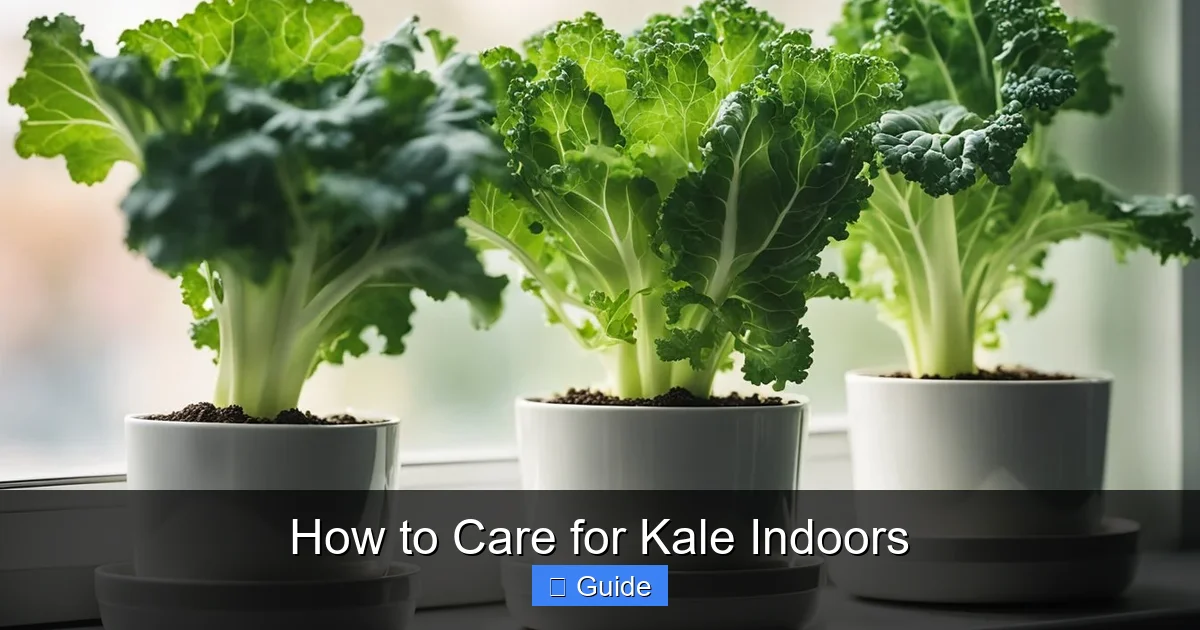
How to Care for Kale Indoors
Growing kale inside is simple when you follow a few basic steps. Give it bright light, keep the soil moist, and feed it regularly. You will enjoy fresh leaves all season.
Welcome to your guide on how to care for kale indoors. This article will walk you through each step in plain language. You will learn how to care for kale indoors without any fancy equipment.
Indoor kale can give you fresh greens all year. The process is easy if you follow a few rules. Let us start with the basics.
Key Takeaways
- Pick a deep pot: Kale needs room for roots.
- Give strong light: At least six hours of direct sun or a grow light.
- Water consistently: Keep soil evenly moist but not soggy.
- Feed every two weeks: Use a balanced liquid fertilizer.
- Watch for pests: Check leaves often and act fast.
- Harvest often: Cut outer leaves to encourage new growth.
Quick Answers to Common Questions
What size pot is best for indoor kale?
A pot at least twelve inches deep and wide works best.
How many hours of light does kale need?
Kale needs at least six hours of direct sun or fourteen hours under a grow light.
How often should I water indoor kale?
Water when the top inch of soil feels dry, usually every two to three days.
What fertilizer should I use?
Use a balanced liquid fertilizer like 10‑10‑10 every two weeks.
When can I start harvesting leaves?
Harvest when leaves reach hand size, cutting outer leaves first.
📑 Table of Contents
Choosing the Right Container
Size matters
When you learn how to care for kale indoors, the first decision is the pot. Choose a container that is at least twelve inches deep. Deep pots let roots spread. A wide pot also helps the plant stay stable.
Drainage is key
Make sure the pot has holes at the bottom. Good drainage stops water from pooling. Standing water leads to root rot. Add a layer of small stones before the soil to improve flow.
Material options
Plastic pots are light and cheap. Clay pots breathe better but weigh more. Fabric grow bags are a great choice for how to care for kale indoors because they air‑prune roots. Pick what fits your space and budget.
Providing Enough Light
Natural sunlight
Kale loves bright light. Place the pot near a south‑facing window. The plant needs at least six hours of direct sun each day. If you cannot give that much sun, you must add artificial light.
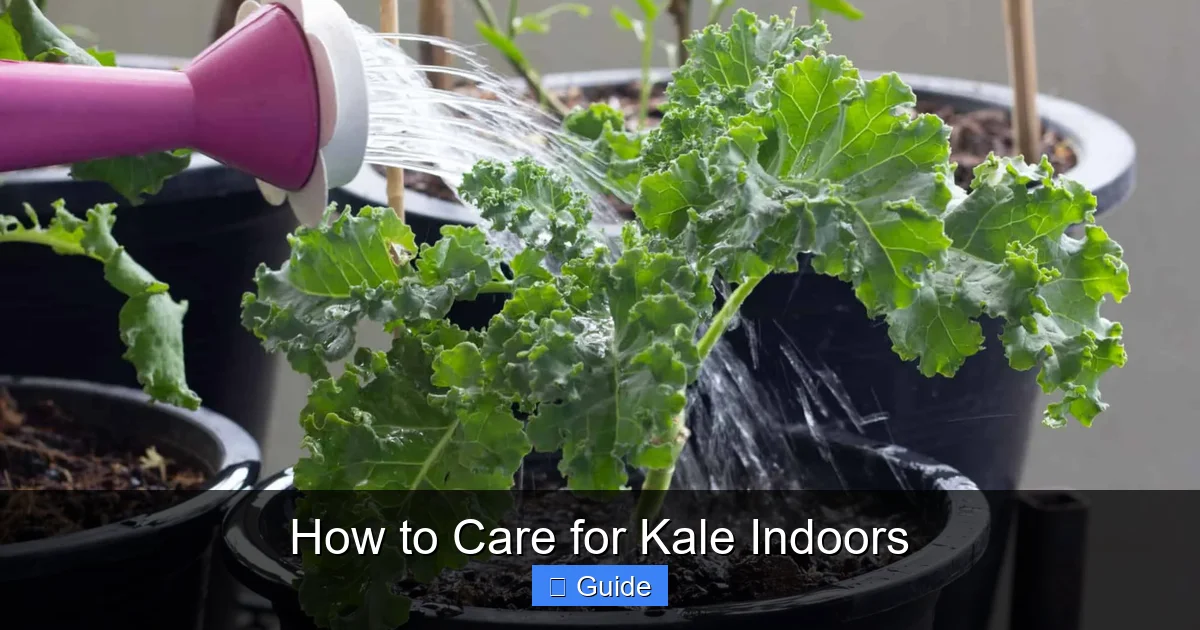
Visual guide about How to Care for Kale Indoors
Image source: storables.com
Grow lights
A full‑spectrum LED grow light works well for how to care for kale indoors. Hang the light about twelve inches above the leaves. Run the light for fourteen to sixteen hours daily. Adjust the height as the plant grows.
Light schedule
Keep a consistent schedule. Turn the light on and off at the same times each day. A timer makes this easy. Consistent light helps the plant develop strong leaves.
Watering and Humidity Basics
Check soil moisture
Stick your finger one inch into the soil. If it feels dry, water the plant. Water until you see excess drain from the bottom. Do not let the pot sit in a saucer of water.
Frequency
Most indoor kale needs water every two to three days. In hot rooms you may water daily. In cooler rooms you can stretch to four days. The rule for how to care for kale indoors is to keep the soil evenly moist.
Humidity tips
Kale likes moderate humidity. If your home is dry, place a tray of water near the pot. A small humidifier also helps. Mist the leaves lightly in the morning if the air is very dry.
Feeding Your Kale
Choose a fertilizer
Use a balanced liquid fertilizer with equal nitrogen, phosphorus, and potassium. A 10‑10‑10 formula works well. Organic options like fish emulsion are also good for how to care for kale indoors.
Feeding schedule
Feed the plant every two weeks during the growing season. Reduce feeding in winter when growth slows. Always follow the label instructions for dilution.
Signs of nutrient need
Yellowing older leaves can mean nitrogen deficiency. Purple stems may signal phosphorus lack. Adjust fertilizer type if you see these signs.
Managing Pests and Diseases
Common indoor pests
Aphids, spider mites, and whiteflies can appear. Inspect the undersides of leaves weekly. Early detection makes control easy.
Natural remedies
Spray a mixture of water and a few drops of dish soap on affected leaves. Neem oil is another safe option. Apply in the evening to avoid leaf burn.
Preventing disease
Good airflow stops fungal problems. Space plants so leaves do not touch. Remove any yellow or spotted leaves right away. Clean tools before each use.
Harvesting and Storing Leaves
When to pick
You can start harvesting when leaves are about the size of your hand. Cut the outer leaves first. Leave the center growing point intact. This method lets the plant keep producing.
How to cut
Use clean scissors. Snip each leaf at the base. Avoid tearing the stem. Clean cuts reduce stress on the plant.
Storage tips
Rinse leaves in cold water. Pat dry with a towel. Store in a plastic bag with a paper towel to absorb moisture. Keep in the refrigerator for up to one week.
Congratulations. You now know how to care for kale indoors from seed to plate. Follow these steps and enjoy fresh, nutritious greens any time of year. Happy growing.
Frequently Asked Questions
Can I grow kale indoors without a grow light?
Yes, if you have a sunny south‑facing window that provides at least sunlight daily.
What temperature is ideal for indoor kale?
Kale prefers temperatures between sixty and seventy degrees Fahrenheit.
How do I prevent root rot?
Use a pot with drainage holes, well‑draining soil, and avoid letting water sit in the saucer.
Is it necessary to mist kale leaves?
Misting helps only in very dry air; a humidifier or water tray works better.
Can I reuse the same soil for a new kale plant?
It is best to refresh the soil or add compost to replenish nutrients before replanting.
How long does indoor kale live?
With proper care, kale can produce leaves for several months before it bolts.