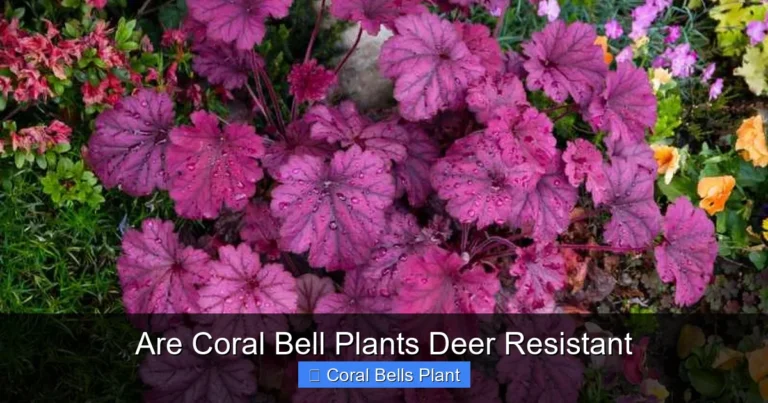
How Far Apart Should You Plant Coral Bells
Plant coral bells 12 to 18 inches apart for most varieties to ensure proper air circulation and room for mature spread. Dwarf types need only 8 to 10 inches while larger cultivars may require up to 24 inches. Proper spacing prevents disease, reduces competition for nutrients, and creates a full, lush appearance as plants mature.
Key Takeaways
- Standard spacing is 12 to 18 inches: Most coral bells varieties thrive when planted at this distance, allowing for their natural mounding habit and mature spread.
- Check the plant tag for variety-specific needs: Dwarf cultivars like ‘Little Cutie’ series need just 8 to 10 inches, while large varieties like ‘Big Top’ series may need 20 to 24 inches.
- Air circulation prevents disease: Proper spacing reduces humidity around foliage, which helps prevent fungal issues like powdery mildew and crown rot.
- Consider your garden design goal: Plant closer (10 to 12 inches) for quick groundcover effect or farther apart (18 to 24 inches) for specimen plantings with visible individual forms.
- Measure from center to center: Always space plants measuring from the center of one root ball to the center of the next, not edge to edge.
- Account for future division: Coral bells benefit from division every 3 to 4 years; adequate initial spacing makes this maintenance easier.
- Container plantings need tighter spacing: In pots, space 6 to 8 inches apart for a full look, but plan to divide or repot annually as they fill in quickly.
Quick Answers to Common Questions
What is the standard spacing for most coral bells varieties?
Most coral bells varieties should be planted 12 to 18 inches apart on center for optimal growth and air circulation.
How close can I plant dwarf coral bells varieties?
Dwarf coral bells like the ‘Little Cutie’ series can be planted 8 to 10 inches apart since they only mature at 8 to 10 inches wide.
Does spacing affect disease resistance in coral bells?
Yes, proper spacing improves air circulation which prevents fungal diseases like powdery mildew and crown rot that thrive in humid, crowded conditions.
Should I measure spacing from the edge of the pot or the center of the plant?
Always measure from center to center of the root balls, not edge to edge, to achieve accurate spacing for mature plant size.
Can I plant coral bells closer together for faster coverage?
You can plant at 10 to 12 inches for quicker fill-in, but expect to divide plants sooner (2 to 3 years) as they will compete for resources and air flow.
📑 Table of Contents
- Getting Started with Coral Bells Spacing
- Understanding Coral Bells Growth Habits
- General Spacing Guidelines for Coral Bells
- Spacing Based on Variety and Cultivar
- Spacing for Different Garden Uses
- Planting Techniques for Proper Spacing
- Common Spacing Mistakes to Avoid
- Seasonal Care and Spacing Adjustments
- Design Tips for Beautiful Coral Bells Plantings
- Troubleshooting Spacing Issues
- Conclusion
Getting Started with Coral Bells Spacing
You have picked out your coral bells. The colors are perfect. The foliage looks amazing. Now you stand in your garden with a trowel in hand and wonder: how far apart should you plant coral bells? This question comes up more often than you might think. Getting the spacing right makes a huge difference in how your plants perform and how your garden looks years down the road.
Coral bells, also known as Heuchera, are beloved for their incredible foliage colors and delicate flower spikes. They form neat mounds that work beautifully in borders, woodland gardens, and containers. But like any perennial, they need room to breathe and grow. Plant them too close and you invite disease and competition. Plant them too far apart and you wait years for that lush, filled-in look. Let’s walk through everything you need to know to space your coral bells perfectly.
Understanding Coral Bells Growth Habits
Before we talk numbers, it helps to understand how these plants actually grow. Coral bells grow from a central crown. They produce a mound of foliage that expands outward each year. The leaves emerge on short stems from the crown, creating that classic rounded shape. Most varieties reach their mature width in about three years.
The Mounding Habit Explained
Coral bells are clump-forming perennials. They do not run or spread aggressively like mint or some groundcovers. Instead, each plant stays in its place and slowly gets wider. The crown thickens over time. New leaves push up from the center. Older leaves on the outside may die back. This creates a dense, tidy mound that looks great all season.
The flower spikes rise above the foliage in late spring to early summer. These airy wands add height but do not affect the plant’s footprint much. After blooming, you can cut the stems back to enjoy the foliage show for the rest of the season.
Mature Size Varies by Variety
This is the biggest factor in spacing. Coral bells come in a huge range of sizes. Some tiny cultivars stay under 8 inches wide. Others spread to 2 feet or more. The plant tag or catalog description will list the mature spread. This number is your starting point for spacing decisions.
For example, the popular ‘Palace Purple’ reaches about 18 inches wide. The ‘Little Cutie’ series stays around 8 to 10 inches. ‘Big Top Caramel’ can spread to 26 inches. Knowing your specific variety’s mature width is step one.
Growth Rate Considerations
Coral bells grow at a moderate pace. They are not overnight fillers. In the first year, a new plant focuses on root establishment. You might see only modest top growth. Year two brings more vigor. By year three, the plant should be near its mature size. Keep this timeline in mind when you plant. That empty space between young plants will fill in, but it takes patience.
General Spacing Guidelines for Coral Bells
Now let’s get to the numbers you came for. The standard recommendation for how far apart should you plant coral bells is 12 to 18 inches on center. This means measuring from the center of one plant’s root ball to the center of the next plant’s root ball.
The 12 to 18 Inch Sweet Spot
This range works for the vast majority of coral bells varieties. At 12 inches, plants will touch and knit together faster, creating a continuous mass of foliage. At 18 inches, each plant retains its individual mound shape longer. You see the distinct form of each cultivar. Both approaches look beautiful. It comes down to your design preference.
If you are planting a mixed border with different varieties, 15 inches is a safe middle ground. It gives each plant enough room without leaving big gaps. You can always adjust slightly based on the specific varieties you chose.
Why On-Center Measurement Matters
Always measure from center to center. Do not measure from the edge of one root ball to the edge of the next. A plant in a 1-gallon pot might have a 6-inch root ball. If you space them 12 inches edge-to-edge, the centers are actually 18 inches apart. That is a big difference. Use a tape measure. Mark your spots with a trowel or stake before you dig.
Adjusting for Soil and Light Conditions
Plants grow larger in ideal conditions. Rich, moist, well-drained soil in part shade produces the biggest, most vigorous coral bells. In dry shade or lean soil, they stay more compact. If your conditions are perfect, lean toward the wider end of the spacing range. If conditions are tough, you can plant a bit closer.
Sun exposure also affects size. Coral bells in more sun (with adequate moisture) often grow larger than those in deep shade. The foliage color may be more intense too. Factor this in when you plan your layout.
Spacing Based on Variety and Cultivar
One size does not fit all. The coral bells world is huge. Breeders have developed hundreds of cultivars with different sizes. Let’s break down spacing by category so you can match your plants to the right numbers.
Dwarf and Miniature Varieties (8 to 12 Inches Apart)
These little gems are perfect for rock gardens, fairy gardens, and container edges. The ‘Little Cutie’ series includes ‘Blondie’, ‘Frost’, ‘Ginger Snap’, and ‘Sugar Plum’. They mature at 8 to 10 inches wide. Space them 8 to 10 inches apart for a tight mosaic. The ‘Petite’ series is similar.
Other dwarf types include ‘Cherry Cola’ (10 inches), ‘Delta Dawn’ (12 inches), and ‘Electra’ (10 inches). These can go 10 to 12 inches apart. They fill in quickly at this spacing and create a wonderful tapestry effect.
Standard Varieties (12 to 18 Inches Apart)
This is the biggest group. It includes classics like ‘Palace Purple’, ‘Caramel’, ‘Citronelle’, ‘Lime Rickey’, ‘Obsidian’, ‘Plum Pudding’, and ‘Silver Scrolls’. Most reach 14 to 18 inches wide at maturity. The 12 to 18 inch range is perfect here.
If you want a solid mass of foliage quickly, plant at 12 inches. If you want to see each plant’s form, go 16 to 18 inches. For a mixed planting of several standard varieties, 15 inches works beautifully.
Large and Vigorous Varieties (18 to 24 Inches Apart)
Some coral bells get surprisingly big. The ‘Big Top’ series includes ‘Big Top Caramel’ and ‘Big Top Bronze’. These can spread 24 to 26 inches. ‘Mega Caramel’ is another large one. ‘Brownies’ and ‘Mocha’ also reach 20 inches or more.
Give these 20 to 24 inches of space. They need it. Crowding large varieties leads to poor air flow and disease. They also tend to have larger root systems that compete heavily for water and nutrients.
Trailing and Spreading Types (Special Considerations)
A few newer cultivars have a more spreading habit. ‘Redstone Falls’ and ‘Yellowstone Falls’ from the Falls series trail gently. They work in hanging baskets and wall plantings. In the ground, they spread wider than they are tall. Space these 18 to 24 inches apart and expect them to fill gaps between neighboring plants.
Spacing for Different Garden Uses
How you use coral bells in your design changes the spacing math. A specimen plant needs different treatment than a groundcover planting. Let’s look at common scenarios.
Border and Edging Plantings
Along a path or border edge, coral bells create a lovely finished look. For a continuous edging line, space standard varieties 12 inches apart. They will knit together into a tidy row. For a more relaxed look with visible individual mounds, go 15 to 18 inches.
If you alternate colors (purple, lime, caramel, purple, lime), keep spacing consistent. The rhythm of the planting depends on even spacing. Use a measuring tape. Your eye will notice irregular gaps.
Mass Plantings and Groundcover Effect
For a sea of foliage under trees or across a shade bed, plant closer. Ten to 12 inches on center creates a weed-suppressing mat faster. This works well with a single variety for impact. ‘Caramel’ or ‘Citronelle’ massed this way is stunning.
Be prepared to divide sooner with tight spacing. Plants will compete after three to four years. Plan to lift and divide sections to maintain vigor. The divisions give you free plants for elsewhere.
Specimen and Focal Point Plantings
When a coral bells is the star of a vignette, give it room to shine. Space 24 to 30 inches from neighbors. Let the mound develop its full symmetrical shape. This works especially well for large, dramatic varieties like ‘Black Pearl’ or ‘Wild Rose’.
Surround a specimen with lower groundcovers like creeping thyme or sedum. The contrast in texture highlights the coral bells form. Mulch well to show off the plant against a dark background.
Container Plantings
Pots follow different rules. You want instant fullness. Space plants 6 to 8 inches apart in containers. They will fill the pot in one season. Use a high-quality potting mix. Water and fertilize regularly. Container-grown coral bells grow faster than in-ground plants.
Plan to repot or divide annually. The crowns will get crowded. In spring, tip the pot out, divide the clumps, and replant with fresh soil. This keeps container plants looking their best.
Woodland and Naturalistic Plantings
In a woodland garden, mimic nature. Space plants irregularly. Use 15 to 24 inches between plants. Group odd numbers (3, 5, 7) for a natural look. Mix with ferns, hostas, and native wildflowers. Let them find their own rhythm over time.
This approach requires patience. The filled-in look takes longer. But the result feels authentic and relaxed. It also reduces maintenance since you are not fighting to maintain a rigid pattern.
Planting Techniques for Proper Spacing
Good spacing starts with good planting technique. A few simple steps ensure your carefully measured distances translate into healthy, well-positioned plants.
Lay Out Before You Dig
Never guess. Place your plants in their pots on the prepared bed. Step back. Look at the arrangement from different angles. Adjust until it looks right. Measure between centers. Only then start digging. This saves you from moving plants after they are in the ground.
Use a long piece of string with knots at your spacing interval. Or cut a stick to your spacing length. These low-tech tools make consistent spacing fast and easy. A 15-inch stick gets you perfect 15-inch spacing every time.
Prepare the Soil Properly
Coral bells hate wet crowns. They need excellent drainage. Amend heavy clay with compost and coarse sand or fine gravel. In sandy soil, add compost for moisture retention. Work amendments in deeply, at least 12 inches. This helps roots establish quickly and supports the mature size you spaced for.
Add a slow-release fertilizer at planting time if your soil is poor. Otherwise, compost alone is plenty. Too much nitrogen makes soft growth that is prone to disease and frost damage.
Plant at the Right Depth
This is critical. The crown (where leaves emerge) must sit at or slightly above soil level. Planting too deep causes crown rot. Planting too high exposes roots. The top of the root ball should be level with the surrounding soil. Firm soil gently around roots. Water well to settle soil and eliminate air pockets.
Mulch Without Smothering
Apply 1 to 2 inches of shredded bark, leaf mold, or pine straw. Keep mulch pulled back from the crown by an inch or two. Mulch against the crown holds moisture and invites rot. Proper mulching conserves moisture, suppresses weeds, and looks finished.
Water Consistently the First Season
New plants need regular water to establish roots. Water deeply twice a week unless rain provides an inch. Check soil moisture with your finger. Once established, coral bells are fairly drought tolerant. But that first year determines long-term success.
Common Spacing Mistakes to Avoid
Even experienced gardeners make spacing errors. Here are the ones I see most often, and how to avoid them.
Planting Too Close for Instant Effect
We all want a full garden yesterday. But cramming plants in creates problems. Poor air circulation leads to powdery mildew, rust, and crown rot. Roots compete for water and nutrients. Plants become stressed and decline. You end up dividing or removing plants sooner than if you had spaced them properly.
Trust the process. Use annuals or fast-growing perennials to fill gaps temporarily if you need immediate color. Let the coral bells grow into their space naturally.
Ignoring Mature Size on the Label
That little tag has valuable info. The mature spread number is based on years of observation. Believe it. If the tag says 20 inches wide, do not plant 12 inches apart because the plant looks small now. It will grow. Plan for the future size, not the current pot size.
Measuring Edge to Edge Instead of Center to Center
We covered this, but it bears repeating. It is the most common measuring error. Center to center. Every time. Use a tape measure. Do not eyeball it. Your brain is bad at estimating distances in a garden bed.
Forgetting About Future Division Access
Coral bells need division every 3 to 4 years to stay vigorous. The center of the clump gets woody and dies out. New growth is on the edges. You need room to dig a spade in between plants to lift divisions. If plants are jammed together, division becomes a wrestling match that damages roots.
Leave enough space to work. At 12 inches, you can still divide. At 8 inches, it is very tight. At 18 inches, it is easy. Factor this into your spacing decision.
Not Accounting for Neighboring Plants
Coral bells do not exist in isolation. They share space with other perennials, shrubs, and bulbs. A hosta next door will spread 3 feet. A hydrangea behind them casts shade and drinks water. Space coral bells with the whole community in mind. Give everyone their fair share of root zone.
Seasonal Care and Spacing Adjustments
Spacing is not a one-time decision. As your garden evolves, you may need to adjust. Here is how to manage spacing over time.
First Year: Patience and Observation
Year one is about roots. Top growth may be minimal. Do not worry about gaps. Mulch well. Water consistently. Remove any flower spikes if you want to direct energy to roots (though the flowers are lovely and feed pollinators). Watch how each variety performs in your conditions.
Years Two to Three: Filling In
Plants expand noticeably. Foliage mounds touch at closer spacings. At wider spacings, you still see soil between plants. This is the time to evaluate. Are plants thriving? Is air flow good? Any signs of disease? Adjust care as needed.
Year Three to Four: Division Time
Most coral bells benefit from division now. The center gets woody. Flower production may decline. Foliage looks tired. Spring is the best time to divide. Dig the whole clump. Pull or cut apart into sections with healthy roots and crowns. Replant the best pieces at proper spacing. Share or compost the rest.
Ongoing: Editing the Garden
Gardens change. Trees grow and cast more shade. Shrubs get removed and sun increases. You may find a variety needs more or less space than you gave it. Do not be afraid to move plants. Early spring or fall are ideal transplant times. Water well after moving.
Design Tips for Beautiful Coral Bells Plantings
Spacing is part of design. Let’s talk about making your coral bells plantings look intentional and gorgeous.
Color Echoes and Contrasts
Space plants to create color rhythms. Repeat a color every third plant. Or alternate warm and cool tones. Purple, lime, caramel, purple, lime, caramel. The spacing creates the beat. Consistent spacing makes the pattern read clearly.
Texture Play
Coral bells have ruffled, smooth, or glossy leaves. Mix textures. Space so each plant’s texture is visible. Pair ruffled ‘Berry Smoothie’ with glossy ‘Obsidian’. The contrast pops when each plant has room to show its character.
Layering with Companions
Plant coral bells in front of taller shade plants like ferns, astilbe, or Japanese forest grass. Behind lower creepers like ajuga or sweet woodruff. The 12 to 18 inch spacing works perfectly for this middle layer. It creates a full, tiered look.
Seasonal Interest Planning
Coral bells shine in spring and fall. Summer can be quiet. Intersperse with summer bloomers like hosta flowers, astilbe, or hardy geraniums. The spacing stays the same. The show just shifts from plant to plant through the season.
Troubleshooting Spacing Issues
Sometimes things go wrong. Here is how to fix common spacing-related problems.
Plants Are Crowded and Declining
If crowns are touching and centers are dying out, it is time to divide. Dig the whole group in early spring. Separate into individual plants. Replant at proper spacing. Amend soil with compost. Water well. They will recover quickly.
Gaps Are Not Filling In
If plants stay small and gaps persist after three years, check your conditions. Is soil too dry? Too wet? Too much sun? Too much shade? Poor soil? Fix the underlying issue. You can also plant closer next time or add more plants to fill gaps.
Disease Problems
Powdery mildew or leaf spot often signals poor air circulation. Thin the planting. Remove every other plant if needed. Improve air flow. Avoid overhead watering. Apply fungicide if severe. Proper initial spacing prevents most disease issues.
Uneven Growth
One plant is huge, its neighbor is tiny. This usually means uneven conditions. Check soil moisture, light, and root competition from nearby trees. You may need to move the struggling plant to a better spot. Or improve conditions where it sits.
Conclusion
So, how far apart should you plant coral bells? The answer is 12 to 18 inches for most varieties, with dwarfs at 8 to 10 inches and large types at 20 to 24 inches. But the real answer is: it depends on your variety, your conditions, and your design goals.
Take the time to measure. Read the plant tag. Lay out your plants before digging. Space for the mature size, not the current pot size. Give them room to breathe. Your reward will be healthy, vigorous coral bells that look better every year. Those mounds of incredible foliage color are worth the planning.
Remember, gardening is a long game. The spacing you choose today determines how your garden looks in three years, five years, ten years. Do it right once. Enjoy the results for a long time. Happy planting!
Frequently Asked Questions
How far apart should you plant coral bells in a container?
In containers, plant coral bells 6 to 8 inches apart for an instantly full look. Plan to divide and repot annually since they fill pots quickly and need fresh soil to maintain vigor.
What happens if I plant coral bells too close together?
Planting coral bells too close causes poor air circulation leading to powdery mildew, crown rot, and leaf diseases. Roots compete for water and nutrients, causing stress and decline. Plants may need division within 1 to 2 years instead of 3 to 4.
Do different coral bells varieties need different spacing?
Yes, spacing varies by mature size. Dwarf varieties need 8 to 10 inches, standard varieties need 12 to 18 inches, and large varieties like ‘Big Top’ series need 20 to 24 inches. Always check the plant tag for specific cultivar spread.
When is the best time to space and plant coral bells?
Early spring or early fall are ideal for planting coral bells. Cool temperatures and reliable rainfall help roots establish before summer heat or winter cold. Space plants properly at planting time to avoid transplanting later.
How do I measure proper spacing when planting coral bells?
Use a tape measure or a pre-marked stick to measure from the center of one root ball to the center of the next. Place plants in pots first, adjust positions, measure, then dig holes. Do not estimate by eye.
Can I plant coral bells closer together if I plan to divide them often?
You can plant closer (10 to 12 inches) if you commit to dividing every 2 years, but this creates more work and stresses plants. Proper initial spacing (12 to 18 inches) with division every 3 to 4 years is healthier and lower maintenance.