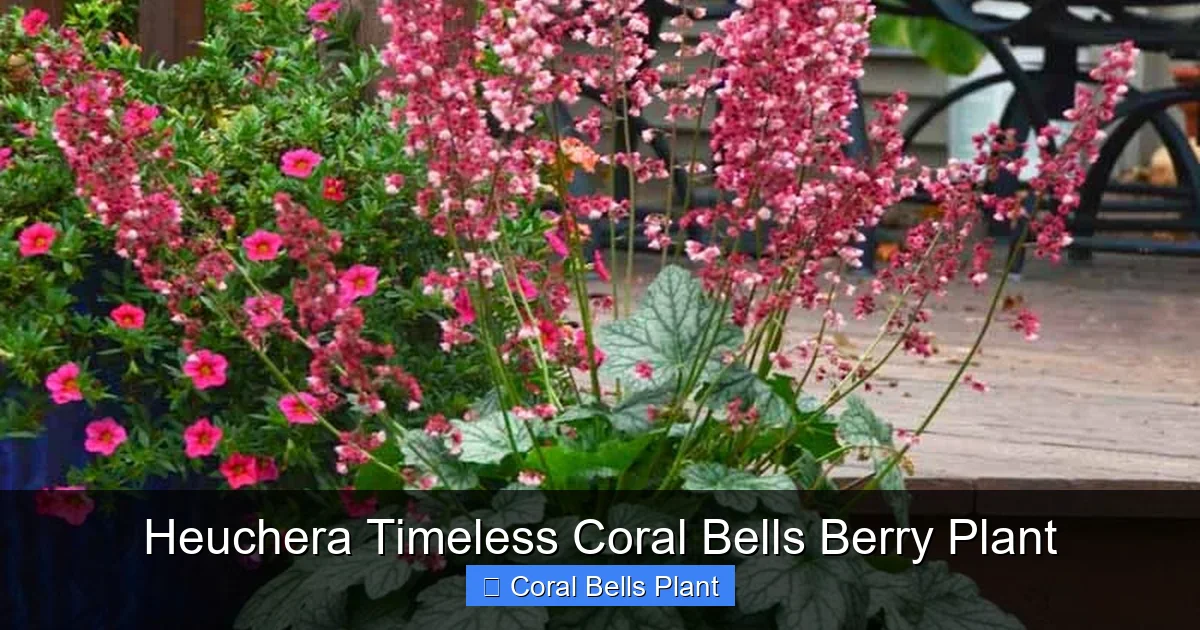
Heuchera Timeless Coral Bells Berry Plant
The Heuchera Timeless Coral Bells Berry Plant is a show-stopping perennial prized for its rich berry-colored foliage that holds its color all season long. This low-maintenance plant thrives in shade to partial sun, making it perfect for brightening dark garden corners or container displays.
If you’ve ever wandered through a garden center in spring, you’ve probably seen those gorgeous mounds of colorful foliage labeled “coral bells” or “heuchera.” Among the dozens of varieties available, one stands out for its particularly rich, berry-toned leaves that seem to glow even in the shadiest corners of the garden. The Heuchera Timeless Coral Bells Berry Plant has become a favorite among both novice gardeners and seasoned landscape designers, and for good reason.
This remarkable perennial offers something that many shade plants simply cannot – consistent, vibrant color throughout the entire growing season without demanding constant attention. Whether you’re looking to brighten a dark pathway, create a stunning container arrangement, or build a low-maintenance border that looks professional year after year, this plant delivers. Let’s dive into everything you need to know about growing, caring for, and designing with this garden gem.
Key Takeaways
- Vibrant Year-Round Color: The Heuchera Timeless Coral Bells Berry Plant delivers intense berry-purple foliage that maintains its brilliance from spring through fall without fading.
- Shade Garden Superstar: This coral bells variety excels in partial to full shade where many flowering plants struggle, bringing life to difficult garden spots.
- Low Maintenance Perennial: Once established, these plants require minimal care – just occasional watering, yearly mulching, and division every few years.
- Pollinator Friendly Blooms: Delicate bell-shaped flowers rise above the foliage in summer, attracting hummingbirds and beneficial insects to your garden.
- Versatile Design Element: Perfect for borders, containers, woodland gardens, and mass plantings, this heuchera pairs beautifully with ferns, hostas, and astilbes.
- Deer and Rabbit Resistant: The slightly fuzzy, bitter-tasting foliage naturally deters common garden pests without chemicals or barriers.
- Cold Hardy Performer: Suitable for USDA zones 4-9, this tough perennial withstands winter temperatures down to -30°F when properly mulched.
Quick Answers to Common Questions
How much sun does Heuchera Timeless Coral Bells Berry Plant need?
This plant thrives in morning sun with afternoon shade or dappled light all day. In cooler climates it tolerates more sun; in hot regions it needs protection from intense afternoon rays to prevent leaf scorch.
When is the best time to divide my heuchera?
Divide in early spring as new growth emerges or early fall (at least 6 weeks before frost). Spring divisions establish quickly; fall divisions need time to root before winter. Avoid dividing during summer heat or bloom period.
Why are the leaves on my coral bells turning brown and crispy?
Brown crispy edges usually indicate too much direct sun or insufficient water. Move to a shadier spot or increase watering. Ensure soil drains well but stays consistently moist, and mulch to retain moisture.
Can I grow Heuchera Timeless Coral Bells Berry Plant in containers?
Absolutely! This variety excels in containers. Use a 12+ inch pot with drainage holes, quality potting mix amended with compost, and water more frequently than in-ground plants. Protect pots in winter in zones 6 and colder.
Is this plant deer and rabbit resistant?
Yes, the astringent compounds in heuchera foliage make it unpalatable to deer and rabbits. While no plant is completely proof against hungry animals, this variety is rarely browsed and makes an excellent choice for critter-prone gardens.
📑 Table of Contents
- Getting to Know the Heuchera Timeless Coral Bells Berry Plant
- Ideal Growing Conditions for Maximum Impact
- Planting and Establishment Success Strategies
- Seasonal Care Calendar
- Propagation and Division: Multiplying Your Investment
- Troubleshooting Common Issues
- Design Ideas and Landscape Applications
- Advanced Growing Tips for Enthusiasts
- Conclusion: Why This Plant Deserves a Spot in Your Garden
Getting to Know the Heuchera Timeless Coral Bells Berry Plant
What Makes This Variety Special
The Heuchera Timeless Coral Bells Berry Plant belongs to the “Timeless” series, a group of heucheras bred specifically for improved heat tolerance, better foliage color retention, and more prolific flowering. What sets the Berry variety apart is its exceptionally rich coloration – think ripe blackberries, deep raspberries, and the darkest plums all blended together on ruffled, maple-shaped leaves.
Unlike older heuchera varieties that might fade to green or bronze by midsummer, this plant holds its berry coloration from the moment leaves emerge in spring until frost knocks them back in late fall. The leaves feature a subtle silver overlay that catches light beautifully, giving the plant a luminous quality in shade. Mature plants form neat mounds reaching 10-12 inches tall and 14-18 inches wide, with flower spikes extending another 12-18 inches above the foliage.
Botanical Background and Breeding History
Heucheras are native to North America, with species found from the rocky cliffs of the Rocky Mountains to the woodland floors of the Appalachians. The genus name honors Johann Heinrich von Heucher, an 18th-century German physician and botanist. Modern hybrids like our featured plant trace their lineage to several native species, primarily Heuchera americana (alumroot) and Heuchera villosa (hairy alumroot).
The Timeless series represents years of careful breeding work focused on solving common heuchera complaints: summer color fade, heat-induced melting out, and sparse flowering. Breeders selected for thicker leaves with more pigment, stronger root systems, and increased flower production. The result is a plant that performs reliably across a wider range of climates than many older cultivars.
Ideal Growing Conditions for Maximum Impact
Light Requirements: Finding the Sweet Spot
One of the biggest misconceptions about coral bells is that they’re strictly shade plants. The truth is more nuanced. The Heuchera Timeless Coral Bells Berry Plant performs best with morning sun and afternoon shade, or dappled light throughout the day. In cooler northern climates (zones 4-6), it can handle more sun – even full sun with adequate moisture. In hotter southern regions (zones 7-9), afternoon shade becomes essential to prevent leaf scorch.
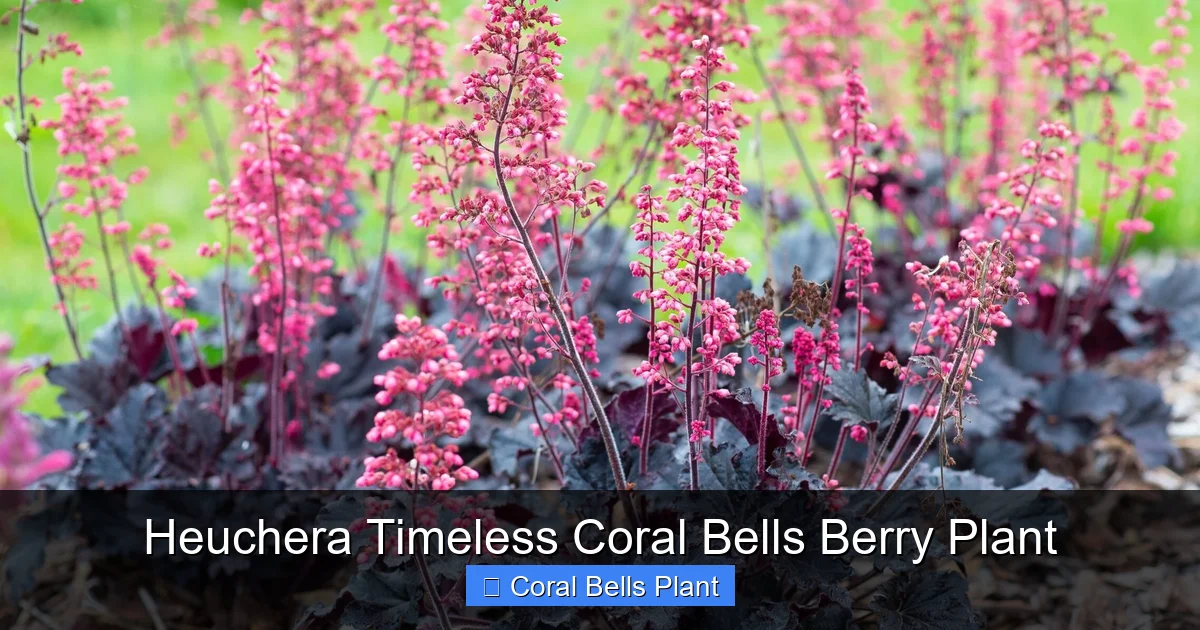
Visual guide about Heuchera Timeless Coral Bells Berry Plant
Image source: blogger.googleusercontent.com
Here’s a practical guideline: if you notice the leaf edges turning brown and crispy, the plant is getting too much direct sun. If the stems become elongated and the color looks washed out or greenish, it needs more light. That perfect berry color develops best with at least 3-4 hours of morning light or bright dappled shade all day.
Soil Preferences and Preparation
Heucheras have a reputation for being picky about soil, but the Timeless series is more forgiving than most. They prefer well-draining soil rich in organic matter with a slightly acidic to neutral pH (6.0-7.0). Heavy clay soils spell trouble – they hold too much water in winter, leading to crown rot, which is the number one killer of these plants.
Before planting, amend your soil generously with compost, leaf mold, or well-rotted manure. Aim for a planting area where the soil feels like a wrung-out sponge – moist but not soggy. If you’re dealing with clay, consider creating raised beds or planting on a slight mound to improve drainage. Sandy soils benefit from extra organic matter to help retain moisture and nutrients.
Watering Wisdom: Consistency Over Quantity
Newly planted heucheras need regular watering to establish strong root systems. Water deeply 2-3 times per week for the first month, then gradually reduce to once weekly. Established plants are surprisingly drought-tolerant but look their best with consistent moisture. The key is watering at the base of the plant, keeping foliage dry to prevent fungal issues.
A 2-inch layer of organic mulch (shredded bark, leaf mold, or pine straw) works wonders for moisture retention and temperature regulation. Keep mulch pulled back slightly from the crown – burying the crown leads to rot. In containers, check soil moisture daily during hot weather, as pots dry out much faster than garden beds.
Planting and Establishment Success Strategies
When and How to Plant
Spring and early fall are the ideal planting windows for the Heuchera Timeless Coral Bells Berry Plant. Spring planting gives roots all season to establish before winter. Fall planting (at least 6 weeks before ground freeze) allows root growth in cool, moist conditions without the stress of summer heat. Avoid planting during summer’s peak heat or when the ground is frozen.
Dig a hole twice as wide as the root ball but no deeper. The crown – where stems meet roots – should sit at or slightly above soil level. This is crucial. Planting too deep is a death sentence for heucheras. Backfill with amended soil, firm gently, and water thoroughly to eliminate air pockets. Space plants 14-18 inches apart for mass plantings, or give them 24 inches if you want each specimen to shine individually.
Container Growing for Patio Perfection
This variety excels in containers, where its colorful foliage can be appreciated up close. Choose a pot at least 12 inches wide and deep with excellent drainage holes. Use a high-quality potting mix blended with 20% compost or worm castings. Avoid garden soil in containers – it compacts and drains poorly.
Container plants need more frequent watering and feeding than in-ground specimens. Check moisture daily in summer. Feed with a balanced, slow-release fertilizer at planting, then supplement with liquid fertilizer at half-strength monthly during the growing season. In zones 6 and colder, move pots to an unheated garage or bury them in the ground for winter protection.
Companion Planting for Stunning Combinations
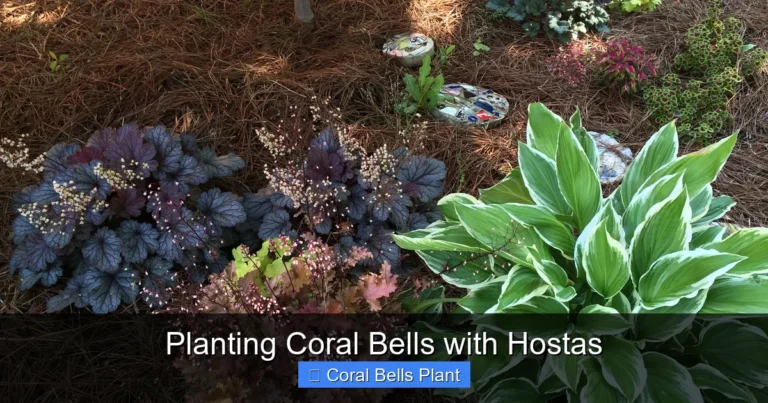
The berry foliage of this heuchera creates magical pairings with the right companions. For a classic shade combination, plant alongside Japanese painted ferns (Athyrium niponicum ‘Pictum’) – their silver and burgundy fronds echo the heuchera’s colors beautifully. Hostas with blue or gold leaves provide bold textural contrast. Astilbes add feathery plumes in pink, red, or white that float above the mound.
For a modern look, pair with black mondo grass (Ophiopogon planiscapus ‘Nigrescens’) and chartreuse hakone grass (Hakonechloa macra ‘Aureola’). The dark grass mirrors the heuchera’s depth while the golden grass provides electric contrast. In containers, try combining with trailing silver dichondra, purple sweet potato vine, and white calibrachoa for a sophisticated thriller-filler-spiller arrangement.
Seasonal Care Calendar
Spring Awakening: Cleanup and Feeding
As temperatures warm, remove any winter-damaged leaves by gently pulling them from the base. Don’t cut – pulling prevents leaving stubs that can rot. Apply a balanced, slow-release fertilizer (something like 10-10-10 or 14-14-14) around the drip line, not against the crown. Top-dress with an inch of compost or well-rotted manure. This is also the perfect time to divide crowded clumps (more on that later).
Watch for the first flower spikes emerging in late spring. You can leave them for the pollinators and subtle beauty, or remove them to direct energy into foliage production. Many gardeners remove the first flush of flowers for a fuller leaf display, then allow the second wave to bloom in midsummer.
Summer Maintenance: Keeping It Gorgeous
Summer care is minimal but important. Deadhead spent flower stems by cutting them to the base – this encourages reblooming and keeps the plant tidy. Remove any leaves that show signs of sun damage, disease, or insect damage. In hot climates, provide temporary afternoon shade during heat waves using shade cloth or strategically placed taller plants.
Monitor soil moisture closely during dry spells. Heucheras in full leaf transpire significant water. A weekly deep soak is better than daily light sprinkles. If you see leaves wilting in afternoon heat but perking up by morning, that’s normal. If they stay wilted into the evening, water immediately.
Fall Preparation: Setting Up for Winter Success
Stop fertilizing by late August to allow the plant to harden off before frost. Continue watering until the ground freezes – hydrated roots survive winter better. After several hard frosts, the foliage may look ragged. In zones 6 and warmer, you can leave it for winter interest and crown protection. In colder zones, cut back to 3 inches after the ground freezes.
Apply a protective winter mulch of straw, pine needles, or shredded leaves 3-4 inches deep over the crown once the ground is frozen. This prevents freeze-thaw cycles that heave plants out of the ground. Remove mulch gradually in early spring as temperatures moderate.
Propagation and Division: Multiplying Your Investment
When and Why to Divide
Every 3-4 years, the center of a heuchera clump becomes woody and less productive, with new growth forming a ring around a dead middle. This is your signal to divide. Division rejuvenates the plant, gives you free plants for elsewhere in the garden, and prevents the “donut effect” where the center dies out completely.
The best time to divide the Heuchera Timeless Coral Bells Berry Plant is early spring, just as new growth emerges, or early fall (September in most regions). Spring divisions have the whole growing season to establish. Fall divisions need at least 6 weeks before hard frost. Avoid dividing during summer heat or when the plant is in full bloom.
Step-by-Step Division Process
Water the plant thoroughly the day before dividing. Dig around the clump 6-8 inches out, then lift the entire plant with a garden fork. Shake or wash off excess soil to reveal the root structure. You’ll see a woody central crown with multiple growing points (eyes) around the perimeter.
Using a sharp, clean knife or spade, cut the crown into sections, ensuring each division has 3-5 healthy eyes and a good root system. Discard the woody, unproductive center. Trim any damaged roots. Replant divisions immediately at the same depth they were growing, water well, and mulch. Keep consistently moist for the first month.
Other Propagation Methods
While division is the most reliable method, you can also propagate from leaf cuttings in spring. Select healthy leaves with a small portion of stem attached. Dip the cut end in rooting hormone and plant in moist perlite or a peat-perlite mix. Cover with a clear plastic bag to maintain humidity, place in bright indirect light, and roots should form in 4-6 weeks. This method is slower but allows you to produce many plants from a single specimen.
Seed propagation is possible but not recommended for named cultivars like this one. Heucheras don’t come true from seed – the resulting plants will be variable and likely won’t match the parent’s berry coloration. Save seed experiments for species heucheras or if you’re breeding new varieties.
Troubleshooting Common Issues
Crown Rot: The Silent Killer
Crown rot, caused by various soil-borne fungi, is the most serious threat to heucheras. Symptoms include wilting despite moist soil, blackened mushy crown tissue, and leaves that pull away easily with brown, rotted bases. Prevention is everything: perfect drainage, proper planting depth, and avoiding mulch against the crown.
If you catch it early, you might save the plant by digging it up, cutting away all rotted tissue to healthy white crown, dusting with fungicide or cinnamon (a natural antifungal), and replanting in a fresh, well-drained location. But honestly, by the time symptoms show, it’s often too late. This is why soil preparation and planting technique are so critical.
Pest Problems: Usually Minor
Heucheras are remarkably pest-resistant. The main culprits are vine weevils (adults notch leaf edges, larvae eat roots), foliar nematodes (cause angular brown spots between leaf veins), and occasionally aphids on flower stems. Deer and rabbits typically avoid them due to the astringent compounds in the leaves.
For vine weevils, apply beneficial nematodes (Steinernema carpocapsae) to the soil in spring and fall. These microscopic worms hunt and kill larvae naturally. Foliar nematodes have no cure – remove and destroy affected leaves, avoid overhead watering, and improve air circulation. Aphids wash off with a strong jet of water or can be treated with insecticidal soap.
Environmental Stress Signals
Your plant communicates through its leaves. Brown, crispy edges usually mean too much sun or not enough water. Yellowing lower leaves can indicate overwatering, poor drainage, or nutrient deficiency. Pale, washed-out color suggests insufficient light. Elongated, weak stems (leggy growth) also point to too much shade.
Frost heaving – where plants are pushed out of the ground by freeze-thaw cycles – exposes roots to deadly drying. If you see this in late winter, gently press the plant back into the soil and cover with mulch. Don’t wait until spring – exposed roots can die in days.
Design Ideas and Landscape Applications
Woodland Garden Integration
The Heuchera Timeless Coral Bells Berry Plant feels right at home in a woodland garden setting. Plant in drifts of 5-7 beneath deciduous trees, where they’ll receive spring sun before the canopy leafs out, then dappled shade all summer. Mix with native woodlanders like foamflower (Tiarella), wild ginger (Asarum), and Solomon’s seal (Polygonatum) for a naturalistic tapestry that evolves through the seasons.
Consider the view from above – these plants are often appreciated from second-story windows or decks. Their mounded habit and rich color create living carpets that look intentional rather than wild. Add stepping stones through large plantings for maintenance access and visual rhythm.
Border and Edging Excellence
As a border edger, this heuchera is unmatched. The consistent height and tidy habit create a clean line along pathways, driveways, or garden bed edges. Plant 12-14 inches apart for a continuous edge, or space 18 inches apart with low groundcovers like creeping thyme or sedum filling gaps. The berry foliage defines edges beautifully without the rigidity of boxwood or the messiness of sprawling perennials.
For a dynamic border, create a “river” of heuchera flowing through mixed plantings. The consistent color ties disparate elements together. Pair with ornamental grasses like Japanese forest grass (Hakonechloa) or sedges (Carex) for movement and textural contrast.
Container Compositions for Every Style
Containers let you showcase this plant’s foliage at eye level. For a sophisticated monochromatic pot, combine with ‘Palace Purple’ heuchera (darker), ‘Caramel’ heuchera (warmer), and ‘Lime Rickey’ heuchera (chartreuse) – all heucheras, all different berry-adjacent tones. Add a trailing variegated ivy or creeping jenny to spill over edges.
In a modern minimalist container, plant a single specimen in a sleek charcoal or white pot. Top-dress with black river rock or glass mulch. The simplicity highlights the plant’s architectural form and ruffled leaf texture. For cottage charm, mix with pink dianthus, white alyssum, and trailing lobelia in a terracotta pot.
Rock Garden and Slope Solutions
On slopes and in rock gardens, the fibrous root system of heucheras helps stabilize soil while their evergreen (in mild climates) or semi-evergreen foliage provides year-round coverage. Plant in pockets between rocks where drainage is naturally excellent. The berry color pops against gray stone beautifully.
On steep slopes, plant in horizontal rows across the hillside to slow water runoff. Combine with other slope-stabilizers like creeping phlox, sedums, and junipers. The heucheras fill the mid-layer between low creepers and taller shrubs.
Advanced Growing Tips for Enthusiasts
Maximizing Flower Power
While grown primarily for foliage, the airy flower spikes of the Heuchera Timeless Coral Bells Berry Plant add a delicate dimension. To maximize blooming, ensure the plant receives adequate spring light (before trees leaf out fully), consistent moisture during bud formation, and a phosphorus-rich fertilizer (like 5-10-5) in early spring. Deadhead religiously – each spent stem removed signals the plant to produce more.
Cut flower spikes for tiny bouquets – they last 5-7 days in water and add an ethereal touch to arrangements. Harvest when the bottom few bells have opened. The flowers are also edible (mild, slightly sweet) and make gorgeous garnishes for summer salads or desserts.
Color Intensity Management
You can influence the depth of berry coloration through cultural practices. Slightly stressful conditions – a bit more sun, a bit less water, leaner soil – often intensify pigmentation as the plant produces more protective anthocyanins. But push too far and you’ll get scorched leaves instead. It’s a delicate balance.
For the richest color in containers, use a soil mix with added perlite for drainage, fertilize sparingly (half-strength monthly), and place where they get 4 hours of morning sun. In the ground, avoid heavy fertilization – a single spring application of compost is usually sufficient. High nitrogen promotes lush green growth at the expense of color.
Creating a Heuchera Collection
Once you fall for one heuchera, you’ll want more. The genus offers an incredible palette: silver, pewter, caramel, lime, orange, purple, near-black, and countless variegated forms. The Timeless series alone includes ‘Night’ (near-black), ‘Treasure’ (caramel-gold), ‘Glory’ (rose-pink), and ‘Berry’ (our star).
Design a dedicated heuchera bed showcasing 10-15 varieties arranged by color progression – from lime through caramel to orange, red, purple, and near-black. Space them 18 inches apart in a grid or flowing pattern. The result is a living color wheel that’s spectacular from spring through fall. Label each variety for reference.
Conclusion: Why This Plant Deserves a Spot in Your Garden
After exploring every aspect of the Heuchera Timeless Coral Bells Berry Plant, it’s clear why this perennial has earned its place in gardens across the country. It solves the age-old shade garden dilemma – how to get sustained, vibrant color without constant work. It adapts to containers, borders, woodland settings, and rock gardens with equal grace. It feeds pollinators, resists pests, and returns reliably year after year.
But perhaps the best reason to grow it is the simple joy it brings. There’s something deeply satisfying about a plant that looks this good with so little fuss. Whether you’re a beginning gardener looking for a confidence-building success or an experienced plantsperson seeking a reliable design element, this heuchera delivers. Plant one this season, and you’ll understand why gardeners who discover the Timeless series rarely go back to older varieties.
Your shade garden has been waiting for this berry-colored beauty. Give it the well-drained soil, appropriate light, and occasional attention it deserves, and it will reward you with months of stunning foliage and delicate blooms. That’s a garden investment with guaranteed returns.
Frequently Asked Questions
How cold hardy is the Heuchera Timeless Coral Bells Berry Plant?
This variety is hardy in USDA zones 4-9, tolerating winter temperatures down to -30°F when properly established and mulched. In zone 4, provide extra winter protection with a thick layer of straw or pine needles after the ground freezes.
Does Heuchera Timeless Coral Bells Berry Plant stay evergreen in winter?
In zones 7-9, the foliage often remains evergreen through winter. In zones 5-6, it’s semi-evergreen – some leaves persist but may look tattered by spring. In zone 4, it typically dies back to the ground and re-emerges from the crown in spring.
How often should I fertilize my coral bells?
Apply a balanced slow-release fertilizer once in early spring when new growth appears. Top-dress with compost annually. Avoid heavy fertilization, especially high-nitrogen formulas, which promote green growth at the expense of the signature berry coloration.
What causes the center of my heuchera to die out?
This “donut effect” is natural aging – the woody crown becomes less productive after 3-4 years. The solution is division: dig the plant in spring or fall, discard the woody center, and replant the vigorous outer sections with healthy roots and growing points.
Can I grow Heuchera Timeless Coral Bells Berry Plant indoors as a houseplant?
While possible short-term, heucheras generally perform poorly as permanent houseplants. They need a winter dormancy period, higher humidity than most homes provide, and are prone to spider mites indoors. Better to enjoy them in outdoor containers that can be brought to a cool, bright garage for winter.
Are the flowers of Heuchera Timeless Coral Bells Berry Plant fragrant?
The small bell-shaped flowers are not notably fragrant to humans, though they attract hummingbirds and pollinators. The primary ornamental value is the stunning berry-colored foliage, which provides season-long interest unlike brief flowering periods.