Planting Coral Bells with Hostas
Coral bells and hostas make perfect shade garden companions with their contrasting foliage textures and colors. This guide covers everything from site selection and planting techniques to ongoing care and design ideas for creating a thriving, low-maintenance shade garden that provides year-round visual interest.
Key Takeaways
- Perfect Shade Partners: Coral bells and hostas thrive in similar light conditions, making them ideal companions for shady garden spots.
- Contrasting Textures: The ruffled, colorful foliage of coral bells beautifully complements the broad, smooth leaves of hostas.
- Similar Water Needs: Both plants prefer consistently moist, well-draining soil, simplifying irrigation management.
- Season-Long Interest: Coral bells offer evergreen foliage while hostas provide dramatic seasonal presence from spring through fall.
- Proper Spacing Matters: Allow 12-18 inches between plants to prevent overcrowding and promote air circulation.
- Spring Planting Is Best: Plant in early spring or early fall to give roots time to establish before extreme temperatures.
- Minimal Maintenance: Once established, this combination requires little care beyond occasional watering and annual cleanup.
Quick Answers to Common Questions
Can I plant coral bells and hostas together in full shade?
Yes, both plants tolerate full shade, but they perform best in dappled shade or morning sun with afternoon shade. Deep shade may reduce hosta vigor and coral bell color intensity.
How far apart should I space coral bells and hostas when planting together?
Space coral bells 12-18 inches apart. Space hostas according to their mature width, typically 24-36 inches for medium to large varieties. Allow extra space between the two species for air circulation.
Do coral bells and hostas have the same watering needs?
Yes, both prefer consistently moist, well-draining soil. Established plants need about one inch of water per week. Hostas transpire more water due to larger leaves and may need extra attention during heat waves.
When is the best time to divide these plants?
Divide hostas in early spring as new shoots emerge. Divide coral bells in spring or early fall when the center becomes woody, typically every 3-4 years.
Which coral bell varieties pair best with blue hostas?
Silver-leaved varieties like ‘Silver Scrolls’, ‘Appletini’, or ‘Forever Purple’ complement blue hostas beautifully. The metallic tones echo the glaucous coating on blue hosta leaves.
📑 Table of Contents
- Why Coral Bells and Hostas Make the Perfect Shade Garden Duo
- Understanding Your Plants: Meet the Partners
- Choosing the Right Varieties for Your Garden
- Site Selection and Soil Preparation
- Planting Techniques for Long-Term Success
- Ongoing Care and Maintenance
- Design Ideas and Creative Combinations
- Troubleshooting Common Problems
- Extending the Season: Companion Plants for Year-Round Interest
- Conclusion: Your Shade Garden Awaits
Why Coral Bells and Hostas Make the Perfect Shade Garden Duo
If you have a shady corner in your garden that feels like a design challenge, you are not alone. Many gardeners struggle to find plants that thrive in low light while still delivering wow factor. Enter the dynamic duo of coral bells and hostas. These two perennials are like old friends who bring out the best in each other. One offers ruffled, colorful leaves that stay vibrant all year. The other brings bold, architectural foliage that commands attention from spring until frost.
I remember the first time I paired them in my own north-facing border. I was skeptical. Would they compete? Would one overshadow the other? Three years later, that bed is the first place my eyes land when I look out the kitchen window. The coral bells form a tidy, colorful carpet at the front. The hostas rise behind them like green sculptures. Together, they create layers of texture and color that no single plant could achieve alone.
In this guide, we will walk through everything you need to know about planting coral bells with hostas. From choosing the right varieties and preparing the site to planting techniques, ongoing care, and creative design ideas, you will have all the tools to create a shade garden that looks professionally designed without the professional price tag.
Understanding Your Plants: Meet the Partners
Getting to Know Coral Bells (Heuchera)
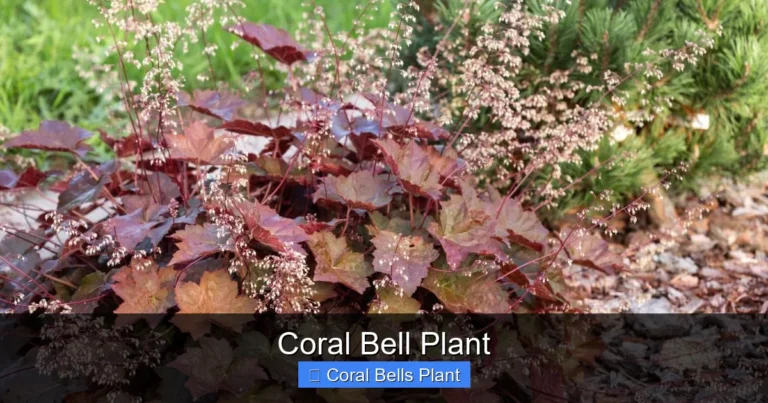
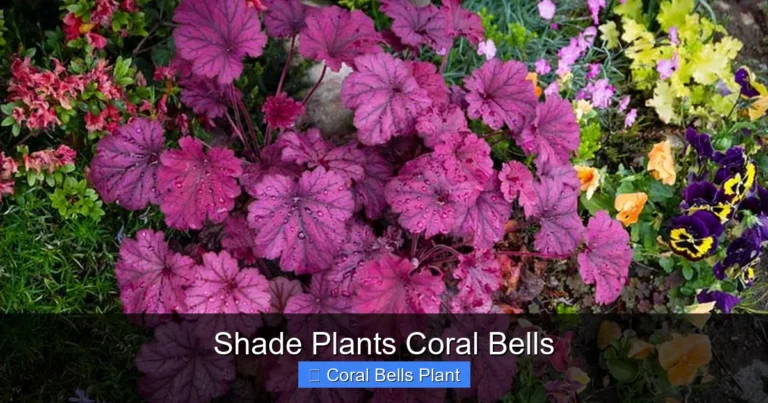
Coral bells, botanically known as Heuchera, are native North American perennials prized primarily for their foliage. While they do send up delicate flower spikes in late spring to early summer, it is the leaves that steal the show. Modern breeding has produced an astonishing palette. You can find coral bells in shades of lime green, caramel, deep purple, near-black, silver, peach, and even bright red.
Visual guide about Planting Coral Bells with Hostas
Image source: i.pinimg.com
Most varieties form neat mounds eight to eighteen inches tall and wide. The leaves are lobed or ruffled, often with contrasting veins or a metallic sheen. They are evergreen in mild climates and semi-evergreen in colder zones, providing winter interest when hostas have disappeared underground. Coral bells prefer partial shade but can handle more sun in cooler regions if kept moist. They thrive in zones four through nine.
Getting to Know Hostas
Hostas are the undisputed kings of the shade garden. With thousands of registered cultivars, there is a hosta for every situation. Sizes range from tiny miniatures like ‘Mouse Ears’ at just a few inches tall to giants like ‘Empress Wu’ that can span four feet across and stand three feet high. Leaf shapes vary from heart-shaped to lanceolate, deeply cupped to flat, smooth to heavily corrugated.
Colors span blue-green, chartreuse, gold, and variegated combinations with white or cream margins. Hostas are deciduous perennials, dying back to the ground after hard frost and emerging fresh each spring. They thrive in zones three through nine and prefer dappled to full shade. Their root systems are fibrous and dense, making them excellent at suppressing weeds once established.
Why They Work Together
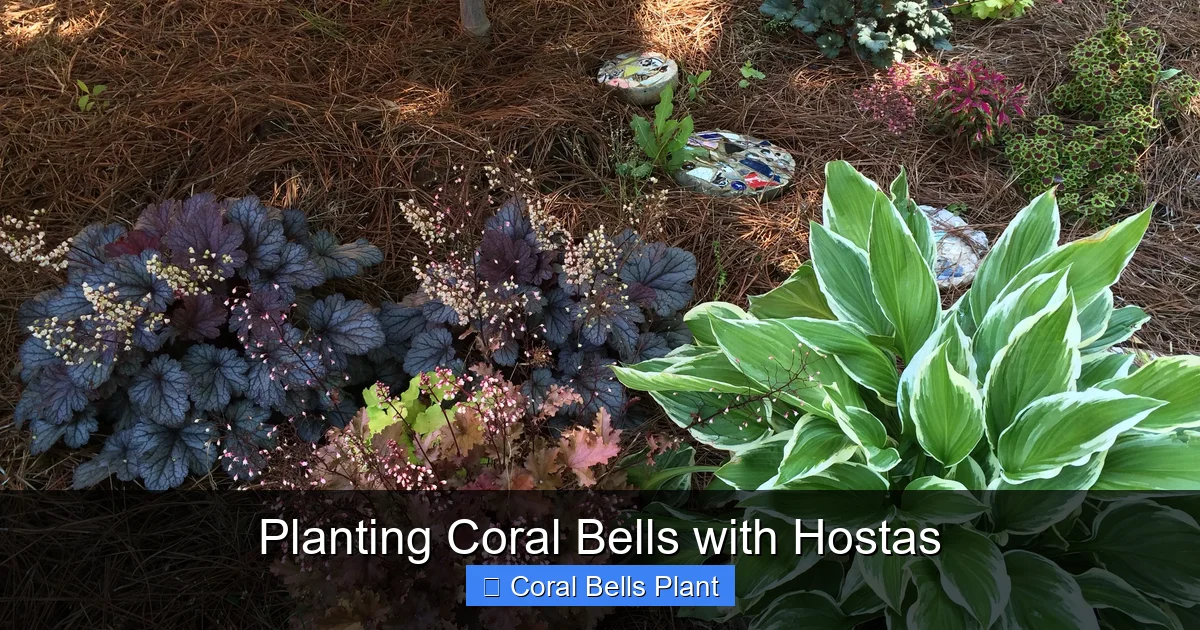
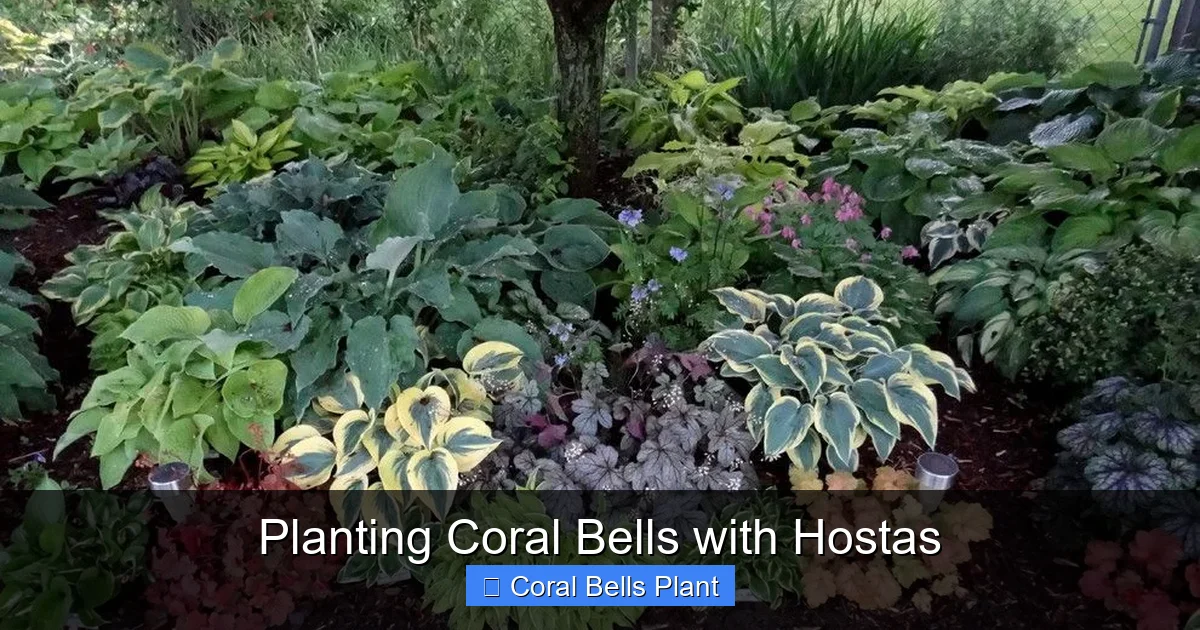
The magic of this pairing lies in complementary differences. Coral bells are low and mounding with intricate, colorful foliage. Hostas are taller and bolder with large, smooth leaves. This creates natural layering without any effort on your part. Both plants want the same things: rich, moist, well-draining soil and protection from harsh afternoon sun. Their root zones occupy slightly different depths, reducing competition. And perhaps best of all, they peek at different times. Coral bells keep their leaves through winter. Hostas emerge in mid-spring, just as coral bells are hitting their stride.
Choosing the Right Varieties for Your Garden
Selecting Coral Bells for Color Impact
With so many heuchera varieties on the market, selection can feel overwhelming. Start by deciding what role you want color to play. Do you want harmony or contrast? For a cool, sophisticated look, pair silver-leaved varieties like ‘Silver Scrolls’ or ‘Appletini’ with blue hostas. The silver picks up the glaucous coating on blue hosta leaves, creating a cohesive, moonlit effect.
If you crave warmth, reach for caramel, amber, or peach tones. ‘Caramel’ is a vigorous, heat-tolerant variety that holds its color well. ‘Georgia Peach’ offers large, ruffled leaves that shift from peach to rose through the seasons. These warm tones pop against green or gold hostas. For drama, dark varieties like ‘Obsidian’, ‘Black Pearl’, or ‘Midnight Rose’ create striking contrast against chartreuse hostas like ‘Sum and Substance’ or ‘August Moon’.
Consider leaf size too. Large-leaved coral bells like the ‘Primo’ series make a bolder statement and hold their own next to big hostas. Smaller varieties work better as edging or tucked between mini hostas.
Selecting Hostas for Structure and Scale
Your hosta choices should balance the scale of your coral bells. A general rule: the hosta should be noticeably larger than the coral bells to create that layered look. For small coral bells, choose medium hostas like ‘Guacamole’, ‘Rainforest Sunrise’, or ‘June’. These reach eighteen to twenty-four inches wide and provide a clear backdrop.
If you are planting larger coral bells or want a more dramatic backdrop, go for large or giant hostas. ‘Empress Wu’, ‘Sum and Substance’, ‘Blue Angel’, and ‘Sagae’ create imposing mounds that frame the coral bells beautifully. Blue hostas add a cool tone that makes purple or silver coral bells sing. Gold and chartreuse hostas brighten dark corners and make red or orange coral bells glow.
Variegated hostas add another layer of pattern. ‘Patriot’, ‘Francee’, and ‘June’ have clean white or gold margins that echo the veining in many coral bells. Just be careful not to create visual chaos. If your coral bells have heavily veined or patterned leaves, choose a solid-colored hosta. If your coral bells are solid, a variegated hosta adds interest.
Matching Cultural Needs
While the genus-level needs align, individual varieties have preferences. Some coral bells, especially those with Heuchera villosa parentage like ‘Caramel’ and ‘Citronelle’, tolerate more heat and humidity. Others, like the dark-leaved ‘Obsidian’, prefer cooler conditions. Blue hostas need more shade to maintain their waxy coating. Gold hostas need some morning sun to develop their best color.
Read plant tags carefully. Choose varieties rated for your hardiness zone. Consider your summer heat and humidity. If you garden in the Deep South, prioritize villosa-type coral bells and heat-tolerant hostas like ‘Guacamole’ or ‘Stained Glass’. In the North, you have a wider palette.
Site Selection and Soil Preparation
Finding the Sweet Spot for Light
Both plants thrive in dappled shade or morning sun with afternoon shade. This mimics their native woodland habitats. A spot under deciduous trees is ideal. You get bright light in spring before the canopy fills in, then cooling shade during the hottest months. The falling leaves provide natural mulch.
North-facing foundations, east-facing beds, and areas shaded by fences or structures also work well. Avoid dense, dark shade under evergreens or on the north side of solid walls. While hostas will survive there, they will grow slowly and flower poorly. Coral bells may become leggy and lose color intensity.
If you only have a spot with a few hours of direct morning sun, that is perfect. The key is protection from intense afternoon sun, especially in zones seven and above. Afternoon sun scorches hosta leaves and fades coral bell colors.
Soil Requirements: The Foundation of Success
Both plants demand rich, organic, well-draining soil. They hate wet feet, especially in winter. Heavy clay and pure sand are equally problematic. Clay holds too much water and suffocates roots. Sand drains too fast and cannot hold nutrients.
The ideal soil is a loose, crumbly loam rich in organic matter. Think forest floor. If your soil is less than perfect, do not despair. Amend it. Before planting, work in two to four inches of compost, well-rotted leaf mold, or aged manure. Dig it in to a depth of twelve to eighteen inches. This improves drainage in clay and water retention in sand while feeding the soil microbiome.
Test your soil pH if you can. Both plants prefer slightly acidic to neutral soil, around 6.0 to 7.0. In very alkaline soils, coral bells may develop chlorosis, yellowing leaves with green veins. Elemental sulfur or acidifying fertilizers can lower pH over time.
Preparing the Planting Area
Clear the area of weeds, grass, and debris. If you are converting lawn, remove the sod completely. Do not just till it in. Grass roots will regrow and compete fiercely. Mark out your planting design with a garden hose or spray paint. This lets you visualize spacing and flow before you commit.
If the area has poor drainage, consider raising the bed slightly. Even a six-inch mound of amended soil can make the difference between thriving plants and root rot. In very wet sites, install a French drain or choose a different location. No amount of amendment fixes a high water table.
Planting Techniques for Long-Term Success
When to Plant
Spring and early fall are the prime planting windows. Spring planting, as soon as the soil can be worked, gives plants a full growing season to establish before winter. Fall planting, four to six weeks before the ground freezes, takes advantage of cool temperatures and reliable rainfall. Roots continue growing in soil temperatures above forty degrees Fahrenheit.
Avoid summer planting unless you can provide diligent daily watering. The heat stress combined with transplant shock often leads to failure. If you must plant in summer, choose a cloudy, cool day and provide temporary shade with a shade cloth or umbrella for the first week.
Spacing for Health and Beauty
Proper spacing prevents a host of problems. Crowded plants compete for water and nutrients. Poor air circulation encourages fungal diseases like powdery mildew and crown rot. And aesthetically, crowded plants lose their individual forms and become a messy tangle.
Space coral bells twelve to eighteen inches apart, center to center. Space hostas according to their mature width. A hosta that reaches thirty-six inches wide needs at least thirty inches from its nearest neighbor. When interplanting, measure from the center of the hosta to the center of the coral bells. A good rule: half the mature width of the hosta plus half the mature width of the coral bells, plus a few inches for breathing room.
For example, a twenty-four-inch hosta and a sixteen-inch coral bell: twelve plus eight equals twenty inches minimum. Twenty-four inches is better. It looks sparse at first. Resist the urge to plant closer. Fill the gaps with annuals or mulch for the first year or two.
Step-by-Step Planting Process
Water both plants thoroughly in their pots an hour before planting. Hydrated roots handle transplant better. Dig holes twice as wide as the root balls and just as deep. Wide holes encourage roots to spread laterally into the amended soil.
Gently remove the plant from its pot. If roots are circling the bottom, tease them apart with your fingers or make three vertical slices with a knife. This sounds harsh but prevents girdling roots. Place the plant in the hole. The crown, where stems meet roots, should sit at or slightly above soil level. Planting too deep is the number one killer of both plants. Crown rot sets in quickly when buried.
Backfill with the amended soil, firming gently with your hands to eliminate air pockets. Do not stomp with your foot. That compacts the soil. Water deeply until the soil is saturated. This settles the soil and ensures good root-to-soil contact. Apply two to three inches of shredded bark, leaf mold, or pine straw mulch. Keep mulch pulled back an inch from the crowns.
First Season Care
The first growing season is all about root establishment. Water deeply once or twice a week, more in heat, less in rain. Check soil moisture by sticking your finger two inches down. If it feels dry, water. Do not rely on sprinklers. They wet the foliage, inviting disease, and often do not penetrate deeply enough.
Do not fertilize at planting time. The amended soil provides plenty of nutrients. Fertilizing stimulates top growth at the expense of roots. Wait until the following spring to apply a slow-release, balanced fertilizer. Remove any flower spikes on coral bells the first year. Let the plant put energy into roots and foliage. Hostas rarely need flower removal, but you can cut scapes if you prefer foliage focus.
Ongoing Care and Maintenance
Watering Established Plants
Once established, usually after one full growing season, both plants are moderately drought tolerant. But they perform best with consistent moisture. Aim for one inch of water per week from rain or irrigation. Deep, infrequent watering encourages deep roots. Frequent shallow watering creates shallow roots that suffer in heat.
Use soaker hoses or drip irrigation. Keep foliage dry. Water early in the day so any splashed leaves dry quickly. In summer heat, check soil moisture every few days. Large hostas transpire massive amounts of water. They will wilt dramatically when thirsty but recover quickly if watered promptly. Coral bells are subtler. Their leaves may dull or curl slightly.
Fertilizing for Vigor
In early spring, as new growth emerges, apply a slow-release granular fertilizer formulated for perennials or a balanced 10-10-10. Scatter it around the drip line, not on the crowns. Water it in. A second light application in early summer supports hostas through their main growth push. Avoid high-nitrogen fertilizers late in the season. They promote tender growth that winter kills.
Organic gardeners can top-dress with an inch of compost each spring. This feeds slowly and improves soil structure over time. Liquid seaweed or fish emulsion applied monthly during the growing season provides a gentle boost.
Mulching Matters
Maintain a two-to-three-inch mulch layer year-round. Mulch conserves moisture, suppresses weeds, moderates soil temperature, and breaks down to feed the soil. Shredded leaves, pine straw, and bark fines are excellent choices. Avoid large wood chips. They tie up nitrogen as they decompose.
Refresh mulch annually in spring after the soil warms. Pull old mulch back, add compost if desired, then replace mulch. Never let mulch pile up against crowns. That is a direct invitation to crown rot and voles.
Seasonal Cleanup
In late fall, after hard frost kills hosta foliage, cut the leaves to the ground. Remove them from the garden. Hosta leaves harbor slug eggs and fungal spores. Do not compost diseased foliage. Coral bells are evergreen. Leave their foliage alone. It protects the crown over winter and provides photosynthetic capacity on warm winter days.
In early spring, before new hosta shoots emerge, remove any tattered or winter-damaged coral bell leaves. Cut them at the base. This makes room for fresh growth and improves air flow. Apply your spring fertilizer and fresh mulch. That is essentially the entire annual maintenance routine.
Dividing: When and How
Hostas benefit from division every four to five years, or when the center of the clump dies out, forming a “fairy ring.” Spring is the best time, just as the eyes emerge. Dig the entire clump. Wash or shake off soil. Use a sharp knife or spade to cut into sections, each with at least three eyes and a good root portion. Replant immediately at the same depth.
Coral bells need division less often, every three to four years, when the center becomes woody and flowering declines. Spring or early fall works. Dig the plant. Pull or cut the woody crown into sections, each with roots and foliage. Discard the old woody center. Replant the vigorous outer sections slightly higher than before, as they tend to sink.
Design Ideas and Creative Combinations
Classic Woodland Border
Create a naturalistic border along a woodland path or shaded fence line. Use large blue hostas like ‘Blue Angel’ or ‘Elegans’ as the backbone. Plant them in groups of three or five for impact. In front, drift coral bells in complementary colors. ‘Silver Scrolls’ or ‘Appletini’ echo the blue. ‘Caramel’ or ‘Georgia Peach’ warm it up. Add native ferns like Christmas fern or lady fern for vertical texture. Spring bulbs like Virginia bluebells or trillium provide ephemeral color before the hostas fully emerge.
Container Combinations
Both plants thrive in containers, making them perfect for shaded patios, balconies, or entryways. Choose a pot at least eighteen inches wide and deep. Use high-quality potting mix with added compost. Plant a medium hosta like ‘June’ or ‘Rainforest Sunrise’ in the center. Surround it with three to five coral bells. ‘Obsidian’ creates a dramatic dark skirt. ‘Lime Rickey’ adds electric chartreuse. ‘Peach Flambe’ brings fiery color.
Containers need more frequent watering and fertilizing. Water when the top inch of soil feels dry. Fertilize monthly with half-strength liquid fertilizer. In zones six and below, move pots to an unheated garage for winter or sink them in the ground. In zone seven and up, they can often stay outdoors with a heavy mulch layer.
Formal Shade Garden
For a more structured look, use repetition and symmetry. Plant matching hostas on either side of a shaded gate or bench. ‘Frances Williams’ or ‘Sagae’ have bold, variegated leaves that read well from a distance. Edge the bed with a single variety of coral bells in a repeating pattern. ‘Palace Purple’ is a classic, reliable choice. ‘Berry Smoothie’ offers larger, more ruffled leaves in a striking rose-purple.
Add boxwood or yew balls for evergreen structure. Underplant with white-flowering hellebores for late winter bloom. The result feels intentional and designed, yet the plants do all the work.
Rain Garden Edge
If you have a rain garden or low spot that stays moist, both plants adapt well to the periodically wet conditions at the upper edge. Choose moisture-tolerant hostas like ‘Sum and Substance’ or ‘Blue Mammoth’. Pair with villosa-type coral bells like ‘Caramel’, ‘Citronelle’, or ‘Brownies’. These handle wet feet better than most. Add moisture-loving companions like Japanese iris, lobelia, or turtlehead for a lush, layered planting that manages stormwater beautifully.
Miniature Fairy Garden
For small spaces or trough gardens, use miniature hostas and compact coral bells. ‘Blue Mouse Ears’, ‘Pandora’s Box’, and ‘Mini Skirt’ hostas stay under eight inches. Pair with ‘Petite Pearl Fairy’ or ‘Little Cutie’ series coral bells. Add tiny ferns, moss, and miniature spring bulbs. This creates a detailed, intimate planting that rewards close inspection. Perfect for a shaded tabletop or rock garden crevice.
Troubleshooting Common Problems
Slugs and Snails: The Hosta Nemesis
Slugs love hostas. They rasp holes in the leaves, ruining the display. Coral bells are rarely bothered. Start with cultural controls. Remove hiding places: boards, dense groundcovers, leaf piles near the plants. Water in the morning so foliage dries by evening. Apply diatomaceous earth or crushed eggshells around hostas. The sharp particles deter soft-bodied pests.
Beer traps work. Bury a shallow container with the rim at soil level. Fill with cheap beer. Slugs crawl in and drown. Empty daily. Copper tape around pot rims or raised beds gives a mild electric shock. For severe infestations, use iron phosphate baits like Sluggo. They are safe for pets and wildlife. Avoid metaldehyde baits. They are toxic to dogs and birds.
Deer and Rabbits
Deer adore hostas. They will eat them to the ground. Rabbits nibble young shoots in spring. Coral bells are less palatable but not immune. In high-pressure areas, fencing is the only reliable solution. An eight-foot fence stops deer. A two-foot chicken wire fence with the bottom buried six inches stops rabbits.
Repellents help but must be reapplied after rain. Rotate products so animals do not habituate. Plantskydd, Liquid Fence, and Bobbex are popular choices. Some gardeners report success with Milorganite fertilizer spread around plants. The odor deters browsers.
Fungal Diseases
Crown rot, caused by several fungi, is the most serious threat. It strikes when crowns stay wet, especially in heavy soil or deep planting. Symptoms include yellowing, wilting, and a mushy crown. Prevention is everything. Plant high. Ensure drainage. Do not overwater. Mulch properly.
Powdery mildew appears as white dust on leaves in humid, stagnant conditions. It is rarely fatal but unsightly. Improve air circulation by proper spacing and thinning nearby shrubs. Water at the base. Remove badly affected leaves. Fungicides are rarely needed in home gardens.
Anthracnose causes brown spots with dark margins on hosta leaves. It spreads in wet weather. Remove infected leaves. Clean up all foliage in fall. Avoid overhead watering.
Sun Scorch and Heat Stress
Brown, crispy leaf edges on hostas usually mean too much sun or not enough water. Blue hostas are especially prone. Move them in early spring or fall if possible. If not, provide a shade cloth during the hottest weeks. Coral bells in too much sun bleach out. Dark varieties turn muddy. Light varieties scorch. Again, relocation or shade cloth helps.
Voles and Root Damage
Voles tunnel through soil and eat roots and crowns in winter. You may not know until spring when plants fail to emerge. Castor oil repellents can deter them. Hardware cloth cages around root balls at planting time offer physical protection. Encourage predators: owls, hawks, snakes. A barn owl box can make a difference.
Extending the Season: Companion Plants for Year-Round Interest
Spring Bulbs and Ephemerals
Hostas emerge late. Coral bells are evergreen but low. The spring gap is an opportunity. Plant early bulbs among them. Snowdrops, crocus, scilla, and chionodoxa bloom and fade before hostas need the space. Daffodils and tulips work too, but their foliage lingers. Choose early varieties and plant them behind hostas so the dying foliage is hidden.
Native spring ephemerals like trillium, bloodroot, and Virginia bluebells are perfect. They complete their life cycle before the canopy closes. They naturalize gently and support early pollinators.
Summer Bloomers for Color
While foliage carries the design, flowers add seasonal sparkle. Astilbe plumes in pink, red, or white rise above the mound in early summer. They love the same conditions. Japanese anemones bloom in late summer to fall on tall, wiry stems. Their white or pink flowers dance above the foliage.
Hellebores bloom in late winter to early spring. Their leathery evergreen leaves persist all year. Plant them at the back of the border. Toad lilies (Tricyrtis) offer orchid-like spotted flowers in fall. They thrive in deep shade where little else blooms.
Ferns for Texture
Ferns are the ultimate texture companions. Their delicate fronds contrast with both the broad hosta leaves and the ruffled coral bells. Japanese painted fern (Athyrium niponicum ‘Pictum’) brings silver and burgundy tones that echo coral bells. Autumn fern (Dryopteris erythrosora) unfurls coppery new growth in spring. Christmas fern (Polystichum acrostichoides) is evergreen and native. Maidenhair fern (Adiantum) adds airy elegance but needs consistent moisture.
Groundcovers for Living Mulch
Instead of bark mulch, use living groundcovers. They suppress weeds, conserve moisture, and add another layer of interest. Sweet woodruff (Galium odoratum) forms a fragrant mat of whorled leaves with white spring flowers. It is well-behaved in shade. Foamflower (Tiarella) is a coral bell relative with similar leaves and foamy spring spikes. ‘Running Tapestry’ spreads gently.
Wild ginger (Asarum canadense) has heart-shaped leaves that hide curious brown flowers at ground level. It is slow but tough. Barrenwort (Epimedium) is the gold standard for dry shade. Wiry stems hold heart-shaped leaves that turn bronzy in fall. Delicate flowers hover above in spring. It is deer-proof and long-lived.
Conclusion: Your Shade Garden Awaits
Planting coral bells with hostas is one of the smartest moves you can make in a shade garden. These two plants cover each other’s weaknesses and amplify each other’s strengths. The hostas provide bold architecture and seasonal drama. The coral bells provide year-round color, intricate texture, and a tidy foreground. Together, they create a plant community that looks lush and intentional with minimal input from you.
Start small if you are new to this combination. Choose three hostas and five coral bells in colors that speak to you. Prepare the soil well. Plant at the right depth. Water consistently the first year. Then step back and watch. The first season will be quiet. The second season will surprise you. By the third, you will have a shade garden that stops visitors in their tracks.
Remember, gardening is a conversation with nature. You provide the framework. The plants do the rest. There will be slugs. There will be weird weather. Some plants will thrive. Others will sulk. That is not failure. That is gardening. Adjust. Replace. Move things around. The combination of coral bells and hostas is forgiving enough to handle your experiments and rewarding enough to make you look like a genius.
So grab your trowel. Pick your palette. Create that shade sanctuary you have been dreaming of. The coral bells and hostas are ready when you are.
Frequently Asked Questions
Will coral bells and hostas compete for nutrients?
Their root systems occupy different soil depths, with hostas having deeper fibrous roots and coral bells having shallower crowns. With proper spacing and soil preparation, competition is minimal. Annual compost top-dressing keeps both well-fed.
Can I grow coral bells and hostas in containers together?
Absolutely. Use a pot at least 18 inches wide and deep with high-quality potting mix. Plant a medium hosta in the center and surround with 3-5 coral bells. Containers need more frequent watering and monthly fertilizing during the growing season.
Why are my coral bells losing their vibrant color?
Color loss usually indicates too much sun, especially for dark varieties, or nutrient deficiency. Move to a shadier spot or apply a balanced fertilizer in spring. Some varieties naturally shift colors through the seasons.
How do I prevent slugs from destroying my hostas?
Combine multiple strategies: remove hiding spots, water in morning only, apply diatomaceous earth or copper barriers, use beer traps, and consider iron phosphate baits for severe infestations. Avoid metaldehyde products if pets are present.
Do I need to cut back coral bells in the fall like hostas?
No. Coral bells are evergreen or semi-evergreen. Leave their foliage intact through winter to protect the crown. Remove only damaged leaves in early spring before new growth emerges.
What should I plant between coral bells and hostas while they fill in?
Use annuals like impatiens, begonias, or coleus for the first season or two. Spring bulbs work well too. Avoid aggressive spreaders that might overwhelm the young perennials. Mulch the gaps with shredded leaves or bark fines.