Fire Alarm Coral Bells Plant
The Fire Alarm coral bells plant is a show-stopping perennial prized for its brilliant red foliage that holds color all season. This low-maintenance Heuchera thrives in shade gardens and adds bold contrast to borders, containers, and woodland settings.
If you have ever walked through a garden center in spring and felt your heart skip a beat at the sight of a plant with leaves the color of a fire truck, you have likely met the Fire Alarm coral bells plant. This cultivar, known botanically as Heuchera ‘Fire Alarm’, is not just another pretty face in the perennial world. It is a workhorse. It is a showstopper. And it might just be the solution to that shady corner where nothing else seems to thrive.
I remember the first time I planted Fire Alarm coral bells in my own garden. I had a stubborn spot under a mature maple tree. Grass refused to grow there. Hostas got slug-eaten. Ferns looked tired by August. Then I tucked in three Fire Alarm plants. By midsummer, that dark corner glowed like embers. Neighbors stopped to ask what it was. That is the power of this plant. It turns problem areas into focal points.
Key Takeaways
- Vibrant foliage: Fire Alarm coral bells feature large, leathery leaves that emerge bright red and mature to deep burgundy, providing year-round interest.
- Shade tolerant: This variety performs best in partial to full shade, making it perfect for difficult garden spots under trees or on north-facing walls.
- Compact habit: Plants form neat mounds 10-12 inches tall and 14-16 inches wide, ideal for edging, containers, and small-space gardens.
- Four-season appeal: Evergreen in mild climates, the foliage persists through winter while delicate white flowers attract pollinators in late spring.
- Low maintenance: Once established, Fire Alarm coral bells require minimal care — just occasional watering, spring cleanup, and division every 3-4 years.
- Deer resistant: The fuzzy, bitter-tasting foliage naturally deters deer and rabbits, a major plus for rural and suburban gardeners.
- Versatile design plant: Pairs beautifully with hostas, ferns, astilbes, and Japanese forest grass for textural contrast in shade gardens.
Quick Answers to Common Questions
How much sun can Fire Alarm coral bells tolerate?
In cool climates (zones 4-5), it handles 4-6 hours of morning sun with consistent moisture. In warmer zones, provide dappled or full shade to prevent leaf scorch.
When should I divide my Fire Alarm coral bells?
Divide in early spring as new growth emerges or in early fall, at least 6 weeks before ground freeze. Divide every 3-4 years to maintain vigor.
Why are the leaves on my Fire Alarm coral bells turning green?
Older leaves at the base naturally lose red pigment and turn green. This is normal. Remove them during spring cleanup. New growth should be vibrant red.
Is Fire Alarm coral bells deer resistant?
Yes, the fuzzy, tannin-rich foliage deters deer and rabbits. However, no plant is completely deer-proof in times of extreme hunger.
Can Fire Alarm coral bells grow in containers?
Absolutely. Its compact 10-12 inch height and 14-16 inch spread make it an excellent container plant. Use well-draining potting mix and water consistently.
📑 Table of Contents
- What Makes Fire Alarm Coral Bells Special
- Ideal Growing Conditions for Fire Alarm Coral Bells
- Planting and Establishment
- Ongoing Care and Maintenance
- Design Ideas: Where Fire Alarm Coral Bells Shines
- Common Problems and Solutions
- Propagation Methods
- Seasonal Interest: A Year in the Life
- Buying Guide: Selecting Healthy Plants
- Fire Alarm Coral Bells vs. Other Red Heucheras
- Frequently Asked Practical Questions
- Conclusion: Why Fire Alarm Deserves a Spot in Your Garden
What Makes Fire Alarm Coral Bells Special
A Color That Refuses to Fade
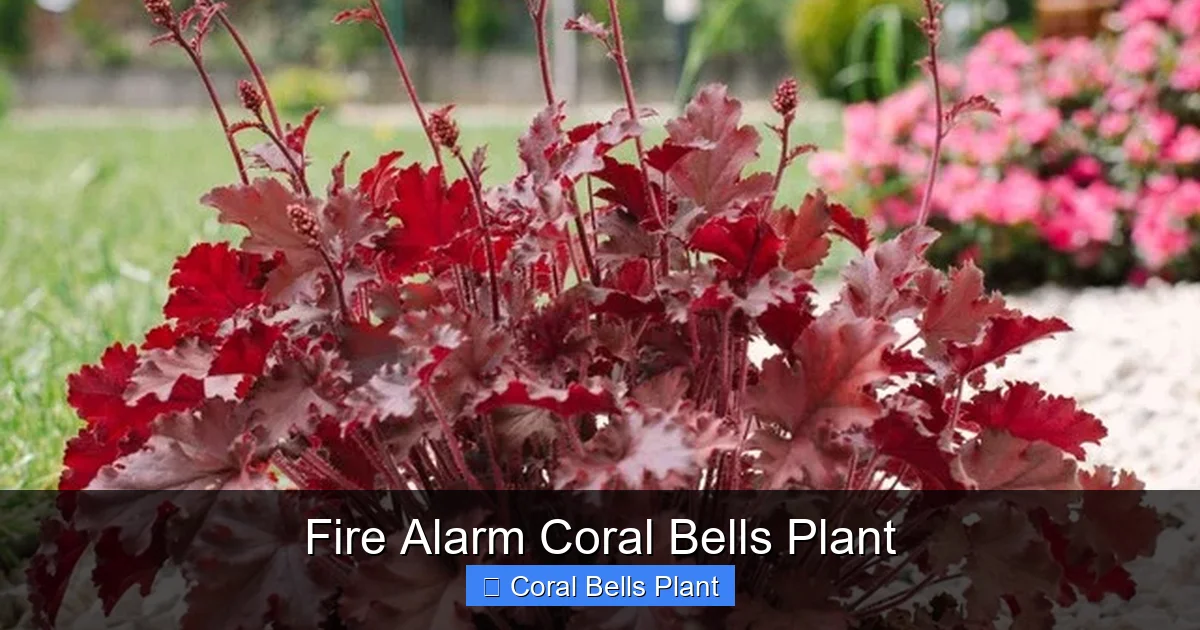
Many red-leaved plants start strong in spring but turn muddy green by July. Not this one. The Fire Alarm coral bells plant holds its saturated red color from emergence through frost. The leaves are large — up to five inches across — with a gently ruffled edge that catches light. In spring, new growth pushes out a shocking, almost neon red. As the season progresses, the color deepens to a rich burgundy-red that looks sophisticated rather than garish.
The foliage has substance. It feels leathery and thick between your fingers. This thickness helps the plant resist sun scorch better than thinner-leaved varieties. It also makes the leaves less appealing to slugs and snails, which tend to prefer tender tissue.
Flowers Are a Bonus, Not the Main Event
In late spring to early summer, slender stems rise 18-24 inches above the foliage mound. They carry airy panicles of tiny, bell-shaped flowers in a soft pinkish-white. The blooms are charming. They attract hummingbirds and native bees. But let us be honest — you grow Fire Alarm coral bells for the leaves. The flowers are a polite bonus. Many gardeners actually snip the flower stems to keep energy focused on foliage production.
Compact and Well-Behaved
This cultivar forms a tidy, mounding clump. It reaches about 10-12 inches tall (foliage only) and spreads 14-16 inches wide. It does not run. It does not flop. It stays where you put it. This makes it excellent for edging pathways, lining the front of a shade border, or tucking into mixed containers where it plays the “filler” role beautifully.
Ideal Growing Conditions for Fire Alarm Coral Bells
Light Requirements: Shade to Part Sun
The Fire Alarm coral bells plant is often marketed as a shade perennial, and that is where it shines brightest. In full shade — think dappled light under deciduous trees or the north side of a structure — the foliage color is richest and the plant experiences the least stress.
However, this variety tolerates more sun than many coral bells, especially in cooler climates (zones 4-6). In these regions, it can handle four to six hours of morning sun. The key is consistent moisture. If you plant it in more sun, you must water more diligently. Afternoon sun in hot climates (zones 7-9) will scorch the leaves, no matter how much water you give.
Pro tip: If you are unsure about your light conditions, watch the spot for a full day. Take photos every two hours. You might be surprised how much — or how little — direct sun an area actually receives.
Soil Preferences: Drainage Is Everything
Heucheras have a fatal flaw: they hate wet feet. The Fire Alarm coral bells plant is no exception. Crown rot is the number one killer. The ideal soil is rich, humusy, and well-draining. Think forest floor — loose, dark, full of decomposed leaves.
If your soil is heavy clay, amend it generously with compost, leaf mold, or fine pine bark before planting. Create a slightly raised planting area if drainage is truly poor. In sandy soils, add organic matter to improve moisture retention. The goal is soil that holds moisture like a wrung-out sponge — damp but not soggy.
Soil pH should be slightly acidic to neutral (6.0-7.0). Coral bells are adaptable, but they struggle in highly alkaline conditions. If your soil tests above 7.5, incorporate elemental sulfur or peat moss to lower the pH gradually.
Hardiness Zones: Tougher Than It Looks
The Fire Alarm coral bells plant is hardy in USDA zones 4-9. In zone 4, it benefits from a light winter mulch of shredded leaves or straw applied after the ground freezes. This prevents frost heaving, which can push the shallow crowns out of the soil.
In zones 8-9, the plant may remain evergreen through winter. In colder zones, the foliage often looks ratty by late winter. Do not panic. This is normal. Leave the old leaves in place until early spring — they protect the crown. Then cut them back to make way for fresh growth.
Planting and Establishment
When to Plant
Spring and early fall are the best planting times. Spring planting gives the roots all season to establish before winter. Fall planting (at least six weeks before ground freeze) takes advantage of cool temperatures and reliable rainfall. Avoid planting in the heat of summer unless you can provide constant attention and shade cloth.
Spacing and Depth
Space plants 14-18 inches apart, measuring from center to center. This allows for mature spread and good air circulation, which prevents foliar diseases.
Planting depth is critical. The crown — where stems meet roots — must sit at or slightly above soil level. Burying the crown invites rot. If you are planting a container-grown specimen, gently tease out circling roots. Set the plant in the hole, backfill with amended soil, and firm gently. Water thoroughly to settle soil and eliminate air pockets.
The First Season: Patience Pays
Newly planted Fire Alarm coral bells need consistent moisture. Water deeply two to three times per week for the first month, then weekly unless rain provides an inch. Mulch with two inches of shredded bark, pine straw, or leaf mold. Keep mulch pulled back an inch from the crown.
Do not fertilize at planting time. The amended soil provides plenty of nutrients. Wait until the following spring to apply a light feeding.
Ongoing Care and Maintenance
Watering: The Goldilocks Principle
Established Fire Alarm coral bells plants have moderate water needs. They want consistently moist soil but cannot tolerate standing water. During the growing season, water when the top inch of soil feels dry. This usually means once a week in average conditions, more during heat waves, less in cool, cloudy periods.
Water at the base of the plant. Wet foliage encourages fungal diseases like powdery mildew and rust. Soaker hoses or drip irrigation are ideal. If you must use overhead sprinklers, run them early in the day so leaves dry quickly.
Fertilizing: Less Is More
Coral bells are light feeders. Too much nitrogen produces lush, soft growth that is prone to disease and winter damage. In early spring, apply a balanced, slow-release fertilizer (such as 10-10-10 or 14-14-14) at half the recommended rate. Alternatively, top-dress with an inch of compost around the plant. That is usually all they need for the year.
Container-grown plants need more frequent feeding since nutrients leach out. Use a dilute liquid fertilizer monthly during the growing season, or incorporate slow-release granules at planting time.
Spring Cleanup
In early spring, before new growth emerges, remove any tattered, brown, or diseased leaves from the previous season. Use clean, sharp scissors or pruners. Cut leaves at the base, being careful not to damage the crown or emerging buds. This cleanup improves air circulation and removes overwintering disease spores.
Division: Renewal Every Few Years
Over time, the center of a coral bells clump can become woody and less vigorous. The plant may also heave out of the ground as the crown expands upward. Division solves both problems.
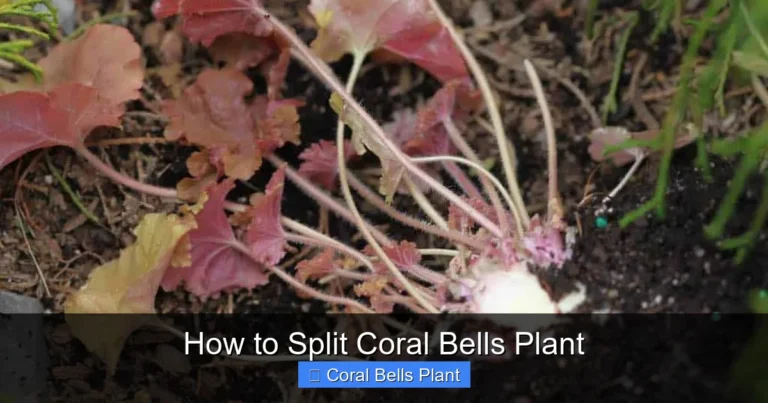
Divide Fire Alarm coral bells in early spring (just as new growth starts) or early fall. Dig up the entire clump. Gently pull or cut apart the crown into sections, each with healthy roots and several growth buds. Discard the woody center. Replant divisions at the correct depth, water well, and mulch. Divisions may look a bit sad for a few weeks but recover quickly.
Design Ideas: Where Fire Alarm Coral Bells Shines
Shade Garden Combinations
The red foliage of Fire Alarm coral bells is a design gift. It provides the “thriller” color in shade combinations where flowers are often scarce. Here are a few tested pairings:
- Silver and red: Pair with Japanese painted fern (Athyrium niponicum ‘Pictum’), lungwort (Pulmonaria), or brunnera ‘Jack Frost’. The silver highlights make the red pop.
- Chartreuse contrast: Plant alongside golden Japanese forest grass (Hakonechloa macra ‘Aureola’), ‘Sum and Substance’ hosta, or golden creeping Jenny. The warm red against cool yellow-green is electric.
- Deep shade drama: Combine with black mondo grass (Ophiopogon planiscapus ‘Nigrescens’), dark-leaved heuchera like ‘Obsidian’, and white-flowering astilbe. Sophisticated and moody.
- Woodland naturalism: Mix with native foamflower (Tiarella), wild ginger (Asarum), and Christmas fern. The red adds a cultivated touch to a naturalistic planting.
Container Recipes
The Fire Alarm coral bells plant is a container superstar. Its compact habit and season-long color make it a reliable “filler” in the classic thriller-filler-spiller formula. Try these combos:
- Spring container: Center a small evergreen like dwarf Alberta spruce. Ring with three Fire Alarm coral bells. Edge with white pansies and ivy.
- Summer shade pot: Use a large, glazed ceramic pot. Plant a tall fern (ostrich or royal) in the center. Surround with Fire Alarm coral bells. Trail sweet potato vine ‘Blackie’ or ‘Marguerite’ over the edge.
- Fall/winter display: Combine with ornamental kale, purple pansies, and trailing wire vine. The coral bells provide structure when annuals fade.
Remember: containers dry out faster than ground soil. Check moisture daily in summer. Use a high-quality potting mix with added perlite for drainage. Elevate pots on feet to ensure drainage holes stay clear.
Edging and Mass Planting
Plant Fire Alarm coral bells in a staggered row along a shaded pathway. The uniform mounds create a tidy edge that looks intentional all season. Space plants 12 inches apart for a quicker fill-in.
For a bold statement, mass plant 7, 9, or 11 individuals in a drift under a high-canopy tree. The effect is a river of red foliage. Interplant with early spring bulbs (snowdrops, scilla, chionodoxa) that will bloom before the coral bells leaf out fully.
Common Problems and Solutions
Crown Rot: The Silent Killer
This is the most serious issue. Symptoms include wilting despite moist soil, blackened crown tissue, and a foul odor. Prevention is everything: perfect drainage, proper planting depth, and avoiding mulch volcanoes. If you catch it early, you can sometimes save the plant by digging it up, cutting away all rotted tissue, dusting with sulfur fungicide, and replanting in a drier location. But often, the plant is a loss.
Powdery Mildew
Appears as a white, powdery coating on leaves. It thrives in humid conditions with poor air circulation. Space plants properly. Water at soil level. Remove affected leaves promptly. In severe cases, apply a horticultural oil or potassium bicarbonate spray. Some gardeners use a homemade spray of 1 tablespoon baking soda plus 1 teaspoon horticultural oil per gallon of water, applied weekly.
Rust
Shows as orange-brown pustules on leaf undersides, with yellow spots on top. Remove and destroy infected leaves. Improve air circulation. Avoid overhead watering. Fungicides labeled for rust on ornamentals can help if applied early.
Foliar Nematodes
Microscopic worms that cause angular, brown lesions between leaf veins. There is no chemical cure for home gardeners. Remove and destroy affected plants. Do not compost. Avoid overhead watering, which spreads nematodes via splash.
Heaving
In freeze-thaw cycles, shallow crowns can be pushed out of the ground. This exposes roots to drying air and cold. If you see this in late winter, gently press the plant back into the soil (do not stomp). Apply a light mulch. In future years, plant slightly deeper and mulch after ground after division to compensate for the upward growth habit.
Deer and Rabbit Resistance
Good news: Fire Alarm coral bells is generally deer and rabbit resistant. The leaves contain tannins and have a fuzzy texture that browsing animals dislike. However, “resistant” does not mean “proof.” In severe winters with high animal pressure, they may nibble new growth. A spray repellent applied early in the season can reinforce the lesson.
Propagation Methods
Division (Easiest and Most Reliable)
As described in the maintenance section, division is the go-to method. It produces mature plants quickly and maintains the exact characteristics of the cultivar. Do it every 3-4 years for plant health, or whenever you want more plants.
Leaf Cuttings (For the Patient Gardener)
You can propagate Fire Alarm coral bells from leaf cuttings, though success rates vary. In late spring, select a healthy leaf with a short piece of petiole (leaf stem). Dip the cut end in rooting hormone. Insert into a pot of moist perlite-vermiculite mix. Cover with a clear plastic bag to maintain humidity. Place in bright, indirect light. Roots and a tiny plantlet may form at the leaf base in 6-8 weeks. Pot up and grow on for a season before planting out.
Seed (Not Recommended for Cultivars)
Fire Alarm coral bells will produce seed if flowers are pollinated. However, seedlings will not come true to type. They will be variable, often reverting to green-leaved forms. If you want more Fire Alarm plants, divide or buy new ones. Save seed sowing for species heucheras or breeding experiments.
Seasonal Interest: A Year in the Life
Spring: The Awakening
As soil warms, fresh leaves unfurl in that shocking, bright red. It is the most intense color of the year. Flower stems begin to elongate. This is the time for spring cleanup and division if needed. Apply slow-release fertilizer.
Summer: Steady Performance
Foliage deepens to burgundy-red. Flowers bloom for 3-4 weeks in late spring/early summer. Deadhead spent flower stems to keep the plant tidy. Watch watering during heat waves. Monitor for powdery mildew in humid regions.
Fall: Rich Tones
Cooler temperatures often intensify the red color. The plant looks fresh and vibrant when many perennials are fading. This is an excellent time to plant new specimens or divide established ones. Reduce watering as temperatures drop.
Winter: Structure and Substance
In zones 7-9, the foliage remains evergreen and handsome all winter. In colder zones, leaves may flatten and brown at the edges but often persist until spring. Do not cut them back. They protect the crown. If heavy snow crushes the plant, it usually rebounds. Apply winter mulch in zone 4 after ground freezes.
Buying Guide: Selecting Healthy Plants
At the Garden Center
Look for plants with firm, turgid leaves — no wilting, yellowing, or brown edges. Check the crown. It should be at soil level, not buried. Gently lift the pot (if the nursery allows) to inspect roots. They should be white or light tan, firm, and fill the pot without being a solid mass of circling roots.
Avoid plants with:
- White, powdery coating on leaves (powdery mildew)
- Orange spots on leaf undersides (rust)
- Soft, mushy crowns (rot)
- Weeds growing in the pot (indicates poor care)
- Roots growing out the bottom drainage holes in a thick mat (rootbound)
Mail Order Tips
Many specialty nurseries ship bare-root or small plug plants. Order from reputable sources with good reviews. Spring shipments should arrive when your soil is workable. Fall shipments need 6+ weeks before ground freeze. Open the box immediately. Soak bare roots in water for an hour before planting. Pot up plugs and grow on for a few weeks if conditions are not ideal for direct planting.
Price Expectations
Quart pots: $8-12. Gallon pots: $14-22. Bare root: $5-9 each in bundles. Plug trays (32-72 cells): $1.50-3 per plant wholesale. The Fire Alarm coral bells plant is patented (PP#24,525), so you will not find it at big-box discount prices. The patent ensures you are getting the true, tested cultivar.
Fire Alarm Coral Bells vs. Other Red Heucheras
Fire Alarm vs. ‘Fire Chief’
‘Fire Chief’ is an older red cultivar. It has smaller, more rounded leaves and a looser habit. The red color is bright but fades to greenish-bronze in summer heat. Fire Alarm has larger, more angular leaves, a tighter mound, and vastly superior color retention. Fire Alarm is the clear winner for modern gardens.
Fire Alarm vs. ‘Cherry Cola’
‘Cherry Cola’ has ruffled, reddish-brown leaves with a silvery overlay. It is beautiful but more muted. Fire Alarm is a true, saturated red. Choose Cherry Cola for sophisticated, vintage-toned plantings. Choose Fire Alarm when you want maximum visual impact from a distance.
Fire Alarm vs. ‘Red Lightning’
‘Red Lightning’ has dark leaves with vivid red veins — a completely different pattern. It is stunning but reads as “veined” rather than “red” from afar. Fire Alarm reads as a solid block of red. Both are excellent. Use Red Lightning for close-up viewing (containers, pathway edges). Use Fire Alarm for mass impact.
Fire Alarm vs. Species Heuchera sanguinea
The species coral bells has green leaves and bright red flowers. It is grown for blooms, not foliage. Fire Alarm is a hybrid bred for foliage. Different purposes entirely.
Frequently Asked Practical Questions
Can Fire Alarm coral bells grow in full sun?
In zones 4-5, yes, with consistent moisture. In zones 6-7, morning sun only. In zones 8-9, shade only. The label “full sun” on some tags refers to northern climates. When in doubt, give it more shade.
Why is my plant turning green in the center?
This is normal aging. The oldest leaves at the base of the mound lose pigment. As long as new growth is red, the plant is healthy. Remove green leaves during spring cleanup.
Can I grow it indoors as a houseplant?
Not recommended long-term. Coral bells need a winter dormancy period triggered by cold temperatures. Indoors, they weaken and decline after a few months. Enjoy them in outdoor containers year-round instead.
My plant flowered but didn’t come back next spring. Why?
Excessive flowering can weaken a young plant. Deadhead flower stems on first-year plants to direct energy to root and crown development. Also check for crown rot or heaving.
Is Fire Alarm coral bells toxic to pets?
Heucheras are generally considered non-toxic to dogs and cats. However, eating large amounts of any plant material can cause gastrointestinal upset. The fuzzy texture discourages most pets from chewing.
Can I plant it under black walnut trees?
Yes. Heucheras are juglone-tolerant. Fire Alarm coral bells is a good choice for the difficult root zone of black walnuts, where few other ornamentals survive.
Conclusion: Why Fire Alarm Deserves a Spot in Your Garden
After years of growing, recommending, and designing with the Fire Alarm coral bells plant, my enthusiasm has not waned. This plant delivers on every promise. It brings high-impact color to the shade garden when most plants offer only green. It asks for little — decent drainage, moderate moisture, a little spring cleanup — and gives back months of bold foliage.
Whether you tuck a single plant into a container, line a woodland path with a dozen, or create a dramatic drift under a shade tree, Fire Alarm coral bells performs. It bridges the gap between the fleeting color of flowers and the reliable structure of evergreens. It solves the “what grows in dry shade?” dilemma. And it makes you look like a garden genius when visitors ask, “What is that amazing red plant?”
If you have not tried it yet, pick up one or three this season. Plant them where you will see them daily — by the front walk, outside the kitchen window, beside the patio. Watch the color shift through the seasons. Notice how it plays with light. See how it makes neighboring plants look better by contrast. That is the magic of great foliage plants. They do not just sit there. They transform the space around them.
The Fire Alarm coral bells plant is more than a pretty perennial. It is a design tool. A problem solver. A four-season friend. Give it the well-drained, shady spot it craves, and it will reward you with color that stops traffic — or at least stops your neighbors in their tracks.
Frequently Asked Questions
What is the hardiness zone for Fire Alarm coral bells?
Fire Alarm coral bells is hardy in USDA zones 4-9. In zone 4, apply winter mulch after the ground freezes to prevent frost heaving. In zones 8-9, it often remains evergreen through winter.
How often should I water Fire Alarm coral bells?
Water deeply when the top inch of soil feels dry. Established plants typically need weekly watering, more during heat waves. Avoid overhead watering to prevent fungal diseases.
Does Fire Alarm coral bells bloom?
Yes, it produces airy panicles of small pinkish-white bell-shaped flowers on 18-24 inch stems in late spring to early summer. The flowers attract hummingbirds and pollinators, but the foliage is the main ornamental feature.
What soil conditions does Fire Alarm coral bells prefer?
Rich, humusy, well-draining soil with a pH of 6.0-7.0. Amend heavy clay with compost and coarse organic matter. Excellent drainage is critical to prevent crown rot.
Can I grow Fire Alarm coral bells indoors?
Not recommended long-term. Coral bells require a cold dormancy period to thrive. Indoors they weaken over time. Enjoy them in outdoor containers or garden beds year-round instead.
How do I prevent crown rot in Fire Alarm coral bells?
Plant with the crown at or slightly above soil level. Ensure excellent drainage. Avoid piling mulch against the crown. Water at the base, not over the foliage. In heavy soils, plant in raised beds or mounds.