
Different Types of Catmint Plants
Catmint plants offer stunning blooms, aromatic foliage, and incredible versatility for any garden. From compact border varieties to tall statement pieces, these drought-tolerant perennials attract pollinators while resisting deer and rabbits. This guide covers the most popular types of catmint plants to help you pick the perfect match for your space.
If you have ever walked past a garden border buzzing with bees and noticed a soft haze of lavender-blue flowers, chances are you were looking at catmint plants. These workhorse perennials have earned their spot in gardens across the country for good reason. They bloom for months. They laugh at drought. Deer and rabbits turn up their noses at them. And they ask for almost nothing in return.
But here is the thing. Not all catmint plants are created equal. Some grow tall and floppy. Others stay neat and compact. Some spread like enthusiastic groundcovers. Others form tidy clumps that behave themselves. Picking the right type for your specific spot makes the difference between a plant that thrills you and one that frustrates you. Let us walk through the wonderful world of catmint varieties together so you can find your perfect match.
Key Takeaways
- Nepeta x faassenii is the classic garden catmint: This hybrid group includes popular cultivars like Walker’s Low and Junior Walker that bloom for months with minimal care.
- Catmint and catnip are different plants: While both belong to the Nepeta genus, catnip (Nepeta cataria) drives cats wild, while ornamental catmint varieties are grown for their beauty.
- Most catmint plants thrive in full sun and well-drained soil: They handle drought beautifully once established and rarely need fertilizer to perform well.
- Shearing after the first bloom encourages a second flush: Cut plants back by half in midsummer to enjoy fresh flowers well into fall.
- Compact varieties work great in containers: Little Trudy and Junior Walker stay under 18 inches, making them perfect for pots and small spaces.
- Catmint plants support pollinators all season: Bees, butterflies, and hummingbirds flock to the nectar-rich tubular flowers from late spring through autumn.
- Deer and rabbit resistance makes catmint a smart choice: The aromatic oils that cats love actually repel browsing mammals from your garden beds.
Quick Answers to Common Questions
What is the difference between catmint and catnip?
Catmint (Nepeta x faassenii and other ornamental species) is grown for its attractive flowers and foliage, while catnip (Nepeta cataria) is grown primarily for cats. Catmint has lower nepetalactone levels, better garden manners, and showier blooms.
Which catmint variety is best for small gardens?
Little Trudy and Junior Walker are excellent for small spaces. Little Trudy stays 8-10 inches tall, while Junior Walker reaches 15-18 inches. Both have long bloom seasons and neat, compact habits that won’t overwhelm a small bed.
When should I cut back catmint plants?
Shear catmint back by half after the first flush of flowers fades in early July. This encourages a heavy second bloom. You can also do the “Chelsea Chop” in late May (cut by one-third before blooming) for sturdier stems and slightly later flowers.
Are catmint plants deer resistant?
Yes, catmint plants are highly deer and rabbit resistant. The aromatic oils in the foliage that attract cats actually repel browsing mammals. They are one of the most reliable deer-resistant perennials for sunny gardens.
Do catmint plants come back every year?
Yes, catmint plants are hardy perennials in zones 3-8. They die back to the ground in winter and return reliably each spring. They live many years and benefit from division every 3-4 years to maintain vigor.
📑 Table of Contents
- Understanding the Catmint Family
- The Classic Nepeta x Faassenii Hybrids
- The Nepeta Racemosa Group
- The Tall and Dramatic Catmint Plants
- Specialty Catmint Plants for Specific Needs
- Designing with Catmint Plants
- Growing Catmint Plants Successfully
- Common Problems and Solutions
- Propagating Catmint Plants
- Catmint Plants Through the Seasons
- Choosing the Right Catmint for You
- Companion Plants for Catmint
- Catmint Plants for Wildlife Gardens
- Creative Uses Beyond the Border
- Buying Healthy Catmint Plants
- Frequently Asked Questions About Catmint Plants
- Conclusion
Understanding the Catmint Family
Before we dive into specific varieties, it helps to know what we are talking about. Catmint plants belong to the genus Nepeta, which includes roughly 250 species. Most garden varieties come from a handful of species and their hybrids. The name catmint often causes confusion because people mix it up with catnip.
Catmint vs Catnip What Is the Difference
Both plants belong to the same genus. Both contain nepetalactone, the compound that sends cats into euphoric rolls. But they serve different purposes in the garden. Catnip (Nepeta cataria) is a rangy, weedy-looking plant grown primarily for cats or herbal tea. It reseeds aggressively and lacks ornamental appeal.
Ornamental catmint plants, on the other hand, have been bred for showy flowers, attractive foliage, and garden manners. They contain much less nepetalactone. Your cat might still rub against them, but they will not destroy the planting. These are the plants you want in your flower beds.
Why Gardeners Love Catmint Plants
The appeal goes way beyond pretty flowers. Catmint plants check almost every box on a gardener’s wish list. They bloom from late spring through fall with a simple midseason haircut. They thrive in poor soil. They handle heat and humidity. They rarely suffer from pests or diseases. And they bring in pollinators like a magnet.
Plus, the aromatic gray-green foliage looks good even when the plant is not in bloom. It adds a soft texture that plays well against bold leaves like hostas or spiky plants like ornamental grasses. You really cannot go wrong adding catmint plants to a sunny border.
The Classic Nepeta x Faassenii Hybrids
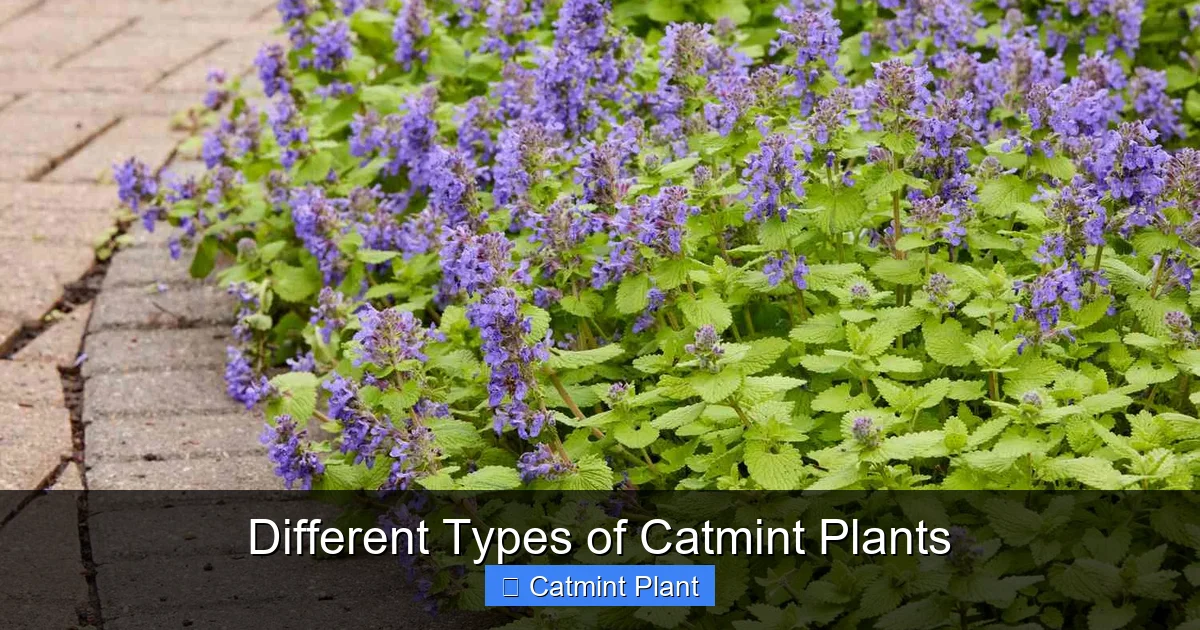
If you buy a catmint at a garden center, it is almost certainly a Nepeta x faassenii hybrid. This group originated from a cross between Nepeta racemosa and Nepeta nepetella back in the 1930s at a Dutch nursery. The result was a line of sterile hybrids that bloom their hearts out without seeding around.
Visual guide about Different Types of Catmint Plants
Image source: thespruce.com
Walker’s Low The Gold Standard
Walker’s Low is the catmint that put catmint plants on the map. Named after a garden in Ireland, not its growth habit, this variety reaches 24 to 30 inches tall and wide. It forms a broad mound of aromatic gray-green leaves topped with spikes of deep lavender-blue flowers.
What makes Walker’s Low special is its staying power. It was named Perennial Plant of the Year in 2007, and it still holds that title in many gardeners’ hearts. The first flush hits in late May or early June. Shear it back by half after those flowers fade, and you get a second show that lasts until frost. It rarely flops if grown in full sun and lean soil.
Junior Walker The Compact Alternative
Love Walker’s Low but short on space? Junior Walker gives you the same long bloom season and tough constitution in a package that stays 15 to 18 inches tall and wide. It fits beautifully at the front of a border, along a pathway, or in a container.
This variety came from a natural mutation discovered at a nursery in Minnesota. It keeps the same deep flower color and gray foliage but with shorter internodes, meaning the leaves are packed tighter on the stems. The result is a naturally dense plant that never needs staking.
Blue Wonder and Dropmore Blue
These two older cultivars still have fans. Blue Wonder grows 12 to 15 inches tall with a slightly more spreading habit. Dropmore Blue reaches 18 to 24 inches and has a reputation for excellent heat tolerance. Both bloom heavily in early summer and again if deadheaded. They are a bit looser in habit than the Walker series but perfectly lovely in a cottage garden.
The Nepeta Racemosa Group
Species Nepeta racemosa (sometimes still sold as Nepeta mussinii) is one parent of the faassenii hybrids. It brings a lower, more spreading habit to the table. The straight species grows 12 inches tall and spreads 18 to 24 inches wide, making it a fantastic groundcover for sunny slopes or the front of a border.
Little Trudy A Tiny Powerhouse
Little Trudy (also sold as ‘Psfike’) is a Plant Select winner that forms a tight mound just 8 to 10 inches tall and 12 to 15 inches wide. The leaves are smaller than typical catmint plants, giving it a fine texture. Lavender-pink flowers cover the plant in late spring, with sporadic rebloom through summer.
This variety excels in rock gardens, troughs, and the edges of paths where you can brush against the fragrant foliage. It handles extreme cold (zone 4) and intense heat with equal aplomb. If you garden in a harsh climate, Little Trudy should be on your list.
Walker’s Low vs Little Trudy Choosing Between Them
Think about scale. Walker’s Low makes a statement in the middle of a border. Little Trudy disappears in that same spot but shines at the edge. Walker’s Low gives you armloads of cut flowers. Little Trudy gives you a fragrant carpet. Both are stellar. The choice depends entirely on where you plant them.
The Tall and Dramatic Catmint Plants
Sometimes you need height. Maybe you want a plant to anchor the back of a border. Maybe you need something to peek over a low fence. The taller catmint plants deliver drama without diva behavior.
Six Hills Giant The Old Reliable
Six Hills Giant has been around since the 1960s and remains a top choice for height. It reaches 30 to 36 inches tall and wide with large, soft lavender-blue flower spikes. The foliage is a bit greener and less aromatic than the faassenii hybrids, but the floral display is impressive.
This variety can get a little floppy in rich soil or part shade. The fix is simple. Plant it in full sun with lean soil. Or give it the Chelsea chop in late May (cut stems back by a third) to promote bushier growth. It pairs beautifully with roses, hiding their bare knees while matching their romance.
Pool Bank A Softer Blue
Pool Bank offers a similar size to Six Hills Giant but with paler, almost icy blue flowers. It was selected at the famous Pool Bank Nursery in England. The effect is softer, more ethereal. It blends beautifully with pastel roses, white phlox, and silver foliage plants like artemisia.
Souvenir d’Andre Chaudron The Pink Surprise
Most catmint plants bloom in shades of blue and lavender. This variety breaks the mold with clear pink flowers. It grows 24 to 30 inches tall with a slightly open habit. The pink spikes stand out in a sea of blue perennials. It is a conversation starter every time.
Like the other tall types, it benefits from lean soil and full sun. The pink color holds best in cooler temperatures. In hot summers, the flowers may fade to a softer blush. Still, it adds a color option that few other catmint plants provide.
Specialty Catmint Plants for Specific Needs
Beyond the main groups, breeders have developed catmint plants for particular situations. These varieties solve problems or fill niches that the classics cannot.
Catmint for Containers and Small Spaces
If you garden on a balcony or patio, look for the most compact varieties. Junior Walker and Little Trudy both thrive in pots. So does ‘Kit Cat’, a tiny mound just 6 to 8 inches tall with proportionally small leaves and flowers. It is adorable in a trough garden or fairy garden.
Container tips for catmint plants: Use a gritty, well-draining mix. Add perlite or coarse sand to regular potting soil. Water when the top inch feels dry. Feed lightly with a slow-release fertilizer in spring. Overwinter pots in a protected spot or sink them in the ground.
Catmint for Hot Humid Climates
Gardeners in the Southeast often struggle with catmint plants melting out in summer humidity. ‘Purrsian Blue’ was bred specifically for this. It forms a tight, rounded mound 14 to 18 inches tall and wide that resists opening up in the center. The flowers are a rich periwinkle blue.
‘Chartreuse on the Loose’ offers something different. The foliage emerges bright chartreuse in spring, maturing to lime green. It grows 10 to 12 inches tall and spreads slowly. The lavender-blue flowers contrast beautifully with the yellow-green leaves. It tolerates more shade than most catmint plants, though flowering decreases.
Catmint for Cut Flowers
All catmint plants work in bouquets, but some have longer, sturdier stems. Walker’s Low and Six Hills Giant lead the pack. Cut stems when about half the flowers on a spike are open. They last 5 to 7 days in a vase. Strip lower leaves and change water daily.
For a dedicated cutting patch, plant in rows 18 inches apart. Shear the whole patch after the first bloom to synchronize the second flush. You will get armloads of stems for weeks. The foliage adds fragrance and texture to arrangements too.
Designing with Catmint Plants
Catmint plants are design chameleons. Their mounding habit, long bloom season, and neutral color palette let them play multiple roles in the garden. Here are some proven combinations.
The Classic Rose Companion
This is the pairing you see in English garden books. Catmint plants at the feet of roses. The gray foliage hides bare canes. The blue flowers contrast with pink, red, yellow, or white roses. Both plants want full sun and good drainage. Both bloom in June. It is a match made in horticultural heaven.
Use Walker’s Low or Six Hills Giant for tall roses. Junior Walker or Little Trudy for compact shrub roses. Plant catmint 18 inches from the rose base to allow air circulation. The catmint will fill in quickly.
Pollinator Paradise Combinations
Build a buffet for bees and butterflies by pairing catmint plants with other long-blooming nectar sources. Try catmint with coneflowers (Echinacea), bee balm (Monarda), salvia, and ornamental oregano. Add some native grasses like little bluestem for structure and winter interest.
Plant in drifts of three or five rather than dotting singles. Pollinators prefer massed flowers. They expend less energy moving between blooms. You get more buzzing life and a more cohesive look.
Mediterranean Garden Style
Catmint plants are native to parts of Europe and Asia with Mediterranean climates. They feel right at home with lavender, rosemary, thyme, sage, and yarrow. The silver-gray foliage echoes through the planting. The scent when you brush past is intoxicating.
Mulch with gravel instead of bark. It reflects heat, improves drainage, and looks authentic. Add a few large rocks or a dry-stacked stone wall. You have a slice of Provence in your backyard.
Edge of the Border and Pathway Plantings
Low catmint varieties soften hard edges beautifully. Plant Little Trudy or Junior Walker along a stone path. The foliage spills over, blurring the line. When you walk by, your legs brush the leaves and release that minty fragrance.
At the front of a border, catmint plants create a neat edge that transitions to taller plants behind. They hide the bare stems of peonies, baptisia, or tall phlox. The blue flowers provide a cooling foreground to hot-colored perennials behind.
Growing Catmint Plants Successfully
You have picked your varieties. Now let us make sure they thrive. Catmint plants are forgiving, but a few key practices separate okay plants from spectacular ones.
Site Selection and Soil Preparation
Full sun means at least six hours of direct light. Eight is better. In hot climates, a little afternoon shade prevents flower fading. Soil must drain well. Catmint plants rot in wet clay, especially over winter.
If your soil is heavy, amend with compost and coarse sand or fine gravel. Raise the bed slightly. Or plant on a slope. The crown (where stems meet roots) should sit at soil level, not buried. Mulch with gravel or a thin layer of compost or skip mulch entirely. Thick bark mulch holds too much moisture.
Planting and Spacing
Spring and early fall are ideal planting times. Space according to mature width. Walker’s Low needs 24 to 30 inches. Junior Walker needs 18 inches. Little Trudy needs 12 to 15 inches. Water well at planting and weekly for the first month unless rain handles it.
Once established, catmint plants are remarkably drought tolerant. Their deep taproots find moisture far below the surface. In fact, too much water makes them floppy and reduces flowering. Lean conditions produce the best plants.
The Chelsea Chop and Deadheading
This is the secret to months of bloom. In late May or early June, when flower buds are forming but not open, shear the whole plant back by one-third to one-half. This is called the Chelsea Chop, timed for the Chelsea Flower Show in London.
The result: shorter, sturdier stems, more branching, and a slightly delayed but heavier bloom. Do this to half your plants for a staggered show. After the first flush finishes in July, shear again by half. Water well. New growth and flowers appear in two to three weeks.
Dividing and Longevity
Catmint plants live a long time but benefit from division every three to four years. The center of the clump dies out, leaving a ring of growth. In early spring, dig the whole plant. Cut into sections with a sharp spade or knife. Each piece needs roots and shoots. Replant the best pieces. Compost the woody center.
Division also gives you free plants to share or spread around. A single Walker’s Low can yield four or five new plants every few years. That is a pretty good return on investment.
Winter Care
In zones 4 through 8, catmint plants are fully hardy. Leave the dead foliage in place over winter. It protects the crown and provides habitat for beneficial insects. Cut back to the ground in early spring before new growth starts.
In zone 3, add a light layer of evergreen boughs or straw after the ground freezes. In zones 9 and 10, catmint plants may struggle with the lack of winter chill. They often behave as short-lived perennials or annuals there. Afternoon shade helps in hot zones.
Common Problems and Solutions
Catmint plants are trouble-free compared to most perennials. But issues occasionally arise. Here is how to handle them.
Floppy Stems
Usually caused by too much shade, too much water, or too rich soil. The fix: move to full sun, stop irrigating, stop fertilizing. Or do the Chelsea Chop in late May. Staking works but looks messy. Prevention beats correction.
Center Die-Out
Natural aging. The plant becomes a donut. Division in spring solves it. Do not try to fill the center with soil. That promotes rot.
Powdery Mildew
Rare but possible in humid climates with poor air circulation. Space plants properly. Water at the base, not overhead. Remove affected leaves. Serious cases respond to horticultural oil or potassium bicarbonate sprays.
Cat Damage
Some cats love catmint plants as much as catnip. They roll on them, flattening stems. Chicken wire cages early in the season protect young plants. Once stems toughen up, cats do less damage. Or plant a sacrificial patch of actual catnip nearby.
Propagating Catmint Plants
Want more plants? You have three easy options.
Division
As described above. Spring is best. Fall works in mild climates. Water divisions well until established.
Stem Cuttings
Take 4-inch cuttings from non-flowering shoots in late spring or early summer. Strip lower leaves. Dip in rooting hormone. Stick in moist perlite or sand. Cover with a plastic bag. Roots form in two to three weeks. Pot up and grow on.
Seed
Most named varieties are sterile hybrids. They will not come true from seed. But species types like Nepeta racemosa and Nepeta nepetella grow easily from seed. Sow indoors 6 to 8 weeks before last frost. Barely cover. Germination takes 10 to 20 days at 70°F.
Catmint Plants Through the Seasons
One of the joys of catmint plants is their multi-season presence. Let us walk through the year.
Spring Awakening
Early spring brings a fountain of fresh gray-green leaves. The mound expands rapidly. By mid-spring, flower buds form at stem tips. This is Chelsea Chop time if you choose to do it.
Early Summer Glory
Late May through June. The first major bloom. Stems are upright. Flowers are vivid. Bees are ecstatic. This is peak cut-flower time.
Midsummer Refresh
After the first flush fades, the plant looks tired. Shear it back. Water. Within weeks, a fresh mound of foliage appears, followed by bud formation.
Late Summer Second Act
August through September brings the rebloom. Often heavier than the first if you sheared properly. The color may be slightly softer. Pollinators appreciate the late-season nectar.
Fall and Winter Structure
After frost, foliage turns tan. The dried stems and seed heads catch frost beautifully. Snow outlines the mounds. Leave them standing until early spring.
Choosing the Right Catmint for You
With so many options, how do you decide? Ask yourself these questions.
How Much Space Do You Have
Large border middle or back: Walker’s Low, Six Hills Giant, Pool Bank. Front of border or small bed: Junior Walker, Blue Wonder, Little Trudy. Container: Kit Cat, Little Trudy, Junior Walker.
What Is Your Climate
Cold winters (zone 3-4): Little Trudy, Walker’s Low, Six Hills Giant. Hot humid summers (zone 7-9): Purrsian Blue, Junior Walker. Mild winters (zone 8-9): Most varieties work but may be shorter-lived.
What Is Your Soil
Sandy or gravelly: Perfect for all. Clay: Amend heavily or choose the toughest types (Walker’s Low, Six Hills Giant). Raised beds solve clay issues.
What Is Your Style
Formal: Junior Walker, Little Trudy (neat mounds). Cottage: Walker’s Low, Six Hills Giant (looser habit). Modern: Purrsian Blue (tight geometry). Pastel: Pool Bank, Souvenir d’Andre Chaudron.
Companion Plants for Catmint
Great partners make catmint plants shine. Here are proven combinations by season.
Spring Partners
Alliums (ornamental onions) bloom with the first catmint flush. Their purple globes float above the blue haze. Salvia nemorosa varieties like ‘Caradonna’ or ‘May Night’ match the bloom time and color palette. Peonies provide bold foliage and early flowers; catmint hides their fading leaves later.
Summer Partners
Coneflowers in pink, white, or orange. Black-eyed Susans for gold contrast. Russian sage for a blue-on-blue haze. Ornamental grasses like feather reed grass or fountain grass for texture. Yarrow in any color.
Fall Partners
Sedum ‘Autumn Joy’ with its pink-to-rust heads. Asters in purple and pink. Goldenrod (solidago) for yellow punch. The catmint rebloom bridges the gap between summer and fall perennials.
Catmint Plants for Wildlife Gardens
If you garden for nature, catmint plants are essential. The nectar-rich tubular flowers feed an incredible diversity of pollinators.
Bees Love Catmint
Honeybees, bumblebees, mason bees, leafcutter bees, and tiny sweat bees all visit. The long bloom season provides reliable forage when other flowers come and go. Plant in groups to maximize bee efficiency.
Butterflies and Moths
Skippers, swallowtails, fritillaries, and painted ladies nectar at catmint. The flower shape suits their proboscis. Some moths visit at dusk. The foliage hosts caterpillars of several moth species.
Hummingbirds
They zip between the tubular flowers, especially in late summer when migration fuel is critical. Red and pink varieties like Souvenir d’Andre Chaudron attract them most, but they visit blue flowers too.
Beneficial Insects
Parasitic wasps, hoverflies, and lady beetles drink nectar and hunt pests nearby. Catmint plants support the whole food web. Avoid pesticides. The insects handle aphids and mites for you.
Creative Uses Beyond the Border
Catmint plants are not just for flower beds. Think outside the box.
Herb Garden Edging
Catmint belongs in the herb garden historically. Use it to edge beds of thyme, oregano, sage, and lavender. The gray foliage unifies the planting. Harvest leaves for tea (mild minty flavor) or sachets.
Green Roof and Hellstrip Plantings
The tough, drought-tolerant nature of catmint plants makes them candidates for green roofs and hellstrips (the strip between sidewalk and street). Little Trudy and Junior Walker handle reflected heat and poor soil. Check local regulations first.
Sensory Gardens
Plant where people brush past. Along paths. Near benches. At child height. The aromatic foliage releases scent on contact. Kids love the fuzzy leaves. It is a touch-and-smell plant that withstands curiosity.
Erosion Control on Slopes
Spreading types like Nepeta racemosa and Blue Wonder knit the soil with their roots. Plant on a sunny bank. They hold the soil and look pretty doing it. Space 18 inches apart for quick coverage.
Buying Healthy Catmint Plants
Smart shopping sets you up for success.
At the Nursery
Look for compact growth, not leggy stems. Leaves should be gray-green, not yellow. Check for roots emerging from drainage holes (rootbound) or loose in the pot (recently potted). Avoid plants with mildew, aphids, or weeds in the pot.
Mail Order
Reputable perennial nurseries ship healthy plugs or bare-root plants in spring. Open the box immediately. Water if dry. Pot up or plant within a day or two. Harden off before planting out.
Plant Size Options
Quart pots (4-inch) establish fast and cost less. Gallon pots give instant impact. Plugs (2-inch) are economical for mass planting but need a season to fill in. All work fine.
Frequently Asked Questions About Catmint Plants
Let us address the questions gardeners ask most often.
Do Catmint Plants Spread Aggressively
Most named varieties are clump-forming and sterile. They do not run or seed aggressively. The species Nepeta racemosa spreads slowly by rhizomes. Catnip (Nepeta cataria) seeds prolifically. Know what you are buying.
Are Catmint Plants Deer Resistant
Yes. The aromatic oils that attract cats repel deer and rabbits. In high-pressure areas, they may get nibbled occasionally, but they are rarely destroyed. They are among the most reliable deer-resistant perennials.
Can I Grow Catmint Plants in Shade
They need full sun for best flowering and compact growth. In part shade (4-6 hours), they grow taller, floppier, and bloom less. ‘Chartreuse on the Loose’ tolerates more shade than most. But really, give them sun.
How Often Should I Water Established Catmint
Rarely. Once established, rainfall is usually enough. In extreme drought, a deep soaking every two to three weeks keeps them looking good. Overwatering causes more problems than underwatering.
Should I Fertilize Catmint Plants
No. Fertilizer promotes floppy growth and reduces flowering. A shovelful of compost around the base in early spring is plenty. Lean soil makes strong plants.
Can Catmint Plants Grow Indoors
Not really. They need intense light, air movement, and seasonal dormancy. They get leggy and attract spider mites indoors. Grow catnip on a sunny windowsill for your cat instead.
Conclusion
Catmint plants might just be the perfect perennial. They bloom for months. They thrive on neglect. They feed pollinators. They resist pests. They smell amazing. And with so many varieties, there is a catmint for every sunny spot in your garden.
Start with one. Maybe Walker’s Low for a classic border. Maybe Little Trudy for a rock garden. Maybe Junior Walker for a pot by the door. Watch it perform. Then add another. Before you know it, you will have a collection. And your garden will buzz with life from June to October.
The best part? You barely have to work for it. Plant in sun. Give it drainage. Shear it twice a year. That is the whole maintenance schedule. In return, you get armloads of flowers, clouds of fragrance, and the satisfaction of growing something beautiful that asks so little.
So go ahead. Pick your catmint plants. Put them in the ground. And get ready to fall in love with one of gardening’s most generous gifts.
Frequently Asked Questions
How much sun do catmint plants need?
Catmint plants need full sun, which means at least 6 hours of direct sunlight daily. They will tolerate light afternoon shade in very hot climates, but flowering decreases and stems become floppy with less sun.
Can I grow catmint plants in containers?
Yes, compact varieties like Junior Walker, Little Trudy, and Kit Cat thrive in containers. Use a well-draining potting mix with added perlite or grit, and ensure the pot has drainage holes. Water when the top inch of soil feels dry.
Why is my catmint flopping over?
Floppy catmint usually results from too much shade, overwatering, rich soil, or lack of pruning. Move to full sun, reduce watering, stop fertilizing, and shear plants back by half after the first bloom to encourage sturdy growth.
Do catmint plants attract bees?
Absolutely. Catmint plants are pollinator magnets. Honeybees, bumblebees, native bees, butterflies, and hummingbirds all visit the nectar-rich flowers throughout the long bloom season from late spring to fall.
How do I propagate catmint plants?
The easiest method is division in early spring every 3-4 years. You can also take 4-inch stem cuttings from non-flowering shoots in late spring and root them in moist perlite. Most named varieties are sterile and won’t come true from seed.
What should I plant with catmint?
Catmint pairs beautifully with roses, salvia, coneflowers, yarrow, ornamental grasses, alliums, and Russian sage. Its gray foliage and blue flowers complement both hot and cool color schemes in sunny borders.


