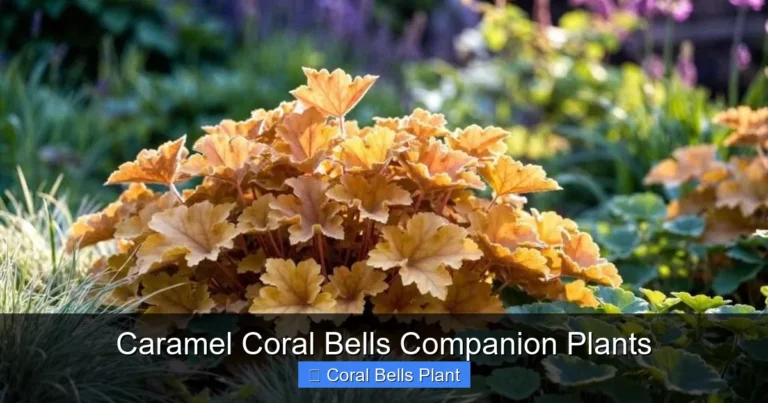
Coral Bell Planting Partners
Coral bells (Heuchera) thrive alongside shade-loving perennials like hostas, ferns, and astilbes that share similar moisture and light needs. Choosing the right coral bell planting partners creates year-round visual interest through contrasting foliage textures, colors, and bloom times while supporting healthy growth for all plants involved.
If you have ever grown coral bells, you know they bring something special to the garden. Those ruffled leaves in shades of purple, caramel, lime, and near-black add instant personality to shady spots. But here is the thing. Coral bells really shine when they have the right friends nearby. Picking good coral bell planting partners is not just about looks. It is about creating a little community where every plant helps the others thrive.
I have spent years moving plants around, trying different combinations, and watching what works. Some pairings look great in a catalog but fail in real life. Others surprise you with how well they get along. The best coral bell planting partners share the same needs for light, water, and soil. They also bring different shapes, heights, and bloom times to the party. Let me walk you through everything I have learned about building beautiful, healthy plant communities around your Heuchera.
Key Takeaways
- Match growing conditions: Select companions that share coral bells’ preference for partial shade, well-draining soil, and consistent moisture
- Contrast foliage textures: Pair broad-leaved hostas or fine-textured ferns with coral bells’ ruffled leaves for dynamic visual interest
- Consider seasonal color: Choose partners with staggered bloom times and complementary foliage colors for year-round appeal
- Mind root competition: Avoid aggressive spreaders that might crowd coral bells’ shallow root systems
- Use height variation: Layer taller plants like Japanese forest grass behind coral bells for depth and dimension
- Support pollinators: Include flowering companions that attract beneficial insects throughout the growing season
- Plan for maintenance: Group plants with similar watering and dividing schedules to simplify garden care
Quick Answers to Common Questions
What are the best coral bell planting partners for beginners?
Hostas, ferns, and astilbes are the easiest coral bell planting partners for beginners because they share identical growing requirements and are widely available at nurseries.
Can coral bells grow under trees with competitive roots?
Coral bells struggle under trees with dense surface roots like maples; instead, choose tough partners like Epimedium, wild ginger, or Tiarella that tolerate dry shade and root competition better.
How far apart should I space coral bells from their companions?
Space coral bells 12-18 inches apart from companions, allowing room for their mature spread while ensuring good air circulation to prevent fungal issues.
Do coral bells and hostas compete for nutrients?
Coral bells and hostas coexist well when both receive adequate moisture and organic matter; hostas have deeper roots while coral bells stay shallow, minimizing direct competition.
Which coral bell planting partners provide winter interest?
Hellebores, evergreen ferns, Epimedium, wild ginger, and variegated Solomon’s seal provide winter structure and foliage interest when coral bells may be less prominent.
📑 Table of Contents
- Understanding What Coral Bells Need
- Classic Shade Garden Companions
- Flowering Perennials for Seasonal Color
- Foliage-Focused Partners for Year-Round Interest
- Ground Covers and Living Mulch
- Design Strategies for Coral Bell Combinations
- Plants to Avoid Near Coral Bells
- Maintaining Your Coral Bell Plant Communities
- Regional Considerations
- Creating Theme Gardens with Coral Bells
- Troubleshooting Common Issues
- Conclusion
Understanding What Coral Bells Need
Before we talk about partners, we need to understand the host. Coral bells are native to North American woodlands. They grow naturally on rocky slopes and forest edges. This tells us a lot about what they like.
Light Requirements
Most coral bells prefer partial shade. Morning sun with afternoon shade is ideal. Some newer varieties tolerate more sun, especially in cooler climates. But in hot summers, too much direct light scorches those beautiful leaves. The color often fades or bleaches out. When choosing coral bell planting partners, pick plants that enjoy the same dappled light conditions.
Soil and Moisture Preferences
Well-draining soil is non-negotiable. Coral bells hate wet feet. Their crowns rot easily if water sits around them. They like soil rich in organic matter. Think forest floor. Leaf mold, compost, and a slightly acidic to neutral pH make them happy. Consistent moisture is best, but they handle short dry spells once established. Good coral bell planting partners will have similar drainage needs.
Root System Characteristics
This is important. Coral bells have shallow, fibrous root systems. They sit close to the surface. They do not compete well with aggressive, deep-rooted plants or thick mats of surface roots. Trees like maples and beeches can outcompete them for water. When selecting coral bell planting partners, avoid bullies that will crowd them out.
Classic Shade Garden Companions
These are the tried-and-true friends. They show up in shade gardens everywhere because they work. They share the same cultural needs and bring complementary forms.
Hostas: The Bold Leaf Contrast
Hostas and coral bells are like peanut butter and jelly. The broad, smooth leaves of hostas make coral bells’ ruffled foliage pop. Choose hosta varieties with different leaf colors to play off your Heuchera. Blue hostas look stunning next to purple or silver coral bells. Gold hostas warm up dark-leaved varieties. Variegated hostas add pattern.
Just watch the size. Giant hostas like ‘Empress Wu’ or ‘Sum and Substance’ can swallow small coral bells. Pick medium or small hostas for the front of the border. ‘Mouse Ears,’ ‘Blue Mouse Ears,’ and ‘Pandora’s Box’ stay compact. They let coral bells shine without hiding them.
Ferns: Texture Masters
Ferns bring a completely different texture. Their delicate, divided fronds contrast beautifully with the solid, lobed leaves of coral bells. Japanese painted fern (Athyrium niponicum ‘Pictum’) is a superstar partner. Its silver and burgundy fronds echo the colors in many Heuchera varieties. Lady fern, autumn fern, and Christmas fern all work well.
Ferns appreciate the same rich, moist soil. They naturalize gently without being aggressive. Their upright vase shape adds vertical interest above the mounding coral bells. This is one of the easiest coral bell planting partnerships to maintain.
Astilbes: Feathery Blooms for Summer
Astilbes bloom when many coral bells are taking a break. Their feathery plumes in pink, red, white, and lavender rise above the foliage in early to mid-summer. They love the same conditions. Moist, rich soil. Partial shade. The fine texture of astilbe flowers and foliage softens the garden scene.
Try ‘Visions’ series for compact habits. ‘Pumila’ stays low and spreads slowly as a ground cover. Taller varieties like ‘Fanal’ or ‘Bridal Veil’ work behind coral bells. The spent flower heads add winter interest if you leave them standing.
Japanese Forest Grass: Movement and Gold
Hakonechloa macra ‘Aureola’ might be the perfect coral bell planting partner. Its cascading gold-and-green blades bring movement. The breeze animates it. Coral bells stay still. That contrast is magical. It glows in shade. It tolerates the same soil. It forms a well-behaved clump that slowly expands.
Plant it where it can spill over a path edge or rock. The golden color warms up cool-toned coral bells like ‘Palace Purple’ or ‘Obsidian.’ It also looks great with chartreuse varieties like ‘Lime Rickey’ for a monochromatic gold theme.
Flowering Perennials for Seasonal Color
Coral bells bloom in late spring to early summer. Their flowers are lovely but not the main show. Adding flowering partners extends the color show through the season.
Bleeding Hearts: Spring Romance
Old-fashioned bleeding heart (Dicentra spectabilis) blooms in spring alongside early coral bell flowers. The dangling pink or white hearts on arching stems create a woodland vignette. Fern-leaf bleeding hearts (Dicentra eximia and hybrids) bloom longer and stay more compact. They do not go dormant in summer like the old-fashioned type.
Both types love the same conditions. They self-sow gently. The blue-green foliage of fern-leaf bleeding hearts looks great with purple coral bells. This is a classic coral bell planting partner combination for a reason.
Lungwort: Early Pollinator Support
Pulmonaria blooms in early spring, often before coral bells wake up fully. The pink-to-blue flowers on the same plant are charming. The spotted or silvered foliage stays attractive all season. ‘Raspberry Splash,’ ‘Silver Bouquet,’ and ‘Trevi Fountain’ are excellent cultivars.
Lungwort spreads slowly by rhizomes. It makes a nice ground cover around coral bells. The rough, hairy leaves deter deer and rabbits. That protects your Heuchera too. A practical and pretty coral bell planting partner.
Columbine: Airy Elegance
Aquilegia dances above coral bells. The spurred flowers on wiry stems add a vertical element. Native columbine (Aquilegia canadensis) with red-and-yellow flowers attracts hummingbirds. Hybrid varieties offer doubles, spurless forms, and every color combo.
Columbine self-sows. You will get volunteers. Some gardeners love this. Others deadhead to control it. The blue-green foliage looks good after flowering. It goes semi-dormant in hot summers, leaving space for coral bells to fill in.
Hellebores: Winter and Early Spring Stars
Hellebores bloom when nothing else does. Late winter to early spring. Their nodding flowers in white, pink, purple, green, and near-black are incredibly long-lasting. The leathery evergreen foliage provides structure year-round.
They are slow to establish but live for decades. Plant them where they can stay. They tolerate dry shade once established, making them tough coral bell planting partners for difficult spots. The new growth in late winter signals the garden year beginning.
Toad Lilies: Fall Finale
Tricyrtis blooms in late summer to fall. Orchid-like flowers speckled with purple decorate arching stems. They thrive in the same moist, rich soil. ‘Sinonome,’ ‘Empress,’ and the Toad Lily series are reliable.
Toad lilies extend the bloom season when most shade plants are done. Their upright habit contrasts with mounding coral bells. They appreciate the leaf litter that coral bells produce. A great coral bell planting partner for four-season gardens.
Foliage-Focused Partners for Year-Round Interest
Flowers come and go. Foliage stays. Building a shade garden around leaf color, shape, and texture creates lasting beauty. These coral bell planting partners earn their keep every day of the growing season.
Brunnera: Silver Hearts
Brunnera macrophylla ‘Jack Frost’ and ‘Looking Glass’ have stunning silver leaves with green veins. The heart-shaped foliage catches light in shade. Tiny blue forget-me-not flowers appear in spring. They are bonus.
Brunnera forms a neat mound. It does not run. The rough leaves deter pests. It pairs beautifully with dark purple coral bells like ‘Black Pearl’ or ‘Forever Purple.’ The silver makes the purple glow. This coral bell planting partner combination looks sophisticated with zero effort.
Heucherella: The Best of Both Worlds
Heucherella (foamy bells) is a hybrid between Heuchera and Tiarella. It combines coral bells’ colorful foliage with foamflower’s lobed leaves and foamy flower spikes. ‘Sweet Tea,’ ‘Alabama Sunrise,’ and ‘Solar Eclipse’ are standouts.
Since they share parentage, they have identical cultural needs. They are essentially coral bells with different leaf shapes. Mixing them creates a tapestry of texture. The similar mounding habit means they play nice together. No one bullies the other.
Tiarella: Foamflower Charm
Tiarella cordifolia is a native ground cover. Maple-shaped leaves often have dark centers. White or pink foam-like flowers rise in spring. Running forms spread gently. Clumping forms stay put. ‘Spring Symphony,’ ‘Sugar and Spice,’ and ‘Cutting Edge’ are clumpers with great foliage.
Tiarella tolerates deeper shade than many coral bells. It fills in around them. The lobed leaves contrast with Heuchera’s rounded lobes. Both have shallow roots. They coexist peacefully. A natural coral bell planting partner from the same family.
Epimedium: Bishop’s Hat Toughness
Epimedium is the ultimate dry shade plant. Once established, it handles root competition from trees. Heart-shaped leaves on wiry stems emerge with bronze tones in spring. Delicate flowers dangle like tiny columbines. ‘Sulphureum,’ ‘Rubrum,’ and ‘Lilafee’ are classics.
Newer hybrids like ‘Amber Queen,’ ‘Pink Champagne,’ and ‘Domino’ have larger, showier flowers and evergreen foliage. Epimedium spreads slowly by rhizomes. It makes a weed-suppressing carpet. Cut back old foliage in late winter before new growth emerges. It protects coral bells from tree roots. A resilient coral bell planting partner.
Solomon’s Seal: Architectural Stems
Polygonatum odoratum ‘Variegatum’ brings vertical lines. Arching stems with alternating white-edged leaves create a fountain shape. Greenish-white bells dangle underneath in spring. Blue-black berries follow in fall. Golden yellow fall color caps the season.
It spreads slowly by rhizomes. The roots are deep but not aggressive. It grows through and around coral bells. The variegation brightens shade. The height (18-24 inches) provides a backdrop. A structural coral bell planting partner with multi-season appeal.
Ground Covers and Living Mulch
Bare soil invites weeds. It dries out fast. Living mulch solves both problems. Low, spreading plants cover the ground between coral bells. They conserve moisture. They suppress weeds. They add another layer of interest.
Wild Ginger: Native Shade Carpet
Asarum canadense (native) and Asarum europaeum (European) form dense mats of heart-shaped leaves. The native has soft, fuzzy leaves. The European is glossy and evergreen. Both hide curious jug-shaped flowers at ground level.
Wild ginger spreads steadily but not aggressively. It knits together beautifully. It tolerates the same conditions. The solid green foliage calms busy coral bell combinations. It is a practical coral bell planting partner that works hard invisibly.
Foamflower: Running Forms
Tiarella cordifolia var. cordifolia runs. It sends out stolons like strawberries. New plantlets root at the nodes. It fills space fast. The maple-shaped leaves often have burgundy centers. White foam flowers in spring.
Use running foamflower under shrubs or in larger areas. It mingles with coral bells without overwhelming them. The stolons go around other plants. It is a well-mannered spreader. A great coral bell planting partner for covering ground.
Barrenwort: Another Name for Epimedium
I mentioned Epimedium earlier. It deserves a second nod as ground cover. The clumping varieties stay put. The running varieties spread. Both make excellent living mulch. The evergreen types keep soil covered all winter. The deciduous types allow spring bulbs to emerge easily.
Sweet Woodruff: Fragrant and Fast
Galium odoratum spreads quickly in moist shade. Whorls of narrow leaves on square stems. White star flowers in spring. The foliage smells like fresh hay when dried. It can be aggressive in ideal conditions.
Use sweet woodruff where you want fast coverage. Contain it with edging or paths. It competes with coral bells if not managed. But in tough spots under trees, it works. A coral bell planting partner for difficult areas with a caveat.
Ajuga: Colorful Carpet
Ajuga reptans forms tight rosettes. ‘Burgundy Glow’ has pink, cream, and green leaves. ‘Black Scallop’ is near-black with ruffled edges. ‘Chocolate Chip’ has tiny leaves. Blue flower spikes in spring.
Ajuga spreads by stolons. It can invade lawns. In contained beds, it is stunning with coral bells. The low profile (3-4 inches) lets Heuchera tower over it. The color echoes work beautifully. A bold coral bell planting partner for edging.
Design Strategies for Coral Bell Combinations
Knowing good partners is half the battle. Arranging them artfully is the other half. Here are design approaches that work.
Color Echoes and Contrasts
Repeat a color from your coral bells in a partner plant. Purple Heuchera with purple-leaf bugbane (Actaea ‘Hillside Black Beauty’). Chartreuse coral bells with golden Japanese forest grass. Silver coral bells with Japanese painted fern. This creates harmony.
Or contrast. Dark purple coral bells with gold hostas. Caramel coral bells with blue hostas. Lime coral bells with dark ferns. Opposites on the color wheel create excitement. Test combinations in pots before planting. Move them around. See what sings.
Texture Tapestry
Mix leaf shapes and surfaces. Ruffled coral bells. Smooth hostas. Divided ferns. Heart-shaped Brunnera. Lobed Tiarella. Strappy grass. Glossy wild ginger. Matte Epimedium. Each texture catches light differently. The garden changes as the sun moves.
Avoid too many similar textures. Ten ruffled things look busy. Balance bold and fine. Smooth and rough. Large and small. This coral bell planting partner strategy creates sophisticated plantings that look intentional.
Height Layering
Think in layers. Ground covers (2-6 inches). Mounding mid-layer (8-18 inches). Taller accents (2-4 feet). Coral bells sit in the mid-layer. Put ground covers in front. Taller plants behind. This creates depth.
Good tall partners: bugbane (Actaea), goat’s beard (Aruncus), rodgersia, tall ferns like ostrich fern. Medium partners: most hostas, astilbes, hellebores, Brunnera. Ground covers: wild ginger, Epimedium, Tiarella, Ajuga. This layering works on slopes too.
Seasonal Succession
Plan for something interesting every month. Hellebores in February. Lungwort in March. Bleeding hearts in April. Coral bells and foamflowers in May. Astilbes and hostas in June. Bugbane in August. Toad lilies in September. Fall color on Epimedium and Solomon’s seal in October. Evergreen foliage all winter.
Write down bloom times. Map it out. A coral bell planting partner plan with seasonal succession never has a dull moment. The garden always has a star.
Container Combinations
Coral bells are container superstars. Their shallow roots love pots. Mix them with trailing plants like creeping jenny (Lysimachia nummularia ‘Aurea’) or ivy. Add upright elements like carex or small ferns. Include a bloomer like impatiens or begonia for summer color.
Container coral bell planting partners need the same watering schedule. Group moisture-lovers together. Use high-quality potting mix with compost. Fertilize lightly. Containers dry faster. Check daily in heat. The combinations change yearly. Experiment freely.
Plants to Avoid Near Coral Bells
Not everyone plays nice. Some plants make bad coral bell planting partners. Knowing who to avoid saves heartache.
Aggressive Spreaders
Ostrich fern (Matteuccia struthiopteris) runs far and fast. It forms dense colonies. Coral bells disappear. Japanese anemone (Anemone hupehensis) spreads aggressively in good soil. Gooseneck loosestrife (Lysimachia clethroides) travels underground. Mint family plants (except well-behaved cultivars) take over.
These plants are not bad. They just need their own space. Or containers. Or a meadow. Do not plant them next to coral bells. You will be digging them out forever.
Deep Shade Heavyweights
Hostas are great. But giant hostas cast deep shade. Coral bells need some light for best color. Plant smaller hostas nearby. Keep giants farther back. The same goes for large rodgersia, petasites, and gunnera. They create umbrellas.
Tree Roots
This is not a plant you choose. It is a condition. Maples, beeches, willows, and poplars have dense surface roots. They suck moisture. They physically crowd coral bells. If you must plant under trees, use Epimedium, wild ginger, or Tiarella. They handle root competition better. Amend soil heavily. Water faithfully. Mulch deeply.
Alkaline Soil Lovers
Coral bells prefer slightly acidic soil (pH 6.0-7.0). Plants that demand alkaline soil (like dianthus, lavender, clematis) will not thrive in the same spot. Do not force it. Match soil preferences.
Maintaining Your Coral Bell Plant Communities
Good partners reduce work. But some maintenance keeps everything looking great.
Dividing and Refreshing
Coral bells need division every 3-4 years. The center gets woody. The plant rises out of the ground. Heuchera crowns push up. This is the perfect time to divide companions too. Hostas, ferns, astilbes, Brunnera, Tiarella, Epimedium all benefit from periodic division.
Do it in early spring or early fall. Water well after. Replant at the same depth. Mulch. The whole bed refreshes together. This coordinated maintenance is a huge advantage of well-chosen coral bell planting partners.
Watering Wisdom
New plantings need consistent moisture. Established beds need deep watering during drought. Soaker hoses or drip irrigation keep foliage dry. Wet leaves invite fungal issues. Water early in the day. Mulch with shredded leaves or bark to conserve moisture.
Group plants with similar water needs. Coral bells, hostas, ferns, astilbes all want consistent moisture. Epimedium and hellebores tolerate more drought once established. Put them on the drier edge of the bed.
Feeding Lightly
Coral bells are light feeders. Too much nitrogen makes soft growth. It reduces winter hardiness. Compost in spring is usually enough. A slow-release organic fertilizer at half rate works. Avoid high-nitrogen lawn fertilizers near beds.
Most coral bell planting partners have similar low fertility needs. Woodland plants evolved in lean soil. Rich compost mimics the forest floor. That is all they need.
Winter Care
Leave foliage standing. It protects crowns. It catches leaves for insulation. It provides winter interest. Cut back in early spring before new growth starts. Evergreen partners (hellebores, Epimedium, wild ginger, some ferns) just need tattered leaves removed.
Mulch after the ground freezes. This prevents freeze-thaw heaving. Coral bells are shallow-rooted. Heaving pushes them out. A 2-3 inch mulch layer prevents this. Your coral bell planting partners get the same protection.
Regional Considerations
Climate changes everything. What works in Seattle fails in Atlanta. What thrives in Denver struggles in Houston. Adapt your coral bell planting partners to your region.
Cool Climates (Zones 3-5)
Coral bells are very hardy. Many survive zone 3 with snow cover. Partners: hostas, ferns, astilbes, bleeding hearts, lungwort, columbine, hellebores, Solomon’s seal, Epimedium, Tiarella. All very hardy. Snow insulates. Winter wet is the enemy. Ensure drainage.
Mid-Range (Zones 6-7)
The sweet spot. Almost everything works. Japanese forest grass is reliably hardy. Heucherella thrives. Toad lilies bloom well. Brunnera shines. This zone has the widest coral bell planting partner palette.
Hot Climates (Zones 8-9)
Heat and humidity challenge coral bells. Choose heat-tolerant varieties. ‘Caramel,’ ‘Citronelle,’ ‘Southern Comfort,’ ‘Georgia Peach’ handle heat better. Partners must also take heat. Autumn fern, cast iron plant (Aspidistra), rohdea, hardy begonia (Begonia grandis), and heat-tolerant hostas like ‘Guacamole’ work.
Afternoon shade is mandatory. Irrigation is essential. Mulch heavily. Fungal diseases increase in humidity. Space plants for air flow. Choose disease-resistant cultivars.
Dry Climates
Low humidity reduces fungal issues. But water is precious. Xeric shade plants become valuable coral bell planting partners. Epimedium, hellebores, Solomon’s seal, and some native Heuchera species (like Heuchera parvifolia) handle dry shade. Amend soil heavily with organic matter. Use drip irrigation. Mulch deeply.
Creating Theme Gardens with Coral Bells
Themed plantings are fun. They give you a framework for choosing coral bell planting partners.
Native Woodland Garden
Use North American natives. Heuchera americana, Heuchera villosa, Heuchera richardsonii. Partners: Tiarella cordifolia, Aquilegia canadensis, Polygonatum biflorum, Asarum canadense, Dryopteris marginalis, Aruncus dioicus, Actaea racemosa. This garden supports local ecology. It feels authentic.
Collector’s Foliage Garden
Focus on leaf variation. Every coral bell cultivar you can find. Every hosta sport. Every fern form. Every Epimedium hybrid. Every Brunnera selection. It is a living catalog. Labels are essential. This garden celebrates foliage diversity.
Pollinator Support Garden
Choose partners with nectar-rich flowers. Lungwort, columbine, foamflower, bugbane, toad lilies, astilbes, native coral bells. Avoid double flowers (no nectar). Include early, mid, and late bloomers. Add a water source. Skip pesticides. Your coral bell planting partners become habitat.
Moon Garden
White and silver plants that glow at dusk. White-flowered coral bells (‘Snow Angel,’ ‘White Cloud’). White hostas (‘White Feather,’ ‘Fire and Ice’). Silver ferns (Japanese painted fern). White bleeding heart (‘Alba’). White astilbe (‘Deutschland’). White foamflower. Variegated Solomon’s seal. Silver Brunnera. Magic in twilight.
Container Collection
Pots on a shady porch. Each pot a different coral bell with tailored partners. One with golden creeping jenny and blue lobelia. One with purple ajuga and white impatiens. One with carex ‘Evergold’ and trailing ivy. Move them. Rearrange. Change seasonally. Maximum flexibility.
Troubleshooting Common Issues
Even with perfect coral bell planting partners, problems arise. Here is how to handle them.
Crown Rot
Coral bells rot if buried too deep or kept too wet. Plant with crown slightly above soil level. Mulch around, not over, the crown. Improve drainage with grit or perlite in heavy soil. Partners that trap moisture (thick mats of ajuga or sweet woodruff right against the crown) can contribute. Keep a gap.
Heaving
Freeze-thaw cycles push plants up. Roots expose. Plants die. Mulch after ground freezes. Plant in spring to establish before winter. Choose well-drained sites. Partners with deep roots (hellebores, Epimedium) stabilize soil.
Deer and Rabbit Damage
Coral bells get eaten. So do hostas, astilbes, and many partners. Deer-resistant partners: ferns, Epimedium, hellebores, lungwort, wild ginger, Japanese forest grass, Brunnera, Tiarella, Solomon’s seal. Interplant these among vulnerable plants. Use repellents. Fence if pressure is high.
Slugs and Snails
They love hostas, lungwort, and tender new growth. Coral bells are less favored but not immune. Beer traps. Copper tape. Diatomaceous earth. Iron phosphate baits. Encourage toads and snakes. Clean up hiding spots. Partners with thick or hairy leaves (Epimedium, Brunnera, wild ginger) resist better.
Fungal Leaf Spots
Humidity and wet foliage cause spots. Space plants for air flow. Water at soil level. Remove affected leaves. Choose resistant varieties. Partners that improve air flow (upright ferns, grasses) help. Avoid overcrowding.
Conclusion
Building a garden around coral bells is one of the most rewarding shade gardening projects you can undertake. These charismatic perennials bring such incredible foliage color and texture that they elevate everything around them. But the magic really happens when you choose coral bell planting partners thoughtfully.
The best combinations share cultural needs while contrasting in form, texture, and seasonal interest. Hostas provide bold leaves. Ferns bring delicate division. Astilbes add summer plumes. Hellebores anchor winter. Ground covers knit it all together. Each plant plays a role. Together they create a community that is more resilient, more beautiful, and more interesting than any single plant could be alone.
Start with a few reliable partners. Observe how they interact. Move things around. Gardens are never finished. They are conversations between plants, soil, light, weather, and you. Your coral bell planting partners will teach you what works in your specific conditions. Listen to them. Adjust. Experiment. Enjoy the process.
Remember that the perfect partner list varies by region, microclimate, and personal taste. What thrives in my zone 6 Pennsylvania garden might struggle in your zone 8 Texas shade or your zone 4 Minnesota woodland. Use this guide as a starting point. Visit local botanical gardens. Talk to nursery staff. Join garden clubs. The best knowledge comes from gardeners in your area.
Most importantly, have fun. Plant combinations you love. Create vignettes that make you smile when you walk by. A garden filled with happy coral bells and their perfect partners is a garden that brings joy every day of the year. That is the whole point.
Frequently Asked Questions
What are the absolute best coral bell planting partners for deep shade?
For deep shade, choose Epimedium, Tiarella, wild ginger (Asarum), hellebores, and Japanese forest grass. These plants thrive in low light where coral bells may struggle to maintain vibrant color.
Can I plant coral bells with sun-loving perennials?
Avoid planting coral bells with sun-loving perennials like lavender, salvia, or coneflowers. They have opposite light and moisture needs. Coral bells require partial shade and consistent moisture.
How do I prevent coral bells from being crowded out by aggressive spreaders?
Install root barriers or edging around aggressive plants. Choose clumping rather than running varieties of companions. Divide spreaders regularly. Plant coral bells on the edge of beds where they can expand freely.
Do coral bells need different soil than their planting partners?
Most classic coral bell planting partners (hostas, ferns, astilbes, hellebores) prefer the same rich, well-draining, slightly acidic soil. Amend planting areas with compost for the entire community.
When is the best time to plant coral bells with their companions?
Early spring or early fall are ideal. Spring planting gives roots time to establish before summer heat. Fall planting allows root growth in cool soil before winter. Avoid planting during summer heat waves.
Can coral bells be planted with spring bulbs?
Yes, coral bells pair beautifully with spring bulbs like snowdrops, crocus, and daffodils. The bulbs bloom before coral bells fully leaf out, and Heuchera foliage hides dying bulb foliage later.