Best Vintage for Houseplant Pests
Vintage pest control methods offer effective, natural solutions for modern houseplant problems. From grandmother’s soap spray to century-old companion planting wisdom, these time-tested techniques work without synthetic chemicals. Learn how to identify common pests and apply proven vintage remedies safely.
Key Takeaways
- Vintage remedies work: Time-tested solutions like neem oil, soap sprays, and diatomaceous earth have controlled pests for generations without building resistance.
- Identification comes first: Proper pest ID ensures you choose the right vintage remedy for your specific problem instead of wasting time on ineffective treatments.
- Prevention beats cure: Historical gardeners knew that healthy plants resist pests naturally — proper watering, lighting, and airflow are your first vintage defense.
- Kitchen ingredients shine: Garlic, chili, cinnamon, and vinegar from your pantry create powerful pest deterrents that vintage gardeners swore by.
- Consistency matters more than strength: Vintage wisdom teaches gentle, repeated applications work better than one harsh treatment that damages plants.
- Beneficial insects are vintage allies: Ladybugs, lacewings, and predatory mites have been used in greenhouses since the 1800s for biological control.
- Quarantine is non-negotiable: The oldest rule in the book — isolate new plants for two weeks — prevents 90% of infestations before they start.
Quick Answers to Common Questions
What is the single most effective vintage remedy for houseplant pests?
Insecticidal soap made from pure castile soap. It controls the widest range of soft-bodied pests (aphids, mealybugs, spider mites, whiteflies, scale crawlers) with minimal plant risk and zero residual toxicity.
Can I use vintage methods on all houseplants?
Most vintage remedies are safe for most plants, but always test on one leaf first. Ferns, some succulents, and plants with hairy leaves can be sensitive to oils and soaps. Wait 48 hours after test application before full treatment.
How often should I apply vintage pest treatments?
For active infestations: every 5-7 days for minimum three weeks to break life cycles. For prevention: neem oil monthly, soap spray every 2-3 weeks, sticky traps continuously. Consistency matters more than concentration.
Are vintage remedies safe for pets and children?
Generally yes — soap, oil, neem, diatomaceous earth, and mechanical controls are low-toxicity. Avoid pyrethrin around cats. Keep all concentrates stored safely. Essential oil recipes (not covered here) can be toxic to pets.
Why do my vintage treatments seem to stop working?
Usually not resistance. Check: thorough coverage (especially leaf undersides), correct timing (repeat every 5-7 days), reinfestation sources (new plants, nearby infested plants), and environmental factors (oil in heat, neem in cold, DE when wet).
📑 Table of Contents
- Why Vintage Pest Control Still Wins Today
- Know Your Enemy: Vintage Pest Identification
- The Vintage Arsenal: Time-Tested Remedies That Work
- Kitchen Cabinet Remedies: Vintage Pantry Pest Control
- Beneficial Insects: The Original Biological Control
- Vintage Cultural Practices: Prevention the Old-Fashioned Way
- Adapting Vintage Methods for Modern Homes
- Troubleshooting: When Vintage Methods Seem to Fail
- Building Your Vintage Pest Control Kit
- Seasonal Vintage Calendar
- Conclusion: The Vintage Mindset for Modern Growers
Why Vintage Pest Control Still Wins Today
Walk into any garden center and you’ll see shelves packed with synthetic sprays promising instant results. But talk to the gardener whose monstera has survived three moves and two decades, and they’ll tell you a different story. The best vintage for houseplant pests isn’t about nostalgia — it’s about methods that have stood the test of time because they genuinely work.
My grandmother grew African violets on every windowsill of her farmhouse. She never bought a bottle of pesticide in her life. Yet her plants stayed pristine through seasons of aphids, spider mites, and mealybugs that plagued the neighborhood. Her secret? A spray bottle of diluted castile oil, a sharp eye, and the patience to treat early and often. That’s vintage wisdom in action — simple, consistent, and remarkably effective.
Modern chemistry has its place. But vintage methods offer something synthetics can’t: they work with your plant’s biology instead of against it. They don’t leave toxic residues. They don’t create super-pests through resistance. And they cost pennies compared to commercial products. In this guide, we’ll explore the most reliable vintage techniques, when to use each one, and how to adapt grandmother’s wisdom for your modern indoor jungle.
Know Your Enemy: Vintage Pest Identification
Every vintage gardening book starts the same way: identify before you treat. Spraying randomly wastes time and stresses plants. The old-timers knew each pest has a weakness, and matching remedy to pest is half the battle.
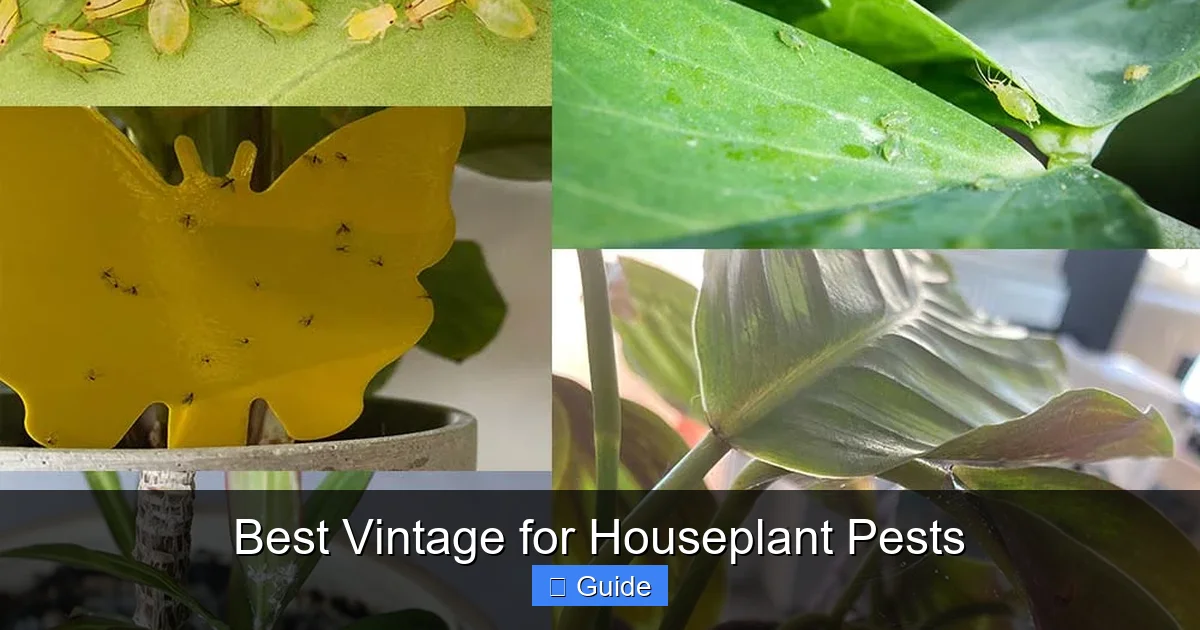
Visual guide about Best Vintage for Houseplant Pests
Image source: mylittlejungle.com
The Big Five Houseplant Pests
Spider mites are the vintage gardener’s nemesis. Barely visible to the naked eye, they reveal themselves through fine webbing on leaf undersides and a stippled, dusty look on foliage. They thrive in dry, warm conditions — exactly what our heated homes provide in winter. A vintage trick: hold a white paper under a suspect leaf and tap sharply. Tiny moving specks confirm mites.
Mealybugs look like tiny cotton balls tucked into leaf axils and stem joints. They’re actually soft-bodied insects covered in white wax. Vintage gardeners called them “plant lice” and treated them with alcohol-dipped cotton swabs — a method still unbeatable for small infestations. They excrete sticky honeydew that attracts sooty mold, a secondary problem.
Scale insects masquerade as harmless bumps on stems and leaves. Under those protective shells, they suck plant sap relentlessly. Armored scale (hard shell) and soft scale (softer covering) need slightly different approaches. Vintage remedy: horticultural oil smothers both types by blocking their breathing pores.
Fungus gnats are more nuisance than threat to mature plants, but their larvae chew tender roots. The vintage giveaway: tiny black flies zigzagging around soil surface, especially after watering. Yellow sticky traps — used in greenhouses since the 1920s — catch adults while you address the real issue: overly moist soil.
Aphids cluster on new growth, curling leaves and stunting stems. They come in green, black, pink, and woolly varieties. Vintage gardeners welcomed ladybugs indoors for aphid control — a practice commercial greenhouses still use today. A strong water spray dislodges most; soap spray finishes the job.
Less Common but Troublesome Pests
Thrips leave silvery trails and black specks of frass on leaves. They’re slender, fringed-wing insects that rasp plant tissue. Vintage blue sticky traps work better than yellow for thrips — they’re attracted to the color. Neem oil disrupts their life cycle effectively.
Whiteflies cloud up when you disturb an infested plant. They’re related to aphids and scale, not true flies. Vintage vacuuming (yes, really — handheld vac on low suction) removes clouds of adults instantly. Follow with insecticidal soap for nymphs on leaf undersides.
Broad mites and cyclamen mites are microscopic but cause dramatic damage: twisted, brittle new growth and distorted flowers. Vintage treatment: immerse entire plant (pot and all) in 110°F water for 15 minutes. This heat treatment kills mites without harming most tropical plants — a technique documented in 1940s greenhouse manuals.
The Vintage Arsenal: Time-Tested Remedies That Work
The best vintage for houseplant pests relies on a surprisingly short list of ingredients. These remedies appeared in garden journals from the 1800s through mid-1900s and remain standards in organic growing today.
Insecticidal Soap: The Grandmother of All Sprays
Potassium salts of fatty acids — that’s the fancy name. Your great-grandmother called it “soap water.” True insecticidal soap uses specific fatty acid chains that penetrate insect cuticles without burning plant tissue. Dish detergent is not the same — it strips leaf wax and causes phytotoxicity.
Vintage recipe: 1 tablespoon pure castile soap (Dr. Bronner’s or similar) per quart of water. Add 1 teaspoon vegetable oil as a sticker-spreader. Shake gently — don’t foam. Spray thoroughly, especially leaf undersides. Repeat every 5-7 days for three weeks to catch hatching eggs.
Why it works: Soap dissolves the waxy coating on soft-bodied insects, causing dehydration. It has zero residual activity — once dry, it’s harmless to beneficials. Vintage gardeners applied it in early morning or evening to slow drying time and increase contact.
Horticultural Oil: The Suffocation Strategy
Mineral oil refined for plant use — formerly called “dormant oil” because it was applied to leafless trees in winter. Modern “superior” or “summer” oils are lighter and safe for foliage. Vintage greenhouse growers used oil emulsions for scale, mites, and overwintering eggs.
Application wisdom: Never apply oil when temperatures exceed 85°F or drop below 40°F. Never combine with sulfur fungicides (causes burn). Water plants well the day before. Spray to dripping, covering all surfaces. The oil film blocks spiracles — insect breathing pores — causing asphyxiation.
Vintage tip: Add a few drops of dish soap per gallon as emulsifier if using raw mineral oil. But commercial horticultural oils come pre-emulsified and are worth the small cost for consistency.
Neem Oil: The Ancient Indian Secret
Pressed from seeds of Azadirachta indica, neem has protected crops in India for 4,000 years. It entered Western horticulture in the 1990s but qualifies as vintage by virtue of its ancient pedigree. Neem works differently than soap or oil — it’s an insect growth regulator and antifeedant.
Active compounds: Azadirachtin disrupts molting and reproduction. Insects stop eating, fail to mature, and don’t lay viable eggs. It’s slow — expect 7-10 days for visible results — but breaks the cycle completely.
Vintage preparation: Cold-pressed neem contains full spectrum of compounds. Mix 1-2 teaspoons per quart warm water with 1/2 teaspoon soap as emulsifier. Use within 8 hours — neem degrades quickly once mixed. Apply weekly as preventive, every 5 days for active infestations.
Diatomaceous Earth: Fossil Power
Microscopic silica shells of ancient algae — diatoms — create a powder that feels like talc but acts like broken glass to insects. Vintage gardeners dusted it around plant bases and on soil surface for crawling pests. It’s mechanical, not chemical, so resistance never develops.
Critical detail: Use food-grade only. Pool-grade DE is heat-treated and loses effectiveness. Wear a mask — silica dust irritates lungs. Apply dry; it stops working when wet. Reapply after watering. Vintage trick: use a powder duster or old spice shaker for even, light coverage.
Best for: Fungus gnat larvae (dust soil surface), ants trailing to plants, springtails, and any soft-bodied crawler. Less effective on flying pests or those protected by waxy coatings.
Pyrethrin: The Chrysanthemum Connection
Extracted from painted daisy flowers (Tanacetum cinerariifolium), pyrethrin has been used since 1800s Persia. It’s a nerve toxin — fast knockdown, short persistence. Vintage formulations combined pyrethrin with piperonyl butoxide (PBO) as a synergist, but modern organic growers often skip PBO.
Vintage caution: Pyrethrin kills beneficials too. Apply only when pests are active and beneficials aren’t — typically early morning. It degrades in sunlight within hours. Reserve for severe outbreaks when gentler methods fail.
Alcohol: The Spot Treatment Classic
Isopropyl alcohol (70%) on a cotton swab — the vintage mealybug and scale eradicator. Touch each insect individually. The alcohol dissolves protective wax and dehydrates the bug instantly. Labor-intensive but 100% targeted with zero collateral damage.
Vintage scale recipe: 1 part alcohol, 1 part water, few drops dish soap. Spray armored scale weekly for a month. The soap helps alcohol penetrate the hard shell. Test on one leaf first — some tender plants (ferns, some succulents) show alcohol burn.
Kitchen Cabinet Remedies: Vintage Pantry Pest Control
Before garden centers existed, the kitchen provided pest control. These remedies use ingredients vintage cooks always had on hand. They’re not as potent as commercial products, but for early infestations and prevention, they shine.
Garlic-Pepper Spray: The Universal Deterrent
Vintage garden journals from the 1920s recommend garlic spray for “all manner of biting and sucking insects.” The sulfur compounds repel rather than kill — pests simply leave treated plants.
Recipe: Blend 1 whole garlic bulb (not just cloves) with 1 quart water. Add 1 tablespoon hot pepper flakes or 1 teaspoon cayenne. Steep 24 hours. Strain through cheesecloth. Add 1 teaspoon liquid soap. Dilute 1:4 with water for application.
Vintage wisdom: Apply at dusk. Garlic degrades in UV light. Smell dissipates in hours to humans but lingers for insects. Reapply after rain or watering. Excellent preventive for spider mites and aphids.
Cinnamon: The Fungus Gnat Fighter
Ground cinnamon contains cinnamaldehyde — antifungal and insecticidal. Vintage greenhouse growers dusted cinnamon on soil surface to suppress damping-off fungus and deter fungus gnats. It’s gentle enough for seedlings.
Application: Sprinkle thin layer on dry soil surface. Reapply after watering. For active infestation, make cinnamon tea: 2 tablespoons per quart boiling water, steep, cool, strain, and water plants with it. The soil drench reaches larvae.
Vinegar Traps: The Fruit Fly Solution
Apple cider vinegar with a drop of dish soap — vintage fruit fly trap works equally well for fungus gnats. The vinegar attracts; soap breaks surface tension so they drown. Place small cups near affected plants. Refresh weekly.
Vintage upgrade: Add a piece of overripe banana to the vinegar. The fermentation gases supercharge attraction. Cover cup with plastic wrap poked with tiny holes — insects enter but can’t escape.
Chamomile Tea: The Damping-Off Preventive
Chamomile contains sulfur compounds that suppress soil fungi. Vintage seed-starters watered seedlings with weak chamomile tea to prevent damping-off — the fungal disease that kills seedlings at soil line. It also mildly deters fungus gnats.
Recipe: 1 chamomile tea bag per cup boiling water. Steep 20 minutes. Cool. Use at half strength for watering. Smells lovely, costs pennies.
Baking Soda: The Powdery Mildew Check
1 teaspoon baking soda, 1/2 teaspoon horticultural oil or soap, 1 quart water. Vintage rose growers swore by this for powdery mildew. The alkaline surface prevents spore germination. Spray weekly as preventive, every 3 days for active infection.
Beneficial Insects: The Original Biological Control
Vintage commercial greenhouses in Victorian England employed “insect keepers” who bred and released beneficial insects. This wasn’t hippie idealism — it was economics. Beneficials worked cheaper and better than early arsenic-based pesticides.
Ladybird Beetles: The Aphid Assassins
Convergent lady beetles (Hippodamia convergens) were collected from mountain overwintering sites by the millions and shipped to greenhouses nationwide. A single adult eats 50+ aphids daily. Larvae eat 400+ before pupating.
Vintage release protocol: Mist plants lightly first — thirsty beetles stay longer. Release at dusk or dawn when they’re less likely to fly immediately. Provide pollen/nectar sources (flowering herbs, alyssum) to encourage reproduction. One vintage trick: refrigerate beetles 30 minutes before release — cold slows them down so they settle them so they crawl instead of fly.
Predatory Mites: The Spider Mite Solution
Phytoseiulus persimilis — a tiny orange mite that eats only spider mites. Introduced to commercial greenhouses in 1950s, it’s the classic biological control success story. One predator eats 5-20 spider mites daily and reproduces faster than its prey at 70-80°F.
Vintage application: Shake predators from bottle onto infested leaves. They disperse quickly. Maintain humidity above 60% — they desiccate in dry air. A vintage humidifier trick: group plants on pebble trays to create microclimate.
Green Lacewings: The Generalist Predators
“Aphid lions” — lacewing larvae — eat aphids, mealybugs, thrips, whiteflies, and small caterpillars. Vintage gardeners bought eggs on cards, hung them on plants, and let nature take over. Each larva consumes 200+ pests in 2-3 weeks.
Modern vintage tip: Adult lacewings need nectar. Plant flowering herbs nearby or provide sugar-water wicks. They’ll stay and lay eggs for continuous generations.
Parasitic Wasps: The Tiny Specialists
Encarsia formosa for whiteflies. Aphidius colemani for aphids. These microscopic wasps lay eggs inside pests. The developing wasp larva consumes the host from within. Vintage greenhouse manuals from 1930s detail release rates — they’ve been used commercially for nearly a century.
Reality check: Beneficials work best preventively or at low pest levels. For heavy infestations, knock down numbers with soap or oil first, then release beneficials to clean up. Vintage growers called this “integrated control” — we call it IPM.
Vintage Cultural Practices: Prevention the Old-Fashioned Way
The best vintage for houseplant pests isn’t a spray — it’s a mindset. Historical gardeners knew that healthy plants in proper conditions rarely get severe infestations. Their cultural practices remain the foundation of pest management.
Quarantine: The Non-Negotiable Rule
Every vintage plant book opens with quarantine. New plants — gifts, purchases, cuttings — stay isolated for 14-21 days. No exceptions. A separate room is ideal; a clear plastic bag over the plant works for small specimens.
Vintage inspection routine: Examine daily with 10x hand lens. Check leaf undersides, stem joints, soil surface. Treat any findings before introducing to collection. This single practice prevents 90% of outbreaks.
Watering Wisdom: The Root of Health
Overwatering is the vintage gardener’s cardinal sin. Soggy soil breeds fungus gnats, weakens roots, and creates stress signals that attract pests. Vintage rule: water thoroughly, then wait until top inch is dry. Lift the pot — weight tells you more than finger tests.
Vintage water quality: Rainwater or distilled preferred. Tap water salts accumulate, stressing plants. Let chlorinated water sit overnight. Room temperature only — cold water shocks tropical roots.
Air Circulation: The Invisible Defense
Stagnant air encourages spider mites, fungal diseases, and weak growth. Vintage conservatories had ventilation systems — roof vents, side louvers, fans. Modern equivalent: oscillating fan on low, running several hours daily. Gentle leaf movement strengthens stems and discourages mites.
Humidity Management: The Mite Deterrent
Spider mites hate humidity. Vintage growers maintained 50-60% humidity through pebble trays, moss-topped pots, and regular misting. Hygrometers were standard equipment. Group plants — they create their own humid microclimate through transpiration.
Vintage humidifier hack: Place wide shallow pans of water on radiators or near heat vents. Add pebbles for evaporation surface. Refill weekly. Simple, silent, effective.
Cleanliness: The Daily Discipline
Vintage gardeners wiped leaves weekly with damp cloth — dust blocks light and harbors pests. Remove dead leaves and flowers promptly. They’re breeding grounds. Sterilize tools between plants (alcohol wipe or flame). Repot annually with fresh sterile mix — old soil harbors pest eggs and pathogens.
Nutrition Balance: The Strength Builder
Over-fertilizing — especially nitrogen — creates lush, soft growth that pests adore. Vintage wisdom: “Feed weakly, weekly.” Dilute fertilizer to 1/4 strength. Use balanced formula. Flush pots monthly with plain water to prevent salt buildup. Strong plants resist pests; forced plants invite them.
Adapting Vintage Methods for Modern Homes
Grandmother’s farmhouse had different conditions than your apartment. Drafty windows, coal heat, no grow lights. Adapting vintage wisdom means understanding principles, not just copying recipes.
Light Limitations
Vintage plants grew in bright windows or conservatories. Modern homes often have lower light. Low light = slow growth = longer pest vulnerability. Supplemental LED grow lights (12-14 hours daily) keep plants growing strongly enough to outpace pest damage.
Temperature Consistency
Vintage homes had temperature swings — cool nights, warm days. Many pests reproduce slower with night cooling. Modern constant 70°F accelerates pest generations. If possible, allow 10°F night drop — crack a window, lower thermostat. Your plants (and heating bill) benefit.
Space Constraints
Vintage gardeners had space for quarantine rooms and beneficial insect habitats. Apartment dwellers adapt: clear storage bins make excellent quarantine chambers. Beneficial sachets (slow-release packets) replace loose releases. Sticky traps on every shelf monitor populations.
Pet and Child Safety
Vintage remedies assumed adults-only spaces. Modern homes need pet-safe choices. Avoid essential oil sprays (toxic to cats). Skip pyrethrin if cats present — they lack liver enzyme to metabolize it. Stick with soap, oil, neem, DE, and mechanical controls. Always test sprays on one leaf first.
Time Management
Vintage gardeners often tended plants daily. Modern schedules demand efficiency. Batch tasks: inspect all plants Sunday evening. Mix spray once monthly, store in labeled bottle. Set calendar reminders for repeat treatments. Consistency beats intensity — vintage wisdom for busy lives.
Troubleshooting: When Vintage Methods Seem to Fail
Even the best vintage for houseplant pests sometimes appears ineffective. Usually it’s not the method — it’s the execution. Here’s vintage troubleshooting wisdom.
Coverage Failures
Spraying only top leaf surfaces misses 80% of pests. Vintage sprayers had adjustable nozzles for upward angle. Modern equivalent: tilt plant, spray from below. Use a sprayer with fine mist — coarse droplets roll off. Spray until runoff. Cover soil surface too — many pests drop there.
Timing Errors
Treating once and expecting eradication ignores insect life cycles. Eggs survive most sprays. Vintage schedule: treat every 5-7 days for minimum three weeks. This catches each generation as they hatch. Mark calendar. Don’t guess.
Resistance Misdiagnosis
True pesticide resistance is rare with mechanical/physical controls (soap, oil, DE). If soap “stops working,” it’s usually coverage, timing, or reinfestation from untreated plants. Check neighbors, quarantine area, new purchases. Vintage growers treated entire collection simultaneously.
Plant Damage Confusion
Phytotoxicity (spray burn) looks like pest damage — brown tips, spotted leaves. Vintage test: spray one leaf, wait 48 hours. No damage = safe. Apply in cool morning, not hot sun. Never spray stressed plants (dry, heat-stressed, newly repotted). Water well day before treatment.
Environmental Mismatch
Neem fails in cold (below 60°F) — compounds don’t activate. Oil burns in heat (above 85°F). DE fails when wet. Beneficials die in low humidity. Match remedy to conditions. Vintage growers adjusted methods seasonally — so should you.
Building Your Vintage Pest Control Kit
You don’t need everything at once. Start with basics, add as needed. Quality over quantity — vintage gardeners invested in good tools.
Essential Starter Kit (Under $50)
- Pure castile soap (liquid, unscented) — $10
- Horticultural oil (pint concentrate) — $15
- Cold-pressed neem oil (4 oz) — $12
- Food-grade diatomaceous earth (1 lb) — $8
- 10x hand lens / jeweler’s loupe — $10
- Quality spray bottle (1 qt, adjustable nozzle) — $8
- Yellow and blue sticky traps (pack of 20) — $10
- Isopropyl alcohol 70% + cotton swabs — $3
Advanced Additions
- Predatory mite sachets (slow-release) — $25
- Lady beetles (seasonal, spring/fall) — $15
- Pyrethrin concentrate (for emergencies only) — $18
- Soil moisture meter — $12
- Hygrometer/thermometer — $10
- Oscillating clip fan — $20
Kitchen Staples (Already Owned)
- Garlic, hot pepper flakes, cinnamon
- Apple cider vinegar, dish soap
- Chamomile tea bags, baking soda
- Vegetable oil, liquid castile soap
Seasonal Vintage Calendar
Vintage gardeners worked with seasons. Indoor plants respond to outdoor cues even under artificial light.
Spring: Awakening and Prevention
Increase watering as growth resumes. Start weekly neem preventive spray. Release beneficials early — establish populations before pests explode. Repot root-bound plants. Inspect thoroughly — overwintering eggs hatch now.
Summer: Vigilance and Growth
Peak pest season. Inspect twice weekly. Spider mites love hot dry air — increase humidity, use fan. Soap spray every 10 days preventive. Harvest beneficial insects from outdoor plants (lacewings, ladybugs) for indoor release.
Fall: Preparation and Quarantine
Bringing outdoor plants in? Mandatory 3-week quarantine. Treat prophylactically with oil + soap. Reduce fertilizing. Check for hitchhikers — slugs, earwigs, ants in pots. Submerge pots in water 20 minutes to evict soil dwellers.
Winter: Maintenance and Monitoring
Low light, dry heat = spider mite heaven. Run humidifier. Sticky traps on every shelf. Alcohol swab mealybugs immediately — they spread fast in close quarters. Minimal fertilizing. Water less but don’t let roots desiccate.
Conclusion: The Vintage Mindset for Modern Growers
The best vintage for houseplant pests isn’t a single product or technique. It’s a relationship with your plants built on observation, patience, and respect for natural balances. Grandmother didn’t win against pests because she had better weapons — she won because she paid attention.
She noticed the first stippling on a leaf. She checked undersides while watering. She quarantined the gift plant from Aunt Martha. She accepted a few aphids as ladybug food rather than reaching for poison at first sight. Her plants thrived because she understood them as living partners, not decorative objects.
You have advantages she didn’t: better lighting, precise climate control, access to beneficial insects by mail, and the accumulated knowledge of generations of growers. Combine her mindset with your tools, and your indoor garden will be more resilient than either could achieve alone.
Start small. Pick one vintage method — soap spray, sticky traps, weekly inspection — and commit to it for a month. Watch what happens. Learn your plants’ signals. Build your kit gradually. Share cuttings and knowledge with other growers. That’s how vintage wisdom survives: gardener to gardener, plant to plant, season to season.
Your monstera’s grandchildren will thank you.
Frequently Asked Questions
What does “vintage” mean in the context of houseplant pest control?
Vintage refers to time-tested, traditional pest management methods used by gardeners for generations — typically before synthetic pesticides became widespread. These include insecticidal soaps, horticultural oils, botanical extracts like neem, mechanical controls like diatomaceous earth, and cultural practices like quarantine and beneficial insect release.
Is neem oil considered a vintage remedy?
Yes, neem oil qualifies as vintage by pedigree — it’s been used in Indian agriculture for over 4,000 years. Though it entered Western horticulture recently (1990s), its ancient origins and traditional preparation methods align with vintage principles of using botanical, low-impact solutions.
Can I mix different vintage remedies together?
Generally no. Mixing soap and oil can cause plant burn. Neem degrades quickly when mixed — use within hours. Alcohol damages some plants if combined with oil. Apply different remedies on separate days (e.g., soap Monday, oil Thursday) rather than tank-mixing.
How do I know if I have spider mites or just dust?
Hold white paper under suspect leaves and tap sharply. Spider mites appear as tiny moving specks (size of pepper grains). Dust doesn’t move. Also check for fine webbing at leaf-stem junctions and stippled, bronze-tinged foliage — classic mite damage.
Do beneficial insects work in home environments?
Yes, with proper conditions. Predatory mites need 60%+ humidity. Lady beetles need pollen/nectar sources to stay and reproduce. Lacewings need sugar water if no flowers present. Slow-release sachets work better than loose releases for beginners. They’re preventive — release before heavy infestation.
What’s the vintage remedy for fungus gnats that actually works?
Three-pronged vintage approach: (1) Let top 1-2 inches of soil dry completely between waterings — this kills larvae. (2) Yellow sticky traps at soil level catch adults. (3) Cinnamon dusted on soil surface or cinnamon tea soil drench suppresses fungal food source. Combine all three for 2-3 weeks.