Best Tool for Mixing Soil
Finding the best tool for mixing soil saves time and improves plant health. This guide covers hand tools, power mixers, and practical tips for every garden size.
Soil mixing is a core step for any healthy garden. When you blend compost, sand, and native earth you create a home where roots can breathe. The right equipment makes this job easy and fast. In this guide we explore the best tool for mixing soil options and help you pick the one that fits your needs.
Many gardeners start with a simple shovel. A shovel works but it can leave clumps and uneven texture. A dedicated mixer breaks clumps and spreads amendments evenly. Choosing the best tool for mixing soil early saves you effort later.
Key Takeaways
- Hand tools work well for small beds: They are cheap, easy to store, and give you control over texture.
- Power mixers handle large volumes fast: They reduce labor and create a uniform blend in minutes.
- Match the tool to your garden size: A broadfork suits medium plots while a rotary mixer fits big farms.
- Moisture matters when mixing: Slightly damp soil blends better and reduces dust.
- Clean tools after each use: Removing soil prevents rust and keeps the next mix smooth.
- Invest in quality once: A durable best tool for mixing soil lasts years and saves money over time.
Quick Answers to Common Questions
What is the best tool for mixing soil in a small raised bed?
A hand cultivator or garden fork works well for small raised beds.
Can a rotary tiller mix compost evenly?
Yes a rotary tiller blends compost uniformly when used in overlapping passes.
How often should I sharpen my broadfork tines?
Sharpen broadfork tines at least once per growing season.
Is a battery powered mixer strong enough for clay soil?
Battery mixers handle light clay but struggle with heavy compacted clay.
What maintenance step is most important for power mixers?
Cleaning after each use and lubricating moving parts are the top priorities.
📑 Table of Contents
Why Soil Mixing Matters
Good soil structure lets water drain and air reach roots. Compacted soil blocks both. Mixing adds organic matter and improves texture. Plants grow stronger when they have a balanced mix.
Benefits of a Uniform Mix
A uniform mix gives consistent nutrients across the bed. Seedlings get the same start. Yields become more predictable. The best tool for mixing soil creates that uniformity quickly.
Even moisture distribution follows a uniform blend. Roots do not hit dry pockets or soggy zones. This balance reduces stress and disease pressure.
Preventing Common Problems
Poor mixing leads to dry spots and waterlogged zones. Roots may rot in wet pockets or die in dry patches. A thorough blend stops these issues before they start.
Weed seeds often hide in unmixed layers. Turning the soil exposes them to light and they die. The best tool for mixing soil helps you manage weeds naturally.
Hand Tools for Soil Mixing
Hand tools are affordable and need no power source. They are ideal for raised beds, containers, and small plots. Here are the most common hand options.
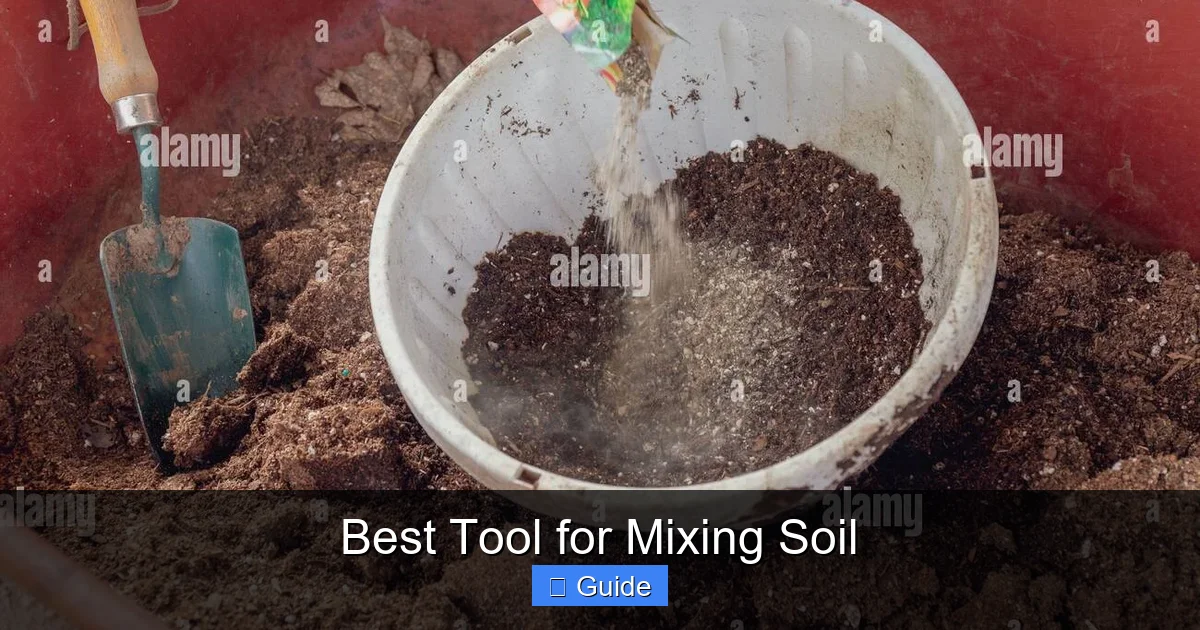
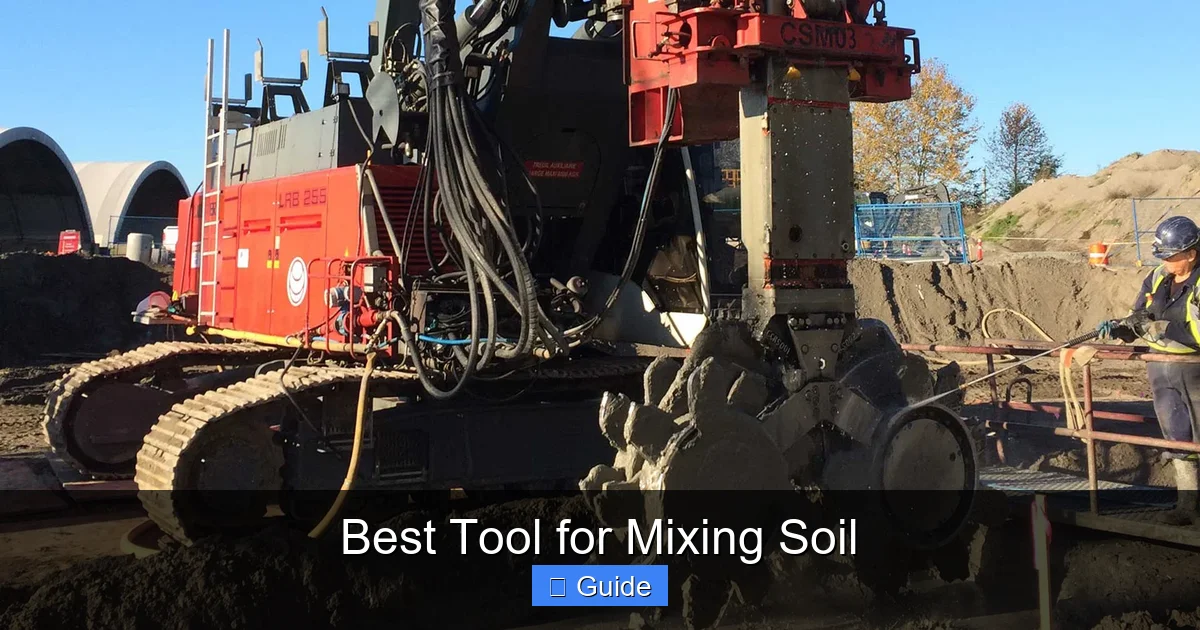
Visual guide about Best Tool for Mixing Soil
Image source: c8.alamy.com
Garden Fork
A garden fork has sturdy tines that lift and turn soil. It works well for loosening compacted ground. The fork can also blend compost into the top layer. It is a classic choice for the best tool for mixing soil in tight spaces.
Use a garden fork when you need precision. You can target a single row without disturbing neighbors. This control is valuable in intensive planting.
Broadfork
A broadfork has two long handles and a wide set of tines. You step on the crossbar and rock back. This action aerates deep soil without turning it over. It preserves soil life while mixing amendments. Many market gardeners call the broadfork the best tool for mixing soil for medium beds.
The broadfork also reduces compaction from foot traffic. You work standing up, which saves your back. It is a favorite for no‑till growers.
Hand Cultivator
A hand cultivator looks like a small rake with curved tines. It breaks up surface crusts and mixes in fertilizer. It is lightweight and easy to maneuver around seedlings. For container gardens it is often the best tool for mixing soil.
Use a cultivator after seeding to incorporate a thin layer of compost. The gentle action protects delicate roots.
Soil Scoop and Bucket
A simple scoop and bucket let you move measured amounts of compost. You can layer materials then turn them with a fork. This low‑tech method works if you have time and patience.
Combine a scoop with a wheelbarrow for larger batches. The process stays manual but scales up nicely.
Power Tools for Soil Mixing
Power tools shine when you face large volumes or heavy clay. They cut mixing time dramatically. Below are the main powered options.
Rotary Tiller
A rotary tiller uses spinning blades to churn soil. It can incorporate several inches of amendment in one pass. It is the go‑to best tool for mixing soil on big vegetable plots. Choose a rear‑tine model for tough ground.
Adjust the depth to match root zone needs. Shallow passes protect existing perennials. Deep passes prepare new beds quickly.
Electric Soil Mixer
An electric soil mixer looks like a cement mixer but smaller. You load soil and amendments, then the drum rotates. It produces a very even blend. It is perfect for nurseries and landscapers who need the best tool for mixing soil on a daily basis.
Electric mixers run quietly and emit no fumes. They are ideal for indoor greenhouse work.
Gas‑Powered Auger Mixer
An auger mixer drills into the ground and lifts soil while blending. It works well for deep mixing in orchards. The auger can reach depths a tiller cannot. It is a specialized best tool for mixing soil for tree planting.
Auger mixers require more maintenance. Keep the auger teeth sharp for clean cuts.
Battery‑Operated Handheld Mixer
New battery mixers are light and cordless. They handle a few cubic feet per batch. They suit urban gardeners who want power without fumes. They are a modern best tool for mixing soil for balcony farms.
Charge time is short, usually under an hour. Swap batteries for continuous work.
Choosing the Right Tool for Your Garden Size
Garden size drives the tool decision. Small spaces need light tools. Large fields need horsepower. Use this quick guide to match your plot.
Containers and Raised Beds
For pots and raised beds a hand cultivator or small fork is enough. You can mix a bag of potting mix in minutes. The best tool for mixing soil here is the one you can store easily.
Keep a compact cultivator on a shelf. It is ready whenever you refresh a container.
Home Vegetable Garden (Up to 500 sq ft)
A broadfork or a small rear‑tine tiller works well. You get deep aeration without a huge machine. Many hobbyists pick the broadfork as the best tool for mixing soil for this size.
If you prefer power, a 5‑hp tiller fits in a garage. It handles a half‑acre in an afternoon.
Market Garden (500 to 5,000 sq ft)
A walk‑behind rotary tiller saves hours. It can handle multiple rows in one pass. Look for adjustable depth. The tiller becomes the best tool for mixing soil for serious growers.
Consider a model with a reverse gear. It helps you back out of tight corners.
Large Farm or Landscape (Over 5,000 sq ft)
Consider a tractor‑mounted tiller or a commercial electric mixer. They process cubic yards per hour. The investment pays off in labor savings. The best tool for mixing soil at this scale is a heavy‑duty power unit.
Schedule regular service for tractor implements. Downtime during planting season is costly.
Tips for Effective Soil Mixing
Even the best tool for mixing soil needs good technique. Follow these tips to get the most from your equipment.
Test Moisture First
Soil that is too dry creates dust. Soil that is too wet clumps. Aim for a damp feel like a wrung sponge. Lightly water the area a day before mixing.
Use a simple squeeze test. If the ball holds shape but crumbles, moisture is right.
Layer Amendments Evenly
Spread compost, sand, and fertilizer in thin layers. Then run the tool over the whole bed. This prevents pockets of pure amendment.
Measure each amendment with a bucket. Consistency across the bed improves results.
Work in Passes
Make overlapping passes with a tiller or mixer. Change direction on the second pass. Cross‑hatching gives a more uniform blend.
Overlap by at least half the tool width. This eliminates missed strips.
Avoid Over‑Mixing
Too much mixing can destroy soil aggregates. Stop when the texture looks even. Over‑mixing also burns organic matter.
Watch for a crumbly, dark appearance. That signals a good stop point.
Clean As You Go
Remove large stones and roots before they jam the machine. A clean bed protects the best tool for mixing soil and speeds the job.
Keep a hand rake nearby for quick debris removal.
Maintenance and Care of Mixing Tools
Proper care extends tool life and keeps performance high. Simple habits make a big difference.
Clean After Every Use
Rinse off soil with a hose. Use a stiff brush for stuck mud. Dry the metal parts to stop rust.
Apply a light coat of oil on steel surfaces after drying.
Sharpen Tines and Blades
Sharp tines cut soil cleanly. Dull edges tear and compact. Sharpen forks and tiller blades at least once a season.
A bench grinder works well for tiller blades. Hand files suit fork tines.
Lubricate Moving Parts
Apply light oil to gearboxes, chains, and bearings. Follow the manufacturer schedule. Well‑lubricated tools run smoother and last longer.
Check oil level before each session. Top up if low.
Store Dry and Covered
Keep tools in a shed or garage. Hang forks on a wall rack. Cover power units with a breathable tarp. Moisture is the enemy of the best tool for mixing soil.
Elevate power cords off the floor. This prevents water damage.
Inspect Before Each Season
Check bolts, belts, and handles for wear. Replace cracked handles or frayed cords. A quick inspection prevents breakdowns in the middle of a job.
Tighten loose bolts with a wrench. Test safety switches on electric models.
Conclusion
Choosing the best tool for mixing soil depends on your garden size, budget, and physical ability. Hand tools give control and low cost. Power tools give speed and consistency for big jobs. Test your soil moisture, layer amendments, and clean your equipment. With the right tool and technique you will build a thriving growing medium that supports strong plants year after year.
Frequently Asked Questions
What defines the best tool for mixing soil?
The best tool for mixing soil matches your garden size, blends amendments uniformly, and is durable for repeated use.
Can I mix soil without any tools?
You can turn soil by hand with a shovel but it is labor intensive and often leaves clumps.
How deep should I mix amendments?
Mix amendments to a depth of 8 to 12 inches for most vegetable gardens.
Do electric mixers require a power outlet?
Most electric mixers need a standard outlet; battery models run cordless.
What safety gear should I wear when using a tiller?
Wear sturdy boots, eye protection, hearing protection, and gloves.
How do I store a broadfork during winter?
Clean the tines, dry them, and hang the broadfork in a dry shed.