Best Rooting Hormone for Mint
Choosing the right rooting hormone can dramatically speed up mint propagation and boost success rates. This guide covers the top products, application methods, and practical tips to help you grow vigorous mint plants from cuttings.
Mint is one of the easiest herbs to propagate, yet many gardeners still struggle with low rooting rates. The secret often lies in the rooting hormone you choose. In this guide we explore the best rooting hormone for mint, compare product types, and share step‑by‑step techniques that turn a single stem into a thriving plant.
Whether you are a beginner starting a kitchen herb garden or a seasoned grower expanding a commercial mint patch, the right hormone can cut weeks off the rooting timeline. We’ll break down the science, review top‑rated products, and give you practical tips you can apply today.
Key Takeaways
- Powder vs. Gel vs. Liquid: Each form works, but gels often cling better to mint stems.
- Active Ingredient Matters: Indole‑3‑butyric acid (IBA) is the most reliable for mint.
- Concentration Counts: 0.1 % to 0.3 % IBA gives strong roots without burning delicate tissue.
- Organic Options Exist: Willow water and honey can work for hobbyists who prefer natural routes.
- Proper Technique Is Key: Clean cuts, sterile tools, and high humidity maximize hormone effectiveness.
- Timing Matters: Early spring or late summer cuttings root fastest.
- Post‑Root Care: Gradual acclimation prevents transplant shock and ensures healthy growth.
Quick Answers to Common Questions
What concentration of IBA is ideal for mint cuttings?
0.1 % to 0.3 % IBA provides strong root initiation without burning the tender stems.
Can I use honey as a rooting hormone for mint?
Honey offers antimicrobial protection and a mild growth boost, but it works best combined with a low‑dose synthetic hormone or willow water.
How long does it take mint cuttings to root with a gel hormone?
Typically 7‑10 days under high humidity and bright indirect light.
Do I need a humidity dome for mint propagation?
Yes, a dome or plastic bag maintains 90 % humidity, which is critical for preventing wilting before roots form.
Is it safe to reuse rooting hormone powder?
Reusing powder risks contamination; always use a fresh portion for each batch of cuttings.
📑 Table of Contents
- Understanding Rooting Hormones for Mint
- Top Commercial Products Reviewed
- How to Choose the Best Rooting Hormone for Mint
- Step‑by‑Step Propagation Using Rooting Hormone
- Common Mistakes and How to Avoid Them
- Natural Alternatives for the Eco‑Conscious Gardener
- Post‑Rooting Care for Strong Mint Plants
- Conclusion
Understanding Rooting Hormones for Mint
What Is a Rooting Hormone?
A rooting hormone is a substance that stimulates root formation on plant cuttings. Most commercial formulas contain synthetic auxins, primarily indole‑3‑butyric acid (IBA) or naphthaleneacetic acid (NAA). These compounds mimic the natural hormones that tell a plant to grow roots.
Why Mint Responds Well to Hormones
Mint stems are soft and contain high levels of natural auxins, but they also lose moisture quickly. A supplemental hormone boosts the root‑initiation signal, helping the cutting overcome transpiration stress. The best rooting hormone for mint typically delivers a low‑to‑moderate IBA concentration that encourages rapid root emergence without damaging the tender tissue.
Forms of Rooting Hormone
You will encounter three main forms on the market: powder, gel, and liquid. Powders are inexpensive and shelf‑stable but can be messy. Gels adhere to the stem, providing a steady release of hormone. Liquids allow precise dosing and are ideal for dip‑and‑plant methods. For mint, many growers prefer gel because it stays on the cut end during the high‑humidity rooting phase.
Top Commercial Products Reviewed
1. Clonex Rooting Gel
Clonex is a favorite among herb growers. It contains 0.31 % IBA in a water‑based gel that clings to mint stems. Users report root emergence in 7‑10 days under a humidity dome. The gel also includes vitamins and minerals that support early root health.
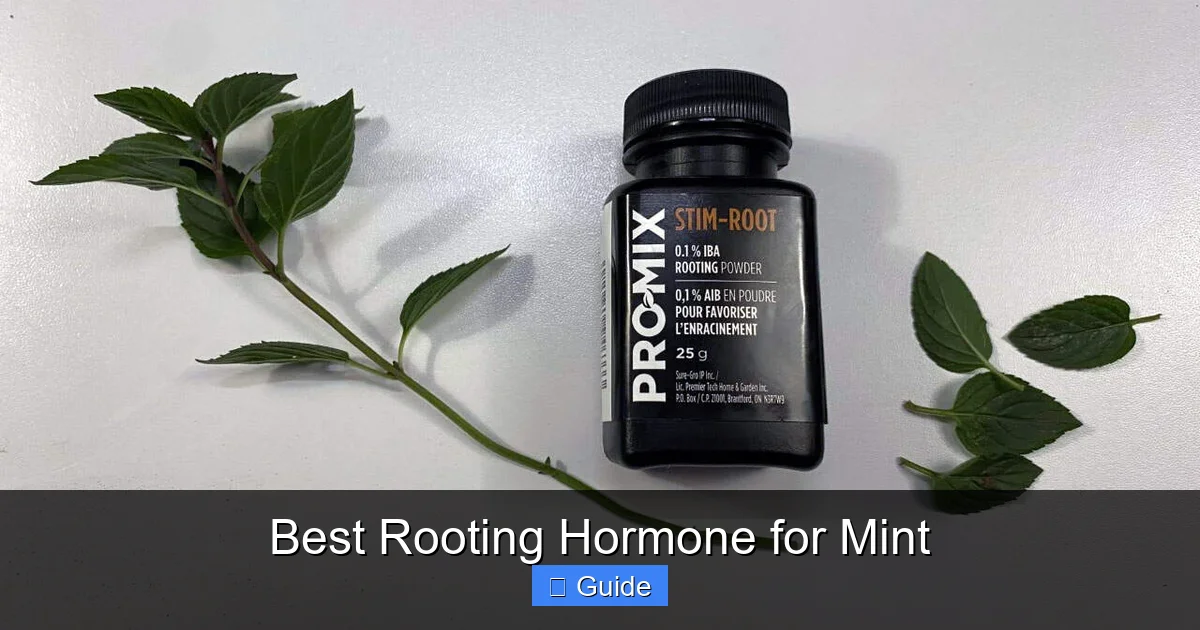
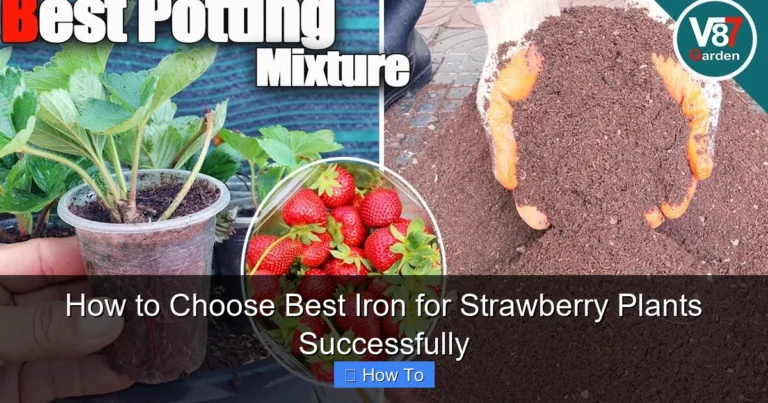
Visual guide about Best Rooting Hormone for Mint
Image source: biggergarden.com
2. Hormex Rooting Powder #8
Hormex #8 offers 0.8 % IBA in a fine powder. It is budget‑friendly and works well when you dust the cut end lightly. Because the concentration is higher, you must tap off excess to avoid burning the delicate mint tissue.
3. Garden Safe Rooting Hormone Liquid
This liquid formula delivers 0.1 % IBA and is ready to use straight from the bottle. It is excellent for dip‑and‑plant workflows. Many home gardeners appreciate the ease of measuring a few milliliters per cutting.
4. Dip ‘N Grow Rooting Concentrate
Dip ‘N Grow is a concentrated liquid (1 % IBA) that you dilute to the desired strength. For mint, a 1:10 dilution yields roughly 0.1 % IBA, matching the sweet spot for rapid rooting. The concentrate has a long shelf life, making it cost‑effective for large batches.
5. Organic Willow Water (DIY)
Willow water is a natural alternative made by soaking willow branches in water for 24‑48 hours. It contains natural salicylic acid and trace auxins. While not as fast as synthetic options, it works well for gardeners who avoid chemicals. Expect roots in 14‑21 days.
How to Choose the Best Rooting Hormone for Mint
Consider Concentration
Mint cuttings thrive with 0.1 % to 0.3 % IBA. Higher concentrations can cause tip burn, while lower ones may not trigger sufficient root initiation. Check the label and, if using a concentrate, calculate the dilution carefully.
Match the Form to Your Workflow
If you propagate many cuttings at once, a gel or liquid dip speeds the process. For occasional hobby propagation, a powder packet is convenient and inexpensive. Think about storage too; gels and liquids may require refrigeration after opening.
Budget vs. Performance
Premium gels like Clonex cost more per ounce but often reduce rooting time by several days. For a small home garden, the time saved may justify the price. Commercial growers may prefer bulk powders or concentrates to lower per‑cutting cost.
Organic Certification
If you sell certified organic mint, you must use an approved organic rooting aid. Willow water, honey, or OMRI‑listed products qualify. Always verify certification before committing to a product line.
Step‑by‑Step Propagation Using Rooting Hormone
Gather Your Materials
- Sharp, sterilized scissors or pruning shears
- Clean containers with drainage holes
- Well‑draining rooting medium (perlite, vermiculite, or a 1:1 peat‑perlite mix)
- Humidity dome or clear plastic bag
- Chosen rooting hormone (gel, powder, or liquid)
- Spray bottle with water
Take the Cuttings
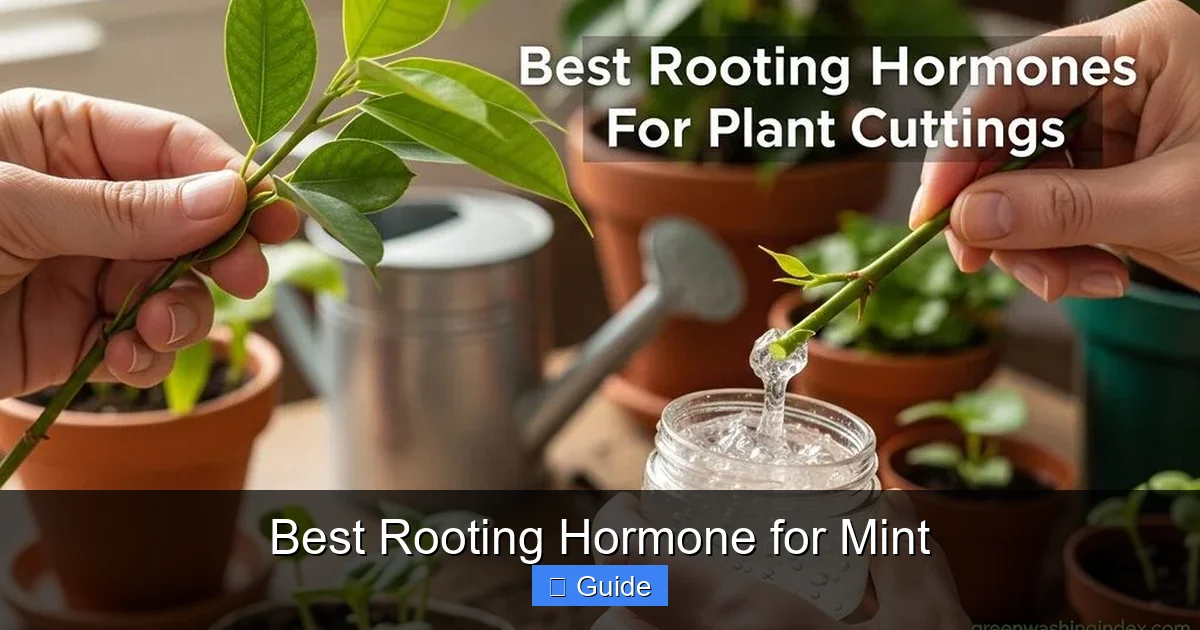
Select healthy, non‑flowering stems about 4‑6 inches long. Cut just below a node at a 45° angle. Remove the lower leaves, leaving two or three sets at the top. A clean cut reduces pathogen entry and maximizes hormone uptake.
Apply the Hormone
For gel: dip the cut end 1‑2 centimeters into the gel, twisting gently to coat evenly. For powder: moisten the cut end with water, then dip into powder and tap off excess. For liquid: submerge the cut end for 5‑10 seconds, then let excess drip off.
Plant the Cuttings
Make a hole in the moist rooting medium with a pencil or dibber. Insert the hormone‑treated end about 2 inches deep. Firm the medium around the stem to ensure good contact. Space cuttings 2‑3 inches apart to allow airflow.
Create a Humid Environment
Cover the tray with a humidity dome or place a clear plastic bag over the container, propping it up with sticks so it does not touch the leaves. Mist the inside daily to keep humidity near 90 %. Keep the setup in bright, indirect light at 68‑75 °F.
Monitor and Transplant
Check for root development after 7‑10 days by gently tugging the cutting. Once roots are 1‑2 inches long, begin hardening off: remove the dome for a few hours each day, increasing exposure over a week. Then transplant into individual pots with potting soil.
Common Mistakes and How to Avoid Them
Over‑Concentrating the Hormone
More is not better. Excess IBA can cause necrotic tips and stunt root growth. Always follow the manufacturer’s recommended dilution or use a calibrated measuring spoon for powders.
Using Dull or Dirty Tools
Dirty blades introduce fungi that rot cuttings before roots form. Sterilize tools with rubbing alcohol or a 10 % bleach solution between each cut.
Insufficient Humidity
Mint loses water fast through its large leaf surface. If the humidity drops below 70 %, cuttings wilt and fail to root. A simple hygrometer helps you keep conditions optimal.
Rooting in Direct Sun
Direct sunlight raises leaf temperature and transpiration, overwhelming the cutting’s limited water uptake. Bright, filtered light is ideal.
Neglecting Airflow
Stagnant, overly wet conditions invite damping‑off fungus. Vent the dome for a few minutes each day or use a small fan on low to circulate air.
Natural Alternatives for the Eco‑Conscious Gardener
Willow Water
As mentioned, willow water supplies natural auxins. To make it, chop fresh willow twigs into 1‑inch pieces, soak in a quart of water for 24‑48 hours, then strain. Use the liquid as a dip for mint cuttings. Results are slower but chemical‑free.
Honey Solution
Honey contains enzymes and antimicrobial compounds that can protect the cut end while providing a mild growth stimulus. Mix one tablespoon of raw honey in a cup of warm water, cool, and dip cuttings for 30 seconds.
Cinnamon Powder
Cinnamon acts as a natural fungicide. Dust the cut end lightly before planting. It does not supply auxins, so pair it with a low‑dose synthetic hormone or willow water for best results.
Aloe Vera Gel
Fresh aloe vera gel contains salicylic acid and polysaccharides that encourage root formation. Apply a thin layer to the cut end. Like cinnamon, it works best as a supplement rather than a standalone hormone.
Post‑Rooting Care for Strong Mint Plants
Hardening Off
Gradually expose rooted cuttings to lower humidity and brighter light over 7‑10 days. Start with one hour of open air, then increase daily. This reduces transplant shock and builds sturdy stems.
Feeding Young Mint
Once the first true leaves appear, feed with a diluted balanced fertilizer (¼ strength) every two weeks. Mint is a heavy feeder, but young roots are sensitive to salt buildup.
Pinching for Bushier Growth
Pinch back the growing tips when the plant reaches 6‑8 inches. This encourages lateral branching, giving you a fuller harvest and more cutting material for future propagation.
Pest and Disease Watch
Watch for aphids, spider mites, and mint rust. Early detection allows organic controls like neem oil or insecticidal soap. Keep foliage dry and provide good airflow to prevent fungal issues.
Conclusion
Choosing the best rooting hormone for mint can transform a frustrating propagation attempt into a quick, reliable process. Whether you opt for a trusted gel like Clonex, a budget powder such as Hormex #8, or a natural willow water brew, the key is matching concentration, form, and technique to your specific growing conditions. Follow the step‑by‑step method, avoid common pitfalls, and give your new mint plants the post‑root care they deserve. With a little patience and the right hormone, you’ll soon enjoy an abundant, aromatic mint harvest ready for teas, cocktails, and culinary creations.
Frequently Asked Questions
What is the best rooting hormone for mint?
The best rooting hormone for mint is a gel containing 0.1 %–0.3 % IBA, such as Clonex Rooting Gel, because it adheres well and delivers consistent results.
Can I make my own rooting hormone for mint?
Yes, willow water or a honey solution can serve as natural alternatives, though they generally root more slowly than synthetic products.
How do I apply rooting hormone to mint cuttings?
Dip the cut end into gel, powder, or liquid according to the product instructions, then plant immediately in moist rooting medium.
Why are my mint cuttings not rooting?
Common causes include too high hormone concentration, low humidity, dirty tools, or exposure to direct sun.
When is the best time to take mint cuttings?
Early spring or late summer, when the plant is actively growing but not flowering, yields the fastest rooting.
How do I care for mint after it has rooted?
Harden off gradually, feed with diluted fertilizer, pinch tips for bushier growth, and monitor for pests and diseases.