Blueberry Yellow Leaves Causes
Yellow leaves on blueberry plants usually signal soil pH problems, nutrient deficiencies, or watering issues. This guide covers every common cause and gives you step-by-step fixes to restore deep green foliage and maximize your harvest.
You walk out to your blueberry patch expecting glossy green leaves. Instead, you see pale yellow foliage staring back at you. Your heart sinks. You wonder what went wrong. You wonder if your harvest is doomed. Take a breath. Yellow leaves are a cry for help, not a death sentence. Your plants are talking. They are telling you exactly what they need. You just need to learn their language.
This guide breaks down every major reason blueberry leaves turn yellow. We will walk through soil chemistry, nutrient roles, watering mistakes, and pest problems. You will learn how to diagnose the issue fast. You will learn how to fix it for good. By the end, you will feel confident managing your blueberry health like a pro. Let us dig in.
Key Takeaways
- Soil pH is the number one culprit: Blueberries need acidic soil between 4.5 and 5.5; anything higher locks up iron and causes yellowing.
- Iron deficiency shows as interveinal chlorosis: Young leaves turn yellow while veins stay green, a classic sign of high pH or wet roots.
- Nitrogen shortage yellows older leaves first: Pale, uniformly yellow lower leaves mean your plant needs a slow-release acidic fertilizer.
- Overwatering and poor drainage suffocate roots: Soggy soil prevents nutrient uptake and invites root rot, both leading to yellow foliage.
- Magnesium and manganese deficiencies mimic each other: Both cause yellowing between veins, but magnesium hits older leaves while manganese targets new growth.
- Quick fixes exist for every cause: Elemental sulfur, chelated iron, pine bark mulch, and proper watering restore health fast.
- Prevention beats cure every time: Test soil annually, mulch with acidic material, and water consistently to keep leaves green all season.
Quick Answers to Common Questions
What is the most common cause of yellow leaves on blueberry plants?
High soil pH above 5.5 is the number one cause. It locks up iron and other nutrients, causing interveinal chlorosis on young leaves first.
How can I tell if my blueberry has iron deficiency versus nitrogen deficiency?
Iron deficiency shows yellow leaves with green veins on new growth. Nitrogen deficiency shows uniform pale yellow on older, lower leaves first.
Can I use vinegar to lower soil pH for blueberries quickly?
No, vinegar kills beneficial soil microbes and the effect lasts only days. Use elemental sulfur for a permanent, biology-friendly pH drop.
Why are my container blueberry leaves turning yellow at the edges?
Edge yellowing on older leaves usually means magnesium deficiency. Apply one tablespoon Epsom salt per gallon water as a soil drench monthly.
Is it normal for blueberry leaves to turn yellow in fall?
Yes, blueberries are deciduous. Uniform yellow, orange, and red fall color from October to November is completely normal and healthy.
📑 Table of Contents
- Why Blueberry Leaves Turn Yellow: The Big Picture
- Soil pH: The Silent Killer of Green Leaves
- Nutrient Deficiencies: Reading the Yellow Patterns
- Water Woes: Too Much, Too Little, Too Inconsistent
- Pests, Diseases, and Environmental Stress
- Seasonal Patterns: When Yellow Leaves Are Normal
- Diagnostic Flowchart: Find Your Cause in Five Minutes
- Prevention: The Year-Round Green Leaf Calendar
- Container Blueberries: Special Yellow Leaf Triggers
- Variety Selection: Genetics Play a Role
- Advanced Soil Management: Beyond the Basics
- Troubleshooting Case Studies: Real Gardens, Real Fixes
- Tools Worth Owning: Invest in Accuracy
- Common Myths That Cause Yellow Leaves
- When to Call a Professional
- Conclusion: Green Leaves Are a Choice
Why Blueberry Leaves Turn Yellow: The Big Picture
Blueberries are picky plants. They evolved in acidic, sandy, low-nutrient soils. They have shallow, fine root systems. They lack root hairs that most plants use to absorb nutrients. This makes them hyper-sensitive to soil conditions. When something is off, they show it fast. Yellow leaves, known as chlorosis, are the universal distress signal.
Chlorosis means the plant cannot make enough chlorophyll. Chlorophyll is the green pigment that captures sunlight. Without it, the plant starves. Growth slows. Fruit drops. Yields plummet. The causes fall into a few main buckets. Soil pH problems top the list. Nutrient deficiencies follow close behind. Water management errors round out the big three. Pests, diseases, and environmental stress play supporting roles. We will cover each in detail.
The Role of Chlorophyll in Plant Health
Chlorophyll molecules sit inside chloroplasts. They absorb red and blue light. They reflect green light. That is why leaves look green. Making chlorophyll requires iron, nitrogen, magnesium, and several other elements. If any piece is missing, the assembly line stops. The leaf loses color. Photosynthesis drops. The plant weakens. Understanding this chain helps you see why each fix works.
How Blueberry Roots Differ From Other Plants
Most plants have thick roots with tiny root hairs. Those hairs vastly increase surface area. Blueberries skipped that evolution. They rely on mycorrhizal fungi partners. The fungi extend the root reach. They mine nutrients from the soil. In exchange, the plant feeds the fungi sugars. This partnership only works in acidic soil. Raise the pH, and the fungi die. The plant loses its lifeline. This is why pH is everything for blueberries.
Soil pH: The Silent Killer of Green Leaves
If you remember one thing from this article, make it this. Blueberries demand a soil pH between 4.5 and 5.5. Period. Above 5.5, iron becomes insoluble. The plant cannot take it up. Above 6.0, manganese, zinc, and copper also lock up. The roots sit in a feast they cannot eat. Yellow leaves appear within weeks. This is the single most common blueberry yellow leaves cause.
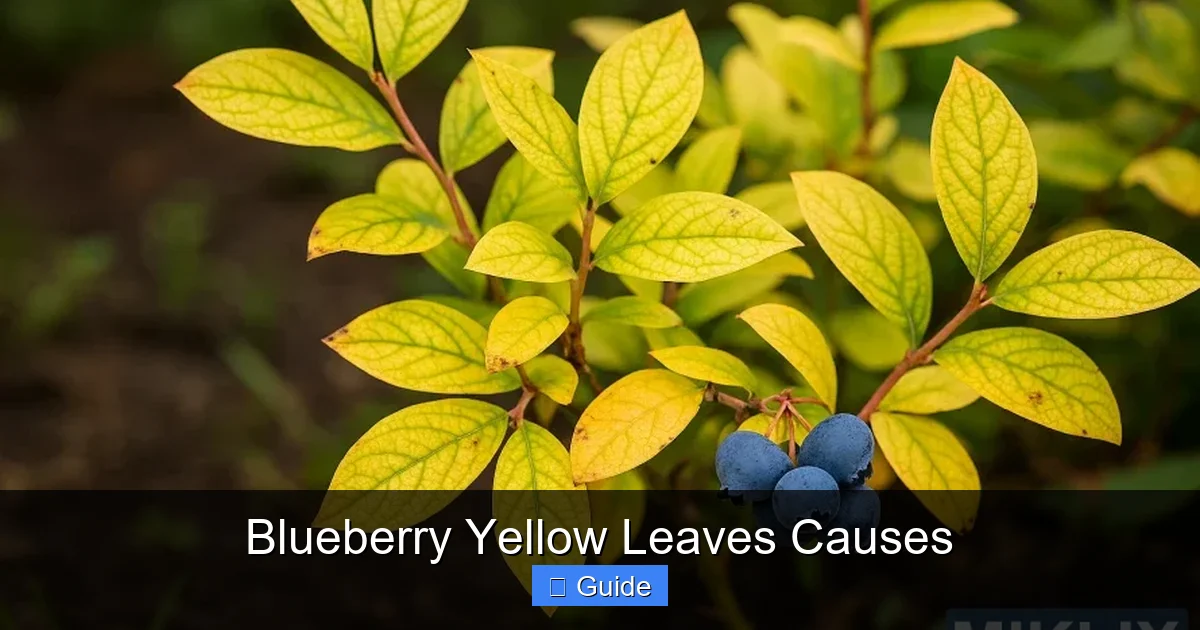
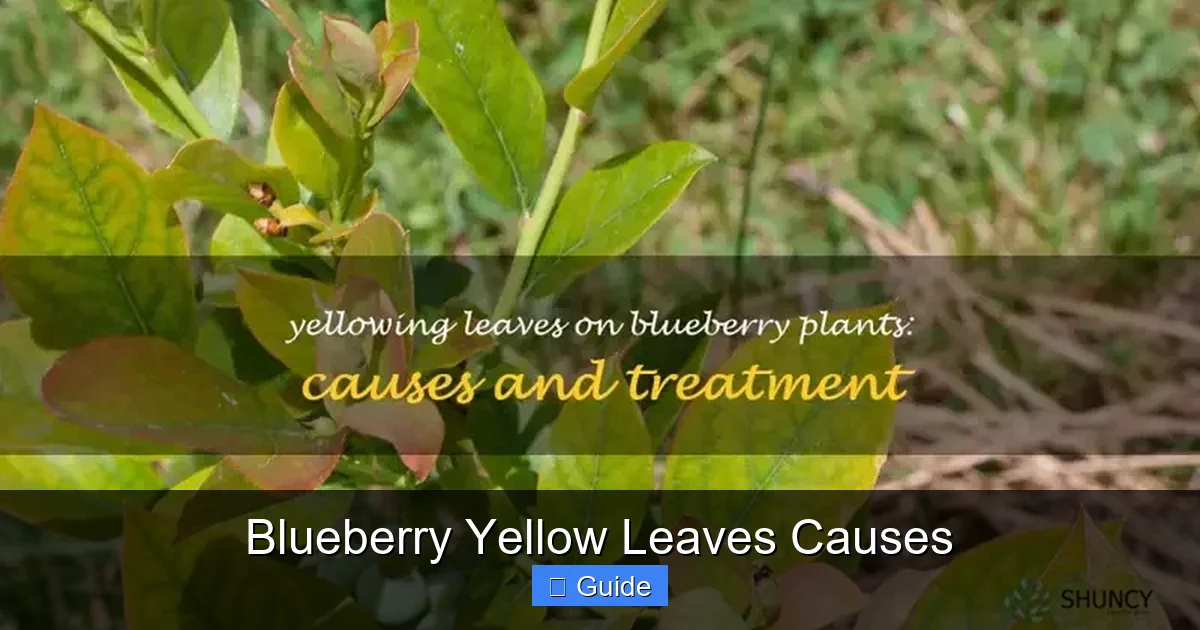
Visual guide about Blueberry Yellow Leaves Causes
Image source: miklix.com
Testing Your Soil pH Correctly
Do not guess. Test. A cheap probe meter from the garden center often lies. Send a sample to your local extension service. Or use a high-quality digital pH meter calibrated with buffer solutions. Test in early spring before growth starts. Test again in fall. Take samples from six inches deep. Take multiple spots around each bush. Mix them for an average. Write the number down. Track it year over year.
Lowering Soil pH Safely and Effectively
Elemental sulfur is the gold standard. Soil bacteria convert it to sulfuric acid. This takes time. Apply in fall for spring effect. Use one to two pounds per hundred square feet per point drop needed. Work it into the top six inches. Water well. Retest in three months. Do not use aluminum sulfate. It works fast but adds toxic aluminum. Do not use vinegar. It kills soil life and bounces back fast. Peat moss helps but is not a long-term fix. Pine bark fines lower pH slowly while improving structure.
Raising pH If You Overshoot
It happens. You get excited. You add too much sulfur. The pH drops below 4.0. Roots burn. Nutrients become too available, reaching toxic levels. Leaves yellow, then brown at edges. Fix it with dolomitic lime. Use half a cup per mature bush. Scratch it in lightly. Water. Retest in a month. Go slow. Blueberries forgive high pH better than low pH.
Container Blueberries and pH Drift
Pots are pH roller coasters. Peat-based mixes start acidic. Alkaline tap water raises pH fast. Fertilizers shift it too. Test container soil monthly. Use rainwater or distilled water. Add a tablespoon of vinegar per gallon of tap water if you must use it. Top-dress with sulfur pellets twice a year. Repot every two to three years with fresh acidic mix.
Nutrient Deficiencies: Reading the Yellow Patterns
Not all yellow looks the same. The pattern tells the story. Location on the plant matters. Age of the leaf matters. Vein color matters. Speed of onset matters. Learning to read these signs lets you target the fix. No more shotgun approaches. No more wasted money. Just the right nutrient at the right time.
Iron Deficiency: The Classic Interveinal Chlorosis
Young leaves turn bright yellow. The veins stay dark green. It looks like a green net on yellow fabric. This is iron chlorosis. Iron does not move inside the plant. New growth shows it first. High pH is usually the root cause. Wet, cold soil makes it worse. Compacted soil makes it worse. Excess phosphorus from too much fertilizer blocks iron too.
Fixing Iron Deficiency Fast
Chelated iron foliar spray greens up leaves in days. Use EDDHA chelate. It works at high pH. Spray early morning or late evening. Cover both leaf surfaces. Repeat in two weeks. For long-term fix, lower soil pH. Add iron sulfate to soil at one ounce per bush. Water in. Do not overdo. Iron toxicity looks like bronze spots on leaves.
Nitrogen Deficiency: Uniform Pale Yellow on Old Leaves
Older, lower leaves turn a uniform pale yellow. No green veins. No pattern. Just washed out. Growth is stunted. New leaves are small. The plant cannibalizes old leaves to feed new ones. This happens in sandy soil. It happens after heavy rain leaches nitrogen. It happens if you only mulch with wood chips. The microbes eat the nitrogen to break down the carbon.
Feeding Nitrogen the Blueberry Way
Use ammonium-based fertilizers. Ammonium sulfate. Ammonium nitrate. Urea. Blueberries prefer ammonium over nitrate. Nitrate raises rhizosphere pH. Ammonium lowers it. Apply in split doses. One third at bud break. One third at petal fall. One third in early June. Stop by July. Late nitrogen causes winter dieback. Use two ounces per year of plant age. Max out at twelve ounces per mature bush.
Magnesium Deficiency: Yellow Edges on Older Leaves
Older leaves yellow from the edges inward. The center stays green longer. It looks like a green arrow pointing up the leaf. Magnesium is mobile. The plant moves it to new growth. Sandy, acidic soil often lacks magnesium. High potassium fertilizers block magnesium uptake. Dolomitic lime adds magnesium but raises pH. Epsom salt is better. One tablespoon per gallon water. Soil drench once a month. Or foliar spray for faster action.
Manganese Deficiency: Yellow New Leaves With Green Veins
Looks like iron deficiency at first. Young leaves yellow between veins. But manganese deficiency often shows brown necrotic spots too. The spots are small and scattered. High pH causes this. So does excessive lime. So does poor drainage. Manganese becomes unavailable above pH 5.5. Manganese sulfate soil application works. One teaspoon per bush. Water in well. Foliar spray with manganese chelate works faster.
Sulfur Deficiency: Uniform Yellow on New Growth
Young leaves turn uniformly yellow. Veins and all. Looks like nitrogen but on new leaves. Sulfur is not mobile. Protein synthesis stops. Growth halts. This is rare in garden soil. Common in soilless mixes. Elemental sulfur fixes it slowly. Gypsum fixes it fast without changing pH. One cup per mature bush. Scratch in. Water.
Zinc and Copper Deficiencies: Rare But Distinct
Zinc deficiency shows as little leaves. Rosetted growth. Short internodes. Yellow between veins. Copper deficiency shows as twisted, dark new growth. Dieback. Both need acidic soil to be available. Zinc sulfate and copper sulfate fix them. Use tiny amounts. One teaspoon per ten gallons water. Foliar spray. Test soil first. Toxicity is easy and deadly.
Water Woes: Too Much, Too Little, Too Inconsistent
Blueberries have shallow roots. The top twelve inches hold ninety percent of them. They dry out fast. They drown fast. They have no taproot to chase deep moisture. Water management is a daily balancing act. Get it wrong, and yellow leaves follow.
Overwatering: The Silent Root Killer
Soggy soil pushes out oxygen. Roots suffocate. They rot. Dead roots cannot uptake nutrients. The plant starves in wet soil. Leaves turn yellow, then drop. The bush looks wilted even though soil is wet. This tricks you into watering more. Check before you water. Stick your finger three inches deep. If it feels moist, wait. Improve drainage with raised beds. Add pine bark. Add perlite. Plant on mounds if clay is heavy.
Underwatering: Drought Stress Yellowing
Dry soil pulls water from leaves. Edges brown. Leaves yellow from tips inward. Fruit shrivels. The plant goes survival mode. It sacrifices leaves to save roots. Mulch is your best defense. Three inches of pine bark. Four inches of pine straw. Replenish yearly. Drip irrigation on a timer saves sanity. Water deep twice a week rather than shallow daily. Early morning only. Wet leaves invite disease.
Water Quality: The Hidden pH Shifter
Municipal water often has pH of seven to eight. It contains bicarbonates. Each watering raises soil pH a tiny bit. Over a season, it adds up. Well water can be worse. High sodium burns roots. High chloride causes leaf scorch. Rainwater is gold. Collect it. Use it. If you must use tap water, acidify it. One tablespoon vinegar per five gallons. Or install an acid injection system for drip lines.
Inconsistent Watering: The Yo-Yo Effect
Wet. Dry. Wet. Dry. Roots crack. Root hairs die. Mycorrhizae die. Nutrient uptake becomes chaotic. Leaves yellow randomly. Fruit cracks. Quality tanks. Consistency beats volume. A timer on drip irrigation is the single best investment you can make. Set it. Forget it. Adjust for rain only.
Pests, Diseases, and Environmental Stress
Sometimes the soil is perfect. The nutrients are balanced. The water is consistent. Leaves still yellow. Living organisms or weather extremes are the culprits. These causes often have distinct signatures. Learning them saves you from misdiagnosing a nutrient issue.
Blueberry Bud Mite and Leaf Distortion
Tiny mites feed inside bud scales. Leaves emerge twisted, reddened, yellowed. Growth is stunted. You need a hand lens to see them. Dormant oil spray in late winter kills overwintering mites. Neem oil during growing season suppresses populations. Remove and burn heavily infested shoots.
Blueberry Gall Midge: The Tip Killer
Tiny flies lay eggs in shoot tips. Larvae feed inside. Tips blacken, yellow, die. Lateral buds break, creating witches broom. Yellow leaves cluster at branch ends. Insecticidal soap at bud swell helps. Remove galled tips. Destroy them. Do not compost.
Root Rot: Phytophthora and Pythium
Water molds love wet soil. They attack roots. Roots turn brown, mushy. Plant cannot drink. Leaves yellow, wilt, die. Often one side of bush goes first. Dig a root. Healthy roots are white and crisp. Rotted roots are brown and slimy. Improve drainage immediately. Phosphonate fungicides suppress but do not cure. Resistant varieties like ‘Legacy’ tolerate it better.
Fungal Leaf Spots: Septoria and Anthracnose
Small brown spots with yellow halos. Spots merge. Leaves yellow and drop. Fruit gets spots too. Wet weather drives it. Prune for airflow. Remove fallen leaves. Copper fungicide at bud break. Repeat per label. Resistant varieties help. ‘Bluecrop’ resists Septoria well.
Viral Diseases: Scorch, Shock, and Mosaic
Viruses cause mottled yellow patterns. Ringspots. Line patterns. Stunting. No cure exists. Remove infected plants. Burn them. Control aphids that spread them. Buy certified virus-free stock. This is why cheap plants from unknown sources are a trap.
Winter Injury and Spring Frost
Late freeze hits swelling buds. Leaves emerge yellow, distorted. Margins brown. The plant recovers but loses crop. Protect with row covers. Overhead irrigation during freeze releases latent heat. Choose late-blooming varieties for frost-prone sites. ‘Elliott’ blooms late. ‘Aurora’ blooms late.
Herbicide Drift: The Accidental Poisoning
Glyphosate drift causes yellowing, cupping, stunting. New growth looks like mini leaves. 2,4-D drift causes twisting, strapping, yellowing. Never spray herbicides near blueberries. Not even on calm days. Volatilization moves chemicals miles. Talk to neighbors. Put up signs. Buffer zones save crops.
Seasonal Patterns: When Yellow Leaves Are Normal
Not every yellow leaf screams problem. Blueberries are deciduous. They drop leaves in fall. They turn brilliant red, orange, yellow first. This is chlorophyll breaking down. Nutrients moving back to roots. It is beautiful. It is normal. Do not panic in October.
Fall Color vs. Summer Chlorosis
Fall color is uniform across the bush. It happens on schedule. Summer chlorosis is patchy. It happens off schedule. It affects specific leaves. It comes with stunted growth. Know the difference. Sleep easy in autumn. Act fast in June.
Spring Flush Yellowing
Sometimes the first spring leaves are pale. The roots have not woken up. The soil is cold. Nutrient uptake lags behind leaf expansion. This corrects itself in two weeks. If it persists, investigate. Cold soil plus high pH equals iron lockout. Warm soil fixes it.
Post-Harvest Yellowing
After heavy fruiting, leaves may yellow. The plant exhausted reserves. It is recovering. Feed lightly with ammonium sulfate. Water well. Mulch thick. Do not prune hard now. Let it rebuild.
Diagnostic Flowchart: Find Your Cause in Five Minutes
Stand in front of your bush. Answer these questions in order. The first yes points to your cause.
Step One: Check the Calendar
Is it October through November? Yes: Normal fall color. No: Go to step two.
Step Two: Check the Pattern
Are only the youngest leaves yellow with green veins? Yes: Iron or manganese deficiency. Check pH first. No: Go to step three.
Step Three: Check the Old Leaves
Are the oldest, lowest leaves uniformly pale yellow? Yes: Nitrogen deficiency. Feed ammonium sulfate. No: Go to step four.
Step Four: Check the Edges
Do older leaves yellow from the edges inward, center stays green? Yes: Magnesium deficiency. Apply Epsom salt. No: Go to step five.
Step Five: Check the Soil Moisture
Is soil soggy three inches down? Yes: Overwatering or poor drainage. Fix drainage. No: Is soil bone dry three inches down? Yes: Underwatering. Water deep. No: Go to step six.
Step Six: Check for Pests and Disease
Look at leaf undersides. Look at shoot tips. Look at roots if you dare. See mites, galls, spots, rot? Treat specifically. See nothing? Go to step seven.
Step Seven: Test Soil pH
This catches ninety percent of remaining cases. Test. Adjust. Retest. The answer lives in the number.
Prevention: The Year-Round Green Leaf Calendar
An ounce of prevention grows a pound of berries. Follow this calendar. Adjust for your zone. Your bushes will thank you with dark green leaves and heavy clusters.
January to February: Dormant Season
Prune. Remove dead wood. Open center for light. Apply dormant oil if mites were bad. Plan fertilizer orders. Dream of pie.
March: Bud Swell
Test soil pH. Apply sulfur if needed. First fertilizer dose at green tip. Check irrigation system. Repair leaks. Mulch bare spots.
April: Bloom
Watch for frost. Cover if needed. Second fertilizer dose at petal fall. Scout for gall midge. Spray neem if seen. Enjoy the flowers.
May: Fruit Set
Third fertilizer dose. Water consistently. Mulch thick. Net for birds. Scout for leaf spots. Spray copper if history says so.
June: Rapid Growth
Stop nitrogen. Watch for iron chlorosis on new growth. Foliar spray chelated iron if needed. Pinch vigorous shoots. Thin fruit if overloaded.
July: Harvest Begins
Pick daily. Water deep. Remove diseased fruit. Do not fertilize. Enjoy the sweetest reward.
August: Late Harvest
Keep picking. Water. Scout for next year’s flower buds forming. They need sun. Prune shading branches lightly.
September: Post-Harvest Recovery
Light nitrogen if leaves pale. Soil test. Order sulfur. Plant new bushes. Fall planting wins.
October to November: Fall Color
Rake leaves. Destroy if diseased. Mulch thick for winter. Put away nets. Clean tools. Rest.
December: Deep Dormancy
Read catalogs. Plan varieties. Order early. The best sell out. Sleep well. Spring comes fast.
Container Blueberries: Special Yellow Leaf Triggers
Pots amplify every problem. The soil volume is tiny. The buffer is zero. Temperature swings are wild. Nutrients leach fast. pH drifts fast. Container growers see more yellow leaves. They also fix them faster.
Pot Size Matters More Than You Think
Minimum twenty gallons for mature bush. Half whiskey barrel works. Fabric pots breathe better. Roots air-prune. No circling. More roots equal more uptake. Less yellow.
Potting Mix Recipe for Success
Fifty percent peat moss. Thirty percent pine bark fines. Twenty percent perlite. One cup elemental sulfur per cubic foot. One cup blood meal. Half cup rock phosphate. Half cup kelp meal. Mix thoroughly. Wet before planting. Let sit a week. pH will settle perfect.
Fertilizer Regimen for Pots
Liquid feed weekly at quarter strength. Ammonium-based. Acid-loving formula. Stop in July. Top-dress with sulfur pellets in March and September. Repot every two years. Root prune. Fresh mix. Happy roots, green leaves.
Winter Protection for Containers
Roots freeze in pots. Ground insulates. Pots do not. Bury pot in mulch pile. Or move to unheated garage. Water monthly. Do not let dry out. Do not fertilize. Spring green-up depends on winter survival.
Variety Selection: Genetics Play a Role
Some varieties tolerate higher pH. Some resist root rot. Some handle heat. Choosing right saves years of fighting yellow leaves. Match the plant to your site. Do not fight genetics.
High pH Tolerant Varieties
‘Sunshine Blue’ handles pH to 6.5. ‘Pink Lemonade’ tolerates neutral soil. ‘Bountiful Blue’ is forgiving. These are dwarf varieties. Yields are lower. But they live where others die.
Heat Tolerant Southern Highbush
‘Misty’, ‘Sharpblue’, ‘Jewel’, ‘Emerald’. Low chill hours. Handle summer heat. Need acidic soil still. But they do not yellow from heat stress like northern varieties in zone eight plus.
Disease Resistant Northern Highbush
‘Legacy’ resists Phytophthora. ‘Bluecrop’ resists Septoria. ‘Duke’ resists mummy berry. ‘Liberty’ resists anthracnose. Resistance means less stress. Less stress means greener leaves.
Pollination Partners Prevent Stress
Blueberries self-pollinate but set more with partners. Two varieties minimum. Three is better. Overlap bloom times. Heavy crops stress plants less than light crops on overburdened bushes. Paradoxically, good pollination reduces yellow leaves.
Advanced Soil Management: Beyond the Basics
You have the basics down. You test pH. You fertilize right. You water smart. Leaves are green. Now let us push to exceptional. These advanced practices build soil that grows itself.
Mycorrhizal Inoculation: The Fungal Partnership
Buy endomycorrhizal inoculant. Sprinkle in planting hole. Water in. The fungi colonize roots. They extend reach tenfold. They solubilize locked phosphorus. They buffer pH swings. They protect against root pathogens. One application lasts years. Do not use fungicides after inoculating. They kill your allies.
Biochar: The Permanent Soil Sponge
Charcoal made from wood. Charged with nutrients. Mixed ten percent by volume. It holds water. It holds nutrients. It houses microbes. It buffers pH. It lasts centuries. One application. Forever better soil. Make your own or buy charged.
Cover Crops Between Rows
Crimson clover fixes nitrogen. Winter rye scavenges nutrients. Buckwheat mines phosphorus. Mow before seed. Leave as mulch. Living roots feed soil life. Dead roots become organic matter. The aisle becomes a fertilizer factory.
Compost Tea: Microbial Brew
Bubble compost in water twenty-four hours. Spray soil and leaves monthly. Billions of beneficial microbes. They cycle nutrients. They suppress disease. They extend root reach. Cheap. Powerful. Smells earthy. Plants love it.
Troubleshooting Case Studies: Real Gardens, Real Fixes
Let us walk through three real scenarios. You will see the diagnostic process. You will see the fix. You will see the timeline. This builds your confidence for your own patch.
Case One: The High pH Mystery
Gardener in zone six. ‘Bluecrop’ and ‘Jersey’. Leaves yellow in June. Veins green. New growth worst. Soil test: pH 6.8. Water test: pH 8.2, high bicarbonates. Fix: Elemental sulfur at two pounds per hundred square feet. Switched to rainwater only. Chelated iron foliar spray every two weeks. Result: Green leaves in three weeks. Full recovery by harvest. Lesson: Test water. It matters as much as soil.
Case Two: The Mulch Mistake
New grower. Heavy wood chip mulch. Six inches deep. Leaves pale yellow all over. Stunted. Soil test: pH 5.0 perfect. Nitrogen test: near zero. Fix: Rake back mulch. Apply blood meal at two pounds per hundred square feet. Water in. Replace mulch at three inches. Add pine bark to mix. Result: Green in ten days. Vigorous growth. Lesson: Carbon-rich mulch steals nitrogen. Balance it.
Case Three: The Container Crash
Patio grower. Five gallon pot. ‘Sunshine Blue’. Leaves yellow, brown edges. Soil soggy. Roots brown. Fix: Repot into twenty gallon fabric pot. Fresh acidic mix. Trim dead roots. Water only when top inch dry. Weekly liquid feed. Result: New growth green in two weeks. Fruit set next spring. Lesson: Pot size is not optional. Drainage is not optional.
Tools Worth Owning: Invest in Accuracy
Guessing costs money. Good tools pay for themselves in one saved bush. Here is the minimal kit.
Soil pH Meter: The Non-Negotiable
Buy a Bluelab or Hanna pocket meter. Fifty to eighty dollars. Calibrate monthly with pH four and seven buffers. Rinse probe with distilled water. Store in storage solution. It lasts years. Cheap probes drift. Drift kills plants.
EC Meter: Nutrient Strength Check
Electrical conductivity measures total salts. Tells you if fertilizer is too strong or too weak. Essential for containers. Same brands. Same care. Thirty to fifty dollars. Worth every penny.
Soil Thermometer: Root Zone Reality
Roots function best at sixty to seventy degrees. Above eighty, uptake slows. Below fifty, uptake stops. Mulch moderates. Shade cloth helps. Know your soil temp. Ten dollars. Digital. Instant read.
Hand Lens: See the Invisible
Ten power triplet loupe. Twenty dollars. See mites. See fungal spores. See insect eggs. Diagnose in the field. No lab wait. No guess. Pocket size. Always with you.
Common Myths That Cause Yellow Leaves
Internet advice is a minefield. These myths persist. They cause real damage. Know them. Avoid them. Teach others.
Myth: Coffee Grounds Acidify Soil
Used grounds are near neutral. Fresh grounds are acidic but tie up nitrogen. They mold. They repel water. Compost them first. Then use. Do not dump on blueberries. Sulfur works. Coffee grounds do not.
Myth: Pine Needles Acidify Soil Fast
Pine needles break down slowly. They make great mulch. They do not lower pH measurably in a season. Use them for mulch. Use sulfur for pH. Do not confuse the two jobs.
Myth: Epsom Salt Fixes Everything
Magnesium sulfate fixes magnesium deficiency. It does not fix iron. It does not fix nitrogen. It does not lower pH. Overuse raises salinity. Burns roots. Use only when soil test shows low magnesium.
Myth: Vinegar Is a Good Soil Acidifier
Vinegar kills soil bacteria. The effect lasts days. Then pH rebounds higher. The dead bacteria release nutrients in a flush. Then crash. Roller coaster kills roots. Elemental sulfur feeds bacteria that make acid slowly. Biology beats chemistry every time.
Myth: More Fertilizer Means More Berries
Excess nitrogen grows leaves, not fruit. Excess phosphorus blocks iron. Excess potassium blocks magnesium. Excess salt burns roots. Follow the schedule. Split applications. Less is more. The best growers use half the label rate.
When to Call a Professional
Most yellow leaf cases you solve yourself. Some need expert eyes. Know when to fold.
Viral Infection Suspected
Mottling, rings, stunting that spreads. No cure. Lab test confirms. Extension service tests for thirty dollars. Remove plant immediately. Protect the rest.
Widespread Root Rot
Multiple bushes declining. Wet site. Phytophthora confirmed. Soil solarization needed. Fumigation maybe. Resistant rootstocks required. Professional equipment saves the planting.
Herbicide Damage Legal Issue
Drift from neighbor or utility. Document everything. Photos. Dates. Weather. Lab tissue analysis. Extension agent witness. Lawyer if needed. Do not settle fast. Full recovery takes years.
Mystery Decline After All Fixes
You tested. You corrected. You waited. Leaves still yellow. Growth still weak. Something deeper. Nematodes. Soil toxicity. Genetic mutation. Lab soil analysis. Tissue analysis. Two hundred dollars. Answers worth thousands.
Conclusion: Green Leaves Are a Choice
Yellow leaves on blueberries are not bad luck. They are information. They tell you the soil pH drifted. They tell you nitrogen ran out. They tell you roots are drowning. They tell you mites moved in. Every yellow pattern has a name. Every name has a fix. You now speak the language.
Start with soil pH. It rules the kingdom. Test it. Trust it. Adjust it. Then feed nitrogen on schedule. Water like a pro. Mulch like a guardian. Scout like a hawk. Prevent like a master. Your reward is not just green leaves. Your reward is bowls of sweet, sun-warmed berries. Your reward is jars of jam in winter. Your reward is the quiet pride of growing something difficult well.
Grab your pH meter. Walk your rows. Listen to your plants. They have been waiting for you to understand. Now you do. Go grow something beautiful.
Frequently Asked Questions
How often should I test my blueberry soil pH?
Test soil pH twice per year: once in early spring before growth starts and once in fall after harvest. Container plants need monthly testing because pH drifts faster in limited soil volume.
What fertilizer is best for blueberries with yellow leaves?
Use ammonium sulfate (21-0-0) for nitrogen deficiency. For iron chlorosis, apply chelated iron EDDHA as a foliar spray and elemental sulfur to lower soil pH long-term.
Can overwatering cause blueberry leaves to turn yellow?
Yes, soggy soil suffocates roots and prevents nutrient uptake. Leaves turn yellow, wilt, and drop even though soil is wet. Improve drainage and water only when the top three inches feel dry.
Why are my blueberry leaves yellow with brown spots?
Yellow leaves with brown spots often indicate fungal leaf spot diseases like Septoria or anthracnose. Improve air circulation, remove fallen leaves, and apply copper fungicide at bud break.
Do coffee grounds help fix yellow blueberry leaves?
Used coffee grounds are nearly neutral pH and do not acidify soil effectively. They can tie up nitrogen while decomposing. Use elemental sulfur instead for reliable pH reduction.
What does magnesium deficiency look like on blueberries?
Magnesium deficiency causes older leaves to yellow from the edges inward while the center vein area stays green, creating a green arrow or Christmas tree pattern on the leaf.